
Browse by Genre
Industrial Music / Industrial Metal / Aggro Industrial / Electro Metal
Industrial Noise / Power Noise / Harsh Noise
Synth Pop / Electro Pop / Synth-Electronica
Techno / Trance / Goa / Drum'n'Bass / Jungle / Tribal / Trip-Hop
Ambient / Electronica / Ethereal / Dub / Soundscapes / Abstract
Experimental / Avantgarde / Weird & Wired / Glitch / Noise / Field Recording
Dark / Gothic / Wave / New Wave / Dark Wave / Industrial Gothic
New Music / Downtown / Avantgarde Jazz / New Classical / World
Search Reviews
Music Reviews
Katharina Ernst: Extrametric II

Artist: Katharina Ernst (@)
Title: Extrametric II
Format: LP
Label: Extrametric (http://www.extrametric.net/) (@)
Rated:

Title: Extrametric II
Format: LP
Label: Extrametric (http://www.extrametric.net/) (@)
Rated:
If rhythm is the oldest form of spellcasting, then Katharina Ernst is somewhere between percussionist, architect and quiet revolutionary - a builder of invisible structures that pulse, tilt and realign your inner wiring. Extrametric II, released on her own freshly minted label, feels like an artist drawing a map of her own nervous system with sticks, skins, wires and breath. It’s both ascetic and lush, a kind of ceremonial mathematics disguised as a solo record.
The album picks up precisely where her first Extrametric left off - down to the track numbering - as if Ernst were engaged in a long, single composition that occasionally comes up for air. But this time the monolith has new entrances: voice, text, and a growing family of electro-acoustic appendages spring from her drum kit like curious biomechanical limbs. The result is music that thinks in circles, spirals, counter-spirals, the kind of patterns you’d expect from someone who studied both fine arts and the polyrhythms of real life.
Ernst has always been fascinated by multiplicity: several beats staking out territory at once, none claiming supremacy. In interviews she links this to politics - and on Extrametric II, you can hear that idea in motion. The meters overlap the way cities breathe: stubbornly, beautifully, without asking permission. These pieces aren’t “songs” so much as living mechanisms, each built to test how many rhythmic lives can coexist inside one organism before it mutates into something else entirely.
Yet for all its cerebral geometry, the album has warmth. On x_10 and x_12, her voice slips into the machine-room with a disarming simplicity. It doesn’t dominate; it infiltrates. Spoken lines drift across the circuitry like someone whispering coordinates for an escape route. You get the sense that Ernst, who once declared the drum set an unapologetic occupier of space, is now using language to widen that territory even further.
Sonically, the palette is a treasure chest of unlikely alliances: kalimba ringing like a metallic raindrop in zero gravity, gongs that glow at the edges like the beginning of a dream, shakers that behave like rogue insects, a drum synthesizer that buzzes as if plotting its own uprising. Everything is played live - no safetynet, no illusion of perfection - and that immediacy gives the album its spine. You hear a musician engineering her own ecosystem in real time.
The short x_11 acts like a fissure in the continuum, a tiny door that opens and slams shut before you understand what dimension it led to. By the time x_14 unfurls, the suite feels less like a record and more like a ritual to sharpen attention - not a trance, but a heightened alertness where every micro-accent has gravity.
Ernst has spent years drifting between art institutions, noise basements, theatre stages and contemporary music ensembles, and Extrametric II gathers all those trajectories with enviable coherence. It’s an album that refuses to simplify itself for anyone but rewards any listener willing to lean in - the way you’d listen to a city from the inside, counting the breaths of morning buses, the footfall mosaics of crowds, the slow pulse of an underground station.
There’s no grand cosmic theme, no narrative arc, no expected emotional payoff. What there is instead is something rarer: a sense that rhythm can be a philosophy, and that coexistence - in sound and in life - doesn’t need hierarchy to function.
In the right light, Extrametric II is less a drum record than a miniature society. And a rather healthy one at that.
The album picks up precisely where her first Extrametric left off - down to the track numbering - as if Ernst were engaged in a long, single composition that occasionally comes up for air. But this time the monolith has new entrances: voice, text, and a growing family of electro-acoustic appendages spring from her drum kit like curious biomechanical limbs. The result is music that thinks in circles, spirals, counter-spirals, the kind of patterns you’d expect from someone who studied both fine arts and the polyrhythms of real life.
Ernst has always been fascinated by multiplicity: several beats staking out territory at once, none claiming supremacy. In interviews she links this to politics - and on Extrametric II, you can hear that idea in motion. The meters overlap the way cities breathe: stubbornly, beautifully, without asking permission. These pieces aren’t “songs” so much as living mechanisms, each built to test how many rhythmic lives can coexist inside one organism before it mutates into something else entirely.
Yet for all its cerebral geometry, the album has warmth. On x_10 and x_12, her voice slips into the machine-room with a disarming simplicity. It doesn’t dominate; it infiltrates. Spoken lines drift across the circuitry like someone whispering coordinates for an escape route. You get the sense that Ernst, who once declared the drum set an unapologetic occupier of space, is now using language to widen that territory even further.
Sonically, the palette is a treasure chest of unlikely alliances: kalimba ringing like a metallic raindrop in zero gravity, gongs that glow at the edges like the beginning of a dream, shakers that behave like rogue insects, a drum synthesizer that buzzes as if plotting its own uprising. Everything is played live - no safetynet, no illusion of perfection - and that immediacy gives the album its spine. You hear a musician engineering her own ecosystem in real time.
The short x_11 acts like a fissure in the continuum, a tiny door that opens and slams shut before you understand what dimension it led to. By the time x_14 unfurls, the suite feels less like a record and more like a ritual to sharpen attention - not a trance, but a heightened alertness where every micro-accent has gravity.
Ernst has spent years drifting between art institutions, noise basements, theatre stages and contemporary music ensembles, and Extrametric II gathers all those trajectories with enviable coherence. It’s an album that refuses to simplify itself for anyone but rewards any listener willing to lean in - the way you’d listen to a city from the inside, counting the breaths of morning buses, the footfall mosaics of crowds, the slow pulse of an underground station.
There’s no grand cosmic theme, no narrative arc, no expected emotional payoff. What there is instead is something rarer: a sense that rhythm can be a philosophy, and that coexistence - in sound and in life - doesn’t need hierarchy to function.
In the right light, Extrametric II is less a drum record than a miniature society. And a rather healthy one at that.
Cobol Pongide: Kosmodrom

Artist: Cobol Pongide (@)
Title: Kosmodrom
Format: CD + Download
Label: Dischi Durevoli Records (@)
Rated:
Title: Kosmodrom
Format: CD + Download
Label: Dischi Durevoli Records (@)
Rated:
Some artists portray space as a high-tech theme park; Cobol Pongide paints it as an interplanetary factory in perpetual strike mode. Kosmodrom, the fourth chapter of his cosmo-materialist saga, feels less like an album and more like a political pamphlet tossed at you from a passing asteroid with a union card. It’s the sound of someone dreaming about the future with a toolbox full of obsolete circuitry and revolutionary pamphlets.
Cobol - the earthling, not the programming language - has spent years wandering through a peculiar corridor where toy instruments, oddball synth-pop, political theory and retro-futurist sci-fi sit around the same table, plotting. Here, he floats even higher. Kosmodrom plays like the soundtrack to an alternate-timeline space program where the proletariat didn’t wait for automation to save them: they simply collectivized the ion thrusters. Its retro-mechanical aesthetic isn’t nostalgia but a way to imagine tomorrow using the least compromised tools available.
Musically, the album hovers in a zone where DEVO, 8-bit arcades and some forgotten Soviet art-rock ensemble could have formed a tiny autonomous union. Nothing feels hand-me-down: each track wobbles on its own eccentric axis, driven by rhythms that sound like machines threatening mutiny, harmonies born from chips longing for retirement, and melodies played on toy keyboards that have suddenly developed cosmic ambitions.
And then there are the lyrics - an unlikely cocktail of proletarian cosmism, evolutionary zoology, political side-eye and tender absurdism. Tardigrades become moral exemplars, trilobites pulsate like neon omens, genomes yearn for collectivization, extraterrestrial communes sprout among asteroid belts, star-crossed lovers drift somewhere near Jupiter, and Soviet cars reinvent themselves as micro-shuttles. The whole thing brushes against the ridiculous, yet it’s the kind of ridiculous that reveals the world more accurately than any sober manifesto ever could.
It all makes sense if you know Cobol: a musician who writes essays on interplanetary labor, travels by bicycle like an urban ufologist, and treats history as a giant cosmic construction site where humanity keeps misplacing the blueprint. Kosmodrom channels that whole worldview - deeply political, but never dour; playful, but never lightweight. It sounds like an aerospace manual rewritten by Stanisaw Lem after a long night fixing a half-dead Commodore 64.
The result is a record that doesn’t court the listener so much as recruit them. It teases, provokes, then gently pulls you into a journey across geological epochs, workerist sci-fi and little bursts of cosmic tenderness. It’s a record that smiles while discussing ecological collapse. That dances while recalling the Biennio Rosso. That whispers about lost love as if chairing a general assembly.
Kosmodrom is a manifesto masquerading as crooked electronic pop - or maybe it’s the other way around. What matters is that it stands as one of the strangest, most vivid visions of the future to emerge from Italian music in recent memory: a future not built for colonizers, but for living beings - humans, trilobites or chatty machines alike - who simply want a better space in which to breathe.
And perhaps, with a bit of luck, a Lada-Vaz fitted with an interstellar ignition system.
Cobol - the earthling, not the programming language - has spent years wandering through a peculiar corridor where toy instruments, oddball synth-pop, political theory and retro-futurist sci-fi sit around the same table, plotting. Here, he floats even higher. Kosmodrom plays like the soundtrack to an alternate-timeline space program where the proletariat didn’t wait for automation to save them: they simply collectivized the ion thrusters. Its retro-mechanical aesthetic isn’t nostalgia but a way to imagine tomorrow using the least compromised tools available.
Musically, the album hovers in a zone where DEVO, 8-bit arcades and some forgotten Soviet art-rock ensemble could have formed a tiny autonomous union. Nothing feels hand-me-down: each track wobbles on its own eccentric axis, driven by rhythms that sound like machines threatening mutiny, harmonies born from chips longing for retirement, and melodies played on toy keyboards that have suddenly developed cosmic ambitions.
And then there are the lyrics - an unlikely cocktail of proletarian cosmism, evolutionary zoology, political side-eye and tender absurdism. Tardigrades become moral exemplars, trilobites pulsate like neon omens, genomes yearn for collectivization, extraterrestrial communes sprout among asteroid belts, star-crossed lovers drift somewhere near Jupiter, and Soviet cars reinvent themselves as micro-shuttles. The whole thing brushes against the ridiculous, yet it’s the kind of ridiculous that reveals the world more accurately than any sober manifesto ever could.
It all makes sense if you know Cobol: a musician who writes essays on interplanetary labor, travels by bicycle like an urban ufologist, and treats history as a giant cosmic construction site where humanity keeps misplacing the blueprint. Kosmodrom channels that whole worldview - deeply political, but never dour; playful, but never lightweight. It sounds like an aerospace manual rewritten by Stanisaw Lem after a long night fixing a half-dead Commodore 64.
The result is a record that doesn’t court the listener so much as recruit them. It teases, provokes, then gently pulls you into a journey across geological epochs, workerist sci-fi and little bursts of cosmic tenderness. It’s a record that smiles while discussing ecological collapse. That dances while recalling the Biennio Rosso. That whispers about lost love as if chairing a general assembly.
Kosmodrom is a manifesto masquerading as crooked electronic pop - or maybe it’s the other way around. What matters is that it stands as one of the strangest, most vivid visions of the future to emerge from Italian music in recent memory: a future not built for colonizers, but for living beings - humans, trilobites or chatty machines alike - who simply want a better space in which to breathe.
And perhaps, with a bit of luck, a Lada-Vaz fitted with an interstellar ignition system.
Aphelion Psalm: Portal to Cassiopea
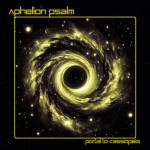
Artist: Aphelion Psalm (@)
Title: Portal to Cassiopea
Format: Download Only (MP3 + Lossless)
Label: self-released
Rated:

Title: Portal to Cassiopea
Format: Download Only (MP3 + Lossless)
Label: self-released
Rated:
There’s a particular kind of ambient musician who works like an amateur astronomer: alone, at night, with cheap tools, immeasurable patience, and the certainty that the universe whispers back if you just tilt the antenna right.
Carlos Martin Cuevas - under the astral moniker "Aphelion Psalm" - is clearly one of them. He’s based in Nerja (lovely small town on the less fashionable side of Costa del Sol), staring past the Mediterranean haze toward constellations whose names sound older than history. And for his debut EP he doesn’t try to impress; he simply opens a window to the infinite and invites you to lean out, hair blown by a solar wind that smells suspiciously like late-night soldering fumes and 1970s voltage drift.
Portal to Cassiopeia is a single 17-minute slab of space ambient, kept uncut to preserve narrative flow - a wise choice, because it breathes like a deep-space organism: slow, patient, occasionally ominous, occasionally tender in the way only the void can be. Cuevas claims it contains four chapters, but they feel less like movements and more like gravitational states: moments where your pulse lines up with the hum of machinery older than your species.
The portal opens with a shimmer that could be cosmic dust or a synth waking from hibernation; both options feel plausible. Soon you’re inside the cryosleep section, where time loses its manners and stretches into a soft metallic twilight. The "Antimatter Void Abyss" (a phrase that sounds like it should require a hazard suit) brings the album’s heaviest mass - a cavernous drone that evokes Lustmord’s subterranean cathedrals, but with a gentler cosmic melancholy swirling through it. And by the time you reach the "Gates of Alpha Cassiopeia", there’s a sense that you’ve crossed a boundary you weren’t meant to name aloud.
Cuevas openly worships at the altars of Tangerine Dream, Klaus Schulze, Neptune Towers and the more cosmic side of Blood Incantation - and yes, you can hear those echoes. But there's also a refreshing lack of pretension: this is DIY in its purest form, built with modest gear and a sincere desire to share a small fragment of celestial wonder. No cinematic universe, no overdesigned mythology - just the hum of a bedroom spacecraft plotting a slow, steady escape from gravity.
In the end, Portal to Cassiopeia doesn’t try to redefine dark ambient, or reinvent the Berlin School, or transcend cosmic drone history. It simply invites you to drift, to stop being a responsible terrestrial for seventeen minutes, and to let the cold dust of distant suns settle onto your skin.
And sometimes, that’s all the cosmos really asks of us.
Carlos Martin Cuevas - under the astral moniker "Aphelion Psalm" - is clearly one of them. He’s based in Nerja (lovely small town on the less fashionable side of Costa del Sol), staring past the Mediterranean haze toward constellations whose names sound older than history. And for his debut EP he doesn’t try to impress; he simply opens a window to the infinite and invites you to lean out, hair blown by a solar wind that smells suspiciously like late-night soldering fumes and 1970s voltage drift.
Portal to Cassiopeia is a single 17-minute slab of space ambient, kept uncut to preserve narrative flow - a wise choice, because it breathes like a deep-space organism: slow, patient, occasionally ominous, occasionally tender in the way only the void can be. Cuevas claims it contains four chapters, but they feel less like movements and more like gravitational states: moments where your pulse lines up with the hum of machinery older than your species.
The portal opens with a shimmer that could be cosmic dust or a synth waking from hibernation; both options feel plausible. Soon you’re inside the cryosleep section, where time loses its manners and stretches into a soft metallic twilight. The "Antimatter Void Abyss" (a phrase that sounds like it should require a hazard suit) brings the album’s heaviest mass - a cavernous drone that evokes Lustmord’s subterranean cathedrals, but with a gentler cosmic melancholy swirling through it. And by the time you reach the "Gates of Alpha Cassiopeia", there’s a sense that you’ve crossed a boundary you weren’t meant to name aloud.
Cuevas openly worships at the altars of Tangerine Dream, Klaus Schulze, Neptune Towers and the more cosmic side of Blood Incantation - and yes, you can hear those echoes. But there's also a refreshing lack of pretension: this is DIY in its purest form, built with modest gear and a sincere desire to share a small fragment of celestial wonder. No cinematic universe, no overdesigned mythology - just the hum of a bedroom spacecraft plotting a slow, steady escape from gravity.
In the end, Portal to Cassiopeia doesn’t try to redefine dark ambient, or reinvent the Berlin School, or transcend cosmic drone history. It simply invites you to drift, to stop being a responsible terrestrial for seventeen minutes, and to let the cold dust of distant suns settle onto your skin.
And sometimes, that’s all the cosmos really asks of us.
Itoko Toma: Beside the Moon

There’s a kind of hush in Itoko Toma’s world - not silence, exactly, but the tender vibration of everything that refuses to shout. "Beside the Moon", her new solo piano album, feels like a sibling to "Beyond the Mountain" - another meditation on space, stillness, and the small, luminous details that make life bearable. Recorded in the coastal quiet of Oiso’s Studio SALO, this collection isn’t just music to be heard, but an atmosphere to inhabit.
Toma, who has long worked in that delicate intersection between neoclassical grace and Japanese minimalism, composes like someone sketching with light. Her piano doesn’t perform; it breathes. Each note lands with the inevitability of moonlight on water - soft, cold, exact. You can almost see the salt air moving between the keys, or the shadow of a hand hesitating before a memory.
Pieces like “Robin” and “Yolu” play out like haiku: brief, precise, and utterly transparent. “Shine” stretches time into a slow exhale, as if Toma were tracing the pulse of night itself. Even the recording seems to listen - you hear the weight of the keys, the quiet friction of hammers, the reverberation of the room behaving like a shy collaborator. It’s the sound of a musician not trying to impress the listener but to disappear into the instrument.
There’s humor in that modesty too - the gentle irony of someone titling an album "Beside the Moon", as if to say: I’m not aiming for transcendence, just sitting next to it. And perhaps that’s why it feels so honest. This isn’t “background” music; it’s foreground for your interior life.
At a time when “calm piano” has become a streaming cliché, Toma’s music remains gloriously human - full of pauses, fragile imperfections, and unguarded tenderness. She doesn’t play to decorate silence, but to converse with it. And somewhere, in that quiet dialogue, something like joy happens - small, unassuming, and as constant as the moon she sits beside.
Toma, who has long worked in that delicate intersection between neoclassical grace and Japanese minimalism, composes like someone sketching with light. Her piano doesn’t perform; it breathes. Each note lands with the inevitability of moonlight on water - soft, cold, exact. You can almost see the salt air moving between the keys, or the shadow of a hand hesitating before a memory.
Pieces like “Robin” and “Yolu” play out like haiku: brief, precise, and utterly transparent. “Shine” stretches time into a slow exhale, as if Toma were tracing the pulse of night itself. Even the recording seems to listen - you hear the weight of the keys, the quiet friction of hammers, the reverberation of the room behaving like a shy collaborator. It’s the sound of a musician not trying to impress the listener but to disappear into the instrument.
There’s humor in that modesty too - the gentle irony of someone titling an album "Beside the Moon", as if to say: I’m not aiming for transcendence, just sitting next to it. And perhaps that’s why it feels so honest. This isn’t “background” music; it’s foreground for your interior life.
At a time when “calm piano” has become a streaming cliché, Toma’s music remains gloriously human - full of pauses, fragile imperfections, and unguarded tenderness. She doesn’t play to decorate silence, but to converse with it. And somewhere, in that quiet dialogue, something like joy happens - small, unassuming, and as constant as the moon she sits beside.
Roman Leykam, Frank Mark: Drifting

Artist: Roman Leykam, Frank Mark
Title: Drifting
Format: CD + Download
Label: Frank Mark Arts (@)
Rated:
Title: Drifting
Format: CD + Download
Label: Frank Mark Arts (@)
Rated:
If Brian Eno had taken up residence inside a slowly rotating satellite over the Swabian Alps, "Drifting" might be the transmission we’d receive - faint, elegant, and strangely intimate. The duo of Roman Leykam and Frank Mark, veterans of the German ambient underground, return with a work that floats between reverence and restraint: an album that doesn’t seek your attention so much as it dissolves the boundary between presence and perception.
Leykam, known for his tactile, painterly approach to the electric guitar - one that recalls the liquid melancholy of Fripp, the hovering minimalism of David Torn, and the patient austerity of late Talk Talk - weaves tones like threads of fog. His e-bow notes feel almost sentient, bending around silence as if negotiating with gravity. Frank Mark, meanwhile, works in the invisible domain of pulse and texture: field recordings, synthetic breaths, distant percussions, and the ghostly murmur of machines that seem to be dreaming of the sea.
The result is music that drifts, yes, but not aimlessly - more like a thought caught between two meanings. “Suction Effect” exhales warmth and metallic shimmer; “Crescent Moon” glides with the calm inevitability of something remembered too late. On "Illusions of Unearthly Nature", Leykam’s guitar becomes pure atmosphere, an instrument that has forgotten it was once made of wood and strings. Even the track titles read like internal weather reports: "Oddity", "Breakwater", "Cognitive Process" - each suggesting a subtle shift of mental climate.
There’s humor here too, if you listen closely - a kind of cosmic irony in the way this duo sculpts silence with such devotion. Their “Deep Joy” is quiet but persistent, like the satisfaction of aligning two universes for a brief second before they drift apart again.
In an age of overproduced introspection, "Drifting" feels refreshingly unhurried, almost monk-like in its clarity. It’s music that refuses spectacle - the kind that prefers to hum in the background of your bloodstream rather than the foreground of your playlist. An album for those who find movement in stillness, or who suspect that the void hums back when you listen hard enough.
Leykam, known for his tactile, painterly approach to the electric guitar - one that recalls the liquid melancholy of Fripp, the hovering minimalism of David Torn, and the patient austerity of late Talk Talk - weaves tones like threads of fog. His e-bow notes feel almost sentient, bending around silence as if negotiating with gravity. Frank Mark, meanwhile, works in the invisible domain of pulse and texture: field recordings, synthetic breaths, distant percussions, and the ghostly murmur of machines that seem to be dreaming of the sea.
The result is music that drifts, yes, but not aimlessly - more like a thought caught between two meanings. “Suction Effect” exhales warmth and metallic shimmer; “Crescent Moon” glides with the calm inevitability of something remembered too late. On "Illusions of Unearthly Nature", Leykam’s guitar becomes pure atmosphere, an instrument that has forgotten it was once made of wood and strings. Even the track titles read like internal weather reports: "Oddity", "Breakwater", "Cognitive Process" - each suggesting a subtle shift of mental climate.
There’s humor here too, if you listen closely - a kind of cosmic irony in the way this duo sculpts silence with such devotion. Their “Deep Joy” is quiet but persistent, like the satisfaction of aligning two universes for a brief second before they drift apart again.
In an age of overproduced introspection, "Drifting" feels refreshingly unhurried, almost monk-like in its clarity. It’s music that refuses spectacle - the kind that prefers to hum in the background of your bloodstream rather than the foreground of your playlist. An album for those who find movement in stillness, or who suspect that the void hums back when you listen hard enough.