
Browse by Genre
Industrial Music / Industrial Metal / Aggro Industrial / Electro Metal
Industrial Noise / Power Noise / Harsh Noise
Synth Pop / Electro Pop / Synth-Electronica
Techno / Trance / Goa / Drum'n'Bass / Jungle / Tribal / Trip-Hop
Ambient / Electronica / Ethereal / Dub / Soundscapes / Abstract
Experimental / Avantgarde / Weird & Wired / Glitch / Noise / Field Recording
Dark / Gothic / Wave / New Wave / Dark Wave / Industrial Gothic
New Music / Downtown / Avantgarde Jazz / New Classical / World
Search Reviews
Music Reviews
Pierre Bastien: Tools

Pierre Bastien has always built his music as if he were a watchmaker working on a surrealist’s heartbeat - precise, absurd, and tenderly human. With "Tools", he returns not to his beloved trumpet or the orchestral tangle of the Mecanium, but to the humble instrument behind it all: the Meccano screwdriver. That flattened rod of metal - half toy, half relic - becomes both muse and method, an object capable of tightening screws and unfastening worlds.
The album’s premise could almost sound like parody - “I compose with a screwdriver” -, but Bastien has never been one to wink too hard at his own eccentricities. His obsession with mechanisms is not irony, but devotion: the screwdriver, in his hands, is a philosopher’s stone of sound, the bridge between childhood play and disciplined invention.
Across "Tools", Bastien assembles a kinetic orchestra that hums, rattles, and sighs like a workshop dreaming of Bach. The machine-instrument at the core of the record is a marvel of absurd engineering: valves breathing six major chords, a rotating nail violin, a family of flute mouthpieces that whistle autonomously, and the ghostly pulse of an automated record player skeleton. From this menagerie of moving parts emerges something fragile and uncanny - not just rhythm or harmony, but the sound of function itself.
Part I (side A) feels like a patient awakening, a series of slow, irregular pulses that seem to test their own endurance. It’s mechanical, yes, but not cold - more like watching an old engine rediscover its purpose. Part II (side B) opens up into longer exhalations, a chamber of air and friction where every accidental creak becomes intention. Somewhere in there, you think you hear the screwdriver itself - not as percussive element, but as presence, as memory of the hand that built all this.
Bastien’s music has always danced between invention and poetry, but "Tools" might be his most distilled expression of that balance. Each gesture is deliberate, yet open to the unexpected: precision becomes chance, and vice versa. There’s no melody in the traditional sense, only a chain of mechanical causality that somehow turns into music - the way wind becomes melody when it finds the right bottle.
The conceptual charm of "Tools" lies in its humility. In an era of software-based everything, Bastien’s screwdriver feels like a relic from another planet - or a future that decided to regress with elegance. His machines don’t simulate emotion; they generate it, through friction, delay, resistance. It’s music that refuses spectacle and instead finds beauty in the smallest functional gesture.
To listen to "Tools" is to stand in the middle of Bastien’s atelier, surrounded by whirring contraptions and quiet ghosts of art history - Matisse’s scissors, Niki de Saint Phalle’s rifle, César’s hydraulic press. Each imaginary object vibrates with the same reverence for making, for transforming labor into grace.
Pierre Bastien, the eternal tinkerer, has once again proven that mechanical repetition can be lyrical, and that the screwdriver - modest, forgotten, indispensable - is perhaps the most musical tool of all.
The album’s premise could almost sound like parody - “I compose with a screwdriver” -, but Bastien has never been one to wink too hard at his own eccentricities. His obsession with mechanisms is not irony, but devotion: the screwdriver, in his hands, is a philosopher’s stone of sound, the bridge between childhood play and disciplined invention.
Across "Tools", Bastien assembles a kinetic orchestra that hums, rattles, and sighs like a workshop dreaming of Bach. The machine-instrument at the core of the record is a marvel of absurd engineering: valves breathing six major chords, a rotating nail violin, a family of flute mouthpieces that whistle autonomously, and the ghostly pulse of an automated record player skeleton. From this menagerie of moving parts emerges something fragile and uncanny - not just rhythm or harmony, but the sound of function itself.
Part I (side A) feels like a patient awakening, a series of slow, irregular pulses that seem to test their own endurance. It’s mechanical, yes, but not cold - more like watching an old engine rediscover its purpose. Part II (side B) opens up into longer exhalations, a chamber of air and friction where every accidental creak becomes intention. Somewhere in there, you think you hear the screwdriver itself - not as percussive element, but as presence, as memory of the hand that built all this.
Bastien’s music has always danced between invention and poetry, but "Tools" might be his most distilled expression of that balance. Each gesture is deliberate, yet open to the unexpected: precision becomes chance, and vice versa. There’s no melody in the traditional sense, only a chain of mechanical causality that somehow turns into music - the way wind becomes melody when it finds the right bottle.
The conceptual charm of "Tools" lies in its humility. In an era of software-based everything, Bastien’s screwdriver feels like a relic from another planet - or a future that decided to regress with elegance. His machines don’t simulate emotion; they generate it, through friction, delay, resistance. It’s music that refuses spectacle and instead finds beauty in the smallest functional gesture.
To listen to "Tools" is to stand in the middle of Bastien’s atelier, surrounded by whirring contraptions and quiet ghosts of art history - Matisse’s scissors, Niki de Saint Phalle’s rifle, César’s hydraulic press. Each imaginary object vibrates with the same reverence for making, for transforming labor into grace.
Pierre Bastien, the eternal tinkerer, has once again proven that mechanical repetition can be lyrical, and that the screwdriver - modest, forgotten, indispensable - is perhaps the most musical tool of all.
Vessitt: Chapter Two: Reflections

Artist: Vessitt
Title: Chapter Two: Reflections
Format: Tape + Download
Label: Dragon's Eye Recordings (@)
Rated:

Title: Chapter Two: Reflections
Format: Tape + Download
Label: Dragon's Eye Recordings (@)
Rated:
Vessitt doesn’t make ambient music for yoga studios. His compositions belong to the hour after the lights go out, when the body hums with insomnia and the window glass quietly pretends to be water. "Chapter Two: Reflections" is not a sequel in the narrative sense, but a continuation of method - a further bending of tone and perception, a mirror that doesn’t flatter but refracts.
From the first moments of "Prologue to the Beginning and End", one senses that Vessitt, this Los Angeles-based sculptor of frequencies, has learned to let silence breathe between the pulses. His guitar - processed beyond recognition - becomes vapor, memory, occasionally blade. Synth textures enter like latecomers to a dream, not quite invited but perfectly timed. The pieces seem less composed than condensed, the way dew collects meaning overnight.
He speaks of reflections and perception, and indeed, every sound here feels doubled - part physical, part phantom. On "Peaking", for instance, the tones wobble as if observed through heat. "Dogma in Ergosphere" trades strings for pure synthesis, its triangle waves tracing the outline of a cybernetic prayer. There’s humour in the title, but the music remains stern, elegant, and faintly radioactive - the kind of sound that seems to illuminate the listener rather than the other way around.
By the time "Gyokuro" arrives - a long-time live piece finally crystallized - Vessitt opens his palette toward the melodic, or at least the suggestion of melody. It’s the record’s breathing space, where harmonic shimmer briefly pretends to be hope before collapsing into slow-motion static. The album’s architecture mirrors a thought experiment: what if reflections could feel pain, or nostalgia?
Dragon’s Eye Recordings, with its long history of championing the spectral and the precise, is a fitting home. Vessitt’s work aligns with a particular strain of West Coast minimalism - lucid, disciplined, but emotionally unruly. His sounds are never ornamental; they behave like questions with no interest in answers.
There’s a sly tension running through "Chapter Two: Reflections": it’s meditative, yes, but also slightly paranoid, as though every sustained note was being observed from behind the mirror. The closing "Epilogue for Everything" completes the loop - not a resolution, but a graceful recursion. The sound doesn’t end; it simply turns its head and looks back at you.
Listening to this album is like staring into dark glass: the longer you gaze, the more you suspect the reflection might blink first.
From the first moments of "Prologue to the Beginning and End", one senses that Vessitt, this Los Angeles-based sculptor of frequencies, has learned to let silence breathe between the pulses. His guitar - processed beyond recognition - becomes vapor, memory, occasionally blade. Synth textures enter like latecomers to a dream, not quite invited but perfectly timed. The pieces seem less composed than condensed, the way dew collects meaning overnight.
He speaks of reflections and perception, and indeed, every sound here feels doubled - part physical, part phantom. On "Peaking", for instance, the tones wobble as if observed through heat. "Dogma in Ergosphere" trades strings for pure synthesis, its triangle waves tracing the outline of a cybernetic prayer. There’s humour in the title, but the music remains stern, elegant, and faintly radioactive - the kind of sound that seems to illuminate the listener rather than the other way around.
By the time "Gyokuro" arrives - a long-time live piece finally crystallized - Vessitt opens his palette toward the melodic, or at least the suggestion of melody. It’s the record’s breathing space, where harmonic shimmer briefly pretends to be hope before collapsing into slow-motion static. The album’s architecture mirrors a thought experiment: what if reflections could feel pain, or nostalgia?
Dragon’s Eye Recordings, with its long history of championing the spectral and the precise, is a fitting home. Vessitt’s work aligns with a particular strain of West Coast minimalism - lucid, disciplined, but emotionally unruly. His sounds are never ornamental; they behave like questions with no interest in answers.
There’s a sly tension running through "Chapter Two: Reflections": it’s meditative, yes, but also slightly paranoid, as though every sustained note was being observed from behind the mirror. The closing "Epilogue for Everything" completes the loop - not a resolution, but a graceful recursion. The sound doesn’t end; it simply turns its head and looks back at you.
Listening to this album is like staring into dark glass: the longer you gaze, the more you suspect the reflection might blink first.
Umbrafono: Segundo Ãlbum
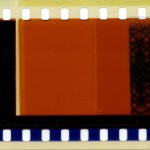
Enrique del Castillo’s "Segundo Album" sounds like cinema refusing to die. It’s the ghost of the projector, whispering back to the audience after everyone has left the room. Umbráfono, his one-man orchestra of modified optical readers, transforms the play of light across celluloid into a living sound organism - mechanical yet strangely human, fragile yet obstinate.
This isn’t music in the usual sense; it’s illumination translated into frequency. Del Castillo’s process feels both alchemical and archaeological: he unearths tones from light, sculpting rhythm from flicker. The result recalls the very early history of sound-on-film - those days when soundtracks were literally drawn onto reels - but instead of nostalgia, there’s a sense of pure reinvention. "Segundo Album" doesn’t recreate a lost technique; it expands its vocabulary, turning the optical reader into a voice capable of stammering, sighing, and humming like an electronic monk.
Each piece (named after the films themselves: "Film 286", "Film 251", "Film 299 Livengood"…) feels like an artifact of a parallel world’s musicology - the kind of world where electricity and geometry fell in love. The noises are dusty but luminous; oscillations dance like scratches across sunlight; harmonics emerge as though a moth brushed past the lens. You could say this is experimental minimalism - but minimalism never sounded so haunted, nor so tactile.
There’s something beautifully self-erasing about del Castillo’s method: the music depends on fragile strips of film that exist in a single physical copy. No editions, no remasters, no infinite duplication. A poetic act of resistance in an age of perfect, sterile replication. It’s art as presence - one that flickers, stutters, and burns out in real time.
And yet, for all its conceptual density, "Segundo Album" isn’t dry or didactic. There’s warmth in the static, humour in the hiccups, tenderness in the dissonance. Sometimes it feels like listening to the internal monologue of an old projector trying to remember its own movies. Sometimes it’s a light-based séance.
Del Castillo, already celebrated in sound art circles from MACBA to Matadero Madrid, proves that the border between image and sound is not a line but a shimmer. "Segundo Album" is that shimmer given voice - ephemeral, precise, and strangely moving.
It’s music you don’t just hear. You see it. Or maybe it’s light you don’t just see - you listen to it.
This isn’t music in the usual sense; it’s illumination translated into frequency. Del Castillo’s process feels both alchemical and archaeological: he unearths tones from light, sculpting rhythm from flicker. The result recalls the very early history of sound-on-film - those days when soundtracks were literally drawn onto reels - but instead of nostalgia, there’s a sense of pure reinvention. "Segundo Album" doesn’t recreate a lost technique; it expands its vocabulary, turning the optical reader into a voice capable of stammering, sighing, and humming like an electronic monk.
Each piece (named after the films themselves: "Film 286", "Film 251", "Film 299 Livengood"…) feels like an artifact of a parallel world’s musicology - the kind of world where electricity and geometry fell in love. The noises are dusty but luminous; oscillations dance like scratches across sunlight; harmonics emerge as though a moth brushed past the lens. You could say this is experimental minimalism - but minimalism never sounded so haunted, nor so tactile.
There’s something beautifully self-erasing about del Castillo’s method: the music depends on fragile strips of film that exist in a single physical copy. No editions, no remasters, no infinite duplication. A poetic act of resistance in an age of perfect, sterile replication. It’s art as presence - one that flickers, stutters, and burns out in real time.
And yet, for all its conceptual density, "Segundo Album" isn’t dry or didactic. There’s warmth in the static, humour in the hiccups, tenderness in the dissonance. Sometimes it feels like listening to the internal monologue of an old projector trying to remember its own movies. Sometimes it’s a light-based séance.
Del Castillo, already celebrated in sound art circles from MACBA to Matadero Madrid, proves that the border between image and sound is not a line but a shimmer. "Segundo Album" is that shimmer given voice - ephemeral, precise, and strangely moving.
It’s music you don’t just hear. You see it. Or maybe it’s light you don’t just see - you listen to it.
Raphael Loher: Hug of Gravity
Artist: Raphael Loher (@)
Title: Hug of Gravity
Format: 12" + Download
Label: Hallow Ground (@)
Rated:

Title: Hug of Gravity
Format: 12" + Download
Label: Hallow Ground (@)
Rated:
The title says it all: this album doesn’t defy gravity - it embraces it. But not in the clumsy way most mortals do, tripping over their own weight; Raphael Loher hugs gravity like an old friend who happens to bend time. "Hug of Gravity" is not a collection of pieces so much as a slow-motion implosion of what we think “a piano album” should be - an act of surrender to the pull of matter, memory, and magnetized tape.
Loher, the Swiss pianist and composer already known for his work with KALI Trio and Baumschule, seems to have wandered far from the polite landscapes of minimalism into something more unsettled and fertile. Built from reworked recordings of his debut Keemuun, these four long pieces (each the length of a small geological age) operate on what you might call extended time perception - not ambient in the background sense, but ambient in the sense of air itself being thickened. You don’t listen to "Hug of Gravity"; you inhabit it until your sense of minutes starts to fray.
The process, as Loher describes it, sounds almost absurdly meticulous: a three-month residency in the Swiss mountains, where he cut, spliced, detuned, slowed, re-recorded, and then spliced again. You can feel that obsessive loop in the sound - every tone like a reflection trapped between peaks, slowly losing its identity. The prepared piano (sometimes dampened by modelling clay, sometimes warped by tape varispeed) becomes less an instrument and more a set of tectonic plates sliding past each other. Notes bend into interference patterns; harmonics flutter like fragile insects caught in slow wind.
There’s something paradoxically playful in this austerity. Loher doesn’t sound like he’s meditating on silence - he’s toying with gravity’s rhythm, teasing it, as if time could be kneaded like dough. At points, the music recalls the decaying architectures of William Basinski, or the patient emotional ambiguity of Linda Catlin Smith, but Loher’s touch is more tactile, more physical. His manipulation of analog tape and clay feels almost ritualistic, a performance of touch in an age of detached digitalism.
The four “Hug of Gravity” movements form a continuum, yet each shifts subtly - a new gravitational field, a new kind of drift. The second part feels like it’s breathing in and out of itself, small crescendos swelling like light through fog. By the third, the listener has lost all sense of tempo; by the fourth, you’re not sure whether the sound is slowing down or your perception is. It’s an exercise in calm ecstasy, yes, but also an experiment in disorientation - a kind of audio vertigo disguised as serenity.
Even the artwork mirrors this paradox: Loher’s line drawings, layered in overlapping transparencies, echo the album’s self-generating geometry - never identical, always shifting.
At its core, "Hug of Gravity" is a study in transformation - of sound, of place, of the artist himself. It’s an album that doesn’t aim to impress or soothe, but to stretch perception until it trembles. Listening to it feels like watching a glacier melt in real time: patient, massive, quietly devastating.
Raphael Loher doesn’t fight gravity. He gives it a voice - and then slows it down until it starts to sing back.
Loher, the Swiss pianist and composer already known for his work with KALI Trio and Baumschule, seems to have wandered far from the polite landscapes of minimalism into something more unsettled and fertile. Built from reworked recordings of his debut Keemuun, these four long pieces (each the length of a small geological age) operate on what you might call extended time perception - not ambient in the background sense, but ambient in the sense of air itself being thickened. You don’t listen to "Hug of Gravity"; you inhabit it until your sense of minutes starts to fray.
The process, as Loher describes it, sounds almost absurdly meticulous: a three-month residency in the Swiss mountains, where he cut, spliced, detuned, slowed, re-recorded, and then spliced again. You can feel that obsessive loop in the sound - every tone like a reflection trapped between peaks, slowly losing its identity. The prepared piano (sometimes dampened by modelling clay, sometimes warped by tape varispeed) becomes less an instrument and more a set of tectonic plates sliding past each other. Notes bend into interference patterns; harmonics flutter like fragile insects caught in slow wind.
There’s something paradoxically playful in this austerity. Loher doesn’t sound like he’s meditating on silence - he’s toying with gravity’s rhythm, teasing it, as if time could be kneaded like dough. At points, the music recalls the decaying architectures of William Basinski, or the patient emotional ambiguity of Linda Catlin Smith, but Loher’s touch is more tactile, more physical. His manipulation of analog tape and clay feels almost ritualistic, a performance of touch in an age of detached digitalism.
The four “Hug of Gravity” movements form a continuum, yet each shifts subtly - a new gravitational field, a new kind of drift. The second part feels like it’s breathing in and out of itself, small crescendos swelling like light through fog. By the third, the listener has lost all sense of tempo; by the fourth, you’re not sure whether the sound is slowing down or your perception is. It’s an exercise in calm ecstasy, yes, but also an experiment in disorientation - a kind of audio vertigo disguised as serenity.
Even the artwork mirrors this paradox: Loher’s line drawings, layered in overlapping transparencies, echo the album’s self-generating geometry - never identical, always shifting.
At its core, "Hug of Gravity" is a study in transformation - of sound, of place, of the artist himself. It’s an album that doesn’t aim to impress or soothe, but to stretch perception until it trembles. Listening to it feels like watching a glacier melt in real time: patient, massive, quietly devastating.
Raphael Loher doesn’t fight gravity. He gives it a voice - and then slows it down until it starts to sing back.
Ellen Fullman and The Living Earth Show: Elemental View
Artist: Ellen Fullman and The Living Earth Show (@)
Title: Elemental View
Format: CD + Download
Label: Room40 (@)
Rated:
Title: Elemental View
Format: CD + Download
Label: Room40 (@)
Rated:
To enter "Elemental View" is to cross a threshold into a resonant cathedral built of physics, patience, and the quiet madness of invention. Ellen Fullman, high priestess of resonance and the Long String Instrument’s chief architect, has once again stretched sound until it becomes a landscape. Imagine a violin that decided one day to colonize a warehouse and sprout 136 steel arteries - that’s her realm.
Fullman’s Long String Instrument isn’t just played - it’s inhabited. She moves among its taut filaments like a ghostly surveyor, bowing with fingertips, summoning overtones that slide and shimmer in slow tectonic shifts. The result isn’t melody, not in the usual sense. It’s topography. You don’t listen to "Elemental View" so much as walk through it, the way light walks through fog, or memory through time.
The six movements unfold with the logic of tides - “Sustained Surface | Distant View” introduces a metallic dawn where every vibration seems to breathe; “Dream Branch | Intimate Glint” follows like a mirage, glinting and alive. By “Environmental Memory”, The Living Earth Show - percussionist Andy Meyerson and guitarist Travis Andrews - have become part of the instrument itself, trading gestures of precision for waves of sympathy. Their interventions are not accompaniment but tectonic adjustment: a gentle shifting of gravity.
There’s humor here, too, in the absurdity of it all. Who else would invent implements called "box bow", "shovelette", and "shoveler" - and make them sound like philosophical tools rather than kitchen utensils? It’s as if Harry Partch came back as a minimalist architect with a penchant for room acoustics.
But Fullman’s discipline saves the music from self-indulgence. Every frequency feels earned, every overtone calibrated to the point of transcendence. The Long String Instrument doesn’t merely produce harmonics; it reveals the secret inner life of vibration itself - a sonic microscope turned on the material world. When Meyerson’s santur joins in “Surface Narrative in Four Parts”, the timbres ripple like metal rainfall, each droplet reflecting a slightly different world.
"Elemental View" is not a comfortable album. It asks for stillness and patience, for a listener willing to dissolve into texture. Yet in that dissolution lies something startlingly human - the sense of being both infinitesimal and infinite, of hearing the bones of sound hum beneath your own.
The final track, “Radio Coda”, closes like a transmission from a parallel dimension where matter and sound are the same thing - the ghost of a signal caught between heaven and hardware.
In a musical age obsessed with shortcuts, Fullman still takes the longest possible route - literally, 136 strings long - and somehow, in that distance, she finds clarity.
If there’s an “elemental view” here, it’s this: that sound, in its purest form, isn’t something we hear, but something that hears us back.
Fullman’s Long String Instrument isn’t just played - it’s inhabited. She moves among its taut filaments like a ghostly surveyor, bowing with fingertips, summoning overtones that slide and shimmer in slow tectonic shifts. The result isn’t melody, not in the usual sense. It’s topography. You don’t listen to "Elemental View" so much as walk through it, the way light walks through fog, or memory through time.
The six movements unfold with the logic of tides - “Sustained Surface | Distant View” introduces a metallic dawn where every vibration seems to breathe; “Dream Branch | Intimate Glint” follows like a mirage, glinting and alive. By “Environmental Memory”, The Living Earth Show - percussionist Andy Meyerson and guitarist Travis Andrews - have become part of the instrument itself, trading gestures of precision for waves of sympathy. Their interventions are not accompaniment but tectonic adjustment: a gentle shifting of gravity.
There’s humor here, too, in the absurdity of it all. Who else would invent implements called "box bow", "shovelette", and "shoveler" - and make them sound like philosophical tools rather than kitchen utensils? It’s as if Harry Partch came back as a minimalist architect with a penchant for room acoustics.
But Fullman’s discipline saves the music from self-indulgence. Every frequency feels earned, every overtone calibrated to the point of transcendence. The Long String Instrument doesn’t merely produce harmonics; it reveals the secret inner life of vibration itself - a sonic microscope turned on the material world. When Meyerson’s santur joins in “Surface Narrative in Four Parts”, the timbres ripple like metal rainfall, each droplet reflecting a slightly different world.
"Elemental View" is not a comfortable album. It asks for stillness and patience, for a listener willing to dissolve into texture. Yet in that dissolution lies something startlingly human - the sense of being both infinitesimal and infinite, of hearing the bones of sound hum beneath your own.
The final track, “Radio Coda”, closes like a transmission from a parallel dimension where matter and sound are the same thing - the ghost of a signal caught between heaven and hardware.
In a musical age obsessed with shortcuts, Fullman still takes the longest possible route - literally, 136 strings long - and somehow, in that distance, she finds clarity.
If there’s an “elemental view” here, it’s this: that sound, in its purest form, isn’t something we hear, but something that hears us back.