
Browse by Genre
Industrial Music / Industrial Metal / Aggro Industrial / Electro Metal
Industrial Noise / Power Noise / Harsh Noise
Synth Pop / Electro Pop / Synth-Electronica
Techno / Trance / Goa / Drum'n'Bass / Jungle / Tribal / Trip-Hop
Ambient / Electronica / Ethereal / Dub / Soundscapes / Abstract
Experimental / Avantgarde / Weird & Wired / Glitch / Noise / Field Recording
Dark / Gothic / Wave / New Wave / Dark Wave / Industrial Gothic
New Music / Downtown / Avantgarde Jazz / New Classical / World
Search Reviews
Music Reviews
Effective Dreaming: Dream Catalogue Vol. 1

Artist: Effective Dreaming
Title: Dream Catalogue Vol. 1
Format: Tape + Download
Label: Fleure Tapes (@)
Rated:

Title: Dream Catalogue Vol. 1
Format: Tape + Download
Label: Fleure Tapes (@)
Rated:
I hate to start a review, especially a critically overdue one like this with an apology, but here goes. With the current state of affairs, I haven't felt much like reviewing new music lately, but I can't let artists who send me product (that qualifies, genre-wise) down as it just isn't fair, although I bet many more popular reviewers do all the time due to the overwhelming amount of promotional product they receive. I this case, the cassette tape (I don't get many of them) got shuffled around and overlooked simply because I thought it was noise (which is not high on my priority list) as most cassette releases I've received over the years seem to be. This turned out to be the furthest thing from the truth as this album is a particular sort of electronica, and an interesting one at that. My personal apology to the artist, Iain Ross, who labors under the moniker Effective Dreaming for putting aside the album for so long (it was released June 21, 2025) but also for losing your note with your email address. Let's face it, email addresses are hard to come by these days and more than half of the promos I receive do not contain them, and I don't have time to hunt them all down, so many artists never hear of the reviews they get. I'm depending on the label (Fleure Tapes) to send Iain the review. 'Dream Catalogue Vol. 1' follows a long line of releases by Glasgow-based artist/musician Iain Ross going back to 2005, not all of them under the name Effective Dreaming. He draws the project's name from Ursula K. Le Guin's sci-fi novel, "The Lathe of Heaven,” where a dreamer's visions alter the fabric of reality- past and present reshaped, histories rewritten, unnoticed by all but the dreamer himself. In similar spirit, Ross's music inhabits a space where memory, perception and matter blur- where each sound carries the residue of something once real, now transformed and dissolving as one drifts through the seams of the world. 'Dream Catalogue Vol. 1' is intended to be a meditation on texture, transience, and the quiet resonance of what slips away.
The music is a series of vignettes with looping, repeating arpeggios, some drones, melodic interludes, little pieces of electronica and sampling that evoke a feeling, a certain nostalgia, or sounds out of a dream. They are all quite different, and surely some may remind you of other ambient artists. I'm reminded of Phil Klampe's Homogenized Terrestrials project, and to a lesser extent, early New Age electronica producer Don Slepian, but there are many differences over all. There are no track titles, just Side A and Side B which each last 30:36. I think what makes this album very cool is the sheer variety of the compositions which could be visually compared to looking through a kaleidoscope, perhaps kaleidoscopic sound for the brain. There is certainly a psychedelic element to the sounds of Effective Dreaming, and perhaps under the right stimulus, the possibility of synesthesia seems appropriate. 'Dream Catalogue Vol. 1' is all about moods and textures, not snappy, elegant electronica compositions, and the physical product reflects that too. The materials (of the cassette) echo the music's exploration of fragile impermanence and erosion: oxidized metal, magnetic tape hiss, hum. A tactile world where sound wears its decay like a patina. The cassette release is limited to only 50 copies, and at last look there were only a mere 5 copies remaining, so if you're a cassette collector, you'd best not delay.
The music is a series of vignettes with looping, repeating arpeggios, some drones, melodic interludes, little pieces of electronica and sampling that evoke a feeling, a certain nostalgia, or sounds out of a dream. They are all quite different, and surely some may remind you of other ambient artists. I'm reminded of Phil Klampe's Homogenized Terrestrials project, and to a lesser extent, early New Age electronica producer Don Slepian, but there are many differences over all. There are no track titles, just Side A and Side B which each last 30:36. I think what makes this album very cool is the sheer variety of the compositions which could be visually compared to looking through a kaleidoscope, perhaps kaleidoscopic sound for the brain. There is certainly a psychedelic element to the sounds of Effective Dreaming, and perhaps under the right stimulus, the possibility of synesthesia seems appropriate. 'Dream Catalogue Vol. 1' is all about moods and textures, not snappy, elegant electronica compositions, and the physical product reflects that too. The materials (of the cassette) echo the music's exploration of fragile impermanence and erosion: oxidized metal, magnetic tape hiss, hum. A tactile world where sound wears its decay like a patina. The cassette release is limited to only 50 copies, and at last look there were only a mere 5 copies remaining, so if you're a cassette collector, you'd best not delay.
Elsehow: Afterimage
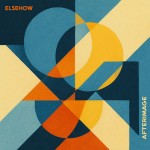
Afterimage arrives like a memory half-remembered in the dark: tenuous, spectral, and strangely urgent. The solo project of Italian-Belgian artist Piero Delux, Elsehow fashions dreamy art pop that feels less like songs than sonic apparitions. Over sparse, ambient frameworks-few beats, gentle washes of synth, subtle texture-Delux places his silky, intimate voice, exploring the spaces between regret and possibility, loss and longing.
From the opening "Remembrance", we hear his aim: to echo what has passed, to hold onto fragments that refuse to dissolve. His words-“moments half-remembered, blurred by time and feeling”-offer the album’s blueprint. Elsehow is not interested in bold statements or theatrical gestures. Instead, the album unfolds in quiet slivers, the kind that slip in when you’re not looking: "Reflections", "Hemisphere", "In This Century" - each a vignette, a shape in the fog.
Delux wears his influences - Sylvian, Walker, late Talk Talk - lightly. They’re not anchors but spectral companions. He borrows their sense of restraint and space, yet he doesn’t mimic; rather, he translates their emotional vocabulary into his own idiom. His voice floats above the minimalism, sometimes distant, sometimes close enough to feel breath on the skin.
Musically, "Afterimage" is built from absence as much as presence. Sparse piano, light reverb, ambient decay: each tone lingers just long enough to fade. Occasionally the rhythm stirs-barely-but mostly this is music that resists propulsion. It’s contemplative, a mirror turned inward. In "Imagine Being Here", a fragile tension builds, as though an unspoken longing tries to push through the veil. On "Telekinesis" the minimalism tips toward ghostly motion; on "The Endless Dusk", a whispered lament folds into dusk’s quiet surrender.
What makes "Afterimage" compelling is its fidelity to ambiguity. It never fully resolves its sorrows; it rarely declares its certainties. Instead, it lives in the question: Can we feel what fades? Can we speak what memory erases? Delux seems to answer: Yes, if we dissolve into the sound first.
For those seeking music that holds you close while letting you drift - this is a rare and beautiful encounter. Elsehow may not shout, but he remains eloquent - a voice singing through the blur.
From the opening "Remembrance", we hear his aim: to echo what has passed, to hold onto fragments that refuse to dissolve. His words-“moments half-remembered, blurred by time and feeling”-offer the album’s blueprint. Elsehow is not interested in bold statements or theatrical gestures. Instead, the album unfolds in quiet slivers, the kind that slip in when you’re not looking: "Reflections", "Hemisphere", "In This Century" - each a vignette, a shape in the fog.
Delux wears his influences - Sylvian, Walker, late Talk Talk - lightly. They’re not anchors but spectral companions. He borrows their sense of restraint and space, yet he doesn’t mimic; rather, he translates their emotional vocabulary into his own idiom. His voice floats above the minimalism, sometimes distant, sometimes close enough to feel breath on the skin.
Musically, "Afterimage" is built from absence as much as presence. Sparse piano, light reverb, ambient decay: each tone lingers just long enough to fade. Occasionally the rhythm stirs-barely-but mostly this is music that resists propulsion. It’s contemplative, a mirror turned inward. In "Imagine Being Here", a fragile tension builds, as though an unspoken longing tries to push through the veil. On "Telekinesis" the minimalism tips toward ghostly motion; on "The Endless Dusk", a whispered lament folds into dusk’s quiet surrender.
What makes "Afterimage" compelling is its fidelity to ambiguity. It never fully resolves its sorrows; it rarely declares its certainties. Instead, it lives in the question: Can we feel what fades? Can we speak what memory erases? Delux seems to answer: Yes, if we dissolve into the sound first.
For those seeking music that holds you close while letting you drift - this is a rare and beautiful encounter. Elsehow may not shout, but he remains eloquent - a voice singing through the blur.
Tristan Honsinger and Riuichi Daijo: We Met Tomorrow
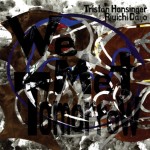
Artist: Tristan Honsinger and Riuichi Daijo
Title: We Met Tomorrow
Format: 12" + Download
Label: DPS Recordings
Rated:

Title: We Met Tomorrow
Format: 12" + Download
Label: DPS Recordings
Rated:
There is something quietly devastating about We Met Tomorrow - as if the music itself knew it was saying goodbye, but decided to do so by laughing softly instead of crying. Recorded in June 2023 at Permian, Riuichi Daijo’s intimate space for improvised music in Tokyo, the album captures two final dialogues between Daijo and the late Tristan Honsinger: one private, one public; one whisper, one open hand. It’s a document of friendship disguised as sound, of absurdity and grace braided through strings and silences.
Honsinger, who passed away later that year, was a performer of contradictions - a clown-philosopher with a cello, a man who could make dissonance sound like empathy. Here, he’s both lucid and disintegrating, his playing as spontaneous as speech and his speech as fractured as melody. Daijo, ever the patient listener, doesn’t accompany so much as inhabit the cello’s mood, letting his guitar become a mirror, a second mouth, or sometimes just a rustle of time.
Side A - Juxtaposition I through III - feels like two painters working on the same canvas without discussing what it should be. Notes overlap, cancel, blur; meaning emerges from proximity rather than structure. There are moments when Honsinger mutters or breathes, and one realizes that improvisation here isn’t “free” in the casual sense - it’s the desperate honesty of two people trusting the next sound more than any plan.
Side B, the live half, opens its throat wider. Daijo’s electric guitar hums with quiet voltage, while Honsinger - amplified, almost spectral - alternates between playing and murmuring strange aphorisms: “Stupidity is the right when you’re wrong”. It’s both a koan and a confession, and it lands like a flicked match in the dark. The closing piece, “We Met Tomorrow”, circles back on itself linguistically and emotionally. The phrase feels absurd, yes, but also oddly truthful - perfect for a musician whose entire career treated time not as a line but as a fold.
Listening feels like overhearing eternity thinking out loud. Honsinger’s cello doesn’t resolve; it lingers, trembles, loops like a Möbius strip of resonance. Daijo’s contribution is equally essential: he shapes silence with intent, giving space for Honsinger’s farewell without embalming it in reverence.
We Met Tomorrow isn’t just a posthumous record - it’s a séance that never ends. Honsinger’s laughter, sighs, and glissandi slip between irony and tenderness, turning the improvised moment into something strangely enduring. You leave the album with the unsettling conviction that he’s still there, bow in hand, waiting for the next note that doesn’t exist yet.
If this truly is his swan song, then it’s one sung backwards through time - a meeting that hasn’t yet happened, but always will.
Honsinger, who passed away later that year, was a performer of contradictions - a clown-philosopher with a cello, a man who could make dissonance sound like empathy. Here, he’s both lucid and disintegrating, his playing as spontaneous as speech and his speech as fractured as melody. Daijo, ever the patient listener, doesn’t accompany so much as inhabit the cello’s mood, letting his guitar become a mirror, a second mouth, or sometimes just a rustle of time.
Side A - Juxtaposition I through III - feels like two painters working on the same canvas without discussing what it should be. Notes overlap, cancel, blur; meaning emerges from proximity rather than structure. There are moments when Honsinger mutters or breathes, and one realizes that improvisation here isn’t “free” in the casual sense - it’s the desperate honesty of two people trusting the next sound more than any plan.
Side B, the live half, opens its throat wider. Daijo’s electric guitar hums with quiet voltage, while Honsinger - amplified, almost spectral - alternates between playing and murmuring strange aphorisms: “Stupidity is the right when you’re wrong”. It’s both a koan and a confession, and it lands like a flicked match in the dark. The closing piece, “We Met Tomorrow”, circles back on itself linguistically and emotionally. The phrase feels absurd, yes, but also oddly truthful - perfect for a musician whose entire career treated time not as a line but as a fold.
Listening feels like overhearing eternity thinking out loud. Honsinger’s cello doesn’t resolve; it lingers, trembles, loops like a Möbius strip of resonance. Daijo’s contribution is equally essential: he shapes silence with intent, giving space for Honsinger’s farewell without embalming it in reverence.
We Met Tomorrow isn’t just a posthumous record - it’s a séance that never ends. Honsinger’s laughter, sighs, and glissandi slip between irony and tenderness, turning the improvised moment into something strangely enduring. You leave the album with the unsettling conviction that he’s still there, bow in hand, waiting for the next note that doesn’t exist yet.
If this truly is his swan song, then it’s one sung backwards through time - a meeting that hasn’t yet happened, but always will.
Marie Wilhelmine Anders: Fire (Remixes)

Artist: Marie Wilhelmine Anders
Title: Fire (Remixes)
Format: Download Only (MP3 + Lossless)
Label: Broque (@)
Rated:
Title: Fire (Remixes)
Format: Download Only (MP3 + Lossless)
Label: Broque (@)
Rated:
Marie Wilhelmine Anders has always seemed less interested in chasing genres than in dissolving them - slowly, elegantly, like a dream slipping through a sequencer. Her 2025 release "Fire (Remixes)", out on Broque, is a kind of retrospective telescope: a look back at the roaring drum & bass of the late ’90s refracted through Anders’ distinctly cinematic and architectonic sensibility. It’s not nostalgia - it’s something closer to archaeology with a pulse.
“Fire”, originally from her album "Travels", was already a shape-shifting thing: equal parts techno backbone, ambient fog, and DnB nervous system. Here, the track is given four new lives, each one inhabiting a different ghost of the genre’s golden age. The 2024 Original Mix sets the tone with Anders’ signature spaciousness: long arcs of synth, percussion like sparks in vacuum, a restrained but ever-present sense of propulsion.
Art Cuebik and Illuvia approach it with a gentler reverence - hovering between air and liquid, recalling the emotional luminosity of the LTJ Bukem school without ever falling into pastiche. Illuvia, in particular, pulls the track’s innards apart with patient care, turning the beat into a slow cascade of suspended particles. It’s the sound of a city seen from above at 3 a.m. - silent, glowing, alive.
Then come 88 Katanas and Offish, who drag “Fire” into darker alleys. Their versions wear their lineage proudly: the techstep grit, the metallic basslines, the post-industrial menace that Ed Rush and Optical once weaponized. But there’s something sly here too - Anders’ melodic DNA still lingers, softening the edges, refusing pure aggression.
Together, these five iterations make "Fire (Remixes)" feel like an essay on transformation: one idea spoken in multiple dialects of rhythm. Marie Wilhelmine Anders doesn’t just curate reinterpretations - she curates perspectives, building a bridge between emotional ambient abstraction and the kinetic intelligence of DnB.
It’s music for those who remember when the future was made of breakbeats, and for those who now realize it still is.
“Fire”, originally from her album "Travels", was already a shape-shifting thing: equal parts techno backbone, ambient fog, and DnB nervous system. Here, the track is given four new lives, each one inhabiting a different ghost of the genre’s golden age. The 2024 Original Mix sets the tone with Anders’ signature spaciousness: long arcs of synth, percussion like sparks in vacuum, a restrained but ever-present sense of propulsion.
Art Cuebik and Illuvia approach it with a gentler reverence - hovering between air and liquid, recalling the emotional luminosity of the LTJ Bukem school without ever falling into pastiche. Illuvia, in particular, pulls the track’s innards apart with patient care, turning the beat into a slow cascade of suspended particles. It’s the sound of a city seen from above at 3 a.m. - silent, glowing, alive.
Then come 88 Katanas and Offish, who drag “Fire” into darker alleys. Their versions wear their lineage proudly: the techstep grit, the metallic basslines, the post-industrial menace that Ed Rush and Optical once weaponized. But there’s something sly here too - Anders’ melodic DNA still lingers, softening the edges, refusing pure aggression.
Together, these five iterations make "Fire (Remixes)" feel like an essay on transformation: one idea spoken in multiple dialects of rhythm. Marie Wilhelmine Anders doesn’t just curate reinterpretations - she curates perspectives, building a bridge between emotional ambient abstraction and the kinetic intelligence of DnB.
It’s music for those who remember when the future was made of breakbeats, and for those who now realize it still is.
Orphax: Embraced Imperfections

There’s a peculiar kind of honesty in Sietse van Erve’s music - the kind that doesn’t try to hide its flaws but polishes them until they shimmer like bruised pearls. Embraced Imperfections, a double album collecting two long-form live performances from the early pandemic years, is exactly that: a meditation on the cracks that make things real, the beautiful noise of systems that refuse to be perfect.
Recorded during those strange, flattened months when “live” meant “livestreamed”, these performances - Embraced Imperfections I and II - now reappear in remastered form, stripped of their visual context but somehow even more intimate for it. Orphax doesn’t play to an audience so much as he plays into the air itself, sculpting time the way a potter shapes wet clay: slowly, repetitively, listening more than acting.
As always, his tools are minimal - synths, organs, effects - but the results feel vast. The first piece hovers like a foghorn caught between two valleys, drifting through overtones that seem to fold space rather than fill it. Notes are less “played” than allowed to occur; textures emerge, collide, and dissolve again, like geological processes compressed into forty minutes. By contrast, Embraced Imperfections II breathes with a looser pulse, an almost human fragility. The drones sway and ripple; they could be sighs or the murmur of some machine learning to dream.
If you’ve followed Orphax’s trajectory - from his early tracker experiments in the ’90s to his collaborations with Martijn Comes, Kenneth Kirschner, and Machinefabriek - you know his music lives in that liminal zone between science and sentiment. It’s microtonal, yes, but it’s also tender. It’s drone, but not drone-as-monolith; more like the slow growth of lichens on concrete, the patience of sound learning to become silence.
And then there’s the philosophy: van Erve has always been interested in mistakes - the tiny digital slips, the unstable harmonics, the hums that shouldn’t be there but are. Here, those imperfections become protagonists. The album’s title isn’t a slogan but a method. “Embraced”, because Orphax doesn’t correct them; he listens, leans in, lets them teach him something.
There’s an almost spiritual humour to that approach - a quiet resistance to the tyranny of quantized perfection. Listening to these long, breathing pieces feels like being gently reminded that life’s most moving moments rarely happen on the grid. Somewhere between the detuned organs, the gentle oscillations, and the absence of pulse, you realize you’ve stopped measuring time altogether.
At first, Embraced Imperfections feels like an endurance test for attention. Then, about ten minutes in, it turns into something else - a kind of emotional architecture. You can live in it for a while. You can let it reshape your inner acoustics.
To call it ambient would be too simple. To call it drone would be lazy. This is Orphax being Orphax - a craftsman of slowness, a curator of dissonance, a man who somehow makes broken tones sound whole again.
In an era obsessed with erasing noise and smoothing every edge, Embraced Imperfections feels radical: a sonic act of self-acceptance. It’s not music that asks for your attention - it waits until you forget to resist it.
Recorded during those strange, flattened months when “live” meant “livestreamed”, these performances - Embraced Imperfections I and II - now reappear in remastered form, stripped of their visual context but somehow even more intimate for it. Orphax doesn’t play to an audience so much as he plays into the air itself, sculpting time the way a potter shapes wet clay: slowly, repetitively, listening more than acting.
As always, his tools are minimal - synths, organs, effects - but the results feel vast. The first piece hovers like a foghorn caught between two valleys, drifting through overtones that seem to fold space rather than fill it. Notes are less “played” than allowed to occur; textures emerge, collide, and dissolve again, like geological processes compressed into forty minutes. By contrast, Embraced Imperfections II breathes with a looser pulse, an almost human fragility. The drones sway and ripple; they could be sighs or the murmur of some machine learning to dream.
If you’ve followed Orphax’s trajectory - from his early tracker experiments in the ’90s to his collaborations with Martijn Comes, Kenneth Kirschner, and Machinefabriek - you know his music lives in that liminal zone between science and sentiment. It’s microtonal, yes, but it’s also tender. It’s drone, but not drone-as-monolith; more like the slow growth of lichens on concrete, the patience of sound learning to become silence.
And then there’s the philosophy: van Erve has always been interested in mistakes - the tiny digital slips, the unstable harmonics, the hums that shouldn’t be there but are. Here, those imperfections become protagonists. The album’s title isn’t a slogan but a method. “Embraced”, because Orphax doesn’t correct them; he listens, leans in, lets them teach him something.
There’s an almost spiritual humour to that approach - a quiet resistance to the tyranny of quantized perfection. Listening to these long, breathing pieces feels like being gently reminded that life’s most moving moments rarely happen on the grid. Somewhere between the detuned organs, the gentle oscillations, and the absence of pulse, you realize you’ve stopped measuring time altogether.
At first, Embraced Imperfections feels like an endurance test for attention. Then, about ten minutes in, it turns into something else - a kind of emotional architecture. You can live in it for a while. You can let it reshape your inner acoustics.
To call it ambient would be too simple. To call it drone would be lazy. This is Orphax being Orphax - a craftsman of slowness, a curator of dissonance, a man who somehow makes broken tones sound whole again.
In an era obsessed with erasing noise and smoothing every edge, Embraced Imperfections feels radical: a sonic act of self-acceptance. It’s not music that asks for your attention - it waits until you forget to resist it.