
Wednesday, June 10, 2026
Browse by Genre
Industrial Music / Industrial Metal / Aggro Industrial / Electro Metal
Industrial Noise / Power Noise / Harsh Noise
Synth Pop / Electro Pop / Synth-Electronica
Techno / Trance / Goa / Drum'n'Bass / Jungle / Tribal / Trip-Hop
Ambient / Electronica / Ethereal / Dub / Soundscapes / Abstract
Experimental / Avantgarde / Weird & Wired / Glitch / Noise / Field Recording
Dark / Gothic / Wave / New Wave / Dark Wave / Industrial Gothic
New Music / Downtown / Avantgarde Jazz / New Classical / World
Search Reviews
Music Reviews
SANAM: Sametou Sawtan

Artist: SANAM (@)
Title: Sametou Sawtan
Format: CD & 12" + Download
Label: Constellation Records (@)
Rated:

Title: Sametou Sawtan
Format: CD & 12" + Download
Label: Constellation Records (@)
Rated:
If the debut SANAM album felt like a bolt of lightning hitting ancient stone, "Sametou Sawtan" is what happens after the dust settles: voices rise from the cracks, feedback coils around old poems like affectionate serpents, and a strange, trembling clarity spreads through the air. The title - “I Heard A Voice” - reads like a warning or an omen, depending on your mood. It turns out to be both.
This band from Beirut has already built a reputation for treating tradition not as a museum piece but as combustible material, ready to ignite when struck by guitars, buzuq filigrees, detuned electronics, and the kind of drumming that sounds as if the kit is trying to outrun history. On their sophomore record, they dive even deeper into this alchemical process - and come back with something that feels both haunted and defiantly alive.
Work on the album began in Beirut, but its spirit stretches across Byblos, Paris, and the emotional no-man’s-land of people watching their country empty out around them. Sandy Chamoun sings from within this suspended state - not mournful, not stoic, but in that aching middle zone where displacement becomes a daily rhythm. Her voice remains SANAM’s gravitational center: crystalline one moment, scorched the next, always carrying a quiet ferocity.
The opening track, "Harik" (“Fire”), lights the fuse. Electronics rasp, drums tumble forward with animal urgency, and Chamoun sounds like someone trying to name a feeling that burns faster than language can keep up. It’s a beginning that feels like an ending, and vice versa - SANAM’s specialty.
"Goblin" leans into a ballad form, but a ballad in SANAM's world is less a confession and more a ritual. Guitars twist around buzuq in a dance equal parts sorrow and mischief. Nothing ever stays still long enough to settle.
"Habibon", meanwhile, proves that autotune need not be a glossy crutch - here it’s a portal. Chamoun’s voice fractures, distorts, recombines, turning emotional instability into architecture. If the track were a building, it would sway in the wind and still refuse to collapse.
The band has long embraced borrowed texts, and on "Hadikat Al Ams" and "Hamam" they prove again how radically context can reshuffle meaning. Paul Shaoul’s words become a hard-edged march, while the Egyptian folk source of "Hamam" mutates into a sprawling, slow-burning séance. The latter is one of the record’s heavyweights: nearly ten minutes of cyclical tension, like watching a storm gather behind a mountain you thought was stable.
Then comes the poetry of Omar Khayyam - a mathematician from the twelfth century whose existential ambiguities land uncomfortably well in 2025. "Sayl Damei" and the title track turn his verses into trembling lanterns held up against contemporary darkness. It’s not nostalgia. It’s continuity under duress.
Chamoun contributes two lyrics of her own: "Harik" and "Tatayoum". The former is a conflagration; the latter, an obsession looped until meaning bends. The buzuq threads through both like a nervous system, binding electronics and percussion into something organic, feverish, and strangely hopeful.
Throughout the album, producer Radwan Ghazi Moumneh acts less like an external hand and more like a tectonic force nudging everything toward eruption. SANAM have always thrived on friction, and here the friction is generative, luminous.
What makes "Sametou Sawtan" remarkable is not its intensity - though it has plenty - but its emotional geometry. The record is full of ruptures and distances: between past and present, between home and elsewhere, between the voice you hear and the voice you imagine. But SANAM do not mourn these distances; they turn them into highways.
To hear this album is to stand at a crossroads that is somehow everywhere at once: Beirut, Byblos, Paris, a medieval poem, a future you can’t quite touch. And in the center, a voice - flickering, steady, refusing to go silent.
If the debut announced SANAM as a storm system, "Sametou Sawtan" shows what they can do once the storm learns to breathe.
This band from Beirut has already built a reputation for treating tradition not as a museum piece but as combustible material, ready to ignite when struck by guitars, buzuq filigrees, detuned electronics, and the kind of drumming that sounds as if the kit is trying to outrun history. On their sophomore record, they dive even deeper into this alchemical process - and come back with something that feels both haunted and defiantly alive.
Work on the album began in Beirut, but its spirit stretches across Byblos, Paris, and the emotional no-man’s-land of people watching their country empty out around them. Sandy Chamoun sings from within this suspended state - not mournful, not stoic, but in that aching middle zone where displacement becomes a daily rhythm. Her voice remains SANAM’s gravitational center: crystalline one moment, scorched the next, always carrying a quiet ferocity.
The opening track, "Harik" (“Fire”), lights the fuse. Electronics rasp, drums tumble forward with animal urgency, and Chamoun sounds like someone trying to name a feeling that burns faster than language can keep up. It’s a beginning that feels like an ending, and vice versa - SANAM’s specialty.
"Goblin" leans into a ballad form, but a ballad in SANAM's world is less a confession and more a ritual. Guitars twist around buzuq in a dance equal parts sorrow and mischief. Nothing ever stays still long enough to settle.
"Habibon", meanwhile, proves that autotune need not be a glossy crutch - here it’s a portal. Chamoun’s voice fractures, distorts, recombines, turning emotional instability into architecture. If the track were a building, it would sway in the wind and still refuse to collapse.
The band has long embraced borrowed texts, and on "Hadikat Al Ams" and "Hamam" they prove again how radically context can reshuffle meaning. Paul Shaoul’s words become a hard-edged march, while the Egyptian folk source of "Hamam" mutates into a sprawling, slow-burning séance. The latter is one of the record’s heavyweights: nearly ten minutes of cyclical tension, like watching a storm gather behind a mountain you thought was stable.
Then comes the poetry of Omar Khayyam - a mathematician from the twelfth century whose existential ambiguities land uncomfortably well in 2025. "Sayl Damei" and the title track turn his verses into trembling lanterns held up against contemporary darkness. It’s not nostalgia. It’s continuity under duress.
Chamoun contributes two lyrics of her own: "Harik" and "Tatayoum". The former is a conflagration; the latter, an obsession looped until meaning bends. The buzuq threads through both like a nervous system, binding electronics and percussion into something organic, feverish, and strangely hopeful.
Throughout the album, producer Radwan Ghazi Moumneh acts less like an external hand and more like a tectonic force nudging everything toward eruption. SANAM have always thrived on friction, and here the friction is generative, luminous.
What makes "Sametou Sawtan" remarkable is not its intensity - though it has plenty - but its emotional geometry. The record is full of ruptures and distances: between past and present, between home and elsewhere, between the voice you hear and the voice you imagine. But SANAM do not mourn these distances; they turn them into highways.
To hear this album is to stand at a crossroads that is somehow everywhere at once: Beirut, Byblos, Paris, a medieval poem, a future you can’t quite touch. And in the center, a voice - flickering, steady, refusing to go silent.
If the debut announced SANAM as a storm system, "Sametou Sawtan" shows what they can do once the storm learns to breathe.
Cheryl E. Leonard: near the bear

There are albums about the Arctic, and then there are albums that seem carved from it - cut into existence by ice, wind, vertebrae, salt, and the stubborn memories of stones. "near the bear", Cheryl E. Leonard’s contribution to forms of minutiae’s glacier-themed series, sits firmly, proudly, glacially in the second category. It’s a record that doesn’t simply document a landscape: it collaborates with it, negotiates with it, occasionally lets it win.
Leonard has been in dialogue with frozen places for years - Antarctica, Svalbard, Greenland - building instruments from what most people would politely step over: shells, driftwood, kelp, bones bleached into secrecy, human detritus curled by time and frost. Instead of treating these objects as relics or souvenirs, she coaxes them into becoming citizens of her compositions. The result is a sonic ecology where nothing feels superfluous. Everything breathes, even when it creaks.
The opening track, "moffen", plays like a walrus jam session in a parallel universe where jazz emerged from kelp forests instead of smoke-filled bars. Phillip Greenlief’s “kelpinet” brings a reediness that’s both comical and weirdly moving - like watching a huge animal attempt grace and succeeding despite itself. Leonard seems to delight in this dance, letting playfulness and vulnerability snuggle under the same blanket.
Then comes "glugge", a piece that starts as a ship’s heartbeat and mutates into something more ominous - an underwater sigh, a mechanical prayer, a quiet lament for the Arctic’s industrial future. Leonard doesn’t sermonize; she just lets the machinery speak. It doesn’t sound reassured.
"thresholds" is the album’s moment of suspended breath: a room in Greenland, a window framing a storm that might be meteorological or existential. Bowed glass pulses like a melancholy organ, and the whole track feels like a meditation on edges - the border between shelter and exposure, warmth and cold, human cadence and elemental indifference.
The long unfurling of "mørketid" is where Leonard’s background as a tactile composer really stretches its legs. Here metal handrails in an abandoned Soviet mining town resonate like ghost infrastructure, vibrating with histories that didn’t expect to be heard again. The track never rushes; why would it? In the darkest months, hurry is a meaningless word.
The finale, "sila", is a quiet stunner: breath-driven instruments, feather-brushed bones, shells that whisper rather than speak. It feels like the Arctic exhaling - not as a threat, but as a reminder that fragility and resilience are often the same thing wearing different coats.
Across all five tracks, Leonard proves again that she’s one of the rare composers who treats field recording not as evidence but as relationship. Her work doesn’t fetishize the remote; it listens to it, tends to it, wrestles with its contradictions, and still manages to keep a curious twinkle in its eye.
"near the bear" is not just an album - it’s a slow spell cast over the listener, a drift northwards into a world where everything touches everything else, even when separated by miles of ice. And in an era where glaciers vanish faster than promises, Leonard hands us something precious: a reason to keep listening closely.
If the Earth is indeed warming beyond recognition, this record insists that we at least learn how it sounded before it melted.
Leonard has been in dialogue with frozen places for years - Antarctica, Svalbard, Greenland - building instruments from what most people would politely step over: shells, driftwood, kelp, bones bleached into secrecy, human detritus curled by time and frost. Instead of treating these objects as relics or souvenirs, she coaxes them into becoming citizens of her compositions. The result is a sonic ecology where nothing feels superfluous. Everything breathes, even when it creaks.
The opening track, "moffen", plays like a walrus jam session in a parallel universe where jazz emerged from kelp forests instead of smoke-filled bars. Phillip Greenlief’s “kelpinet” brings a reediness that’s both comical and weirdly moving - like watching a huge animal attempt grace and succeeding despite itself. Leonard seems to delight in this dance, letting playfulness and vulnerability snuggle under the same blanket.
Then comes "glugge", a piece that starts as a ship’s heartbeat and mutates into something more ominous - an underwater sigh, a mechanical prayer, a quiet lament for the Arctic’s industrial future. Leonard doesn’t sermonize; she just lets the machinery speak. It doesn’t sound reassured.
"thresholds" is the album’s moment of suspended breath: a room in Greenland, a window framing a storm that might be meteorological or existential. Bowed glass pulses like a melancholy organ, and the whole track feels like a meditation on edges - the border between shelter and exposure, warmth and cold, human cadence and elemental indifference.
The long unfurling of "mørketid" is where Leonard’s background as a tactile composer really stretches its legs. Here metal handrails in an abandoned Soviet mining town resonate like ghost infrastructure, vibrating with histories that didn’t expect to be heard again. The track never rushes; why would it? In the darkest months, hurry is a meaningless word.
The finale, "sila", is a quiet stunner: breath-driven instruments, feather-brushed bones, shells that whisper rather than speak. It feels like the Arctic exhaling - not as a threat, but as a reminder that fragility and resilience are often the same thing wearing different coats.
Across all five tracks, Leonard proves again that she’s one of the rare composers who treats field recording not as evidence but as relationship. Her work doesn’t fetishize the remote; it listens to it, tends to it, wrestles with its contradictions, and still manages to keep a curious twinkle in its eye.
"near the bear" is not just an album - it’s a slow spell cast over the listener, a drift northwards into a world where everything touches everything else, even when separated by miles of ice. And in an era where glaciers vanish faster than promises, Leonard hands us something precious: a reason to keep listening closely.
If the Earth is indeed warming beyond recognition, this record insists that we at least learn how it sounded before it melted.
Ümlaut: Musique de Film III
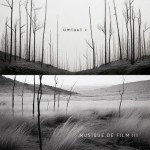
Imagine a cinema where the screen is turned off and the speakers alone continue to flicker. That’s where Jeff Düngfelder, under his moniker Ümlaut, invites you with Musique de Film III. His new album doesn’t show you scenes; it gives you the architecture of possible films - the corridors, the half-lit lobbies, the empty seats echoing with footsteps as the reel rewinds.
Operating out of the northern Connecticut countryside, Düngfelder has long developed a sound-world of field recordings, tape loops, electronics and quiet revelation. On this third installment in his “film music” series, he lengthens the silence between images and lets that silence breathe. The album is composed of twelve tracks each titled in a way that hints at a place, a descent, a weather change - Emigre, Frost Descent, Permafrost, Under Consideration - but always leaves the viewer-listener’s imagination doing the final framing.
What’s striking here is the way simplicity becomes radical. Gone are flamboyant gestures; what remains are textures that hover as if dizzy with potential. A kalimba ring echoes, a synth pad folds, a field recording of water somewhere deep in forest drips. The mix is quiet, careful, nearly respectful of its own space. One hears more than one catches. The effect is cinematic, yet without soundtrack clichés- you’re not being guided, you’re being led to a threshold.
There’s also a thread of concept: the idea of “perpetual geographies”, as the release notes say, meaning those unseen terrains that morph as you wander rather than stay fixed. Ümlaut has always been fascinated by the in-between: absence and image, sound and void, what lies on the screen when the projector is off. This work takes that fascination further - you don’t so much watch the music as dwell inside it.
It can be funny too, in a sly way. The innocence of a simple melody or tape loop starts to feel like a glitch in an archive, a misfiled memory of birds and machine hums. That small irony - that the album is both meditative and slightly off-kilter - gives it a warm human tremor. Because yes: this abstract architecture is built of human hands, wires, recorders, and choices.
If you are open to being still, and letting your mind drift rather than follow a beat, Musique de Film III will reward you. It’s not background music, nor is it demanding in the conventional sense - it simply asks you: “What if the story is in the space between images?” And maybe the real film is the one you project from inside your head.
In the end, Ümlaut doesn’t offer closure. He offers the lobby after the screening, the hallway, the door left gently open - and asks you to step into the unknown.
Operating out of the northern Connecticut countryside, Düngfelder has long developed a sound-world of field recordings, tape loops, electronics and quiet revelation. On this third installment in his “film music” series, he lengthens the silence between images and lets that silence breathe. The album is composed of twelve tracks each titled in a way that hints at a place, a descent, a weather change - Emigre, Frost Descent, Permafrost, Under Consideration - but always leaves the viewer-listener’s imagination doing the final framing.
What’s striking here is the way simplicity becomes radical. Gone are flamboyant gestures; what remains are textures that hover as if dizzy with potential. A kalimba ring echoes, a synth pad folds, a field recording of water somewhere deep in forest drips. The mix is quiet, careful, nearly respectful of its own space. One hears more than one catches. The effect is cinematic, yet without soundtrack clichés- you’re not being guided, you’re being led to a threshold.
There’s also a thread of concept: the idea of “perpetual geographies”, as the release notes say, meaning those unseen terrains that morph as you wander rather than stay fixed. Ümlaut has always been fascinated by the in-between: absence and image, sound and void, what lies on the screen when the projector is off. This work takes that fascination further - you don’t so much watch the music as dwell inside it.
It can be funny too, in a sly way. The innocence of a simple melody or tape loop starts to feel like a glitch in an archive, a misfiled memory of birds and machine hums. That small irony - that the album is both meditative and slightly off-kilter - gives it a warm human tremor. Because yes: this abstract architecture is built of human hands, wires, recorders, and choices.
If you are open to being still, and letting your mind drift rather than follow a beat, Musique de Film III will reward you. It’s not background music, nor is it demanding in the conventional sense - it simply asks you: “What if the story is in the space between images?” And maybe the real film is the one you project from inside your head.
In the end, Ümlaut doesn’t offer closure. He offers the lobby after the screening, the hallway, the door left gently open - and asks you to step into the unknown.
Jennifer Touch: Aging at Airports

There’s a particular kind of melancholy that only an airport can deliver: fluorescent eternity, overcaffeinated passengers, the half-life of dreams announced through failing PA systems. Jennifer Touch takes that limbo and turns it into her studio. Aging at Airports sounds like someone composing hymns to impermanence on a moving walkway that never quite reaches its destination.
Touch has always balanced shadow and shimmer, but here she digs into something more existential. Not the grand, cinematic kind of existentialism - no Sartre at gate C23 - but the quieter dread of recognizing your reflection in a polished departure-hall window and thinking: Is that really me? Or just the version of me that’s always running to catch up? For an artist who has spent years touring across continents, the theme is brutally honest. Airports promise velocity, but deliver waiting. They promise youth and glamour, but leave you counting the fluorescent wrinkles. Touch doesn’t hide from this tension; she wraps her synths around it like a thermal blanket that’s half comfort, half survival mechanism.
Musically, the album flickers between modes like a glitchy departure board. “Behaviour” and “Ceiling” nod toward EBM but with a softness that refuses macho posturing - EBM with a heart murmur rather than a chest puff. “Walls of Patience” drifts into drone-pop territory, the kind that feels like walking through fog at 4 a.m. with your carry-on as your only confidant. “Dripping” and “Wars & Blood Red Roses” embrace minimal pulses, stripped down to the bone, like she’s chiseling rhythm out of the airport’s architecture itself.mAnd then there’s “Rumble (Defiance)” - a short, sharp shock aimed squarely at the dancefloor’s dark corners. It’s as if Touch, after spending the whole album reflecting on decay, suddenly remembers that she can still bend a club to her will whenever she feels like it.
Lyrically, she navigates vulnerability without veering into melodrama. Her voice carries both the weight of lived experience and the slyness of someone who knows that taking yourself too seriously is simply another trap. The contrast between her soulful delivery and the sleek electronic surfaces is the album’s emotional engine: raw humanity pressing against polished machinery.
For those familiar with her earlier work - or her collaborations with Curses, Paranoid London, and the rest of the neo-darkwave constellation - this record feels like both a continuation and a shedding of skin. Touch leans into clarity rather than mystique, into the discomfort of honesty rather than the safety of posture.
Aging at Airports is not a lament; it’s a portrait of becoming. It’s the sound of an artist accepting that time moves, even when the flight doesn’t. And somewhere between the boarding zones and the synthetic glow of the terminal, she manages to find a pulse that is unmistakably her own.
A record about fading that somehow leaves you feeling more alive.
Touch has always balanced shadow and shimmer, but here she digs into something more existential. Not the grand, cinematic kind of existentialism - no Sartre at gate C23 - but the quieter dread of recognizing your reflection in a polished departure-hall window and thinking: Is that really me? Or just the version of me that’s always running to catch up? For an artist who has spent years touring across continents, the theme is brutally honest. Airports promise velocity, but deliver waiting. They promise youth and glamour, but leave you counting the fluorescent wrinkles. Touch doesn’t hide from this tension; she wraps her synths around it like a thermal blanket that’s half comfort, half survival mechanism.
Musically, the album flickers between modes like a glitchy departure board. “Behaviour” and “Ceiling” nod toward EBM but with a softness that refuses macho posturing - EBM with a heart murmur rather than a chest puff. “Walls of Patience” drifts into drone-pop territory, the kind that feels like walking through fog at 4 a.m. with your carry-on as your only confidant. “Dripping” and “Wars & Blood Red Roses” embrace minimal pulses, stripped down to the bone, like she’s chiseling rhythm out of the airport’s architecture itself.mAnd then there’s “Rumble (Defiance)” - a short, sharp shock aimed squarely at the dancefloor’s dark corners. It’s as if Touch, after spending the whole album reflecting on decay, suddenly remembers that she can still bend a club to her will whenever she feels like it.
Lyrically, she navigates vulnerability without veering into melodrama. Her voice carries both the weight of lived experience and the slyness of someone who knows that taking yourself too seriously is simply another trap. The contrast between her soulful delivery and the sleek electronic surfaces is the album’s emotional engine: raw humanity pressing against polished machinery.
For those familiar with her earlier work - or her collaborations with Curses, Paranoid London, and the rest of the neo-darkwave constellation - this record feels like both a continuation and a shedding of skin. Touch leans into clarity rather than mystique, into the discomfort of honesty rather than the safety of posture.
Aging at Airports is not a lament; it’s a portrait of becoming. It’s the sound of an artist accepting that time moves, even when the flight doesn’t. And somewhere between the boarding zones and the synthetic glow of the terminal, she manages to find a pulse that is unmistakably her own.
A record about fading that somehow leaves you feeling more alive.
Hybrid Leisureland: Flower Bullet

Sometimes you need a soft explosion instead of a bang - and that might be the whole secret behind Flower Bullet, the new album by Hidetoshi Koizumi under his longtime alias, Hybrid Leisureland. Here, he doesn’t just make ambient electronica: he gently transmutes pain into petals, turning what could be a bullet of words into a garden of possibility.
Koizumi, who’s been composing under the Hybrid Leisureland name since his Ultimae Records days, brings his signature quiet intelligence to this record. Known for weaving field recordings, analog electronics and subtle textures into landscapes, he now leans even more into intimacy and tension.
The concept is beautifully simple: words can wound like bullets, but what if those bullets could become flowers? Koizumi himself explains that Flower Bullet is his wish for communication that heals - turning everyday conversations, laughter, and shared moments into “flowers” instead of weapons.
From the opening track “Neutral” onwards, the album feels like a slow sunrise in another world. Synth pads glow like dawn light, field recordings drift in and out, and gentle pulses create a heartbeat under the surface. “Witch of the Plains” carries a dreamy, wide-open feeling, like gliding over a landscape lit only by moon and distant fires. On “Hope of Days”, there’s a bittersweet sweetness, as if hope itself has to learn how to speak softly so it doesn’t hurt.
Some of the mixes - such as “8mm (mix)” or “Black Game (Hidetoshi Koizumi mix)” - feel like rewinding an old home movie under a microscope. The textures are fragile, but not fragile in a twee way; instead, their fragility is their strength, as though every crack in the music reveals something more real underneath. “Midnight Barber” hums in the deep hours when time stretches and memory murmurs. “Crying Tomorrow” closes the set, a track that doesn’t feel like resignation, but more like a tearful promise: things might be hard, but words could still grow.
What’s remarkable here is how Koizumi builds tension without ever resorting to bombast. The emotional weight of the album comes from its restraint, from a sense that every sound matters because he’s asking you to listen - really listen - not just tune in. It’s ambient music with a moral backbone, but also with a delicate skin.
And if you close your eyes while listening, Flower Bullet doesn't just paint a scene - it invites you into a safe garden after a long storm. One where words bloom, wounds soften, and even silence feels like a kind of conversation.
In a world full of noise, this is Koizumi’s message: what if the most powerful thing we say is not what we shoot, but what we plant?
Koizumi, who’s been composing under the Hybrid Leisureland name since his Ultimae Records days, brings his signature quiet intelligence to this record. Known for weaving field recordings, analog electronics and subtle textures into landscapes, he now leans even more into intimacy and tension.
The concept is beautifully simple: words can wound like bullets, but what if those bullets could become flowers? Koizumi himself explains that Flower Bullet is his wish for communication that heals - turning everyday conversations, laughter, and shared moments into “flowers” instead of weapons.
From the opening track “Neutral” onwards, the album feels like a slow sunrise in another world. Synth pads glow like dawn light, field recordings drift in and out, and gentle pulses create a heartbeat under the surface. “Witch of the Plains” carries a dreamy, wide-open feeling, like gliding over a landscape lit only by moon and distant fires. On “Hope of Days”, there’s a bittersweet sweetness, as if hope itself has to learn how to speak softly so it doesn’t hurt.
Some of the mixes - such as “8mm (mix)” or “Black Game (Hidetoshi Koizumi mix)” - feel like rewinding an old home movie under a microscope. The textures are fragile, but not fragile in a twee way; instead, their fragility is their strength, as though every crack in the music reveals something more real underneath. “Midnight Barber” hums in the deep hours when time stretches and memory murmurs. “Crying Tomorrow” closes the set, a track that doesn’t feel like resignation, but more like a tearful promise: things might be hard, but words could still grow.
What’s remarkable here is how Koizumi builds tension without ever resorting to bombast. The emotional weight of the album comes from its restraint, from a sense that every sound matters because he’s asking you to listen - really listen - not just tune in. It’s ambient music with a moral backbone, but also with a delicate skin.
And if you close your eyes while listening, Flower Bullet doesn't just paint a scene - it invites you into a safe garden after a long storm. One where words bloom, wounds soften, and even silence feels like a kind of conversation.
In a world full of noise, this is Koizumi’s message: what if the most powerful thing we say is not what we shoot, but what we plant?