
Browse by Genre
Industrial Music / Industrial Metal / Aggro Industrial / Electro Metal
Industrial Noise / Power Noise / Harsh Noise
Synth Pop / Electro Pop / Synth-Electronica
Techno / Trance / Goa / Drum'n'Bass / Jungle / Tribal / Trip-Hop
Ambient / Electronica / Ethereal / Dub / Soundscapes / Abstract
Experimental / Avantgarde / Weird & Wired / Glitch / Noise / Field Recording
Dark / Gothic / Wave / New Wave / Dark Wave / Industrial Gothic
New Music / Downtown / Avantgarde Jazz / New Classical / World
Search Reviews
Music Reviews
Balloons for the Dog: Wicked Forms of Old Snow
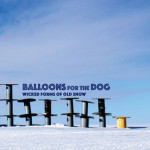
Artist: Balloons for the Dog
Title: Wicked Forms of Old Snow
Format: Download Only (MP3 + Lossless)
Label: Cuneiform (http://www.cuneiformrecords.com/) (@)
Rated:

Title: Wicked Forms of Old Snow
Format: Download Only (MP3 + Lossless)
Label: Cuneiform (http://www.cuneiformrecords.com/) (@)
Rated:
Some bands are born to be misunderstood. Balloons for the Dog seemed to thrive on it, almost like misunderstanding was their chosen medium - an invisible third instrument between guitar feedback and dada recitation. From 1977 to 1981, they were Washington DC’s untrainable stray, sniffing at the bins of punk, lapping at the puddles of art rock, and then running away to bark at metaphysics under the moon.
Wicked Forms of Old Snow finally gathers their only single alongside eighteen unreleased tracks, and it feels less like an archival release than an archaeological prank: fragments of a civilization that never quite admitted it existed. Listening today, one can hear the raw ambition that scared labels and audiences alike. They were too feral for punk’s uniforms, too irreverent for art rock’s temples, and far too funny to be taken seriously - until suddenly they were.
The lyrics - sometimes muttered, sometimes declaimed like Brecht in a Maryland basement - skewer and seduce in equal measure. Assassination Candidate is political theatre with the scenery collapsing around it. I Wish I Were You / Tuna Tonight turns longing into farce and farce into a kind of truth. Talking Dogs is literal in title but allegorical in execution: voices as masks, masks as voices, the whole world going canine. And then there’s All The Beautiful Young Men, a track that stands out for its unexpected gravity, reminding us that satire often hides its own broken heart.
Vocally, Georgy Jett and Mr. Leo operate like deranged vaudevillians in a Beckett play - one deadpan, one eruptive, both exchanging skins faster than the audience can keep up. Guitarist Bill Longhorse holds the reins loosely, weaving Stravinsky-like stabs and Sun Ra-inspired cosmic tangents into a structure that could collapse at any moment (and sometimes did - legend has it their amplifiers occasionally caught fire mid-show, which feels less like accident than metaphor).
The band’s humor - songs like Truck Stop Nose or Dr Donut - never reads as mere novelty. Instead, absurdity becomes weaponized sincerity: laughter as resistance, silliness as a way to carve out freedom in the gray suburbs of Maryland. This is where they diverged from the punk orthodoxy around them: they weren’t angry at the system, they were amused through it, collapsing its seriousness into theater.
Forty-plus years later, these tracks sound oddly prescient. Where so many “lost bands” emerge from the vaults sounding dated, Balloons for the Dog feel like they were rehearsing for a future that never arrived - a future where categories were useless, where art was both joke and sacrament, where amps burning down was just part of the gig. In 2025, with post-punk’s ghosts endlessly resurrected, their refusal to choose sides feels less like confusion and more like liberation.
The title says it well: these are wicked forms, beautiful in their jagged persistence, like old snow that refuses to melt, refracting sunlight into something grotesque and dazzling. This isn’t revivalism - it’s recognition. Yes, it happened. Yes, it mattered. And listening now, with grins and winces, we realize it still does.
Wicked Forms of Old Snow finally gathers their only single alongside eighteen unreleased tracks, and it feels less like an archival release than an archaeological prank: fragments of a civilization that never quite admitted it existed. Listening today, one can hear the raw ambition that scared labels and audiences alike. They were too feral for punk’s uniforms, too irreverent for art rock’s temples, and far too funny to be taken seriously - until suddenly they were.
The lyrics - sometimes muttered, sometimes declaimed like Brecht in a Maryland basement - skewer and seduce in equal measure. Assassination Candidate is political theatre with the scenery collapsing around it. I Wish I Were You / Tuna Tonight turns longing into farce and farce into a kind of truth. Talking Dogs is literal in title but allegorical in execution: voices as masks, masks as voices, the whole world going canine. And then there’s All The Beautiful Young Men, a track that stands out for its unexpected gravity, reminding us that satire often hides its own broken heart.
Vocally, Georgy Jett and Mr. Leo operate like deranged vaudevillians in a Beckett play - one deadpan, one eruptive, both exchanging skins faster than the audience can keep up. Guitarist Bill Longhorse holds the reins loosely, weaving Stravinsky-like stabs and Sun Ra-inspired cosmic tangents into a structure that could collapse at any moment (and sometimes did - legend has it their amplifiers occasionally caught fire mid-show, which feels less like accident than metaphor).
The band’s humor - songs like Truck Stop Nose or Dr Donut - never reads as mere novelty. Instead, absurdity becomes weaponized sincerity: laughter as resistance, silliness as a way to carve out freedom in the gray suburbs of Maryland. This is where they diverged from the punk orthodoxy around them: they weren’t angry at the system, they were amused through it, collapsing its seriousness into theater.
Forty-plus years later, these tracks sound oddly prescient. Where so many “lost bands” emerge from the vaults sounding dated, Balloons for the Dog feel like they were rehearsing for a future that never arrived - a future where categories were useless, where art was both joke and sacrament, where amps burning down was just part of the gig. In 2025, with post-punk’s ghosts endlessly resurrected, their refusal to choose sides feels less like confusion and more like liberation.
The title says it well: these are wicked forms, beautiful in their jagged persistence, like old snow that refuses to melt, refracting sunlight into something grotesque and dazzling. This isn’t revivalism - it’s recognition. Yes, it happened. Yes, it mattered. And listening now, with grins and winces, we realize it still does.
Alessandro Bosetti performed by Reinier van Houdt: Carnaval 2

Artist: Alessandro Bosetti performed by Reinier van Houdt (@)
Title: Carnaval 2
Format: LP
Label: three:four records (@)
Rated:

Title: Carnaval 2
Format: LP
Label: three:four records (@)
Rated:
Alessandro Bosetti’s "Carnaval 2" is less a sequel than a haunted echo: you hear Schumann’s "Carnaval", but only the dust motes, the treble shadows, the skeletal rhythm bones. Bosetti doesn’t remake it; he erases its faces and lets the bones whisper. Over two hundred years later, he rips off the masks and leaves us with unnamed masks - piano-chapters that no longer carry character labels, but carry the weight of possibility. The mask is now a question, not an answer.
Performed by Reinier van Houdt, and interspersed with Bosetti’s own electro-acoustic “Paraventi” (screens) between chapters, the album is a work of absence as much as presence. Van Houdt’s piano sometimes floats in familiar tones, sometimes fractures as if the keyboard is remembering itself backwards. In the interludes, electronics drift and thrum - soft sighs, subtle static - that feel like the room breathing, or time stretching.
What’s beautiful - and unsettling - is that Bosetti keeps the formal scaffold of "Carnaval"’s chapter structure, but frees each section from its narrative anchor. The numbered chapters aren’t characters now, but blank sigils. The masks are blank: you can don any, or none. It’s as though the composer said: “Here is form. Now you fill it with your own ghosts”. There’s a playful cruelty in that: the score demands identity, but offers none. If you expect Harlequin, you get a trembling chord instead.
Van Houdt is the perfect medium for this project. His touch is liminal: precise when needed, but capable of dissolving into ambiguity. The album’s pacing matters: the short electro-acoustic screens offer breathing room - moments to shift mask, to reset expectations, to catch your breath before the next chapter begins. The transitions matter as much as the piano itself.
There are no lyrics here, so your own mind becomes the narrator. The silence between notes, the half-formed melodic fragments, the choice to erase or to repeat - these are the story. The irony is that removing narrative gives you more narrative; erasing character gives you more possibility. “Who are you?” the music asks. And the answer is: “Maybe everyone. Maybe nobody”.
Bosetti’s catalog shows him as a sculptor of language and sound. He’s worked with speech loops, field recordings, experiments in voice; in "Carnaval 2" he turns to abstraction, to musical language stripped of idiosyncrasy. In doing so, he reveals how loaded the mere structure of "Carnaval" always was. The original masks - Clara, Harlequin, Eusebius - are gone. What remains is structure, emptiness, and the listener’s projection.
If there is a flaw, it’s that the effort to keep everything open risks undercommitment: at times you wish he’d pick a mask and really wear it, instead of floating between them. Some chapters feel hesitant, as though waiting for permission. Others shine exactly because they resist.
In "Carnaval 2", Bosetti gives us a music of possibility. It is music as blank slate, as mirror, as question. It is both invitation and refusal: listen, but don’t be surprised if you don’t recognize yourself. The mask is blank. The music demands you fill it. And perhaps that is a very modern kind of identity.
Performed by Reinier van Houdt, and interspersed with Bosetti’s own electro-acoustic “Paraventi” (screens) between chapters, the album is a work of absence as much as presence. Van Houdt’s piano sometimes floats in familiar tones, sometimes fractures as if the keyboard is remembering itself backwards. In the interludes, electronics drift and thrum - soft sighs, subtle static - that feel like the room breathing, or time stretching.
What’s beautiful - and unsettling - is that Bosetti keeps the formal scaffold of "Carnaval"’s chapter structure, but frees each section from its narrative anchor. The numbered chapters aren’t characters now, but blank sigils. The masks are blank: you can don any, or none. It’s as though the composer said: “Here is form. Now you fill it with your own ghosts”. There’s a playful cruelty in that: the score demands identity, but offers none. If you expect Harlequin, you get a trembling chord instead.
Van Houdt is the perfect medium for this project. His touch is liminal: precise when needed, but capable of dissolving into ambiguity. The album’s pacing matters: the short electro-acoustic screens offer breathing room - moments to shift mask, to reset expectations, to catch your breath before the next chapter begins. The transitions matter as much as the piano itself.
There are no lyrics here, so your own mind becomes the narrator. The silence between notes, the half-formed melodic fragments, the choice to erase or to repeat - these are the story. The irony is that removing narrative gives you more narrative; erasing character gives you more possibility. “Who are you?” the music asks. And the answer is: “Maybe everyone. Maybe nobody”.
Bosetti’s catalog shows him as a sculptor of language and sound. He’s worked with speech loops, field recordings, experiments in voice; in "Carnaval 2" he turns to abstraction, to musical language stripped of idiosyncrasy. In doing so, he reveals how loaded the mere structure of "Carnaval" always was. The original masks - Clara, Harlequin, Eusebius - are gone. What remains is structure, emptiness, and the listener’s projection.
If there is a flaw, it’s that the effort to keep everything open risks undercommitment: at times you wish he’d pick a mask and really wear it, instead of floating between them. Some chapters feel hesitant, as though waiting for permission. Others shine exactly because they resist.
In "Carnaval 2", Bosetti gives us a music of possibility. It is music as blank slate, as mirror, as question. It is both invitation and refusal: listen, but don’t be surprised if you don’t recognize yourself. The mask is blank. The music demands you fill it. And perhaps that is a very modern kind of identity.
Mazut: Dirt Collector

Mazut’s "Dirt Collector" is the sound of a decade crystallizing, a post-industrial memoir in 13 chapters of metallic pulse and analog grit. Pawe Starzec and Micha Turowski return from a brief hiatus, not to retread the familiar territory of high-octane acid, but to explore the shadowy margins where dance music flirts with dystopia. The result is an album that simmers rather than erupts, slow-burning yet insistent, like a city street under a neon haze at 3 a.m.
From the opener, "The Original Sound", it’s clear that Mazut’s homage to the electronics of the 1980s - Cabaret Voltaire, Severed Heads - has been transformed into something stubbornly their own. Sinews of post-industrial tension intertwine with hypnotic synth lines and fractured rhythmic pulses, besides current manipulations of military false flags that many people are following on newspapers. There is a conscious play with contrast: the mechanized hum of "Ear" and the paranoid thrum of "Paranoid Park" feel like circuit boards conversing in a language half human, half machine.
Tracks like "The Fountain of Negativity" and "You Try to Make People Upset, But Nobody Gives a Fuck" showcase Mazut’s rare gift for combining bleak humor with austere textures. One can almost imagine the duo wryly smirking in the studio, aware of the absurdity of angst encapsulated in a 5-minute electronic excursion. Guest drummer Daniel Szwed on "Shrouded in Obscurity" and "Slow Cancelation of The Future" injects a subtle organic chaos into the otherwise meticulously synthetic environment, reminding listeners that even machinery needs a pulse to feel alive.
There’s a deliberate pacing here. The album does not demand immediate gratification; it’s a terrain to wander, not a nightclub to conquer. Its closer, "Eye", distills the journey into a fragile, almost meditative pulse - an acknowledgment that Mazut’s exploration of acid, post-industrial, and ambient synth is as much about reflection as it is about dance.
Technically, the duo’s production skills shine. Turowski’s engineering and mixing render textures with clarity while maintaining the grime and friction essential to post-industrial soundscapes. Stpie’s mastering preserves the raw energy without sterilizing it - a tricky balance Mazut navigates with ease.
"Dirt Collector" is, in essence, a Venn diagram of influences and experimentation, a record that asks listeners to inhabit its angles and shadows rather than simply consume them. It’s sly, sometimes sardonic, and ultimately, it is unapologetically Mazut: a stubborn refusal to settle for mere nostalgia, a celebration of grit, texture, and the slow, beautiful decay of sound into the forerunning of a decaying world.
From the opener, "The Original Sound", it’s clear that Mazut’s homage to the electronics of the 1980s - Cabaret Voltaire, Severed Heads - has been transformed into something stubbornly their own. Sinews of post-industrial tension intertwine with hypnotic synth lines and fractured rhythmic pulses, besides current manipulations of military false flags that many people are following on newspapers. There is a conscious play with contrast: the mechanized hum of "Ear" and the paranoid thrum of "Paranoid Park" feel like circuit boards conversing in a language half human, half machine.
Tracks like "The Fountain of Negativity" and "You Try to Make People Upset, But Nobody Gives a Fuck" showcase Mazut’s rare gift for combining bleak humor with austere textures. One can almost imagine the duo wryly smirking in the studio, aware of the absurdity of angst encapsulated in a 5-minute electronic excursion. Guest drummer Daniel Szwed on "Shrouded in Obscurity" and "Slow Cancelation of The Future" injects a subtle organic chaos into the otherwise meticulously synthetic environment, reminding listeners that even machinery needs a pulse to feel alive.
There’s a deliberate pacing here. The album does not demand immediate gratification; it’s a terrain to wander, not a nightclub to conquer. Its closer, "Eye", distills the journey into a fragile, almost meditative pulse - an acknowledgment that Mazut’s exploration of acid, post-industrial, and ambient synth is as much about reflection as it is about dance.
Technically, the duo’s production skills shine. Turowski’s engineering and mixing render textures with clarity while maintaining the grime and friction essential to post-industrial soundscapes. Stpie’s mastering preserves the raw energy without sterilizing it - a tricky balance Mazut navigates with ease.
"Dirt Collector" is, in essence, a Venn diagram of influences and experimentation, a record that asks listeners to inhabit its angles and shadows rather than simply consume them. It’s sly, sometimes sardonic, and ultimately, it is unapologetically Mazut: a stubborn refusal to settle for mere nostalgia, a celebration of grit, texture, and the slow, beautiful decay of sound into the forerunning of a decaying world.
Tepih: ?ablona
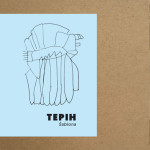
Artist: Tepih (http://www.gaudenzbadrutt.ch/) (@)
Title: ?ablona
Format: CD + Download
Label: Bruit Editions/Zavod Sploh (@)
Rated:
Title: ?ablona
Format: CD + Download
Label: Bruit Editions/Zavod Sploh (@)
Rated:
Šablona means “template”, but Tepih (literally “carpet”) spend the entire album gleefully unraveling any sense of pattern. This Slovenian-Swiss quartet - Gaudenz Badrutt (electronics), Toma Grom (double bass, electronics), Jonas Kocher (accordion), and Samo Kutin (hurdy-gurdy) - have spent years together in the Šalter Ensemble. Their debut as Tepih sounds like four conspirators deciding the only rule is that rules exist to be bent until they squeak.
The instrumentation itself feels like a prank pulled on history: the hurdy-gurdy, once the workhorse of medieval dance, is wired and overdriven until it buzzes like an angry transformer. The accordion, often a symbol of communal warmth, is stretched into whispers and sirens. The double bass mutters and groans like a tectonic shift, while Badrutt’s electronics flicker in and out, a ghost network connecting everything.
Each track title (from Vec prekinjenih ponovitev - “many interrupted repetitions” - to Blindes Raster - “blind grid”) hints at the joke: templates that collapse, grids that misalign, repetitions sabotaged mid-flow. This isn’t music of unity but of coexistence: four vectors crossing, never quite blending, but always listening, adjusting, sparking.
There are no lyrics, but there’s certainly language: a polyglot of friction, buzzing drones, clattering pulses, and delicate suspensions. It is a sound that evokes imagined folklore for a planet that never existed - one where electricity was discovered before wood, and drones before songs.
The irony is that, despite its refusal to conform, Šablona is remarkably cohesive. The album’s six pieces weave themselves into a sonic carpet, but a carpet full of holes, frayed edges, threads pulling you sideways. Tepih remind us that templates are only starting points; the art lies in how you trip over them, how you let them unravel, and how beautiful the mess can be.
This is not comfort music. It’s the sound of four musicians tugging at the seams of tradition until it comes apart in their hands - then showing you the strange, dazzling patterns hidden underneath.
The instrumentation itself feels like a prank pulled on history: the hurdy-gurdy, once the workhorse of medieval dance, is wired and overdriven until it buzzes like an angry transformer. The accordion, often a symbol of communal warmth, is stretched into whispers and sirens. The double bass mutters and groans like a tectonic shift, while Badrutt’s electronics flicker in and out, a ghost network connecting everything.
Each track title (from Vec prekinjenih ponovitev - “many interrupted repetitions” - to Blindes Raster - “blind grid”) hints at the joke: templates that collapse, grids that misalign, repetitions sabotaged mid-flow. This isn’t music of unity but of coexistence: four vectors crossing, never quite blending, but always listening, adjusting, sparking.
There are no lyrics, but there’s certainly language: a polyglot of friction, buzzing drones, clattering pulses, and delicate suspensions. It is a sound that evokes imagined folklore for a planet that never existed - one where electricity was discovered before wood, and drones before songs.
The irony is that, despite its refusal to conform, Šablona is remarkably cohesive. The album’s six pieces weave themselves into a sonic carpet, but a carpet full of holes, frayed edges, threads pulling you sideways. Tepih remind us that templates are only starting points; the art lies in how you trip over them, how you let them unravel, and how beautiful the mess can be.
This is not comfort music. It’s the sound of four musicians tugging at the seams of tradition until it comes apart in their hands - then showing you the strange, dazzling patterns hidden underneath.
Jonas Kocher: Archipelago

If most people still imagine the accordion as a wheezing box for folk dances or Parisian clichés, Jonas Kocher prefers to treat it like a tectonic plate shifting under your feet. "Archipelago" - his third solo album, arriving more than a decade after "Solo" (2011) and "Materials" (2009) - feels less like a return to roots than a refusal to have any.
Recorded in one day in Biel/Bienne, the seven improvisations unfold like islands appearing in a fog: distinct yet interconnected, precariously floating in the same turbulent sea. Kocher wrestles his Bugari Bayan 2RC into producing sonorities that could pass for electronics, metallic groans, or breath caught mid-collapse. At times, chords resonate like cathedral bells; elsewhere, sharp attacks slice the air like broken glass. It is music that knows the border between organic and mechanical is a polite fiction - and that the accordion, with its lungs of bellows, can breathe both ways.
There are no lyrics here - unless you count the squeals, drones, and whispers as a private language - but the album does suggest a narrative: the slow cartography of sound as survival. Every track is a negotiation between control and accident, between geometry and chance, as if Kocher were drawing maps with a pen that insists on wandering off the paper.
Ironically, the title "Archipelago" is apt: these pieces are solitary islands, yes, but they also imply submerged connections, unseen ridges under the waterline. You don’t just listen, you navigate, testing the currents, waiting for the next shore. And in a world where accordionists are too often sentenced to entertain in the background, Kocher insists on the opposite: here, the instrument sits front and center, uncompromising, elemental, slyly defiant.
This is not music to sip wine to - it’s music that knocks the glass from your hand, then lets you hear the shards ring out on the floor.
Recorded in one day in Biel/Bienne, the seven improvisations unfold like islands appearing in a fog: distinct yet interconnected, precariously floating in the same turbulent sea. Kocher wrestles his Bugari Bayan 2RC into producing sonorities that could pass for electronics, metallic groans, or breath caught mid-collapse. At times, chords resonate like cathedral bells; elsewhere, sharp attacks slice the air like broken glass. It is music that knows the border between organic and mechanical is a polite fiction - and that the accordion, with its lungs of bellows, can breathe both ways.
There are no lyrics here - unless you count the squeals, drones, and whispers as a private language - but the album does suggest a narrative: the slow cartography of sound as survival. Every track is a negotiation between control and accident, between geometry and chance, as if Kocher were drawing maps with a pen that insists on wandering off the paper.
Ironically, the title "Archipelago" is apt: these pieces are solitary islands, yes, but they also imply submerged connections, unseen ridges under the waterline. You don’t just listen, you navigate, testing the currents, waiting for the next shore. And in a world where accordionists are too often sentenced to entertain in the background, Kocher insists on the opposite: here, the instrument sits front and center, uncompromising, elemental, slyly defiant.
This is not music to sip wine to - it’s music that knocks the glass from your hand, then lets you hear the shards ring out on the floor.