
Saturday, August 29, 2026
Glen Whitehead: Pale Blue
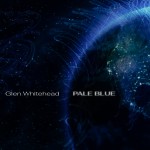
Artist: Glen Whitehead (@)
Title: Pale Blue
Format: CD & 12" + Download
Label: Neuma Records (@)
Rated:

Title: Pale Blue
Format: CD & 12" + Download
Label: Neuma Records (@)
Rated:
Glen Whitehead is an accomplished trumpet player from Colorado Springs, Colorado, exploring improvisational phenomena, interactive communication and environmental collaboration between living cultures, technologies and the natural world. Utilizing field recordings from Colorado, France, Greece, Hawaii, Ireland, Mexico, New Zealand, Turkey, and Wyoming along with some electronics as background/environment, Whitehead seeks to tell an encompassing narrative of 'Pale Blue,' the nickname of planet earth, the orb we live on.
First I have to say, solo trumpet can be a very lonely, melancholy instrument. One listen to the theme from "La Strada" and you know it's true. This is often the case on 'Pale Blue,' an album of seven tracks with trumpet set in a variety of environments. Beginning with the title track, Whitehead's trumpet riffs off a brief theme set in a watery, droney ambience. "Dawn of the Din" is howling wind with trumpet squeaks and squawks that gives way to twittering birds and similar frequency electronics when the trumpet begins sounding more trumpet-like. It all ends appropriately in a thunderstorm. "M(aias)aura" has one of the most interesting sonic environments on the album, and Whitehead's trumpet technique is different here than most of his other playing. This track is frenetic and just darn strange. "Dreaming at a Distance" seems to have an ocean background and the multi-tracked trumpets sound drunken and sad. The environment changes later on to something more buzzy and industrial, yet with birds. Huh? "Wilderness of Mirrors" also features Mert Gunal on ney (Turkish flue) which adds a bit of the exotic in a cricket-filled night. The trumpet sound is all low-end, like some Tibetan horn, or sick cows. When that gets mixed with adhan (Islamic call to prayer) things really get strange. Dr. Colin McAllister is featured playing electric and classical guitar on "Pila del Ángel" and Whitehead's contribution on trumpet begins with squeaky higher timbres that sound a boiling tea kettle whistle. This is interspersed with a more normal sounding trumpet/classical guitar duet and a ghostly vocal choir.
It ends on "4 Wai" with Glen's trumpet butting up against a cosmic dreamwall of sonic ambience which is almost the best piece on the album. The main problem I have with 'Pale Blue' is that more often than not, the trumpet sounds separate from the field recording/electronic environments it resides in. I would have preferred a more integrated approach, perhaps even some Jon Hassell techniques where the trumpet sound was electronically modified to suit the environment, but that is seldom the case on 'Pale Blue.' An interesting album that has its moments.
First I have to say, solo trumpet can be a very lonely, melancholy instrument. One listen to the theme from "La Strada" and you know it's true. This is often the case on 'Pale Blue,' an album of seven tracks with trumpet set in a variety of environments. Beginning with the title track, Whitehead's trumpet riffs off a brief theme set in a watery, droney ambience. "Dawn of the Din" is howling wind with trumpet squeaks and squawks that gives way to twittering birds and similar frequency electronics when the trumpet begins sounding more trumpet-like. It all ends appropriately in a thunderstorm. "M(aias)aura" has one of the most interesting sonic environments on the album, and Whitehead's trumpet technique is different here than most of his other playing. This track is frenetic and just darn strange. "Dreaming at a Distance" seems to have an ocean background and the multi-tracked trumpets sound drunken and sad. The environment changes later on to something more buzzy and industrial, yet with birds. Huh? "Wilderness of Mirrors" also features Mert Gunal on ney (Turkish flue) which adds a bit of the exotic in a cricket-filled night. The trumpet sound is all low-end, like some Tibetan horn, or sick cows. When that gets mixed with adhan (Islamic call to prayer) things really get strange. Dr. Colin McAllister is featured playing electric and classical guitar on "Pila del Ángel" and Whitehead's contribution on trumpet begins with squeaky higher timbres that sound a boiling tea kettle whistle. This is interspersed with a more normal sounding trumpet/classical guitar duet and a ghostly vocal choir.
It ends on "4 Wai" with Glen's trumpet butting up against a cosmic dreamwall of sonic ambience which is almost the best piece on the album. The main problem I have with 'Pale Blue' is that more often than not, the trumpet sounds separate from the field recording/electronic environments it resides in. I would have preferred a more integrated approach, perhaps even some Jon Hassell techniques where the trumpet sound was electronically modified to suit the environment, but that is seldom the case on 'Pale Blue.' An interesting album that has its moments.
Comments
Stream
Browse by Genre
Industrial Music / Industrial Metal / Aggro Industrial / Electro Metal
Industrial Noise / Power Noise / Harsh Noise
Synth Pop / Electro Pop / Synth-Electronica
Techno / Trance / Goa / Drum'n'Bass / Jungle / Tribal / Trip-Hop
Ambient / Electronica / Ethereal / Dub / Soundscapes / Abstract
Experimental / Avantgarde / Weird & Wired / Glitch / Noise / Field Recording
Dark / Gothic / Wave / New Wave / Dark Wave / Industrial Gothic
New Music / Downtown / Avantgarde Jazz / New Classical / World