
Monday, October 26, 2026
Sorry For Laughing: Sun Comes
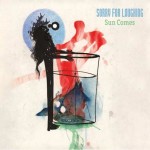


Gordon H. Whitlow’s project Sorry For Laughing is a bit like a vintage watch — steeped in tradition, meticulously crafted, and ticking to its own peculiar rhythm. With "Sun Comes", the group's latest release, Whitlow, and his ensemble offer a timepiece for those who measure life in moments of sonic exploration rather than minutes and hours.
Whitlow, a key figure in the avant-garde collective Biota (formerly Mnemonist Orchestra), has always been an architect of sound, constructing immersive soundscapes that defy genre conventions. This album, however, marks a new chapter. After a hiatus of three decades, Whitlow reactivated Sorry For Laughing, transforming it from a solo endeavor into a supergroup of sorts. Joined by the likes of Edward Ka-Spel (Legendary Pink Dots), Martyn Bates (Eyeless In Gaza), Patrick Q-Wright, and guitarist Janet Feder, the project now brims with a collaborative energy that feels both fresh and steeped in history.
"Sun Comes" plays out like an aural chronicle of a day in the life—if that life were lived in a place where time folds back on itself and melodies dissolve into abstraction. The album opens with "Emerge (Sense The Dawn)", a brief yet potent prelude that feels like the first rays of sunlight cracking open the sky. It’s a gentle, almost reverential start that sets the tone for the unfolding journey. Whitlow and company are in no rush here; they allow their compositions to breathe, giving each moment its due without any hurry to reach a conclusion.
The title track, "Sun Comes", is a fleeting but vivid burst of light — a mere two minutes of ephemeral beauty that leaves as quickly as it arrives. It's the musical equivalent of catching a glimpse of something extraordinary out of the corner of your eye, only to have it disappear before you can fully process it.
As the album progresses, tracks like "Give The Day, Take The Day" and "Struggle Then Redemption" (both in reality belongs to "Sun Comes" suite and the first 6 tracks, if you follow the track list detachment also visible on the release Bandcamp page) expand on this theme, moving through phases of tension and release, dissonance and harmony. "Give The Day, Take The Day" is particularly noteworthy for its patient unfolding, a nine-minute exploration that feels like a full day encapsulated in sound. It’s a piece that rewards deep listening, revealing layers of complexity beneath its deceptively simple surface.
Edward Ka-Spel’s contributions are unmistakable, particularly in the album’s more experimental moments. His presence adds an otherworldly dimension, with his signature blend of spoken word and esoteric electronics weaving in and out of the mix.
One of the album's most intriguing aspects is its ability to evoke a sense of nostalgia without succumbing to it. "The Three Roses" and "Adam Lay Ybounden" nod to old English folk traditions, but these are refracted through the band’s avant-garde lens, transforming them into something entirely new. The former is a delicate, almost fragile piece, while the latter is a darker, more brooding affair—both pieces echoing across time and space, yet anchored firmly in the present.
The album closes with "So, You Rest Easy" a sprawling twelve-minute track that feels like the final exhale after a long day. It’s a fitting end to an album that is as much about the spaces between the notes as it is about the notes themselves.
In "Sun Comes", Sorry For Laughing has created something that defies easy categorization. It’s an album that demands patience and rewards it tenfold. For those willing to invest the time, it offers a rich, immersive experience that is as intellectually stimulating as it is emotionally resonant. Whitlow and his collaborators have crafted a work that is not just a collection of songs but a journey—a journey that, like life itself, is full of unexpected twists, fleeting moments of beauty, and the occasional struggle for redemption.
Whitlow, a key figure in the avant-garde collective Biota (formerly Mnemonist Orchestra), has always been an architect of sound, constructing immersive soundscapes that defy genre conventions. This album, however, marks a new chapter. After a hiatus of three decades, Whitlow reactivated Sorry For Laughing, transforming it from a solo endeavor into a supergroup of sorts. Joined by the likes of Edward Ka-Spel (Legendary Pink Dots), Martyn Bates (Eyeless In Gaza), Patrick Q-Wright, and guitarist Janet Feder, the project now brims with a collaborative energy that feels both fresh and steeped in history.
"Sun Comes" plays out like an aural chronicle of a day in the life—if that life were lived in a place where time folds back on itself and melodies dissolve into abstraction. The album opens with "Emerge (Sense The Dawn)", a brief yet potent prelude that feels like the first rays of sunlight cracking open the sky. It’s a gentle, almost reverential start that sets the tone for the unfolding journey. Whitlow and company are in no rush here; they allow their compositions to breathe, giving each moment its due without any hurry to reach a conclusion.
The title track, "Sun Comes", is a fleeting but vivid burst of light — a mere two minutes of ephemeral beauty that leaves as quickly as it arrives. It's the musical equivalent of catching a glimpse of something extraordinary out of the corner of your eye, only to have it disappear before you can fully process it.
As the album progresses, tracks like "Give The Day, Take The Day" and "Struggle Then Redemption" (both in reality belongs to "Sun Comes" suite and the first 6 tracks, if you follow the track list detachment also visible on the release Bandcamp page) expand on this theme, moving through phases of tension and release, dissonance and harmony. "Give The Day, Take The Day" is particularly noteworthy for its patient unfolding, a nine-minute exploration that feels like a full day encapsulated in sound. It’s a piece that rewards deep listening, revealing layers of complexity beneath its deceptively simple surface.
Edward Ka-Spel’s contributions are unmistakable, particularly in the album’s more experimental moments. His presence adds an otherworldly dimension, with his signature blend of spoken word and esoteric electronics weaving in and out of the mix.
One of the album's most intriguing aspects is its ability to evoke a sense of nostalgia without succumbing to it. "The Three Roses" and "Adam Lay Ybounden" nod to old English folk traditions, but these are refracted through the band’s avant-garde lens, transforming them into something entirely new. The former is a delicate, almost fragile piece, while the latter is a darker, more brooding affair—both pieces echoing across time and space, yet anchored firmly in the present.
The album closes with "So, You Rest Easy" a sprawling twelve-minute track that feels like the final exhale after a long day. It’s a fitting end to an album that is as much about the spaces between the notes as it is about the notes themselves.
In "Sun Comes", Sorry For Laughing has created something that defies easy categorization. It’s an album that demands patience and rewards it tenfold. For those willing to invest the time, it offers a rich, immersive experience that is as intellectually stimulating as it is emotionally resonant. Whitlow and his collaborators have crafted a work that is not just a collection of songs but a journey—a journey that, like life itself, is full of unexpected twists, fleeting moments of beauty, and the occasional struggle for redemption.
Comments
Stream
Browse by Genre
Industrial Music / Industrial Metal / Aggro Industrial / Electro Metal
Industrial Noise / Power Noise / Harsh Noise
Synth Pop / Electro Pop / Synth-Electronica
Techno / Trance / Goa / Drum'n'Bass / Jungle / Tribal / Trip-Hop
Ambient / Electronica / Ethereal / Dub / Soundscapes / Abstract
Experimental / Avantgarde / Weird & Wired / Glitch / Noise / Field Recording
Dark / Gothic / Wave / New Wave / Dark Wave / Industrial Gothic
New Music / Downtown / Avantgarde Jazz / New Classical / World