
Thursday, August 27, 2026
Kiwanoid: Vanat?hi
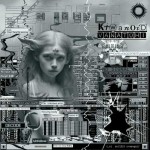


Here we go - another album trying to bottle the sound of the void. "Vanatühi" by Kiwanoid, released on Mille Plateaux and Glitch Please, is ostensibly a technopagan concept album, but let’s be honest: this record is more like a pixelated fever dream of a hard-drive graveyard, where ancient DOS systems croak out their last whispers of binary breath. For an album that delights in disorder, the sonic chaos somehow ties itself into a peculiar coherence - an electronic thicket of glitch aesthetics that feels like it’s always one click away from self-destructing.
Let's start with the premise. "Vanatühi" ("emptiness" in Estonian, if you're keeping track) is a philosophical rabbit hole disguised as a glitch album. Kiwanoid dubs this a “technopagan” venture - because nothing says “return to nature” quite like hammering out glitch-techno on a 4-bit laptop that belongs in a museum. The album’s track titles are variations of the word “nothing” in different languages, signaling a love affair with existential nihilism dressed up in techno’s darkest robes. It’s a bold, heady concept, but one can’t help but chuckle at the notion of "nothing" being stretched over 20 tracks. You almost expect the sound of a vacuum cleaner sucking up ideas, but instead, Kiwanoid gives us rhythmic disorder that’s every bit as intricate as it is opaque.
The album opens with "nix", a foreboding landscape of jagged clicks and minimal textures that immediately transports you to Kiwanoid's strange digital forest. You can practically hear the low-bitrate software wheezing for oxygen. What initially feels like a disjointed collision of corrupted files soon reveals itself to be a carefully curated dance of alien clicks, bleeps, and off-kilter bass drums that insist on getting your attention. Like Mille Plateaux alumni Oval and Alva Noto, Kiwanoid leans into the unpredictability of glitch but sidesteps the genre’s tendency for sterile precision. Instead, there's something almost folksy about the digital decay on display here, as if a forest of microchips had grown moss over centuries of forgotten computations.
Tracks like "khh nh" and "nikakatiting" bring the more frenetic side of Kiwanoid’s glitchcraft into focus. The fractured beats slap you in the face with the disorienting glee of someone operating on caffeine and zero sleep. The polyrhythms are both irregular and addictive, with tempos that swing violently between glitch-techno and tribal reverie. Imagine dancing around a fire in a post-apocalyptic forest, but instead of drums, you’ve got malfunctioning hard drives and a haunted CPU spewing out percussive error codes.
What really sets "Vanatühi" apart from your garden-variety glitch experiments is its strange warmth. For all its digital abrasiveness, there’s an undeniable sense of nostalgia and human touch lurking beneath the clatter. Tracks like "" and "ha ho na letho" might initially sound like they’re crafted from broken electronics, but the deeper you listen, the more these lo-fi sounds begin to form a kind of surreal, esoteric beauty. It’s like staring at cave paintings while hearing the hum of a distant satellite - worlds colliding in the best possible way.
Of course, glitch purists might balk at the album’s reliance on unpredictable contrasts. You can’t settle into any groove for long before Kiwanoid rips the rug out from under you. "impumpununu" feels like a brief 66-second experiment in controlled demolition, while "kphanavi" sounds like an alien stomp dance, complete with fractured voice samples that sound like they’re being warped by an intergalactic DJ. It’s messy, but it’s an exhilarating mess - one that keeps you on edge without ever descending into noise-for-noise's-sake.
And then, there’s the conceptual heft. These 20 tracks don’t just aim for glitchy chaos; they are an exploration of "nothingness" in all its forms, and you can't help but feel the eerie absence of convention in every digital scrape. Kiwanoid's choice to include human voice samples (warped and garbled as they are) adds an almost cyborg-like dimension to the record, making you wonder if you’re listening to the last gasps of human consciousness in a world ruled by sentient machines.
But is "Vanatühi" an easy listen? Absolutely not. Like many Mille Plateaux releases, this album demands attention, patience, and perhaps a bit of masochism. The unpredictable sharp edges and tachycardic rhythms can grate on the nerves, especially if you’re expecting anything resembling traditional structure. There are no radio-friendly cuts here. Kiwanoid isn’t interested in making things accessible or easy - this is music for the late-night headphone crowd, the ones who find beauty in the abstract and unsettling.
And yet, for all its glitchy disarray, "Vanatühi" never feels like it’s trying to alienate its listener. There’s something oddly communal about the record, as if Kiwanoid is inviting us all to join in a technopagan ritual where the glitches are sacred and the chaos is celebrated. It’s the kind of album that will likely divide listeners into two camps: those who view it as an intricate puzzle worth solving and those who dismiss it as sonic gibberish. I, for one, am firmly in the former camp.
Kiwanoid has created a record that feels both ancient and futuristic, a swirling maelstrom of decaying technology and primal rhythm. "Vanatühi" may be about nothing, but in that void, Kiwanoid has found a vast, intricate world worth exploring. It’s an album that feels like it shouldn’t exist, but thankfully, it does.
Let's start with the premise. "Vanatühi" ("emptiness" in Estonian, if you're keeping track) is a philosophical rabbit hole disguised as a glitch album. Kiwanoid dubs this a “technopagan” venture - because nothing says “return to nature” quite like hammering out glitch-techno on a 4-bit laptop that belongs in a museum. The album’s track titles are variations of the word “nothing” in different languages, signaling a love affair with existential nihilism dressed up in techno’s darkest robes. It’s a bold, heady concept, but one can’t help but chuckle at the notion of "nothing" being stretched over 20 tracks. You almost expect the sound of a vacuum cleaner sucking up ideas, but instead, Kiwanoid gives us rhythmic disorder that’s every bit as intricate as it is opaque.
The album opens with "nix", a foreboding landscape of jagged clicks and minimal textures that immediately transports you to Kiwanoid's strange digital forest. You can practically hear the low-bitrate software wheezing for oxygen. What initially feels like a disjointed collision of corrupted files soon reveals itself to be a carefully curated dance of alien clicks, bleeps, and off-kilter bass drums that insist on getting your attention. Like Mille Plateaux alumni Oval and Alva Noto, Kiwanoid leans into the unpredictability of glitch but sidesteps the genre’s tendency for sterile precision. Instead, there's something almost folksy about the digital decay on display here, as if a forest of microchips had grown moss over centuries of forgotten computations.
Tracks like "khh nh" and "nikakatiting" bring the more frenetic side of Kiwanoid’s glitchcraft into focus. The fractured beats slap you in the face with the disorienting glee of someone operating on caffeine and zero sleep. The polyrhythms are both irregular and addictive, with tempos that swing violently between glitch-techno and tribal reverie. Imagine dancing around a fire in a post-apocalyptic forest, but instead of drums, you’ve got malfunctioning hard drives and a haunted CPU spewing out percussive error codes.
What really sets "Vanatühi" apart from your garden-variety glitch experiments is its strange warmth. For all its digital abrasiveness, there’s an undeniable sense of nostalgia and human touch lurking beneath the clatter. Tracks like "" and "ha ho na letho" might initially sound like they’re crafted from broken electronics, but the deeper you listen, the more these lo-fi sounds begin to form a kind of surreal, esoteric beauty. It’s like staring at cave paintings while hearing the hum of a distant satellite - worlds colliding in the best possible way.
Of course, glitch purists might balk at the album’s reliance on unpredictable contrasts. You can’t settle into any groove for long before Kiwanoid rips the rug out from under you. "impumpununu" feels like a brief 66-second experiment in controlled demolition, while "kphanavi" sounds like an alien stomp dance, complete with fractured voice samples that sound like they’re being warped by an intergalactic DJ. It’s messy, but it’s an exhilarating mess - one that keeps you on edge without ever descending into noise-for-noise's-sake.
And then, there’s the conceptual heft. These 20 tracks don’t just aim for glitchy chaos; they are an exploration of "nothingness" in all its forms, and you can't help but feel the eerie absence of convention in every digital scrape. Kiwanoid's choice to include human voice samples (warped and garbled as they are) adds an almost cyborg-like dimension to the record, making you wonder if you’re listening to the last gasps of human consciousness in a world ruled by sentient machines.
But is "Vanatühi" an easy listen? Absolutely not. Like many Mille Plateaux releases, this album demands attention, patience, and perhaps a bit of masochism. The unpredictable sharp edges and tachycardic rhythms can grate on the nerves, especially if you’re expecting anything resembling traditional structure. There are no radio-friendly cuts here. Kiwanoid isn’t interested in making things accessible or easy - this is music for the late-night headphone crowd, the ones who find beauty in the abstract and unsettling.
And yet, for all its glitchy disarray, "Vanatühi" never feels like it’s trying to alienate its listener. There’s something oddly communal about the record, as if Kiwanoid is inviting us all to join in a technopagan ritual where the glitches are sacred and the chaos is celebrated. It’s the kind of album that will likely divide listeners into two camps: those who view it as an intricate puzzle worth solving and those who dismiss it as sonic gibberish. I, for one, am firmly in the former camp.
Kiwanoid has created a record that feels both ancient and futuristic, a swirling maelstrom of decaying technology and primal rhythm. "Vanatühi" may be about nothing, but in that void, Kiwanoid has found a vast, intricate world worth exploring. It’s an album that feels like it shouldn’t exist, but thankfully, it does.
Comments
Stream
Browse by Genre
Industrial Music / Industrial Metal / Aggro Industrial / Electro Metal
Industrial Noise / Power Noise / Harsh Noise
Synth Pop / Electro Pop / Synth-Electronica
Techno / Trance / Goa / Drum'n'Bass / Jungle / Tribal / Trip-Hop
Ambient / Electronica / Ethereal / Dub / Soundscapes / Abstract
Experimental / Avantgarde / Weird & Wired / Glitch / Noise / Field Recording
Dark / Gothic / Wave / New Wave / Dark Wave / Industrial Gothic
New Music / Downtown / Avantgarde Jazz / New Classical / World