
Thursday, August 27, 2026
Isak Hedtj?rn: Kvarpan
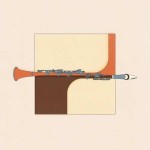


If you’ve ever wondered what it sounds like when a clarinet suffers a quarter-life crisis, look no further than Isak HedtjÄrn’s debut solo album, "Kvarpan". Recorded in a boatyard near Stockholm, this album isn't your typical clarinet showcase - in fact, it’s barely even a clarinet album in the traditional sense. HedtjÄrn, armed with a metal clarinet (because, why not?), dives deep into the abyss of improvisation, and what comes out is...well, somewhere between chaotic genius and an elaborate prank on the avant-garde.
Let’s talk about this clarinet. Not just any clarinet, mind you - it’s a "metal" one. Picture this: HedtjÄrn's instrument is less Benny Goodman and more Cthulhu with a brass reed, bending the edges of sound itself like it’s trying to call down a thunderstorm. The title "Kvarpan" refers to a slang word for the clarinet that apparently only one guy used, Roland Keijser, a Swedish jazz legend. But it’s fitting that HedtjÄrn would resurrect this obscure term for an album that feels like it’s resurrecting the very concept of free improvisation from the dustbin of music theory.
The album is all recorded “on location” in one session, as if HedtjÄrn is staging an art-house film where the plot is improvised and the protagonist is a clarinet with an existential crisis. There’s a strange charm in this raw, unedited approach. The ferries, the waiting cars - they’re all part of the atmosphere, the soundscape intruding on the music like uninvited guests to an intimate concert. It’s not just a recording; it’s a document of time and space, a snapshot of the day when a clarinet decided to throw itself into the sea and swim for freedom.
From the first notes of "Toner", you know you’re in for something otherworldly. The clarinet stretches and warps, as if it’s learning to speak a new language - one made of breath and the sharp inhale before the world collapses. This is free improvisation at its most unsettling. Forget melodic lines, forget structured rhythms; what HedtjÄrn offers is something more primal, like the clarinet’s unfiltered thoughts spilling out in real time. This ain’t smooth jazz, and Kenny G would probably run screaming in the opposite direction.
Tracks like "Kvarplek" and "Sågen II" play like abstract sonic puzzles, each note a piece you’re never quite sure fits. HedtjÄrn overdubs himself into a quartet - except, he does it "blind". He records each part without hearing the others, a bold artistic choice that somehow, against all odds, works. It’s like listening to a conversation where everyone is talking past each other, yet some inexplicable harmony emerges. It’s disjointed but oddly satisfying, like a jigsaw puzzle where all the pieces are from different sets but still form some kind of fractured picture.
But it’s not all anarchic noise. "Kvarpan" surprises with moments of fragile beauty. On tracks like "Kvarpan I" and "Toner II", HedtjÄrn lets his instrument breathe, playing with tone and texture in ways that hint at the clarinet's more classical roots. These passages are haunting, almost tender, as though the clarinet itself is pausing to reflect before diving back into chaos. There’s a deep emotional undercurrent here, a sense that HedtjÄrn is tapping into something raw and personal, even as he pushes his instrument to the breaking point.
HedtjÄrn’s influences are wide-ranging, from early jazz clarinetists like Johnny Dodds to the more experimental approaches of Mats Gustafsson. But he’s not content to mimic; he bends these traditions into something wholly his own. There’s a deep respect for history here, but also a kind of irreverent rebellion. He learned the rules, and now he’s gleefully tearing them apart. As he says in the liner notes, “My idea was first to never play tonally at all”, which, in jazz, is like saying you’re going to paint but only use invisible ink. And yet, in the hands of HedtjÄrn, this approach becomes something weirdly profound.
At times, this album is uncomfortable - like hearing a private conversation you weren’t meant to overhear - but it’s also deeply rewarding for those who stick with it., but it features radical, beautifully strange music that pushes the boundaries of what a clarinet (and music itself) can be. If you're tired of the predictable and crave something that will quite literally f""k with your brain (as Mats Gustafsson so poetically put it), "Kvarpan" is your album.
Just don’t expect to understand it on the first listen. Or the second. Or, honestly, ever. But isn’t that the point?
Let’s talk about this clarinet. Not just any clarinet, mind you - it’s a "metal" one. Picture this: HedtjÄrn's instrument is less Benny Goodman and more Cthulhu with a brass reed, bending the edges of sound itself like it’s trying to call down a thunderstorm. The title "Kvarpan" refers to a slang word for the clarinet that apparently only one guy used, Roland Keijser, a Swedish jazz legend. But it’s fitting that HedtjÄrn would resurrect this obscure term for an album that feels like it’s resurrecting the very concept of free improvisation from the dustbin of music theory.
The album is all recorded “on location” in one session, as if HedtjÄrn is staging an art-house film where the plot is improvised and the protagonist is a clarinet with an existential crisis. There’s a strange charm in this raw, unedited approach. The ferries, the waiting cars - they’re all part of the atmosphere, the soundscape intruding on the music like uninvited guests to an intimate concert. It’s not just a recording; it’s a document of time and space, a snapshot of the day when a clarinet decided to throw itself into the sea and swim for freedom.
From the first notes of "Toner", you know you’re in for something otherworldly. The clarinet stretches and warps, as if it’s learning to speak a new language - one made of breath and the sharp inhale before the world collapses. This is free improvisation at its most unsettling. Forget melodic lines, forget structured rhythms; what HedtjÄrn offers is something more primal, like the clarinet’s unfiltered thoughts spilling out in real time. This ain’t smooth jazz, and Kenny G would probably run screaming in the opposite direction.
Tracks like "Kvarplek" and "Sågen II" play like abstract sonic puzzles, each note a piece you’re never quite sure fits. HedtjÄrn overdubs himself into a quartet - except, he does it "blind". He records each part without hearing the others, a bold artistic choice that somehow, against all odds, works. It’s like listening to a conversation where everyone is talking past each other, yet some inexplicable harmony emerges. It’s disjointed but oddly satisfying, like a jigsaw puzzle where all the pieces are from different sets but still form some kind of fractured picture.
But it’s not all anarchic noise. "Kvarpan" surprises with moments of fragile beauty. On tracks like "Kvarpan I" and "Toner II", HedtjÄrn lets his instrument breathe, playing with tone and texture in ways that hint at the clarinet's more classical roots. These passages are haunting, almost tender, as though the clarinet itself is pausing to reflect before diving back into chaos. There’s a deep emotional undercurrent here, a sense that HedtjÄrn is tapping into something raw and personal, even as he pushes his instrument to the breaking point.
HedtjÄrn’s influences are wide-ranging, from early jazz clarinetists like Johnny Dodds to the more experimental approaches of Mats Gustafsson. But he’s not content to mimic; he bends these traditions into something wholly his own. There’s a deep respect for history here, but also a kind of irreverent rebellion. He learned the rules, and now he’s gleefully tearing them apart. As he says in the liner notes, “My idea was first to never play tonally at all”, which, in jazz, is like saying you’re going to paint but only use invisible ink. And yet, in the hands of HedtjÄrn, this approach becomes something weirdly profound.
At times, this album is uncomfortable - like hearing a private conversation you weren’t meant to overhear - but it’s also deeply rewarding for those who stick with it., but it features radical, beautifully strange music that pushes the boundaries of what a clarinet (and music itself) can be. If you're tired of the predictable and crave something that will quite literally f""k with your brain (as Mats Gustafsson so poetically put it), "Kvarpan" is your album.
Just don’t expect to understand it on the first listen. Or the second. Or, honestly, ever. But isn’t that the point?
Comments
Stream
Browse by Genre
Industrial Music / Industrial Metal / Aggro Industrial / Electro Metal
Industrial Noise / Power Noise / Harsh Noise
Synth Pop / Electro Pop / Synth-Electronica
Techno / Trance / Goa / Drum'n'Bass / Jungle / Tribal / Trip-Hop
Ambient / Electronica / Ethereal / Dub / Soundscapes / Abstract
Experimental / Avantgarde / Weird & Wired / Glitch / Noise / Field Recording
Dark / Gothic / Wave / New Wave / Dark Wave / Industrial Gothic
New Music / Downtown / Avantgarde Jazz / New Classical / World