
Saturday, August 29, 2026
Jeff Mills: The Eyewitness


“In the beginning, there was rhythm; then came the trauma.”
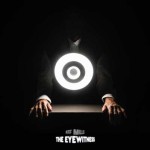
Jeff Mills’ "The Eyewitness" is not just an album - it’s an autopsy. A post-mortem examination of humanity’s fragile psyche laid bare through sound. It’s as if Mills, dressed in his noir suit beneath surgical lights, has dissected the collective wounds of the modern world and composed a soundtrack from the fallout. The result? A work as unflinchingly cerebral as it is hauntingly visceral.
The concept driving this release is quintessential Mills: ambitious, unsettling, and philosophical. Positioned as a reflection of trauma’s ripple effects on individuals and society, the album doesn’t coddle the listener. Instead, it stares unblinking into the dark corners of our shared experiences. Mills, with his usual audacity, composes not in service to comfort but to challenge. He doesn’t ask, "How do you feel about this?" but rather, "Do you even realize you’re complicit in this?"
The album opens with "In A Traumatized World", a piece that is as much performance art as it is music. Mills narrates in a self-invented language - a cryptic dialect devoid of meaning but loaded with affect. The result is unnervingly human yet eerily alien, like overhearing a private confession in a tongue you can’t comprehend. This fractured introduction sets the tone: you’re not here to dance; you’re here to confront.
Tracks like "Menticide" and "Mass Hypnosis" are cold, unyielding statements. Pulsating rhythms mimic the numbing cadence of manipulation, their precision bordering on mechanical. It’s techno as metaphor: structured, relentless, and almost militaristic in its command. And yet, in "Wonderous Butterfly", Mills allows a moment of unexpected beauty. It’s fleeting, delicate - a suggestion that even in darkness, there’s space for awe.
The album reaches its most striking conceptual moment in "Sacred Iridescent Mirror (The Pledge)". Here, Mills doesn’t just reflect; he refracts. The track feels like a disjointed ceremony, an ode to ambiguity itself, leaving the listener to grapple with the weight of its unresolved questions. By the time you reach the "Human Toll Mix" of "In A Traumatized World", the narrative folds back on itself, a looping indictment of our cyclical struggles.
It’s impossible to talk about "The Eyewitness" without marveling at Mills’ ability to construct entire worlds out of sound. Each track feels like a diorama, meticulously arranged with uncanny details: an oscillating synth that sounds like a siren from a dystopian skyline; a low-end thrum that mimics the sound of inevitability. This isn’t music for passive consumption. It demands engagement, thought, and perhaps even a bit of self-reckoning.
But there’s irony here, too. Mills’ music, with its layered complexity and intellectual heft, could easily alienate. Yet "The Eyewitness" feels strangely universal, as if Mills knows we’re all implicated in the trauma he’s documenting. His suit-and-tie aesthetic, the surgical lamp imagery - it’s a performance of authority, but also vulnerability. Mills isn’t above his subject; he’s as tangled in it as the rest of us.
Ultimately, "The Eyewitness" is a mirror - one polished to brutal clarity, forcing us to see the wounds we’d rather ignore. It’s techno as testimony, art as evidence, and Jeff Mills as both creator and witness. This isn’t an easy listen, nor is it meant to be. But it’s vital, a stark reminder that music can still serve as a vehicle for truth, even when that truth is uncomfortable.
So take a deep breath, step into the surgical glow of Mills’ operating theater, and let yourself bear witness. After all, the first step to healing is seeing.
Jeff Mills’ "The Eyewitness" is not just an album - it’s an autopsy. A post-mortem examination of humanity’s fragile psyche laid bare through sound. It’s as if Mills, dressed in his noir suit beneath surgical lights, has dissected the collective wounds of the modern world and composed a soundtrack from the fallout. The result? A work as unflinchingly cerebral as it is hauntingly visceral.
The concept driving this release is quintessential Mills: ambitious, unsettling, and philosophical. Positioned as a reflection of trauma’s ripple effects on individuals and society, the album doesn’t coddle the listener. Instead, it stares unblinking into the dark corners of our shared experiences. Mills, with his usual audacity, composes not in service to comfort but to challenge. He doesn’t ask, "How do you feel about this?" but rather, "Do you even realize you’re complicit in this?"
The album opens with "In A Traumatized World", a piece that is as much performance art as it is music. Mills narrates in a self-invented language - a cryptic dialect devoid of meaning but loaded with affect. The result is unnervingly human yet eerily alien, like overhearing a private confession in a tongue you can’t comprehend. This fractured introduction sets the tone: you’re not here to dance; you’re here to confront.
Tracks like "Menticide" and "Mass Hypnosis" are cold, unyielding statements. Pulsating rhythms mimic the numbing cadence of manipulation, their precision bordering on mechanical. It’s techno as metaphor: structured, relentless, and almost militaristic in its command. And yet, in "Wonderous Butterfly", Mills allows a moment of unexpected beauty. It’s fleeting, delicate - a suggestion that even in darkness, there’s space for awe.
The album reaches its most striking conceptual moment in "Sacred Iridescent Mirror (The Pledge)". Here, Mills doesn’t just reflect; he refracts. The track feels like a disjointed ceremony, an ode to ambiguity itself, leaving the listener to grapple with the weight of its unresolved questions. By the time you reach the "Human Toll Mix" of "In A Traumatized World", the narrative folds back on itself, a looping indictment of our cyclical struggles.
It’s impossible to talk about "The Eyewitness" without marveling at Mills’ ability to construct entire worlds out of sound. Each track feels like a diorama, meticulously arranged with uncanny details: an oscillating synth that sounds like a siren from a dystopian skyline; a low-end thrum that mimics the sound of inevitability. This isn’t music for passive consumption. It demands engagement, thought, and perhaps even a bit of self-reckoning.
But there’s irony here, too. Mills’ music, with its layered complexity and intellectual heft, could easily alienate. Yet "The Eyewitness" feels strangely universal, as if Mills knows we’re all implicated in the trauma he’s documenting. His suit-and-tie aesthetic, the surgical lamp imagery - it’s a performance of authority, but also vulnerability. Mills isn’t above his subject; he’s as tangled in it as the rest of us.
Ultimately, "The Eyewitness" is a mirror - one polished to brutal clarity, forcing us to see the wounds we’d rather ignore. It’s techno as testimony, art as evidence, and Jeff Mills as both creator and witness. This isn’t an easy listen, nor is it meant to be. But it’s vital, a stark reminder that music can still serve as a vehicle for truth, even when that truth is uncomfortable.
So take a deep breath, step into the surgical glow of Mills’ operating theater, and let yourself bear witness. After all, the first step to healing is seeing.
Comments
Stream
Browse by Genre
Industrial Music / Industrial Metal / Aggro Industrial / Electro Metal
Industrial Noise / Power Noise / Harsh Noise
Synth Pop / Electro Pop / Synth-Electronica
Techno / Trance / Goa / Drum'n'Bass / Jungle / Tribal / Trip-Hop
Ambient / Electronica / Ethereal / Dub / Soundscapes / Abstract
Experimental / Avantgarde / Weird & Wired / Glitch / Noise / Field Recording
Dark / Gothic / Wave / New Wave / Dark Wave / Industrial Gothic
New Music / Downtown / Avantgarde Jazz / New Classical / World