
Saturday, August 29, 2026
Aperus: Lost Tribe of the Shadow
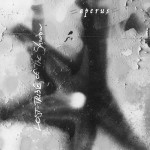
Artist: Aperus (@)
Title: Lost Tribe of the Shadow
Format: CD + Download
Label: Geophonic Records (@)
Rated:

Title: Lost Tribe of the Shadow
Format: CD + Download
Label: Geophonic Records (@)
Rated:
It has been a while since I've heard from Brian McWilliams and his Aperus project, but a new album is certainly welcome. For newcomers to Aperus, Aperus (/ap·r·us/ - "to perceive the inner nature of things intuitively.") is a sound artist and photographer living in the high desert of northern New Mexico. His work evolved out of an early interplay of atmospheres and imagery into a wider intimacy with sound, noise, texture and symbolism. Aperus processes signals from the subtle world to create works that echo with unexpected meaning. Something I should convey is part of a handwritten not to me by Brian about the album. "Several years ago at the height of apocalyptic times in the U.S. I started to notice graffiti under the overpasses near our house in Santa Fe. Part of me that wanted to escape saw these as petroglyphs from a lost tribe living in the shadows sending warnings of our demise if we continue on the same path. They've found a more enlightened way to live with each other and the earth and could help us change course if we wanted to wake up to a better way. They've studied the shadow, learned from it, transmuted their own darkness. We can too if the will can be found."
Profound words inspired from underpass graffiti, never ringing more true than today. However, the music on 'Lost Tribe of the Shadow' sounds much less hopeful than Mr. McWilliams' missive to me. It is a dark-gray oppressive ambience with some mechano-industrial loops and other sonic incidents that seem to leave hope out of the equation. This is the medicine recommended (perhaps even forced?) on us to put us in the headspace to see clearly the path we're on and the torturous terrain it leads through. A little snapshot of each track could be enlightening. Title track - "Lost Tribe of the Shadow" - mechano-industrial loop with oppressive ambience and a repetitious, simple sub-melody line...slaving away in ignominy is alive and well. "A Dark Age" - heavy, dull, stultifying ambience devoid of joy, whispered grumblings, depressing and seemingly endless...like purgatory. "Beneath the Static" - rumblings from below causing a little stir but not really breaking the surface. "For Us It's Probably Too Late" - a melancholy melange of heavy pads that may allude to regret? "A Debt to Our Ancestors" - the tribal spirit realized through hand percussion and flutes or whistles, chaos in the spirit realm, a call to those who came before us...perhaps only the animals know for certain. "Graffiti Ghosts" - a rhythmic, electronic segment with sequenced noise, indicitive of motion, activity and thought. "A Dark Age Redux" - different this time, much less oppressive and more like being enveloped in an electronic void. "Lost Tribe 2" - the mechanical loop of industry is back full force, the last gasp of the daily grind, the forgotten toilers, who eventually fade away into the dustbin of history. "Like the Sun and Stars" - a somewhat uplifting orchestral loop that sounds eternal and a little nostalgic, yet transitional... "Ghost Graffiti Outro" - an enigmatic ending track if there ever was one. Things are unclear...calls for a sequel.
Aperus has given the listener much to think about in these troubled times. Perhaps the Carl Jung quote on the Aperus packaging of this CD is ultimately relevant - "One does not become enlightened by imagining figures of light, but by making the darkness conscious."
Profound words inspired from underpass graffiti, never ringing more true than today. However, the music on 'Lost Tribe of the Shadow' sounds much less hopeful than Mr. McWilliams' missive to me. It is a dark-gray oppressive ambience with some mechano-industrial loops and other sonic incidents that seem to leave hope out of the equation. This is the medicine recommended (perhaps even forced?) on us to put us in the headspace to see clearly the path we're on and the torturous terrain it leads through. A little snapshot of each track could be enlightening. Title track - "Lost Tribe of the Shadow" - mechano-industrial loop with oppressive ambience and a repetitious, simple sub-melody line...slaving away in ignominy is alive and well. "A Dark Age" - heavy, dull, stultifying ambience devoid of joy, whispered grumblings, depressing and seemingly endless...like purgatory. "Beneath the Static" - rumblings from below causing a little stir but not really breaking the surface. "For Us It's Probably Too Late" - a melancholy melange of heavy pads that may allude to regret? "A Debt to Our Ancestors" - the tribal spirit realized through hand percussion and flutes or whistles, chaos in the spirit realm, a call to those who came before us...perhaps only the animals know for certain. "Graffiti Ghosts" - a rhythmic, electronic segment with sequenced noise, indicitive of motion, activity and thought. "A Dark Age Redux" - different this time, much less oppressive and more like being enveloped in an electronic void. "Lost Tribe 2" - the mechanical loop of industry is back full force, the last gasp of the daily grind, the forgotten toilers, who eventually fade away into the dustbin of history. "Like the Sun and Stars" - a somewhat uplifting orchestral loop that sounds eternal and a little nostalgic, yet transitional... "Ghost Graffiti Outro" - an enigmatic ending track if there ever was one. Things are unclear...calls for a sequel.
Aperus has given the listener much to think about in these troubled times. Perhaps the Carl Jung quote on the Aperus packaging of this CD is ultimately relevant - "One does not become enlightened by imagining figures of light, but by making the darkness conscious."
Comments
Stream
Browse by Genre
Industrial Music / Industrial Metal / Aggro Industrial / Electro Metal
Industrial Noise / Power Noise / Harsh Noise
Synth Pop / Electro Pop / Synth-Electronica
Techno / Trance / Goa / Drum'n'Bass / Jungle / Tribal / Trip-Hop
Ambient / Electronica / Ethereal / Dub / Soundscapes / Abstract
Experimental / Avantgarde / Weird & Wired / Glitch / Noise / Field Recording
Dark / Gothic / Wave / New Wave / Dark Wave / Industrial Gothic
New Music / Downtown / Avantgarde Jazz / New Classical / World