
Saturday, August 29, 2026
Pak Yan Lau / Vica Pacheco: Aquapelagos Vol. 3: Pac?fico
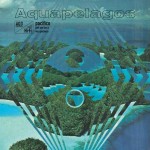
Artist: Pak Yan Lau / Vica Pacheco (@)
Title: Aquapelagos Vol. 3: Pac?fico
Format: 12" + Download
Label: Keroxen (@)
Rated:

Title: Aquapelagos Vol. 3: Pac?fico
Format: 12" + Download
Label: Keroxen (@)
Rated:
What does it mean to make music about an ocean? Not just any ocean, but the Pacific - spanning one-third of the Earth’s surface, an aquatic expanse so vast it defies comprehension. In "Aquapelagos Vol. 3: Pacífico", Pak Yan Lau and Vica Pacheco dive headfirst into this unfathomable depth, each crafting a distinct sonic portrait of this boundless body of water. This double LP, released by Keroxen, is the third installment of the "Aquapelagos" series, a project dedicated to exploring the interplay of water, sound, and culture.
Pacheco’s side of the split feels like the ocean’s surface at dawn - serene, shimmering, and alive with quiet mystery. Her "Flautas Mineralis" introduces the record with water flutes that gurgle and breathe, accompanied by delicate synth textures that evoke sunlit ripples. On "Detrás del Teide", Pacheco conjures a volcanic landscape seen through an aqueous lens, blending electronics with natural resonances to create a soundscape that feels simultaneously ancient and futuristic.
Her pièce de résistance, "Noche Imaginaria", brings listeners into a dreamlike state, where the Pacific whispers lullabies under a canopy of stars. There’s a meditative calm in her compositions, reminiscent of Pauline Oliveros’s deep listening philosophy, but with an organic warmth that recalls Hiroshi Yoshimura’s ambient landscapes.
On the flip side, Pak Yan Lau’s "The Ocean in Us" plunges into the ocean’s deepest trenches. This 22-minute opus is an overwhelming sonic metaphor for the Pacific’s immensity, as prepared piano, synths, and percussive effects layer into a dense and dynamic composition. Lau’s work swells and subsides, mimicking the tides and the interplay of light and shadow in the ocean’s depths.
The addition of Tenerife Conservatory students imbues the piece with an almost cinematic gravitas. Their contributions - strings and choral elements - add a human echo to the vastness, reminding us of our smallness in the face of nature’s grandeur. Recorded in "El Tanque", a repurposed oil tank in Santa Cruz de Tenerife, the album benefits from the space’s cavernous acoustics. Each sound seems to carry a subtle dampness, as if the echoes themselves have been submerged. This isn’t just a record - it’s a site-specific experience where water becomes both theme and medium.
"Aquapelagos Vol. 3" doesn’t merely celebrate the Pacific; it becomes a microcosm of its complexity. As Philip Hayward and Matt Hill note in the liner notes, the Pacific is a space too vast to navigate in its entirety, a mesh of disparate cultures and geographies. Similarly, the record weaves genres and textures into an intricate sonic tapestry: ambient, neo-classical, electroacoustic, and experimental.
Both artists bring a unique voice to the conversation, but the dialogue is unified by a shared reverence for the ocean’s mystique. While Pacheco’s side feels like floating on gentle waves, Lau’s plunges you into a churning maelstrom. Together, they encapsulate the Pacific’s dual nature - majestic and tranquil, yet overwhelming and unknowable.
Dive in, but don’t expect to find the shore anytime soon.
Pacheco’s side of the split feels like the ocean’s surface at dawn - serene, shimmering, and alive with quiet mystery. Her "Flautas Mineralis" introduces the record with water flutes that gurgle and breathe, accompanied by delicate synth textures that evoke sunlit ripples. On "Detrás del Teide", Pacheco conjures a volcanic landscape seen through an aqueous lens, blending electronics with natural resonances to create a soundscape that feels simultaneously ancient and futuristic.
Her pièce de résistance, "Noche Imaginaria", brings listeners into a dreamlike state, where the Pacific whispers lullabies under a canopy of stars. There’s a meditative calm in her compositions, reminiscent of Pauline Oliveros’s deep listening philosophy, but with an organic warmth that recalls Hiroshi Yoshimura’s ambient landscapes.
On the flip side, Pak Yan Lau’s "The Ocean in Us" plunges into the ocean’s deepest trenches. This 22-minute opus is an overwhelming sonic metaphor for the Pacific’s immensity, as prepared piano, synths, and percussive effects layer into a dense and dynamic composition. Lau’s work swells and subsides, mimicking the tides and the interplay of light and shadow in the ocean’s depths.
The addition of Tenerife Conservatory students imbues the piece with an almost cinematic gravitas. Their contributions - strings and choral elements - add a human echo to the vastness, reminding us of our smallness in the face of nature’s grandeur. Recorded in "El Tanque", a repurposed oil tank in Santa Cruz de Tenerife, the album benefits from the space’s cavernous acoustics. Each sound seems to carry a subtle dampness, as if the echoes themselves have been submerged. This isn’t just a record - it’s a site-specific experience where water becomes both theme and medium.
"Aquapelagos Vol. 3" doesn’t merely celebrate the Pacific; it becomes a microcosm of its complexity. As Philip Hayward and Matt Hill note in the liner notes, the Pacific is a space too vast to navigate in its entirety, a mesh of disparate cultures and geographies. Similarly, the record weaves genres and textures into an intricate sonic tapestry: ambient, neo-classical, electroacoustic, and experimental.
Both artists bring a unique voice to the conversation, but the dialogue is unified by a shared reverence for the ocean’s mystique. While Pacheco’s side feels like floating on gentle waves, Lau’s plunges you into a churning maelstrom. Together, they encapsulate the Pacific’s dual nature - majestic and tranquil, yet overwhelming and unknowable.
Dive in, but don’t expect to find the shore anytime soon.
Comments
Stream
Browse by Genre
Industrial Music / Industrial Metal / Aggro Industrial / Electro Metal
Industrial Noise / Power Noise / Harsh Noise
Synth Pop / Electro Pop / Synth-Electronica
Techno / Trance / Goa / Drum'n'Bass / Jungle / Tribal / Trip-Hop
Ambient / Electronica / Ethereal / Dub / Soundscapes / Abstract
Experimental / Avantgarde / Weird & Wired / Glitch / Noise / Field Recording
Dark / Gothic / Wave / New Wave / Dark Wave / Industrial Gothic
New Music / Downtown / Avantgarde Jazz / New Classical / World