
The Young Mothers: Better If You Let It
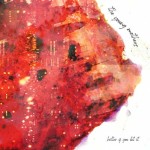
Artist: The Young Mothers (@)
Title: Better If You Let It
Format: CD + Download
Label: Sonic Transmissions Records (@)
Rated:

Title: Better If You Let It
Format: CD + Download
Label: Sonic Transmissions Records (@)
Rated:
Some bands settle into a genre. Some bands reshape a genre. And then there are bands like The Young Mothers, who take a genre, set it on fire, toss it into the void, and dance in the flickering shadows of whatever emerges next. After six years, the genre-defiant, mind-bending collective returns with "Better If You Let It", an album that dares you to stop making sense. Built on the restless vision of Norwegian bassist Ingebrigt Håker Flaten, but now more than ever a collective effort, this record pulses with a feral energy, an unchained eclecticism where free jazz collides with hip-hop, punk, electronic noise, and avant-garde cinematic textures. It’s a chaotic, exhilarating listen - one moment you’re in a smoky jazz club, the next you’re moshing in a basement, then suddenly floating through space in an electric haze.
The album’s title track, “Better If You Let It”, is a sprawling, high-energy collision of brass, electronics, and groove-heavy improvisation. A rhythmic cyclone builds tension before releasing into jagged saxophone riffs and unpredictable time shifts. The ten-minute runtime feels like a manifesto - an open invitation to embrace the unexpected. “Hymn” follows with a slow-burning, hypnotic atmosphere, where Jawwaad Taylor’s trumpet and Jason Jackson’s saxophone create a meditative call-and-response. It starts sparse, almost reverent, before gradually layering percussive textures and deep, resonant bass, unfolding like a processional march into the unknown. Then there’s “Lijm”, a chaotic, groove-driven centerpiece, fusing experimental hip-hop with heavy, distorted basslines and unpredictable rhythmic bursts. Frank Rosaly’s electronics add eerie, textural disruptions, while the percussion swings between tight funk and fractured free jazz rhythms.
“Song For a Poet” is a moment of poignant reflection, featuring sweeping brass arrangements and a dynamic interplay between saxophone and vibraphone. This track carries an emotional weight, with melodic motifs that feel both nostalgic and forward-thinking. Closing the album, “Scarlet Woman Lodge” is its most ambitious and sprawling composition, clocking in at 15 minutes. It shifts between slow, drone-like intensity and explosive jazz-punk energy, with intricate guitar textures from Jonathan F. Horne and deep, pulsating basslines from Håker Flaten. The track's evolving structure makes it feel like a ritualistic improvisation, moving from meditative stillness to wild, unhinged catharsis.
With "Better If You Let It", The Young Mothers prove once again that they are one of the most fearless ensembles operating at the fringes of jazz and beyond. It’s avant-garde with a punk soul, jazz with an anarchist heart, and experimentalism that still swings, screams, and seduces.
The album’s title track, “Better If You Let It”, is a sprawling, high-energy collision of brass, electronics, and groove-heavy improvisation. A rhythmic cyclone builds tension before releasing into jagged saxophone riffs and unpredictable time shifts. The ten-minute runtime feels like a manifesto - an open invitation to embrace the unexpected. “Hymn” follows with a slow-burning, hypnotic atmosphere, where Jawwaad Taylor’s trumpet and Jason Jackson’s saxophone create a meditative call-and-response. It starts sparse, almost reverent, before gradually layering percussive textures and deep, resonant bass, unfolding like a processional march into the unknown. Then there’s “Lijm”, a chaotic, groove-driven centerpiece, fusing experimental hip-hop with heavy, distorted basslines and unpredictable rhythmic bursts. Frank Rosaly’s electronics add eerie, textural disruptions, while the percussion swings between tight funk and fractured free jazz rhythms.
“Song For a Poet” is a moment of poignant reflection, featuring sweeping brass arrangements and a dynamic interplay between saxophone and vibraphone. This track carries an emotional weight, with melodic motifs that feel both nostalgic and forward-thinking. Closing the album, “Scarlet Woman Lodge” is its most ambitious and sprawling composition, clocking in at 15 minutes. It shifts between slow, drone-like intensity and explosive jazz-punk energy, with intricate guitar textures from Jonathan F. Horne and deep, pulsating basslines from Håker Flaten. The track's evolving structure makes it feel like a ritualistic improvisation, moving from meditative stillness to wild, unhinged catharsis.
With "Better If You Let It", The Young Mothers prove once again that they are one of the most fearless ensembles operating at the fringes of jazz and beyond. It’s avant-garde with a punk soul, jazz with an anarchist heart, and experimentalism that still swings, screams, and seduces.
Comments
Stream
Browse by Genre
Industrial Music / Industrial Metal / Aggro Industrial / Electro Metal
Industrial Noise / Power Noise / Harsh Noise
Synth Pop / Electro Pop / Synth-Electronica
Techno / Trance / Goa / Drum'n'Bass / Jungle / Tribal / Trip-Hop
Ambient / Electronica / Ethereal / Dub / Soundscapes / Abstract
Experimental / Avantgarde / Weird & Wired / Glitch / Noise / Field Recording
Dark / Gothic / Wave / New Wave / Dark Wave / Industrial Gothic
New Music / Downtown / Avantgarde Jazz / New Classical / World