
微風ゾーン Bifuu_ZONE: The West
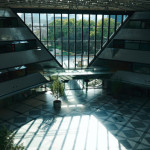
Artist: 微風ゾーン Bifuu_ZONE
Title: The West
Format: Tape + Download
Label: Constellation Tatsu (@)
Rated:


Title: The West
Format: Tape + Download
Label: Constellation Tatsu (@)
Rated:
There is a peculiar modern obsession with “liminal spaces” that often reduces them to internet horror aesthetics: abandoned malls, fluorescent corridors, empty swimming pools at night, humanity collectively deciding that slightly vacant architecture is somehow terrifying. Meanwhile actual liminality, the emotional and philosophical experience of transition, erosion, impermanence, and unresolved presence, is far subtler and far stranger. The West understands this distinction beautifully.
Released through Constellation Tatsu, the album by Bifuu_ZONE approaches spatial ambient music not as haunted spectacle but as quiet continuation. The project’s name itself, loosely translating to “a zone of gentle breeze”, already signals its intentions clearly. This is not music interested in overwhelming the listener with dystopian atmosphere or nostalgic collapse. Instead, "The West" inhabits spaces where time softens structures gradually, where memory settles into architecture like dust carried by weather.
Created by Tsudio Studio, whose broader work has traversed ambient, vaporwave-adjacent electronics, and spatial sound design through labels like Local Visions and ULTRA-VYBE, the album feels remarkably focused in its restraint. Each track is inspired by locations west of Osaka, yet the music avoids direct field-recording realism or documentary impulses. These are imagined acoustic environments, emotional architectures translated into tone and resonance.
The result unfolds less like a sequence of compositions than a slow walk through partially remembered buildings after rain.
“Cosmo Sound In” opens the record with diffuse pads and soft harmonic drift that immediately establish the album’s emotional climate. There is openness everywhere. The sounds seem less placed than suspended, gently hovering within vast interior spaces. The alto saxophone contributions by mori_de_kurasu become crucial here, introducing breath and fragile human presence into otherwise spacious electronic environments. The instrument never dominates. Instead, it appears almost like condensation briefly forming on glass before disappearing again.
One of the album’s greatest strengths lies in how attentively it treats silence and decay. Ambient music often collapses into passive wallpaper because it fears emptiness, endlessly filling space with texture until nothing meaningful remains. Bifuu_ZONE understands that stillness itself carries emotional information. Gaps matter. Resonance matters. The fading edge of a tone matters.
“RIC Midnight” exemplifies this beautifully. The track unfolds with a kind of nocturnal patience, its harmonic movement so gradual it almost escapes conscious detection. Yet beneath the calm surface, tiny shifts continuously alter the emotional temperature. Listening closely feels like observing light change across concrete over several hours. Human civilization spends billions constructing permanent monuments only for moss, rain, and time to quietly outperform every architect eventually.
The conceptual framework surrounding impermanence and “post-liminal space” could easily have become pretentious in lesser hands. Contemporary ambient culture occasionally mistakes vague philosophical vocabulary for actual depth. But "The West" earns its conceptual ambitions because the music genuinely embodies its ideas. The Japanese sensibility toward impermanence referenced in the release materials is not merely decorative framing; it permeates the album structurally. These tracks do not seek resolution or climax. They accept transience as condition.
“RESO” and “Meteor Plaza” continue this delicate balancing act between architectural spaciousness and emotional intimacy. The textures feel weathered rather than pristine, subtly eroded around the edges. There is a softness to the production that prevents the album from becoming sterile digital ambience. One senses air moving through rooms, distant reflections, surfaces aging slowly.
The saxophone returns most poignantly on “Lamer”, where mori_de_kurasu’s playing introduces an almost human vulnerability into the otherwise restrained environment. Breath becomes audible against the larger stillness. The contrast is quietly devastating. Not dramatic sadness exactly, but awareness of scale: the fleeting body inside structures that outlast it.
“Suma Rikyu Park” and “TWIN21” perhaps best reveal Tsudio Studio’s skill for emotional understatement. The compositions drift carefully between melancholy and serenity without collapsing fully into either. This ambiguity becomes the album’s emotional core. "The West" is not mournful about impermanence. Nor does it romanticize decay. It simply observes transformation with unusual tenderness.
By the time “Herbis Ent” closes the record, the listener has entered a distinctly altered perceptual state. The album slows internal time. Architectural references dissolve into emotional resonance. Places become atmospheres rather than coordinates.
There are echoes here of certain strands of Japanese ambient and environmental music traditions, perhaps distant affinities with figures like Hiroshi Yoshimura or the spatial sensitivity of Midori Takada, yet "The West" never feels derivative or trapped inside retro ambient nostalgia. Its relationship with space feels contemporary precisely because it resists overstimulation.
And that restraint is increasingly radical. In a cultural moment obsessed with acceleration, constant visibility, and emotional over-articulation, Bifuu_ZONE creates music that trusts quiet perception. These tracks do not demand attention aggressively. They wait patiently for the listener to slow down enough to notice what remains after movement ends.
A remarkably subtle record, then, full of disappearing edges, architectural ghosts, and soft transformations. Not music about emptiness, but about what continues breathing gently inside spaces after certainty has already departed.
Released through Constellation Tatsu, the album by Bifuu_ZONE approaches spatial ambient music not as haunted spectacle but as quiet continuation. The project’s name itself, loosely translating to “a zone of gentle breeze”, already signals its intentions clearly. This is not music interested in overwhelming the listener with dystopian atmosphere or nostalgic collapse. Instead, "The West" inhabits spaces where time softens structures gradually, where memory settles into architecture like dust carried by weather.
Created by Tsudio Studio, whose broader work has traversed ambient, vaporwave-adjacent electronics, and spatial sound design through labels like Local Visions and ULTRA-VYBE, the album feels remarkably focused in its restraint. Each track is inspired by locations west of Osaka, yet the music avoids direct field-recording realism or documentary impulses. These are imagined acoustic environments, emotional architectures translated into tone and resonance.
The result unfolds less like a sequence of compositions than a slow walk through partially remembered buildings after rain.
“Cosmo Sound In” opens the record with diffuse pads and soft harmonic drift that immediately establish the album’s emotional climate. There is openness everywhere. The sounds seem less placed than suspended, gently hovering within vast interior spaces. The alto saxophone contributions by mori_de_kurasu become crucial here, introducing breath and fragile human presence into otherwise spacious electronic environments. The instrument never dominates. Instead, it appears almost like condensation briefly forming on glass before disappearing again.
One of the album’s greatest strengths lies in how attentively it treats silence and decay. Ambient music often collapses into passive wallpaper because it fears emptiness, endlessly filling space with texture until nothing meaningful remains. Bifuu_ZONE understands that stillness itself carries emotional information. Gaps matter. Resonance matters. The fading edge of a tone matters.
“RIC Midnight” exemplifies this beautifully. The track unfolds with a kind of nocturnal patience, its harmonic movement so gradual it almost escapes conscious detection. Yet beneath the calm surface, tiny shifts continuously alter the emotional temperature. Listening closely feels like observing light change across concrete over several hours. Human civilization spends billions constructing permanent monuments only for moss, rain, and time to quietly outperform every architect eventually.
The conceptual framework surrounding impermanence and “post-liminal space” could easily have become pretentious in lesser hands. Contemporary ambient culture occasionally mistakes vague philosophical vocabulary for actual depth. But "The West" earns its conceptual ambitions because the music genuinely embodies its ideas. The Japanese sensibility toward impermanence referenced in the release materials is not merely decorative framing; it permeates the album structurally. These tracks do not seek resolution or climax. They accept transience as condition.
“RESO” and “Meteor Plaza” continue this delicate balancing act between architectural spaciousness and emotional intimacy. The textures feel weathered rather than pristine, subtly eroded around the edges. There is a softness to the production that prevents the album from becoming sterile digital ambience. One senses air moving through rooms, distant reflections, surfaces aging slowly.
The saxophone returns most poignantly on “Lamer”, where mori_de_kurasu’s playing introduces an almost human vulnerability into the otherwise restrained environment. Breath becomes audible against the larger stillness. The contrast is quietly devastating. Not dramatic sadness exactly, but awareness of scale: the fleeting body inside structures that outlast it.
“Suma Rikyu Park” and “TWIN21” perhaps best reveal Tsudio Studio’s skill for emotional understatement. The compositions drift carefully between melancholy and serenity without collapsing fully into either. This ambiguity becomes the album’s emotional core. "The West" is not mournful about impermanence. Nor does it romanticize decay. It simply observes transformation with unusual tenderness.
By the time “Herbis Ent” closes the record, the listener has entered a distinctly altered perceptual state. The album slows internal time. Architectural references dissolve into emotional resonance. Places become atmospheres rather than coordinates.
There are echoes here of certain strands of Japanese ambient and environmental music traditions, perhaps distant affinities with figures like Hiroshi Yoshimura or the spatial sensitivity of Midori Takada, yet "The West" never feels derivative or trapped inside retro ambient nostalgia. Its relationship with space feels contemporary precisely because it resists overstimulation.
And that restraint is increasingly radical. In a cultural moment obsessed with acceleration, constant visibility, and emotional over-articulation, Bifuu_ZONE creates music that trusts quiet perception. These tracks do not demand attention aggressively. They wait patiently for the listener to slow down enough to notice what remains after movement ends.
A remarkably subtle record, then, full of disappearing edges, architectural ghosts, and soft transformations. Not music about emptiness, but about what continues breathing gently inside spaces after certainty has already departed.
Comments
Stream
Browse by Genre
Industrial Music / Industrial Metal / Aggro Industrial / Electro Metal
Industrial Noise / Power Noise / Harsh Noise
Synth Pop / Electro Pop / Synth-Electronica
Techno / Trance / Goa / Drum'n'Bass / Jungle / Tribal / Trip-Hop
Ambient / Electronica / Ethereal / Dub / Soundscapes / Abstract
Experimental / Avantgarde / Weird & Wired / Glitch / Noise / Field Recording
Dark / Gothic / Wave / New Wave / Dark Wave / Industrial Gothic
New Music / Downtown / Avantgarde Jazz / New Classical / World