
Andreas Tschopp: What If We Align Our Breath
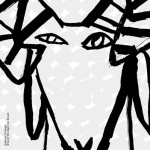
Artist: Andreas Tschopp
Title: What If We Align Our Breath
Format: 12" + Download
Label: Kit Records (@)
Rated:

Title: What If We Align Our Breath
Format: 12" + Download
Label: Kit Records (@)
Rated:
There is a particular kind of album that does not merely ask you to listen, but quietly adjusts your breathing while you are not paying attention. By the time you notice, you are already inside its atmosphere, walking slower, hearing differently, wondering why the world outside suddenly feels louder and more ridiculous than usual. Human civilization has built entire economies around stress and notifications, so naturally an album like this arrives almost as an act of resistance.
For listeners familiar with Andreas Tschopp through projects like Skyjack, Le Rex, or the Indonesian-inspired textures of Bubaran, this first solo release may initially seem surprisingly restrained. Yet restraint is precisely the point. Rather than showcasing virtuosity in the conventional jazz sense, Tschopp constructs a porous sonic ecology where horns, flutes, tape loops, percussion, and electronics breathe alongside one another with unusual patience. The album feels less “performed” than inhabited.
The central presence of the kudu horns gives the record its emotional and physical gravity. Their tones are ancient, unstable, mournful, and strangely intimate, carrying a graininess that modern brass instruments often smooth away. Tschopp does not attempt to tame them into polished melodic tools. Instead, he listens to their imperfections, their hesitations, their rough edges. The result is music that feels startlingly alive, as though every note arrives carrying weather, dust, distance, and memory within it.
What makes the album remarkable is the way it balances spiritual openness with compositional precision. There are traces of ambient jazz here, certainly, but also echoes of indigenous ceremonial music, electroacoustic minimalism, and post-classical texture work. Yet none of these references dominate. The record refuses easy categorization with admirable calm. It simply exists in its own liminal terrain, where improvisation becomes philosophy and resonance becomes political language.
Tracks like “The Poetry of the In-Between” and “I Am Because You Are” embody the album’s core concern: interconnectedness not as slogan, but as lived condition. The influence of ubuntu philosophy is palpable throughout, though never didactic. Instead, collaboration itself becomes the message. South African musicians Shane Cooper and Gontse Makhene contribute with remarkable subtlety, while poet Koleka Putuma brings an incantatory depth to “Sounding the Voice.” Even the electronics behave communally. Synths and tape manipulations do not dominate the acoustic instruments but drift around them like companions sharing the same road at dusk.
The production deserves particular praise. Co-produced and mixed by Cooper alongside Tschopp, the album maintains an extraordinary sense of space. Sounds emerge softly from the edges of perception, overlap gently, then dissolve before they become fixed objects. The mix itself seems committed to coexistence. Nothing fights for dominance. In lesser hands this approach could easily become vague or overly precious, the sort of “healing music” sold to exhausted executives next to Himalayan salt lamps and artisanal regret. Instead, the record remains grounded in tactile detail and emotional ambiguity.
There is also an understated courage in how openly hopeful the album feels. Contemporary experimental music often mistakes emotional detachment for sophistication, as though sincerity might somehow contaminate the conceptual framework. Tschopp avoids that trap entirely. "What If We Align Our Breath" dares to suggest that gentleness may itself be radical in an era increasingly organized around spectacle, division, and algorithmic agitation. Not naïve optimism, but attentive presence.
At moments, the record recalls the spiritual jazz lineage of Don Cherry or the transcultural curiosity of Jon Hassell, particularly in its blending of geographical and sonic identities. Yet Tschopp’s approach feels less cosmopolitan in the fashionable sense and more rooted in genuine encounter. You hear someone trying to build relationships with sound rather than merely collecting influences like stamps in a passport.
The closing pieces leave behind a lingering sensation difficult to articulate. Not transcendence exactly. More like recalibration. As though the album has temporarily restored forgotten frequencies in the listener’s nervous system. Breathing, after all, is both individual and collective: utterly personal, yet shared by every living thing. Tschopp understands this deeply, and the album’s title stops feeling metaphorical after a while. It becomes instruction. Or invitation.
A quietly luminous record. One that trusts silence, trusts listeners, and trusts that music can still create forms of connection more meaningful than the endless digital shouting match humans now mistake for public discourse. An increasingly rare kind of intelligence.
For listeners familiar with Andreas Tschopp through projects like Skyjack, Le Rex, or the Indonesian-inspired textures of Bubaran, this first solo release may initially seem surprisingly restrained. Yet restraint is precisely the point. Rather than showcasing virtuosity in the conventional jazz sense, Tschopp constructs a porous sonic ecology where horns, flutes, tape loops, percussion, and electronics breathe alongside one another with unusual patience. The album feels less “performed” than inhabited.
The central presence of the kudu horns gives the record its emotional and physical gravity. Their tones are ancient, unstable, mournful, and strangely intimate, carrying a graininess that modern brass instruments often smooth away. Tschopp does not attempt to tame them into polished melodic tools. Instead, he listens to their imperfections, their hesitations, their rough edges. The result is music that feels startlingly alive, as though every note arrives carrying weather, dust, distance, and memory within it.
What makes the album remarkable is the way it balances spiritual openness with compositional precision. There are traces of ambient jazz here, certainly, but also echoes of indigenous ceremonial music, electroacoustic minimalism, and post-classical texture work. Yet none of these references dominate. The record refuses easy categorization with admirable calm. It simply exists in its own liminal terrain, where improvisation becomes philosophy and resonance becomes political language.
Tracks like “The Poetry of the In-Between” and “I Am Because You Are” embody the album’s core concern: interconnectedness not as slogan, but as lived condition. The influence of ubuntu philosophy is palpable throughout, though never didactic. Instead, collaboration itself becomes the message. South African musicians Shane Cooper and Gontse Makhene contribute with remarkable subtlety, while poet Koleka Putuma brings an incantatory depth to “Sounding the Voice.” Even the electronics behave communally. Synths and tape manipulations do not dominate the acoustic instruments but drift around them like companions sharing the same road at dusk.
The production deserves particular praise. Co-produced and mixed by Cooper alongside Tschopp, the album maintains an extraordinary sense of space. Sounds emerge softly from the edges of perception, overlap gently, then dissolve before they become fixed objects. The mix itself seems committed to coexistence. Nothing fights for dominance. In lesser hands this approach could easily become vague or overly precious, the sort of “healing music” sold to exhausted executives next to Himalayan salt lamps and artisanal regret. Instead, the record remains grounded in tactile detail and emotional ambiguity.
There is also an understated courage in how openly hopeful the album feels. Contemporary experimental music often mistakes emotional detachment for sophistication, as though sincerity might somehow contaminate the conceptual framework. Tschopp avoids that trap entirely. "What If We Align Our Breath" dares to suggest that gentleness may itself be radical in an era increasingly organized around spectacle, division, and algorithmic agitation. Not naïve optimism, but attentive presence.
At moments, the record recalls the spiritual jazz lineage of Don Cherry or the transcultural curiosity of Jon Hassell, particularly in its blending of geographical and sonic identities. Yet Tschopp’s approach feels less cosmopolitan in the fashionable sense and more rooted in genuine encounter. You hear someone trying to build relationships with sound rather than merely collecting influences like stamps in a passport.
The closing pieces leave behind a lingering sensation difficult to articulate. Not transcendence exactly. More like recalibration. As though the album has temporarily restored forgotten frequencies in the listener’s nervous system. Breathing, after all, is both individual and collective: utterly personal, yet shared by every living thing. Tschopp understands this deeply, and the album’s title stops feeling metaphorical after a while. It becomes instruction. Or invitation.
A quietly luminous record. One that trusts silence, trusts listeners, and trusts that music can still create forms of connection more meaningful than the endless digital shouting match humans now mistake for public discourse. An increasingly rare kind of intelligence.
Comments
Stream
Browse by Genre
Industrial Music / Industrial Metal / Aggro Industrial / Electro Metal
Industrial Noise / Power Noise / Harsh Noise
Synth Pop / Electro Pop / Synth-Electronica
Techno / Trance / Goa / Drum'n'Bass / Jungle / Tribal / Trip-Hop
Ambient / Electronica / Ethereal / Dub / Soundscapes / Abstract
Experimental / Avantgarde / Weird & Wired / Glitch / Noise / Field Recording
Dark / Gothic / Wave / New Wave / Dark Wave / Industrial Gothic
New Music / Downtown / Avantgarde Jazz / New Classical / World