
Saturday, October 17, 2026
VV.AA.: XKatedral Anthology II
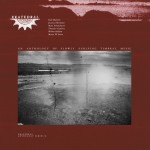


If the first volume of XKatedral's anthology series explored the slow metamorphosis of acoustic resonance, "Anthology Series II" turns its attention toward another kind of alchemy. Here, algorithms, synthesis and digital processes are not presented as futuristic novelties or sterile technologies. Instead, they become instruments for uncovering harmonic phenomena that have always existed, patiently waiting for someone curious enough to listen. This is electronic music that gazes less toward tomorrow than toward eternity.
The Swedish imprint XKatedral has quietly cultivated a remarkable artistic community over the past decade, bringing together composers whose interests intersect around duration, spectral harmony and the physical behaviour of sound itself. Rather than promoting a recognisable "label sound", XKatedral has encouraged individual voices connected by shared methods of listening. This second anthology, originally released in 2023 and now remastered alongside its companion volumes, captures that philosophy beautifully. Every piece speaks a distinct dialect, yet they all belong to the same sonic family.
The opening work, "Music for Low Quartet", finds Kali Malone revisiting material from "The Sacrificial Code" through a new instrumental perspective. Two double basses, performed by Vilhelm Bromander and Zach Rowden, intertwine with Malone's sine-wave electronics in music that seems perpetually suspended between gravity and levitation. The low frequencies possess undeniable physical weight, yet they never feel oppressive. Instead, they create spaciousness, demonstrating once again Malone's extraordinary ability to transform minimal material into profound emotional architecture. Every sustained tone seems to contain invisible corridors extending far beyond the audible spectrum.
From there, Jessica Ekomane shifts the focus entirely toward synthetic sound. "First Light" abandons acoustic references without sacrificing warmth or expressive subtlety. Built exclusively from digitally generated material, the composition unfolds as an intricate web of microscopic interactions where timbre itself becomes narrative. Ekomane has long explored perception through algorithmic processes, and this piece illustrates her gift for creating complexity that remains remarkably lucid. The electronics do not imitate natural phenomena; rather, they propose entirely new ecosystems governed by their own internal logic.
Mats Erlandsson's "Hands Melt In The Sun" occupies the anthology's emotional centre. Constructed from electronically transformed zithers and carefully organised synthetic tones, the work functions simultaneously as a personal reflection and a tribute to Stockholm's drone tradition. The title itself suggests impossible physical states, and the music embraces that ambiguity. Chords slowly rotate around a persistent fundamental, producing subtle shifts in colour that recall sunlight moving across industrial ruins. One rarely thinks of zithers as existential instruments, yet Erlandsson somehow persuades them to contemplate memory with remarkable eloquence.
The shorter works on the second half provide fascinating contrasts. Theodor Kentros' "Rough Draft v.7" compresses an immersive multichannel conception into stereo without losing its remarkable spatial awareness. Buchla synthesizers merge with recorded wind instruments until the distinction between electronic and acoustic sources dissolves into a fluid sonic mass. Meanwhile, Wilma Hultén's "Inertia", her first released recording, explores digital feedback not as malfunction but as creative principle. Tiny gestural events punctuate broad harmonic fields that seem to breathe independently of human intervention, as though the software itself had developed an interest in meditation.
The anthology concludes with perhaps its most striking statement. Maria W Horn's live rendition of "Dies Irae" draws together female vocal quartet, pitched glass and electronics into a work that hovers uneasily between sacred tradition and speculative fiction. The familiar liturgical title immediately evokes centuries of Western musical history, yet Horn avoids quotation or nostalgic reverence. Instead, she examines how ancient harmonic language might continue evolving when filtered through contemporary electronic sensibilities. The vocal writing retains an almost ritualistic solemnity, while the glass and synthesis introduce shimmering instabilities that prevent the music from ever settling into comfortable reverence. The result feels simultaneously ancient and uncannily contemporary, like discovering a medieval cathedral quietly communicating with a data centre.
What distinguishes "Anthology Series II" - released on June 2023, and recently re-pressed - from many collections of contemporary electronic composition is its remarkable patience. None of these artists seek immediate impact. Their music asks listeners to inhabit sound rather than consume it, to observe transformation at a pace that modern life rarely permits. There is a quiet confidence in this refusal to compete for attention. After all, geological processes have never worried much about marketing deadlines.
The remastering further enhances the anthology's extraordinary sense of depth. Harmonic relationships remain transparent even during the densest passages, while the careful sequencing allows each work to illuminate different aspects of spectral thinking without feeling repetitive. Stephen O'Malley's understated sleeve design and Kali Malone's art direction reinforce the label's commitment to coherence without uniformity.
Ultimately, "XKatedral Anthology Series II" is not simply a survey of composers working with electronics. It is a study of listening itself. These pieces remind us that technology, at its most thoughtful, does not replace human sensitivity. It extends it, offering new ways to perceive relationships between sound, space and time that were always present but seldom so patiently revealed. In a culture fascinated by faster processors and louder declarations, XKatedral proposes something considerably more radical: that the future may depend less on inventing new sounds than on learning to hear the existing ones more deeply.
The Swedish imprint XKatedral has quietly cultivated a remarkable artistic community over the past decade, bringing together composers whose interests intersect around duration, spectral harmony and the physical behaviour of sound itself. Rather than promoting a recognisable "label sound", XKatedral has encouraged individual voices connected by shared methods of listening. This second anthology, originally released in 2023 and now remastered alongside its companion volumes, captures that philosophy beautifully. Every piece speaks a distinct dialect, yet they all belong to the same sonic family.
The opening work, "Music for Low Quartet", finds Kali Malone revisiting material from "The Sacrificial Code" through a new instrumental perspective. Two double basses, performed by Vilhelm Bromander and Zach Rowden, intertwine with Malone's sine-wave electronics in music that seems perpetually suspended between gravity and levitation. The low frequencies possess undeniable physical weight, yet they never feel oppressive. Instead, they create spaciousness, demonstrating once again Malone's extraordinary ability to transform minimal material into profound emotional architecture. Every sustained tone seems to contain invisible corridors extending far beyond the audible spectrum.
From there, Jessica Ekomane shifts the focus entirely toward synthetic sound. "First Light" abandons acoustic references without sacrificing warmth or expressive subtlety. Built exclusively from digitally generated material, the composition unfolds as an intricate web of microscopic interactions where timbre itself becomes narrative. Ekomane has long explored perception through algorithmic processes, and this piece illustrates her gift for creating complexity that remains remarkably lucid. The electronics do not imitate natural phenomena; rather, they propose entirely new ecosystems governed by their own internal logic.
Mats Erlandsson's "Hands Melt In The Sun" occupies the anthology's emotional centre. Constructed from electronically transformed zithers and carefully organised synthetic tones, the work functions simultaneously as a personal reflection and a tribute to Stockholm's drone tradition. The title itself suggests impossible physical states, and the music embraces that ambiguity. Chords slowly rotate around a persistent fundamental, producing subtle shifts in colour that recall sunlight moving across industrial ruins. One rarely thinks of zithers as existential instruments, yet Erlandsson somehow persuades them to contemplate memory with remarkable eloquence.
The shorter works on the second half provide fascinating contrasts. Theodor Kentros' "Rough Draft v.7" compresses an immersive multichannel conception into stereo without losing its remarkable spatial awareness. Buchla synthesizers merge with recorded wind instruments until the distinction between electronic and acoustic sources dissolves into a fluid sonic mass. Meanwhile, Wilma Hultén's "Inertia", her first released recording, explores digital feedback not as malfunction but as creative principle. Tiny gestural events punctuate broad harmonic fields that seem to breathe independently of human intervention, as though the software itself had developed an interest in meditation.
The anthology concludes with perhaps its most striking statement. Maria W Horn's live rendition of "Dies Irae" draws together female vocal quartet, pitched glass and electronics into a work that hovers uneasily between sacred tradition and speculative fiction. The familiar liturgical title immediately evokes centuries of Western musical history, yet Horn avoids quotation or nostalgic reverence. Instead, she examines how ancient harmonic language might continue evolving when filtered through contemporary electronic sensibilities. The vocal writing retains an almost ritualistic solemnity, while the glass and synthesis introduce shimmering instabilities that prevent the music from ever settling into comfortable reverence. The result feels simultaneously ancient and uncannily contemporary, like discovering a medieval cathedral quietly communicating with a data centre.
What distinguishes "Anthology Series II" - released on June 2023, and recently re-pressed - from many collections of contemporary electronic composition is its remarkable patience. None of these artists seek immediate impact. Their music asks listeners to inhabit sound rather than consume it, to observe transformation at a pace that modern life rarely permits. There is a quiet confidence in this refusal to compete for attention. After all, geological processes have never worried much about marketing deadlines.
The remastering further enhances the anthology's extraordinary sense of depth. Harmonic relationships remain transparent even during the densest passages, while the careful sequencing allows each work to illuminate different aspects of spectral thinking without feeling repetitive. Stephen O'Malley's understated sleeve design and Kali Malone's art direction reinforce the label's commitment to coherence without uniformity.
Ultimately, "XKatedral Anthology Series II" is not simply a survey of composers working with electronics. It is a study of listening itself. These pieces remind us that technology, at its most thoughtful, does not replace human sensitivity. It extends it, offering new ways to perceive relationships between sound, space and time that were always present but seldom so patiently revealed. In a culture fascinated by faster processors and louder declarations, XKatedral proposes something considerably more radical: that the future may depend less on inventing new sounds than on learning to hear the existing ones more deeply.
Comments
Stream
Browse by Genre
Industrial Music / Industrial Metal / Aggro Industrial / Electro Metal
Industrial Noise / Power Noise / Harsh Noise
Synth Pop / Electro Pop / Synth-Electronica
Techno / Trance / Goa / Drum'n'Bass / Jungle / Tribal / Trip-Hop
Ambient / Electronica / Ethereal / Dub / Soundscapes / Abstract
Experimental / Avantgarde / Weird & Wired / Glitch / Noise / Field Recording
Dark / Gothic / Wave / New Wave / Dark Wave / Industrial Gothic
New Music / Downtown / Avantgarde Jazz / New Classical / World