
Sunday, October 18, 2026
VV.AA.: XKatedral Anthology III
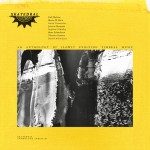


A label's tenth anniversary often arrives wrapped in nostalgia, complete with retrospective declarations and carefully polished myths. XKatedral chooses a more fitting celebration. "Anthology Series III" does not look backwards in search of monuments; it listens across a decade of work to reveal a network of ideas still in motion. Rather than asking what has been achieved, it quietly asks what sound can continue becoming when composers remain patient enough to follow its smallest transformations.
Across eight pieces written between 2014 and 2025, the anthology gathers artists who have helped define XKatedral's identity without ever reducing them to a shared aesthetic formula. Synthetic sound, acoustic instruments, algorithmic processes and spectral thinking form the common vocabulary, but each composer speaks with unmistakably individual inflection. The result feels less like a compilation than a carefully curated exhibition where every room changes the way the previous one is remembered.
The opening miniature, "My Falling Sinks", immediately demonstrates Kali Malone's remarkable gift for making restraint feel emotionally expansive. Built around a descending melody performed on a justly tuned organ with contributions from cellist Lucy Railton and guitarist Stephen O'Malley, the piece lasts barely four minutes, yet it seems to suspend ordinary notions of duration. The unusual tuning system lends each interval an almost tactile quality, as though harmony had briefly escaped the compromises of equal temperament and rediscovered its natural proportions.
From this quiet beginning, Maria W Horn unfolds "Empyrean Flare", one of the anthology's defining statements. Inspired in part by the Tintinnabuli principles developed by Arvo PÄrt, Horn animates supersaw oscillators through slowly circling harmonic motion while subtle glissandi gradually destabilise the apparent serenity. Analog tape saturation adds warmth without softening the composition's underlying tension. It resembles light filtered through thick clouds, beautiful precisely because it never settles into certainty.
David Granström's "Tessellation" shifts the emphasis toward generative synthesis, yet avoids the detached elegance often associated with algorithmic composition. Repeating tape loops establish patterns that continuously reorganise themselves, creating the sensation that structure is emerging spontaneously rather than being imposed from above. Mathematics becomes strangely lyrical here, suggesting that equations occasionally possess better emotional intelligence than the people writing them. A mildly unsettling thought, but the music makes a convincing case.
One of the anthology's quiet revelations is Jessica Ekomane's "To Whoever Shall Inherit The Earth". Recorded almost accidentally during a late-night session, the work carries an intimacy that no amount of meticulous planning could manufacture. Ekomane has consistently explored perception through complex electronic systems, yet here the emphasis falls on fragility rather than architecture. The title hints at legacy, but the music feels deeply rooted in the fleeting present, preserving an unrepeatable moment before it disappears.
Stephen O'Malley's "Smoking Mother" offers perhaps the anthology's most surprising contribution. Best known for overwhelming amplifier-driven soundscapes, O'Malley instead reveals a composer fascinated by resonance, ritual and gradual accumulation. Drawing distant inspiration from figures as diverse as Krzysztof Penderecki, Popol Vuh and the great Dhrupad master Zia Mohiuddin Dagar, the piece unfolds with meditative authority rather than sheer force. It is a reminder that intensity does not always require high volume. Sometimes it simply requires unwavering attention.
That same attentiveness permeates Mats Erlandsson's "Att Böja SjÄlarna", where violin and voice gently inhabit a spacious electronic environment. The title translates roughly as "To Bend Souls", and the music embraces that ambiguity without theatricality. Gaianeh Pilossian's violin and Sara Fors' voice never dominate the electronic textures; instead, they appear like fragile human traces inside an immense acoustic landscape.
The closing pair provides an elegant conclusion. Theodor Kentros' intriguingly titled "This Will Be My Last Piece For Organ" is less a farewell than an investigation into the organ's unstable acoustic behaviour, recreating its shifting frequencies through oscillators and resonant feedback. Whether it truly marks the composer's final encounter with the instrument is almost beside the point. Composers have a habit of making dramatic promises to themselves, only to return a few years later after hearing one particularly persuasive overtone.
Daniel M. Karlsson's "Fault Lines" ends the anthology with quiet grandeur. Built through deterministic generative methods and enriched by vocal performances from Sara Fors, Ansis Btiš and Artrs ukurs, the work explores fracture without collapse. Harmonic planes drift against one another like tectonic plates moving too slowly for ordinary perception, yet carrying immense emotional weight beneath the surface. It is an apt conclusion for a collection devoted to subtle transformation.
As with the previous volumes, the remastering preserves extraordinary clarity while allowing each work's physical presence to emerge naturally. Stephen O'Malley's understated design, Kali Malone's visual direction and Jordana Loeb's screen print reinforce XKatedral's long-standing commitment to presenting sound as a complete aesthetic experience rather than an isolated object.
Taken together, the three "Anthology" volumes document more than a decade of remarkable music, but "Series III" perhaps best captures XKatedral's deeper philosophy. These composers are not interested in novelty for its own sake, nor in preserving tradition as though it belonged behind museum glass. Instead, they treat sound as an endlessly evolving material whose smallest movements can reshape entire emotional landscapes. In doing so, they remind us that some of the most profound musical journeys occur not through dramatic departures, but through the almost imperceptible act of listening more carefully than before.
Across eight pieces written between 2014 and 2025, the anthology gathers artists who have helped define XKatedral's identity without ever reducing them to a shared aesthetic formula. Synthetic sound, acoustic instruments, algorithmic processes and spectral thinking form the common vocabulary, but each composer speaks with unmistakably individual inflection. The result feels less like a compilation than a carefully curated exhibition where every room changes the way the previous one is remembered.
The opening miniature, "My Falling Sinks", immediately demonstrates Kali Malone's remarkable gift for making restraint feel emotionally expansive. Built around a descending melody performed on a justly tuned organ with contributions from cellist Lucy Railton and guitarist Stephen O'Malley, the piece lasts barely four minutes, yet it seems to suspend ordinary notions of duration. The unusual tuning system lends each interval an almost tactile quality, as though harmony had briefly escaped the compromises of equal temperament and rediscovered its natural proportions.
From this quiet beginning, Maria W Horn unfolds "Empyrean Flare", one of the anthology's defining statements. Inspired in part by the Tintinnabuli principles developed by Arvo PÄrt, Horn animates supersaw oscillators through slowly circling harmonic motion while subtle glissandi gradually destabilise the apparent serenity. Analog tape saturation adds warmth without softening the composition's underlying tension. It resembles light filtered through thick clouds, beautiful precisely because it never settles into certainty.
David Granström's "Tessellation" shifts the emphasis toward generative synthesis, yet avoids the detached elegance often associated with algorithmic composition. Repeating tape loops establish patterns that continuously reorganise themselves, creating the sensation that structure is emerging spontaneously rather than being imposed from above. Mathematics becomes strangely lyrical here, suggesting that equations occasionally possess better emotional intelligence than the people writing them. A mildly unsettling thought, but the music makes a convincing case.
One of the anthology's quiet revelations is Jessica Ekomane's "To Whoever Shall Inherit The Earth". Recorded almost accidentally during a late-night session, the work carries an intimacy that no amount of meticulous planning could manufacture. Ekomane has consistently explored perception through complex electronic systems, yet here the emphasis falls on fragility rather than architecture. The title hints at legacy, but the music feels deeply rooted in the fleeting present, preserving an unrepeatable moment before it disappears.
Stephen O'Malley's "Smoking Mother" offers perhaps the anthology's most surprising contribution. Best known for overwhelming amplifier-driven soundscapes, O'Malley instead reveals a composer fascinated by resonance, ritual and gradual accumulation. Drawing distant inspiration from figures as diverse as Krzysztof Penderecki, Popol Vuh and the great Dhrupad master Zia Mohiuddin Dagar, the piece unfolds with meditative authority rather than sheer force. It is a reminder that intensity does not always require high volume. Sometimes it simply requires unwavering attention.
That same attentiveness permeates Mats Erlandsson's "Att Böja SjÄlarna", where violin and voice gently inhabit a spacious electronic environment. The title translates roughly as "To Bend Souls", and the music embraces that ambiguity without theatricality. Gaianeh Pilossian's violin and Sara Fors' voice never dominate the electronic textures; instead, they appear like fragile human traces inside an immense acoustic landscape.
The closing pair provides an elegant conclusion. Theodor Kentros' intriguingly titled "This Will Be My Last Piece For Organ" is less a farewell than an investigation into the organ's unstable acoustic behaviour, recreating its shifting frequencies through oscillators and resonant feedback. Whether it truly marks the composer's final encounter with the instrument is almost beside the point. Composers have a habit of making dramatic promises to themselves, only to return a few years later after hearing one particularly persuasive overtone.
Daniel M. Karlsson's "Fault Lines" ends the anthology with quiet grandeur. Built through deterministic generative methods and enriched by vocal performances from Sara Fors, Ansis Btiš and Artrs ukurs, the work explores fracture without collapse. Harmonic planes drift against one another like tectonic plates moving too slowly for ordinary perception, yet carrying immense emotional weight beneath the surface. It is an apt conclusion for a collection devoted to subtle transformation.
As with the previous volumes, the remastering preserves extraordinary clarity while allowing each work's physical presence to emerge naturally. Stephen O'Malley's understated design, Kali Malone's visual direction and Jordana Loeb's screen print reinforce XKatedral's long-standing commitment to presenting sound as a complete aesthetic experience rather than an isolated object.
Taken together, the three "Anthology" volumes document more than a decade of remarkable music, but "Series III" perhaps best captures XKatedral's deeper philosophy. These composers are not interested in novelty for its own sake, nor in preserving tradition as though it belonged behind museum glass. Instead, they treat sound as an endlessly evolving material whose smallest movements can reshape entire emotional landscapes. In doing so, they remind us that some of the most profound musical journeys occur not through dramatic departures, but through the almost imperceptible act of listening more carefully than before.
Comments
Stream
Browse by Genre
Industrial Music / Industrial Metal / Aggro Industrial / Electro Metal
Industrial Noise / Power Noise / Harsh Noise
Synth Pop / Electro Pop / Synth-Electronica
Techno / Trance / Goa / Drum'n'Bass / Jungle / Tribal / Trip-Hop
Ambient / Electronica / Ethereal / Dub / Soundscapes / Abstract
Experimental / Avantgarde / Weird & Wired / Glitch / Noise / Field Recording
Dark / Gothic / Wave / New Wave / Dark Wave / Industrial Gothic
New Music / Downtown / Avantgarde Jazz / New Classical / World