
Saturday, September 5, 2026
Røed Quartet: Red Nose Hymn
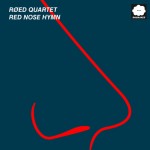


There is a curious confidence in naming your debut after a red nose. It immediately suggests that solemnity will not be mistaken for seriousness. Jazz, after all, has spent decades proving that technical sophistication and playfulness are perfectly capable of sharing the same stage, although musicians occasionally forget this and audiences politely pretend not to notice. "Red Nose Hymn" understands that the best improvisation often carries a smile just beneath its concentration.
Led by Norwegian saxophonist Aksel Røed, the newly formed Røed Quartet arrives with a record that feels remarkably assured for a first outing. Conceived initially for a commissioned performance at the Tedansfestival in 2024, the ensemble has evolved into something far more organic than a temporary project. Alongside trumpeter and flugelhorn player Lyder Røed, bassist Ola Høyer, and Swedish drummer Cornelia Nilsson, Aksel has assembled a quartet whose greatest strength lies not in dazzling virtuosity, though there is plenty of that, but in the quality of their collective listening.
The album openly acknowledges its debt to the golden age of 1960s jazz, yet never lapses into historical reenactment. Echoes of the post-bop revolution inevitably emerge throughout the record. One occasionally hears the conversational elasticity of Wayne Shorter's classic quartets, the melodic generosity associated with Blue Note recordings, or the spacious lyricism that has long characterised Scandinavian jazz. Yet these influences remain exactly that: points of departure rather than destinations. The music consistently sounds like four contemporary musicians speaking their own language while remaining fluent in jazz history.
Aksel Røed himself has steadily become one of the more compelling voices within Norway's vibrant jazz scene, working across projects that comfortably blur the boundaries between straight-ahead improvisation, progressive rock and freer forms of expression. His playing combines muscular tenor phrasing with an unusually lyrical instinct, capable of moving from robust declarations to whispering introspection without ever sounding self-conscious. Throughout "Red Nose Hymn", he avoids the temptation to dominate proceedings, preferring instead to shape conversations that allow every member of the quartet equal narrative weight.
That democratic spirit becomes immediately apparent in the opening "One Half Step for Me (A Whole Step for My Brother)". Even its title hints at affectionate humour, transforming a simple intervallic joke into something unexpectedly warm. The piece unfolds through elegant thematic development before opening into improvisations that never feel like obligatory solo showcases. Each musician builds upon ideas left suspended by the previous voice, creating a genuine sense of dialogue rather than sequential monologues.
The beautifully titled "Fanfare for Judee" introduces another dimension altogether. Whether consciously invoking the fragile introspection of Judee Sill or simply sharing her emotional atmosphere, the composition balances ceremonial grandeur with remarkable tenderness. Lyder Røed's trumpet and flugelhorn deserve particular praise here. His tone possesses that increasingly rare combination of clarity and vulnerability, capable of singing without excessive sentimentality. Rather than soaring above the ensemble, his lines seem to emerge naturally from within its harmonic fabric.
The title track occupies the emotional centre of the record. "Red Nose Hymn" plays wonderfully with apparent contradictions. A hymn traditionally suggests reverence, while a red nose evokes clowns, absurdity or perhaps quiet embarrassment. The composition itself inhabits precisely that delicate territory where dignity and vulnerability coexist. There is something profoundly human in acknowledging that grace occasionally arrives wearing ridiculous shoes.
Behind the melodic accessibility lies sophisticated craftsmanship. The quartet consistently favours subtle rhythmic elasticity over overt complexity. Cornelia Nilsson's drumming exemplifies this philosophy beautifully. Rather than filling every available space with displays of technical prowess, she shapes momentum through texture, dynamics and impeccable timing. Her playing constantly reminds us that restraint is often the most demanding form of virtuosity.
Ola Høyer's bass provides the album's quiet gravitational centre. Whether anchoring harmonies or engaging in fluid counterpoint, his contribution remains essential without ever demanding attention for its own sake. Like excellent architecture, one notices its importance most clearly when imagining its absence.
"Between the Wish and the World" perhaps best encapsulates the quartet's aesthetic. The title alone suggests that familiar territory where aspiration collides with reality, and the music mirrors that emotional ambiguity through patient thematic development and understated harmonic shifts. It is jazz that trusts implication more than declaration, allowing listeners to inhabit emotional spaces rather than simply observe them.
The closing "Time to Go" resists grand finales or explosive climaxes. Instead, it departs with quiet confidence, leaving behind the satisfying impression of a conversation concluded naturally rather than artificially extended. That sense of proportion characterises the album as a whole. Nothing feels excessive. Every note appears to have earned its place.
Recorded by Vetle Junker and sensitively mixed and mastered by Arne Martin Nybo, the production captures the quartet with admirable transparency. The acoustic space remains open enough for every instrumental interaction to breathe, preserving both intimacy and immediacy. One almost forgets the presence of microphones altogether, always a reliable sign that recording has become invisible.
"Red Nose Hymn" ultimately succeeds because it refuses both nostalgia and novelty for their own sake. Instead, it embraces a more demanding ambition: making honest music within a tradition that remains very much alive. The quartet demonstrates that jazz history is not a museum to be preserved behind glass but a language still capable of generating fresh conversations.
In a cultural landscape increasingly obsessed with constant reinvention, there is something quietly refreshing about musicians who understand that originality often emerges not from rejecting the past, but from listening to it carefully enough to discover where its unfinished sentences might still lead. The Røed Quartet has taken an impressive first step along that path, reminding us that sometimes the most memorable hymns are those unafraid to carry a little laughter inside their reverence.
Led by Norwegian saxophonist Aksel Røed, the newly formed Røed Quartet arrives with a record that feels remarkably assured for a first outing. Conceived initially for a commissioned performance at the Tedansfestival in 2024, the ensemble has evolved into something far more organic than a temporary project. Alongside trumpeter and flugelhorn player Lyder Røed, bassist Ola Høyer, and Swedish drummer Cornelia Nilsson, Aksel has assembled a quartet whose greatest strength lies not in dazzling virtuosity, though there is plenty of that, but in the quality of their collective listening.
The album openly acknowledges its debt to the golden age of 1960s jazz, yet never lapses into historical reenactment. Echoes of the post-bop revolution inevitably emerge throughout the record. One occasionally hears the conversational elasticity of Wayne Shorter's classic quartets, the melodic generosity associated with Blue Note recordings, or the spacious lyricism that has long characterised Scandinavian jazz. Yet these influences remain exactly that: points of departure rather than destinations. The music consistently sounds like four contemporary musicians speaking their own language while remaining fluent in jazz history.
Aksel Røed himself has steadily become one of the more compelling voices within Norway's vibrant jazz scene, working across projects that comfortably blur the boundaries between straight-ahead improvisation, progressive rock and freer forms of expression. His playing combines muscular tenor phrasing with an unusually lyrical instinct, capable of moving from robust declarations to whispering introspection without ever sounding self-conscious. Throughout "Red Nose Hymn", he avoids the temptation to dominate proceedings, preferring instead to shape conversations that allow every member of the quartet equal narrative weight.
That democratic spirit becomes immediately apparent in the opening "One Half Step for Me (A Whole Step for My Brother)". Even its title hints at affectionate humour, transforming a simple intervallic joke into something unexpectedly warm. The piece unfolds through elegant thematic development before opening into improvisations that never feel like obligatory solo showcases. Each musician builds upon ideas left suspended by the previous voice, creating a genuine sense of dialogue rather than sequential monologues.
The beautifully titled "Fanfare for Judee" introduces another dimension altogether. Whether consciously invoking the fragile introspection of Judee Sill or simply sharing her emotional atmosphere, the composition balances ceremonial grandeur with remarkable tenderness. Lyder Røed's trumpet and flugelhorn deserve particular praise here. His tone possesses that increasingly rare combination of clarity and vulnerability, capable of singing without excessive sentimentality. Rather than soaring above the ensemble, his lines seem to emerge naturally from within its harmonic fabric.
The title track occupies the emotional centre of the record. "Red Nose Hymn" plays wonderfully with apparent contradictions. A hymn traditionally suggests reverence, while a red nose evokes clowns, absurdity or perhaps quiet embarrassment. The composition itself inhabits precisely that delicate territory where dignity and vulnerability coexist. There is something profoundly human in acknowledging that grace occasionally arrives wearing ridiculous shoes.
Behind the melodic accessibility lies sophisticated craftsmanship. The quartet consistently favours subtle rhythmic elasticity over overt complexity. Cornelia Nilsson's drumming exemplifies this philosophy beautifully. Rather than filling every available space with displays of technical prowess, she shapes momentum through texture, dynamics and impeccable timing. Her playing constantly reminds us that restraint is often the most demanding form of virtuosity.
Ola Høyer's bass provides the album's quiet gravitational centre. Whether anchoring harmonies or engaging in fluid counterpoint, his contribution remains essential without ever demanding attention for its own sake. Like excellent architecture, one notices its importance most clearly when imagining its absence.
"Between the Wish and the World" perhaps best encapsulates the quartet's aesthetic. The title alone suggests that familiar territory where aspiration collides with reality, and the music mirrors that emotional ambiguity through patient thematic development and understated harmonic shifts. It is jazz that trusts implication more than declaration, allowing listeners to inhabit emotional spaces rather than simply observe them.
The closing "Time to Go" resists grand finales or explosive climaxes. Instead, it departs with quiet confidence, leaving behind the satisfying impression of a conversation concluded naturally rather than artificially extended. That sense of proportion characterises the album as a whole. Nothing feels excessive. Every note appears to have earned its place.
Recorded by Vetle Junker and sensitively mixed and mastered by Arne Martin Nybo, the production captures the quartet with admirable transparency. The acoustic space remains open enough for every instrumental interaction to breathe, preserving both intimacy and immediacy. One almost forgets the presence of microphones altogether, always a reliable sign that recording has become invisible.
"Red Nose Hymn" ultimately succeeds because it refuses both nostalgia and novelty for their own sake. Instead, it embraces a more demanding ambition: making honest music within a tradition that remains very much alive. The quartet demonstrates that jazz history is not a museum to be preserved behind glass but a language still capable of generating fresh conversations.
In a cultural landscape increasingly obsessed with constant reinvention, there is something quietly refreshing about musicians who understand that originality often emerges not from rejecting the past, but from listening to it carefully enough to discover where its unfinished sentences might still lead. The Røed Quartet has taken an impressive first step along that path, reminding us that sometimes the most memorable hymns are those unafraid to carry a little laughter inside their reverence.
Comments
Stream
Browse by Genre
Industrial Music / Industrial Metal / Aggro Industrial / Electro Metal
Industrial Noise / Power Noise / Harsh Noise
Synth Pop / Electro Pop / Synth-Electronica
Techno / Trance / Goa / Drum'n'Bass / Jungle / Tribal / Trip-Hop
Ambient / Electronica / Ethereal / Dub / Soundscapes / Abstract
Experimental / Avantgarde / Weird & Wired / Glitch / Noise / Field Recording
Dark / Gothic / Wave / New Wave / Dark Wave / Industrial Gothic
New Music / Downtown / Avantgarde Jazz / New Classical / World