
Emil Mark: Mellemtid
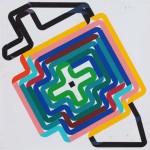
Artist: Emil Mark
Title: Mellemtid
Format: Download Only (MP3 + Lossless)
Label: Tonal Union (@)
Rated:

Title: Mellemtid
Format: Download Only (MP3 + Lossless)
Label: Tonal Union (@)
Rated:
Every generation eventually discovers the pipe organ and decides it can be something other than the soundtrack to solemn Sundays and gothic architecture. Some approach it with scholarly reverence, others with cinematic grandeur. Danish composer Emil Mark chooses a more refreshing strategy: he treats it like an intriguing machine he has just found abandoned in a basement and cannot resist taking apart to see how it works. As it happens, that is almost exactly how "Mellemtid" came into being.
Mark's debut for Tonal Union emerged from a fortunate coincidence during his studies in Electronic Music and Sound Art at the Danish National Academy of Music, where several forgotten practice organs quietly awaited someone curious enough to wake them. Having never seriously played the instrument before, he approached it without the burden of tradition. Rather than asking what an organ "should" sound like, he asked what it could become when filtered through sampling, digital processing and an ear shaped as much by minimalism as contemporary electronic music.
That innocence proves to be one of the record's greatest strengths. Mark is clearly aware of the lineage extending from Bach and Messiaen to more recent figures such as Kali Malone and Sara Davachi, yet "Mellemtid" never feels like an attempt to occupy the same shelf. It speaks another dialect altogether. The historical weight of the instrument remains present, but it is carried lightly, almost playfully, like someone wearing an antique coat with modern sneakers.
The composer's influences reveal themselves subtly. The structural patience of Morton Feldman, the process-oriented thinking of Steve Reich, the attentive listening advocated by Pauline Oliveros, even the restrained geometry of painter Agnes Martin all leave fingerprints on the music without ever becoming quotations. Mark absorbs these ideas rather than displaying them, allowing simple melodic cells and gently shifting repetitions to generate surprisingly rich emotional spaces.
Opening piece "Blomster" immediately establishes this approach. Beneath its delicate organ figures lies an understated melodic instinct that borders on pop without surrendering to obvious hooks. It feels welcoming rather than austere, inviting listeners into an environment where repetition functions less as hypnosis than quiet companionship.
That balance between accessibility and formal rigor continues throughout the EP. "I Vinden", inspired by Agnes Martin's minimalist visual language, unfolds through carefully arranged patterns whose apparent simplicity conceals meticulous internal movement. Tiny harmonic shifts gradually alter the emotional climate, much as changing sunlight transforms the same landscape over the course of an afternoon.
Perhaps the most fascinating aspect of "Mellemtid" is the dialogue between acoustic reality and digital intervention. Mark records the organs closely, isolating their pipes, mechanical noises and resonant bodies before reshaping them inside Ableton. Yet the electronic processing never feels like an attempt to disguise the source material. Instead, it extends the instrument's physical presence into impossible acoustic architectures. One sometimes loses track of where wood and metal end and software begins. In an era obsessed with authenticity, Mark quietly suggests that transformation can be just as truthful.
"Med Tog" exemplifies this beautifully. Built around subtle temporal displacements between repeating voices, the piece creates gentle harmonic instability without ever becoming disorienting. Lines drift slightly apart before finding unexpected alignments again, producing the sensation of several clocks agreeing on approximately the same time while refusing absolute precision. Considering that the album's title roughly translates as "meantime" and alludes to intermediate cycling times, the relationship between movement and temporality becomes one of its hidden conceptual threads.
Then comes "Rejser", which Mark jokingly describes as his own EDM track. It is a wonderfully misleading description. There are no drops, no explosive climaxes, no obligatory invitations to raise one's hands toward the nearest lighting rig. Instead, repetition itself becomes propulsion. The piece dances internally, generating momentum through evolving patterns rather than percussion. It is dance music for people who suspect that standing still can also be a choreography.
Throughout its five concise compositions, "Mellemtid" demonstrates remarkable restraint. Many contemporary ambient and minimalist releases mistake duration for depth, stretching modest ideas until patience becomes an endurance sport. Mark avoids that temptation. Every piece ends with the satisfying feeling that it has explored precisely the amount of territory it needed, no more and no less.
This sense of proportion reflects the composer's broader artistic personality. Although this EP centers on the organ, Mark has repeatedly described himself primarily as a multi-instrumentalist interested in exploring different sound worlds rather than establishing a permanent identity around a single instrument. That openness gives "Mellemtid" an appealing sense of discovery. It sounds less like the arrival of an established master than the beginning of an artist asking unusually good questions.
The irony, of course, is that one of Western music's oldest and most monumental instruments becomes, in Mark's hands, surprisingly light on its feet. The organ stops preaching and starts wondering. Its centuries of accumulated authority dissolve into curiosity, and curiosity has always made for better company.
For a debut, "Mellemtid" possesses an uncommon confidence. It neither rebels against tradition nor bows before it. Instead, Emil Mark simply opens the basement door, listens carefully to what history sounds like in the present tense, and invites us inside. Some discoveries begin with grand artistic manifestos. Others begin because someone wandered downstairs and noticed an old instrument waiting patiently in the dark. This EP reminds us that the second kind often lasts longer.
Mark's debut for Tonal Union emerged from a fortunate coincidence during his studies in Electronic Music and Sound Art at the Danish National Academy of Music, where several forgotten practice organs quietly awaited someone curious enough to wake them. Having never seriously played the instrument before, he approached it without the burden of tradition. Rather than asking what an organ "should" sound like, he asked what it could become when filtered through sampling, digital processing and an ear shaped as much by minimalism as contemporary electronic music.
That innocence proves to be one of the record's greatest strengths. Mark is clearly aware of the lineage extending from Bach and Messiaen to more recent figures such as Kali Malone and Sara Davachi, yet "Mellemtid" never feels like an attempt to occupy the same shelf. It speaks another dialect altogether. The historical weight of the instrument remains present, but it is carried lightly, almost playfully, like someone wearing an antique coat with modern sneakers.
The composer's influences reveal themselves subtly. The structural patience of Morton Feldman, the process-oriented thinking of Steve Reich, the attentive listening advocated by Pauline Oliveros, even the restrained geometry of painter Agnes Martin all leave fingerprints on the music without ever becoming quotations. Mark absorbs these ideas rather than displaying them, allowing simple melodic cells and gently shifting repetitions to generate surprisingly rich emotional spaces.
Opening piece "Blomster" immediately establishes this approach. Beneath its delicate organ figures lies an understated melodic instinct that borders on pop without surrendering to obvious hooks. It feels welcoming rather than austere, inviting listeners into an environment where repetition functions less as hypnosis than quiet companionship.
That balance between accessibility and formal rigor continues throughout the EP. "I Vinden", inspired by Agnes Martin's minimalist visual language, unfolds through carefully arranged patterns whose apparent simplicity conceals meticulous internal movement. Tiny harmonic shifts gradually alter the emotional climate, much as changing sunlight transforms the same landscape over the course of an afternoon.
Perhaps the most fascinating aspect of "Mellemtid" is the dialogue between acoustic reality and digital intervention. Mark records the organs closely, isolating their pipes, mechanical noises and resonant bodies before reshaping them inside Ableton. Yet the electronic processing never feels like an attempt to disguise the source material. Instead, it extends the instrument's physical presence into impossible acoustic architectures. One sometimes loses track of where wood and metal end and software begins. In an era obsessed with authenticity, Mark quietly suggests that transformation can be just as truthful.
"Med Tog" exemplifies this beautifully. Built around subtle temporal displacements between repeating voices, the piece creates gentle harmonic instability without ever becoming disorienting. Lines drift slightly apart before finding unexpected alignments again, producing the sensation of several clocks agreeing on approximately the same time while refusing absolute precision. Considering that the album's title roughly translates as "meantime" and alludes to intermediate cycling times, the relationship between movement and temporality becomes one of its hidden conceptual threads.
Then comes "Rejser", which Mark jokingly describes as his own EDM track. It is a wonderfully misleading description. There are no drops, no explosive climaxes, no obligatory invitations to raise one's hands toward the nearest lighting rig. Instead, repetition itself becomes propulsion. The piece dances internally, generating momentum through evolving patterns rather than percussion. It is dance music for people who suspect that standing still can also be a choreography.
Throughout its five concise compositions, "Mellemtid" demonstrates remarkable restraint. Many contemporary ambient and minimalist releases mistake duration for depth, stretching modest ideas until patience becomes an endurance sport. Mark avoids that temptation. Every piece ends with the satisfying feeling that it has explored precisely the amount of territory it needed, no more and no less.
This sense of proportion reflects the composer's broader artistic personality. Although this EP centers on the organ, Mark has repeatedly described himself primarily as a multi-instrumentalist interested in exploring different sound worlds rather than establishing a permanent identity around a single instrument. That openness gives "Mellemtid" an appealing sense of discovery. It sounds less like the arrival of an established master than the beginning of an artist asking unusually good questions.
The irony, of course, is that one of Western music's oldest and most monumental instruments becomes, in Mark's hands, surprisingly light on its feet. The organ stops preaching and starts wondering. Its centuries of accumulated authority dissolve into curiosity, and curiosity has always made for better company.
For a debut, "Mellemtid" possesses an uncommon confidence. It neither rebels against tradition nor bows before it. Instead, Emil Mark simply opens the basement door, listens carefully to what history sounds like in the present tense, and invites us inside. Some discoveries begin with grand artistic manifestos. Others begin because someone wandered downstairs and noticed an old instrument waiting patiently in the dark. This EP reminds us that the second kind often lasts longer.
Comments
Stream
Browse by Genre
Industrial Music / Industrial Metal / Aggro Industrial / Electro Metal
Industrial Noise / Power Noise / Harsh Noise
Synth Pop / Electro Pop / Synth-Electronica
Techno / Trance / Goa / Drum'n'Bass / Jungle / Tribal / Trip-Hop
Ambient / Electronica / Ethereal / Dub / Soundscapes / Abstract
Experimental / Avantgarde / Weird & Wired / Glitch / Noise / Field Recording
Dark / Gothic / Wave / New Wave / Dark Wave / Industrial Gothic
New Music / Downtown / Avantgarde Jazz / New Classical / World