
Raphael Loher: Figuren
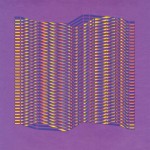


There is a peculiar kind of musical archaeology involved in "Figuren". Raphael Loher does not excavate old recordings merely to preserve their remains, nor does he treat them as convenient material for the usual ambient makeover. He takes performances that already existed, separates them into melodic fragments, isolated tones and resonances, subjects some of them to tape manipulation, changes their pitch and then rebuilds the results into something that no longer behaves like its source. The past is not remembered here. It is repeatedly disassembled until it starts behaving differently.
This is particularly significant because Loher is a pianist. His previous work has often begun with the physical presence of the instrument, whether through preparation, altered tuning, pedals or unusually concentrated playing. His 2022 debut "Keemuun" reduced the piano's enormous possibilities to a remarkably restricted field, while "Hug of Gravity" subsequently took recordings of those performances and stretched their relationships across much longer durations. Loher is also active in the Swiss improvisation scene through Baumschule, with Manuel Troller and Julian Sartorius, and KALI Trio, alongside Urs Müller and Nicolas Stocker. His musical personality therefore makes the apparent retreat from the piano in "Figuren" rather more interesting than a simple change of equipment. He is not abandoning his instrument so much as questioning how much of an instrument needs to remain audible for its musical identity to survive.
The source material consists of ten intimate performances of "Keemuun", recorded during the pandemic for audiences of only one or two people. During a residency in the Blenio Valley, Loher pulled those recordings apart and generated around thirty preliminary pieces from their constituent material. Some of that process informed "Hug of Gravity"; "Figuren" pushes the same family of ideas further, passing selected fragments through a Revox B77 before digitising and reshaping them again. The resulting album is consequently less like a set of compositions than a series of carefully engineered mutations. There is something almost perversely patient about making music this way. Most people edit because they want to finish. Loher edits because apparently finishing was not complicated enough.
"Figuren I" opens with a few hesitant melodic shapes whose edges seem slightly softened by repetition. The notes do not arrive with the authority of piano statements anymore. They have become objects whose previous identity can still be sensed, but not entirely recovered. Their recurrence is important: each return places the same material in a subtly different context, so that memory itself becomes part of the arrangement. A tiny alteration in decay or pitch can make a familiar figure appear less familiar without actually changing its basic outline.
That tension between recognition and estrangement runs through the record. "Figuren II" is more rhythmically articulate, built from small gestures that seem to overlap imperfectly. The music has a pulse, but not one generous enough to qualify as a beat. Instead, rhythmic information emerges from repetition, interruption and slight displacement. It is a wonderfully economical trick. Loher does not need to create a complex rhythm when he can allow two simple patterns to disagree politely.
The pieces remain short enough to resist the grand architectural gestures of "Hug of Gravity". "Figuren III" and "Figuren IV" pass through sparse melodic configurations in which silence and decay are as consequential as the notes themselves. The effect is not empty space but a heightened awareness of what remains after a sound has stopped. Loher's fascination with reduction becomes particularly clear here: he keeps taking information away until the remaining material starts carrying disproportionate weight.
There is also a quiet strangeness to the tape process. A Revox B77 is not merely a nostalgic prop in this context. Its ability to alter speed and therefore pitch introduces a physical instability into material that could otherwise have been manipulated entirely within a computer. That matters because the slight imperfections of analogue treatment give the fragments a history. Even when the final pieces sound extremely clean, there is a sense that the tones have travelled somewhere before arriving in their present form.
"Figuren V" is among the album's more finely balanced constructions, with fragments appearing to orbit one another without settling into a conventional progression. The result is deceptively simple. One hears a small amount of material, but the relationships between its repetitions keep changing. This is where the comparison with Morton Feldman becomes useful, not because Loher imitates Feldman's language, but because both composers understand that duration can make apparently modest events acquire enormous perceptual significance.
The connection with William Basinski is equally tempting, particularly because both artists have discovered how much expressive information can be extracted from repetition and deterioration. Yet Loher's method is more interventionist. He is not simply allowing old material to decay. He actively rearranges it, alters its pitch and changes the scale at which its components operate. The music therefore feels less like a tape loop gradually losing its original shape and more like an image being photocopied, cut apart and reconstructed by someone who keeps becoming interested in a different detail.
"Figuren VI" introduces a darker tension, with a low recurring presence set against more fragmented harmonic material. The simplicity of the components makes their collision unusually effective. There is no need for a dramatic crescendo because the friction is already embedded in the patterns themselves. One begins to hear the record's “figures” not as melodies in the conventional sense but as small behavioural units: they repeat, hesitate, collide, drift apart and occasionally seem to anticipate one another.
"Figuren VII" is perhaps the most delicate of the shorter pieces, while the concluding "Figuren VIII" allows the material more time to accumulate. Its slightly awkward repetitions and unstable harmonic relations give the ending an intriguing ambiguity. It does not provide closure in the conventional sense. Instead, the final piece feels as though the album has arrived at another arrangement of the same unresolved materials. The circle is not completed so much as redrawn with a slightly different radius.
This makes the title "Figuren" particularly apt. The German word can suggest figures, forms, characters or shapes, and Loher's pieces occupy all those meanings without settling on one. A figure can be a melody, a rhythmic cell, a recurring sonic object, or simply a pattern that becomes recognisable through repetition. Here, each one is provisional. Its identity depends upon where it appears and what surrounds it.
The record's greatest strength is therefore not its resemblance to ambient music, minimalism or experimental electronics, although it comfortably touches all three. It is the unusual precision with which Loher manages the threshold between composition and transformation. The original performances are not merely quoted, but neither are they completely erased. Their physical memory survives in altered form. What began as piano playing has become a collection of traces that no longer need the piano to make sense.
That is a surprisingly rich proposition for a record so restrained. "Figuren" does not demand attention through volume, density or dramatic development. It operates by making small discrepancies matter. A repeated note shifts slightly; a loop seems to lose its balance; two fragments briefly occupy the same rhythmic space; a resonance lasts just long enough to change the meaning of the next sound. The listener is gradually trained to notice distinctions that would be almost invisible in a more crowded piece of music.
There is something almost comic about how much technological labour has gone into producing music that can sound so modest. Ten performances, a residency, around thirty preliminary pieces, tape processing, pitch alterations, digitisation, recombination and further editing have ultimately produced eight compact compositions. Humanity has invented computers, tape machines and digital audio workstations, only to use them to make a three-minute fragment wait very patiently before becoming interesting. Fortunately, in Loher's case, the patience pays off.
Figuren is less concerned with making new sounds than with discovering how differently an existing sound can behave once its context has been dismantled. That gives the album an unusually intimate quality. The music feels close to its source material without ever becoming nostalgic for it. What survives is not the performance itself but its potential for another life.
In that sense, Loher's deliberate distance from the piano is not really a departure from his earlier work. It is its logical consequence. Having reduced the instrument, altered it, recorded it and reconsidered it, he now treats its sounds as raw material rather than as evidence of pianistic performance. The instrument has become less visible precisely because Loher has learned how much can be done with what it leaves behind.
Figuren ultimately succeeds through this modest act of refusal: it refuses the piano its traditional authority, refuses repetition its usual predictability, and refuses ambient music the obligation to be merely soothing. Its eight pieces are small, but they are not slight. They behave like fragments of something larger whose original outline may no longer matter. What matters is the strange new coherence they acquire after being taken apart.
This is particularly significant because Loher is a pianist. His previous work has often begun with the physical presence of the instrument, whether through preparation, altered tuning, pedals or unusually concentrated playing. His 2022 debut "Keemuun" reduced the piano's enormous possibilities to a remarkably restricted field, while "Hug of Gravity" subsequently took recordings of those performances and stretched their relationships across much longer durations. Loher is also active in the Swiss improvisation scene through Baumschule, with Manuel Troller and Julian Sartorius, and KALI Trio, alongside Urs Müller and Nicolas Stocker. His musical personality therefore makes the apparent retreat from the piano in "Figuren" rather more interesting than a simple change of equipment. He is not abandoning his instrument so much as questioning how much of an instrument needs to remain audible for its musical identity to survive.
The source material consists of ten intimate performances of "Keemuun", recorded during the pandemic for audiences of only one or two people. During a residency in the Blenio Valley, Loher pulled those recordings apart and generated around thirty preliminary pieces from their constituent material. Some of that process informed "Hug of Gravity"; "Figuren" pushes the same family of ideas further, passing selected fragments through a Revox B77 before digitising and reshaping them again. The resulting album is consequently less like a set of compositions than a series of carefully engineered mutations. There is something almost perversely patient about making music this way. Most people edit because they want to finish. Loher edits because apparently finishing was not complicated enough.
"Figuren I" opens with a few hesitant melodic shapes whose edges seem slightly softened by repetition. The notes do not arrive with the authority of piano statements anymore. They have become objects whose previous identity can still be sensed, but not entirely recovered. Their recurrence is important: each return places the same material in a subtly different context, so that memory itself becomes part of the arrangement. A tiny alteration in decay or pitch can make a familiar figure appear less familiar without actually changing its basic outline.
That tension between recognition and estrangement runs through the record. "Figuren II" is more rhythmically articulate, built from small gestures that seem to overlap imperfectly. The music has a pulse, but not one generous enough to qualify as a beat. Instead, rhythmic information emerges from repetition, interruption and slight displacement. It is a wonderfully economical trick. Loher does not need to create a complex rhythm when he can allow two simple patterns to disagree politely.
The pieces remain short enough to resist the grand architectural gestures of "Hug of Gravity". "Figuren III" and "Figuren IV" pass through sparse melodic configurations in which silence and decay are as consequential as the notes themselves. The effect is not empty space but a heightened awareness of what remains after a sound has stopped. Loher's fascination with reduction becomes particularly clear here: he keeps taking information away until the remaining material starts carrying disproportionate weight.
There is also a quiet strangeness to the tape process. A Revox B77 is not merely a nostalgic prop in this context. Its ability to alter speed and therefore pitch introduces a physical instability into material that could otherwise have been manipulated entirely within a computer. That matters because the slight imperfections of analogue treatment give the fragments a history. Even when the final pieces sound extremely clean, there is a sense that the tones have travelled somewhere before arriving in their present form.
"Figuren V" is among the album's more finely balanced constructions, with fragments appearing to orbit one another without settling into a conventional progression. The result is deceptively simple. One hears a small amount of material, but the relationships between its repetitions keep changing. This is where the comparison with Morton Feldman becomes useful, not because Loher imitates Feldman's language, but because both composers understand that duration can make apparently modest events acquire enormous perceptual significance.
The connection with William Basinski is equally tempting, particularly because both artists have discovered how much expressive information can be extracted from repetition and deterioration. Yet Loher's method is more interventionist. He is not simply allowing old material to decay. He actively rearranges it, alters its pitch and changes the scale at which its components operate. The music therefore feels less like a tape loop gradually losing its original shape and more like an image being photocopied, cut apart and reconstructed by someone who keeps becoming interested in a different detail.
"Figuren VI" introduces a darker tension, with a low recurring presence set against more fragmented harmonic material. The simplicity of the components makes their collision unusually effective. There is no need for a dramatic crescendo because the friction is already embedded in the patterns themselves. One begins to hear the record's “figures” not as melodies in the conventional sense but as small behavioural units: they repeat, hesitate, collide, drift apart and occasionally seem to anticipate one another.
"Figuren VII" is perhaps the most delicate of the shorter pieces, while the concluding "Figuren VIII" allows the material more time to accumulate. Its slightly awkward repetitions and unstable harmonic relations give the ending an intriguing ambiguity. It does not provide closure in the conventional sense. Instead, the final piece feels as though the album has arrived at another arrangement of the same unresolved materials. The circle is not completed so much as redrawn with a slightly different radius.
This makes the title "Figuren" particularly apt. The German word can suggest figures, forms, characters or shapes, and Loher's pieces occupy all those meanings without settling on one. A figure can be a melody, a rhythmic cell, a recurring sonic object, or simply a pattern that becomes recognisable through repetition. Here, each one is provisional. Its identity depends upon where it appears and what surrounds it.
The record's greatest strength is therefore not its resemblance to ambient music, minimalism or experimental electronics, although it comfortably touches all three. It is the unusual precision with which Loher manages the threshold between composition and transformation. The original performances are not merely quoted, but neither are they completely erased. Their physical memory survives in altered form. What began as piano playing has become a collection of traces that no longer need the piano to make sense.
That is a surprisingly rich proposition for a record so restrained. "Figuren" does not demand attention through volume, density or dramatic development. It operates by making small discrepancies matter. A repeated note shifts slightly; a loop seems to lose its balance; two fragments briefly occupy the same rhythmic space; a resonance lasts just long enough to change the meaning of the next sound. The listener is gradually trained to notice distinctions that would be almost invisible in a more crowded piece of music.
There is something almost comic about how much technological labour has gone into producing music that can sound so modest. Ten performances, a residency, around thirty preliminary pieces, tape processing, pitch alterations, digitisation, recombination and further editing have ultimately produced eight compact compositions. Humanity has invented computers, tape machines and digital audio workstations, only to use them to make a three-minute fragment wait very patiently before becoming interesting. Fortunately, in Loher's case, the patience pays off.
Figuren is less concerned with making new sounds than with discovering how differently an existing sound can behave once its context has been dismantled. That gives the album an unusually intimate quality. The music feels close to its source material without ever becoming nostalgic for it. What survives is not the performance itself but its potential for another life.
In that sense, Loher's deliberate distance from the piano is not really a departure from his earlier work. It is its logical consequence. Having reduced the instrument, altered it, recorded it and reconsidered it, he now treats its sounds as raw material rather than as evidence of pianistic performance. The instrument has become less visible precisely because Loher has learned how much can be done with what it leaves behind.
Figuren ultimately succeeds through this modest act of refusal: it refuses the piano its traditional authority, refuses repetition its usual predictability, and refuses ambient music the obligation to be merely soothing. Its eight pieces are small, but they are not slight. They behave like fragments of something larger whose original outline may no longer matter. What matters is the strange new coherence they acquire after being taken apart.
Comments
Stream
Browse by Genre
Industrial Music / Industrial Metal / Aggro Industrial / Electro Metal
Industrial Noise / Power Noise / Harsh Noise
Synth Pop / Electro Pop / Synth-Electronica
Techno / Trance / Goa / Drum'n'Bass / Jungle / Tribal / Trip-Hop
Ambient / Electronica / Ethereal / Dub / Soundscapes / Abstract
Experimental / Avantgarde / Weird & Wired / Glitch / Noise / Field Recording
Dark / Gothic / Wave / New Wave / Dark Wave / Industrial Gothic
New Music / Downtown / Avantgarde Jazz / New Classical / World