
Monday, November 16, 2026
Portion Control: 1983-86 - Hit The Pulse to Purge…
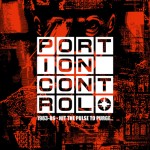
Artist: Portion Control (@)
Title: 1983-86 - Hit The Pulse to Purge…
Format: CD x 4 (quadruple CD boxset)
Label: Artoffact (@)
Rated:

Title: 1983-86 - Hit The Pulse to Purge…
Format: CD x 4 (quadruple CD boxset)
Label: Artoffact (@)
Rated:
There is something pleasingly perverse about a band called Portion Control delivering a four-CD collection that contains enough material to keep an industrial dancefloor occupied until the building is condemned. Formed in London in 1979, Portion Control emerged from the post-punk underground with an approach to electronic music that was abrasive, rhythmically inventive and distinctly uninterested in behaving itself. Their importance is often measured through the artists who followed their lead, from Depeche Mode and Nitzer Ebb to Skinny Puppy, Front Line Assembly, Nine Inch Nails and Orbital. Yet influence can be a rather lazy form of historical recognition: it tells us who borrowed from whom, but not necessarily why the original music still deserves attention. "1983-86 - Hit The Pulse to Purge…" makes a fairly convincing case for listening to the source rather than merely admiring its descendants.
The collection covers a particularly fertile stretch of the group's history, bringing together the "Hit The Pulse" mini-album (1983), "..Step Forward" (1984), "Psycho-Bod Saves The World" (1986), the "Purge" EP and a selection of singles, B-sides, rarities, remixes, demos and live recordings. Its opening disc establishes the group's distinctive vocabulary: sequenced electronic patterns, hard-edged percussion, rough vocal delivery and bass lines that seem to have been designed with the express purpose of making furniture nervous. But the music is not simply an exercise in mechanical aggression. There is a strong sense of songcraft beneath the rough surfaces, with hooks, structural shifts and an instinct for rhythmic tension that prevent the material from becoming a monotonous parade of electronic blunt instruments.
The early tracks retain something of post-punk's unruly spirit, although guitars are largely replaced by synthesiser sequences and sampled fragments. Portion Control's relationship with technology was experimental in a practical rather than romantic sense. In the early days, the group worked with an ARP Axxe, Roland CR-78 drum machine and the Greengate DS:3 sampling system running on an Apple II computer, an arrangement whose limitations were apparently more productive than discouraging. Sampling was still a relatively young technique, and the available equipment offered little of the convenience that contemporary producers take for granted. The band's solution was not to wait for better tools, but to find ways of making the existing ones misbehave. Their early fascination with dub, particularly its use of echo, space and repetition, also helped distinguish their sound from the more straightforward electronic constructions of the period.
That mixture of rhythmic discipline and unruly detail is especially evident in "Hit The Pulse" and the material surrounding it. Tracks such as “Chew You To Bits”, “Discord” and “Death By Venom” have a wiry, confrontational energy, while “Abbo Dabbo” demonstrates that the group's sense of humour was not confined to the occasional eccentric title. The subsequent singles “Raise The Pulse”, “Rough Justice” and “Go-Talk” move more decisively towards the dancefloor, stretching the rhythmic framework into longer forms without sanding away the band's abrasive character. Their appeal lies partly in the tension between physical immediacy and sonic oddness: these are records that can make a body move while leaving the brain wondering what exactly has just happened.
"..Step Forward" marks another important stage in that development. The increased use of sequenced synthesiser lines, including the Roland MC-202, gives the music a more defined electronic architecture. “Havoc Man” and “Refugee” are particularly revealing examples of the band's ability to construct momentum through interlocking patterns rather than relying on conventional instrumental gestures. There is a curious balance between precision and volatility: the sequences are tightly controlled, but the vocals and surrounding textures retain a distinctly human roughness. The result is neither polished synth-pop nor industrial noise in its most uncompromising form. Portion Control occupied a productive patch of territory between the two, and seemed quite happy to leave the borders unmarked.
The second disc brings "Psycho-Bod Saves The World" into focus, alongside the "Purge" material and later reconstructions. The album's title alone suggests that the group had no intention of allowing solemnity to become a permanent condition. Its music continues the band's interest in forceful electronic rhythm, but the collection's broader range becomes more apparent here. “Brain Scraper Death Dive”, “Siren City”, “Danger Zone” and “Cut And Thrust” demonstrate different shades of the group's approach, from compact rhythmic assaults to more developed, dance-oriented constructions. The humour embedded in the titles is worth noting, too. Portion Control have always understood that darkness need not be accompanied by a compulsory facial expression suggesting a particularly difficult tax audit.
The "Purge" versions of “Raise The Pulse”, “Go-Talk” and “The Great Divide” provide an interesting opportunity to compare the band's treatment of familiar material. The latter, in particular, appears in several forms across the set, making its development one of the collection's recurring reference points. Rhys Fulber's rebuild of “Refugee” adds a later perspective, connecting the original recording with one of the artists whose work grew out of the same electro-industrial lineage. It is a useful inclusion, although the original remains essential to understanding the band's own musical language.
The third disc, devoted to B-sides, compilation appearances and demos, is where the collection becomes especially valuable to listeners interested in the mechanics of the creative process. Some of this material is less immediately accessible than the principal album tracks, but that is hardly a fault. “The Man Who Did Backwards Somersaults”, “Upside Down” and “Justice” reveal a group willing to explore less predictable structures, while the two demos of “H.O.T. Matter” offer a glimpse of how a composition can change during development. The Arthur Baker demo mix of “Conscience” is another welcome archival detail. These recordings do not merely pad out the running time; they broaden the picture of a band whose catalogue was never limited to a handful of genre-defining singles.
The final disc moves from the studio to two live recordings, captured in Amsterdam in 1984 and Lausanne in 1985. Their value is partly historical, but also musical: tracks such as “Eat Your Heart”, “Go-Talk”, “Raise The Pulse”, “Karateka” and “Havoc Man” acquire a different character when heard in performance. The sound is less controlled, the transitions more exposed, and the material's physical qualities become harder to ignore. These are documents rather than pristine concert productions, which is precisely why they belong here. They offer a useful reminder that Portion Control's music was never intended to remain safely inside the circuitry of a recording studio.
As an archival release, "1983-86 - Hit The Pulse to Purge…" is impressively comprehensive. All the material has been remastered by Paul Lavigne at Kontrast Mastering, while the 24-page booklet and archive photographs give the package a welcome visual dimension. The limited red-vinyl edition, with ten selected tracks, offers a more compact entry point, but the four-CD version is plainly the more rewarding option for anyone wanting to understand the full scope of this period. Its sheer length can occasionally test one's attention, and not every demo or alternate version is likely to become indispensable. That is an inevitable consequence of opening the archive rather than simply selecting the most obvious highlights.
Portion Control's subsequent return in the 2000s, followed by records such as "Wellcome", "Filthy White Guy" and "Pure Form", demonstrated that the group was not interested in treating its early catalogue as a museum exhibit. Their later work continued to develop the same interest in electronic construction, texture and rhythmic force, using newer tools without abandoning the independence that had shaped their beginnings. This collection therefore feels less like a nostalgic detour than an opportunity to reconsider a group whose historical importance has sometimes exceeded its public visibility.
The best thing about "1983-86 - Hit The Pulse to Purge…" is that it does not need to rely on influence as its main selling point. The music remains inventive, energetic and occasionally gloriously peculiar on its own terms. Portion Control were not simply preparing the ground for other artists to build something more commercially successful upon it. They were making records with their own personality, their own sense of rhythm and a healthy disregard for the boundaries between experimentation and entertainment. Forty years later, the pulse is still very much present. The purge, apparently, can wait.
Comments
Stream
Browse by Genre
Industrial Music / Industrial Metal / Aggro Industrial / Electro Metal
Industrial Noise / Power Noise / Harsh Noise
Synth Pop / Electro Pop / Synth-Electronica
Techno / Trance / Goa / Drum'n'Bass / Jungle / Tribal / Trip-Hop
Ambient / Electronica / Ethereal / Dub / Soundscapes / Abstract
Experimental / Avantgarde / Weird & Wired / Glitch / Noise / Field Recording
Dark / Gothic / Wave / New Wave / Dark Wave / Industrial Gothic
New Music / Downtown / Avantgarde Jazz / New Classical / World