
Tuesday, November 24, 2026
Roxanne Turcotte: Sillages
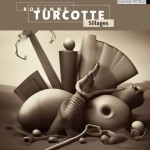


Roxanne Turcotte's idea of "cinemasonics" provides a useful key to the album. She describes an approach in which sound takes on the expressive role usually assigned to images, through overlapping layers, spatial organisation and the contrapuntal interaction of different timbres. The analogy with cinema is not simply about creating atmosphere or supplying imaginary pictures. It is about allowing several strands of material, each with its own history and identity, to develop simultaneously. In "Sillages", these strands include electronic constructions, recordings of everyday environments, animal calls, instrumental performances, fragments of speech and sounds whose original purpose may be difficult to identify. The result is a collection of six compositions that often feels closer to an edited documentary with an unusually adventurous soundtrack than to a conventional electroacoustic album.
Turcotte has a long history in this territory. Originally trained as a pianist at the Conservatoire de musique de Montréal, she went on to study electroacoustic composition with Marcelle Deschênes and Francis Dhomont at the Université de Montréal, becoming the first woman to obtain a master's degree in the discipline there in 1988. Her professional activity has extended into television, cinema, radio, theatre, dance, circus arts and multimedia installations. She has also received numerous distinctions, including the SOCAN Jan V. Matejcek Award for New Classical Music in 2021. Her work has consistently crossed the boundary between composition and sound design, and "Sillages" demonstrates how naturally she can move between those practices without reducing either to a supporting role.
“Gradation” opens the album with material drawn from two unusual instruments invented by Jean-François Laporte of Totem contemporain: the siren organ and the Babel table. Rather than treating their sounds as conventional instrumental performances, Turcotte selects recordings from an extensive sound bank and incorporates them into a composition concerned with escalation, transformation and eventual collapse. The piece develops through successive increases in intensity, suggesting a life cycle in which energy accumulates before subsiding into something more mysterious. Its imagery moves between mythical creatures, ritual, euphoria and extinction, but the music does not need to illustrate each reference literally. Its interest lies in the shifting relationship between recognisable gestures and less easily classified acoustic material. There is a certain irony in beginning a record about historical traces with instruments that sound as though they have arrived from a future civilisation whose technical documentation has been misplaced.
“Haïku” offers a more concentrated change of perspective. Lasting just over four minutes, it uses recordings made in and around Tokyo in 2025, combining urban and natural environments with fragments drawn from Turcotte's sound archive. Bells, voices and familiar objects become part of a miniature portrait of a place, but the composition is not simply a travel souvenir. Its references to ecological and human traces give the piece a more reflective dimension, while its brevity prevents the material from becoming over-explained. The work also acknowledges Belgian composer Annette Vande Gorne, whose "Haïkus" provided inspiration for some passages. It is a delicate interlude, though not an entirely tranquil one: cities have a habit of reminding us that even the most carefully composed moment is surrounded by other people's noise.
The album's central piece, “Artéfacts”, is also its most ambitious. Everyday objects, insects, recordings made during travels to the Seychelles and New Zealand, and fragments of spoken material are brought together in a composition that considers the relationship between human memory and the much longer history of life on Earth. Turcotte's fascination with cicadas is particularly revealing. Their extraordinary evolutionary age, underground development and brief adult existence provide a natural parallel for the way memories survive, sometimes long after the circumstances that produced them have disappeared. The piece also incorporates voices by actor Laurent Poitrenaux, excerpts from theatrical works and fragments of radio interviews recorded across several decades. These passages function as structural interruptions, but they also introduce a distinctly human dimension into the surrounding acoustic activity. Historical voices do not merely provide documentary evidence; they become performers in a composition whose cast includes insects, objects, machines and people who may no longer be alive. It is an expansive idea, and one that gives the album its strongest sense of purpose.
“Réel / Irréel” changes the scale again. Developed through the Sampo system, an electronic device designed by Alexander Mihalic to simplify the connection and control of acoustic instruments in live electronic performance, the work transforms the clarinet into an augmented instrument. Its title points towards the unstable relationship between the physical performer and the electronically modified result. The piece began as an exploration with clarinettist Laurent Fléchier and was later adapted into an imaginary duet involving bass clarinet and prerecorded video. The distinction between the instrument's natural voice and its electronically altered counterpart becomes a productive source of ambiguity. There is something pleasingly paradoxical about using technology designed to make live performance less cumbersome to create a work concerned with the uncertainty of what we are actually hearing.
“L'heure dorée” is among the album's most emotionally direct compositions. Its central instrument is the Armenian duduk, played here by Michel Dubeau, accompanied by Julien Grégoire on the udu and by a multichannel electronic component. The duduk's expressive, breath-like tone provides a melodic focus for a work that considers the landscapes of the Middle East and Armenia, while also addressing the human consequences of war, poverty and political oppression. Turcotte's text makes explicit reference to the suffering of Palestinians, Lebanese and Armenians, as well as the conditions faced by women in Afghanistan and Iran. The music's restrained sense of hope is therefore not an attempt to soften these realities. Rather, it gives the melody a fragile dignity, allowing the instrumental voice to carry an emotional weight that would be difficult to achieve through a more literal treatment. The recurring sound of sand, represented through recordings from the Îles-de-la-Madeleine and the movement of the udu, adds another geographical dimension to the composition. Different places meet without being confused with one another.
The closing “Forêt boréale” brings the album back to the natural environment, but with an intimacy that distinguishes it from the earlier travel recordings. Turcotte combines birdsongs with performances by four wind players, including flutes, ocarina and percussion, integrating processed instrumental sounds into the electronic composition. The work is dedicated in part to Chantal Dumas, whose radio piece "Le son-refuge" had a lasting influence on the composer. Turcotte's own experience volunteering at a wildlife rehabilitation centre also informs the piece. Her account of caring for injured birds, orphaned chicks and animals that have become dependent on human environments gives the composition a personal significance beyond the usual celebration of nature's beauty. Some of the birds she encountered had even learned to imitate mobile-phone ringtones and domestic sounds. One can hardly blame them: humans have been exporting their irritating habits into the natural world for quite some time. Yet the composition is not a complaint. Its exchanges between instrumentalists and recorded birds create a thoughtful musical relationship between human intervention and the independent activity of other species.
The album's dedication to Serge Arcuri, Chantal Dumas and several of Turcotte's mentors, including Francis Dhomont, Marcelle Deschênes, José Evangelista and Serge Garant, gives these different subjects an additional emotional connection. It is not a collection of memorial pieces in the conventional sense, but the presence of those who shaped the composer's life and artistic development is felt throughout. The recordings of voices, animals, instruments and environments all become part of a wider consideration of what survives and what disappears. The title "Sillages" is particularly appropriate in this respect: a wake is visible only because something has passed through a medium, leaving behind a temporary alteration. The original presence may be gone, but its effects remain perceptible.
There is, admittedly, a great deal happening here. The rapid changes of scale and subject, from the synthetic experiments of “Gradation” to the intimate instrumental writing of “L'heure dorée”, can make the album feel more like a carefully assembled exhibition than a continuous musical statement. The conceptual explanations are also unusually detailed, occasionally threatening to turn the listening experience into an exercise in reading the programme notes before allowing the music to speak. Yet Turcotte's compositional intelligence generally keeps these different strands from becoming an assortment of unrelated curiosities. Her ability to integrate environmental recordings, electronic transformations and live instrumental material gives the album a recognisable identity without forcing every composition into the same mould.
Released by empreintes DIGITALes, a label whose catalogue has been closely associated with electroacoustic and acousmatic music since 1990, "Sillages" is a persuasive example of how the documentary and the imaginative can coexist within a single musical language. Turcotte does not simply collect sounds from different locations and arrange them for aesthetic effect. She considers their origins, their cultural associations and the lives that have intersected with them, then gives those materials new relationships through composition. The album is intellectually generous without becoming entirely academic, and its occasional moments of beauty emerge from the specificity of what it contains rather than from any attempt to manufacture easy consolation. It leaves the impression of a world crowded with evidence of life, much of it overlooked, some of it already disappearing. Listening carefully is perhaps the least we can do.
Comments
Stream
Browse by Genre
Industrial Music / Industrial Metal / Aggro Industrial / Electro Metal
Industrial Noise / Power Noise / Harsh Noise
Synth Pop / Electro Pop / Synth-Electronica
Techno / Trance / Goa / Drum'n'Bass / Jungle / Tribal / Trip-Hop
Ambient / Electronica / Ethereal / Dub / Soundscapes / Abstract
Experimental / Avantgarde / Weird & Wired / Glitch / Noise / Field Recording
Dark / Gothic / Wave / New Wave / Dark Wave / Industrial Gothic
New Music / Downtown / Avantgarde Jazz / New Classical / World