
PETER GEISSELBRECHT : Concord Sonata / Musica Callada
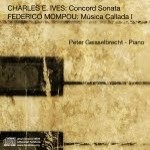
Artist: PETER GEISSELBRECHT
Title: Concord Sonata / Musica Callada
Format: CD
Label: Achulian Handaxe (@)
Rated:


Title: Concord Sonata / Musica Callada
Format: CD
Label: Achulian Handaxe (@)
Rated:
It's ages I don't review a contemporary classic piano work like these and every once in a while I'm so glad to deal with such materials above all if the matter is interesting and this is the case. While I had never heard before Mampou, the composer Charles Ives is not exactly new to my ears, his Concord Sonata presents an interesting mix of melodic passage and soft breaks but don't expect it to be something barely close to late Nineteenth century composer like Cage or even Webern. Ives composition reminded me a bit of the half of the works surely influenced by serialism and this need for abstraction of academics but at the same time he's managed to keep a melodic edge. Geisselbrecht interprets wonderfully the four episodes and for what I can understand his technical skill gets really congenial to the fast passages written by the American composer. As I've said I didn't know anything about Federico Mampou, this recording collects nine short compositions that go from one to three minutes, during the first listening the melodic parts really reminded of Satie but later I started thinking something could have been comparable to some piano works for children of Bartok. Both of the comparison could also be quite misleading, thus let's say that this melodic idea of simple piano compositions is meant in a personal way, infact Mampou aesthetic-al taste is less light hearted. If you listen carefully to all of the sketches here included I'm sure you'll notice there's something mysterious rearing its enigmatic head exactly when you don't expect it to arrive in some of the scores. Mampou's style is based on less notes and and a more slowed down attitude and Geisselbrecht has no problem to put himself in this kind of shoes. Some music makes me think are more eternal than others.
Comments
Browse by Genre
Industrial Music / Industrial Metal / Aggro Industrial / Electro Metal
Industrial Noise / Power Noise / Harsh Noise
Synth Pop / Electro Pop / Synth-Electronica
Techno / Trance / Goa / Drum'n'Bass / Jungle / Tribal / Trip-Hop
Ambient / Electronica / Ethereal / Dub / Soundscapes / Abstract
Experimental / Avantgarde / Weird & Wired / Glitch / Noise / Field Recording
Dark / Gothic / Wave / New Wave / Dark Wave / Industrial Gothic
New Music / Downtown / Avantgarde Jazz / New Classical / World