
Tuesday, October 20, 2026
Tobias Lilja: Medicine Sings Triptych
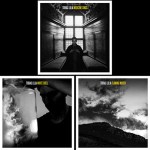
Artist: Tobias Lilja (@)
Title: Medicine Sings Triptych
Format: Download Only (MP3 + Lossless)
Label: self-released
Rated:

Title: Medicine Sings Triptych
Format: Download Only (MP3 + Lossless)
Label: self-released
Rated:
A while back I reviewed Swedish electronic experimental artist Tobias Lilja's 'Delirium Portraits' album which was released on the n5MD label. It was a very cool piece of experimental pop electronica, vastly different than most of the material that comes my way in the synthpop vein, so I would hesitate to even call it "synthpop". In the interim between that and his latest release(s), the 'Medicine Sings Triptych', Mr. Lilja moved his studio out of his apartment and into a bigger space allowing him to be louder and more experimental with his voice, and also to incorporate a lot more hardware musical gear and acoustic percussion instruments in the recording process. The first result is the 'Medicine Sings Triptych', a series of three EPs - 'Medicine Sings', 'White Shell', and 'Flaming Mouth', all released on his own Medicine Sings label. The material on these EPs is vastly different than 'Delirium Portraits'; more organic, hypnotic and ritualistic, as well as conceptual, although of an abstract or oblique nature. The EPs are a journey and Lilja is your guide through these uncharted regions. While some places along the way may seem familiar by default, I can guarantee you most of it will be places you've never been.
Opening with the title track from 'Medicine Sings', Lilja sing-chants in a shamanic style over a repetitive electronic beat that melds the ancient with the futuristic. The hypnotic electronics employed seem to be designed to induce a sort of psychedelic trance, setting you up for what's to come. Before you get to where you have to go, you must cross the "Frozen Lake", a surreal impressionistic set piece where suppressed memories can be dimly perceived through the veneer of its icy surface. What began as a languid crawl turns into a jarring effusion of conflicting thoughts, desires and actions. You must hurry in order not to be consumed by it. On "Swarming Suns" Lilja uses his voice as an instrument, chanting wordlessly over a techno-tribal beat with lots of hypnotic repetition delving deep into the primal. Before you know it, you're 'In the Dead Zone', with creaking sounds and a motorish drone (maybe a motorboat?) being ferried to...elsewhere. There a bit of noisy industrial towards the end. Perhaps all is not as it seems? As a bonus you get the Hecq remix of "Frozen Lake". It downplays the brushed percussion of the original leaving a minimal hat as the main rhythmic guide. Tobias's voice seems bolder in this mix. It is a bit less eerie and somewhat more industrial. Strings are pumped up too. I can't pick a favorite; they're both good.
"How to Attract Snowflakes" opens the second EP, 'White Shell'. This one has lyrics by Sam Sohlberg. It's a slow melancholy song that reminds me of Legendary Pink Dots, somewhat due to the melody and lyrics. Musically, it's a doomy sort of electro-industrial. Perhaps one of the more accessible tracks on all of the EPs. Title track "White Shell" has clockwork piano and electronic percussion as its musical base while Tobias croons over the top. It's slow, but you get the feeling of intense motion as it evolves, until it sort of breaks apart. The instrumental mix of "Evelyn" follows with an ambient flavor and here again, Lilja's vocals are used instrumentally. The two tracks that follow are both remixes. First, the Storm Craver remix of "White Shell", which dispenses with the clockwork piano and subs an arpeggio-like sequenced synth. Lilja's vocals are left intact. It has a bit of a different feel, but I like the original better. This is followed by the Pelikanol remix of "Sun Eater" from the next EP. It is substantially different instrumentally from the original, and seems out of place here. Likely it was put here because the songs on 'White Shell' are shorter than those on 'Flaming Mouth'. Around the middle it gets much too old school trancey-techno. To me it was just superfluous.
Final EP in the triptych is 'Flaming Mouth'. It begins with "There is No Other", a wake-up call with a steady beat urging you onward with its proggy electronic noodling and Lilja's hypnotic vocals. It's not Pink Floyd, but if Syd Barrett was still alive and collaborated with Roger Waters on an album today, it might sound a little something like this. "Sun Eater" is next, and begins with harmonium and light electronic percussion. Lilja's languid vocals and synesthetic lyrics convey summer memories of the past. The harmonium fades out being replaced by more orchestral synth work. Somewhat reminiscent to me of Mercury Rev and later day Talk Talk, but still different. In any case, much better than the remix of this track on the former EP. The journey comes to an end with title track "Flaming Mouth", a completely improvised ambient piece with drones, harmonica, and no beat appears until nearly four minutes into it. Towards the end the rhythm really picks up. Lilja states "Those familiar with Sámi music will feel a connection." So not being familiar with it, I sought some out, and after listening I could see what Lilja was striving for in this Scandanavian folk music, although his implementation of it is somewhat more abstract. An interesting ending to this epic journey, but still it's not quite over yet. Final track on this EP is the Rotoskop (Klaus Gratzel) remix of "There is No Other" which substitutes a more active electronic rhythm for the original but strips out and/or downplays some of the atmospherics that made the original so engaging. The added electronics at the end I simply didn't much care for.
In conclusion, the EPs without the remixes are just fine. The epic vision of the artist may be just too much for some, while others may perceive the Medicine Sings Triptych as one of the most fantastic musical creations to come along of late. I enjoyed quite a bit of it, and it never ceases to amaze me of some of the things Tobias Lilja is capable of. There is also a video for "Medicine Sings"made in collaboration with Anna Moberg and directed by Sam Sohlberg that does much to convey visually what Lilja is striving for here. Deep. Very deep.
Comments
Browse by Genre
Industrial Music / Industrial Metal / Aggro Industrial / Electro Metal
Industrial Noise / Power Noise / Harsh Noise
Synth Pop / Electro Pop / Synth-Electronica
Techno / Trance / Goa / Drum'n'Bass / Jungle / Tribal / Trip-Hop
Ambient / Electronica / Ethereal / Dub / Soundscapes / Abstract
Experimental / Avantgarde / Weird & Wired / Glitch / Noise / Field Recording
Dark / Gothic / Wave / New Wave / Dark Wave / Industrial Gothic
New Music / Downtown / Avantgarde Jazz / New Classical / World