
Browse by Genre
Industrial Music / Industrial Metal / Aggro Industrial / Electro Metal
Industrial Noise / Power Noise / Harsh Noise
Synth Pop / Electro Pop / Synth-Electronica
Techno / Trance / Goa / Drum'n'Bass / Jungle / Tribal / Trip-Hop
Ambient / Electronica / Ethereal / Dub / Soundscapes / Abstract
Experimental / Avantgarde / Weird & Wired / Glitch / Noise / Field Recording
Dark / Gothic / Wave / New Wave / Dark Wave / Industrial Gothic
New Music / Downtown / Avantgarde Jazz / New Classical / World
Search Reviews
Music Reviews
Stephen O’Malley: Spheres Collapser
Artist: Stephen O’Malley (@)
Title: Spheres Collapser
Format: 12" + Download
Label: XKatedral / La Becque Editions (@)
Rated:

Title: Spheres Collapser
Format: 12" + Download
Label: XKatedral / La Becque Editions (@)
Rated:
Stephen O’Malley deciding to write for pipe organ feels less like a stylistic pivot and more like an inevitability. After years spent bending amplifiers into monolithic drones with Sunn O))), moving into a cathedral and letting the building itself do the amplification was probably the next logical step. Why carry the weight when the architecture can do it for you.
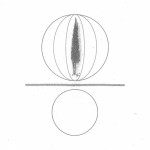
"Spheres Collapser" is, on paper, disarmingly simple: two long-form organ pieces, recorded in a Swiss church, performed alongside Kali Malone and Frederikke Hoffmeier. In practice, it’s about as subtle as tectonic plates shifting under a marble floor. The pipe organ - specifically the sprawling, historically layered instrument at Église Saint-François in Lausanne - becomes less an instrument than a system of pressure, air, and time. You don’t “play” it so much as initiate a process and then wait for the consequences.
O’Malley’s compositional language hasn’t changed as much as it has migrated. The same obsessions are here: duration, density, the slow revelation of harmonic overtones that feel less written than uncovered. If you’ve followed his work with Khanate or his various electroacoustic collaborations, you’ll recognize the patience. What’s different is the medium’s refusal to be rushed. The organ breathes on its own terms, and the room answers back.
“Phase I” unfolds like a negotiation with gravity. Low frequencies gather in the nave, thickening the air until it feels almost tactile. There’s no dramatic gesture, no obvious narrative arc. Instead, sound accumulates, layer by microscopic layer, until you realize the piece has quietly reconfigured your sense of scale. Time stretches. Listening becomes less about following and more about enduring, or maybe inhabiting.
Kali Malone’s presence is not incidental. Her own work with organ minimalism has a reputation for turning austerity into something strangely luminous, and here that sensibility seeps into the performance. The tones are not just heavy; they’re precise, almost surgical in how they occupy space. Frederikke Hoffmeier, better known in other contexts as Puce Mary, adds another layer of tension - less visible, perhaps, but felt in the way the sound resists settling into pure consonance.
“Phase II” doesn’t so much continue as deepen the descent. If the first piece establishes a gravitational field, the second explores what happens when you stop resisting it. Harmonics begin to shimmer at the edges, like light caught in slow motion. There are moments where the organ seems to fracture into smaller particles of sound, only to reassemble into something even more imposing. It’s not dramatic in the cinematic sense. It’s geological. Change happens, but on a scale that makes human impatience look slightly ridiculous.
The origin of the material - part of a larger suite created for choreographer Cindy Van Acker - lingers in the background. You can almost sense the phantom of movement, the idea that bodies once interacted with these sounds. But stripped of that visual component, the music stands as a kind of architectural study. Sound shaping space, space reshaping perception.
What’s quietly fascinating is how little O’Malley seems interested in transcendence here. The pipe organ, with all its ecclesiastical baggage, practically begs for spiritual readings. Instead, "Spheres Collapser" feels grounded, even physical. Air moves through pipes. Frequencies collide. The room vibrates. If there’s anything sacred, it’s the mechanics.
This is not an album that meets you halfway. It expects stillness, attention, and a willingness to let go of the idea that something needs to “happen”. For some listeners, that will translate to profundity. For others, it will feel like being politely crushed by a very patient machine.
Either way, "Spheres Collapser" does what O’Malley has always done, just with bigger lungs: it stretches sound until it stops behaving like music and starts behaving like an environment. And once you’re inside it, leaving feels slightly theoretical.
"Spheres Collapser" is, on paper, disarmingly simple: two long-form organ pieces, recorded in a Swiss church, performed alongside Kali Malone and Frederikke Hoffmeier. In practice, it’s about as subtle as tectonic plates shifting under a marble floor. The pipe organ - specifically the sprawling, historically layered instrument at Église Saint-François in Lausanne - becomes less an instrument than a system of pressure, air, and time. You don’t “play” it so much as initiate a process and then wait for the consequences.
O’Malley’s compositional language hasn’t changed as much as it has migrated. The same obsessions are here: duration, density, the slow revelation of harmonic overtones that feel less written than uncovered. If you’ve followed his work with Khanate or his various electroacoustic collaborations, you’ll recognize the patience. What’s different is the medium’s refusal to be rushed. The organ breathes on its own terms, and the room answers back.
“Phase I” unfolds like a negotiation with gravity. Low frequencies gather in the nave, thickening the air until it feels almost tactile. There’s no dramatic gesture, no obvious narrative arc. Instead, sound accumulates, layer by microscopic layer, until you realize the piece has quietly reconfigured your sense of scale. Time stretches. Listening becomes less about following and more about enduring, or maybe inhabiting.
Kali Malone’s presence is not incidental. Her own work with organ minimalism has a reputation for turning austerity into something strangely luminous, and here that sensibility seeps into the performance. The tones are not just heavy; they’re precise, almost surgical in how they occupy space. Frederikke Hoffmeier, better known in other contexts as Puce Mary, adds another layer of tension - less visible, perhaps, but felt in the way the sound resists settling into pure consonance.
“Phase II” doesn’t so much continue as deepen the descent. If the first piece establishes a gravitational field, the second explores what happens when you stop resisting it. Harmonics begin to shimmer at the edges, like light caught in slow motion. There are moments where the organ seems to fracture into smaller particles of sound, only to reassemble into something even more imposing. It’s not dramatic in the cinematic sense. It’s geological. Change happens, but on a scale that makes human impatience look slightly ridiculous.
The origin of the material - part of a larger suite created for choreographer Cindy Van Acker - lingers in the background. You can almost sense the phantom of movement, the idea that bodies once interacted with these sounds. But stripped of that visual component, the music stands as a kind of architectural study. Sound shaping space, space reshaping perception.
What’s quietly fascinating is how little O’Malley seems interested in transcendence here. The pipe organ, with all its ecclesiastical baggage, practically begs for spiritual readings. Instead, "Spheres Collapser" feels grounded, even physical. Air moves through pipes. Frequencies collide. The room vibrates. If there’s anything sacred, it’s the mechanics.
This is not an album that meets you halfway. It expects stillness, attention, and a willingness to let go of the idea that something needs to “happen”. For some listeners, that will translate to profundity. For others, it will feel like being politely crushed by a very patient machine.
Either way, "Spheres Collapser" does what O’Malley has always done, just with bigger lungs: it stretches sound until it stops behaving like music and starts behaving like an environment. And once you’re inside it, leaving feels slightly theoretical.
Emily Wittbrodt: Wearing Words
Artist: Emily Wittbrodt (@)
Title: Wearing Words
Format: 12" + Download
Label: Futura Resistenza (@)
Rated:
Title: Wearing Words
Format: 12" + Download
Label: Futura Resistenza (@)
Rated:
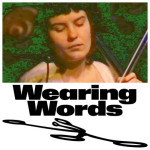
Emily Wittbrodt’s "Wearing Words" is built on a small, slightly maddening premise: what if language doesn’t belong to you, but you insist on using it anyway? Not as expression, but as adaptation. Not speaking, but wearing.
She describes the process as feeling “like wearing clothes that don’t belong to me”, a borrowed vocabulary that never quite settles on the skin. That image ends up doing more work than most album concepts manage in a lifetime. Because once you hear it, you can’t un-hear it: every phrase on this record sounds negotiated rather than owned, gently forced into melodic shapes that existed before meaning arrived.
Wittbrodt, trained in classical traditions but clearly uninterested in staying obedient to them, constructs the music first - clean, deliberate, almost architectural - and only later searches for the words that can inhabit it. Not decorate it, not explain it. Fit it. It’s a backwards method, and predictably, it produces a kind of friction that becomes the album’s real subject.
She has said she spent weeks doing nothing but chasing the right words, to the point of dreaming about them, as if language had turned into a low-level fever. You can hear that obsessive fine-tuning everywhere: lines that feel just slightly too tight, vowels stretched like fabric under tension, consonants landing with surgical precision. It’s meticulous, but not sterile. More like someone trying to tailor a suit in the dark.
Musically, "Wearing Words" drifts in a zone where chamber pop, baroque echoes, and restrained improvisation keep brushing against each other without ever fully merging. The cello remains the axis, warm but unsentimental, while accordion, clarinet, and electronics hover like secondary thoughts. Nothing insists. Nothing performs urgency. Even the more ornate passages feel as if they’re holding back, aware that too much certainty would break the spell.
Sandro HÄhnel’s voice is a crucial decision. Wittbrodt deliberately writes outside his natural range, forcing him into a softer, almost disembodied delivery. The result is a voice that doesn’t declare identity but suspends it. Gender blurs, authority dissolves, and what remains is something fragile, almost provisional. A voice that sounds like it’s trying on language rather than owning it.
There’s also a darker undercurrent Wittbrodt hints at: that people “wear words” not just out of discomfort, but out of strategy. Language as camouflage. Language as manipulation. It’s not hammered into a thesis, but it lingers behind the songs like a quiet suspicion that meaning itself might be compromised.
And that’s where the album becomes more than an elegant experiment. It starts to resemble a study of how we communicate when we’re not entirely sure we can. When language feels second-hand, when expression arrives late, when clarity is something you assemble rather than discover.
Tracks like “Lied” or the title piece don’t resolve this tension. They sit inside it. Melodies offer a sense of direction, while the words keep shifting underfoot, never fully settling. It’s beautiful in a slightly unstable way, like a sentence that almost says what you mean but leaves a residue of doubt.
In the end, "Wearing Words" doesn’t try to fix the gap between sound and language. It just exposes it, patiently, almost tenderly. Wittbrodt doesn’t claim fluency. She documents the effort.
And honestly, that’s a lot closer to how most people actually live with language than they’d like to admit.
She describes the process as feeling “like wearing clothes that don’t belong to me”, a borrowed vocabulary that never quite settles on the skin. That image ends up doing more work than most album concepts manage in a lifetime. Because once you hear it, you can’t un-hear it: every phrase on this record sounds negotiated rather than owned, gently forced into melodic shapes that existed before meaning arrived.
Wittbrodt, trained in classical traditions but clearly uninterested in staying obedient to them, constructs the music first - clean, deliberate, almost architectural - and only later searches for the words that can inhabit it. Not decorate it, not explain it. Fit it. It’s a backwards method, and predictably, it produces a kind of friction that becomes the album’s real subject.
She has said she spent weeks doing nothing but chasing the right words, to the point of dreaming about them, as if language had turned into a low-level fever. You can hear that obsessive fine-tuning everywhere: lines that feel just slightly too tight, vowels stretched like fabric under tension, consonants landing with surgical precision. It’s meticulous, but not sterile. More like someone trying to tailor a suit in the dark.
Musically, "Wearing Words" drifts in a zone where chamber pop, baroque echoes, and restrained improvisation keep brushing against each other without ever fully merging. The cello remains the axis, warm but unsentimental, while accordion, clarinet, and electronics hover like secondary thoughts. Nothing insists. Nothing performs urgency. Even the more ornate passages feel as if they’re holding back, aware that too much certainty would break the spell.
Sandro HÄhnel’s voice is a crucial decision. Wittbrodt deliberately writes outside his natural range, forcing him into a softer, almost disembodied delivery. The result is a voice that doesn’t declare identity but suspends it. Gender blurs, authority dissolves, and what remains is something fragile, almost provisional. A voice that sounds like it’s trying on language rather than owning it.
There’s also a darker undercurrent Wittbrodt hints at: that people “wear words” not just out of discomfort, but out of strategy. Language as camouflage. Language as manipulation. It’s not hammered into a thesis, but it lingers behind the songs like a quiet suspicion that meaning itself might be compromised.
And that’s where the album becomes more than an elegant experiment. It starts to resemble a study of how we communicate when we’re not entirely sure we can. When language feels second-hand, when expression arrives late, when clarity is something you assemble rather than discover.
Tracks like “Lied” or the title piece don’t resolve this tension. They sit inside it. Melodies offer a sense of direction, while the words keep shifting underfoot, never fully settling. It’s beautiful in a slightly unstable way, like a sentence that almost says what you mean but leaves a residue of doubt.
In the end, "Wearing Words" doesn’t try to fix the gap between sound and language. It just exposes it, patiently, almost tenderly. Wittbrodt doesn’t claim fluency. She documents the effort.
And honestly, that’s a lot closer to how most people actually live with language than they’d like to admit.
The Fair Attempts: Null Guide
Artist: The Fair Attempts
Title: Null Guide
Format: Download Only (MP3 + Lossless)
Label: Starwing Digital
Rated:

Title: Null Guide
Format: Download Only (MP3 + Lossless)
Label: Starwing Digital
Rated:
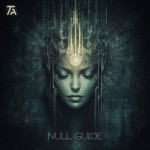
If you’re looking for comfort, "Null Guide" is not your album. It doesn’t soothe, it doesn’t reassure, and it certainly doesn’t pretend things are fine. It stands there, arms crossed, pointing at the cracks in the walls and asking why you’re still calling it a house.
The Fair Attempts, the project of Timo Haakana and Starwing, has always operated with a strong conceptual backbone, but here that framework hardens into something closer to a manifesto. Their dystopian universe, already mapped out in fragments across earlier works and Starwing’s writing, becomes less speculative and more diagnostic. This is no longer “a possible future.” It feels like a report written from inside the present, just with the politeness stripped away.
Musically, the record plants itself firmly in the intersection of industrial rock, EBM, and darkwave, but it’s not interested in nostalgia. The machinery is familiar, sure: pounding rhythms, serrated synth lines, vocals that oscillate between command and collapse. But there’s a certain exhaustion baked into the production, as if the system keeps running not because it works, but because no one knows how to shut it down.
The opening tracks waste no time setting the tone. "Nothing’s Gonna Be Alright" is about as subtle as a siren in a concrete tunnel. It leans into repetition not just as a hook, but as a psychological tactic, hammering the same phrase until it stops feeling like a statement and starts sounding like a condition. There’s a strange clarity in that bluntness. No metaphors to hide behind, just a flat refusal of optimism.
"Freedom’s Just a Word You Say" sharpens the critique, dissecting language itself as a tool of control. The lyrics flirt with Orwellian territory, but without the academic distance. This isn’t theory, it’s lived disorientation. Words lose their anchor, meanings slip, and what’s left is a kind of semantic fatigue. The music mirrors that instability, shifting between tight, almost danceable structures and moments that feel deliberately off-balance.
By the time "Ghost Within" arrives, the focus turns inward. The external dystopia folds into something more psychological, more intimate. The “enemy” is no longer just systemic; it’s internalized, parasitic. The track plays like a quiet admission that the line between oppression and self-sabotage is thinner than anyone would like to admit.
Mid-album, "Never Again" and "It’s All Fraud" push the nihilistic thread to its logical extreme. Here, the record risks collapsing under its own weight, flirting with total negation. But instead of becoming monotonous, it gains a strange momentum. The refusal of meaning becomes its own kind of meaning, a negative space that the listener is forced to navigate. It’s not pleasant, but it is effective.
There’s also a certain dark humor lurking beneath the surface, though you have to be paying attention to catch it. Lines that verge on the absurd, exaggerated hostility, the almost theatrical intensity. It’s as if the album is aware of how far it’s pushing things and occasionally smirks at its own severity. Not enough to break the mood, just enough to keep it from becoming self-parody.
"Shadowplay" and "Anniversary of Our Destruction" expand the album’s scope again, reconnecting the personal and the societal. Time loops, cycles repeat, nothing resolves. The sense of déjà vu isn’t accidental. It’s structural. You’re not moving forward; you’re circling a drain that looks suspiciously like history.
The title track, "Null Guide", functions as a kind of thesis. Guidance, in this world, is either absent or corrupted. The idea of an external compass is dismantled, replaced by something more ambiguous: an inward turn that may or may not lead anywhere useful. It’s one of the few moments where the album allows a hint of ambiguity that isn’t immediately crushed.
By the closing stretch, particularly "The Curse" and "Inward", the record has stripped itself down to something raw and exposed. The aggression hasn’t disappeared, but it’s been internalized. What began as confrontation ends as introspection, though not the comforting kind. More like staring into a mirror that refuses to flatter you.
What makes "Null Guide" compelling isn’t just its sonic force, but its refusal to offer easy exits. Many records in this space gesture toward darkness as an aesthetic. Here, it feels structural, almost philosophical. The band isn’t asking you to agree, exactly. They’re asking you to sit with the discomfort long enough to recognize parts of it.
It’s not a fun listen, unless your idea of fun involves existential dread set to a very steady beat. But it is a coherent one. And in a landscape where meaning is often diluted into background noise, there’s something almost refreshing about an album that insists, repeatedly, that the signal is still there. You just might not like what it’s saying.
The Fair Attempts, the project of Timo Haakana and Starwing, has always operated with a strong conceptual backbone, but here that framework hardens into something closer to a manifesto. Their dystopian universe, already mapped out in fragments across earlier works and Starwing’s writing, becomes less speculative and more diagnostic. This is no longer “a possible future.” It feels like a report written from inside the present, just with the politeness stripped away.
Musically, the record plants itself firmly in the intersection of industrial rock, EBM, and darkwave, but it’s not interested in nostalgia. The machinery is familiar, sure: pounding rhythms, serrated synth lines, vocals that oscillate between command and collapse. But there’s a certain exhaustion baked into the production, as if the system keeps running not because it works, but because no one knows how to shut it down.
The opening tracks waste no time setting the tone. "Nothing’s Gonna Be Alright" is about as subtle as a siren in a concrete tunnel. It leans into repetition not just as a hook, but as a psychological tactic, hammering the same phrase until it stops feeling like a statement and starts sounding like a condition. There’s a strange clarity in that bluntness. No metaphors to hide behind, just a flat refusal of optimism.
"Freedom’s Just a Word You Say" sharpens the critique, dissecting language itself as a tool of control. The lyrics flirt with Orwellian territory, but without the academic distance. This isn’t theory, it’s lived disorientation. Words lose their anchor, meanings slip, and what’s left is a kind of semantic fatigue. The music mirrors that instability, shifting between tight, almost danceable structures and moments that feel deliberately off-balance.
By the time "Ghost Within" arrives, the focus turns inward. The external dystopia folds into something more psychological, more intimate. The “enemy” is no longer just systemic; it’s internalized, parasitic. The track plays like a quiet admission that the line between oppression and self-sabotage is thinner than anyone would like to admit.
Mid-album, "Never Again" and "It’s All Fraud" push the nihilistic thread to its logical extreme. Here, the record risks collapsing under its own weight, flirting with total negation. But instead of becoming monotonous, it gains a strange momentum. The refusal of meaning becomes its own kind of meaning, a negative space that the listener is forced to navigate. It’s not pleasant, but it is effective.
There’s also a certain dark humor lurking beneath the surface, though you have to be paying attention to catch it. Lines that verge on the absurd, exaggerated hostility, the almost theatrical intensity. It’s as if the album is aware of how far it’s pushing things and occasionally smirks at its own severity. Not enough to break the mood, just enough to keep it from becoming self-parody.
"Shadowplay" and "Anniversary of Our Destruction" expand the album’s scope again, reconnecting the personal and the societal. Time loops, cycles repeat, nothing resolves. The sense of déjà vu isn’t accidental. It’s structural. You’re not moving forward; you’re circling a drain that looks suspiciously like history.
The title track, "Null Guide", functions as a kind of thesis. Guidance, in this world, is either absent or corrupted. The idea of an external compass is dismantled, replaced by something more ambiguous: an inward turn that may or may not lead anywhere useful. It’s one of the few moments where the album allows a hint of ambiguity that isn’t immediately crushed.
By the closing stretch, particularly "The Curse" and "Inward", the record has stripped itself down to something raw and exposed. The aggression hasn’t disappeared, but it’s been internalized. What began as confrontation ends as introspection, though not the comforting kind. More like staring into a mirror that refuses to flatter you.
What makes "Null Guide" compelling isn’t just its sonic force, but its refusal to offer easy exits. Many records in this space gesture toward darkness as an aesthetic. Here, it feels structural, almost philosophical. The band isn’t asking you to agree, exactly. They’re asking you to sit with the discomfort long enough to recognize parts of it.
It’s not a fun listen, unless your idea of fun involves existential dread set to a very steady beat. But it is a coherent one. And in a landscape where meaning is often diluted into background noise, there’s something almost refreshing about an album that insists, repeatedly, that the signal is still there. You just might not like what it’s saying.
Erik Wøllo: Snow Tides

Erik Wøllo has been making music long enough to know that if you stare at a landscape for too long, it eventually starts staring back. "Snow Tides" feels like one of those moments - less a description of winter than a quiet negotiation with it.
For anyone keeping track (and if you are, maybe take a break), Wøllo’s trajectory has always circled around this intersection of guitar and electronics, somewhere between ambient introspection and melodic clarity. Since the early days on labels like Projekt, he’s refined a language where the electric guitar doesn’t behave like a guitar anymore, and synthesizers don’t dominate so much as dissolve into atmosphere. On paper, nothing here is radically new. In practice, it’s about as subtle as watching snow fall for an hour and realizing you’ve been thinking about your life the whole time.
The album opens with “Winter’s Breath”, which does exactly what the title promises without embarrassing itself. Slow, wide, and patient, it sets a horizon rather than a statement. From there, "Snow Tides" unfolds like a series of temperature shifts rather than a narrative arc. Piano figures emerge and retreat, guitars stretch into luminous threads, and the electronics act like weather systems - never fully still, never intrusive.
Wøllo has mentioned that winter is his most creative period, which makes sense. There’s a particular kind of enforced stillness in long northern winters, the kind that either drives you slightly mad or forces you into clarity. This record leans toward the latter, though not without moments where the calm starts to feel a little uncanny. “Glacial Veil”, for instance, carries a faint sense of unease, like beauty that knows it can’t last.
The central suite - “Luminara”, the title track, and “Jan Mayen” - works less as a sequence of songs and more as a single, extended breath. The reference to Jan Mayen, that remote and largely uninhabited Arctic island, is telling. Wøllo hasn’t been there, but the music imagines it anyway, which is either poetic license or a very polite way of admitting that imagination does most of the heavy lifting in ambient music. Either way, it works. The sense of distance is convincing, even if it’s entirely constructed.
Midway through, “Glass Reverie” shifts the focus inward, built on repeating guitar motifs that feel almost like a memory trying to stabilize itself. It’s one of those pieces where very little happens, and that’s precisely the point. Then “North Trek” and “Astral Travelers” introduce a mild sense of motion - sequencers flicker, rhythms pulse gently - like the album briefly remembers that time exists and then decides it’s overrated.
“Arctic Moon” strips things back again, a reminder that Wøllo’s strength isn’t in complexity but in restraint. By the time the closing track arrives - “Falling Snow, Whispering Tides”, which sounds like it was named during a particularly contemplative cup of tea - the album has settled into a kind of luminous suspension. It doesn’t resolve. It just fades into a horizon that was probably there all along.
What’s quietly impressive about "Snow Tides" is its refusal to dramatize nature. There’s no cinematic exaggeration, no attempt to turn landscapes into spectacle. Instead, Wøllo focuses on scale and patience, letting small shifts accumulate until they start to feel significant. It’s the musical equivalent of noticing how silence isn’t actually silent.
There’s a risk, of course. Music this restrained can slide into background listening, the sonic wallpaper of people who own too many scarves and not enough problems. But when it works - and here it mostly does - it creates a space that feels earned rather than decorative.
In the end, "Snow Tides" doesn’t try to impress you. It just waits. And if you’re willing to meet it halfway, it offers something increasingly rare: the suggestion that stillness isn’t emptiness, but a form of attention. Which, given the current state of everything, is almost suspiciously generous.
For anyone keeping track (and if you are, maybe take a break), Wøllo’s trajectory has always circled around this intersection of guitar and electronics, somewhere between ambient introspection and melodic clarity. Since the early days on labels like Projekt, he’s refined a language where the electric guitar doesn’t behave like a guitar anymore, and synthesizers don’t dominate so much as dissolve into atmosphere. On paper, nothing here is radically new. In practice, it’s about as subtle as watching snow fall for an hour and realizing you’ve been thinking about your life the whole time.
The album opens with “Winter’s Breath”, which does exactly what the title promises without embarrassing itself. Slow, wide, and patient, it sets a horizon rather than a statement. From there, "Snow Tides" unfolds like a series of temperature shifts rather than a narrative arc. Piano figures emerge and retreat, guitars stretch into luminous threads, and the electronics act like weather systems - never fully still, never intrusive.
Wøllo has mentioned that winter is his most creative period, which makes sense. There’s a particular kind of enforced stillness in long northern winters, the kind that either drives you slightly mad or forces you into clarity. This record leans toward the latter, though not without moments where the calm starts to feel a little uncanny. “Glacial Veil”, for instance, carries a faint sense of unease, like beauty that knows it can’t last.
The central suite - “Luminara”, the title track, and “Jan Mayen” - works less as a sequence of songs and more as a single, extended breath. The reference to Jan Mayen, that remote and largely uninhabited Arctic island, is telling. Wøllo hasn’t been there, but the music imagines it anyway, which is either poetic license or a very polite way of admitting that imagination does most of the heavy lifting in ambient music. Either way, it works. The sense of distance is convincing, even if it’s entirely constructed.
Midway through, “Glass Reverie” shifts the focus inward, built on repeating guitar motifs that feel almost like a memory trying to stabilize itself. It’s one of those pieces where very little happens, and that’s precisely the point. Then “North Trek” and “Astral Travelers” introduce a mild sense of motion - sequencers flicker, rhythms pulse gently - like the album briefly remembers that time exists and then decides it’s overrated.
“Arctic Moon” strips things back again, a reminder that Wøllo’s strength isn’t in complexity but in restraint. By the time the closing track arrives - “Falling Snow, Whispering Tides”, which sounds like it was named during a particularly contemplative cup of tea - the album has settled into a kind of luminous suspension. It doesn’t resolve. It just fades into a horizon that was probably there all along.
What’s quietly impressive about "Snow Tides" is its refusal to dramatize nature. There’s no cinematic exaggeration, no attempt to turn landscapes into spectacle. Instead, Wøllo focuses on scale and patience, letting small shifts accumulate until they start to feel significant. It’s the musical equivalent of noticing how silence isn’t actually silent.
There’s a risk, of course. Music this restrained can slide into background listening, the sonic wallpaper of people who own too many scarves and not enough problems. But when it works - and here it mostly does - it creates a space that feels earned rather than decorative.
In the end, "Snow Tides" doesn’t try to impress you. It just waits. And if you’re willing to meet it halfway, it offers something increasingly rare: the suggestion that stillness isn’t emptiness, but a form of attention. Which, given the current state of everything, is almost suspiciously generous.
bvdub: The Catastrophe Machine

'The Catastrophe Machine' is the latest album from San Franciscan Brock Van Wey recording under the name bvdub, whose massive discography goes way back to 2007 (and before that a DJ in the SF rave scene). There is no way I can keep up with this guy's releases, having reviewed only a few of them in the past. The last one was 'Four Forgetting' on the Sound In Silence label back in 2023, and since then there have been at least 26 releases (most, but not all self-released) and I have no idea what paths/direction bvdub's music has taken since, so this will come as a surprise to me.
'The Catastrophe Machine' is four lengthy tracks hovering pretty close to the 20 minute mark each, fairly typical for bvdub. Beginning with "Collapsed Under Your Lies" we begin in a psychedelic swirl that sounds both retro and modern at the same time. Guitar, vocals and a lot of synth work and electronic effects permeate this melancholy track. As it progresses, I'm noting a good deal of distortion, and I'm guessing this is intentional rather than accidental, but I find it somewhat disconcerting. There is an industrial quality amidst the clatter with church organ drone in the background and the piling on of sonics until it dissipates and morphs into something more minimal and innocent. In a certain sense, I'm reminded of Legendary Pink Dots at their most experimental. Somewhere underneath all the sonic excess there is a melodic theme, but you'll have to strain to hear it. "Infinite Equations" vacillates between sonic overkill and calm passages reminiscent of Pink Floyd in their quieter moments with a strong rhythm component that becomes more evident as the track progresses. To be perfectly honest, some of the sounds bvdub uses on this one are hard on the ears, especially in the percussion department, and so upfront that it defies the concept of "ambient" making it something else entirely.
"Masses In Motion" brings back submerged vocals under heavy synth pads. The melodic theme in this one is more pronounced than previous, and the rhythm (when it finally arrives) is heavier as well, combining breakbeat elements as it moves forward. So far it’s my favorite track on the album, even if it goes on a bit too long. Finally, there is the title track which highlights the contrast between semi-placid ambient synths and bodacious rhythms. Midway through, the music changes to something more tranquil, albeit briefly, a reoccurring feature of this track. I think this album is more for fans of bvdub who are familiar with Van Wey's compositional style than bringing new ears to the fold. Distortion and sonic density can be off-putting to those not particularly interested in its abrasive aspects, and although 'The Catastrophe Machine' is not rooted in the noise genre, some of its elements identify with it. If you want the physical product (CD and cassette, both limited editions) you will need to go to Dronarivm, but if the digital download will do, you can get that directly from bvdub's Bandcamp site.
'The Catastrophe Machine' is four lengthy tracks hovering pretty close to the 20 minute mark each, fairly typical for bvdub. Beginning with "Collapsed Under Your Lies" we begin in a psychedelic swirl that sounds both retro and modern at the same time. Guitar, vocals and a lot of synth work and electronic effects permeate this melancholy track. As it progresses, I'm noting a good deal of distortion, and I'm guessing this is intentional rather than accidental, but I find it somewhat disconcerting. There is an industrial quality amidst the clatter with church organ drone in the background and the piling on of sonics until it dissipates and morphs into something more minimal and innocent. In a certain sense, I'm reminded of Legendary Pink Dots at their most experimental. Somewhere underneath all the sonic excess there is a melodic theme, but you'll have to strain to hear it. "Infinite Equations" vacillates between sonic overkill and calm passages reminiscent of Pink Floyd in their quieter moments with a strong rhythm component that becomes more evident as the track progresses. To be perfectly honest, some of the sounds bvdub uses on this one are hard on the ears, especially in the percussion department, and so upfront that it defies the concept of "ambient" making it something else entirely.
"Masses In Motion" brings back submerged vocals under heavy synth pads. The melodic theme in this one is more pronounced than previous, and the rhythm (when it finally arrives) is heavier as well, combining breakbeat elements as it moves forward. So far it’s my favorite track on the album, even if it goes on a bit too long. Finally, there is the title track which highlights the contrast between semi-placid ambient synths and bodacious rhythms. Midway through, the music changes to something more tranquil, albeit briefly, a reoccurring feature of this track. I think this album is more for fans of bvdub who are familiar with Van Wey's compositional style than bringing new ears to the fold. Distortion and sonic density can be off-putting to those not particularly interested in its abrasive aspects, and although 'The Catastrophe Machine' is not rooted in the noise genre, some of its elements identify with it. If you want the physical product (CD and cassette, both limited editions) you will need to go to Dronarivm, but if the digital download will do, you can get that directly from bvdub's Bandcamp site.