
Wednesday, September 23, 2026
Browse by Genre
Industrial Music / Industrial Metal / Aggro Industrial / Electro Metal
Industrial Noise / Power Noise / Harsh Noise
Synth Pop / Electro Pop / Synth-Electronica
Techno / Trance / Goa / Drum'n'Bass / Jungle / Tribal / Trip-Hop
Ambient / Electronica / Ethereal / Dub / Soundscapes / Abstract
Experimental / Avantgarde / Weird & Wired / Glitch / Noise / Field Recording
Dark / Gothic / Wave / New Wave / Dark Wave / Industrial Gothic
New Music / Downtown / Avantgarde Jazz / New Classical / World
Search Reviews
Music Reviews
Futuro Ancestrale: Elsewhen
Artist: Futuro Ancestrale (@)
Title: Elsewhen
Format: CD
Label: Unsounds Records/Tora Records (@)
Rated:

Title: Elsewhen
Format: CD
Label: Unsounds Records/Tora Records (@)
Rated:
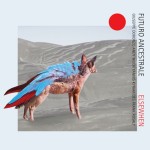
There is something wonderfully inconvenient about the title "Elsewhen". Not elsewhere, but else-when: an alternative time rather than an alternative place. It suggests that history might be less like a line than a badly organised cupboard, with different centuries and geographies rummaging around in the same drawer. Futuro Ancestrale’s second album takes precisely this temporal confusion as its playground, bringing together Giuseppe Doronzo’s baritone saxophone and an assortment of traditional instruments with the live electronics of Yannis Kyriakides, Andy Moor’s electric guitar and Frank Rosaly’s drums. The result is neither “world music” nor fusion in the conventional sense, but something considerably more slippery: a music in which old materials are allowed to become strange again.
Doronzo is particularly well equipped for this sort of mischief. Born in Barletta in 1987 and based in Amsterdam, he has developed a practice around the baritone saxophone that moves between contemporary composition, jazz improvisation, microtonality and non-Western traditions. His work with instruments such as the Iranian ney-anban, Chinese hulusi and Albanian longari has never amounted simply to collecting exotic timbres like musical fridge magnets. His interest lies in what happens when those sounds enter an improvisational environment and start behaving differently. Tora Records, the Amsterdam label he founded in 2018, has likewise become a home for music occupying the borderlands between improvisation, electro-acoustic composition and non-Western traditions.
On "Elsewhen", electronics are not pasted onto an ancestral vocabulary as some kind of futuristic wallpaper. They interfere with it. Kyriakides’ sampling and processing can make a flute seem briefly detached from its physical origin, while Moor and Rosaly provide a nervous, often surprisingly muscular framework in which these sounds can circulate. "Eye of the Hurricane" is a good example: the hulusi carries a breathy, almost folkloric identity, but the guitar and drums prevent it from settling comfortably into a picturesque pastoral scene. The electronic interventions further complicate the picture, turning recognisable acoustic gestures into fragments of another chronology. It is as if someone had placed an old photograph on a scanner and then decided that the scanner deserved a solo.
"Ghostline" works differently. The Albanian cyla dyjare, with its peculiar double-voice character, meets drums and electronics in a piece that seems to move rather than simply develop. There is something almost tactile about the way Doronzo’s instrumental colours are retained while being made unstable around the edges. The music does not imitate a shepherd wandering through some idealised Balkan landscape; it makes the very idea of musical memory slightly unreliable. What we hear feels inherited and newly manufactured at the same time.
That tension becomes particularly intriguing in "Scindone". The title refers to a peculiar belief from Lucanian folk medicine, where the scindone is a mysterious headache attributed to exposure to the sun after a day of working in the fields. According to the tradition, however, its real origin is considerably stranger: the condition can be contracted by urinating against a rainbow, after which it supposedly torments the victim throughout the night. The cure is no less ritualistic: before sunrise, the afflicted person must leave the house without speaking to anyone, pass beneath three masonry arches and repeat a protective formula. It is an extraordinary piece of popular imagination, somewhere between medical explanation, superstition and ceremonial magic, and it gives the track an altogether different historical resonance. In this context, Scindone becomes more than a reference to an old Apulian or Southern Italian custom. It evokes a world in which illness, landscape, weather, work and the supernatural are still entangled, where the boundaries between physical experience and symbolic belief have never been tidied up by modernity. Doronzo does not attempt to reconstruct that world literally. Instead, its strange logic seems to seep into the music, adding another layer to "Elsewhen"’s fascination with forms of knowledge that survive outside official histories. The past here is not noble, picturesque or conveniently ancient. It is superstitious, bodily, occasionally absurd and wonderfully difficult to explain, which may be precisely why it remains so evocative.
The same principle governs "Faló", inspired by the Chadian kakaki and by seasonal fire rituals. The piece has a ceremonial quality, but not the sort that demands incense and a respectful silence from the listener. Rosaly’s percussion gives it physical weight, while the electronic treatment and Doronzo’s instrumental interventions prevent the ritual atmosphere from becoming decorative. "Saturno", "Blind Needle" and "Underrun" move further into less obviously folkloric territory, where the album’s vocabulary begins to feel increasingly hybrid. The instruments cease to function as cultural labels and become active participants in an evolving sonic grammar.
This is also where the presence of Andy Moor becomes important. His guitar does not behave like the polite Western representative invited to the intercultural dinner to demonstrate that everyone can get along. His abrasive, electronically extended vocabulary has long belonged to the more unruly corners of European improvisation, from The Ex and Dog Faced Hermans to Lean Left and numerous collaborations. In Futuro Ancestrale he provides friction rather than validation. Frank Rosaly, meanwhile, is equally capable of resisting the obvious role of “the drummer”: his percussion can establish pulse, density or suspense, but it also leaves considerable negative space around the other musicians. Earlier criticism of the trio’s first album already noticed their unusual restraint, particularly in the way Rosaly and Moor avoided turning Doronzo’s unusual instrumental palette into an excuse for perpetual sonic assault.
The arrival of Kyriakides changes the equation substantially. His electronics make "Elsewhen" feel less like an expansion of the first Futuro Ancestrale album than a mutation of it. The earlier trio recording, "Futuro Ancestrale" (Clean Feed, 2024), was recorded live at Amsterdam’s Bimhuis and already explored the collision of baritone saxophone, guitar, percussion and non-Western instruments. Reviews of that album repeatedly identified its unusual balance between heaviness, space, ritual suggestion and improvisational freedom. "Elsewhen" takes that vocabulary and introduces a technological layer capable of altering the evidence while it is being presented.
That makes the album’s recurring fascination with duality more than a conceptual decoration. Acoustic/electronic, ancient/contemporary, composed/improvised, local/distant: these oppositions are constantly being proposed and then quietly sabotaged. "Elsewhen" is strongest when it refuses to decide which side belongs to which era. The hulusi can sound futuristic; the electronics can acquire something almost archaeological; the baritone saxophone can become less a jazz instrument than a large breathing machine whose ancestry is temporarily unavailable.
There is also a more delicate question underneath all this cultural cross-pollination. How do you use instruments associated with particular traditions without reducing them to exotic colour? Futuro Ancestrale does not solve that problem through reverence. It approaches it through interaction. The traditional instruments are not placed behind glass, but neither are they stripped of their identities and thrown into an anonymous experimental soup. Their distinct timbres remain audible while the surrounding musicians continuously challenge what those timbres are allowed to mean. That distinction matters.
The album’s nine pieces therefore feel less like compositions about the past than experiments in how the past behaves once it has been electrically disturbed. "Driftlight", the closing eight-minute piece, is especially effective in this respect, leaving enough space for the album’s various temporal layers to coexist without demanding a grand finale. There is no neat reconciliation, no ceremonial handshake between ancestors and synthesizers. Civilization survives another album without finding a solution to history, which is probably for the best.
Doronzo’s music has always seemed interested in the possibility that tradition can remain alive precisely by refusing to remain unchanged. "Elsewhen" pushes that idea further. Its “ancestral” material is not there to certify authenticity, while its futuristic electronics are not there to certify modernity. Both are simply materials, vulnerable to transformation, misunderstanding, collision and rediscovery. The album’s real subject is therefore not cultural fusion but temporal friction: the strange moment when something very old becomes unfamiliar again.
And perhaps that is why "Elsewhen" works. It does not ask the past to explain the present, nor does it ask the future to rescue it. It lets different times interfere with one another until their boundaries become audible rather than theoretical. Somewhere between Doronzo’s deep baritone, a double flute from Albania, a Chinese gourd flute, Moor’s guitar, Rosaly’s percussion and Kyriakides’ restless electronics, history stops behaving like history and starts behaving like sound.
Doronzo is particularly well equipped for this sort of mischief. Born in Barletta in 1987 and based in Amsterdam, he has developed a practice around the baritone saxophone that moves between contemporary composition, jazz improvisation, microtonality and non-Western traditions. His work with instruments such as the Iranian ney-anban, Chinese hulusi and Albanian longari has never amounted simply to collecting exotic timbres like musical fridge magnets. His interest lies in what happens when those sounds enter an improvisational environment and start behaving differently. Tora Records, the Amsterdam label he founded in 2018, has likewise become a home for music occupying the borderlands between improvisation, electro-acoustic composition and non-Western traditions.
On "Elsewhen", electronics are not pasted onto an ancestral vocabulary as some kind of futuristic wallpaper. They interfere with it. Kyriakides’ sampling and processing can make a flute seem briefly detached from its physical origin, while Moor and Rosaly provide a nervous, often surprisingly muscular framework in which these sounds can circulate. "Eye of the Hurricane" is a good example: the hulusi carries a breathy, almost folkloric identity, but the guitar and drums prevent it from settling comfortably into a picturesque pastoral scene. The electronic interventions further complicate the picture, turning recognisable acoustic gestures into fragments of another chronology. It is as if someone had placed an old photograph on a scanner and then decided that the scanner deserved a solo.
"Ghostline" works differently. The Albanian cyla dyjare, with its peculiar double-voice character, meets drums and electronics in a piece that seems to move rather than simply develop. There is something almost tactile about the way Doronzo’s instrumental colours are retained while being made unstable around the edges. The music does not imitate a shepherd wandering through some idealised Balkan landscape; it makes the very idea of musical memory slightly unreliable. What we hear feels inherited and newly manufactured at the same time.
That tension becomes particularly intriguing in "Scindone". The title refers to a peculiar belief from Lucanian folk medicine, where the scindone is a mysterious headache attributed to exposure to the sun after a day of working in the fields. According to the tradition, however, its real origin is considerably stranger: the condition can be contracted by urinating against a rainbow, after which it supposedly torments the victim throughout the night. The cure is no less ritualistic: before sunrise, the afflicted person must leave the house without speaking to anyone, pass beneath three masonry arches and repeat a protective formula. It is an extraordinary piece of popular imagination, somewhere between medical explanation, superstition and ceremonial magic, and it gives the track an altogether different historical resonance. In this context, Scindone becomes more than a reference to an old Apulian or Southern Italian custom. It evokes a world in which illness, landscape, weather, work and the supernatural are still entangled, where the boundaries between physical experience and symbolic belief have never been tidied up by modernity. Doronzo does not attempt to reconstruct that world literally. Instead, its strange logic seems to seep into the music, adding another layer to "Elsewhen"’s fascination with forms of knowledge that survive outside official histories. The past here is not noble, picturesque or conveniently ancient. It is superstitious, bodily, occasionally absurd and wonderfully difficult to explain, which may be precisely why it remains so evocative.
The same principle governs "Faló", inspired by the Chadian kakaki and by seasonal fire rituals. The piece has a ceremonial quality, but not the sort that demands incense and a respectful silence from the listener. Rosaly’s percussion gives it physical weight, while the electronic treatment and Doronzo’s instrumental interventions prevent the ritual atmosphere from becoming decorative. "Saturno", "Blind Needle" and "Underrun" move further into less obviously folkloric territory, where the album’s vocabulary begins to feel increasingly hybrid. The instruments cease to function as cultural labels and become active participants in an evolving sonic grammar.
This is also where the presence of Andy Moor becomes important. His guitar does not behave like the polite Western representative invited to the intercultural dinner to demonstrate that everyone can get along. His abrasive, electronically extended vocabulary has long belonged to the more unruly corners of European improvisation, from The Ex and Dog Faced Hermans to Lean Left and numerous collaborations. In Futuro Ancestrale he provides friction rather than validation. Frank Rosaly, meanwhile, is equally capable of resisting the obvious role of “the drummer”: his percussion can establish pulse, density or suspense, but it also leaves considerable negative space around the other musicians. Earlier criticism of the trio’s first album already noticed their unusual restraint, particularly in the way Rosaly and Moor avoided turning Doronzo’s unusual instrumental palette into an excuse for perpetual sonic assault.
The arrival of Kyriakides changes the equation substantially. His electronics make "Elsewhen" feel less like an expansion of the first Futuro Ancestrale album than a mutation of it. The earlier trio recording, "Futuro Ancestrale" (Clean Feed, 2024), was recorded live at Amsterdam’s Bimhuis and already explored the collision of baritone saxophone, guitar, percussion and non-Western instruments. Reviews of that album repeatedly identified its unusual balance between heaviness, space, ritual suggestion and improvisational freedom. "Elsewhen" takes that vocabulary and introduces a technological layer capable of altering the evidence while it is being presented.
That makes the album’s recurring fascination with duality more than a conceptual decoration. Acoustic/electronic, ancient/contemporary, composed/improvised, local/distant: these oppositions are constantly being proposed and then quietly sabotaged. "Elsewhen" is strongest when it refuses to decide which side belongs to which era. The hulusi can sound futuristic; the electronics can acquire something almost archaeological; the baritone saxophone can become less a jazz instrument than a large breathing machine whose ancestry is temporarily unavailable.
There is also a more delicate question underneath all this cultural cross-pollination. How do you use instruments associated with particular traditions without reducing them to exotic colour? Futuro Ancestrale does not solve that problem through reverence. It approaches it through interaction. The traditional instruments are not placed behind glass, but neither are they stripped of their identities and thrown into an anonymous experimental soup. Their distinct timbres remain audible while the surrounding musicians continuously challenge what those timbres are allowed to mean. That distinction matters.
The album’s nine pieces therefore feel less like compositions about the past than experiments in how the past behaves once it has been electrically disturbed. "Driftlight", the closing eight-minute piece, is especially effective in this respect, leaving enough space for the album’s various temporal layers to coexist without demanding a grand finale. There is no neat reconciliation, no ceremonial handshake between ancestors and synthesizers. Civilization survives another album without finding a solution to history, which is probably for the best.
Doronzo’s music has always seemed interested in the possibility that tradition can remain alive precisely by refusing to remain unchanged. "Elsewhen" pushes that idea further. Its “ancestral” material is not there to certify authenticity, while its futuristic electronics are not there to certify modernity. Both are simply materials, vulnerable to transformation, misunderstanding, collision and rediscovery. The album’s real subject is therefore not cultural fusion but temporal friction: the strange moment when something very old becomes unfamiliar again.
And perhaps that is why "Elsewhen" works. It does not ask the past to explain the present, nor does it ask the future to rescue it. It lets different times interfere with one another until their boundaries become audible rather than theoretical. Somewhere between Doronzo’s deep baritone, a double flute from Albania, a Chinese gourd flute, Moor’s guitar, Rosaly’s percussion and Kyriakides’ restless electronics, history stops behaving like history and starts behaving like sound.
Le UN: 25 pièces sans vide
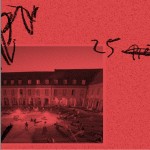
There is a certain perversity in calling a three-CD set by twenty-five improvisers "25 pièces sans vide". The title suggests an absence of emptiness, while free improvisation traditionally thrives on precisely the spaces where nothing appears to be happening. And then there is Le UN itself: twenty-five people calling themselves “the one”, which sounds either like a philosophical proposition or the name of a particularly badly organised superhero. In reality, the contradiction is the point. "25 pièces sans vide" is an extended examination of how a crowd can remain a crowd without becoming a blur, and how individual freedom might survive when twenty-five nervous systems are making decisions at the same time.
Le UN began in 2012 through the initiative of double bassist David Chiesa, initially bringing together musicians with very different backgrounds and experimenting with graphic, oral and textual forms of direction. In 2019, the ensemble changed course, concentrating exclusively on free or non-idiomatic improvisation and abandoning scores and formal direction altogether. Its members are involved not only in making the music but also in the organisation of the group, which operates horizontally rather than according to a conventional leader-and-orchestra structure.
That distinction is crucial. Le UN is not simply a large free-improvisation orchestra. It is an attempt to make the organisation of the ensemble itself part of the artistic experiment. The group explicitly treats improvisation as an attitude rather than a genre, and its interest in impermanence extends beyond the music: performances leave traces, recordings, memories and consequences, but cannot reproduce the original situation.
The box gathers five substantial pieces recorded between 2021 and 2022, divided between large-ensemble performances, smaller formations and an outdoor intervention. Across roughly three hours, the scale keeps changing: 45 minutes in Gradignan, nearly an hour in Le Havre, then progressively smaller groups at Cluny before the musicians move into the public space of Place Saint-Michel in Bordeaux. It is less a conventional album than a set of different experiments conducted on the same social organism.
The first disc, "Unité nodale T4S", immediately demonstrates the problem Le UN has chosen for itself. Put twenty-five experienced improvisers in the same room and you have an almost absurd quantity of possible decisions. Somebody can become louder. Somebody else can disappear. A saxophone can interrupt a cello; an electronic texture can undermine a percussion pattern; a piano can suddenly provide a centre of gravity that nobody explicitly asked for. The danger is obvious: collective improvisation can become either a polite soup or an arms race. Le UN generally avoids both.
What makes the large ensemble convincing is its ability to create temporary centres rather than a permanent hierarchy. Sophie Agnel's piano can suddenly become structurally important without becoming “the leader”; percussion can gather momentum without turning into a rhythm section; voices, strings and brass can briefly form recognisable relationships before abandoning them. Electronics from Jérôme Noetinger and Lionel Marchetti do not simply provide atmospheric wallpaper, either. They alter the apparent scale of the ensemble, making acoustic gestures seem larger, stranger or more distant.
The musicians are individually too distinctive to disappear completely. That is one of the group's most interesting characteristics. The lineup includes several generations and approaches to experimental music, from piano, strings, double basses and winds to rotating surfaces, electronics, accordion, voice, hurdy-gurdy, light and physical actions. The challenge is not to suppress these personalities but to prevent them from behaving like twenty-five soloists waiting for their turn. Le UN's own description of its practice places individual singularity at the centre while insisting that it must not obstruct shared space. That sounds suspiciously utopian on paper. Fortunately, the music is more complicated than the philosophy.
"Unité nodale ESJ", occupying the whole of the second disc, makes this especially clear. Its length changes the listener's relationship with concentration. There is no convenient three-minute reset button, no chorus to announce that the previous argument has been resolved. Instead, density accumulates and recedes. Electronics can create broad fields of pressure, while strings, percussion and winds introduce irregular disturbances. At times the texture seems almost geological, as if the ensemble were slowly excavating a sound rather than performing one.
This is also where the title becomes useful. There are “pieces without gaps”, but that does not mean there are no silences or reductions in intensity. The absence of a gap is conceptual rather than merely acoustic. One event remains connected to the next even when the audible material becomes sparse. Listening becomes an exercise in remembering what has just disappeared.
A recent assessment of the set rightly emphasised the unusual ability of the musicians to retain their individual expertise inside the larger aggregate. It also noted the markedly different character of the discs: the first and final pieces combine acoustic and electronic impulses, while the second is more heavily oriented toward electronic waveforms and the two middle pieces on CD3 are predominantly acoustic. The observation is useful because it reveals that "25 pièces sans vide" is not really about one Le UN sound. There isn't one.
The third disc is where the proposition becomes more intimate. "PME postes fixes" reduces the ensemble to a smaller constellation involving piano, rotating surfaces, percussion and electronics. The reduction does not make the music simpler. It makes the relationships more exposed. Every sound has more responsibility because there are fewer bodies available to disguise it. A small metallic gesture can suddenly acquire structural significance; an electronic oscillation can become almost architectural; piano fragments can hover between melody and percussive interruption.
It is here that Le UN's approach begins to resemble chamber music without adopting chamber music's usual manners. The players listen closely, but there is no obligation to be elegant about it. Sounds can scrape, interrupt, hover, stutter or simply refuse to develop. The intimacy is therefore not cosy. It is closer to being in a room with several people who are all paying extremely close attention to one another and none of whom has been given the authority to settle the argument.
"PME cordes" goes further by reducing the acoustic palette largely to strings, accordion and voice. Three double basses, two cellos and two violins create a fascinating vertical tension between low resonance and high-frequency fragility. The result is almost a study in how little is required for strings to stop sounding “beautiful” in the conventional sense. Bow pressure, friction, scraping, resonance and interruption become as important as pitch.
The voice and accordion introduce another layer of ambiguity. The human voice can suggest language even when no language is being used, while the accordion is capable of sounding simultaneously mechanical and organic. Together they create the impression of an improvised miniature theatre in which nobody has bothered to write the script. This is perhaps the most persuasive argument for Le UN's insistence that improvisation is not a genre. The music does not need to sound like a particular tradition because its subject is the act of negotiating what happens next. Then the musicians leave the stage.
"Brigade d'Intervention Légère PSM", recorded at Place Saint-Michel in Bordeaux, places the ensemble directly inside public space. Here the environment is no longer a neutral acoustic container. Voices, ambient noise and the unpredictable behaviour of the surrounding square become part of the material. The distinction between performer and audience becomes less secure, which is precisely what Le UN has been questioning throughout its practice.
This is more than an interesting recording trick. Playing outdoors introduces a different kind of risk. A concert hall can be controlled, at least in theory. A public square has traffic, conversations, weather, pedestrians, distractions and people who did not consent to becoming an avant-garde audience. The world is allowed to interrupt the musicians. In such circumstances, improvisation stops being a purely musical negotiation and becomes a negotiation with reality itself.
That interest in displacement is fundamental to Le UN's broader activity. The ensemble has explored streets, rivers, caves, exhibition spaces and acousmatic situations, deliberately placing improvisation in environments that disturb the conventional separation between performer, listener and location. The point is not simply to find exotic places in which to record unusual sounds. It is to discover how much of the music depends on the idea of a stage in the first place. The answer, on "25 pièces sans vide", seems to be: less than we might assume.
There is also a subtle political dimension to the ensemble's method, although it wisely avoids turning the recordings into an ideological lecture. Twenty-five people sharing responsibility without a conductor is not a metaphor for harmonious society. Quite the opposite. It exposes how difficult collective life actually is. Someone has to listen. Someone has to leave space. Someone has to accept that their excellent idea is not going to happen. Someone else has to make a noise at precisely the wrong moment and discover that it was, accidentally, the right one. That tension is what keeps the music alive.
The set is not uniformly easy listening, and it should not be. The extended "Unité Nodale ESJ" can become deliberately dense, with electronic textures occupying enough space to test the listener's patience. A recent review of the set found this concentration less convincing than the more varied acoustic sections, noting the tendency of the long second-disc performance toward sustained electronic density. That criticism is fair, but the slight imbalance also makes the box more revealing. A project genuinely committed to collective risk should occasionally produce results that are less immediately persuasive. Otherwise the “risk” is just good branding.
What ultimately distinguishes "25 pièces sans vide" is therefore not technical virtuosity, although there is an extraordinary amount of it. Nor is it simply the spectacle of twenty-five musicians improvising simultaneously. Its real subject is attention: how individual attention can become collective without becoming uniform, and how a group can construct temporary form without deciding in advance what that form should be.
The three-CD format makes that question physical. You do not consume this music like a playlist. You spend time with it. The box comes with a twenty-page bilingual booklet containing texts by Le UN, Joël Pagier, Jean-Philippe Pierron and Nate Wooley, reinforcing the sense that the release is intended not merely as documentation but as an account of an ongoing practice.
And perhaps “documentation” is the wrong word anyway. The ensemble itself insists on the distinction between traces and proof. A recording can tell us that something happened. It cannot give us the situation in which it happened, the glances between musicians, the physical acoustics, the audience's reactions, the accidental noise outside the room or the precise instant when one player decided to enter and another decided not to.
That missing information is not a defect. It is the residue that makes the recordings worth hearing.
"25 pièces sans vide" ultimately presents improvisation as a strange form of collective architecture. Nothing is fixed, yet structures appear. Nobody is officially in charge, yet decisions accumulate. Individual voices remain audible, yet something larger occasionally emerges from their interference. And the “one” in Le UN never becomes a single voice. It becomes a temporary agreement between many.
Twenty-five people making one music without making themselves one person: humanity has spent millennia failing to solve that problem politically. Le UN at least gets a few hours of excellent noise out of it.
Le UN began in 2012 through the initiative of double bassist David Chiesa, initially bringing together musicians with very different backgrounds and experimenting with graphic, oral and textual forms of direction. In 2019, the ensemble changed course, concentrating exclusively on free or non-idiomatic improvisation and abandoning scores and formal direction altogether. Its members are involved not only in making the music but also in the organisation of the group, which operates horizontally rather than according to a conventional leader-and-orchestra structure.
That distinction is crucial. Le UN is not simply a large free-improvisation orchestra. It is an attempt to make the organisation of the ensemble itself part of the artistic experiment. The group explicitly treats improvisation as an attitude rather than a genre, and its interest in impermanence extends beyond the music: performances leave traces, recordings, memories and consequences, but cannot reproduce the original situation.
The box gathers five substantial pieces recorded between 2021 and 2022, divided between large-ensemble performances, smaller formations and an outdoor intervention. Across roughly three hours, the scale keeps changing: 45 minutes in Gradignan, nearly an hour in Le Havre, then progressively smaller groups at Cluny before the musicians move into the public space of Place Saint-Michel in Bordeaux. It is less a conventional album than a set of different experiments conducted on the same social organism.
The first disc, "Unité nodale T4S", immediately demonstrates the problem Le UN has chosen for itself. Put twenty-five experienced improvisers in the same room and you have an almost absurd quantity of possible decisions. Somebody can become louder. Somebody else can disappear. A saxophone can interrupt a cello; an electronic texture can undermine a percussion pattern; a piano can suddenly provide a centre of gravity that nobody explicitly asked for. The danger is obvious: collective improvisation can become either a polite soup or an arms race. Le UN generally avoids both.
What makes the large ensemble convincing is its ability to create temporary centres rather than a permanent hierarchy. Sophie Agnel's piano can suddenly become structurally important without becoming “the leader”; percussion can gather momentum without turning into a rhythm section; voices, strings and brass can briefly form recognisable relationships before abandoning them. Electronics from Jérôme Noetinger and Lionel Marchetti do not simply provide atmospheric wallpaper, either. They alter the apparent scale of the ensemble, making acoustic gestures seem larger, stranger or more distant.
The musicians are individually too distinctive to disappear completely. That is one of the group's most interesting characteristics. The lineup includes several generations and approaches to experimental music, from piano, strings, double basses and winds to rotating surfaces, electronics, accordion, voice, hurdy-gurdy, light and physical actions. The challenge is not to suppress these personalities but to prevent them from behaving like twenty-five soloists waiting for their turn. Le UN's own description of its practice places individual singularity at the centre while insisting that it must not obstruct shared space. That sounds suspiciously utopian on paper. Fortunately, the music is more complicated than the philosophy.
"Unité nodale ESJ", occupying the whole of the second disc, makes this especially clear. Its length changes the listener's relationship with concentration. There is no convenient three-minute reset button, no chorus to announce that the previous argument has been resolved. Instead, density accumulates and recedes. Electronics can create broad fields of pressure, while strings, percussion and winds introduce irregular disturbances. At times the texture seems almost geological, as if the ensemble were slowly excavating a sound rather than performing one.
This is also where the title becomes useful. There are “pieces without gaps”, but that does not mean there are no silences or reductions in intensity. The absence of a gap is conceptual rather than merely acoustic. One event remains connected to the next even when the audible material becomes sparse. Listening becomes an exercise in remembering what has just disappeared.
A recent assessment of the set rightly emphasised the unusual ability of the musicians to retain their individual expertise inside the larger aggregate. It also noted the markedly different character of the discs: the first and final pieces combine acoustic and electronic impulses, while the second is more heavily oriented toward electronic waveforms and the two middle pieces on CD3 are predominantly acoustic. The observation is useful because it reveals that "25 pièces sans vide" is not really about one Le UN sound. There isn't one.
The third disc is where the proposition becomes more intimate. "PME postes fixes" reduces the ensemble to a smaller constellation involving piano, rotating surfaces, percussion and electronics. The reduction does not make the music simpler. It makes the relationships more exposed. Every sound has more responsibility because there are fewer bodies available to disguise it. A small metallic gesture can suddenly acquire structural significance; an electronic oscillation can become almost architectural; piano fragments can hover between melody and percussive interruption.
It is here that Le UN's approach begins to resemble chamber music without adopting chamber music's usual manners. The players listen closely, but there is no obligation to be elegant about it. Sounds can scrape, interrupt, hover, stutter or simply refuse to develop. The intimacy is therefore not cosy. It is closer to being in a room with several people who are all paying extremely close attention to one another and none of whom has been given the authority to settle the argument.
"PME cordes" goes further by reducing the acoustic palette largely to strings, accordion and voice. Three double basses, two cellos and two violins create a fascinating vertical tension between low resonance and high-frequency fragility. The result is almost a study in how little is required for strings to stop sounding “beautiful” in the conventional sense. Bow pressure, friction, scraping, resonance and interruption become as important as pitch.
The voice and accordion introduce another layer of ambiguity. The human voice can suggest language even when no language is being used, while the accordion is capable of sounding simultaneously mechanical and organic. Together they create the impression of an improvised miniature theatre in which nobody has bothered to write the script. This is perhaps the most persuasive argument for Le UN's insistence that improvisation is not a genre. The music does not need to sound like a particular tradition because its subject is the act of negotiating what happens next. Then the musicians leave the stage.
"Brigade d'Intervention Légère PSM", recorded at Place Saint-Michel in Bordeaux, places the ensemble directly inside public space. Here the environment is no longer a neutral acoustic container. Voices, ambient noise and the unpredictable behaviour of the surrounding square become part of the material. The distinction between performer and audience becomes less secure, which is precisely what Le UN has been questioning throughout its practice.
This is more than an interesting recording trick. Playing outdoors introduces a different kind of risk. A concert hall can be controlled, at least in theory. A public square has traffic, conversations, weather, pedestrians, distractions and people who did not consent to becoming an avant-garde audience. The world is allowed to interrupt the musicians. In such circumstances, improvisation stops being a purely musical negotiation and becomes a negotiation with reality itself.
That interest in displacement is fundamental to Le UN's broader activity. The ensemble has explored streets, rivers, caves, exhibition spaces and acousmatic situations, deliberately placing improvisation in environments that disturb the conventional separation between performer, listener and location. The point is not simply to find exotic places in which to record unusual sounds. It is to discover how much of the music depends on the idea of a stage in the first place. The answer, on "25 pièces sans vide", seems to be: less than we might assume.
There is also a subtle political dimension to the ensemble's method, although it wisely avoids turning the recordings into an ideological lecture. Twenty-five people sharing responsibility without a conductor is not a metaphor for harmonious society. Quite the opposite. It exposes how difficult collective life actually is. Someone has to listen. Someone has to leave space. Someone has to accept that their excellent idea is not going to happen. Someone else has to make a noise at precisely the wrong moment and discover that it was, accidentally, the right one. That tension is what keeps the music alive.
The set is not uniformly easy listening, and it should not be. The extended "Unité Nodale ESJ" can become deliberately dense, with electronic textures occupying enough space to test the listener's patience. A recent review of the set found this concentration less convincing than the more varied acoustic sections, noting the tendency of the long second-disc performance toward sustained electronic density. That criticism is fair, but the slight imbalance also makes the box more revealing. A project genuinely committed to collective risk should occasionally produce results that are less immediately persuasive. Otherwise the “risk” is just good branding.
What ultimately distinguishes "25 pièces sans vide" is therefore not technical virtuosity, although there is an extraordinary amount of it. Nor is it simply the spectacle of twenty-five musicians improvising simultaneously. Its real subject is attention: how individual attention can become collective without becoming uniform, and how a group can construct temporary form without deciding in advance what that form should be.
The three-CD format makes that question physical. You do not consume this music like a playlist. You spend time with it. The box comes with a twenty-page bilingual booklet containing texts by Le UN, Joël Pagier, Jean-Philippe Pierron and Nate Wooley, reinforcing the sense that the release is intended not merely as documentation but as an account of an ongoing practice.
And perhaps “documentation” is the wrong word anyway. The ensemble itself insists on the distinction between traces and proof. A recording can tell us that something happened. It cannot give us the situation in which it happened, the glances between musicians, the physical acoustics, the audience's reactions, the accidental noise outside the room or the precise instant when one player decided to enter and another decided not to.
That missing information is not a defect. It is the residue that makes the recordings worth hearing.
"25 pièces sans vide" ultimately presents improvisation as a strange form of collective architecture. Nothing is fixed, yet structures appear. Nobody is officially in charge, yet decisions accumulate. Individual voices remain audible, yet something larger occasionally emerges from their interference. And the “one” in Le UN never becomes a single voice. It becomes a temporary agreement between many.
Twenty-five people making one music without making themselves one person: humanity has spent millennia failing to solve that problem politically. Le UN at least gets a few hours of excellent noise out of it.
I'A'V: Volatile Poem

There is a small contradiction hiding inside the title "Volatile Poem". A poem usually implies something deliberately shaped, while volatility suggests a form that cannot quite be trusted to remain where it was put. I’A’V understand the contradiction perfectly. Their debut is built from songs, but the songs keep shedding their skins; it contains voices, cello and flute, but none of these instruments is allowed to remain entirely itself. The result is music that seems to hover between composition and dissolution, as if someone had written a song on a piece of ice and then become curious about what happens next.
I’A’V emerged from an invitation made by gnration in Braga to Inês Malheiro, who brought together Arianna Casellas and Violeta Azevedo for a residency that first produced "Volatile Poem". The three musicians arrived with considerably different backgrounds. Malheiro has developed a practice in which the voice is treated as raw material as much as a means of communication, moving between composition, improvisation, performance and sound work. Casellas works across music and interdisciplinary practice, with cello and an interest in the folklore and cultural residues of the places she has inhabited. Azevedo moves between composition and improvisation, particularly through the dialogue between transverse flute and electronics. Their meeting therefore does not feel like the assembly of three musicians looking for a common genre. It feels more like three established vocabularies being forced to negotiate a new grammar.
That negotiation is immediately apparent in “Echoes”. The voice appears neither as conventional singing nor as pure abstraction. It remains recognisably human, but its surroundings make its identity unstable. Electronic tones flicker around it, while the instrumental elements seem to occupy an uncertain distance. The piece establishes one of the album’s most effective tricks: whenever the music approaches something resembling a song, it slightly alters the conditions under which the song can exist.
“Air Particles” expands that idea. The title could almost be mistaken for a piece of New Age packaging, but the music is considerably less polite. Flute and cello provide organic contours while electronics introduce brittle edges, suspended tones and interruptions. The instruments do not simply accompany one another. They seem to be listening through different physical laws. The flute breathes; the cello pulls sound through the strings; the electronic layer behaves as though breathing were an optional feature.
This makes Violeta Azevedo’s flute particularly important. It does not function merely as the delicate acoustic counterweight to Malheiro’s voice and the cello. Its breathiness becomes a reminder that even the most fragile sound has a body behind it. Casellas’s cello supplies another kind of resistance, its strings bringing friction, grain and gravity into a record otherwise capable of becoming almost weightless. Against them, Malheiro’s voice can move from intimate presence to something fractured, multiplied or electronically transformed. The three materials consequently keep correcting one another.
The nearly ten-minute “Caminha” is where the album’s architecture becomes most apparent. Rather than behaving like an extended song in the conventional sense, it unfolds through changes of density and perception. There are moments when the music seems remarkably exposed, followed by passages in which processing gathers around the performers until their identities become difficult to separate. The transition is never presented as a spectacular special effect. It happens almost conversationally, which makes the transformation more unsettling. One moment you hear a person singing; a few minutes later you seem to be hearing the memory of a person singing.
Then comes “Rents Are High Again And I Can't Touch The Sky”, lasting just twenty-five seconds. Its title is almost hilariously mundane compared with the metaphysical atmosphere surrounding it. It also introduces an important crack in the album’s otherwise ethereal surface. Rent is high. The sky remains inaccessible. Even experimental music, apparently, has to pay attention to the housing market eventually.
The miniature “Flame Distortion” continues this disruption, while “Waterfall” provides one of the album’s more substantial passages. Here the title suggests movement, but not necessarily the picturesque kind. The sound seems to pour rather than proceed, with textures continually changing shape without settling into a stable hierarchy. What is particularly effective is the refusal to make abstraction synonymous with coldness. There is still a physical quality to the music, especially in the interaction between the acoustic instruments and the voice.
That balance may be the album’s central achievement. "Volatile Poem" is certainly experimental, but its experimentation is not based on rejecting song. The original presentation of the project explicitly grew from an investigation into what a song might be, with Malheiro, Casellas and Azevedo working with voices, flute, cello and whatever else emerged during the process. The 2024 gnration presentation already described the project as an attempt to examine the form and beauty of song, while allowing improvisation and fragmentation into the composition.
Consequently, “Scream Study” is an especially revealing title. It treats one of the most primal human vocal actions as an object for investigation. A scream can express pain, anger, fear, pleasure, protest or simply the sudden realisation that somebody has put pineapple on pizza. I’A’V are interested in what remains when that expressive impulse becomes musical material. The piece does not need to settle on one emotional meaning. It can examine the sound itself, its pressure and its grain, without pretending that abstraction has somehow made the human element disappear.
“Everyone Should Be Loud”, at twenty-two seconds, is another tiny act of sabotage. After so much careful attention to nuance, silence and gradation, the title sounds almost like a political slogan issued by a particularly eccentric town council. Yet it fits the record’s interest in collective presence. These three musicians are constantly negotiating volume, density and space, and the album repeatedly suggests that listening together does not mean becoming identical.
That becomes crucial in the closing “I’m Here”, an eleven-and-a-half-minute piece that feels less like a finale than a sustained declaration of presence. The phrase is simple, almost embarrassingly so. But after an album spent so much time fragmenting voices and transforming instrumental identities, presence itself becomes meaningful. “I’m here” is not necessarily a statement of stability. It can also mean: I am still here despite everything that has happened to the sound around me.
This is where the title "Volatile Poem" finally makes sense. Volatility is not merely an aesthetic preference. It is the condition under which the three artists communicate. Their music does not resolve difference by smoothing it away. Instead, cello, flute, voice and electronics remain recognisable enough to retain their personalities while constantly disturbing one another’s boundaries.
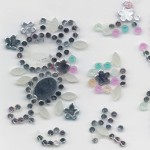
The album’s physical format adds another amusing contradiction. The first edition on Sucata Tapes is a limited cassette release, with each copy accompanied by a unique 3D-printed I’A’V logo and random bits of sequins or glitter. It is difficult to imagine a better material joke for music that spends thirty-eight minutes refusing to stay materially stable: a fragile cassette containing sounds that are themselves continually mutating, dressed up with tiny pieces of celebratory debris. Experimental music occasionally remembers that it is allowed to have fun.
There is also a distinctly Portuguese context to the project, although "Volatile Poem" never turns regional identity into decoration. All three musicians are deeply connected to the contemporary Portuguese experimental scene, and the project itself grew out of gnration’s Radiografia programme, which was designed to foreground emerging composers and practices in Braga. The residency gave the trio a specific institutional starting point, but the music quickly outgrows that context.
What remains after repeated listening is not a particular melody or electronic trick, but a sensation of continual negotiation. The album is constantly deciding how much of itself should be exposed and how much should be obscured. Its most beautiful passages are often those in which the answer remains unresolved: a flute breath interrupted by electronics, a cello phrase disappearing into processing, a voice suddenly becoming texture and then returning as a person.
There is something almost tender about that instability. "Volatile Poem" does not treat transformation as a way of escaping humanity. Quite the opposite. It keeps returning to the body: breath, voice, strings, resonance, vibration. The electronic elements may distort these things, but they cannot completely erase their origins.
I’A’V therefore make a record about becoming something else without quite becoming unrecognisable. Its songs do not break apart because composition has failed. They break apart because the three musicians have discovered that fragmentation can be another form of togetherness. The poem is volatile precisely because it is alive, and "Volatile Poem" is at its most convincing when it lets that life remain slightly out of control.
I’A’V emerged from an invitation made by gnration in Braga to Inês Malheiro, who brought together Arianna Casellas and Violeta Azevedo for a residency that first produced "Volatile Poem". The three musicians arrived with considerably different backgrounds. Malheiro has developed a practice in which the voice is treated as raw material as much as a means of communication, moving between composition, improvisation, performance and sound work. Casellas works across music and interdisciplinary practice, with cello and an interest in the folklore and cultural residues of the places she has inhabited. Azevedo moves between composition and improvisation, particularly through the dialogue between transverse flute and electronics. Their meeting therefore does not feel like the assembly of three musicians looking for a common genre. It feels more like three established vocabularies being forced to negotiate a new grammar.
That negotiation is immediately apparent in “Echoes”. The voice appears neither as conventional singing nor as pure abstraction. It remains recognisably human, but its surroundings make its identity unstable. Electronic tones flicker around it, while the instrumental elements seem to occupy an uncertain distance. The piece establishes one of the album’s most effective tricks: whenever the music approaches something resembling a song, it slightly alters the conditions under which the song can exist.
“Air Particles” expands that idea. The title could almost be mistaken for a piece of New Age packaging, but the music is considerably less polite. Flute and cello provide organic contours while electronics introduce brittle edges, suspended tones and interruptions. The instruments do not simply accompany one another. They seem to be listening through different physical laws. The flute breathes; the cello pulls sound through the strings; the electronic layer behaves as though breathing were an optional feature.
This makes Violeta Azevedo’s flute particularly important. It does not function merely as the delicate acoustic counterweight to Malheiro’s voice and the cello. Its breathiness becomes a reminder that even the most fragile sound has a body behind it. Casellas’s cello supplies another kind of resistance, its strings bringing friction, grain and gravity into a record otherwise capable of becoming almost weightless. Against them, Malheiro’s voice can move from intimate presence to something fractured, multiplied or electronically transformed. The three materials consequently keep correcting one another.
The nearly ten-minute “Caminha” is where the album’s architecture becomes most apparent. Rather than behaving like an extended song in the conventional sense, it unfolds through changes of density and perception. There are moments when the music seems remarkably exposed, followed by passages in which processing gathers around the performers until their identities become difficult to separate. The transition is never presented as a spectacular special effect. It happens almost conversationally, which makes the transformation more unsettling. One moment you hear a person singing; a few minutes later you seem to be hearing the memory of a person singing.
Then comes “Rents Are High Again And I Can't Touch The Sky”, lasting just twenty-five seconds. Its title is almost hilariously mundane compared with the metaphysical atmosphere surrounding it. It also introduces an important crack in the album’s otherwise ethereal surface. Rent is high. The sky remains inaccessible. Even experimental music, apparently, has to pay attention to the housing market eventually.
The miniature “Flame Distortion” continues this disruption, while “Waterfall” provides one of the album’s more substantial passages. Here the title suggests movement, but not necessarily the picturesque kind. The sound seems to pour rather than proceed, with textures continually changing shape without settling into a stable hierarchy. What is particularly effective is the refusal to make abstraction synonymous with coldness. There is still a physical quality to the music, especially in the interaction between the acoustic instruments and the voice.
That balance may be the album’s central achievement. "Volatile Poem" is certainly experimental, but its experimentation is not based on rejecting song. The original presentation of the project explicitly grew from an investigation into what a song might be, with Malheiro, Casellas and Azevedo working with voices, flute, cello and whatever else emerged during the process. The 2024 gnration presentation already described the project as an attempt to examine the form and beauty of song, while allowing improvisation and fragmentation into the composition.
Consequently, “Scream Study” is an especially revealing title. It treats one of the most primal human vocal actions as an object for investigation. A scream can express pain, anger, fear, pleasure, protest or simply the sudden realisation that somebody has put pineapple on pizza. I’A’V are interested in what remains when that expressive impulse becomes musical material. The piece does not need to settle on one emotional meaning. It can examine the sound itself, its pressure and its grain, without pretending that abstraction has somehow made the human element disappear.
“Everyone Should Be Loud”, at twenty-two seconds, is another tiny act of sabotage. After so much careful attention to nuance, silence and gradation, the title sounds almost like a political slogan issued by a particularly eccentric town council. Yet it fits the record’s interest in collective presence. These three musicians are constantly negotiating volume, density and space, and the album repeatedly suggests that listening together does not mean becoming identical.
That becomes crucial in the closing “I’m Here”, an eleven-and-a-half-minute piece that feels less like a finale than a sustained declaration of presence. The phrase is simple, almost embarrassingly so. But after an album spent so much time fragmenting voices and transforming instrumental identities, presence itself becomes meaningful. “I’m here” is not necessarily a statement of stability. It can also mean: I am still here despite everything that has happened to the sound around me.
This is where the title "Volatile Poem" finally makes sense. Volatility is not merely an aesthetic preference. It is the condition under which the three artists communicate. Their music does not resolve difference by smoothing it away. Instead, cello, flute, voice and electronics remain recognisable enough to retain their personalities while constantly disturbing one another’s boundaries.
The album’s physical format adds another amusing contradiction. The first edition on Sucata Tapes is a limited cassette release, with each copy accompanied by a unique 3D-printed I’A’V logo and random bits of sequins or glitter. It is difficult to imagine a better material joke for music that spends thirty-eight minutes refusing to stay materially stable: a fragile cassette containing sounds that are themselves continually mutating, dressed up with tiny pieces of celebratory debris. Experimental music occasionally remembers that it is allowed to have fun.
There is also a distinctly Portuguese context to the project, although "Volatile Poem" never turns regional identity into decoration. All three musicians are deeply connected to the contemporary Portuguese experimental scene, and the project itself grew out of gnration’s Radiografia programme, which was designed to foreground emerging composers and practices in Braga. The residency gave the trio a specific institutional starting point, but the music quickly outgrows that context.
What remains after repeated listening is not a particular melody or electronic trick, but a sensation of continual negotiation. The album is constantly deciding how much of itself should be exposed and how much should be obscured. Its most beautiful passages are often those in which the answer remains unresolved: a flute breath interrupted by electronics, a cello phrase disappearing into processing, a voice suddenly becoming texture and then returning as a person.
There is something almost tender about that instability. "Volatile Poem" does not treat transformation as a way of escaping humanity. Quite the opposite. It keeps returning to the body: breath, voice, strings, resonance, vibration. The electronic elements may distort these things, but they cannot completely erase their origins.
I’A’V therefore make a record about becoming something else without quite becoming unrecognisable. Its songs do not break apart because composition has failed. They break apart because the three musicians have discovered that fragmentation can be another form of togetherness. The poem is volatile precisely because it is alive, and "Volatile Poem" is at its most convincing when it lets that life remain slightly out of control.
Charles Lareau: Stasis
According to his Discogs page, Charles Lareau hails from Green Bay, Wisconsin and is now based in Hangzhou, China. I was unfamiliar with his work, but the liner notes credits Lareau with "tapes and electronics," so I had some sense of what I was getting myself into. These tracks were recorded in 2021 & 2022 in Shanghai, China. Let's dive in and see what we have here.
We open with "aixst00," which is gritty machine noise. Imagine running a two-stroke engine though a series of effects and you get a sense of what you are in for. "Transistor" is heavily processed warbling static and analogue tones. I like the rawness of this and there is a minimalism here that is engaging. Finally, "algosphere" keeps the minimalism going with a lot of drone and ambience. If you are looking for atmosphere, this is where you will find it.
Flipping the tape over, we begin with "0II0I," which is an interesting mix of field recordings of singing and music buried under a wall of tape hiss and other noises. "Airwaves" is a short piece that brings some noise, with a repetitive static crunch and high-pitched radio noises. Finally, we close it off with "trajectory," which at 13:06 is the longest track on the release. The track kicks off with a static blast, but then quickly relaxes with some peaceful drone. This has the feel of being done in real time with one take, as there are sudden shifts at times. This settles into a heavily distorted drone piece that constantly evolves and shifts over time. Bits of static hiss come along for the ride and then vanish, tapes sounds like they are getting eaten for a brief moment, and suddenly it is over.
This is one of those nebulous releases that are a bit difficult to categorize. It is noisy, but not really noise. A bit too noisy to be ambient though. But it is very well done and a nice listen. Lareau manages to keep everything interesting by not getting too bogged down in formula. If you like tape experimentation with a lot of processing, this will be up your alley. Well worth checking out. This release weighs in at around 40 minutes.
We open with "aixst00," which is gritty machine noise. Imagine running a two-stroke engine though a series of effects and you get a sense of what you are in for. "Transistor" is heavily processed warbling static and analogue tones. I like the rawness of this and there is a minimalism here that is engaging. Finally, "algosphere" keeps the minimalism going with a lot of drone and ambience. If you are looking for atmosphere, this is where you will find it.
Flipping the tape over, we begin with "0II0I," which is an interesting mix of field recordings of singing and music buried under a wall of tape hiss and other noises. "Airwaves" is a short piece that brings some noise, with a repetitive static crunch and high-pitched radio noises. Finally, we close it off with "trajectory," which at 13:06 is the longest track on the release. The track kicks off with a static blast, but then quickly relaxes with some peaceful drone. This has the feel of being done in real time with one take, as there are sudden shifts at times. This settles into a heavily distorted drone piece that constantly evolves and shifts over time. Bits of static hiss come along for the ride and then vanish, tapes sounds like they are getting eaten for a brief moment, and suddenly it is over.
This is one of those nebulous releases that are a bit difficult to categorize. It is noisy, but not really noise. A bit too noisy to be ambient though. But it is very well done and a nice listen. Lareau manages to keep everything interesting by not getting too bogged down in formula. If you like tape experimentation with a lot of processing, this will be up your alley. Well worth checking out. This release weighs in at around 40 minutes.
Wallmart: Food Desert Created By Neighborhood Gentrification

Artist: Wallmart (@)
Title: Food Desert Created By Neighborhood Gentrification
Format: Download Only (MP3 + Lossless)
Label: Inner Demons Records
Rated:
Title: Food Desert Created By Neighborhood Gentrification
Format: Download Only (MP3 + Lossless)
Label: Inner Demons Records
Rated:
The Discogs entry for this artist has several aliases, including: 69, Destroy Date, E.J. Vodka, Edward Giles, and Unknown Hierarchy. Edward Giles is a member of +DOG+, among many others. Now let's talk a bit about the title for a moment. "Food Desert Created By Neighborhood Gentrification" is a real thing, so although many completely disregard noise, I figure any attention we can get to such issues is worthwhile. The liner notes state that "WALLMART "Food Desert" is a new fifteen plus HNW track about an old subject. While the need for commercial property starts to diminish as retail shopping goes online. Many smaller "brick & mortar stores" have suffered the impact of the "big box" model of retail. The seemingly lower prices are never offset by the loss of local businesses that have shuttered their doors as commercial property developers continue to buy up neglected, underutilized land to create "food deserts" that lower income shoppers cannot access or afford." I have personally seen such food deserts in my work, so all I can say is "preach, brother." As for Wallmart? No bonus points for figuring out what we are in for here, so let's get past the geriatric greeter and see what the people in the blue vests have on sale today.
As you may have figured out based on the name and the fact that it's being released by Inner Demons Records, this is some heavy harsh noise wall. Over fifteen and a half minutes, the track grinds and stutters away in a cacophony of electronic noise. There is a lot going on in the track with a nice bass undercurrent to keep everything grounded. At the end, it cuts out to some hum and a brief news report about a store closure.
Overall, this is some nice wall of noise with a socially conscious point that one would be hard pressed to oppose. I am not the biggest fan of harsh noise wall (I prefer the "everything including the kitchen sink" variety of noise), but I found this to be engaging. This album weighs in at just over 15 minutes.
As you may have figured out based on the name and the fact that it's being released by Inner Demons Records, this is some heavy harsh noise wall. Over fifteen and a half minutes, the track grinds and stutters away in a cacophony of electronic noise. There is a lot going on in the track with a nice bass undercurrent to keep everything grounded. At the end, it cuts out to some hum and a brief news report about a store closure.
Overall, this is some nice wall of noise with a socially conscious point that one would be hard pressed to oppose. I am not the biggest fan of harsh noise wall (I prefer the "everything including the kitchen sink" variety of noise), but I found this to be engaging. This album weighs in at just over 15 minutes.