
Monday, September 7, 2026
Browse by Genre
Industrial Music / Industrial Metal / Aggro Industrial / Electro Metal
Industrial Noise / Power Noise / Harsh Noise
Synth Pop / Electro Pop / Synth-Electronica
Techno / Trance / Goa / Drum'n'Bass / Jungle / Tribal / Trip-Hop
Ambient / Electronica / Ethereal / Dub / Soundscapes / Abstract
Experimental / Avantgarde / Weird & Wired / Glitch / Noise / Field Recording
Dark / Gothic / Wave / New Wave / Dark Wave / Industrial Gothic
New Music / Downtown / Avantgarde Jazz / New Classical / World
Search Reviews
Music Reviews
Røed Quartet: Red Nose Hymn
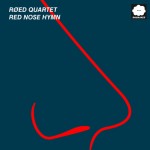
There is a curious confidence in naming your debut after a red nose. It immediately suggests that solemnity will not be mistaken for seriousness. Jazz, after all, has spent decades proving that technical sophistication and playfulness are perfectly capable of sharing the same stage, although musicians occasionally forget this and audiences politely pretend not to notice. "Red Nose Hymn" understands that the best improvisation often carries a smile just beneath its concentration.
Led by Norwegian saxophonist Aksel Røed, the newly formed Røed Quartet arrives with a record that feels remarkably assured for a first outing. Conceived initially for a commissioned performance at the Tedansfestival in 2024, the ensemble has evolved into something far more organic than a temporary project. Alongside trumpeter and flugelhorn player Lyder Røed, bassist Ola Høyer, and Swedish drummer Cornelia Nilsson, Aksel has assembled a quartet whose greatest strength lies not in dazzling virtuosity, though there is plenty of that, but in the quality of their collective listening.
The album openly acknowledges its debt to the golden age of 1960s jazz, yet never lapses into historical reenactment. Echoes of the post-bop revolution inevitably emerge throughout the record. One occasionally hears the conversational elasticity of Wayne Shorter's classic quartets, the melodic generosity associated with Blue Note recordings, or the spacious lyricism that has long characterised Scandinavian jazz. Yet these influences remain exactly that: points of departure rather than destinations. The music consistently sounds like four contemporary musicians speaking their own language while remaining fluent in jazz history.
Aksel Røed himself has steadily become one of the more compelling voices within Norway's vibrant jazz scene, working across projects that comfortably blur the boundaries between straight-ahead improvisation, progressive rock and freer forms of expression. His playing combines muscular tenor phrasing with an unusually lyrical instinct, capable of moving from robust declarations to whispering introspection without ever sounding self-conscious. Throughout "Red Nose Hymn", he avoids the temptation to dominate proceedings, preferring instead to shape conversations that allow every member of the quartet equal narrative weight.
That democratic spirit becomes immediately apparent in the opening "One Half Step for Me (A Whole Step for My Brother)". Even its title hints at affectionate humour, transforming a simple intervallic joke into something unexpectedly warm. The piece unfolds through elegant thematic development before opening into improvisations that never feel like obligatory solo showcases. Each musician builds upon ideas left suspended by the previous voice, creating a genuine sense of dialogue rather than sequential monologues.
The beautifully titled "Fanfare for Judee" introduces another dimension altogether. Whether consciously invoking the fragile introspection of Judee Sill or simply sharing her emotional atmosphere, the composition balances ceremonial grandeur with remarkable tenderness. Lyder Røed's trumpet and flugelhorn deserve particular praise here. His tone possesses that increasingly rare combination of clarity and vulnerability, capable of singing without excessive sentimentality. Rather than soaring above the ensemble, his lines seem to emerge naturally from within its harmonic fabric.
The title track occupies the emotional centre of the record. "Red Nose Hymn" plays wonderfully with apparent contradictions. A hymn traditionally suggests reverence, while a red nose evokes clowns, absurdity or perhaps quiet embarrassment. The composition itself inhabits precisely that delicate territory where dignity and vulnerability coexist. There is something profoundly human in acknowledging that grace occasionally arrives wearing ridiculous shoes.
Behind the melodic accessibility lies sophisticated craftsmanship. The quartet consistently favours subtle rhythmic elasticity over overt complexity. Cornelia Nilsson's drumming exemplifies this philosophy beautifully. Rather than filling every available space with displays of technical prowess, she shapes momentum through texture, dynamics and impeccable timing. Her playing constantly reminds us that restraint is often the most demanding form of virtuosity.
Ola Høyer's bass provides the album's quiet gravitational centre. Whether anchoring harmonies or engaging in fluid counterpoint, his contribution remains essential without ever demanding attention for its own sake. Like excellent architecture, one notices its importance most clearly when imagining its absence.
"Between the Wish and the World" perhaps best encapsulates the quartet's aesthetic. The title alone suggests that familiar territory where aspiration collides with reality, and the music mirrors that emotional ambiguity through patient thematic development and understated harmonic shifts. It is jazz that trusts implication more than declaration, allowing listeners to inhabit emotional spaces rather than simply observe them.
The closing "Time to Go" resists grand finales or explosive climaxes. Instead, it departs with quiet confidence, leaving behind the satisfying impression of a conversation concluded naturally rather than artificially extended. That sense of proportion characterises the album as a whole. Nothing feels excessive. Every note appears to have earned its place.
Recorded by Vetle Junker and sensitively mixed and mastered by Arne Martin Nybo, the production captures the quartet with admirable transparency. The acoustic space remains open enough for every instrumental interaction to breathe, preserving both intimacy and immediacy. One almost forgets the presence of microphones altogether, always a reliable sign that recording has become invisible.
"Red Nose Hymn" ultimately succeeds because it refuses both nostalgia and novelty for their own sake. Instead, it embraces a more demanding ambition: making honest music within a tradition that remains very much alive. The quartet demonstrates that jazz history is not a museum to be preserved behind glass but a language still capable of generating fresh conversations.
In a cultural landscape increasingly obsessed with constant reinvention, there is something quietly refreshing about musicians who understand that originality often emerges not from rejecting the past, but from listening to it carefully enough to discover where its unfinished sentences might still lead. The Røed Quartet has taken an impressive first step along that path, reminding us that sometimes the most memorable hymns are those unafraid to carry a little laughter inside their reverence.
Led by Norwegian saxophonist Aksel Røed, the newly formed Røed Quartet arrives with a record that feels remarkably assured for a first outing. Conceived initially for a commissioned performance at the Tedansfestival in 2024, the ensemble has evolved into something far more organic than a temporary project. Alongside trumpeter and flugelhorn player Lyder Røed, bassist Ola Høyer, and Swedish drummer Cornelia Nilsson, Aksel has assembled a quartet whose greatest strength lies not in dazzling virtuosity, though there is plenty of that, but in the quality of their collective listening.
The album openly acknowledges its debt to the golden age of 1960s jazz, yet never lapses into historical reenactment. Echoes of the post-bop revolution inevitably emerge throughout the record. One occasionally hears the conversational elasticity of Wayne Shorter's classic quartets, the melodic generosity associated with Blue Note recordings, or the spacious lyricism that has long characterised Scandinavian jazz. Yet these influences remain exactly that: points of departure rather than destinations. The music consistently sounds like four contemporary musicians speaking their own language while remaining fluent in jazz history.
Aksel Røed himself has steadily become one of the more compelling voices within Norway's vibrant jazz scene, working across projects that comfortably blur the boundaries between straight-ahead improvisation, progressive rock and freer forms of expression. His playing combines muscular tenor phrasing with an unusually lyrical instinct, capable of moving from robust declarations to whispering introspection without ever sounding self-conscious. Throughout "Red Nose Hymn", he avoids the temptation to dominate proceedings, preferring instead to shape conversations that allow every member of the quartet equal narrative weight.
That democratic spirit becomes immediately apparent in the opening "One Half Step for Me (A Whole Step for My Brother)". Even its title hints at affectionate humour, transforming a simple intervallic joke into something unexpectedly warm. The piece unfolds through elegant thematic development before opening into improvisations that never feel like obligatory solo showcases. Each musician builds upon ideas left suspended by the previous voice, creating a genuine sense of dialogue rather than sequential monologues.
The beautifully titled "Fanfare for Judee" introduces another dimension altogether. Whether consciously invoking the fragile introspection of Judee Sill or simply sharing her emotional atmosphere, the composition balances ceremonial grandeur with remarkable tenderness. Lyder Røed's trumpet and flugelhorn deserve particular praise here. His tone possesses that increasingly rare combination of clarity and vulnerability, capable of singing without excessive sentimentality. Rather than soaring above the ensemble, his lines seem to emerge naturally from within its harmonic fabric.
The title track occupies the emotional centre of the record. "Red Nose Hymn" plays wonderfully with apparent contradictions. A hymn traditionally suggests reverence, while a red nose evokes clowns, absurdity or perhaps quiet embarrassment. The composition itself inhabits precisely that delicate territory where dignity and vulnerability coexist. There is something profoundly human in acknowledging that grace occasionally arrives wearing ridiculous shoes.
Behind the melodic accessibility lies sophisticated craftsmanship. The quartet consistently favours subtle rhythmic elasticity over overt complexity. Cornelia Nilsson's drumming exemplifies this philosophy beautifully. Rather than filling every available space with displays of technical prowess, she shapes momentum through texture, dynamics and impeccable timing. Her playing constantly reminds us that restraint is often the most demanding form of virtuosity.
Ola Høyer's bass provides the album's quiet gravitational centre. Whether anchoring harmonies or engaging in fluid counterpoint, his contribution remains essential without ever demanding attention for its own sake. Like excellent architecture, one notices its importance most clearly when imagining its absence.
"Between the Wish and the World" perhaps best encapsulates the quartet's aesthetic. The title alone suggests that familiar territory where aspiration collides with reality, and the music mirrors that emotional ambiguity through patient thematic development and understated harmonic shifts. It is jazz that trusts implication more than declaration, allowing listeners to inhabit emotional spaces rather than simply observe them.
The closing "Time to Go" resists grand finales or explosive climaxes. Instead, it departs with quiet confidence, leaving behind the satisfying impression of a conversation concluded naturally rather than artificially extended. That sense of proportion characterises the album as a whole. Nothing feels excessive. Every note appears to have earned its place.
Recorded by Vetle Junker and sensitively mixed and mastered by Arne Martin Nybo, the production captures the quartet with admirable transparency. The acoustic space remains open enough for every instrumental interaction to breathe, preserving both intimacy and immediacy. One almost forgets the presence of microphones altogether, always a reliable sign that recording has become invisible.
"Red Nose Hymn" ultimately succeeds because it refuses both nostalgia and novelty for their own sake. Instead, it embraces a more demanding ambition: making honest music within a tradition that remains very much alive. The quartet demonstrates that jazz history is not a museum to be preserved behind glass but a language still capable of generating fresh conversations.
In a cultural landscape increasingly obsessed with constant reinvention, there is something quietly refreshing about musicians who understand that originality often emerges not from rejecting the past, but from listening to it carefully enough to discover where its unfinished sentences might still lead. The Røed Quartet has taken an impressive first step along that path, reminding us that sometimes the most memorable hymns are those unafraid to carry a little laughter inside their reverence.
Luca Formentini: Angel Lost

Artist: Luca Formentini (@)
Title: Angel Lost
Format: Download Only (MP3 + Lossless)
Label: self-released
Rated:

Title: Angel Lost
Format: Download Only (MP3 + Lossless)
Label: self-released
Rated:
There is a peculiar freedom in releasing a single thirty-minute composition without fanfare, marketing machinery or elaborate mythology. It is almost an act of resistance. While algorithms impatiently demand constant novelty in bite-sized portions, Luca Formentini responds with "Angel Lost": one uninterrupted meditation that neither rushes nor apologises for its duration. It simply exists, inviting listeners to meet it halfway. As usual, humanity has perfected the art of shortening attention spans while simultaneously complaining that nothing feels meaningful anymore.
Following the emotionally charged "I Am Ghosts", "Angel Lost" does not present itself as a sequel so much as an afterimage. Some works exhaust their emotional material and close the door behind them. Others continue to echo long after completion, generating new questions from unresolved tensions. This piece belongs firmly to the latter category, emerging as what Formentini himself describes as one of those lingering resonances that refuse to disappear once the previous album has faded into silence.
Formentini has steadily carved a distinctive place within contemporary experimental electronics, combining modular synthesis, vintage analogue instruments and carefully sculpted guitar textures into works that rarely settle into comfortable genre definitions. While traces of ambient, electroacoustic composition, drone and kosmische music remain audible throughout his catalogue, reducing his output to any single label would feel misleading. His compositions behave less like environments than psychological states, constantly shifting between serenity and instability without fully embracing either.
That sense of ambiguity becomes the true subject of "Angel Lost". The "angel" of the title carries no theological baggage. Instead, it functions as a remarkably contemporary metaphor: a consciousness deprived of orientation, searching for vertical meaning inside an increasingly horizontal culture where every certainty immediately becomes another battlefield. It is an image that resonates without becoming didactic. Rather than arguing a philosophical position, Formentini allows sound itself to embody uncertainty.
Built from Yamaha CS50 synthesizer, modular electronics, Torso S4 sequencing and electric guitar, the piece unfolds with extraordinary patience. Layers emerge almost imperceptibly, harmonic relationships continuously adjusting themselves through subtle fluctuations rather than dramatic events. Robert Rich's mastering deserves particular mention here. Rich, himself one of the pioneers of immersive drone and psychoacoustic composition, preserves every microscopic detail while allowing the enormous dynamic space of the recording to remain intact. The result feels simultaneously intimate and immense, as though the music occupies both the listener's headphones and the architecture surrounding them.
Unlike many contemporary drone works that rely primarily on static immersion, "Angel Lost" possesses an internal dramatic arc. Movement happens beneath the surface. Harmonic centres drift gently before dissolving again, while fragments of electric guitar occasionally appear like distant human voices attempting communication across immense distances. One never encounters conventional melodies, yet melodic memory seems to hover just outside perception, creating an almost phantom-like emotional pull.
The album's greatest strength lies in its refusal to manipulate emotion directly. Formentini understands that transcendence cannot be manufactured through volume or excessive layering. Instead, he builds carefully balanced systems whose emotional weight emerges naturally from resonance itself. Frequencies interact like fragile negotiations rather than declarations. Every new overtone slightly alters the landscape, much as small personal doubts can quietly reshape entire belief systems.
There are moments where the piece recalls aspects of early electronic minimalism, while elsewhere it brushes against contemporary electroacoustic composition or the spacious atmospheres cultivated by artists associated with labels like Room40 or Touch. Yet none of these comparisons fully capture its identity. Formentini seems less interested in stylistic affiliation than in exploring perception itself, asking how sustained sound alters our relationship with time, memory and emotional balance.
What makes "Angel Lost" particularly compelling is that it never mistakes abstraction for emotional distance. Beneath its carefully controlled architecture lies unmistakable vulnerability. The lost angel becomes recognisable precisely because it never falls dramatically from heaven. Instead, it simply loses direction. That feels far more unsettling, and considerably more familiar. Most people do not experience life through catastrophic revelations. They drift. They adapt. They wake up one morning slightly further from themselves than they intended.
The composition mirrors that gradual displacement beautifully. Rather than resolving into triumphant catharsis or complete dissolution, it remains suspended in productive uncertainty until its final moments. The ending feels less like closure than a gentle release, as though the music simply continues somewhere beyond hearing, indifferent to whether anyone is still listening.
There is also quiet confidence in the decision to self-release such an uncompromising work. In an era where visibility often appears more important than substance, "Angel Lost" chooses the opposite route. It trusts that attentive listeners still exist. That may sound optimistic, perhaps even reckless, but occasionally art benefits from a little recklessness.
With "Angel Lost", Luca Formentini confirms that his work is becoming increasingly less concerned with constructing sonic landscapes than with revealing invisible emotional architectures. This is not music designed to distract from the noise of everyday life. It listens directly into that noise until hidden structures begin to emerge. Somewhere between collapse and transcendence, confusion and clarity, "Angel Lost" quietly reminds us that losing one's orientation is not necessarily the end of the journey. Sometimes it is simply the moment when genuine listening begins.
Following the emotionally charged "I Am Ghosts", "Angel Lost" does not present itself as a sequel so much as an afterimage. Some works exhaust their emotional material and close the door behind them. Others continue to echo long after completion, generating new questions from unresolved tensions. This piece belongs firmly to the latter category, emerging as what Formentini himself describes as one of those lingering resonances that refuse to disappear once the previous album has faded into silence.
Formentini has steadily carved a distinctive place within contemporary experimental electronics, combining modular synthesis, vintage analogue instruments and carefully sculpted guitar textures into works that rarely settle into comfortable genre definitions. While traces of ambient, electroacoustic composition, drone and kosmische music remain audible throughout his catalogue, reducing his output to any single label would feel misleading. His compositions behave less like environments than psychological states, constantly shifting between serenity and instability without fully embracing either.
That sense of ambiguity becomes the true subject of "Angel Lost". The "angel" of the title carries no theological baggage. Instead, it functions as a remarkably contemporary metaphor: a consciousness deprived of orientation, searching for vertical meaning inside an increasingly horizontal culture where every certainty immediately becomes another battlefield. It is an image that resonates without becoming didactic. Rather than arguing a philosophical position, Formentini allows sound itself to embody uncertainty.
Built from Yamaha CS50 synthesizer, modular electronics, Torso S4 sequencing and electric guitar, the piece unfolds with extraordinary patience. Layers emerge almost imperceptibly, harmonic relationships continuously adjusting themselves through subtle fluctuations rather than dramatic events. Robert Rich's mastering deserves particular mention here. Rich, himself one of the pioneers of immersive drone and psychoacoustic composition, preserves every microscopic detail while allowing the enormous dynamic space of the recording to remain intact. The result feels simultaneously intimate and immense, as though the music occupies both the listener's headphones and the architecture surrounding them.
Unlike many contemporary drone works that rely primarily on static immersion, "Angel Lost" possesses an internal dramatic arc. Movement happens beneath the surface. Harmonic centres drift gently before dissolving again, while fragments of electric guitar occasionally appear like distant human voices attempting communication across immense distances. One never encounters conventional melodies, yet melodic memory seems to hover just outside perception, creating an almost phantom-like emotional pull.
The album's greatest strength lies in its refusal to manipulate emotion directly. Formentini understands that transcendence cannot be manufactured through volume or excessive layering. Instead, he builds carefully balanced systems whose emotional weight emerges naturally from resonance itself. Frequencies interact like fragile negotiations rather than declarations. Every new overtone slightly alters the landscape, much as small personal doubts can quietly reshape entire belief systems.
There are moments where the piece recalls aspects of early electronic minimalism, while elsewhere it brushes against contemporary electroacoustic composition or the spacious atmospheres cultivated by artists associated with labels like Room40 or Touch. Yet none of these comparisons fully capture its identity. Formentini seems less interested in stylistic affiliation than in exploring perception itself, asking how sustained sound alters our relationship with time, memory and emotional balance.
What makes "Angel Lost" particularly compelling is that it never mistakes abstraction for emotional distance. Beneath its carefully controlled architecture lies unmistakable vulnerability. The lost angel becomes recognisable precisely because it never falls dramatically from heaven. Instead, it simply loses direction. That feels far more unsettling, and considerably more familiar. Most people do not experience life through catastrophic revelations. They drift. They adapt. They wake up one morning slightly further from themselves than they intended.
The composition mirrors that gradual displacement beautifully. Rather than resolving into triumphant catharsis or complete dissolution, it remains suspended in productive uncertainty until its final moments. The ending feels less like closure than a gentle release, as though the music simply continues somewhere beyond hearing, indifferent to whether anyone is still listening.
There is also quiet confidence in the decision to self-release such an uncompromising work. In an era where visibility often appears more important than substance, "Angel Lost" chooses the opposite route. It trusts that attentive listeners still exist. That may sound optimistic, perhaps even reckless, but occasionally art benefits from a little recklessness.
With "Angel Lost", Luca Formentini confirms that his work is becoming increasingly less concerned with constructing sonic landscapes than with revealing invisible emotional architectures. This is not music designed to distract from the noise of everyday life. It listens directly into that noise until hidden structures begin to emerge. Somewhere between collapse and transcendence, confusion and clarity, "Angel Lost" quietly reminds us that losing one's orientation is not necessarily the end of the journey. Sometimes it is simply the moment when genuine listening begins.
Thomas Peter: changing bodies

There is a curious habit among human beings: we insist on believing that objects are silent until someone decides to play them. Stones, pieces of wood, metal surfaces, empty rooms. They wait patiently while we congratulate ourselves on inventing music. Thomas Peter's "changing bodies" politely dismantles that illusion. The sounds were already there. We simply forgot how to listen.
The Zurich-based composer and sound artist has spent decades navigating the fertile territory between composition, improvisation, sound art and performance. Whether working with the Geneva-based Insub Meta Orchestra or developing interdisciplinary projects alongside dancers and visual artists, Peter has consistently treated sound as something embodied rather than abstract. His work rarely begins with melody or harmony. Instead, it begins with matter itself: surfaces, materials, resonances, movements, and the invisible conversations that physical objects conduct when nobody is paying attention.
That philosophy reaches an elegant maturity on changing bodies, his first release for Hallow Ground. Composed over four years, the album feels less like a collection of pieces than a prolonged act of observation. Field recordings gathered from urban spaces, interiors and landscapes intertwine with analogue and digital synthesizers, while recordings of wood, stone and metal dissolve into textures that are often impossible to identify. Recognition becomes secondary. Curiosity takes its place.
Peter's greatest achievement lies precisely in avoiding the familiar trap of electroacoustic composition: the temptation to display unusual sounds simply because they are unusual. Here, every sonic event serves a larger architecture. A scrape is never merely a scrape, nor is a drone simply sustained. Each gesture exists because of its relationship to silence, resonance and expectation. The record is remarkably economical, never overcrowding the listener despite the microscopic richness of its details.
The opening "drift" establishes this delicate equilibrium immediately. Tiny vibrations emerge almost tentatively before gathering enough confidence to reshape the surrounding acoustic space. The piece behaves less like a composition unfolding in time than like weather slowly reorganising itself. Nothing dramatic happens, yet everything quietly changes.
That sense of perpetual transformation continues throughout "niebla" and "bending myself", where Peter blurs the boundary between environmental recordings and synthetic sound so thoroughly that categorisation becomes irrelevant. One frequently suspects hearing footsteps, distant machinery or shifting air currents, only to realise moments later that the source may well be an oscillator, or perhaps the memory of one. The uncertainty itself becomes part of the listening experience.
The wonderfully titled "something that is there, something similar" perhaps encapsulates the album's entire aesthetic. It explores resemblance rather than identity, suggesting forms without fully revealing them. The listener constantly feels on the verge of recognition, as though memory itself were being gently edited in real time. It is a remarkably subtle psychological effect, achieved without theatrical gestures or conceptual grandstanding.
The closing title track expands this language into its most complete expression. Layers accumulate with extraordinary patience, allowing minute shifts in texture to generate emotional movement rather than conventional narrative. Peter demonstrates remarkable confidence here, resisting any urge to manufacture climaxes. Instead, he trusts that attentive listening can produce its own momentum. He is right.
There is also something quietly philosophical running beneath the album's immaculate surface. The title, changing bodies, does not merely refer to physical objects vibrating under acoustic pressure. It also hints at perception itself. By the end of the record, one begins to suspect that the body undergoing transformation may be the listener's. Hearing becomes less about identifying sources and more about inhabiting relationships between frequencies, spaces and memory. It is difficult to leave the album without becoming slightly more attentive to the unnoticed sounds of everyday life. Your kettle, your staircase and your old radiator suddenly seem suspiciously expressive.
Hallow Ground has built an enviable catalogue dedicated to artists who approach sound with patience and conceptual clarity, and Peter fits naturally within that lineage. Yet his voice remains distinctly personal. There is a rare humility in these compositions. Rather than imposing meaning onto the material, he collaborates with it, allowing objects, environments and resonances to retain their own agency. One could almost describe the album as a duet between a composer and the physical world itself.
In an age saturated with increasingly louder declarations, changing bodies proposes something far more radical: attention. Not passive relaxation, nor fashionable minimalism masquerading as profundity, but genuine concentration. Thomas Peter reminds us that listening is not a neutral act. It changes the listener as much as the sound being heard. The bodies of the title, it turns out, are all of ours.
The Zurich-based composer and sound artist has spent decades navigating the fertile territory between composition, improvisation, sound art and performance. Whether working with the Geneva-based Insub Meta Orchestra or developing interdisciplinary projects alongside dancers and visual artists, Peter has consistently treated sound as something embodied rather than abstract. His work rarely begins with melody or harmony. Instead, it begins with matter itself: surfaces, materials, resonances, movements, and the invisible conversations that physical objects conduct when nobody is paying attention.
That philosophy reaches an elegant maturity on changing bodies, his first release for Hallow Ground. Composed over four years, the album feels less like a collection of pieces than a prolonged act of observation. Field recordings gathered from urban spaces, interiors and landscapes intertwine with analogue and digital synthesizers, while recordings of wood, stone and metal dissolve into textures that are often impossible to identify. Recognition becomes secondary. Curiosity takes its place.
Peter's greatest achievement lies precisely in avoiding the familiar trap of electroacoustic composition: the temptation to display unusual sounds simply because they are unusual. Here, every sonic event serves a larger architecture. A scrape is never merely a scrape, nor is a drone simply sustained. Each gesture exists because of its relationship to silence, resonance and expectation. The record is remarkably economical, never overcrowding the listener despite the microscopic richness of its details.
The opening "drift" establishes this delicate equilibrium immediately. Tiny vibrations emerge almost tentatively before gathering enough confidence to reshape the surrounding acoustic space. The piece behaves less like a composition unfolding in time than like weather slowly reorganising itself. Nothing dramatic happens, yet everything quietly changes.
That sense of perpetual transformation continues throughout "niebla" and "bending myself", where Peter blurs the boundary between environmental recordings and synthetic sound so thoroughly that categorisation becomes irrelevant. One frequently suspects hearing footsteps, distant machinery or shifting air currents, only to realise moments later that the source may well be an oscillator, or perhaps the memory of one. The uncertainty itself becomes part of the listening experience.
The wonderfully titled "something that is there, something similar" perhaps encapsulates the album's entire aesthetic. It explores resemblance rather than identity, suggesting forms without fully revealing them. The listener constantly feels on the verge of recognition, as though memory itself were being gently edited in real time. It is a remarkably subtle psychological effect, achieved without theatrical gestures or conceptual grandstanding.
The closing title track expands this language into its most complete expression. Layers accumulate with extraordinary patience, allowing minute shifts in texture to generate emotional movement rather than conventional narrative. Peter demonstrates remarkable confidence here, resisting any urge to manufacture climaxes. Instead, he trusts that attentive listening can produce its own momentum. He is right.
There is also something quietly philosophical running beneath the album's immaculate surface. The title, changing bodies, does not merely refer to physical objects vibrating under acoustic pressure. It also hints at perception itself. By the end of the record, one begins to suspect that the body undergoing transformation may be the listener's. Hearing becomes less about identifying sources and more about inhabiting relationships between frequencies, spaces and memory. It is difficult to leave the album without becoming slightly more attentive to the unnoticed sounds of everyday life. Your kettle, your staircase and your old radiator suddenly seem suspiciously expressive.
Hallow Ground has built an enviable catalogue dedicated to artists who approach sound with patience and conceptual clarity, and Peter fits naturally within that lineage. Yet his voice remains distinctly personal. There is a rare humility in these compositions. Rather than imposing meaning onto the material, he collaborates with it, allowing objects, environments and resonances to retain their own agency. One could almost describe the album as a duet between a composer and the physical world itself.
In an age saturated with increasingly louder declarations, changing bodies proposes something far more radical: attention. Not passive relaxation, nor fashionable minimalism masquerading as profundity, but genuine concentration. Thomas Peter reminds us that listening is not a neutral act. It changes the listener as much as the sound being heard. The bodies of the title, it turns out, are all of ours.
Antoine Ferris: [KAAARST]
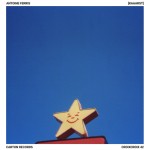
Some records introduce themselves politely. [KAAARST] kicks the door with the body of a bass guitar, then apologizes by humming a strangely beautiful melody. Humanity, as usual, is perfectly capable of making elegance out of blunt force.
French bassist Antoine Ferris has been an active presence in Toulouse's adventurous improvised music scene through projects such as Baraque à Free, Megacoaster, Feràmia and Totun, developing a vocabulary that treats the electric bass as anything but a conventional low-end instrument. Across those ensembles, and through collaborations with composers and improvisers, he has cultivated an approach where electronics, hip-hop production aesthetics, noise, and free improvisation are not competing languages but different dialects of the same conversation. [KAAARST], his first solo statement, feels less like a debut than the moment when years of accumulated experiments finally found a coherent gravitational centre.
Calling this a bass album would be technically correct in the same way calling a volcano "warm geology" would also be technically correct. Ferris continuously dismantles the identity of his instrument. Strings become percussion, feedback becomes melody, contact microphones amplify microscopic gestures, effects pedals generate unstable rhythmic companions that behave almost like stubborn improvisers rather than obedient machines. At times he attacks the instrument with his fists, elsewhere with a butter knife, turning performance into a peculiar choreography where every object seems equally qualified to become a musical tool.
Yet despite all this apparent violence, [KAAARST] never settles for noise as spectacle. The abrasive textures are consistently shadowed by melancholy. There is an emotional hesitation beneath the distortion, as though every burst of sonic aggression immediately questions itself. The album lives inside that contradiction, finding tenderness in abrasion and vulnerability inside mechanical repetition.
The sequencing reinforces this fragmented emotional geography. The miniature opener "crush" barely has time to introduce itself before dissolving, while "strange party" assembles fractured grooves from unstable rhythmic cells that flirt with electronic music without ever surrendering to predictable structures. Pieces like "hount orbe" and "coume sourde" stretch improvisation into something almost geological, allowing feedback and resonance to evolve with patient inevitability. Even the provocatively titled "electronic dance music" seems to smile ironically at genre expectations: if anyone arrives expecting club anthems, they may discover instead that dancing can also happen inside one's nervous system.
Ferris' fascination with electronic production is especially compelling because it never attempts to disguise the physicality of performance. Sampling techniques borrowed from beat-making coexist with unmistakably tactile instrumental gestures. Every scrape, strike and accidental resonance preserves the memory of hands touching wood and metal. The electronics do not erase the performer; they magnify the traces of his presence until every imperfection acquires structural importance.
The collaborative moments provide welcome shifts in perspective without interrupting the album's identity. Natacha Kanga's contribution to "shame's coming" introduces a fragile vocal dimension that contrasts beautifully with Ferris' fragmented instrumental language, while Louie Z's Occitan singing on "la nèu" anchors the record in a sense of place and cultural memory. The use of an endangered regional language feels quietly significant: amid all the digital manipulation and sonic deconstruction, an ancient voice appears, reminding us that experimentation does not require abandoning history.
There are echoes throughout the record of artists who have expanded the vocabulary of the electric bass and electroacoustic improvisation, yet Ferris avoids sounding derivative. His references to industrial music, glitch aesthetics, hip-hop production and free improvisation remain ingredients rather than destinations. The album constantly resists becoming too comfortable within any single tradition, preferring instead to occupy the unstable terrain between them.
The title itself suggests rugged landscapes shaped over immense stretches of time, and that metaphor proves surprisingly apt. These pieces often feel eroded rather than constructed. Sounds emerge like exposed mineral layers, revealing hidden colours beneath rough surfaces. Even the shortest tracks function as sedimentary deposits, each preserving tiny sonic fossils that resonate long after they disappear.
For listeners accustomed to clearly defined genres, [KAAARST] may initially resemble an elaborate puzzle whose picture never appears on the box. That is precisely its strength. Ferris trusts curiosity more than certainty, inviting repeated listening rather than immediate comprehension. The album rewards attention to detail: the unstable pulse hiding beneath distortion, the unexpected lyricism surfacing through feedback, the rhythmic intelligence concealed inside apparent chaos.
In an era where software can simulate almost any instrumental gesture with alarming efficiency, Antoine Ferris reminds us that unpredictability remains profoundly human. Sometimes all it takes is a bass guitar, a handful of pedals, questionable kitchen utensils, and the willingness to let accidents become collaborators. The result is an album that feels simultaneously raw and meticulously considered, proving that even broken signals can carry remarkably honest messages.
French bassist Antoine Ferris has been an active presence in Toulouse's adventurous improvised music scene through projects such as Baraque à Free, Megacoaster, Feràmia and Totun, developing a vocabulary that treats the electric bass as anything but a conventional low-end instrument. Across those ensembles, and through collaborations with composers and improvisers, he has cultivated an approach where electronics, hip-hop production aesthetics, noise, and free improvisation are not competing languages but different dialects of the same conversation. [KAAARST], his first solo statement, feels less like a debut than the moment when years of accumulated experiments finally found a coherent gravitational centre.
Calling this a bass album would be technically correct in the same way calling a volcano "warm geology" would also be technically correct. Ferris continuously dismantles the identity of his instrument. Strings become percussion, feedback becomes melody, contact microphones amplify microscopic gestures, effects pedals generate unstable rhythmic companions that behave almost like stubborn improvisers rather than obedient machines. At times he attacks the instrument with his fists, elsewhere with a butter knife, turning performance into a peculiar choreography where every object seems equally qualified to become a musical tool.
Yet despite all this apparent violence, [KAAARST] never settles for noise as spectacle. The abrasive textures are consistently shadowed by melancholy. There is an emotional hesitation beneath the distortion, as though every burst of sonic aggression immediately questions itself. The album lives inside that contradiction, finding tenderness in abrasion and vulnerability inside mechanical repetition.
The sequencing reinforces this fragmented emotional geography. The miniature opener "crush" barely has time to introduce itself before dissolving, while "strange party" assembles fractured grooves from unstable rhythmic cells that flirt with electronic music without ever surrendering to predictable structures. Pieces like "hount orbe" and "coume sourde" stretch improvisation into something almost geological, allowing feedback and resonance to evolve with patient inevitability. Even the provocatively titled "electronic dance music" seems to smile ironically at genre expectations: if anyone arrives expecting club anthems, they may discover instead that dancing can also happen inside one's nervous system.
Ferris' fascination with electronic production is especially compelling because it never attempts to disguise the physicality of performance. Sampling techniques borrowed from beat-making coexist with unmistakably tactile instrumental gestures. Every scrape, strike and accidental resonance preserves the memory of hands touching wood and metal. The electronics do not erase the performer; they magnify the traces of his presence until every imperfection acquires structural importance.
The collaborative moments provide welcome shifts in perspective without interrupting the album's identity. Natacha Kanga's contribution to "shame's coming" introduces a fragile vocal dimension that contrasts beautifully with Ferris' fragmented instrumental language, while Louie Z's Occitan singing on "la nèu" anchors the record in a sense of place and cultural memory. The use of an endangered regional language feels quietly significant: amid all the digital manipulation and sonic deconstruction, an ancient voice appears, reminding us that experimentation does not require abandoning history.
There are echoes throughout the record of artists who have expanded the vocabulary of the electric bass and electroacoustic improvisation, yet Ferris avoids sounding derivative. His references to industrial music, glitch aesthetics, hip-hop production and free improvisation remain ingredients rather than destinations. The album constantly resists becoming too comfortable within any single tradition, preferring instead to occupy the unstable terrain between them.
The title itself suggests rugged landscapes shaped over immense stretches of time, and that metaphor proves surprisingly apt. These pieces often feel eroded rather than constructed. Sounds emerge like exposed mineral layers, revealing hidden colours beneath rough surfaces. Even the shortest tracks function as sedimentary deposits, each preserving tiny sonic fossils that resonate long after they disappear.
For listeners accustomed to clearly defined genres, [KAAARST] may initially resemble an elaborate puzzle whose picture never appears on the box. That is precisely its strength. Ferris trusts curiosity more than certainty, inviting repeated listening rather than immediate comprehension. The album rewards attention to detail: the unstable pulse hiding beneath distortion, the unexpected lyricism surfacing through feedback, the rhythmic intelligence concealed inside apparent chaos.
In an era where software can simulate almost any instrumental gesture with alarming efficiency, Antoine Ferris reminds us that unpredictability remains profoundly human. Sometimes all it takes is a bass guitar, a handful of pedals, questionable kitchen utensils, and the willingness to let accidents become collaborators. The result is an album that feels simultaneously raw and meticulously considered, proving that even broken signals can carry remarkably honest messages.
Jim O'Rourke & Jos Smolders: Albumin

Artist: Jim O'Rourke & Jos Smolders (@)
Title: Albumin
Format: LP
Label: Moving Furniture Records (@)
Rated:

Title: Albumin
Format: LP
Label: Moving Furniture Records (@)
Rated:
There are collaborations where two artists meet halfway. Then there are collaborations where neither artist seems particularly interested in staying recognisable, preferring instead to dissolve into a third entity that belongs to neither of them. "Albumin", the second joint work by Jim O'Rourke and Jos Smolders, inhabits precisely that curious territory. It is less a conversation than a slow chemical reaction. The title itself feels appropriately biological: albumin is a protein that binds, transports and stabilises. This record does something remarkably similar with sound.
Following "Additive Inverse" (2021), O'Rourke and Smolders resumed their partnership through an almost ascetic working method. Over three years, each contributed from his own studio, exchanging material in concentrated one-day sessions. Rather than composing in a traditional sense, they seem to have cultivated an ecosystem in which sounds continuously mutate. O'Rourke initiated the process with material extracted from his Kyma system, whose sophisticated signal-processing algorithms have long fascinated composers interested in spectral transformation, while Smolders responded by granulating and reshaping those materials into ever-changing textures. The result is music that appears to be perpetually reconsidering itself.
Jim O'Rourke hardly needs introduction within experimental music. Few contemporary figures have travelled so comfortably between radically different worlds, from electroacoustic composition and free improvisation to pop songwriting, film scores, production work with Wilco and Sonic Youth, and countless collaborations across avant-garde music. Living in Japan for many years has only reinforced his tendency toward patient refinement rather than prolific spectacle. Every project seems to ask a different question.
Jos Smolders has pursued a similarly uncompromising path, albeit one less visible outside dedicated experimental circles. For decades he has been one of the quiet architects of the Dutch electroacoustic scene, not only through his own extensive catalogue but also through EARLabs, both as an online platform and mastering studio. His work consistently reveals extraordinary sensitivity toward the microscopic behaviour of sound itself, making him an ideal counterpart for O'Rourke's restless curiosity.
That compatibility becomes immediately apparent across the album's two extended pieces. Rather than presenting dramatic contrasts or obvious structural divisions, "(HP-HP)" and "r(OP-OP)" evolve through continuous internal transformation. Warm harmonic clouds gradually reveal rough mineral textures; granular particles coalesce into fleeting rhythmic suggestions before dissolving once again into shimmering ambiguity. Every apparent destination quietly becomes another point of departure.
What makes "Albumin" particularly compelling is its refusal to treat abstraction as emotional distance. Beneath the dense layers of processed sound lies an unexpectedly tactile experience. One has the impression of touching different materials rather than merely hearing frequencies: polished stone giving way to corroded metal, velvet gradually revealing hidden grains of sand, smooth surfaces unexpectedly breaking into crystalline fractures. The spectral processing never feels technological for its own sake. Instead, technology becomes an instrument for revealing the hidden physical lives of sounds.
The pacing deserves particular praise. In less confident hands, two eighteen-minute electroacoustic compositions could easily drift into self-indulgence or conceptual demonstration. O'Rourke and Smolders avoid both pitfalls through remarkable discipline. Their patience never becomes inertia. Every minute introduces subtle redistributions of energy, microscopic shifts in density, timbre or spatial perspective that reward attentive listening without demanding constant analytical effort.
Occasionally, rhythmic patterns emerge almost accidentally from the surrounding textures, only to disappear before establishing themselves. These fleeting pulses function like mirages, hinting at structure while refusing predictability. It is music that continually negotiates between organisation and entropy, between intention and emergence.
One of the album's quiet pleasures lies in its resistance to virtuosity. Despite the immense technical sophistication involved, neither artist seems interested in displaying mastery. There are no moments designed to impress through complexity alone. Instead, the technology recedes behind the listening experience itself. This humility is increasingly rare in electronic music, where software often seems determined to remind us how clever it is. Here, the algorithms simply get on with the job while the sounds remain the protagonists.
The collaboration also reveals something revealing about both musicians individually. O'Rourke's compositional instinct for long-form development and Smolders' forensic attention to sonic texture reinforce rather than overshadow one another. At no point does one sense alternating authorship or stylistic compromise. The album genuinely feels co-authored, its identity emerging from mutual trust rather than negotiated territory.
Moving Furniture Records has built an impressive catalogue dedicated to electroacoustic music that values subtlety over grand gestures, and "Albumin" fits beautifully within that tradition while remaining unmistakably its own work. It is neither austere nor comforting, neither purely academic nor conventionally expressive. Instead, it occupies the fascinating middle ground where curiosity itself becomes an emotional state.
Listening to "Albumin" feels strangely similar to watching clouds through a microscope. The image sounds absurd, because it is. Yet the album repeatedly creates precisely that impossible sensation: something simultaneously vast and microscopic, constantly changing shape while somehow remaining entirely itself. O'Rourke and Smolders remind us that the richest forms of movement are often the slowest ones, occurring patiently beneath the threshold where certainty gives way to wonder.
Following "Additive Inverse" (2021), O'Rourke and Smolders resumed their partnership through an almost ascetic working method. Over three years, each contributed from his own studio, exchanging material in concentrated one-day sessions. Rather than composing in a traditional sense, they seem to have cultivated an ecosystem in which sounds continuously mutate. O'Rourke initiated the process with material extracted from his Kyma system, whose sophisticated signal-processing algorithms have long fascinated composers interested in spectral transformation, while Smolders responded by granulating and reshaping those materials into ever-changing textures. The result is music that appears to be perpetually reconsidering itself.
Jim O'Rourke hardly needs introduction within experimental music. Few contemporary figures have travelled so comfortably between radically different worlds, from electroacoustic composition and free improvisation to pop songwriting, film scores, production work with Wilco and Sonic Youth, and countless collaborations across avant-garde music. Living in Japan for many years has only reinforced his tendency toward patient refinement rather than prolific spectacle. Every project seems to ask a different question.
Jos Smolders has pursued a similarly uncompromising path, albeit one less visible outside dedicated experimental circles. For decades he has been one of the quiet architects of the Dutch electroacoustic scene, not only through his own extensive catalogue but also through EARLabs, both as an online platform and mastering studio. His work consistently reveals extraordinary sensitivity toward the microscopic behaviour of sound itself, making him an ideal counterpart for O'Rourke's restless curiosity.
That compatibility becomes immediately apparent across the album's two extended pieces. Rather than presenting dramatic contrasts or obvious structural divisions, "(HP-HP)" and "r(OP-OP)" evolve through continuous internal transformation. Warm harmonic clouds gradually reveal rough mineral textures; granular particles coalesce into fleeting rhythmic suggestions before dissolving once again into shimmering ambiguity. Every apparent destination quietly becomes another point of departure.
What makes "Albumin" particularly compelling is its refusal to treat abstraction as emotional distance. Beneath the dense layers of processed sound lies an unexpectedly tactile experience. One has the impression of touching different materials rather than merely hearing frequencies: polished stone giving way to corroded metal, velvet gradually revealing hidden grains of sand, smooth surfaces unexpectedly breaking into crystalline fractures. The spectral processing never feels technological for its own sake. Instead, technology becomes an instrument for revealing the hidden physical lives of sounds.
The pacing deserves particular praise. In less confident hands, two eighteen-minute electroacoustic compositions could easily drift into self-indulgence or conceptual demonstration. O'Rourke and Smolders avoid both pitfalls through remarkable discipline. Their patience never becomes inertia. Every minute introduces subtle redistributions of energy, microscopic shifts in density, timbre or spatial perspective that reward attentive listening without demanding constant analytical effort.
Occasionally, rhythmic patterns emerge almost accidentally from the surrounding textures, only to disappear before establishing themselves. These fleeting pulses function like mirages, hinting at structure while refusing predictability. It is music that continually negotiates between organisation and entropy, between intention and emergence.
One of the album's quiet pleasures lies in its resistance to virtuosity. Despite the immense technical sophistication involved, neither artist seems interested in displaying mastery. There are no moments designed to impress through complexity alone. Instead, the technology recedes behind the listening experience itself. This humility is increasingly rare in electronic music, where software often seems determined to remind us how clever it is. Here, the algorithms simply get on with the job while the sounds remain the protagonists.
The collaboration also reveals something revealing about both musicians individually. O'Rourke's compositional instinct for long-form development and Smolders' forensic attention to sonic texture reinforce rather than overshadow one another. At no point does one sense alternating authorship or stylistic compromise. The album genuinely feels co-authored, its identity emerging from mutual trust rather than negotiated territory.
Moving Furniture Records has built an impressive catalogue dedicated to electroacoustic music that values subtlety over grand gestures, and "Albumin" fits beautifully within that tradition while remaining unmistakably its own work. It is neither austere nor comforting, neither purely academic nor conventionally expressive. Instead, it occupies the fascinating middle ground where curiosity itself becomes an emotional state.
Listening to "Albumin" feels strangely similar to watching clouds through a microscope. The image sounds absurd, because it is. Yet the album repeatedly creates precisely that impossible sensation: something simultaneously vast and microscopic, constantly changing shape while somehow remaining entirely itself. O'Rourke and Smolders remind us that the richest forms of movement are often the slowest ones, occurring patiently beneath the threshold where certainty gives way to wonder.