
Friday, September 4, 2026
Browse by Genre
Industrial Music / Industrial Metal / Aggro Industrial / Electro Metal
Industrial Noise / Power Noise / Harsh Noise
Synth Pop / Electro Pop / Synth-Electronica
Techno / Trance / Goa / Drum'n'Bass / Jungle / Tribal / Trip-Hop
Ambient / Electronica / Ethereal / Dub / Soundscapes / Abstract
Experimental / Avantgarde / Weird & Wired / Glitch / Noise / Field Recording
Dark / Gothic / Wave / New Wave / Dark Wave / Industrial Gothic
New Music / Downtown / Avantgarde Jazz / New Classical / World
Search Reviews
Music Reviews
Orphax: Continuation
Some albums announce themselves with dramatic gestures, eager to prove their significance within the first thirty seconds. "Continuation" does precisely the opposite. It enters quietly, almost apologetically, then proceeds to rearrange your perception of time with such patience that, somewhere around the ten-minute mark, you may forget whether you started listening five minutes ago or sometime last Tuesday. Time, after all, is remarkably cooperative until artists like Sietse van Erve decide to tamper with it.
Operating under the name Orphax for nearly three decades, the Amsterdam-based composer has become one of the most consistent voices in contemporary drone and minimal electroacoustic music. A trained drummer who gradually abandoned rhythm in favour of duration itself, Van Erve has built a remarkable catalogue of over fifty releases while simultaneously nurturing the wider experimental community through his own Moving Furniture Records. His influence extends beyond composition: as a label owner, curator, collaborator and performer, he has quietly helped sustain a scene where careful listening still carries more value than constant novelty.
"Continuation" is his first studio album since "En de stilstaande tijd" (2019), but describing it as a return would be misleading. The title captures its essence more accurately. This feels less like a new chapter than the natural extension of an artistic language refined through years of live performance. Recorded over eight months in his aptly named Studio De Baviaan, the album deliberately embraces imperfections, favouring rough edges over immaculate production. In Van Erve's world, tiny fluctuations are not blemishes to erase but evidence that sound remains alive. Humans are wonderfully inconsistent creatures; why should music pretend otherwise?
Across its two expansive movements, Orphax constructs an environment rather than a composition. Layers of sustained tones drift with microscopic variations, producing harmonic relationships that continually reshape themselves without ever announcing dramatic transformation. It is drone music in the purest sense, yet never static. Every minute introduces subtle shifts in density, colour and resonance that reward attentive listening while gently discouraging any desire for immediate gratification.
There is a fascinating physicality to the sound. Van Erve has long been interested in spatial perception, and "Continuation" often feels less like something entering the ears than something occupying the room itself. Frequencies overlap until they generate phantom melodies and fleeting overtones that seem to emerge from nowhere. One occasionally wonders whether the speakers are producing these sounds or whether the brain has simply become an enthusiastic accomplice. Neuroscience rarely receives proper credit as a guest performer.
Unlike much contemporary drone, which sometimes mistakes sheer density for emotional depth, "Continuation" leaves ample room for air. Silence is never absent; it exists inside the tones themselves, allowing every harmonic bloom to emerge naturally rather than through obvious compositional manipulation. The music breathes with an almost geological rhythm, unconcerned with conventional development yet constantly evolving beneath the surface.
One can also detect the influence of Van Erve's live practice. Although assembled through multitrack recordings, the album preserves the sense of unfolding discovery characteristic of improvisation. Nothing feels predetermined. Instead, the music advances through attentive observation, each new layer responding organically to what already exists rather than imposing itself upon it. The result possesses an understated confidence that never needs to raise its voice.
For listeners familiar with Orphax's earlier work, "Continuation" offers a slightly rawer palette, bringing it closer to the tactile immediacy of his concerts. Those expecting polished ambient wallpaper may be mildly surprised. This is not music designed to decorate a room. It quietly alters the room's psychological dimensions instead, making familiar spaces seem marginally stranger and significantly larger.
Ultimately, "Continuation" succeeds because it trusts the listener. Van Erve famously avoids prescribing rigid conceptual interpretations, preferring the music to become something different for each individual. That openness becomes one of the album's greatest strengths. Rather than dictating meaning, it creates conditions in which meaning can slowly emerge, much like shapes gradually revealing themselves in darkness after the eyes have adjusted.
Some records demand attention through spectacle. "Continuation" earns it through persistence, restraint and remarkable sensitivity. By the end, its title feels less descriptive than philosophical: music, listening, memory and time all revealed as processes rather than destinations. The piece does not really conclude. It simply reaches the point where silence is willing to continue the conversation on its own.
Operating under the name Orphax for nearly three decades, the Amsterdam-based composer has become one of the most consistent voices in contemporary drone and minimal electroacoustic music. A trained drummer who gradually abandoned rhythm in favour of duration itself, Van Erve has built a remarkable catalogue of over fifty releases while simultaneously nurturing the wider experimental community through his own Moving Furniture Records. His influence extends beyond composition: as a label owner, curator, collaborator and performer, he has quietly helped sustain a scene where careful listening still carries more value than constant novelty.
"Continuation" is his first studio album since "En de stilstaande tijd" (2019), but describing it as a return would be misleading. The title captures its essence more accurately. This feels less like a new chapter than the natural extension of an artistic language refined through years of live performance. Recorded over eight months in his aptly named Studio De Baviaan, the album deliberately embraces imperfections, favouring rough edges over immaculate production. In Van Erve's world, tiny fluctuations are not blemishes to erase but evidence that sound remains alive. Humans are wonderfully inconsistent creatures; why should music pretend otherwise?
Across its two expansive movements, Orphax constructs an environment rather than a composition. Layers of sustained tones drift with microscopic variations, producing harmonic relationships that continually reshape themselves without ever announcing dramatic transformation. It is drone music in the purest sense, yet never static. Every minute introduces subtle shifts in density, colour and resonance that reward attentive listening while gently discouraging any desire for immediate gratification.
There is a fascinating physicality to the sound. Van Erve has long been interested in spatial perception, and "Continuation" often feels less like something entering the ears than something occupying the room itself. Frequencies overlap until they generate phantom melodies and fleeting overtones that seem to emerge from nowhere. One occasionally wonders whether the speakers are producing these sounds or whether the brain has simply become an enthusiastic accomplice. Neuroscience rarely receives proper credit as a guest performer.
Unlike much contemporary drone, which sometimes mistakes sheer density for emotional depth, "Continuation" leaves ample room for air. Silence is never absent; it exists inside the tones themselves, allowing every harmonic bloom to emerge naturally rather than through obvious compositional manipulation. The music breathes with an almost geological rhythm, unconcerned with conventional development yet constantly evolving beneath the surface.
One can also detect the influence of Van Erve's live practice. Although assembled through multitrack recordings, the album preserves the sense of unfolding discovery characteristic of improvisation. Nothing feels predetermined. Instead, the music advances through attentive observation, each new layer responding organically to what already exists rather than imposing itself upon it. The result possesses an understated confidence that never needs to raise its voice.
For listeners familiar with Orphax's earlier work, "Continuation" offers a slightly rawer palette, bringing it closer to the tactile immediacy of his concerts. Those expecting polished ambient wallpaper may be mildly surprised. This is not music designed to decorate a room. It quietly alters the room's psychological dimensions instead, making familiar spaces seem marginally stranger and significantly larger.
Ultimately, "Continuation" succeeds because it trusts the listener. Van Erve famously avoids prescribing rigid conceptual interpretations, preferring the music to become something different for each individual. That openness becomes one of the album's greatest strengths. Rather than dictating meaning, it creates conditions in which meaning can slowly emerge, much like shapes gradually revealing themselves in darkness after the eyes have adjusted.
Some records demand attention through spectacle. "Continuation" earns it through persistence, restraint and remarkable sensitivity. By the end, its title feels less descriptive than philosophical: music, listening, memory and time all revealed as processes rather than destinations. The piece does not really conclude. It simply reaches the point where silence is willing to continue the conversation on its own.
Danya Pilchen: Paper Braids

Artist: Danya Pilchen (@)
Title: Paper Braids
Format: CD + Download
Label: Moving Furniture Records (@)
Rated:

Title: Paper Braids
Format: CD + Download
Label: Moving Furniture Records (@)
Rated:
The word "immersive" has become one of those catch-all adjectives that gets thrown around whenever music lasts longer than the average attention span of a social media reel. "Paper Braids" is a useful reminder that genuine immersion has very little to do with duration and everything to do with attention. Danya Pilchen's hour-long composition asks for precisely that: not passive listening, but a willingness to inhabit sound as though it were an architectural space rather than a sequence of musical events.
Born in Ukraine and now based in The Hague, Pilchen has steadily developed a compositional language centred on one elusive subject: the perception of time. His work frequently explores how groups of performers and listeners negotiate shared temporal experiences, drawing equally from contemporary classical composition, acoustic ecology and systems thinking. Rather than treating music as an object to be admired from a distance, Pilchen approaches it as a living environment whose behaviour changes according to those who occupy it.
"Paper Braids" represents the culmination of a four-year collaboration with the Kali Ensemble, an adventurous Dutch collective devoted to experimental repertoire and collaborative performance practices. The piece was conceived specifically for Amsterdam's Orgelpark, exploiting not only the hall itself but also its remarkable collection of organs. Four instruments, each with its own temperament and historical character, converse with microphones, loudspeakers, performers and an algorithmic control system that constantly reacts to the unfolding acoustic situation. It sounds suspiciously like a science experiment, and, in the best possible way, it is.
Yet despite its elaborate technical design, the album never feels clinical. The feedback systems do not behave like cold machines but like unpredictable organisms. Organ tones bloom into clouds of overtones, subtle resonances awaken seemingly from nowhere, and harmonic relationships slowly shift as if the building itself had decided to join the ensemble. One soon realises that nobody, not even the performers, remains entirely in control. The room quietly acquires co-composer status. Architects may finally feel vindicated after spending centuries insisting that walls deserve creative credit.
The title proves unexpectedly apt. Like braided paper, the music intertwines fragile strands whose strength comes from their interaction rather than their individual substance. Long-held chords stretch across the acoustic field while microscopic fluctuations in tuning, reverberation and feedback continuously reshape their identity. Nothing dramatic occurs, yet nothing ever truly stands still. Pilchen understands that sustained sound is never static. Given enough patience, a single tone contains weather.
This sensitivity owes something to the Wandelweiser tradition of attentive listening, but "Paper Braids" resists easy categorisation. It avoids both the devotional solemnity sometimes associated with organ music and the sterile austerity that occasionally burdens reductionist composition. Instead, it maintains an almost tactile curiosity. One hears musicians navigating space as much as notes, responding to echoes, delays and sonic shadows with remarkable restraint. Their performances become acts of careful observation rather than declarations.
The emotional impact emerges gradually. There are no obvious climaxes waiting to reward perseverance, no hidden crescendo promising catharsis. Instead, the listener slowly becomes aware that their own perception has changed. Sounds that initially seemed identical begin revealing minute differences. Silences grow unexpectedly active. Distance acquires texture. By the closing minutes, the ears have been gently recalibrated, as though the album had quietly adjusted the listener instead of the other way around.
The recording itself deserves praise for preserving this remarkable interplay between physical space and musical intention. Every resonance feels tangible without becoming artificially magnified, allowing Orgelpark's acoustic personality to remain an active participant rather than mere ambience.
"Paper Braids" may not satisfy those seeking memorable melodies or conventional narrative arcs, but that would be rather like criticising a telescope for failing to function as a frying pan. Pilchen is pursuing different questions altogether. He asks what happens when listening itself becomes the composition's central material, when architecture performs alongside musicians, and when time ceases to be measured by clocks and instead by changing perception.
The answer is quietly extraordinary: a work of uncommon patience, intelligence and sensitivity that transforms feedback from technical phenomenon into poetic metaphor. Rather than filling space with sound, "Paper Braids" reveals that sound was already patiently waiting inside the space all along.
Born in Ukraine and now based in The Hague, Pilchen has steadily developed a compositional language centred on one elusive subject: the perception of time. His work frequently explores how groups of performers and listeners negotiate shared temporal experiences, drawing equally from contemporary classical composition, acoustic ecology and systems thinking. Rather than treating music as an object to be admired from a distance, Pilchen approaches it as a living environment whose behaviour changes according to those who occupy it.
"Paper Braids" represents the culmination of a four-year collaboration with the Kali Ensemble, an adventurous Dutch collective devoted to experimental repertoire and collaborative performance practices. The piece was conceived specifically for Amsterdam's Orgelpark, exploiting not only the hall itself but also its remarkable collection of organs. Four instruments, each with its own temperament and historical character, converse with microphones, loudspeakers, performers and an algorithmic control system that constantly reacts to the unfolding acoustic situation. It sounds suspiciously like a science experiment, and, in the best possible way, it is.
Yet despite its elaborate technical design, the album never feels clinical. The feedback systems do not behave like cold machines but like unpredictable organisms. Organ tones bloom into clouds of overtones, subtle resonances awaken seemingly from nowhere, and harmonic relationships slowly shift as if the building itself had decided to join the ensemble. One soon realises that nobody, not even the performers, remains entirely in control. The room quietly acquires co-composer status. Architects may finally feel vindicated after spending centuries insisting that walls deserve creative credit.
The title proves unexpectedly apt. Like braided paper, the music intertwines fragile strands whose strength comes from their interaction rather than their individual substance. Long-held chords stretch across the acoustic field while microscopic fluctuations in tuning, reverberation and feedback continuously reshape their identity. Nothing dramatic occurs, yet nothing ever truly stands still. Pilchen understands that sustained sound is never static. Given enough patience, a single tone contains weather.
This sensitivity owes something to the Wandelweiser tradition of attentive listening, but "Paper Braids" resists easy categorisation. It avoids both the devotional solemnity sometimes associated with organ music and the sterile austerity that occasionally burdens reductionist composition. Instead, it maintains an almost tactile curiosity. One hears musicians navigating space as much as notes, responding to echoes, delays and sonic shadows with remarkable restraint. Their performances become acts of careful observation rather than declarations.
The emotional impact emerges gradually. There are no obvious climaxes waiting to reward perseverance, no hidden crescendo promising catharsis. Instead, the listener slowly becomes aware that their own perception has changed. Sounds that initially seemed identical begin revealing minute differences. Silences grow unexpectedly active. Distance acquires texture. By the closing minutes, the ears have been gently recalibrated, as though the album had quietly adjusted the listener instead of the other way around.
The recording itself deserves praise for preserving this remarkable interplay between physical space and musical intention. Every resonance feels tangible without becoming artificially magnified, allowing Orgelpark's acoustic personality to remain an active participant rather than mere ambience.
"Paper Braids" may not satisfy those seeking memorable melodies or conventional narrative arcs, but that would be rather like criticising a telescope for failing to function as a frying pan. Pilchen is pursuing different questions altogether. He asks what happens when listening itself becomes the composition's central material, when architecture performs alongside musicians, and when time ceases to be measured by clocks and instead by changing perception.
The answer is quietly extraordinary: a work of uncommon patience, intelligence and sensitivity that transforms feedback from technical phenomenon into poetic metaphor. Rather than filling space with sound, "Paper Braids" reveals that sound was already patiently waiting inside the space all along.
Till Hillbrecht & Zimoun: Warp Slow
Artist: Till Hillbrecht & Zimoun (@)
Title: Warp Slow
Format: Download Only (MP3 + Lossless)
Label: Room40 (@)
Rated:

Title: Warp Slow
Format: Download Only (MP3 + Lossless)
Label: Room40 (@)
Rated:
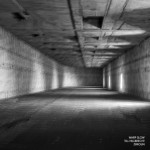
Some records move forward. Others move inward. "Warp Slow" seems to do neither, preferring instead to stretch sideways until space itself begins to lose confidence in its dimensions. The title proves remarkably accurate: this is music that warps not through dramatic gestures, but through prolonged exposure, bending perception one repetition at a time.
The collaboration between Till Hillbrecht and Zimoun feels almost inevitable in retrospect. Swiss artist Zimoun has spent the better part of two decades redefining the relationship between sculpture, mechanics and sound, building astonishing installations from humble materials such as cardboard boxes, DC motors, cotton balls and wires. His work inhabits galleries and museums across the world, yet it rarely behaves like visual art with incidental audio. Instead, sound becomes the architecture itself, transforming repetitive mechanical actions into immersive acoustic ecosystems. Hillbrecht, whose practice similarly explores minimal processes and the physical behavior of sound, proves an ideal counterpart in an album concerned less with melody than with the invisible forces that shape listening.
The premise is almost laughably simple. Nine gestures, one instrument, endless repetition.
Naturally, simplicity refuses to stay simple.
Across these nine pieces, tiny repeated figures accumulate into dense harmonic landscapes where distortion, resonance and overtone interactions become the true protagonists. Rather than composing through constant invention, Hillbrecht and Zimoun allow the material to evolve under its own internal pressures. Every repeated gesture slowly mutates as frequencies collide, reinforcing some harmonics while erasing others. The music appears static only in the way a river appears motionless from an airplane.
Opening with the concise "Warp 1", the album immediately establishes its peculiar relationship with time. Notes repeat with unwavering patience, yet subtle acoustic interactions constantly reshape the sonic surface. By "Warp 2", the space has expanded dramatically, the repetitions blooming into vast reverberant structures that evoke abandoned industrial halls as much as sacred architecture. The distinction hardly matters. Both were built by humans hoping to contain something larger than themselves.
What distinguishes "Warp Slow" from many minimalist drone records is its physicality. The duo repeatedly speaks of friction, and friction becomes the album's central metaphor. Low frequencies grind gently against shimmering overtones; clean tones dissolve into rough distortion; moments of crystalline beauty suddenly develop abrasive edges. Peace here is never passive. It is negotiated continuously, like two tectonic plates agreeing not to cause another earthquake today.
The longer compositions reveal the project's real ambition. "Warp 5" and especially the monumental twenty-four-minute "Warp 9" demonstrate extraordinary confidence in gradual transformation. These are not pieces concerned with destination but with sustained attention. The smallest timbral shift acquires dramatic significance simply because the music teaches the listener to hear on its own microscopic scale.
This approach recalls aspects of composers such as Éliane Radigue or La Monte Young, while also echoing the process-oriented thinking of certain installation artists. Yet Hillbrecht and Zimoun never sound derivative. Their fascination lies not in sustained tones themselves but in how sustained tones behave once left alone long enough. Sound becomes less an object than a living material, constantly reorganizing itself through acoustic interaction.
There is, admittedly, something quietly humorous about devoting nearly ninety minutes to what initially resembles one persistent sonic idea. The joke, however, is entirely on the listener. Five minutes in, one may wonder whether anything is actually changing. Twenty minutes later, one begins noticing delicate fluctuations previously hidden beneath habitual listening. Forty minutes later, ordinary environmental noises start sounding strangely musical. By the end, even your refrigerator deserves a recording contract.
Room40 has consistently championed artists working at the intersection of composition, sound art and spatial listening, and "Warp Slow" sits comfortably within that tradition. Lawrence English's mastering preserves an impressive sense of scale, allowing both the immense bass foundations and the fragile upper harmonics enough room to breathe without collapsing into undifferentiated density.
Perhaps the album's greatest achievement lies in its refusal to dramatize minimalism. There are no grand conceptual manifestos disguised as music, no exaggerated austerity demanding admiration. Instead, Hillbrecht and Zimoun quietly trust that repetition itself contains inexhaustible complexity, provided one listens with sufficient patience. That trust proves contagious.
"Warp Slow" ultimately asks an unfashionable question: what if progress were less interesting than attention? In a culture increasingly obsessed with acceleration, novelty and instant transformation, the album proposes another model altogether. Stay with one sound. Stay longer than feels comfortable. Watch it become something else without ever ceasing to be itself.
Like light slowly changing across the surface of a mountain, nothing spectacular appears to happen. Until you realize the entire landscape has shifted while you were busy believing it hadn't. That is the peculiar magic of "Warp Slow": not the promise of escape, but the revelation that stillness has been moving all along.
The collaboration between Till Hillbrecht and Zimoun feels almost inevitable in retrospect. Swiss artist Zimoun has spent the better part of two decades redefining the relationship between sculpture, mechanics and sound, building astonishing installations from humble materials such as cardboard boxes, DC motors, cotton balls and wires. His work inhabits galleries and museums across the world, yet it rarely behaves like visual art with incidental audio. Instead, sound becomes the architecture itself, transforming repetitive mechanical actions into immersive acoustic ecosystems. Hillbrecht, whose practice similarly explores minimal processes and the physical behavior of sound, proves an ideal counterpart in an album concerned less with melody than with the invisible forces that shape listening.
The premise is almost laughably simple. Nine gestures, one instrument, endless repetition.
Naturally, simplicity refuses to stay simple.
Across these nine pieces, tiny repeated figures accumulate into dense harmonic landscapes where distortion, resonance and overtone interactions become the true protagonists. Rather than composing through constant invention, Hillbrecht and Zimoun allow the material to evolve under its own internal pressures. Every repeated gesture slowly mutates as frequencies collide, reinforcing some harmonics while erasing others. The music appears static only in the way a river appears motionless from an airplane.
Opening with the concise "Warp 1", the album immediately establishes its peculiar relationship with time. Notes repeat with unwavering patience, yet subtle acoustic interactions constantly reshape the sonic surface. By "Warp 2", the space has expanded dramatically, the repetitions blooming into vast reverberant structures that evoke abandoned industrial halls as much as sacred architecture. The distinction hardly matters. Both were built by humans hoping to contain something larger than themselves.
What distinguishes "Warp Slow" from many minimalist drone records is its physicality. The duo repeatedly speaks of friction, and friction becomes the album's central metaphor. Low frequencies grind gently against shimmering overtones; clean tones dissolve into rough distortion; moments of crystalline beauty suddenly develop abrasive edges. Peace here is never passive. It is negotiated continuously, like two tectonic plates agreeing not to cause another earthquake today.
The longer compositions reveal the project's real ambition. "Warp 5" and especially the monumental twenty-four-minute "Warp 9" demonstrate extraordinary confidence in gradual transformation. These are not pieces concerned with destination but with sustained attention. The smallest timbral shift acquires dramatic significance simply because the music teaches the listener to hear on its own microscopic scale.
This approach recalls aspects of composers such as Éliane Radigue or La Monte Young, while also echoing the process-oriented thinking of certain installation artists. Yet Hillbrecht and Zimoun never sound derivative. Their fascination lies not in sustained tones themselves but in how sustained tones behave once left alone long enough. Sound becomes less an object than a living material, constantly reorganizing itself through acoustic interaction.
There is, admittedly, something quietly humorous about devoting nearly ninety minutes to what initially resembles one persistent sonic idea. The joke, however, is entirely on the listener. Five minutes in, one may wonder whether anything is actually changing. Twenty minutes later, one begins noticing delicate fluctuations previously hidden beneath habitual listening. Forty minutes later, ordinary environmental noises start sounding strangely musical. By the end, even your refrigerator deserves a recording contract.
Room40 has consistently championed artists working at the intersection of composition, sound art and spatial listening, and "Warp Slow" sits comfortably within that tradition. Lawrence English's mastering preserves an impressive sense of scale, allowing both the immense bass foundations and the fragile upper harmonics enough room to breathe without collapsing into undifferentiated density.
Perhaps the album's greatest achievement lies in its refusal to dramatize minimalism. There are no grand conceptual manifestos disguised as music, no exaggerated austerity demanding admiration. Instead, Hillbrecht and Zimoun quietly trust that repetition itself contains inexhaustible complexity, provided one listens with sufficient patience. That trust proves contagious.
"Warp Slow" ultimately asks an unfashionable question: what if progress were less interesting than attention? In a culture increasingly obsessed with acceleration, novelty and instant transformation, the album proposes another model altogether. Stay with one sound. Stay longer than feels comfortable. Watch it become something else without ever ceasing to be itself.
Like light slowly changing across the surface of a mountain, nothing spectacular appears to happen. Until you realize the entire landscape has shifted while you were busy believing it hadn't. That is the peculiar magic of "Warp Slow": not the promise of escape, but the revelation that stillness has been moving all along.
Emil Mark: Mellemtid
Artist: Emil Mark
Title: Mellemtid
Format: Download Only (MP3 + Lossless)
Label: Tonal Union (@)
Rated:
Title: Mellemtid
Format: Download Only (MP3 + Lossless)
Label: Tonal Union (@)
Rated:
Every generation eventually discovers the pipe organ and decides it can be something other than the soundtrack to solemn Sundays and gothic architecture. Some approach it with scholarly reverence, others with cinematic grandeur. Danish composer Emil Mark chooses a more refreshing strategy: he treats it like an intriguing machine he has just found abandoned in a basement and cannot resist taking apart to see how it works. As it happens, that is almost exactly how "Mellemtid" came into being.
Mark's debut for Tonal Union emerged from a fortunate coincidence during his studies in Electronic Music and Sound Art at the Danish National Academy of Music, where several forgotten practice organs quietly awaited someone curious enough to wake them. Having never seriously played the instrument before, he approached it without the burden of tradition. Rather than asking what an organ "should" sound like, he asked what it could become when filtered through sampling, digital processing and an ear shaped as much by minimalism as contemporary electronic music.
That innocence proves to be one of the record's greatest strengths. Mark is clearly aware of the lineage extending from Bach and Messiaen to more recent figures such as Kali Malone and Sara Davachi, yet "Mellemtid" never feels like an attempt to occupy the same shelf. It speaks another dialect altogether. The historical weight of the instrument remains present, but it is carried lightly, almost playfully, like someone wearing an antique coat with modern sneakers.
The composer's influences reveal themselves subtly. The structural patience of Morton Feldman, the process-oriented thinking of Steve Reich, the attentive listening advocated by Pauline Oliveros, even the restrained geometry of painter Agnes Martin all leave fingerprints on the music without ever becoming quotations. Mark absorbs these ideas rather than displaying them, allowing simple melodic cells and gently shifting repetitions to generate surprisingly rich emotional spaces.
Opening piece "Blomster" immediately establishes this approach. Beneath its delicate organ figures lies an understated melodic instinct that borders on pop without surrendering to obvious hooks. It feels welcoming rather than austere, inviting listeners into an environment where repetition functions less as hypnosis than quiet companionship.
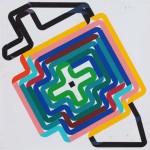
That balance between accessibility and formal rigor continues throughout the EP. "I Vinden", inspired by Agnes Martin's minimalist visual language, unfolds through carefully arranged patterns whose apparent simplicity conceals meticulous internal movement. Tiny harmonic shifts gradually alter the emotional climate, much as changing sunlight transforms the same landscape over the course of an afternoon.
Perhaps the most fascinating aspect of "Mellemtid" is the dialogue between acoustic reality and digital intervention. Mark records the organs closely, isolating their pipes, mechanical noises and resonant bodies before reshaping them inside Ableton. Yet the electronic processing never feels like an attempt to disguise the source material. Instead, it extends the instrument's physical presence into impossible acoustic architectures. One sometimes loses track of where wood and metal end and software begins. In an era obsessed with authenticity, Mark quietly suggests that transformation can be just as truthful.
"Med Tog" exemplifies this beautifully. Built around subtle temporal displacements between repeating voices, the piece creates gentle harmonic instability without ever becoming disorienting. Lines drift slightly apart before finding unexpected alignments again, producing the sensation of several clocks agreeing on approximately the same time while refusing absolute precision. Considering that the album's title roughly translates as "meantime" and alludes to intermediate cycling times, the relationship between movement and temporality becomes one of its hidden conceptual threads.
Then comes "Rejser", which Mark jokingly describes as his own EDM track. It is a wonderfully misleading description. There are no drops, no explosive climaxes, no obligatory invitations to raise one's hands toward the nearest lighting rig. Instead, repetition itself becomes propulsion. The piece dances internally, generating momentum through evolving patterns rather than percussion. It is dance music for people who suspect that standing still can also be a choreography.
Throughout its five concise compositions, "Mellemtid" demonstrates remarkable restraint. Many contemporary ambient and minimalist releases mistake duration for depth, stretching modest ideas until patience becomes an endurance sport. Mark avoids that temptation. Every piece ends with the satisfying feeling that it has explored precisely the amount of territory it needed, no more and no less.
This sense of proportion reflects the composer's broader artistic personality. Although this EP centers on the organ, Mark has repeatedly described himself primarily as a multi-instrumentalist interested in exploring different sound worlds rather than establishing a permanent identity around a single instrument. That openness gives "Mellemtid" an appealing sense of discovery. It sounds less like the arrival of an established master than the beginning of an artist asking unusually good questions.
The irony, of course, is that one of Western music's oldest and most monumental instruments becomes, in Mark's hands, surprisingly light on its feet. The organ stops preaching and starts wondering. Its centuries of accumulated authority dissolve into curiosity, and curiosity has always made for better company.
For a debut, "Mellemtid" possesses an uncommon confidence. It neither rebels against tradition nor bows before it. Instead, Emil Mark simply opens the basement door, listens carefully to what history sounds like in the present tense, and invites us inside. Some discoveries begin with grand artistic manifestos. Others begin because someone wandered downstairs and noticed an old instrument waiting patiently in the dark. This EP reminds us that the second kind often lasts longer.
Mark's debut for Tonal Union emerged from a fortunate coincidence during his studies in Electronic Music and Sound Art at the Danish National Academy of Music, where several forgotten practice organs quietly awaited someone curious enough to wake them. Having never seriously played the instrument before, he approached it without the burden of tradition. Rather than asking what an organ "should" sound like, he asked what it could become when filtered through sampling, digital processing and an ear shaped as much by minimalism as contemporary electronic music.
That innocence proves to be one of the record's greatest strengths. Mark is clearly aware of the lineage extending from Bach and Messiaen to more recent figures such as Kali Malone and Sara Davachi, yet "Mellemtid" never feels like an attempt to occupy the same shelf. It speaks another dialect altogether. The historical weight of the instrument remains present, but it is carried lightly, almost playfully, like someone wearing an antique coat with modern sneakers.
The composer's influences reveal themselves subtly. The structural patience of Morton Feldman, the process-oriented thinking of Steve Reich, the attentive listening advocated by Pauline Oliveros, even the restrained geometry of painter Agnes Martin all leave fingerprints on the music without ever becoming quotations. Mark absorbs these ideas rather than displaying them, allowing simple melodic cells and gently shifting repetitions to generate surprisingly rich emotional spaces.
Opening piece "Blomster" immediately establishes this approach. Beneath its delicate organ figures lies an understated melodic instinct that borders on pop without surrendering to obvious hooks. It feels welcoming rather than austere, inviting listeners into an environment where repetition functions less as hypnosis than quiet companionship.
That balance between accessibility and formal rigor continues throughout the EP. "I Vinden", inspired by Agnes Martin's minimalist visual language, unfolds through carefully arranged patterns whose apparent simplicity conceals meticulous internal movement. Tiny harmonic shifts gradually alter the emotional climate, much as changing sunlight transforms the same landscape over the course of an afternoon.
Perhaps the most fascinating aspect of "Mellemtid" is the dialogue between acoustic reality and digital intervention. Mark records the organs closely, isolating their pipes, mechanical noises and resonant bodies before reshaping them inside Ableton. Yet the electronic processing never feels like an attempt to disguise the source material. Instead, it extends the instrument's physical presence into impossible acoustic architectures. One sometimes loses track of where wood and metal end and software begins. In an era obsessed with authenticity, Mark quietly suggests that transformation can be just as truthful.
"Med Tog" exemplifies this beautifully. Built around subtle temporal displacements between repeating voices, the piece creates gentle harmonic instability without ever becoming disorienting. Lines drift slightly apart before finding unexpected alignments again, producing the sensation of several clocks agreeing on approximately the same time while refusing absolute precision. Considering that the album's title roughly translates as "meantime" and alludes to intermediate cycling times, the relationship between movement and temporality becomes one of its hidden conceptual threads.
Then comes "Rejser", which Mark jokingly describes as his own EDM track. It is a wonderfully misleading description. There are no drops, no explosive climaxes, no obligatory invitations to raise one's hands toward the nearest lighting rig. Instead, repetition itself becomes propulsion. The piece dances internally, generating momentum through evolving patterns rather than percussion. It is dance music for people who suspect that standing still can also be a choreography.
Throughout its five concise compositions, "Mellemtid" demonstrates remarkable restraint. Many contemporary ambient and minimalist releases mistake duration for depth, stretching modest ideas until patience becomes an endurance sport. Mark avoids that temptation. Every piece ends with the satisfying feeling that it has explored precisely the amount of territory it needed, no more and no less.
This sense of proportion reflects the composer's broader artistic personality. Although this EP centers on the organ, Mark has repeatedly described himself primarily as a multi-instrumentalist interested in exploring different sound worlds rather than establishing a permanent identity around a single instrument. That openness gives "Mellemtid" an appealing sense of discovery. It sounds less like the arrival of an established master than the beginning of an artist asking unusually good questions.
The irony, of course, is that one of Western music's oldest and most monumental instruments becomes, in Mark's hands, surprisingly light on its feet. The organ stops preaching and starts wondering. Its centuries of accumulated authority dissolve into curiosity, and curiosity has always made for better company.
For a debut, "Mellemtid" possesses an uncommon confidence. It neither rebels against tradition nor bows before it. Instead, Emil Mark simply opens the basement door, listens carefully to what history sounds like in the present tense, and invites us inside. Some discoveries begin with grand artistic manifestos. Others begin because someone wandered downstairs and noticed an old instrument waiting patiently in the dark. This EP reminds us that the second kind often lasts longer.
Carl Stone & Asuna: Imu Plastos

There is something wonderfully suspicious about an experimental album built from toy instruments. One expects whimsy, perhaps a charming detour into nostalgia. Imu Plastos quickly reveals that this expectation is exactly the trap. Carl Stone and Asuna take the sonic debris of childhood, feed it through layers of real-time sampling and digital transformation, then return it to us so thoroughly mutated that it feels less like remembering a toy box and more like discovering an alien civilization that learned music from discarded plastic objects.
The collaboration brings together two generations of Japanese experimental music. Carl Stone, often described as one of the pioneers of computer-based sampled composition, emerged from the American experimental scene before relocating to Japan, where his work has continued to reshape ideas about repetition, digital manipulation and the musical potential of found sound. His influence on contemporary electronic composition is immense, though he has always worn that status lightly, preferring curiosity over canonization.
Asuna (Asuna Arashi) arrives from a very different but equally singular trajectory. Known internationally for his extraordinary “100 Keyboards” performances, he has spent years constructing immersive environments from toy keyboards, small electronic devices and objects that most musicians would overlook while searching for more respectable equipment. Respectability has never produced particularly interesting music anyway.
Their first meeting at an experimental festival in Kanazawa in 2024 apparently generated an immediate creative loop. Asuna played more than a hundred toy instruments, samplers and synthesizers; Stone sampled and processed those sounds in real time; Asuna then captured Stone's transformed material and fed it back into his own system. The process resembled two mirrors facing each other, except the reflections were made of squeaking plastic, fragmented melodies and digital ghosts.
The studio album preserves this feedback architecture while pushing it into stranger territory. The most fascinating conceptual twist lies in the editing: the sampled and processed sounds are often presented before the original source material, reversing the usual relationship between object and sample. Cause and effect become delightfully unstable. One hears a strange electronic texture, then later encounters the toy fragment from which it was derived, as though the future were retroactively inventing its own past.
The track titles, all anagrams of Carl Stone & Asuna, are more than a clever puzzle. They mirror the album's entire methodology, where sounds are continuously rearranged, recontextualized and turned inside out. Imu Plastos itself combines a linguistic root connected to taking or sampling with another related to plasticity and toys, encapsulating the record's central obsession with transformation.
Musically, the album is remarkably varied despite its tightly constrained source material. The opening “Casual Resonant” functions like a brief orientation ritual before “Nascent Arousal” begins introducing the duo's peculiar sense of rhythm, where tiny percussive fragments seem to stumble into complex patterns by accident. The centrepiece, “As Aural Consent”, unfolds over nearly eleven minutes of constantly shifting textures, moving from almost cartoonish melodic fragments to dense, shimmering electronic swarms that feel simultaneously playful and unsettling.
What makes Imu Plastos particularly compelling is its refusal to choose between humour and sophistication. The toy origins of many sounds remain audible, and the album clearly enjoys their inherent absurdity. Yet beneath the surface lies an intricate exploration of temporality, memory and digital mediation. Stone's sampling practice has always treated recorded sound as malleable material rather than documentary evidence, while Asuna's world of inexpensive electronic objects challenges hierarchies between serious instruments and mass-produced noise makers.
The result often feels like listening to a parade that has wandered off its planned route and discovered a hidden dimension behind the fairground. “A Salsa Nocturne” hints at dance music without ever fully becoming dance music, while “As Toucans Learn” creates the delightful sensation that tropical birds have enrolled in a seminar on granular synthesis. Even the more contemplative pieces, such as “A Nacreous Slant”, retain a sense of curious movement, as though every sound were still deciding what it wants to become.
Lawrence English's mastering deserves particular praise for preserving both the microscopic detail and the surprising warmth of the recordings. The album could easily have become a brittle exercise in digital complexity, but it remains tactile throughout, full of tiny mechanical imperfections and resonances that remind us these transformations began with physical objects.
Room40 has long specialized in releases that blur boundaries between composition, improvisation and sound art, and Imu Plastos fits beautifully within that catalogue while maintaining a distinctly eccentric identity. It is experimental music that does not mistake seriousness for solemnity. Stone and Asuna understand that wonder is often a more radical artistic strategy than austerity.
Perhaps the album's greatest achievement is that it makes sampling feel mysterious again. In an era when digital manipulation is ubiquitous, Imu Plastos restores the sense that recording and transforming a sound can still be an act of discovery rather than routine production. By the end, one begins to suspect that every forgotten toy in every attic might contain an undiscovered electronic universe waiting for someone curious enough to press the right button.
The collaboration brings together two generations of Japanese experimental music. Carl Stone, often described as one of the pioneers of computer-based sampled composition, emerged from the American experimental scene before relocating to Japan, where his work has continued to reshape ideas about repetition, digital manipulation and the musical potential of found sound. His influence on contemporary electronic composition is immense, though he has always worn that status lightly, preferring curiosity over canonization.
Asuna (Asuna Arashi) arrives from a very different but equally singular trajectory. Known internationally for his extraordinary “100 Keyboards” performances, he has spent years constructing immersive environments from toy keyboards, small electronic devices and objects that most musicians would overlook while searching for more respectable equipment. Respectability has never produced particularly interesting music anyway.
Their first meeting at an experimental festival in Kanazawa in 2024 apparently generated an immediate creative loop. Asuna played more than a hundred toy instruments, samplers and synthesizers; Stone sampled and processed those sounds in real time; Asuna then captured Stone's transformed material and fed it back into his own system. The process resembled two mirrors facing each other, except the reflections were made of squeaking plastic, fragmented melodies and digital ghosts.
The studio album preserves this feedback architecture while pushing it into stranger territory. The most fascinating conceptual twist lies in the editing: the sampled and processed sounds are often presented before the original source material, reversing the usual relationship between object and sample. Cause and effect become delightfully unstable. One hears a strange electronic texture, then later encounters the toy fragment from which it was derived, as though the future were retroactively inventing its own past.
The track titles, all anagrams of Carl Stone & Asuna, are more than a clever puzzle. They mirror the album's entire methodology, where sounds are continuously rearranged, recontextualized and turned inside out. Imu Plastos itself combines a linguistic root connected to taking or sampling with another related to plasticity and toys, encapsulating the record's central obsession with transformation.
Musically, the album is remarkably varied despite its tightly constrained source material. The opening “Casual Resonant” functions like a brief orientation ritual before “Nascent Arousal” begins introducing the duo's peculiar sense of rhythm, where tiny percussive fragments seem to stumble into complex patterns by accident. The centrepiece, “As Aural Consent”, unfolds over nearly eleven minutes of constantly shifting textures, moving from almost cartoonish melodic fragments to dense, shimmering electronic swarms that feel simultaneously playful and unsettling.
What makes Imu Plastos particularly compelling is its refusal to choose between humour and sophistication. The toy origins of many sounds remain audible, and the album clearly enjoys their inherent absurdity. Yet beneath the surface lies an intricate exploration of temporality, memory and digital mediation. Stone's sampling practice has always treated recorded sound as malleable material rather than documentary evidence, while Asuna's world of inexpensive electronic objects challenges hierarchies between serious instruments and mass-produced noise makers.
The result often feels like listening to a parade that has wandered off its planned route and discovered a hidden dimension behind the fairground. “A Salsa Nocturne” hints at dance music without ever fully becoming dance music, while “As Toucans Learn” creates the delightful sensation that tropical birds have enrolled in a seminar on granular synthesis. Even the more contemplative pieces, such as “A Nacreous Slant”, retain a sense of curious movement, as though every sound were still deciding what it wants to become.
Lawrence English's mastering deserves particular praise for preserving both the microscopic detail and the surprising warmth of the recordings. The album could easily have become a brittle exercise in digital complexity, but it remains tactile throughout, full of tiny mechanical imperfections and resonances that remind us these transformations began with physical objects.
Room40 has long specialized in releases that blur boundaries between composition, improvisation and sound art, and Imu Plastos fits beautifully within that catalogue while maintaining a distinctly eccentric identity. It is experimental music that does not mistake seriousness for solemnity. Stone and Asuna understand that wonder is often a more radical artistic strategy than austerity.
Perhaps the album's greatest achievement is that it makes sampling feel mysterious again. In an era when digital manipulation is ubiquitous, Imu Plastos restores the sense that recording and transforming a sound can still be an act of discovery rather than routine production. By the end, one begins to suspect that every forgotten toy in every attic might contain an undiscovered electronic universe waiting for someone curious enough to press the right button.