
Browse by Genre
Industrial Music / Industrial Metal / Aggro Industrial / Electro Metal
Industrial Noise / Power Noise / Harsh Noise
Synth Pop / Electro Pop / Synth-Electronica
Techno / Trance / Goa / Drum'n'Bass / Jungle / Tribal / Trip-Hop
Ambient / Electronica / Ethereal / Dub / Soundscapes / Abstract
Experimental / Avantgarde / Weird & Wired / Glitch / Noise / Field Recording
Dark / Gothic / Wave / New Wave / Dark Wave / Industrial Gothic
New Music / Downtown / Avantgarde Jazz / New Classical / World
Search Reviews
Music Reviews
Simon Goff: Sparks
Artist: Simon Goff (@)
Title: Sparks
Format: Download Only (MP3 + Lossless)
Label: Grand Chess Records (@)
Rated:

Title: Sparks
Format: Download Only (MP3 + Lossless)
Label: Grand Chess Records (@)
Rated:
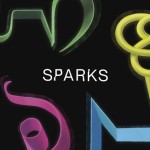
Some records are content to exist as finished statements. Others behave more like conversations, accepting that every musical idea carries within it the possibility of another life. "Sparks" belongs firmly to the latter category. Rather than treating the remix as a promotional afterthought, Simon Goff transforms it into an extension of composition itself, inviting four artists with markedly different sensibilities to revisit the material from "Spark Like Living Mothers" and reveal what remained dormant beneath its surface.
It is a deceptively simple premise. Thomas Tallis wrote "If Ye Love Me" nearly five centuries ago. Goff reimagined that Renaissance motet through the language of contemporary electronics, strings and immersive textures on "Spark Like Living Mothers". Now Kaitlyn Aurelia Smith, Masayoshi Fujita, Anne Müller and Pye Corner Audio each reinterpret Goff's reinterpretation. At every stage, something is lost, something is gained, and something entirely unforeseen quietly appears. Creative influence, after all, rarely travels in straight lines. It resembles a flame passed from one candle to another. The light remains recognisable, even though the fire is never quite the same.
This notion of artistic inheritance has long been central to Goff's work. Although many listeners first encountered him through his collaborations with Hildur Guðnadóttir on the Grammy-winning scores for "Chernobyl" and "Joker", or through his increasingly acclaimed film and television compositions, his solo output occupies a more intimate territory. A classically trained violinist based in Berlin, Goff has steadily developed a vocabulary where bowed strings, electronics, field recordings and subtle studio manipulation coexist without hierarchy. His albums never feel interested in showcasing technical sophistication, despite the considerable craft behind them. Instead, they seek emotional precision, often arriving somewhere between memory and architecture.
"Sparks" demonstrates another aspect of that generosity. It requires considerable confidence to hand deeply personal material to other composers and accept that it may return wearing entirely different clothes. Humans tend to struggle with lending books because they fear coffee stains. Goff lends entire compositions and somehow emerges with four compelling new perspectives.
Kaitlyn Aurelia Smith opens the EP with "Beyond the Clouds", immediately dissolving the boundaries between organic warmth and synthetic shimmer that have defined much of her remarkable catalogue. Her modular synthesis never overwhelms the original piece. Instead, it behaves almost like sunlight refracted through moving water, surrounding Goff's harmonic language with constantly shifting iridescence. The result feels buoyant without becoming weightless, retaining an emotional gravity beneath its luminous surface.
Masayoshi Fujita approaches "Now Their Pain is Sugar" from a markedly different direction. Known for his exquisite command of the vibraphone and his understated compositional elegance, Fujita strips the material back to its skeletal beauty. Every note appears carefully considered, every resonance allowed to bloom naturally before gently dissolving. His version possesses the quiet confidence of someone who understands that silence is rarely empty; it is simply waiting for the right sound to inhabit it.
Anne Müller's reworking of "The Learning of the Eye" perhaps comes closest to Goff's own emotional vocabulary while still establishing an unmistakably personal voice. Her long-standing exploration of the cello as both lyrical instrument and textural source allows the composition to breathe with remarkable tenderness. Layers emerge almost imperceptibly, producing a fragile intimacy that never slips into sentimentality. Like much of Müller's finest work, the piece seems less interested in expressing emotion than in creating a space where emotions may safely unfold.
The closing contribution, Pye Corner Audio's expansive reimagining of "The Yet to Come", shifts the atmosphere entirely. Stretching towards ten minutes, it introduces an understated pulse that subtly recalls analogue electronics, vintage soundtrack aesthetics and haunted late-night transmissions without ever becoming nostalgic. Martin Jenkins has long demonstrated an uncanny ability to create music that feels simultaneously futuristic and strangely remembered, as though discovered on a forgotten videotape from a future that never happened. His interpretation gently darkens the EP, not as a conclusion but as an invitation to continue wandering beyond it.
What makes "Sparks" particularly satisfying is its refusal to become a stylistic showcase. The participating artists certainly retain their distinctive identities, yet none approach the material as an opportunity for radical reinvention at any cost. There is mutual respect embedded throughout the project. Each remix listens before it speaks. That quality feels increasingly rare in contemporary electronic culture, where transformation sometimes becomes indistinguishable from replacement.
The production deserves equal recognition. Mastered by Stefan Betke, whose work as Pole and engineer has shaped countless landmarks in experimental electronic music, the EP maintains exceptional clarity even when textures become densely layered. Tiny harmonic interactions remain audible without sacrificing warmth, preserving the tactile quality that has always distinguished Goff's recordings.
Perhaps the most rewarding aspect of "Sparks" is the question it quietly leaves unresolved. Which version is the original? Tallis' sacred polyphony? Goff's contemporary meditation? These four reinterpretations? The answer, of course, is all of them and none of them. Music does not remain alive because it resists change. It survives because every generation finds another way of hearing it.
In that sense, "Sparks" is less a remix collection than a meditation on artistic continuity. It reminds us that influence is not a chain of ownership but a series of generous misunderstandings, each artist discovering something the previous one could not quite hear. The smallest spark, after all, rarely illuminates the same landscape twice.
It is a deceptively simple premise. Thomas Tallis wrote "If Ye Love Me" nearly five centuries ago. Goff reimagined that Renaissance motet through the language of contemporary electronics, strings and immersive textures on "Spark Like Living Mothers". Now Kaitlyn Aurelia Smith, Masayoshi Fujita, Anne Müller and Pye Corner Audio each reinterpret Goff's reinterpretation. At every stage, something is lost, something is gained, and something entirely unforeseen quietly appears. Creative influence, after all, rarely travels in straight lines. It resembles a flame passed from one candle to another. The light remains recognisable, even though the fire is never quite the same.
This notion of artistic inheritance has long been central to Goff's work. Although many listeners first encountered him through his collaborations with Hildur Guðnadóttir on the Grammy-winning scores for "Chernobyl" and "Joker", or through his increasingly acclaimed film and television compositions, his solo output occupies a more intimate territory. A classically trained violinist based in Berlin, Goff has steadily developed a vocabulary where bowed strings, electronics, field recordings and subtle studio manipulation coexist without hierarchy. His albums never feel interested in showcasing technical sophistication, despite the considerable craft behind them. Instead, they seek emotional precision, often arriving somewhere between memory and architecture.
"Sparks" demonstrates another aspect of that generosity. It requires considerable confidence to hand deeply personal material to other composers and accept that it may return wearing entirely different clothes. Humans tend to struggle with lending books because they fear coffee stains. Goff lends entire compositions and somehow emerges with four compelling new perspectives.
Kaitlyn Aurelia Smith opens the EP with "Beyond the Clouds", immediately dissolving the boundaries between organic warmth and synthetic shimmer that have defined much of her remarkable catalogue. Her modular synthesis never overwhelms the original piece. Instead, it behaves almost like sunlight refracted through moving water, surrounding Goff's harmonic language with constantly shifting iridescence. The result feels buoyant without becoming weightless, retaining an emotional gravity beneath its luminous surface.
Masayoshi Fujita approaches "Now Their Pain is Sugar" from a markedly different direction. Known for his exquisite command of the vibraphone and his understated compositional elegance, Fujita strips the material back to its skeletal beauty. Every note appears carefully considered, every resonance allowed to bloom naturally before gently dissolving. His version possesses the quiet confidence of someone who understands that silence is rarely empty; it is simply waiting for the right sound to inhabit it.
Anne Müller's reworking of "The Learning of the Eye" perhaps comes closest to Goff's own emotional vocabulary while still establishing an unmistakably personal voice. Her long-standing exploration of the cello as both lyrical instrument and textural source allows the composition to breathe with remarkable tenderness. Layers emerge almost imperceptibly, producing a fragile intimacy that never slips into sentimentality. Like much of Müller's finest work, the piece seems less interested in expressing emotion than in creating a space where emotions may safely unfold.
The closing contribution, Pye Corner Audio's expansive reimagining of "The Yet to Come", shifts the atmosphere entirely. Stretching towards ten minutes, it introduces an understated pulse that subtly recalls analogue electronics, vintage soundtrack aesthetics and haunted late-night transmissions without ever becoming nostalgic. Martin Jenkins has long demonstrated an uncanny ability to create music that feels simultaneously futuristic and strangely remembered, as though discovered on a forgotten videotape from a future that never happened. His interpretation gently darkens the EP, not as a conclusion but as an invitation to continue wandering beyond it.
What makes "Sparks" particularly satisfying is its refusal to become a stylistic showcase. The participating artists certainly retain their distinctive identities, yet none approach the material as an opportunity for radical reinvention at any cost. There is mutual respect embedded throughout the project. Each remix listens before it speaks. That quality feels increasingly rare in contemporary electronic culture, where transformation sometimes becomes indistinguishable from replacement.
The production deserves equal recognition. Mastered by Stefan Betke, whose work as Pole and engineer has shaped countless landmarks in experimental electronic music, the EP maintains exceptional clarity even when textures become densely layered. Tiny harmonic interactions remain audible without sacrificing warmth, preserving the tactile quality that has always distinguished Goff's recordings.
Perhaps the most rewarding aspect of "Sparks" is the question it quietly leaves unresolved. Which version is the original? Tallis' sacred polyphony? Goff's contemporary meditation? These four reinterpretations? The answer, of course, is all of them and none of them. Music does not remain alive because it resists change. It survives because every generation finds another way of hearing it.
In that sense, "Sparks" is less a remix collection than a meditation on artistic continuity. It reminds us that influence is not a chain of ownership but a series of generous misunderstandings, each artist discovering something the previous one could not quite hear. The smallest spark, after all, rarely illuminates the same landscape twice.
Spyros Polychronopoulos + Nikos Veliotis: Position

Artist: Spyros Polychronopoulos + Nikos Veliotis (@)
Title: Position
Format: Download Only (MP3 + Lossless)
Label: Room40 (@)
Rated:
Title: Position
Format: Download Only (MP3 + Lossless)
Label: Room40 (@)
Rated:
Some collaborations arrive with the fanfare of long-awaited reunions. Others simply happen when the music has finally become more impatient than the calendar. "Position" belongs to the latter category. After nearly twenty-five years of parallel artistic lives, Greek composer and researcher Spyros Polychronopoulos and cellist Nikos Veliotis finally meet in recorded form, and the result carries none of the self-consciousness often associated with "dream collaborations". Instead, it feels inevitable, as though these four pieces had quietly been waiting for the two musicians to grow into the same acoustic conversation.
Released by Australia's consistently adventurous Room40, the album occupies that fertile territory where electroacoustic composition, reductionism and drone cease to function as genres and instead become methods of observation. There is very little here that resembles conventional musical narrative. No melodies demanding to be remembered, no climaxes eager to justify their existence, no dramatic turns designed to reassure distracted listeners that "something is happening". Something is happening all the time. The challenge is learning to hear it.
That has always been central to the work of Spyros Polychronopoulos. Beyond his activity as a composer and sound artist, his academic research into musical acoustics and psychoacoustics has explored the delicate relationship between physical sound and human perception. Rather than treating science and composition as separate disciplines, he has consistently allowed each to inform the other. His music rarely demonstrates theories; it creates conditions in which listeners experience them directly.
Nikos Veliotis arrives from a different, though ultimately complementary, trajectory. Over the past two decades, the Athens-based cellist has established himself as one of Europe's most distinctive experimental string players, collaborating across contemporary composition, improvisation and drone music while steadily redefining what the cello can become. His performances often seem less concerned with producing notes than with exposing the instrument's internal architecture. Bow pressure, friction, unstable harmonics and sustained resonance become expressive materials in themselves.
"Position" is precisely where these two sensibilities intersect.
Across the four compositions, the cello functions simultaneously as instrument, resonating chamber and acoustic landscape. Polychronopoulos' careful manipulation of resonance and Veliotis' remarkably disciplined performance practice create music that continuously rearranges itself without ever abandoning its essential stillness. Tiny fluctuations emerge almost imperceptibly. Certain frequencies drift into focus while others disappear beneath newly formed harmonic relationships. Listening becomes an act of recalibration rather than consumption.
The opening "Position AEL" establishes the album's entire philosophy. Extended tones stretch across nearly twenty minutes, yet the experience never feels static. Instead, the piece resembles observing sunlight moving across a stone wall. The wall remains where it has always been, but everything about its appearance changes through the smallest shifts in illumination. Likewise, resonance here behaves as a living organism rather than an acoustic by-product.
"Position BIR" introduces slightly more pronounced interactions between harmonic layers, allowing subtle interference patterns to generate unexpected motion. One begins to realise that silence is not absent from the album simply because sound continues uninterrupted. Instead, silence exists inside the resonances themselves, hidden between frequencies that alternately reinforce and erase one another.
The shorter "Position COQ" perhaps best demonstrates the duo's remarkable sensitivity to timbre. Every scrape of bow against string carries extraordinary physical presence without becoming overtly theatrical. Nothing is exaggerated. Nothing is ornamental. The music trusts that attentive listening remains one of humanity's least fashionable but most rewarding activities. Quite an optimistic assumption, considering many people now struggle to finish a two-minute voice message.
The concluding "Position DWU" gently withdraws rather than concludes, allowing the album's central questions to remain unresolved. That refusal feels entirely appropriate. Polychronopoulos and Veliotis never set out to explain resonance. They invite listeners into its continuous negotiation, where perception itself becomes unstable, forever adjusting to microscopic changes that conventional listening habits tend to overlook.
There are inevitable reference points. Admirers of the lowercase precision associated with the Wandelweiser circle, the sustained instrumental investigations of artists such as Éliane Radigue, or the patient harmonic explorations found throughout the broader Room40 catalogue will immediately recognise a shared sensibility. Yet "Position" never feels derivative. Its distinctiveness lies precisely in the balance between analytical clarity and physical intimacy. The album is deeply informed by acoustical research, but it never resembles an experiment conducted for its own sake. Every sonic decision ultimately serves perception, not theory.
The production deserves equal praise. There is no attempt to dramatise the cello through artificial spaciousness or exaggerated detail. Instead, the recording preserves the instrument's material presence with remarkable honesty. One almost senses the air moving inside the wooden body, the vibrations lingering long after the bow has shifted direction.
"Position" asks for something increasingly uncommon: trust. Trust that attention can deepen rather than diminish experience. Trust that slowness remains compatible with discovery. Trust that music need not constantly announce its intentions to transform the listener. In return, it offers an uncommon reward. The longer one inhabits these resonant spaces, the less they seem to describe sound and the more they begin to describe listening itself. Somewhere between vibration and perception, between physics and memory, Polychronopoulos and Veliotis discover a place where music does not move forward. It simply keeps finding new ways to remain beautifully, quietly present.
Released by Australia's consistently adventurous Room40, the album occupies that fertile territory where electroacoustic composition, reductionism and drone cease to function as genres and instead become methods of observation. There is very little here that resembles conventional musical narrative. No melodies demanding to be remembered, no climaxes eager to justify their existence, no dramatic turns designed to reassure distracted listeners that "something is happening". Something is happening all the time. The challenge is learning to hear it.
That has always been central to the work of Spyros Polychronopoulos. Beyond his activity as a composer and sound artist, his academic research into musical acoustics and psychoacoustics has explored the delicate relationship between physical sound and human perception. Rather than treating science and composition as separate disciplines, he has consistently allowed each to inform the other. His music rarely demonstrates theories; it creates conditions in which listeners experience them directly.
Nikos Veliotis arrives from a different, though ultimately complementary, trajectory. Over the past two decades, the Athens-based cellist has established himself as one of Europe's most distinctive experimental string players, collaborating across contemporary composition, improvisation and drone music while steadily redefining what the cello can become. His performances often seem less concerned with producing notes than with exposing the instrument's internal architecture. Bow pressure, friction, unstable harmonics and sustained resonance become expressive materials in themselves.
"Position" is precisely where these two sensibilities intersect.
Across the four compositions, the cello functions simultaneously as instrument, resonating chamber and acoustic landscape. Polychronopoulos' careful manipulation of resonance and Veliotis' remarkably disciplined performance practice create music that continuously rearranges itself without ever abandoning its essential stillness. Tiny fluctuations emerge almost imperceptibly. Certain frequencies drift into focus while others disappear beneath newly formed harmonic relationships. Listening becomes an act of recalibration rather than consumption.
The opening "Position AEL" establishes the album's entire philosophy. Extended tones stretch across nearly twenty minutes, yet the experience never feels static. Instead, the piece resembles observing sunlight moving across a stone wall. The wall remains where it has always been, but everything about its appearance changes through the smallest shifts in illumination. Likewise, resonance here behaves as a living organism rather than an acoustic by-product.
"Position BIR" introduces slightly more pronounced interactions between harmonic layers, allowing subtle interference patterns to generate unexpected motion. One begins to realise that silence is not absent from the album simply because sound continues uninterrupted. Instead, silence exists inside the resonances themselves, hidden between frequencies that alternately reinforce and erase one another.
The shorter "Position COQ" perhaps best demonstrates the duo's remarkable sensitivity to timbre. Every scrape of bow against string carries extraordinary physical presence without becoming overtly theatrical. Nothing is exaggerated. Nothing is ornamental. The music trusts that attentive listening remains one of humanity's least fashionable but most rewarding activities. Quite an optimistic assumption, considering many people now struggle to finish a two-minute voice message.
The concluding "Position DWU" gently withdraws rather than concludes, allowing the album's central questions to remain unresolved. That refusal feels entirely appropriate. Polychronopoulos and Veliotis never set out to explain resonance. They invite listeners into its continuous negotiation, where perception itself becomes unstable, forever adjusting to microscopic changes that conventional listening habits tend to overlook.
There are inevitable reference points. Admirers of the lowercase precision associated with the Wandelweiser circle, the sustained instrumental investigations of artists such as Éliane Radigue, or the patient harmonic explorations found throughout the broader Room40 catalogue will immediately recognise a shared sensibility. Yet "Position" never feels derivative. Its distinctiveness lies precisely in the balance between analytical clarity and physical intimacy. The album is deeply informed by acoustical research, but it never resembles an experiment conducted for its own sake. Every sonic decision ultimately serves perception, not theory.
The production deserves equal praise. There is no attempt to dramatise the cello through artificial spaciousness or exaggerated detail. Instead, the recording preserves the instrument's material presence with remarkable honesty. One almost senses the air moving inside the wooden body, the vibrations lingering long after the bow has shifted direction.
"Position" asks for something increasingly uncommon: trust. Trust that attention can deepen rather than diminish experience. Trust that slowness remains compatible with discovery. Trust that music need not constantly announce its intentions to transform the listener. In return, it offers an uncommon reward. The longer one inhabits these resonant spaces, the less they seem to describe sound and the more they begin to describe listening itself. Somewhere between vibration and perception, between physics and memory, Polychronopoulos and Veliotis discover a place where music does not move forward. It simply keeps finding new ways to remain beautifully, quietly present.
Pilocka Krach: Faust III

Artist: Pilocka Krach (@)
Title: Faust III
Format: 7" x 3 + Download
Label: Greatest Hits International
Rated:

Title: Faust III
Format: 7" x 3 + Download
Label: Greatest Hits International
Rated:
There are artists who borrow literary titles because they sound impressive, and there are artists who steal them the way tricksters steal crowns: not to imitate kings, but to throw a dance party inside the palace. "Faust III" belongs firmly to the second category. Pilocka Krach invokes Goethe's most famous antihero only to dissolve him into a gleefully unstable theatrical performance where Faust, Gretchen and Mephisto cease to be separate characters and become different masks worn by the same restless spirit.
It is a fitting move for the Berlin-based multidisciplinary artist, whose work has always existed somewhere between club culture, performance art, pop deconstruction and joyful provocation. Music, video, visual art, choreography and theatrical gesture have never functioned as isolated disciplines in her practice. Instead, they constantly leak into one another, making every release feel like a fragment of a larger stage production whose curtain never quite falls.
"Faust III", presented as three acts across nine songs and released as a trilogy of 7-inch records, embraces this dramaturgical logic from beginning to end. Yet despite the conceptual framework, it never becomes weighed down by its own ambitions. If anything, Pilocka Krach seems suspicious of seriousness whenever it starts dressing too elegantly. She slips humour into existential reflection with remarkable ease, reminding us that absurdity and sincerity have always been close relatives.
Musically, the album continues refining the distinctive vocabulary she has developed over the years. Club music, pop songwriting and post-punk angularity coexist inside skeletal arrangements dominated by dark synthesizers, muscular basslines and rhythms that deliberately avoid the obvious punctuation of constant hi-hats. The grooves feel strangely spacious, leaving enough air between beats for irony, melancholy and unexpected emotional turns to sneak inside. It is dance music that seems less interested in commanding bodies than in quietly reprogramming them.
The opening "Hey Party People", featuring noun, immediately establishes this playful ambiguity. Even its title behaves like an unresolved grammatical puzzle. Is it an invitation? A greeting? A sarcastic observation? Pilocka Krach understands that language itself is choreography, each word capable of changing direction depending on where emphasis falls. The track captures that instability beautifully, balancing infectious momentum against a subtle sense of theatrical distance.
"Burning Down The House In The Middle Of The Street" follows with characteristic wit. Despite its apocalyptic title, destruction here feels oddly celebratory, less an endorsement of chaos than an acknowledgment that many established structures have already caught fire on their own. The music responds not with panic but with movement. Humans, after all, possess a remarkable ability to keep dancing while pretending the smoke is part of the lighting design.
The first act concludes with "Der Leichte Wind", featuring the legendary Gudrun Gut. Long recognised as one of Berlin's defining experimental voices through projects such as Malaria! and her pioneering label work, Gut brings quiet gravity to a piece written as a tribute to her late artistic companion Bettina Köster. The result is one of the album's emotional anchors, where memory moves like wind itself: impossible to grasp directly, yet constantly reshaping everything it touches.
The central act shifts toward introspection without sacrificing momentum. "Follow The Feel" proposes emotion not as sentimental refuge but as practical navigation, while "Inferno Paradiso (und dann mal kucken)", featuring Mendrix, delights in collapsing opposites that philosophy has spent centuries trying to keep apart. Paradise and inferno become neighbouring districts separated only by a badly maintained bicycle lane. "Temps Perdu" deepens this reflection, treating lost time not as failure but as material capable of generating unexpected futures.
By the time the final act arrives, the record has accumulated enough emotional tension to justify its release into movement. "All Begin Again" refuses the illusion of definitive endings, suggesting that every conclusion secretly rehearses another beginning. "Spark In The Dark" compresses hope into a remarkably economical gesture before "World On Fire" closes the performance with exhilarating ambiguity. Is everything burning? Freezing? Starting over? Pilocka Krach wisely declines to provide definitive answers. Theatre, unlike politics, occasionally benefits from unresolved endings.
One of the album's greatest strengths lies in its resistance to nostalgia. Although echoes of early industrial pop, Neue Deutsche Welle and post-punk are audible throughout, "Faust III" never behaves like a museum exhibition dedicated to Berlin's underground mythology. Instead, it absorbs those histories into something unmistakably contemporary. Even its handcrafted production, proudly assembled without technological shortcuts, feels less like a rejection of modern tools than an affirmation that personality remains impossible to automate.
The theatrical concept could easily have overshadowed the songs themselves. Instead, it enhances them, providing a loose framework without restricting their spontaneity. Every collaboration contributes meaningfully, every act develops its own emotional climate, and every recurring motif acquires fresh significance as the record progresses.
In the end, "Faust III" offers neither redemption nor damnation. It proposes something considerably more human: that contradiction may be our most reliable companion. We search for certainty, stumble into spectacle, laugh at ourselves, dance anyway, and somehow emerge carrying a small spark through the darkness. Pilocka Krach understands that this is not merely theatre. It is rehearsal for everyday life, only with a considerably better soundtrack.
It is a fitting move for the Berlin-based multidisciplinary artist, whose work has always existed somewhere between club culture, performance art, pop deconstruction and joyful provocation. Music, video, visual art, choreography and theatrical gesture have never functioned as isolated disciplines in her practice. Instead, they constantly leak into one another, making every release feel like a fragment of a larger stage production whose curtain never quite falls.
"Faust III", presented as three acts across nine songs and released as a trilogy of 7-inch records, embraces this dramaturgical logic from beginning to end. Yet despite the conceptual framework, it never becomes weighed down by its own ambitions. If anything, Pilocka Krach seems suspicious of seriousness whenever it starts dressing too elegantly. She slips humour into existential reflection with remarkable ease, reminding us that absurdity and sincerity have always been close relatives.
Musically, the album continues refining the distinctive vocabulary she has developed over the years. Club music, pop songwriting and post-punk angularity coexist inside skeletal arrangements dominated by dark synthesizers, muscular basslines and rhythms that deliberately avoid the obvious punctuation of constant hi-hats. The grooves feel strangely spacious, leaving enough air between beats for irony, melancholy and unexpected emotional turns to sneak inside. It is dance music that seems less interested in commanding bodies than in quietly reprogramming them.
The opening "Hey Party People", featuring noun, immediately establishes this playful ambiguity. Even its title behaves like an unresolved grammatical puzzle. Is it an invitation? A greeting? A sarcastic observation? Pilocka Krach understands that language itself is choreography, each word capable of changing direction depending on where emphasis falls. The track captures that instability beautifully, balancing infectious momentum against a subtle sense of theatrical distance.
"Burning Down The House In The Middle Of The Street" follows with characteristic wit. Despite its apocalyptic title, destruction here feels oddly celebratory, less an endorsement of chaos than an acknowledgment that many established structures have already caught fire on their own. The music responds not with panic but with movement. Humans, after all, possess a remarkable ability to keep dancing while pretending the smoke is part of the lighting design.
The first act concludes with "Der Leichte Wind", featuring the legendary Gudrun Gut. Long recognised as one of Berlin's defining experimental voices through projects such as Malaria! and her pioneering label work, Gut brings quiet gravity to a piece written as a tribute to her late artistic companion Bettina Köster. The result is one of the album's emotional anchors, where memory moves like wind itself: impossible to grasp directly, yet constantly reshaping everything it touches.
The central act shifts toward introspection without sacrificing momentum. "Follow The Feel" proposes emotion not as sentimental refuge but as practical navigation, while "Inferno Paradiso (und dann mal kucken)", featuring Mendrix, delights in collapsing opposites that philosophy has spent centuries trying to keep apart. Paradise and inferno become neighbouring districts separated only by a badly maintained bicycle lane. "Temps Perdu" deepens this reflection, treating lost time not as failure but as material capable of generating unexpected futures.
By the time the final act arrives, the record has accumulated enough emotional tension to justify its release into movement. "All Begin Again" refuses the illusion of definitive endings, suggesting that every conclusion secretly rehearses another beginning. "Spark In The Dark" compresses hope into a remarkably economical gesture before "World On Fire" closes the performance with exhilarating ambiguity. Is everything burning? Freezing? Starting over? Pilocka Krach wisely declines to provide definitive answers. Theatre, unlike politics, occasionally benefits from unresolved endings.
One of the album's greatest strengths lies in its resistance to nostalgia. Although echoes of early industrial pop, Neue Deutsche Welle and post-punk are audible throughout, "Faust III" never behaves like a museum exhibition dedicated to Berlin's underground mythology. Instead, it absorbs those histories into something unmistakably contemporary. Even its handcrafted production, proudly assembled without technological shortcuts, feels less like a rejection of modern tools than an affirmation that personality remains impossible to automate.
The theatrical concept could easily have overshadowed the songs themselves. Instead, it enhances them, providing a loose framework without restricting their spontaneity. Every collaboration contributes meaningfully, every act develops its own emotional climate, and every recurring motif acquires fresh significance as the record progresses.
In the end, "Faust III" offers neither redemption nor damnation. It proposes something considerably more human: that contradiction may be our most reliable companion. We search for certainty, stumble into spectacle, laugh at ourselves, dance anyway, and somehow emerge carrying a small spark through the darkness. Pilocka Krach understands that this is not merely theatre. It is rehearsal for everyday life, only with a considerably better soundtrack.
VV.AA.: XKatedral Anthology III
A label's tenth anniversary often arrives wrapped in nostalgia, complete with retrospective declarations and carefully polished myths. XKatedral chooses a more fitting celebration. "Anthology Series III" does not look backwards in search of monuments; it listens across a decade of work to reveal a network of ideas still in motion. Rather than asking what has been achieved, it quietly asks what sound can continue becoming when composers remain patient enough to follow its smallest transformations.
Across eight pieces written between 2014 and 2025, the anthology gathers artists who have helped define XKatedral's identity without ever reducing them to a shared aesthetic formula. Synthetic sound, acoustic instruments, algorithmic processes and spectral thinking form the common vocabulary, but each composer speaks with unmistakably individual inflection. The result feels less like a compilation than a carefully curated exhibition where every room changes the way the previous one is remembered.
The opening miniature, "My Falling Sinks", immediately demonstrates Kali Malone's remarkable gift for making restraint feel emotionally expansive. Built around a descending melody performed on a justly tuned organ with contributions from cellist Lucy Railton and guitarist Stephen O'Malley, the piece lasts barely four minutes, yet it seems to suspend ordinary notions of duration. The unusual tuning system lends each interval an almost tactile quality, as though harmony had briefly escaped the compromises of equal temperament and rediscovered its natural proportions.
From this quiet beginning, Maria W Horn unfolds "Empyrean Flare", one of the anthology's defining statements. Inspired in part by the Tintinnabuli principles developed by Arvo PÄrt, Horn animates supersaw oscillators through slowly circling harmonic motion while subtle glissandi gradually destabilise the apparent serenity. Analog tape saturation adds warmth without softening the composition's underlying tension. It resembles light filtered through thick clouds, beautiful precisely because it never settles into certainty.
David Granström's "Tessellation" shifts the emphasis toward generative synthesis, yet avoids the detached elegance often associated with algorithmic composition. Repeating tape loops establish patterns that continuously reorganise themselves, creating the sensation that structure is emerging spontaneously rather than being imposed from above. Mathematics becomes strangely lyrical here, suggesting that equations occasionally possess better emotional intelligence than the people writing them. A mildly unsettling thought, but the music makes a convincing case.
One of the anthology's quiet revelations is Jessica Ekomane's "To Whoever Shall Inherit The Earth". Recorded almost accidentally during a late-night session, the work carries an intimacy that no amount of meticulous planning could manufacture. Ekomane has consistently explored perception through complex electronic systems, yet here the emphasis falls on fragility rather than architecture. The title hints at legacy, but the music feels deeply rooted in the fleeting present, preserving an unrepeatable moment before it disappears.
Stephen O'Malley's "Smoking Mother" offers perhaps the anthology's most surprising contribution. Best known for overwhelming amplifier-driven soundscapes, O'Malley instead reveals a composer fascinated by resonance, ritual and gradual accumulation. Drawing distant inspiration from figures as diverse as Krzysztof Penderecki, Popol Vuh and the great Dhrupad master Zia Mohiuddin Dagar, the piece unfolds with meditative authority rather than sheer force. It is a reminder that intensity does not always require high volume. Sometimes it simply requires unwavering attention.
That same attentiveness permeates Mats Erlandsson's "Att Böja SjÄlarna", where violin and voice gently inhabit a spacious electronic environment. The title translates roughly as "To Bend Souls", and the music embraces that ambiguity without theatricality. Gaianeh Pilossian's violin and Sara Fors' voice never dominate the electronic textures; instead, they appear like fragile human traces inside an immense acoustic landscape.
The closing pair provides an elegant conclusion. Theodor Kentros' intriguingly titled "This Will Be My Last Piece For Organ" is less a farewell than an investigation into the organ's unstable acoustic behaviour, recreating its shifting frequencies through oscillators and resonant feedback. Whether it truly marks the composer's final encounter with the instrument is almost beside the point. Composers have a habit of making dramatic promises to themselves, only to return a few years later after hearing one particularly persuasive overtone.
Daniel M. Karlsson's "Fault Lines" ends the anthology with quiet grandeur. Built through deterministic generative methods and enriched by vocal performances from Sara Fors, Ansis Btiš and Artrs ukurs, the work explores fracture without collapse. Harmonic planes drift against one another like tectonic plates moving too slowly for ordinary perception, yet carrying immense emotional weight beneath the surface. It is an apt conclusion for a collection devoted to subtle transformation.
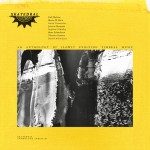
As with the previous volumes, the remastering preserves extraordinary clarity while allowing each work's physical presence to emerge naturally. Stephen O'Malley's understated design, Kali Malone's visual direction and Jordana Loeb's screen print reinforce XKatedral's long-standing commitment to presenting sound as a complete aesthetic experience rather than an isolated object.
Taken together, the three "Anthology" volumes document more than a decade of remarkable music, but "Series III" perhaps best captures XKatedral's deeper philosophy. These composers are not interested in novelty for its own sake, nor in preserving tradition as though it belonged behind museum glass. Instead, they treat sound as an endlessly evolving material whose smallest movements can reshape entire emotional landscapes. In doing so, they remind us that some of the most profound musical journeys occur not through dramatic departures, but through the almost imperceptible act of listening more carefully than before.
Across eight pieces written between 2014 and 2025, the anthology gathers artists who have helped define XKatedral's identity without ever reducing them to a shared aesthetic formula. Synthetic sound, acoustic instruments, algorithmic processes and spectral thinking form the common vocabulary, but each composer speaks with unmistakably individual inflection. The result feels less like a compilation than a carefully curated exhibition where every room changes the way the previous one is remembered.
The opening miniature, "My Falling Sinks", immediately demonstrates Kali Malone's remarkable gift for making restraint feel emotionally expansive. Built around a descending melody performed on a justly tuned organ with contributions from cellist Lucy Railton and guitarist Stephen O'Malley, the piece lasts barely four minutes, yet it seems to suspend ordinary notions of duration. The unusual tuning system lends each interval an almost tactile quality, as though harmony had briefly escaped the compromises of equal temperament and rediscovered its natural proportions.
From this quiet beginning, Maria W Horn unfolds "Empyrean Flare", one of the anthology's defining statements. Inspired in part by the Tintinnabuli principles developed by Arvo PÄrt, Horn animates supersaw oscillators through slowly circling harmonic motion while subtle glissandi gradually destabilise the apparent serenity. Analog tape saturation adds warmth without softening the composition's underlying tension. It resembles light filtered through thick clouds, beautiful precisely because it never settles into certainty.
David Granström's "Tessellation" shifts the emphasis toward generative synthesis, yet avoids the detached elegance often associated with algorithmic composition. Repeating tape loops establish patterns that continuously reorganise themselves, creating the sensation that structure is emerging spontaneously rather than being imposed from above. Mathematics becomes strangely lyrical here, suggesting that equations occasionally possess better emotional intelligence than the people writing them. A mildly unsettling thought, but the music makes a convincing case.
One of the anthology's quiet revelations is Jessica Ekomane's "To Whoever Shall Inherit The Earth". Recorded almost accidentally during a late-night session, the work carries an intimacy that no amount of meticulous planning could manufacture. Ekomane has consistently explored perception through complex electronic systems, yet here the emphasis falls on fragility rather than architecture. The title hints at legacy, but the music feels deeply rooted in the fleeting present, preserving an unrepeatable moment before it disappears.
Stephen O'Malley's "Smoking Mother" offers perhaps the anthology's most surprising contribution. Best known for overwhelming amplifier-driven soundscapes, O'Malley instead reveals a composer fascinated by resonance, ritual and gradual accumulation. Drawing distant inspiration from figures as diverse as Krzysztof Penderecki, Popol Vuh and the great Dhrupad master Zia Mohiuddin Dagar, the piece unfolds with meditative authority rather than sheer force. It is a reminder that intensity does not always require high volume. Sometimes it simply requires unwavering attention.
That same attentiveness permeates Mats Erlandsson's "Att Böja SjÄlarna", where violin and voice gently inhabit a spacious electronic environment. The title translates roughly as "To Bend Souls", and the music embraces that ambiguity without theatricality. Gaianeh Pilossian's violin and Sara Fors' voice never dominate the electronic textures; instead, they appear like fragile human traces inside an immense acoustic landscape.
The closing pair provides an elegant conclusion. Theodor Kentros' intriguingly titled "This Will Be My Last Piece For Organ" is less a farewell than an investigation into the organ's unstable acoustic behaviour, recreating its shifting frequencies through oscillators and resonant feedback. Whether it truly marks the composer's final encounter with the instrument is almost beside the point. Composers have a habit of making dramatic promises to themselves, only to return a few years later after hearing one particularly persuasive overtone.
Daniel M. Karlsson's "Fault Lines" ends the anthology with quiet grandeur. Built through deterministic generative methods and enriched by vocal performances from Sara Fors, Ansis Btiš and Artrs ukurs, the work explores fracture without collapse. Harmonic planes drift against one another like tectonic plates moving too slowly for ordinary perception, yet carrying immense emotional weight beneath the surface. It is an apt conclusion for a collection devoted to subtle transformation.
As with the previous volumes, the remastering preserves extraordinary clarity while allowing each work's physical presence to emerge naturally. Stephen O'Malley's understated design, Kali Malone's visual direction and Jordana Loeb's screen print reinforce XKatedral's long-standing commitment to presenting sound as a complete aesthetic experience rather than an isolated object.
Taken together, the three "Anthology" volumes document more than a decade of remarkable music, but "Series III" perhaps best captures XKatedral's deeper philosophy. These composers are not interested in novelty for its own sake, nor in preserving tradition as though it belonged behind museum glass. Instead, they treat sound as an endlessly evolving material whose smallest movements can reshape entire emotional landscapes. In doing so, they remind us that some of the most profound musical journeys occur not through dramatic departures, but through the almost imperceptible act of listening more carefully than before.
VV.AA.: XKatedral Anthology II
If the first volume of XKatedral's anthology series explored the slow metamorphosis of acoustic resonance, "Anthology Series II" turns its attention toward another kind of alchemy. Here, algorithms, synthesis and digital processes are not presented as futuristic novelties or sterile technologies. Instead, they become instruments for uncovering harmonic phenomena that have always existed, patiently waiting for someone curious enough to listen. This is electronic music that gazes less toward tomorrow than toward eternity.
The Swedish imprint XKatedral has quietly cultivated a remarkable artistic community over the past decade, bringing together composers whose interests intersect around duration, spectral harmony and the physical behaviour of sound itself. Rather than promoting a recognisable "label sound", XKatedral has encouraged individual voices connected by shared methods of listening. This second anthology, originally released in 2023 and now remastered alongside its companion volumes, captures that philosophy beautifully. Every piece speaks a distinct dialect, yet they all belong to the same sonic family.
The opening work, "Music for Low Quartet", finds Kali Malone revisiting material from "The Sacrificial Code" through a new instrumental perspective. Two double basses, performed by Vilhelm Bromander and Zach Rowden, intertwine with Malone's sine-wave electronics in music that seems perpetually suspended between gravity and levitation. The low frequencies possess undeniable physical weight, yet they never feel oppressive. Instead, they create spaciousness, demonstrating once again Malone's extraordinary ability to transform minimal material into profound emotional architecture. Every sustained tone seems to contain invisible corridors extending far beyond the audible spectrum.
From there, Jessica Ekomane shifts the focus entirely toward synthetic sound. "First Light" abandons acoustic references without sacrificing warmth or expressive subtlety. Built exclusively from digitally generated material, the composition unfolds as an intricate web of microscopic interactions where timbre itself becomes narrative. Ekomane has long explored perception through algorithmic processes, and this piece illustrates her gift for creating complexity that remains remarkably lucid. The electronics do not imitate natural phenomena; rather, they propose entirely new ecosystems governed by their own internal logic.
Mats Erlandsson's "Hands Melt In The Sun" occupies the anthology's emotional centre. Constructed from electronically transformed zithers and carefully organised synthetic tones, the work functions simultaneously as a personal reflection and a tribute to Stockholm's drone tradition. The title itself suggests impossible physical states, and the music embraces that ambiguity. Chords slowly rotate around a persistent fundamental, producing subtle shifts in colour that recall sunlight moving across industrial ruins. One rarely thinks of zithers as existential instruments, yet Erlandsson somehow persuades them to contemplate memory with remarkable eloquence.
The shorter works on the second half provide fascinating contrasts. Theodor Kentros' "Rough Draft v.7" compresses an immersive multichannel conception into stereo without losing its remarkable spatial awareness. Buchla synthesizers merge with recorded wind instruments until the distinction between electronic and acoustic sources dissolves into a fluid sonic mass. Meanwhile, Wilma Hultén's "Inertia", her first released recording, explores digital feedback not as malfunction but as creative principle. Tiny gestural events punctuate broad harmonic fields that seem to breathe independently of human intervention, as though the software itself had developed an interest in meditation.
The anthology concludes with perhaps its most striking statement. Maria W Horn's live rendition of "Dies Irae" draws together female vocal quartet, pitched glass and electronics into a work that hovers uneasily between sacred tradition and speculative fiction. The familiar liturgical title immediately evokes centuries of Western musical history, yet Horn avoids quotation or nostalgic reverence. Instead, she examines how ancient harmonic language might continue evolving when filtered through contemporary electronic sensibilities. The vocal writing retains an almost ritualistic solemnity, while the glass and synthesis introduce shimmering instabilities that prevent the music from ever settling into comfortable reverence. The result feels simultaneously ancient and uncannily contemporary, like discovering a medieval cathedral quietly communicating with a data centre.
What distinguishes "Anthology Series II" - released on June 2023, and recently re-pressed - from many collections of contemporary electronic composition is its remarkable patience. None of these artists seek immediate impact. Their music asks listeners to inhabit sound rather than consume it, to observe transformation at a pace that modern life rarely permits. There is a quiet confidence in this refusal to compete for attention. After all, geological processes have never worried much about marketing deadlines.
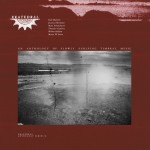
The remastering further enhances the anthology's extraordinary sense of depth. Harmonic relationships remain transparent even during the densest passages, while the careful sequencing allows each work to illuminate different aspects of spectral thinking without feeling repetitive. Stephen O'Malley's understated sleeve design and Kali Malone's art direction reinforce the label's commitment to coherence without uniformity.
Ultimately, "XKatedral Anthology Series II" is not simply a survey of composers working with electronics. It is a study of listening itself. These pieces remind us that technology, at its most thoughtful, does not replace human sensitivity. It extends it, offering new ways to perceive relationships between sound, space and time that were always present but seldom so patiently revealed. In a culture fascinated by faster processors and louder declarations, XKatedral proposes something considerably more radical: that the future may depend less on inventing new sounds than on learning to hear the existing ones more deeply.
The Swedish imprint XKatedral has quietly cultivated a remarkable artistic community over the past decade, bringing together composers whose interests intersect around duration, spectral harmony and the physical behaviour of sound itself. Rather than promoting a recognisable "label sound", XKatedral has encouraged individual voices connected by shared methods of listening. This second anthology, originally released in 2023 and now remastered alongside its companion volumes, captures that philosophy beautifully. Every piece speaks a distinct dialect, yet they all belong to the same sonic family.
The opening work, "Music for Low Quartet", finds Kali Malone revisiting material from "The Sacrificial Code" through a new instrumental perspective. Two double basses, performed by Vilhelm Bromander and Zach Rowden, intertwine with Malone's sine-wave electronics in music that seems perpetually suspended between gravity and levitation. The low frequencies possess undeniable physical weight, yet they never feel oppressive. Instead, they create spaciousness, demonstrating once again Malone's extraordinary ability to transform minimal material into profound emotional architecture. Every sustained tone seems to contain invisible corridors extending far beyond the audible spectrum.
From there, Jessica Ekomane shifts the focus entirely toward synthetic sound. "First Light" abandons acoustic references without sacrificing warmth or expressive subtlety. Built exclusively from digitally generated material, the composition unfolds as an intricate web of microscopic interactions where timbre itself becomes narrative. Ekomane has long explored perception through algorithmic processes, and this piece illustrates her gift for creating complexity that remains remarkably lucid. The electronics do not imitate natural phenomena; rather, they propose entirely new ecosystems governed by their own internal logic.
Mats Erlandsson's "Hands Melt In The Sun" occupies the anthology's emotional centre. Constructed from electronically transformed zithers and carefully organised synthetic tones, the work functions simultaneously as a personal reflection and a tribute to Stockholm's drone tradition. The title itself suggests impossible physical states, and the music embraces that ambiguity. Chords slowly rotate around a persistent fundamental, producing subtle shifts in colour that recall sunlight moving across industrial ruins. One rarely thinks of zithers as existential instruments, yet Erlandsson somehow persuades them to contemplate memory with remarkable eloquence.
The shorter works on the second half provide fascinating contrasts. Theodor Kentros' "Rough Draft v.7" compresses an immersive multichannel conception into stereo without losing its remarkable spatial awareness. Buchla synthesizers merge with recorded wind instruments until the distinction between electronic and acoustic sources dissolves into a fluid sonic mass. Meanwhile, Wilma Hultén's "Inertia", her first released recording, explores digital feedback not as malfunction but as creative principle. Tiny gestural events punctuate broad harmonic fields that seem to breathe independently of human intervention, as though the software itself had developed an interest in meditation.
The anthology concludes with perhaps its most striking statement. Maria W Horn's live rendition of "Dies Irae" draws together female vocal quartet, pitched glass and electronics into a work that hovers uneasily between sacred tradition and speculative fiction. The familiar liturgical title immediately evokes centuries of Western musical history, yet Horn avoids quotation or nostalgic reverence. Instead, she examines how ancient harmonic language might continue evolving when filtered through contemporary electronic sensibilities. The vocal writing retains an almost ritualistic solemnity, while the glass and synthesis introduce shimmering instabilities that prevent the music from ever settling into comfortable reverence. The result feels simultaneously ancient and uncannily contemporary, like discovering a medieval cathedral quietly communicating with a data centre.
What distinguishes "Anthology Series II" - released on June 2023, and recently re-pressed - from many collections of contemporary electronic composition is its remarkable patience. None of these artists seek immediate impact. Their music asks listeners to inhabit sound rather than consume it, to observe transformation at a pace that modern life rarely permits. There is a quiet confidence in this refusal to compete for attention. After all, geological processes have never worried much about marketing deadlines.
The remastering further enhances the anthology's extraordinary sense of depth. Harmonic relationships remain transparent even during the densest passages, while the careful sequencing allows each work to illuminate different aspects of spectral thinking without feeling repetitive. Stephen O'Malley's understated sleeve design and Kali Malone's art direction reinforce the label's commitment to coherence without uniformity.
Ultimately, "XKatedral Anthology Series II" is not simply a survey of composers working with electronics. It is a study of listening itself. These pieces remind us that technology, at its most thoughtful, does not replace human sensitivity. It extends it, offering new ways to perceive relationships between sound, space and time that were always present but seldom so patiently revealed. In a culture fascinated by faster processors and louder declarations, XKatedral proposes something considerably more radical: that the future may depend less on inventing new sounds than on learning to hear the existing ones more deeply.