
Browse by Genre
Industrial Music / Industrial Metal / Aggro Industrial / Electro Metal
Industrial Noise / Power Noise / Harsh Noise
Synth Pop / Electro Pop / Synth-Electronica
Techno / Trance / Goa / Drum'n'Bass / Jungle / Tribal / Trip-Hop
Ambient / Electronica / Ethereal / Dub / Soundscapes / Abstract
Experimental / Avantgarde / Weird & Wired / Glitch / Noise / Field Recording
Dark / Gothic / Wave / New Wave / Dark Wave / Industrial Gothic
New Music / Downtown / Avantgarde Jazz / New Classical / World
Search Reviews
Music Reviews
Franz Scala: Cafe Futuro
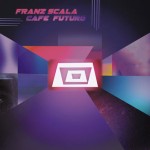
Artist: Franz Scala (@)
Title: Cafe Futuro
Format: LP
Label: Slow Motion Music (@)
Distributor: Word and Sound
Rated:

Title: Cafe Futuro
Format: LP
Label: Slow Motion Music (@)
Distributor: Word and Sound
Rated:
Franz Scala’s "Cafe Futuro" is not just an album, it’s a place you stumble into at the wrong hour and end up staying until the lights come on and your nostalgia has mascara running down its face. Released on Slow Motion, the record feels like a love letter written directly onto the dancefloor tiles of a Neukölln bar where history, sweat, eyeliner and synthesizers have soaked into the walls and refuse to leave.
Scala, Italian by birth and cosmic by vocation, has always had a rare talent: he understands that dance music is less about movement than memory. With "Cafe Futuro", he sharpens that instinct, pushing deeper into the emotional archaeology of Italo, New Beat and proto-house, not as revivalist cosplay but as lived language. These tracks don’t quote the past; they remember it, the way you remember a voice from another room.
The album opens with “New Look”, which hits like a confident stride across a smoke-filled floor. The bass is thick, the pulse assured, and the vocal presence carries that glamorous detachment that only works when it’s sincere. Scala knows exactly how much drama to allow before it tips into parody, and he never crosses the line - though he dances on it, smiling. “Echoes of Love” slows the heartbeat slightly, letting melody and vocoder blur into something tender but unresolved, like an unfinished confession whispered over a synthesizer that’s seen better nights.
Elsewhere, "Cafe Futuro" shows its range without losing cohesion. “Telephone Boy” crackles with nervous energy, while “Light Year Run” gives the album room to breathe, pads stretching out like neon reflections on wet pavement. Collaborations are used wisely, not as name-dropping but as character entrances in a carefully staged scene: Local Suicide bring bite and attitude to “Saxon Rebel”, while Charlie’s presence on “Crush Test” adds a sultry ambiguity that feels both intimate and distant. No one overstays their welcome.
One of the album’s quiet triumphs is “BIT99”, a track that doubles as both homage and self-portrait. Scala’s love for vintage Italian synthesis isn’t fetishistic; it’s personal. You can hear the circuitry thinking, aging, dreaming. It’s music aware of its own material body, humming proudly despite the years.
By the time "Cafe Futuro" reaches its closing stretch, culminating in “Fase Lunare”, the feeling is less of an ending than of drifting outside just before dawn, cigarette between fingers, unsure whether you’re exhausted or euphoric. Scala doesn’t offer resolution. He offers atmosphere, continuity, the sense that this world keeps spinning whether you’re on the floor or leaning against the bar.
There’s humor here, too - not jokes, but a knowing wink. "Cafe Futuro" understands the absurdity of taking nostalgia seriously, and does it anyway, with elegance and grit. It’s a record that respects the dancefloor as a site of emotional truth, where past and future briefly agree to share the same beat.
Franz Scala isn’t chasing trends, and he’s not embalming history. He’s keeping a place alive. Pull up a chair. The music’s already started.
Scala, Italian by birth and cosmic by vocation, has always had a rare talent: he understands that dance music is less about movement than memory. With "Cafe Futuro", he sharpens that instinct, pushing deeper into the emotional archaeology of Italo, New Beat and proto-house, not as revivalist cosplay but as lived language. These tracks don’t quote the past; they remember it, the way you remember a voice from another room.
The album opens with “New Look”, which hits like a confident stride across a smoke-filled floor. The bass is thick, the pulse assured, and the vocal presence carries that glamorous detachment that only works when it’s sincere. Scala knows exactly how much drama to allow before it tips into parody, and he never crosses the line - though he dances on it, smiling. “Echoes of Love” slows the heartbeat slightly, letting melody and vocoder blur into something tender but unresolved, like an unfinished confession whispered over a synthesizer that’s seen better nights.
Elsewhere, "Cafe Futuro" shows its range without losing cohesion. “Telephone Boy” crackles with nervous energy, while “Light Year Run” gives the album room to breathe, pads stretching out like neon reflections on wet pavement. Collaborations are used wisely, not as name-dropping but as character entrances in a carefully staged scene: Local Suicide bring bite and attitude to “Saxon Rebel”, while Charlie’s presence on “Crush Test” adds a sultry ambiguity that feels both intimate and distant. No one overstays their welcome.
One of the album’s quiet triumphs is “BIT99”, a track that doubles as both homage and self-portrait. Scala’s love for vintage Italian synthesis isn’t fetishistic; it’s personal. You can hear the circuitry thinking, aging, dreaming. It’s music aware of its own material body, humming proudly despite the years.
By the time "Cafe Futuro" reaches its closing stretch, culminating in “Fase Lunare”, the feeling is less of an ending than of drifting outside just before dawn, cigarette between fingers, unsure whether you’re exhausted or euphoric. Scala doesn’t offer resolution. He offers atmosphere, continuity, the sense that this world keeps spinning whether you’re on the floor or leaning against the bar.
There’s humor here, too - not jokes, but a knowing wink. "Cafe Futuro" understands the absurdity of taking nostalgia seriously, and does it anyway, with elegance and grit. It’s a record that respects the dancefloor as a site of emotional truth, where past and future briefly agree to share the same beat.
Franz Scala isn’t chasing trends, and he’s not embalming history. He’s keeping a place alive. Pull up a chair. The music’s already started.
Jo Montgomerie: Ephemeral Rituals

Artist: Jo Montgomerie
Title: Ephemeral Rituals
Format: CD + Download
Label: The Helen Scarsdale Agency (@)
Rated:
Title: Ephemeral Rituals
Format: CD + Download
Label: The Helen Scarsdale Agency (@)
Rated:
Jo Montgomerie’s "Ephemeral Rituals" doesn’t so much invite you in as quietly rearrange the room while you’re standing in it. When you finally notice, the walls have moved, the light has changed temperature, and something intimate is humming where silence used to be. This is not music that explains itself; it insinuates, repeats, insists - like habits we swear we don’t have, until we do.
Based in Manchester, Montgomerie has been patiently refining a language of abstraction where sound behaves less like narrative and more like weather, residue, muscle memory. Her materials are deliberately oblique: clacks, drones, frictions, tones that feel sourced from somewhere familiar but refuse to show their passport. The opening piece immediately sets the tone with a percussive insistence that feels mechanical yet oddly human, a rhythm that could be labor, ritual, or simply time tapping its fingers on the desk. From this apparent austerity, something unexpectedly luminous blooms - dark, yes, but glowing, like a bruise that remembers sunlight.
What distinguishes "Ephemeral Rituals" is Montgomerie’s refusal to treat texture as an end in itself. These pieces are dense, sometimes industrial in weight, but they breathe. There’s a devotional quality here, not in the religious sense, but in the way repetition becomes care, and care becomes meaning. Tracks unfold slowly, with a confidence that doesn’t rush the listener, trusting that attention will catch up eventually. And if it doesn’t - well, that’s on you.
There are moments where the album brushes against familiar coordinates of experimental music history - post-industrial dub shadows, spectral drones, the cinematic patience of sound-as-environment - but nothing feels derivative. Instead, Montgomerie seems to treat those references like half-remembered dreams: useful, evocative, and slightly unreliable. Her sound design often feels photographic, which makes sense given her parallel visual practice. You can almost hear layers being superimposed, images bleeding into each other, grain becoming emotion.
The emotional core of the record lies in its focus on small, human compulsions: breathing, running, waiting, leaving. These aren’t grand gestures; they’re the quiet rituals that structure ordinary life, magnified until they become strange again. By the time the closing tracks roll around, the music feels less like something you’re listening to and more like something you’re inside - an atmosphere where stillness isn’t empty, just attentive.
"Ephemeral Rituals" is not a record that begs for interpretation, nor does it reward casual consumption. It’s stern but generous, austere but strangely tender. Think of it as a set of private ceremonies conducted in public sound, where noise becomes memory and repetition turns into care. No veil is lifted, no secret revealed - but somehow, you leave feeling seen.
Based in Manchester, Montgomerie has been patiently refining a language of abstraction where sound behaves less like narrative and more like weather, residue, muscle memory. Her materials are deliberately oblique: clacks, drones, frictions, tones that feel sourced from somewhere familiar but refuse to show their passport. The opening piece immediately sets the tone with a percussive insistence that feels mechanical yet oddly human, a rhythm that could be labor, ritual, or simply time tapping its fingers on the desk. From this apparent austerity, something unexpectedly luminous blooms - dark, yes, but glowing, like a bruise that remembers sunlight.
What distinguishes "Ephemeral Rituals" is Montgomerie’s refusal to treat texture as an end in itself. These pieces are dense, sometimes industrial in weight, but they breathe. There’s a devotional quality here, not in the religious sense, but in the way repetition becomes care, and care becomes meaning. Tracks unfold slowly, with a confidence that doesn’t rush the listener, trusting that attention will catch up eventually. And if it doesn’t - well, that’s on you.
There are moments where the album brushes against familiar coordinates of experimental music history - post-industrial dub shadows, spectral drones, the cinematic patience of sound-as-environment - but nothing feels derivative. Instead, Montgomerie seems to treat those references like half-remembered dreams: useful, evocative, and slightly unreliable. Her sound design often feels photographic, which makes sense given her parallel visual practice. You can almost hear layers being superimposed, images bleeding into each other, grain becoming emotion.
The emotional core of the record lies in its focus on small, human compulsions: breathing, running, waiting, leaving. These aren’t grand gestures; they’re the quiet rituals that structure ordinary life, magnified until they become strange again. By the time the closing tracks roll around, the music feels less like something you’re listening to and more like something you’re inside - an atmosphere where stillness isn’t empty, just attentive.
"Ephemeral Rituals" is not a record that begs for interpretation, nor does it reward casual consumption. It’s stern but generous, austere but strangely tender. Think of it as a set of private ceremonies conducted in public sound, where noise becomes memory and repetition turns into care. No veil is lifted, no secret revealed - but somehow, you leave feeling seen.
Otto Lindholm: Shall the Days Float Through Our Eyes
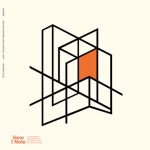
Artist: Otto Lindholm (@)
Title: Shall the Days Float Through Our Eyes
Format: 7"
Label: Skew Note
Rated:

Title: Shall the Days Float Through Our Eyes
Format: 7"
Label: Skew Note
Rated:
There’s something almost mischievous about releasing a 7” like "Shall the Days Float Through Our Eyes" in an age of endless files and infinite scroll. Otto Lindholm - alias of Brussels-based double bassist and composer Cyrille de Haes - opts for brevity, tactility, and restraint, as if to say: you don’t need a cathedral to feel the weight of stone, sometimes a well-placed brick will do. These two short pieces feel less like tracks and more like apertures: moments where sound opens, looks around, and then quietly withdraws before it explains itself too much.
“Lissitzky” arrives with an almost architectural confidence. The prepared double bass is multiplied, delayed, folded back onto itself through desynchronised loopers, creating planes of tension that feel drawn rather than played. You can sense the industrial space breathing along with the music - walls listening, balconies humming back. It’s a piece that doesn’t move forward so much as it assembles itself in mid-air, all angles and pressure points, a reminder that abstraction can still sweat. “Skelton”, on the flip side, loosens its grip. Grainier, slower, and emotionally exposed, it feels like the echo after an argument you’ve already lost: not dramatic, just honest. The bass here doesn’t assert; it hesitates, allowing silence and decay to finish its sentences.
What makes this release quietly compelling is how it compresses Lindholm’s broader practice into miniature form. His long-standing interest in resonance, density, and embodied listening is fully intact, but reframed through scarcity and impermanence. Each lathe-cut copy is made in real time, slightly different, imperfect by design - an elegant contradiction in a culture obsessed with identical reproduction. There’s no grand statement here, no manifesto shouted from the rooftops. Instead, "Shall the Days Float Through Our Eyes" offers two fleeting immersions that linger longer than expected, like light caught in dust. It doesn’t demand your attention; it earns it, briefly, and then lets the days keep floating.
“Lissitzky” arrives with an almost architectural confidence. The prepared double bass is multiplied, delayed, folded back onto itself through desynchronised loopers, creating planes of tension that feel drawn rather than played. You can sense the industrial space breathing along with the music - walls listening, balconies humming back. It’s a piece that doesn’t move forward so much as it assembles itself in mid-air, all angles and pressure points, a reminder that abstraction can still sweat. “Skelton”, on the flip side, loosens its grip. Grainier, slower, and emotionally exposed, it feels like the echo after an argument you’ve already lost: not dramatic, just honest. The bass here doesn’t assert; it hesitates, allowing silence and decay to finish its sentences.
What makes this release quietly compelling is how it compresses Lindholm’s broader practice into miniature form. His long-standing interest in resonance, density, and embodied listening is fully intact, but reframed through scarcity and impermanence. Each lathe-cut copy is made in real time, slightly different, imperfect by design - an elegant contradiction in a culture obsessed with identical reproduction. There’s no grand statement here, no manifesto shouted from the rooftops. Instead, "Shall the Days Float Through Our Eyes" offers two fleeting immersions that linger longer than expected, like light caught in dust. It doesn’t demand your attention; it earns it, briefly, and then lets the days keep floating.
Mark Harwood: or, Urim

Mark Harwood’s "or, Urim" is one of those records that doesn’t knock politely. It kicks the door, apologises halfway through, then steals your coat on the way out - and somehow you thank it for the experience. Released on his own Penultimate Press, the album continues Harwood’s long-standing obsession with fractured authorship, cultural debris, and the uneasy romance between human memory and machine logic.
Harwood, born in the early ’70s, belongs to that awkward in-between generation: old enough to remember when sound was scarce, physical, and stubbornly slow; young enough to witness its collapse into infinite, frictionless data. "or, Urim" lives exactly in that crack. It’s plunderphonic in spirit but not nostalgic, gleefully irresponsible yet oddly reflective - like rifling through an abandoned archive while wondering who will own the ruins.
Musically, the album behaves like a hallucination with a filing system. Psychedelia rubs shoulders with progressive electronics, avant-classical gestures appear and vanish, and extreme digital abrasion keeps reminding you that comfort is not on the menu. Harwood doesn’t collage for shock value alone; he rearranges pre-existing forms until they start asking uncomfortable questions about authorship, ownership, and power. This is less “sampling culture” and more “sampling as civil disobedience”.
Tracks stretch and compress time in unpredictable ways. "Tarshish" unfolds like a slow, ceremonial data breach, while "Treuer Atem" breathes with an uncanny, half-organic pulse - intimate, then suddenly alien. On the flip side, "The Hunt (Pathetic Study)" feels deliberately awkward, as if testing how much absurdity a structure can tolerate before collapsing. And the closing "Hesychasm or Urim and Thummim" is a long, murmuring descent: part ritual, part corrupted firmware update, hovering between meditation and menace.
There’s humour here, but it’s dry, sideways, and occasionally cruel - the kind that laughs not because things are funny, but because the alternative is screaming. Harwood seems acutely aware of the irony of living in an era where a child can be punished for recontextualising a few seconds of sound, while vast systems ingest entire cultural histories without blinking. "or, Urim" doesn’t resolve this contradiction; it sharpens it, presses it to the ear, and listens for feedback.
In the end, this is not a comforting record, nor does it pretend to be. It’s dusty and futuristic at once, a head trip that acknowledges both the thrill and the dread of our synthetic present. "or, Urim" delights in theft, yes - but also in the fragile hope that meaning can still leak through the cracks. A record for those who enjoy their electronics unstable, their philosophy unresolved, and their questions left deliciously unanswered.
Harwood, born in the early ’70s, belongs to that awkward in-between generation: old enough to remember when sound was scarce, physical, and stubbornly slow; young enough to witness its collapse into infinite, frictionless data. "or, Urim" lives exactly in that crack. It’s plunderphonic in spirit but not nostalgic, gleefully irresponsible yet oddly reflective - like rifling through an abandoned archive while wondering who will own the ruins.
Musically, the album behaves like a hallucination with a filing system. Psychedelia rubs shoulders with progressive electronics, avant-classical gestures appear and vanish, and extreme digital abrasion keeps reminding you that comfort is not on the menu. Harwood doesn’t collage for shock value alone; he rearranges pre-existing forms until they start asking uncomfortable questions about authorship, ownership, and power. This is less “sampling culture” and more “sampling as civil disobedience”.
Tracks stretch and compress time in unpredictable ways. "Tarshish" unfolds like a slow, ceremonial data breach, while "Treuer Atem" breathes with an uncanny, half-organic pulse - intimate, then suddenly alien. On the flip side, "The Hunt (Pathetic Study)" feels deliberately awkward, as if testing how much absurdity a structure can tolerate before collapsing. And the closing "Hesychasm or Urim and Thummim" is a long, murmuring descent: part ritual, part corrupted firmware update, hovering between meditation and menace.
There’s humour here, but it’s dry, sideways, and occasionally cruel - the kind that laughs not because things are funny, but because the alternative is screaming. Harwood seems acutely aware of the irony of living in an era where a child can be punished for recontextualising a few seconds of sound, while vast systems ingest entire cultural histories without blinking. "or, Urim" doesn’t resolve this contradiction; it sharpens it, presses it to the ear, and listens for feedback.
In the end, this is not a comforting record, nor does it pretend to be. It’s dusty and futuristic at once, a head trip that acknowledges both the thrill and the dread of our synthetic present. "or, Urim" delights in theft, yes - but also in the fragile hope that meaning can still leak through the cracks. A record for those who enjoy their electronics unstable, their philosophy unresolved, and their questions left deliciously unanswered.
Malo Moray: Embrace

Artist: Malo Moray (@)
Title: Embrace
Format: CD & 12" + Download
Label: Possibly Sam Records (http://www.possiblysam.com/) (@)
Rated:
Title: Embrace
Format: CD & 12" + Download
Label: Possibly Sam Records (http://www.possiblysam.com/) (@)
Rated:
Malo Moray (aka Malo Moray & His Inflatable Knee) is a bassist, composer and performer from Leipzig, Germany and his latest release, 'Embrace,' was recorded live in front of a small audience of about two dozen people and recorded directly to vinyl completely in real-time, no overdubs. Using double bass, tapes, electronics and live processing, Malo explores a fragile and immersive sound world, somewhere between ambient, krautrock and jazz, inspired by Brian Eno. Laurie Anderson, David Sylvian, Swans and Soundwalk Collective. Malo says 'Embrace' is about presence- celebrating slowness and trust.
Malo's inspiration influences are certainly commendable, but don't expect the album to sound like any of them in particular. The album is only four tracks of varying lengths in about 41 minutes. First track, "Over The Mountain Range" begins with a background ambient drone (sustained synth chord) and incidental electronic crackle/static and then bass improvisation, later with bowed and processed bass background (possibly on tape), and after the bowed bass becomes the soloing instrument. With solo bowed stringed instruments there is often a degree of melancholy and that is not absent here. About 10:40 into the piece Malo begins his vocal recitation, a sort of speak-singing- not dissimilar to Laurie Anderson's style; a sort of anecdotal dream sequence that is visceral in an unexpected way. The story-like dialogue draws you in compelling your attention. It blends into track 2, "Himiko" with ethereal wordless vocals borne on an ambient cloud. More bowed bass follows. Track 3, "I Am Here Now" sounds like spring with ambient natural sounds (a stream, birds) and orchestral synth strings. A couple minutes into the piece Malo beings another vocal recitation There is applause at the end of this one, just to let you know that it's live and Malo addresses the audience in his native Deutsche, while all of his recitations have been in English. Final track, "Vanishing Act" conjures Leonard Cohen vocally, and the combination of bass and the ambient background is just gorgeous. I am truly impressed. More applause and a final brief address in German follows.
All things considered, this is a remarkable recording, a magical experience that transcends many of the live albums I've ever heard. While the deluxe limited editions are sold out, the Blueberry Translucent vinyl with 12-page booklet, OBI, poster and postcard (limited edition of 70) and Lemon Popsicle Translucent vinyl with 12-page booklet and OBI (limited edition of 200) and Blueberry Cake CD (limited edition of 100) are still available. You really need to hear this. Highly recommended!
Malo's inspiration influences are certainly commendable, but don't expect the album to sound like any of them in particular. The album is only four tracks of varying lengths in about 41 minutes. First track, "Over The Mountain Range" begins with a background ambient drone (sustained synth chord) and incidental electronic crackle/static and then bass improvisation, later with bowed and processed bass background (possibly on tape), and after the bowed bass becomes the soloing instrument. With solo bowed stringed instruments there is often a degree of melancholy and that is not absent here. About 10:40 into the piece Malo begins his vocal recitation, a sort of speak-singing- not dissimilar to Laurie Anderson's style; a sort of anecdotal dream sequence that is visceral in an unexpected way. The story-like dialogue draws you in compelling your attention. It blends into track 2, "Himiko" with ethereal wordless vocals borne on an ambient cloud. More bowed bass follows. Track 3, "I Am Here Now" sounds like spring with ambient natural sounds (a stream, birds) and orchestral synth strings. A couple minutes into the piece Malo beings another vocal recitation There is applause at the end of this one, just to let you know that it's live and Malo addresses the audience in his native Deutsche, while all of his recitations have been in English. Final track, "Vanishing Act" conjures Leonard Cohen vocally, and the combination of bass and the ambient background is just gorgeous. I am truly impressed. More applause and a final brief address in German follows.
All things considered, this is a remarkable recording, a magical experience that transcends many of the live albums I've ever heard. While the deluxe limited editions are sold out, the Blueberry Translucent vinyl with 12-page booklet, OBI, poster and postcard (limited edition of 70) and Lemon Popsicle Translucent vinyl with 12-page booklet and OBI (limited edition of 200) and Blueberry Cake CD (limited edition of 100) are still available. You really need to hear this. Highly recommended!