
Browse by Genre
Industrial Music / Industrial Metal / Aggro Industrial / Electro Metal
Industrial Noise / Power Noise / Harsh Noise
Synth Pop / Electro Pop / Synth-Electronica
Techno / Trance / Goa / Drum'n'Bass / Jungle / Tribal / Trip-Hop
Ambient / Electronica / Ethereal / Dub / Soundscapes / Abstract
Experimental / Avantgarde / Weird & Wired / Glitch / Noise / Field Recording
Dark / Gothic / Wave / New Wave / Dark Wave / Industrial Gothic
New Music / Downtown / Avantgarde Jazz / New Classical / World
Search Reviews
Music Reviews
Modern Silent Cinema: Flesh Mother (Redux)

Artist: Modern Silent Cinema (@)
Title: Flesh Mother (Redux)
Format: CD & 12" + Download
Label: Bad Channel Records (@)
Rated:


Title: Flesh Mother (Redux)
Format: CD & 12" + Download
Label: Bad Channel Records (@)
Rated:
I just recently received this release from Cullen Gallagher (a transplant from Maine to Brooklyn, New York) who operates under the name of Modern Silent Cinema. MSC's releases go all the way back to 2004 with a varied approach to left field music, ranging from oddball soundtracks to primitive lo-fo avant garde piano and weird indie guitar/electronics albums. 'Flesh Mother' was originally recorded back in 2009 but now comes to light in commercial formats, remixed with a bonus track and remastered by Caleb Mulkerin (of Big Blood). The release date is scheduled for December 29, 2025, and this is one of the few times I've actually gotten a review finished before the release date. 'Flesh Mother (Redux)' is primarily a noise/black metal album with lots of distorted guitar grind and electronic grief. The opening track, "Velvet-Clawed Misfortune Approaches" begins with a wall of loud, heavy distortion with a vague notion of chord/note change. This lasts incessantly up to 3/4 of the way through the nearly 4 minute piece, the last quarter being a wind-down of sorts. Only true noisophiles may be brave enough to continue. The title track is next, a good deal more nuanced in its approach to noise with its distorted sonics and metallic rumblings as a strange rhythm emerges from the shadows. It sounds like what I would imagine to be a dreaming but restless malevolent dragon. "Twisted Passion (Made Her a Mistress of Sin)" has a vaguely shoegaze quality about it with some melodic concession but still primarily noise. "Acrohypothermy" fires guitar through all distortion pedals at once with some sort of swirling echo just to keep things moving. It's a phantasmagoria of noise indulgence until the end. Cullen break out the piano for '"Whittington's Wishes" as psychotic and distorted notes careen in a surreal echo chamber. Back to more heavy guitar-created noise on "Emlorin" but this time there is a melody woven into it like a demonic fanfare. More guitar harshness is the mainstay of "What You Have Left" that I'm sure is ear-splitting and teeth-jarring at a loud volume. "Assuage" takes a sustained, overdriven guitar note into a buzzy, seemingly endless drone with overtones that lasts for 6:25. (Talk about endurance tests...whew!) Finally we get the last track, "Fires That Destroy" which is unlike anything else on the album. Here you actually hear Cullen play his guitar without the heavy distortion (but still with some effects) in something that might resemble a song, or at least the makings of one. It is an odd chord progression with a fair amount of improvisation that might have been the result of on-the-spot creation. For me, what makes Modern Silent Cinema interesting is Cullen's output beyond this album. 'Flesh Mother's' appeal will largely be limited to black metal noise enthusiasts but those interested in a wider variety of avant garde sounds should check out MSC's other releases, and there are quite a few of them. You can purchase the CD of this album from MSC's Bandcamp site, but you'll have to go to the Bad Channel Records label site for the vinyl. By the way, that's the image of Polish silent film femme fatale Pola Negri on the cover.
Peter Phippen / Ivar Lunde, Jr. / Paulina Fae: The Phantom Moon
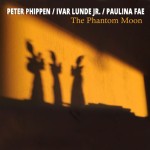
Artist: Peter Phippen / Ivar Lunde, Jr. / Paulina Fae (@)
Title: The Phantom Moon
Format: Download Only (MP3 + Lossless)
Label: Projekt (@)
Rated:
Title: The Phantom Moon
Format: Download Only (MP3 + Lossless)
Label: Projekt (@)
Rated:
"The Phantom Moon" is one of those records that doesn’t knock on the door - it seeps under it, like moonlight sneaking across the floor at 3 a.m., when you’re not sure if you’re awake, dreaming, or simply remembering something that never quite happened.
This collaboration between Peter Phippen, Ivar Lunde Jr., and Paulina Fae feels less like a project and more like a slow ritual accidentally left running. Phippen’s flutes - bamboo, shakuhachi, Native American variants, all breathing with a lived-in, almost conversational fragility - don’t perform melodies so much as confide in the air. They sound ancient without trying, like instruments that have seen enough sunsets to stop explaining themselves. Lunde Jr., a familiar presence in the ambient underground, builds the surrounding space with restraint and patience: synth textures that hover, frame drum pulses that feel ceremonial rather than rhythmic, silence treated as a collaborator instead of a gap to be filled.
Then there’s Paulina Fae, whose voice doesn’t arrive to sing in the conventional sense. It drifts, hovers, dissolves. No lyrics to pin meaning down, no hooks to reassure the rational brain. Her vocalizations function more like emotional weather: fog, distant warmth, the suggestion of a human presence just out of sight. At times she sounds like memory itself trying to remember its own origin.
What’s striking is how carefully the album avoids drama while remaining deeply emotional. This is nocturnal music without gothic excess, spiritual without incense overload. Even when melancholy dominates - and it often does - it’s a gentle, accepting melancholy, the kind that doesn’t ask to be cured. Tracks like "Three Shadows" or "Field of Gray" unfold with a patient inevitability, as if time itself has agreed to slow down out of respect.
There is, admittedly, a whiff of cosmic earnestness hovering over the project - the moon, the veil, the otherworldly presence - but the music earns its mysticism by never pushing it too hard. It doesn’t demand belief. It simply creates a space where belief, doubt, longing, and calm can coexist without arguing. If you find yourself rolling your eyes at the more rhapsodic interpretations surrounding the album, don’t worry: the sounds themselves remain grounded, tactile, human. No one is trying to sell you enlightenment in a deluxe bundle.
"The Phantom Moon" works best when listened to as a single arc, late at night, lights low, expectations even lower. It’s music for reflection without conclusions, for stillness without emptiness. When it ends, it doesn’t feel finished - just temporarily out of view, like the moon slipping behind a cloud, still there, still watching, quietly indifferent to whether you understood anything at all.
This collaboration between Peter Phippen, Ivar Lunde Jr., and Paulina Fae feels less like a project and more like a slow ritual accidentally left running. Phippen’s flutes - bamboo, shakuhachi, Native American variants, all breathing with a lived-in, almost conversational fragility - don’t perform melodies so much as confide in the air. They sound ancient without trying, like instruments that have seen enough sunsets to stop explaining themselves. Lunde Jr., a familiar presence in the ambient underground, builds the surrounding space with restraint and patience: synth textures that hover, frame drum pulses that feel ceremonial rather than rhythmic, silence treated as a collaborator instead of a gap to be filled.
Then there’s Paulina Fae, whose voice doesn’t arrive to sing in the conventional sense. It drifts, hovers, dissolves. No lyrics to pin meaning down, no hooks to reassure the rational brain. Her vocalizations function more like emotional weather: fog, distant warmth, the suggestion of a human presence just out of sight. At times she sounds like memory itself trying to remember its own origin.
What’s striking is how carefully the album avoids drama while remaining deeply emotional. This is nocturnal music without gothic excess, spiritual without incense overload. Even when melancholy dominates - and it often does - it’s a gentle, accepting melancholy, the kind that doesn’t ask to be cured. Tracks like "Three Shadows" or "Field of Gray" unfold with a patient inevitability, as if time itself has agreed to slow down out of respect.
There is, admittedly, a whiff of cosmic earnestness hovering over the project - the moon, the veil, the otherworldly presence - but the music earns its mysticism by never pushing it too hard. It doesn’t demand belief. It simply creates a space where belief, doubt, longing, and calm can coexist without arguing. If you find yourself rolling your eyes at the more rhapsodic interpretations surrounding the album, don’t worry: the sounds themselves remain grounded, tactile, human. No one is trying to sell you enlightenment in a deluxe bundle.
"The Phantom Moon" works best when listened to as a single arc, late at night, lights low, expectations even lower. It’s music for reflection without conclusions, for stillness without emptiness. When it ends, it doesn’t feel finished - just temporarily out of view, like the moon slipping behind a cloud, still there, still watching, quietly indifferent to whether you understood anything at all.
Camila Nebbia, Gonçalo Almeida, Sylvain Darrifourcq: Hypomaniac
Artist: Camila Nebbia, Gonçalo Almeida, Sylvain Darrifourcq (@)
Title: Hypomaniac
Format: 12" + Download
Label: Defkaz (@)
Rated:
Title: Hypomaniac
Format: 12" + Download
Label: Defkaz (@)
Rated:
There are records that knock politely. "Hypomaniac" kicks the door, apologises mid-riot, then asks if you noticed how beautifully the walls vibrated while falling. This debut by Nebbia, Almeida, and Darrifourq is free jazz in a state of productive overstimulation: not chaos for chaos’ sake, but a nervous system pushed just far enough to start telling the truth.
Recorded live in Thessaloniki during defkaz’s "Take 2" festival, the album carries that specific electricity only festivals generate: the sense that something might derail at any second, and that everyone involved secretly hopes it will. Hypomania, after all, is not madness but acceleration - ideas arriving faster than etiquette allows. This trio doesn’t cure it; they ride it like a stolen motorcycle.
Camila Nebbia’s saxophone is the album’s unstable narrator. Her lines don’t declaim; they test the air, bending tradition without snapping it. There’s free jazz lineage in her phrasing, yes, but also a contemporary clarity - she’s not trying to escape history, she’s dragging it into the present by the collar and asking it to breathe faster. Her sound can be tender, then suddenly serrated, as if lyricism itself had a caffeine problem.
Gonçalo Almeida treats the double bass less as an instrument and more as a fault line. He oscillates between deep groove and abrasive density, making the bass throb, grind, protest. At times it feels amplified beyond physics, flirting with noise yet never abandoning pulse. This is important: "Hypomaniac" grooves. Hard. Even when it’s tearing itself apart, it taps its foot.
Sylvain Darrifourq, meanwhile, operates like a nervous system with sticks. His drumming is in constant motion, always alert, always threatening to combust - but it never does. Instead, it hypnotises. He understands restraint as a form of violence: sudden silences, brittle textures, rhythmic feints that keep the music hovering at red alert without tipping into collapse.
The four tracks - titled only by their durations, a small but telling refusal of narrative comfort - unfold like weather systems. They don’t develop so much as "accumulate". Motifs appear, vanish, mutate. Collective improvisation here isn’t polite conversation; it’s three minds overlapping, interrupting, finishing each other’s sentences badly and brilliantly.
There’s something refreshing, even darkly funny, about how seriously this trio takes intensity. No spiritual platitudes, no heroic poses - just three musicians trusting that excess, when handled with skill, can still be precise. "Hypomaniac" doesn’t offer catharsis; it offers momentum. You don’t come out calmer. You come out sharper.
Recorded live in Thessaloniki during defkaz’s "Take 2" festival, the album carries that specific electricity only festivals generate: the sense that something might derail at any second, and that everyone involved secretly hopes it will. Hypomania, after all, is not madness but acceleration - ideas arriving faster than etiquette allows. This trio doesn’t cure it; they ride it like a stolen motorcycle.
Camila Nebbia’s saxophone is the album’s unstable narrator. Her lines don’t declaim; they test the air, bending tradition without snapping it. There’s free jazz lineage in her phrasing, yes, but also a contemporary clarity - she’s not trying to escape history, she’s dragging it into the present by the collar and asking it to breathe faster. Her sound can be tender, then suddenly serrated, as if lyricism itself had a caffeine problem.
Gonçalo Almeida treats the double bass less as an instrument and more as a fault line. He oscillates between deep groove and abrasive density, making the bass throb, grind, protest. At times it feels amplified beyond physics, flirting with noise yet never abandoning pulse. This is important: "Hypomaniac" grooves. Hard. Even when it’s tearing itself apart, it taps its foot.
Sylvain Darrifourq, meanwhile, operates like a nervous system with sticks. His drumming is in constant motion, always alert, always threatening to combust - but it never does. Instead, it hypnotises. He understands restraint as a form of violence: sudden silences, brittle textures, rhythmic feints that keep the music hovering at red alert without tipping into collapse.
The four tracks - titled only by their durations, a small but telling refusal of narrative comfort - unfold like weather systems. They don’t develop so much as "accumulate". Motifs appear, vanish, mutate. Collective improvisation here isn’t polite conversation; it’s three minds overlapping, interrupting, finishing each other’s sentences badly and brilliantly.
There’s something refreshing, even darkly funny, about how seriously this trio takes intensity. No spiritual platitudes, no heroic poses - just three musicians trusting that excess, when handled with skill, can still be precise. "Hypomaniac" doesn’t offer catharsis; it offers momentum. You don’t come out calmer. You come out sharper.
Alister Spence: Within Without
Alister Spence’s "Within Without" feels less like an album and more like a long, attentive conversation with an old friend who has finally stopped pretending to be polite. The Fender Rhodes here is not a nostalgic prop, nor a jazz museum piece dusted off for tasteful reverence; it’s a stubborn, metallic animal, coaxed, prodded, occasionally irritated into speaking in clicks, hums, shivers, and half-formed thoughts.
Spence’s history with the instrument matters, but not in a sentimental “once upon a time” way. You can hear decades of lived friction embedded in these sounds: the Rhodes as a youthful burden (“portable” only if you redefine the word), then as a survivor of technological fashion cycles, and finally as a site of excavation. By the time "Within Without" was recorded - quietly, at home, during the suspended animation of pandemic isolation - the instrument had ceased to be a keyboard at all. It had become a field of objects, resonant points, and reluctant surfaces, each one waiting to be persuaded into sound.
The record unfolds in short, sharply focused pieces, like notebook entries written directly onto vibrating metal. Titles such as "Hungry Machine", "Delicate Industry", or "Growl, Warble, Strike" aren’t metaphors so much as instructions, or perhaps warnings. Spence works in miniature, but never feels slight: these fragments are dense with attention. Notes are less important than textures; rhythm is often implied rather than declared. A prepared tine buzzes, a pedal smears harmonics into fog, percussion taps the instrument as if checking whether it’s still alive. It is.
There’s a quiet humor running through the album too, the kind that comes from deep familiarity. "Cheery Buzzy" and its later companion "Friend of Cheery Buzzy" sound like private jokes shared between musician and machine, moments where the Rhodes briefly agrees to behave before immediately misbehaving again. Elsewhere, pieces like "Metal Spectral" or "Nest of Shimmers" drift into near-acousmatic territory, where it becomes difficult - and refreshingly irrelevant - to identify the source of the sound at all.
What anchors "Within Without" is patience. Spence listens harder than he plays. This is music shaped by restraint, by waiting for accidents rather than forcing conclusions. The pandemic birds outside his Sydney home aren’t just a poetic footnote; their presence feels conceptually aligned with the record’s ethos. Less human noise, more space for small, peripheral events to come forward. The album thrives in that margin, where intention loosens its grip and sound is allowed to wobble, resist, and occasionally refuse.
Mastered by Lawrence English, whose Room40 catalogue has long championed this kind of attentive sonic practice, "Within Without" sits comfortably among contemporary explorations of reduction and materiality. But it never feels academic. It’s tactile, slightly unruly, and deeply personal without ever becoming confessional. Spence isn’t telling a story so much as documenting a relationship - one built on weight, resistance, memory, and the quiet thrill of discovering that an old instrument still has plenty to argue about.
Spence’s history with the instrument matters, but not in a sentimental “once upon a time” way. You can hear decades of lived friction embedded in these sounds: the Rhodes as a youthful burden (“portable” only if you redefine the word), then as a survivor of technological fashion cycles, and finally as a site of excavation. By the time "Within Without" was recorded - quietly, at home, during the suspended animation of pandemic isolation - the instrument had ceased to be a keyboard at all. It had become a field of objects, resonant points, and reluctant surfaces, each one waiting to be persuaded into sound.
The record unfolds in short, sharply focused pieces, like notebook entries written directly onto vibrating metal. Titles such as "Hungry Machine", "Delicate Industry", or "Growl, Warble, Strike" aren’t metaphors so much as instructions, or perhaps warnings. Spence works in miniature, but never feels slight: these fragments are dense with attention. Notes are less important than textures; rhythm is often implied rather than declared. A prepared tine buzzes, a pedal smears harmonics into fog, percussion taps the instrument as if checking whether it’s still alive. It is.
There’s a quiet humor running through the album too, the kind that comes from deep familiarity. "Cheery Buzzy" and its later companion "Friend of Cheery Buzzy" sound like private jokes shared between musician and machine, moments where the Rhodes briefly agrees to behave before immediately misbehaving again. Elsewhere, pieces like "Metal Spectral" or "Nest of Shimmers" drift into near-acousmatic territory, where it becomes difficult - and refreshingly irrelevant - to identify the source of the sound at all.
What anchors "Within Without" is patience. Spence listens harder than he plays. This is music shaped by restraint, by waiting for accidents rather than forcing conclusions. The pandemic birds outside his Sydney home aren’t just a poetic footnote; their presence feels conceptually aligned with the record’s ethos. Less human noise, more space for small, peripheral events to come forward. The album thrives in that margin, where intention loosens its grip and sound is allowed to wobble, resist, and occasionally refuse.
Mastered by Lawrence English, whose Room40 catalogue has long championed this kind of attentive sonic practice, "Within Without" sits comfortably among contemporary explorations of reduction and materiality. But it never feels academic. It’s tactile, slightly unruly, and deeply personal without ever becoming confessional. Spence isn’t telling a story so much as documenting a relationship - one built on weight, resistance, memory, and the quiet thrill of discovering that an old instrument still has plenty to argue about.
Drexciya: Fusion Flats
With "Fusion Flats", Drexciya resurface not as a nostalgia act embalmed in wax, but as a living pressure system - still leaking electricity, still bending timelines. This reissue feels less like an archival gesture and more like reopening a submerged hatch: the water rushes in, the lights flicker, and suddenly Detroit techno is once again an alien ecology rather than a genre tag.
Originally orbiting the gravitational pull of "Neptune’s Lair", "Fusion Flats" has always been a curious object in the Drexciyan universe. Not a manifesto, not a deep mythological chapter, but a working engine: stripped, propulsive, functional in the best sense. It moves forward with that unmistakable Drexciya gait - elastic, slightly hostile, deeply physical - where electro rhythms snap like tendons and synth lines feel engineered rather than composed. This is music that doesn’t express emotion so much as generate conditions: pressure, velocity, submersion.
Hearing it now, remastered and newly contextualized, the track’s economy is striking. No excess mythology, no ornamental sci-fi gloss - just a lean, hydrodynamic groove that seems designed to test how much motion can be extracted from minimal information. Drexciya were always masters of this paradox: sounding futuristic by being brutally efficient. The future, here, is not shiny - it’s optimized.
The remixes expand the perimeter without breaking the seal. Octave One’s version treats "Fusion Flats" like a living organism, stretching it into something more muscular and panoramic, without sanding down its edges. Kaotic Spatial Rhythms lean into abstraction, letting the track fray and destabilize, while 043 Chaos push it closer to electro’s nervous system - jagged, uncompromising, slightly unwell (in a good way). None of them attempt to “improve” the original; they orbit it, respectfully aware that Drexciya is not material to be fixed, only refracted.
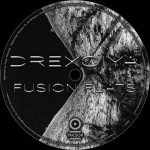
The new artwork by Matthew Angelo Harrison fits perfectly into this logic: not illustration, not homage, but a contemporary echo - suggesting that Drexciya’s ideas are still metabolizing inside current artistic practice. Which is perhaps the quiet revelation of this reissue. Twenty-five years on, "Fusion Flats" doesn’t sound prophetic or dated; it sounds operational. Like a tool that was built correctly the first time.
There’s a temptation, with Drexciya, to drown everything in lore. But "Fusion Flats" reminds us that beneath the myth was always a ruthless clarity of design. This is techno that doesn’t ask you to believe in Atlantis - it simply drops you underwater and checks whether you can still move. Spoiler: you can. And it still feels incredible.
Originally orbiting the gravitational pull of "Neptune’s Lair", "Fusion Flats" has always been a curious object in the Drexciyan universe. Not a manifesto, not a deep mythological chapter, but a working engine: stripped, propulsive, functional in the best sense. It moves forward with that unmistakable Drexciya gait - elastic, slightly hostile, deeply physical - where electro rhythms snap like tendons and synth lines feel engineered rather than composed. This is music that doesn’t express emotion so much as generate conditions: pressure, velocity, submersion.
Hearing it now, remastered and newly contextualized, the track’s economy is striking. No excess mythology, no ornamental sci-fi gloss - just a lean, hydrodynamic groove that seems designed to test how much motion can be extracted from minimal information. Drexciya were always masters of this paradox: sounding futuristic by being brutally efficient. The future, here, is not shiny - it’s optimized.
The remixes expand the perimeter without breaking the seal. Octave One’s version treats "Fusion Flats" like a living organism, stretching it into something more muscular and panoramic, without sanding down its edges. Kaotic Spatial Rhythms lean into abstraction, letting the track fray and destabilize, while 043 Chaos push it closer to electro’s nervous system - jagged, uncompromising, slightly unwell (in a good way). None of them attempt to “improve” the original; they orbit it, respectfully aware that Drexciya is not material to be fixed, only refracted.
The new artwork by Matthew Angelo Harrison fits perfectly into this logic: not illustration, not homage, but a contemporary echo - suggesting that Drexciya’s ideas are still metabolizing inside current artistic practice. Which is perhaps the quiet revelation of this reissue. Twenty-five years on, "Fusion Flats" doesn’t sound prophetic or dated; it sounds operational. Like a tool that was built correctly the first time.
There’s a temptation, with Drexciya, to drown everything in lore. But "Fusion Flats" reminds us that beneath the myth was always a ruthless clarity of design. This is techno that doesn’t ask you to believe in Atlantis - it simply drops you underwater and checks whether you can still move. Spoiler: you can. And it still feels incredible.