
Browse by Genre
Industrial Music / Industrial Metal / Aggro Industrial / Electro Metal
Industrial Noise / Power Noise / Harsh Noise
Synth Pop / Electro Pop / Synth-Electronica
Techno / Trance / Goa / Drum'n'Bass / Jungle / Tribal / Trip-Hop
Ambient / Electronica / Ethereal / Dub / Soundscapes / Abstract
Experimental / Avantgarde / Weird & Wired / Glitch / Noise / Field Recording
Dark / Gothic / Wave / New Wave / Dark Wave / Industrial Gothic
New Music / Downtown / Avantgarde Jazz / New Classical / World
Search Reviews
Music Reviews
Petru KSS: Kolibri Live
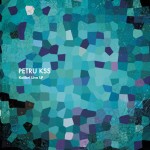
Artist: Petru KSS (@)
Title: Kolibri Live
Format: LP
Label: Kolibri Space Shuttle Records
Distributor: EPM Music
Rated:

Title: Kolibri Live
Format: LP
Label: Kolibri Space Shuttle Records
Distributor: EPM Music
Rated:
There is a peculiar courage in releasing a live electronic album. A guitarist can always blame a broken string, a jazz musician can smile knowingly after a risky improvisation, but electronic performers have long fought the suspicion that they merely stand behind glowing boxes while laptops politely do the difficult work. PETRU KSS answers that suspicion with "Kolibri Live", a record that insists techno can be as physical, vulnerable and unpredictable as any improvised performance.
Conceived and performed live in the wilderness of Corsica, "Kolibri Live" serves as both the debut album for the producer's Kolibri Space Shuttle Records and the clearest articulation yet of his artistic identity. PETRU has steadily cultivated a reputation through immersive live sets and collaborations within the deeper end of the European techno spectrum, and this release benefits from the involvement of respected figures such as Hannes Bieger, whose meticulous mix preserves both the music's cinematic scale and its tactile immediacy. The support of artists including Dubfire and .VRIL further situates PETRU within a lineage of producers who value atmosphere as much as propulsion, but the album rarely feels like an attempt to imitate established names.
The opening "Genesis" immediately establishes the central premise. This is not techno built around explosive drops or festival theatrics. Instead, sounds accumulate patiently, as if geological rather than mechanical processes were shaping the music. Rhythms emerge from silence, harmonic fragments glimmer briefly before dissolving again, and every new layer seems less concerned with increasing volume than with expanding depth.
That gradual architecture becomes one of the album's defining strengths. "Ketarion (Rework)" and "Tuplet Puppet" introduce subtle polyrhythmic tensions that keep the body engaged while the mind wanders elsewhere. PETRU understands that hypnosis rarely comes from repetition alone; it comes from the tiny deviations that prevent repetition from becoming routine.
The centrepiece "Liminal Orbit" lives up to its title. Hovering somewhere between dancefloor functionality and ambient contemplation, it captures the sensation of suspended movement remarkably well. One can imagine it working equally effectively in a dark warehouse at three in the morning or during a solitary night drive where every motorway light briefly resembles an approaching constellation. Humans, after all, have spent centuries staring at the stars while simultaneously inventing increasingly expensive ways to avoid looking at one another.
Throughout the record, the production favours openness over density. Bass frequencies remain powerful without becoming oppressive, while melodic elements drift across the stereo field with almost orchestral restraint. Hannes Bieger's mix deserves particular credit here, allowing individual textures to breathe instead of compressing every frequency into an anonymous wall of impact. The mastering retains that sense of space, giving the album an unusually organic dynamic range for contemporary techno.
Tracks like "Trappist", "Capsule" and "Kasioppea" continue the album's narrative ascent from earthly landscapes toward imagined cosmic environments, yet the space imagery never feels like superficial branding. Rather than relying on science-fiction clichés, PETRU constructs environments through careful manipulation of resonance, delay and evolving harmonic colour. Space here is psychological before it is astronomical.
Perhaps the most refreshing quality of "Kolibri Live" is its commitment to real-time performance. Small imperfections remain intact, tiny fluctuations in timing and energy that quietly remind the listener that every transition was navigated by human instinct rather than endlessly revised automation. Those moments give the album its pulse. In an era where digital precision often becomes indistinguishable from emotional neutrality, such imperfections feel almost luxurious.
The closing pair, "Pegasus" and "Landing", complete the conceptual arc without resorting to obvious climaxes. The descent feels earned, as though the journey has subtly altered the listener's perception rather than simply delivered a sequence of increasingly dramatic peaks.
While many contemporary techno albums function as collections of DJ tools, "Kolibri Live" succeeds as a coherent long-form listening experience. Its eleven interconnected pieces prioritise continuity over immediate gratification, inviting immersion rather than distraction. PETRU demonstrates that dance music can remain deeply physical without sacrificing narrative ambition, and that electronic performance still possesses something algorithms cannot quite simulate: the quiet electricity of someone making irreversible decisions in real time.
The album's closing slogan, "Take Your Soul Beyond Gravity", could easily have sounded like promotional hyperbole. Instead, after an hour spent travelling through PETRU's carefully constructed sonic orbit, it feels less like marketing than a modest observation. Gravity, it turns out, applies rather poorly to music that knows exactly when to lift its feet off the ground.
Conceived and performed live in the wilderness of Corsica, "Kolibri Live" serves as both the debut album for the producer's Kolibri Space Shuttle Records and the clearest articulation yet of his artistic identity. PETRU has steadily cultivated a reputation through immersive live sets and collaborations within the deeper end of the European techno spectrum, and this release benefits from the involvement of respected figures such as Hannes Bieger, whose meticulous mix preserves both the music's cinematic scale and its tactile immediacy. The support of artists including Dubfire and .VRIL further situates PETRU within a lineage of producers who value atmosphere as much as propulsion, but the album rarely feels like an attempt to imitate established names.
The opening "Genesis" immediately establishes the central premise. This is not techno built around explosive drops or festival theatrics. Instead, sounds accumulate patiently, as if geological rather than mechanical processes were shaping the music. Rhythms emerge from silence, harmonic fragments glimmer briefly before dissolving again, and every new layer seems less concerned with increasing volume than with expanding depth.
That gradual architecture becomes one of the album's defining strengths. "Ketarion (Rework)" and "Tuplet Puppet" introduce subtle polyrhythmic tensions that keep the body engaged while the mind wanders elsewhere. PETRU understands that hypnosis rarely comes from repetition alone; it comes from the tiny deviations that prevent repetition from becoming routine.
The centrepiece "Liminal Orbit" lives up to its title. Hovering somewhere between dancefloor functionality and ambient contemplation, it captures the sensation of suspended movement remarkably well. One can imagine it working equally effectively in a dark warehouse at three in the morning or during a solitary night drive where every motorway light briefly resembles an approaching constellation. Humans, after all, have spent centuries staring at the stars while simultaneously inventing increasingly expensive ways to avoid looking at one another.
Throughout the record, the production favours openness over density. Bass frequencies remain powerful without becoming oppressive, while melodic elements drift across the stereo field with almost orchestral restraint. Hannes Bieger's mix deserves particular credit here, allowing individual textures to breathe instead of compressing every frequency into an anonymous wall of impact. The mastering retains that sense of space, giving the album an unusually organic dynamic range for contemporary techno.
Tracks like "Trappist", "Capsule" and "Kasioppea" continue the album's narrative ascent from earthly landscapes toward imagined cosmic environments, yet the space imagery never feels like superficial branding. Rather than relying on science-fiction clichés, PETRU constructs environments through careful manipulation of resonance, delay and evolving harmonic colour. Space here is psychological before it is astronomical.
Perhaps the most refreshing quality of "Kolibri Live" is its commitment to real-time performance. Small imperfections remain intact, tiny fluctuations in timing and energy that quietly remind the listener that every transition was navigated by human instinct rather than endlessly revised automation. Those moments give the album its pulse. In an era where digital precision often becomes indistinguishable from emotional neutrality, such imperfections feel almost luxurious.
The closing pair, "Pegasus" and "Landing", complete the conceptual arc without resorting to obvious climaxes. The descent feels earned, as though the journey has subtly altered the listener's perception rather than simply delivered a sequence of increasingly dramatic peaks.
While many contemporary techno albums function as collections of DJ tools, "Kolibri Live" succeeds as a coherent long-form listening experience. Its eleven interconnected pieces prioritise continuity over immediate gratification, inviting immersion rather than distraction. PETRU demonstrates that dance music can remain deeply physical without sacrificing narrative ambition, and that electronic performance still possesses something algorithms cannot quite simulate: the quiet electricity of someone making irreversible decisions in real time.
The album's closing slogan, "Take Your Soul Beyond Gravity", could easily have sounded like promotional hyperbole. Instead, after an hour spent travelling through PETRU's carefully constructed sonic orbit, it feels less like marketing than a modest observation. Gravity, it turns out, applies rather poorly to music that knows exactly when to lift its feet off the ground.
Kontagion: I
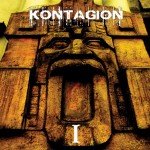
There comes a point where genre labels stop being useful and begin behaving like overworked customs officers, desperately trying to stamp passports that clearly belong to several countries at once. Kontagion's fifth full-length, simply titled "I", happily walks past the checkpoint carrying industrial metal, sludge, post-hardcore, noise, doom and post-rock in the same suitcase. It is heavy enough to flatten concrete, yet flexible enough to avoid becoming trapped inside the conventions that often weigh down contemporary extreme music.
The Polish outfit has never seemed particularly interested in satisfying the expectations of any single scene. Across previous releases, they have steadily refined a language where mechanical aggression coexists with emotional vulnerability, and "I" feels like the logical culmination of that journey. Rather than expanding outward through sheer excess, the band digs deeper into the tension between crushing density and carefully controlled atmosphere.
The opening "11" wastes little time announcing the album's intentions. It functions less as an introduction than as the slow turning of an enormous machine that has been dormant for years. Once "Balance" and "Closer" arrive, Kontagion reveals one of its greatest strengths: the ability to write songs that retain memorable structures without sacrificing unpredictability. Riffs emerge like collapsing buildings, while electronics and noise seep into the cracks rather than merely decorating the walls.
Industrial music has always flirted with the fantasy of humanity becoming machinery, while sludge has generally preferred to remind us that machinery eventually rusts anyway. Kontagion occupies the uncomfortable space between those philosophies. The guitars grind with mechanical precision, but beneath them lies something distinctly human: frustration, exhaustion, persistence. These are not songs celebrating apocalypse. They sound more like field reports from people still trying to function after the apocalypse has become ordinary office policy.
Vocally, the album marks another confident evolution. Rather than relying exclusively on abrasive delivery, melodic passages appear throughout the record with surprising effectiveness. They never soften the impact; instead, they sharpen it by introducing moments of fragile clarity before the next sonic collapse. The contrast gives tracks like "Needs" and "Across" an emotional complexity that many heavier records sacrifice in favour of relentless punishment.
"Panopticon" naturally invites associations with surveillance and invisible systems of control, and the music mirrors that unease through tightly wound arrangements that seem perpetually observed, unable to relax. Later, "Calibrate" and the monumental "Worse" stretch the band's compositional ambitions further, allowing repetition to accumulate genuine psychological weight rather than simply extending running time. The closing "Circles" offers no triumphant resolution. Instead, it reinforces the album's recurring suggestion that cycles, personal or societal, rarely end cleanly. They mutate.
One particularly admirable quality is the production's refusal to sterilise the chaos. Modern heavy music often mistakes compression for power, leaving everything equally loud and therefore strangely lifeless. Here, dynamics remain intact. Noise breathes. Silence briefly interrupts. Feedback lingers just long enough to feel like an additional instrument rather than an accident left in the mix.
Listeners familiar with industrial metal's canonical names will certainly recognise distant echoes, but Kontagion rarely sounds derivative. The band's willingness to absorb influences from post-rock's patient architecture, doom's oppressive gravity and noise music's textural curiosity allows "I" to exist as something more fluid than a simple hybrid. It is less interested in genre fusion than in emotional coherence.
Perhaps the album's greatest achievement is that, despite its considerable heaviness, it never becomes emotionally numb. There is anger here, certainly, but also doubt, melancholy and an ongoing search for equilibrium that justifies titles like "Balance" and "Calibrate". Even its most devastating moments seem driven by the desire to communicate rather than simply overwhelm.
For a record titled "I", this turns out to be surprisingly collective music. Every crushing riff, fractured texture and unexpected melodic turn suggests identity not as something fixed but as something continuously assembled under pressure. In an age where algorithms are forever encouraging artists to become more recognisable, Kontagion takes the opposite route. They become more difficult to classify with every release, and that feels less like defiance than quiet confidence. Sometimes the strongest identity is the one that refuses to fit inside somebody else's filing cabinet.
The Polish outfit has never seemed particularly interested in satisfying the expectations of any single scene. Across previous releases, they have steadily refined a language where mechanical aggression coexists with emotional vulnerability, and "I" feels like the logical culmination of that journey. Rather than expanding outward through sheer excess, the band digs deeper into the tension between crushing density and carefully controlled atmosphere.
The opening "11" wastes little time announcing the album's intentions. It functions less as an introduction than as the slow turning of an enormous machine that has been dormant for years. Once "Balance" and "Closer" arrive, Kontagion reveals one of its greatest strengths: the ability to write songs that retain memorable structures without sacrificing unpredictability. Riffs emerge like collapsing buildings, while electronics and noise seep into the cracks rather than merely decorating the walls.
Industrial music has always flirted with the fantasy of humanity becoming machinery, while sludge has generally preferred to remind us that machinery eventually rusts anyway. Kontagion occupies the uncomfortable space between those philosophies. The guitars grind with mechanical precision, but beneath them lies something distinctly human: frustration, exhaustion, persistence. These are not songs celebrating apocalypse. They sound more like field reports from people still trying to function after the apocalypse has become ordinary office policy.
Vocally, the album marks another confident evolution. Rather than relying exclusively on abrasive delivery, melodic passages appear throughout the record with surprising effectiveness. They never soften the impact; instead, they sharpen it by introducing moments of fragile clarity before the next sonic collapse. The contrast gives tracks like "Needs" and "Across" an emotional complexity that many heavier records sacrifice in favour of relentless punishment.
"Panopticon" naturally invites associations with surveillance and invisible systems of control, and the music mirrors that unease through tightly wound arrangements that seem perpetually observed, unable to relax. Later, "Calibrate" and the monumental "Worse" stretch the band's compositional ambitions further, allowing repetition to accumulate genuine psychological weight rather than simply extending running time. The closing "Circles" offers no triumphant resolution. Instead, it reinforces the album's recurring suggestion that cycles, personal or societal, rarely end cleanly. They mutate.
One particularly admirable quality is the production's refusal to sterilise the chaos. Modern heavy music often mistakes compression for power, leaving everything equally loud and therefore strangely lifeless. Here, dynamics remain intact. Noise breathes. Silence briefly interrupts. Feedback lingers just long enough to feel like an additional instrument rather than an accident left in the mix.
Listeners familiar with industrial metal's canonical names will certainly recognise distant echoes, but Kontagion rarely sounds derivative. The band's willingness to absorb influences from post-rock's patient architecture, doom's oppressive gravity and noise music's textural curiosity allows "I" to exist as something more fluid than a simple hybrid. It is less interested in genre fusion than in emotional coherence.
Perhaps the album's greatest achievement is that, despite its considerable heaviness, it never becomes emotionally numb. There is anger here, certainly, but also doubt, melancholy and an ongoing search for equilibrium that justifies titles like "Balance" and "Calibrate". Even its most devastating moments seem driven by the desire to communicate rather than simply overwhelm.
For a record titled "I", this turns out to be surprisingly collective music. Every crushing riff, fractured texture and unexpected melodic turn suggests identity not as something fixed but as something continuously assembled under pressure. In an age where algorithms are forever encouraging artists to become more recognisable, Kontagion takes the opposite route. They become more difficult to classify with every release, and that feels less like defiance than quiet confidence. Sometimes the strongest identity is the one that refuses to fit inside somebody else's filing cabinet.
Zlatko Kaučič & Francesco Cigana: Kako Klicati Zmaja

Artist: Zlatko Kaučič & Francesco Cigana
Title: Kako Klicati Zmaja
Format: CD + Download
Label: Dissipatio (@)
Rated:

Title: Kako Klicati Zmaja
Format: CD + Download
Label: Dissipatio (@)
Rated:
Zlatko Kaui has spent decades proving that percussion is far more than a keeper of rhythm. The Slovenian drummer and educator has become one of the defining figures of European free improvisation, collaborating with artists across jazz, contemporary composition and experimental music while mentoring generations of younger musicians through workshops and creative education. His playing has always balanced explosive spontaneity with an almost childlike curiosity about sound itself. On "Kako Klicati Zmaja" ("How to Call the Dragon"), recorded live in Padua alongside Italian percussionist Francesco Cigana, that curiosity becomes the album's true protagonist.
The title draws from a nineteenth-century account of the "Pozoj", a dragon-like creature from Slavic folklore hidden beneath marshes, churches and castles, awakened only through repeated rituals until it finally emerges from the earth. It is an inspired metaphor for improvised music. Nothing is summoned by force. The performers circle an invisible presence, listening, waiting, nudging it toward the surface until the music decides it is ready to reveal itself.
The instrumentation appears deceptively limited: drums, percussion, found objects and assorted sonic debris. In practice, the palette is astonishingly broad. Kaui and Cigana treat every surface as a possible storyteller. Skins rumble, metals shimmer, wooden objects crackle, and unidentified noises wander through the stereo image like curious animals investigating unfamiliar territory. At times it becomes difficult to distinguish intentional gesture from happy accident, which is precisely where the album finds much of its charm.
Each track pairs a Slovenian and an Italian word, suggesting dialogues rather than translations: "sentiero+uho", "fiamma+oko", "scrivere+govoriti". Paths meet ears, flames encounter eyes, writing converses with speech. These titles quietly reflect the music itself, where two musicians communicate through parallel languages without ever seeking perfect symmetry. Rather than mirroring one another, they construct an ecosystem in which every gesture alters the landscape for the next.
There is remarkable discipline beneath the apparent freedom. European free improvisation is sometimes unfairly caricatured as a competition to discover who can frighten a cymbal most effectively. Here, restraint proves just as important as eruption. Short silences become structural beams, delicate textures interrupt dense percussive clusters, and rhythmic fragments emerge only to dissolve before they become predictable. Listening feels less like following compositions than observing weather systems that continuously reorganize themselves.
Cigana proves an ideal partner. His sensitivity prevents the performance from becoming a master-and-student narrative despite Kaui's legendary stature. Instead, their interaction resembles two seasoned explorers comparing maps that neither entirely trusts. One proposes a direction, the other quietly redraws the terrain.
The live recording contributes enormously to the experience. Audience presence remains discreet, yet the room itself becomes another resonating body. Every metallic vibration and wooden resonance acquires physical depth, reminding us that improvised music exists first as an event before becoming an object. You are not simply hearing percussion; you are hearing air being disturbed inside a shared space.
The dragon of the title never arrives in cinematic fashion. There is no climactic roar waiting at the album's conclusion. Instead, it appears in fleeting glimpses, hidden within unexpected resonances and sudden moments of collective intuition. Like the old legend, the ritual matters more than the capture.
"Kako Klicati Zmaja" ultimately celebrates listening as an act of creation. Kaui and Cigana demonstrate that improvisation is not about filling silence but negotiating with it, patiently uncovering forms already sleeping beneath the surface. By the time the final vibrations fade, the dragon has indeed emerged, though not as a beast to be conquered. It appears as something far rarer: a conversation so attentive that even ordinary objects begin speaking in forgotten languages.
The title draws from a nineteenth-century account of the "Pozoj", a dragon-like creature from Slavic folklore hidden beneath marshes, churches and castles, awakened only through repeated rituals until it finally emerges from the earth. It is an inspired metaphor for improvised music. Nothing is summoned by force. The performers circle an invisible presence, listening, waiting, nudging it toward the surface until the music decides it is ready to reveal itself.
The instrumentation appears deceptively limited: drums, percussion, found objects and assorted sonic debris. In practice, the palette is astonishingly broad. Kaui and Cigana treat every surface as a possible storyteller. Skins rumble, metals shimmer, wooden objects crackle, and unidentified noises wander through the stereo image like curious animals investigating unfamiliar territory. At times it becomes difficult to distinguish intentional gesture from happy accident, which is precisely where the album finds much of its charm.
Each track pairs a Slovenian and an Italian word, suggesting dialogues rather than translations: "sentiero+uho", "fiamma+oko", "scrivere+govoriti". Paths meet ears, flames encounter eyes, writing converses with speech. These titles quietly reflect the music itself, where two musicians communicate through parallel languages without ever seeking perfect symmetry. Rather than mirroring one another, they construct an ecosystem in which every gesture alters the landscape for the next.
There is remarkable discipline beneath the apparent freedom. European free improvisation is sometimes unfairly caricatured as a competition to discover who can frighten a cymbal most effectively. Here, restraint proves just as important as eruption. Short silences become structural beams, delicate textures interrupt dense percussive clusters, and rhythmic fragments emerge only to dissolve before they become predictable. Listening feels less like following compositions than observing weather systems that continuously reorganize themselves.
Cigana proves an ideal partner. His sensitivity prevents the performance from becoming a master-and-student narrative despite Kaui's legendary stature. Instead, their interaction resembles two seasoned explorers comparing maps that neither entirely trusts. One proposes a direction, the other quietly redraws the terrain.
The live recording contributes enormously to the experience. Audience presence remains discreet, yet the room itself becomes another resonating body. Every metallic vibration and wooden resonance acquires physical depth, reminding us that improvised music exists first as an event before becoming an object. You are not simply hearing percussion; you are hearing air being disturbed inside a shared space.
The dragon of the title never arrives in cinematic fashion. There is no climactic roar waiting at the album's conclusion. Instead, it appears in fleeting glimpses, hidden within unexpected resonances and sudden moments of collective intuition. Like the old legend, the ritual matters more than the capture.
"Kako Klicati Zmaja" ultimately celebrates listening as an act of creation. Kaui and Cigana demonstrate that improvisation is not about filling silence but negotiating with it, patiently uncovering forms already sleeping beneath the surface. By the time the final vibrations fade, the dragon has indeed emerged, though not as a beast to be conquered. It appears as something far rarer: a conversation so attentive that even ordinary objects begin speaking in forgotten languages.
Frank Meyer & Roman Leykam: Aural Documents

Artist: Frank Meyer & Roman Leykam
Title: Aural Documents
Format: CD + Download
Label: Frank Mark Arts (@)
Rated:
Title: Aural Documents
Format: CD + Download
Label: Frank Mark Arts (@)
Rated:
Frank Meyer and Roman Leykam have been working together for decades, yet what makes their partnership compelling is not familiarity but the opposite: an enduring willingness to surprise one another. Their collaborations have consistently occupied an elusive territory where ambient music, electroacoustic experimentation, free improvisation and abstract sound design intersect without feeling obliged to declare citizenship in any of those nations. "Aural Documents" continues that journey, presenting ten pieces recorded between 2022 and 2024 that treat sound less as a vehicle for melody than as evidence of a conversation unfolding in real time. Their long-running collaboration has gradually developed a distinctive language built on planned spontaneity, timbral exploration and an openness to unexpected detours.
The title is particularly apt. These are indeed documents, but not in the bureaucratic sense. They resemble field notes from expeditions into unstable sonic terrain, observations captured before anyone had the chance to translate them into something more conventional. Each track feels like an attempt to preserve a fleeting configuration of ideas rather than polish it into permanence.
From the opening "Different Angles", the duo establishes an aesthetic of perpetual negotiation. Guitar treatments, electronics and subtly shifting textures circle one another without obvious hierarchy. One instrument suggests a direction, another quietly questions it, until the music settles into a fragile equilibrium that remains wonderfully susceptible to collapse. It is improvisation understood not as virtuosic display but as collective listening.
This quality permeates "Memory Box" and "A Finer Point of Things", where small gestures accumulate into surprisingly rich architectures. Instead of dramatic developments, Meyer and Leykam favour gradual transformations. Sounds are introduced almost incidentally, altered almost imperceptibly, then quietly withdrawn before they become predictable. The effect resembles watching clouds reshape themselves: the movement is continuous, yet you only realise how much has changed after several minutes.
"Spirit of Contradiction" may be the album's unofficial manifesto. Rather than resolving opposing musical impulses, it lets them coexist. Ambient serenity rubs against nervous abstraction, harmonic warmth collides with abrasive textures, rhythmic suggestion appears only to evaporate moments later. Thankfully, contradiction remains far healthier in music than on social media, where it usually ends with someone typing entirely in capital letters.
Throughout the album, silence functions as an equal partner. "Renewal" and the beautifully titled "As Ice Dissolves Into Water" demonstrate remarkable patience, allowing resonance and decay to become compositional materials in their own right. Nothing feels hurried. Every pause carries structural importance, inviting listeners to hear not only what is played but also the acoustic space surrounding each event.
The closing sequence deepens this impression. "Exuberance" offers an almost mischievous burst of kinetic energy before "Prying Eyes", "A Wealth of Implications" and "Wavering Shadow" return to more introspective terrain. The latter, especially, feels like a landscape viewed at dusk, where familiar shapes gradually surrender their certainty and become something altogether more ambiguous. There are echoes of kosmische music, electroacoustic composition, ambient improvisation and experimental jazz, but these references remain peripheral rather than defining. Meyer and Leykam have reached a point where influences are fully metabolised, leaving behind a vocabulary that feels distinctly their own. Longtime followers of Frank Mark Arts will recognise familiar concerns, yet "Aural Documents" possesses a particular clarity and confidence that suggests two artists increasingly comfortable with leaving questions unanswered.
Ultimately, "Aural Documents" asks for a different mode of listening. It is less interested in memorable hooks than in attentive perception, less concerned with destinations than with the subtle shifts occurring along the way. These recordings preserve moments that could easily have vanished the instant they were created, reminding us that improvisation is not merely about invention. It is also about trust: trust in another musician, trust in uncertainty, and trust that even the most elusive sounds can leave remarkably durable traces in memory.
The title is particularly apt. These are indeed documents, but not in the bureaucratic sense. They resemble field notes from expeditions into unstable sonic terrain, observations captured before anyone had the chance to translate them into something more conventional. Each track feels like an attempt to preserve a fleeting configuration of ideas rather than polish it into permanence.
From the opening "Different Angles", the duo establishes an aesthetic of perpetual negotiation. Guitar treatments, electronics and subtly shifting textures circle one another without obvious hierarchy. One instrument suggests a direction, another quietly questions it, until the music settles into a fragile equilibrium that remains wonderfully susceptible to collapse. It is improvisation understood not as virtuosic display but as collective listening.
This quality permeates "Memory Box" and "A Finer Point of Things", where small gestures accumulate into surprisingly rich architectures. Instead of dramatic developments, Meyer and Leykam favour gradual transformations. Sounds are introduced almost incidentally, altered almost imperceptibly, then quietly withdrawn before they become predictable. The effect resembles watching clouds reshape themselves: the movement is continuous, yet you only realise how much has changed after several minutes.
"Spirit of Contradiction" may be the album's unofficial manifesto. Rather than resolving opposing musical impulses, it lets them coexist. Ambient serenity rubs against nervous abstraction, harmonic warmth collides with abrasive textures, rhythmic suggestion appears only to evaporate moments later. Thankfully, contradiction remains far healthier in music than on social media, where it usually ends with someone typing entirely in capital letters.
Throughout the album, silence functions as an equal partner. "Renewal" and the beautifully titled "As Ice Dissolves Into Water" demonstrate remarkable patience, allowing resonance and decay to become compositional materials in their own right. Nothing feels hurried. Every pause carries structural importance, inviting listeners to hear not only what is played but also the acoustic space surrounding each event.
The closing sequence deepens this impression. "Exuberance" offers an almost mischievous burst of kinetic energy before "Prying Eyes", "A Wealth of Implications" and "Wavering Shadow" return to more introspective terrain. The latter, especially, feels like a landscape viewed at dusk, where familiar shapes gradually surrender their certainty and become something altogether more ambiguous. There are echoes of kosmische music, electroacoustic composition, ambient improvisation and experimental jazz, but these references remain peripheral rather than defining. Meyer and Leykam have reached a point where influences are fully metabolised, leaving behind a vocabulary that feels distinctly their own. Longtime followers of Frank Mark Arts will recognise familiar concerns, yet "Aural Documents" possesses a particular clarity and confidence that suggests two artists increasingly comfortable with leaving questions unanswered.
Ultimately, "Aural Documents" asks for a different mode of listening. It is less interested in memorable hooks than in attentive perception, less concerned with destinations than with the subtle shifts occurring along the way. These recordings preserve moments that could easily have vanished the instant they were created, reminding us that improvisation is not merely about invention. It is also about trust: trust in another musician, trust in uncertainty, and trust that even the most elusive sounds can leave remarkably durable traces in memory.
Rapoon: :COLD WAR : drum'n'bass:
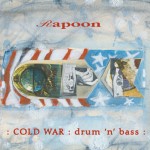
Some anniversaries are celebrated with nostalgia. Others return like unfinished business. Twenty-five years after "Cold War" first emerged from Robin Storey's inexhaustible imagination, its expanded resurrection feels less like an archival curiosity than an uncomfortable reminder that history possesses an alarming talent for recycling itself. Humanity, apparently convinced that every generation deserves its own geopolitical anxiety, continues to insist on sequels no one requested.
Since the late 1980s, following his departure from the pioneering industrial collective Zoviet France, Robin Storey has built Rapoon into one of experimental music's richest and most idiosyncratic universes. Rather than embracing the rigid aesthetics of industrial or ambient music, he developed an approach where looping structures, ethnographic echoes, ritual percussion and electronic manipulation coexist without hierarchy. His albums often resemble imagined geographies, places assembled from memory, myth and radio interference rather than any recognizable map.
Originally released in 2001, "Cold War" was something of an anomaly even within Rapoon's sprawling catalogue. At a time when drum'n'bass had already matured beyond its explosive beginnings, Storey appropriated its vocabulary without becoming indebted to it. The fractured breakbeats, muscular basslines and restless momentum never aimed for club functionality. Instead, they became another layer within his long-standing fascination with repetition, trance and cultural cross-pollination. Jungle rhythms collide with Middle Eastern melodic fragments, looping vocal traces and drifting atmospheres until genre itself becomes almost irrelevant.
Listening today, the original two discs remain remarkably resistant to dating. Tracks such as "Lunarists In The Jungle", "White Silence" or "Rubicon" unfold like unstable ecosystems where rhythm functions less as propulsion than as gravity. Beats constantly threaten to dominate before dissolving into clouds of processed voices, tribal percussion or ghostly drones. Every composition appears to negotiate between movement and suspension, refusing either complete stillness or straightforward momentum.
Storey's production remains wonderfully imperfect by contemporary standards. Rather than the immaculate precision that now defines so much electronic music, these pieces breathe through accumulated texture. Loops rub against one another, frequencies blur at the edges, and details emerge almost accidentally after repeated listens. The music feels assembled by sedimentation rather than engineering, each layer preserving traces of previous ones beneath its surface.
The newly added third disc avoids the common trap of anniversary editions becoming museum exhibitions. Rather than polishing old material into modern gloss, these reinterpretations extend the original ideas into today's fractured political landscape. "Another Thing Again" immediately establishes a broader, darker scale, while "Descended Across Europe" and "The Bomb Doors Are Open" resonate with an unease that contemporary listeners hardly need explained. Their power lies precisely in avoiding explicit commentary. Storey has always understood that suggestion ages far better than slogans.
One of Rapoon's greatest strengths has always been its ability to absorb influences without displaying them like collector's trophies. Dub, industrial, world music, ambient, techno, musique concrète and ritual percussion all appear throughout ":COLD WAR : drum'n'bass:", yet none remain in their original form. Everything passes through Storey's peculiar compositional metabolism until it belongs entirely to the Rapoon vocabulary.
There is also an understated sense of irony running beneath the record. Titles like "You've Been A Great Contestant...You've Won Nothing" or "The Soviet Pants" introduce flashes of absurd humour into an otherwise serious landscape. They serve as subtle reminders that political systems, ideologies and historical narratives often collapse under the weight of their own theatricality. Even catastrophe occasionally wears ill-fitting trousers.
What makes this expanded edition particularly valuable is that it highlights how prophetic Rapoon often appeared without ever attempting prophecy. Storey was never interested in predicting specific events. Instead, he explored recurring emotional climates: tension, displacement, uncertainty, resilience. Those conditions unfortunately remain as contemporary as ever.
Far from functioning as a nostalgic reissue, ":COLD WAR : drum'n'bass:" reveals an artist whose experiments have quietly outlived many of the genres they once intersected. Twenty-five years later, the rhythms still pulse with nervous energy, the atmospheres remain richly enigmatic, and the questions linger unresolved. The Cold War may have officially ended decades ago. Rapoon gently reminds us that the psychological climate surrounding it never really packed its bags.
Since the late 1980s, following his departure from the pioneering industrial collective Zoviet France, Robin Storey has built Rapoon into one of experimental music's richest and most idiosyncratic universes. Rather than embracing the rigid aesthetics of industrial or ambient music, he developed an approach where looping structures, ethnographic echoes, ritual percussion and electronic manipulation coexist without hierarchy. His albums often resemble imagined geographies, places assembled from memory, myth and radio interference rather than any recognizable map.
Originally released in 2001, "Cold War" was something of an anomaly even within Rapoon's sprawling catalogue. At a time when drum'n'bass had already matured beyond its explosive beginnings, Storey appropriated its vocabulary without becoming indebted to it. The fractured breakbeats, muscular basslines and restless momentum never aimed for club functionality. Instead, they became another layer within his long-standing fascination with repetition, trance and cultural cross-pollination. Jungle rhythms collide with Middle Eastern melodic fragments, looping vocal traces and drifting atmospheres until genre itself becomes almost irrelevant.
Listening today, the original two discs remain remarkably resistant to dating. Tracks such as "Lunarists In The Jungle", "White Silence" or "Rubicon" unfold like unstable ecosystems where rhythm functions less as propulsion than as gravity. Beats constantly threaten to dominate before dissolving into clouds of processed voices, tribal percussion or ghostly drones. Every composition appears to negotiate between movement and suspension, refusing either complete stillness or straightforward momentum.
Storey's production remains wonderfully imperfect by contemporary standards. Rather than the immaculate precision that now defines so much electronic music, these pieces breathe through accumulated texture. Loops rub against one another, frequencies blur at the edges, and details emerge almost accidentally after repeated listens. The music feels assembled by sedimentation rather than engineering, each layer preserving traces of previous ones beneath its surface.
The newly added third disc avoids the common trap of anniversary editions becoming museum exhibitions. Rather than polishing old material into modern gloss, these reinterpretations extend the original ideas into today's fractured political landscape. "Another Thing Again" immediately establishes a broader, darker scale, while "Descended Across Europe" and "The Bomb Doors Are Open" resonate with an unease that contemporary listeners hardly need explained. Their power lies precisely in avoiding explicit commentary. Storey has always understood that suggestion ages far better than slogans.
One of Rapoon's greatest strengths has always been its ability to absorb influences without displaying them like collector's trophies. Dub, industrial, world music, ambient, techno, musique concrète and ritual percussion all appear throughout ":COLD WAR : drum'n'bass:", yet none remain in their original form. Everything passes through Storey's peculiar compositional metabolism until it belongs entirely to the Rapoon vocabulary.
There is also an understated sense of irony running beneath the record. Titles like "You've Been A Great Contestant...You've Won Nothing" or "The Soviet Pants" introduce flashes of absurd humour into an otherwise serious landscape. They serve as subtle reminders that political systems, ideologies and historical narratives often collapse under the weight of their own theatricality. Even catastrophe occasionally wears ill-fitting trousers.
What makes this expanded edition particularly valuable is that it highlights how prophetic Rapoon often appeared without ever attempting prophecy. Storey was never interested in predicting specific events. Instead, he explored recurring emotional climates: tension, displacement, uncertainty, resilience. Those conditions unfortunately remain as contemporary as ever.
Far from functioning as a nostalgic reissue, ":COLD WAR : drum'n'bass:" reveals an artist whose experiments have quietly outlived many of the genres they once intersected. Twenty-five years later, the rhythms still pulse with nervous energy, the atmospheres remain richly enigmatic, and the questions linger unresolved. The Cold War may have officially ended decades ago. Rapoon gently reminds us that the psychological climate surrounding it never really packed its bags.