
Browse by Genre
Industrial Music / Industrial Metal / Aggro Industrial / Electro Metal
Industrial Noise / Power Noise / Harsh Noise
Synth Pop / Electro Pop / Synth-Electronica
Techno / Trance / Goa / Drum'n'Bass / Jungle / Tribal / Trip-Hop
Ambient / Electronica / Ethereal / Dub / Soundscapes / Abstract
Experimental / Avantgarde / Weird & Wired / Glitch / Noise / Field Recording
Dark / Gothic / Wave / New Wave / Dark Wave / Industrial Gothic
New Music / Downtown / Avantgarde Jazz / New Classical / World
Search Reviews
Music Reviews
Dobrawa Czocher: State Of Matter
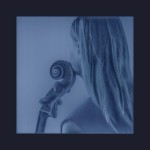
There is a peculiar kind of bravery in allowing an instrument to stop behaving like itself. On "State Of Matter", Dobrawa Czocher never abandons the cello, yet she constantly persuades it to reveal unfamiliar identities. Sometimes it sings with centuries of classical memory; sometimes it becomes percussion, breath, pulse, or a shadow dissolving into electronics. The result is less a collection of compositions than an ecosystem where sound is forever changing phase, perfectly reflecting the album's title.
The Polish composer and cellist has spent years building a reputation that comfortably transcends the concert hall. After studies in Warsaw and Detmold, her tenure as principal cellist with the Mieczysaw Karowicz Symphony Orchestra and her celebrated collaborations with Hania Rani established her as one of the most distinctive figures in Europe's contemporary classical landscape. Yet "State Of Matter" feels like the record of someone deliberately stepping away from familiar achievements. Following her move from Warsaw to Poland's Baltic coast, the landscape itself appears to have rewritten her vocabulary.
Nature, thankfully, is not treated here as wallpaper for mindfulness playlists. The sea is never merely picturesque. It behaves as an unpredictable force, simultaneously eroding and rebuilding emotional terrain. Forests suggest shelter but also disorientation. These pieces breathe like weather systems rather than narratives with neat beginnings and endings.
The opening "Monologue" establishes an intimate dialogue, almost as if Czocher is tuning not simply an instrument but an internal compass. From there, "Blue" introduces one of the album's defining characteristics: rhythm emerging from unexpected places. Percussive cello techniques intertwine with synthesizers and carefully sculpted electronics without ever feeling like decorative additions. Even more striking is Czocher's own layered voice, appearing for the first time in her recorded work. Rather than stepping into the spotlight, it becomes another texture within the ensemble, a ghostly extension of the instrument itself.
"Phoenix" provides the emotional fulcrum. Its gradual ascent is constructed with remarkable patience, relying less on dramatic gestures than on accumulating microscopic shifts in intensity. When the piece finally reaches its powerful climax, it feels earned rather than engineered. In an era where many compositions mistake volume for emotional depth, Czocher demonstrates that restraint often carries far greater weight. Humans, predictably, tend to believe everything must become louder to become meaningful. Music continues to disagree.
Elsewhere, "Sehnsucht" embraces longing without collapsing into sentimentality, allowing repetition to function not as minimalism for its own sake but as a form of contemplation. "Sirens" avoids the obvious mythological traps its title might suggest, instead exploring attraction and danger through subtle harmonic tensions. "Letter From The Soul" briefly narrows the emotional focus before "Fluctuations" restores movement, illustrating how instability itself can become a source of balance. By the time "Someone On Your Side" and "Goodbye" arrive, the record has quietly transformed from an exploration of external landscapes into an examination of resilience, ending not with closure but with acceptance.
What distinguishes "State Of Matter" from many contemporary neo-classical releases is its refusal to become cinematic shorthand for emotion. One can hear echoes of Bach's architectural clarity, Kodály's physical relationship with the cello, Reich's hypnotic pulse and Richter's expansive atmospheres, yet these influences never dominate the conversation. Czocher absorbs them into a language that remains unmistakably her own, one where classical discipline coexists naturally with electronic experimentation.
The production deserves equal praise. Recorded at the historic Studio S4 of Polish Radio, every layer occupies space with remarkable precision. Silence becomes an active participant rather than the absence of sound, allowing individual gestures to resonate long after they have disappeared.
If "Dreamscapes" introduced Dobrawa Czocher as a compelling composer, "State Of Matter" confirms that she possesses something considerably rarer: the confidence to keep evolving without announcing every transformation with fanfare. Like the Baltic tides that inspired much of its creation, the album changes constantly while appearing almost motionless. Only after the final notes fade does one realise that the landscape has shifted beneath one's feet. Quietly, patiently, almost imperceptibly. And perhaps that is the most profound state of matter music can achieve.
The Polish composer and cellist has spent years building a reputation that comfortably transcends the concert hall. After studies in Warsaw and Detmold, her tenure as principal cellist with the Mieczysaw Karowicz Symphony Orchestra and her celebrated collaborations with Hania Rani established her as one of the most distinctive figures in Europe's contemporary classical landscape. Yet "State Of Matter" feels like the record of someone deliberately stepping away from familiar achievements. Following her move from Warsaw to Poland's Baltic coast, the landscape itself appears to have rewritten her vocabulary.
Nature, thankfully, is not treated here as wallpaper for mindfulness playlists. The sea is never merely picturesque. It behaves as an unpredictable force, simultaneously eroding and rebuilding emotional terrain. Forests suggest shelter but also disorientation. These pieces breathe like weather systems rather than narratives with neat beginnings and endings.
The opening "Monologue" establishes an intimate dialogue, almost as if Czocher is tuning not simply an instrument but an internal compass. From there, "Blue" introduces one of the album's defining characteristics: rhythm emerging from unexpected places. Percussive cello techniques intertwine with synthesizers and carefully sculpted electronics without ever feeling like decorative additions. Even more striking is Czocher's own layered voice, appearing for the first time in her recorded work. Rather than stepping into the spotlight, it becomes another texture within the ensemble, a ghostly extension of the instrument itself.
"Phoenix" provides the emotional fulcrum. Its gradual ascent is constructed with remarkable patience, relying less on dramatic gestures than on accumulating microscopic shifts in intensity. When the piece finally reaches its powerful climax, it feels earned rather than engineered. In an era where many compositions mistake volume for emotional depth, Czocher demonstrates that restraint often carries far greater weight. Humans, predictably, tend to believe everything must become louder to become meaningful. Music continues to disagree.
Elsewhere, "Sehnsucht" embraces longing without collapsing into sentimentality, allowing repetition to function not as minimalism for its own sake but as a form of contemplation. "Sirens" avoids the obvious mythological traps its title might suggest, instead exploring attraction and danger through subtle harmonic tensions. "Letter From The Soul" briefly narrows the emotional focus before "Fluctuations" restores movement, illustrating how instability itself can become a source of balance. By the time "Someone On Your Side" and "Goodbye" arrive, the record has quietly transformed from an exploration of external landscapes into an examination of resilience, ending not with closure but with acceptance.
What distinguishes "State Of Matter" from many contemporary neo-classical releases is its refusal to become cinematic shorthand for emotion. One can hear echoes of Bach's architectural clarity, Kodály's physical relationship with the cello, Reich's hypnotic pulse and Richter's expansive atmospheres, yet these influences never dominate the conversation. Czocher absorbs them into a language that remains unmistakably her own, one where classical discipline coexists naturally with electronic experimentation.
The production deserves equal praise. Recorded at the historic Studio S4 of Polish Radio, every layer occupies space with remarkable precision. Silence becomes an active participant rather than the absence of sound, allowing individual gestures to resonate long after they have disappeared.
If "Dreamscapes" introduced Dobrawa Czocher as a compelling composer, "State Of Matter" confirms that she possesses something considerably rarer: the confidence to keep evolving without announcing every transformation with fanfare. Like the Baltic tides that inspired much of its creation, the album changes constantly while appearing almost motionless. Only after the final notes fade does one realise that the landscape has shifted beneath one's feet. Quietly, patiently, almost imperceptibly. And perhaps that is the most profound state of matter music can achieve.
Fiesta Alba: Drops Of Sunshine In The City Of Spectres

Artist: Fiesta Alba (@)
Title: Drops Of Sunshine In The City Of Spectres
Format: CD EP
Label: neontaster multimedia dept./Altipiani
Rated:

Title: Drops Of Sunshine In The City Of Spectres
Format: CD EP
Label: neontaster multimedia dept./Altipiani
Rated:
There are records that politely ask for your attention, and there are records that grab you by the sleeve, point toward a city in flames, then insist you dance through it without losing your sense of direction. "Drops Of Sunshine In The City Of Spectres" belongs firmly to the latter category. It is restless, argumentative, occasionally exhausting, and all the more compelling for refusing to simplify either its music or its worldview.
The Rome-based collective has been cultivating an idiosyncratic vocabulary since their self-titled debut, one that was considerably expanded on last year's "Pyrotechnic Babel". This new EP does not merely refine that formula. Instead, it fractures it into smaller particles and lets them collide. Math rock remains the gravitational centre, but its angular precision now shares space with drum'n'bass propulsion, electronic manipulation, Afrocentric rhythmic thinking, progressive architecture and fragments of spoken philosophy. It sounds like a crowded intersection where every traffic light has failed, yet somehow nobody crashes.
What makes Fiesta Alba particularly interesting is that complexity is never pursued as an intellectual trophy. Plenty of contemporary experimental rock projects seem convinced that confusing the listener is equivalent to challenging them. Fiesta Alba appear to understand the difference. Their music may be intricate, but every detour serves an expressive purpose. The dense rhythmic interplay, abrupt structural shifts and carefully layered textures all reinforce the emotional and political questions running beneath the surface.
The twin pieces "City Of Spectres II" and "City Of Spectres I" frame the EP with complementary perspectives. Rather than functioning as simple reprises, they illuminate the same landscape from different emotional angles. Drum'n'bass rhythms inject nervous momentum into the former, while the latter allows Alessandra Plini's measured vocal performance to articulate urban alienation with striking clarity. The city becomes more than a physical location. It is a psychological architecture built from surveillance, conformity and the slow erosion of individual thought. Yet sunlight persists, however briefly. The title's central metaphor never feels naïve because the optimism it offers is stubborn rather than triumphant.
"Inch By Inch" is arguably the emotional centrepiece. Diego Pandiscia delivers lyrics that refuse rhetorical shortcuts, his voice oscillating between theatrical abrasion and weary introspection. The repeated image of crawling through mud becomes an unsettling metaphor for societies that continue moving despite appearing trapped inside their own decay. The arrangement mirrors this condition beautifully, expanding from fragmented rhythmic cells into something unexpectedly lyrical without ever abandoning its underlying tension.
Perhaps the EP's most fascinating moment arrives with "Uncontacted". Inspired by isolated Amazonian communities, the track avoids the patronising temptation of musical exoticism. Instead, Tiziana Lo Conte performs in an invented language whose meaning lies not in literal translation but in pure vocal presence. Her voice becomes another instrument navigating the constantly shifting relationship between electronics, progressive structures and intricate rhythmic patterns. It is less about representing another culture than questioning our own obsession with categorising everything that remains beyond immediate comprehension.
Then comes "Kinder Egg Surprise", available only on the physical edition, where Fiesta Alba venture into particularly provocative territory. By introducing an AI-generated voice alongside sampled reflections associated with Slavoj iek, the band deliberately blurs boundaries between authenticity and simulation. Rather than celebrating technology or condemning it outright, they treat artificial intelligence as another cultural material to interrogate. Set against an infectious techno-funk pulse, the track delivers one of the EP's sharpest critiques of consumerism with an almost mischievous sense of humour. It asks what surprise modern society really hides inside its brightly wrapped promises. The answer, unsurprisingly, is less a toy than a mirror.
Musically, the record's greatest strength lies in its refusal to fetishise hybridity. The influences are audible, from the rhythmic elasticity of "Battles" to the fearless structural imagination of King Crimson, from the communal pulse of Sons of Kemet to echoes of Steve Reich and Fela Kuti. Yet these references function as ingredients rather than destinations. Fiesta Alba are not assembling a collage of admired predecessors. They are constructing a language that belongs to the peculiar realities they wish to confront.
For all its political urgency, "Drops Of Sunshine In The City Of Spectres" never becomes doctrinaire. It understands that resistance also requires imagination, irony and moments of genuine beauty. Even the band's recurring lucha libre imagery embodies this balance, suggesting that masks can conceal identities but also empower them. Sometimes survival itself becomes a performance, though hopefully with fewer flying elbows than professional wrestling usually demands.
At just over twenty minutes, the EP ends before its ideas have exhausted themselves. That brevity feels intentional. These are not definitive answers to a fractured world, but dispatches from within it. Fiesta Alba remind us that even in cities populated by spectres, sunlight does not disappear. It arrives in brief flashes, reflected off broken surfaces, demanding that we notice it before the next shadow falls.
The Rome-based collective has been cultivating an idiosyncratic vocabulary since their self-titled debut, one that was considerably expanded on last year's "Pyrotechnic Babel". This new EP does not merely refine that formula. Instead, it fractures it into smaller particles and lets them collide. Math rock remains the gravitational centre, but its angular precision now shares space with drum'n'bass propulsion, electronic manipulation, Afrocentric rhythmic thinking, progressive architecture and fragments of spoken philosophy. It sounds like a crowded intersection where every traffic light has failed, yet somehow nobody crashes.
What makes Fiesta Alba particularly interesting is that complexity is never pursued as an intellectual trophy. Plenty of contemporary experimental rock projects seem convinced that confusing the listener is equivalent to challenging them. Fiesta Alba appear to understand the difference. Their music may be intricate, but every detour serves an expressive purpose. The dense rhythmic interplay, abrupt structural shifts and carefully layered textures all reinforce the emotional and political questions running beneath the surface.
The twin pieces "City Of Spectres II" and "City Of Spectres I" frame the EP with complementary perspectives. Rather than functioning as simple reprises, they illuminate the same landscape from different emotional angles. Drum'n'bass rhythms inject nervous momentum into the former, while the latter allows Alessandra Plini's measured vocal performance to articulate urban alienation with striking clarity. The city becomes more than a physical location. It is a psychological architecture built from surveillance, conformity and the slow erosion of individual thought. Yet sunlight persists, however briefly. The title's central metaphor never feels naïve because the optimism it offers is stubborn rather than triumphant.
"Inch By Inch" is arguably the emotional centrepiece. Diego Pandiscia delivers lyrics that refuse rhetorical shortcuts, his voice oscillating between theatrical abrasion and weary introspection. The repeated image of crawling through mud becomes an unsettling metaphor for societies that continue moving despite appearing trapped inside their own decay. The arrangement mirrors this condition beautifully, expanding from fragmented rhythmic cells into something unexpectedly lyrical without ever abandoning its underlying tension.
Perhaps the EP's most fascinating moment arrives with "Uncontacted". Inspired by isolated Amazonian communities, the track avoids the patronising temptation of musical exoticism. Instead, Tiziana Lo Conte performs in an invented language whose meaning lies not in literal translation but in pure vocal presence. Her voice becomes another instrument navigating the constantly shifting relationship between electronics, progressive structures and intricate rhythmic patterns. It is less about representing another culture than questioning our own obsession with categorising everything that remains beyond immediate comprehension.
Then comes "Kinder Egg Surprise", available only on the physical edition, where Fiesta Alba venture into particularly provocative territory. By introducing an AI-generated voice alongside sampled reflections associated with Slavoj iek, the band deliberately blurs boundaries between authenticity and simulation. Rather than celebrating technology or condemning it outright, they treat artificial intelligence as another cultural material to interrogate. Set against an infectious techno-funk pulse, the track delivers one of the EP's sharpest critiques of consumerism with an almost mischievous sense of humour. It asks what surprise modern society really hides inside its brightly wrapped promises. The answer, unsurprisingly, is less a toy than a mirror.
Musically, the record's greatest strength lies in its refusal to fetishise hybridity. The influences are audible, from the rhythmic elasticity of "Battles" to the fearless structural imagination of King Crimson, from the communal pulse of Sons of Kemet to echoes of Steve Reich and Fela Kuti. Yet these references function as ingredients rather than destinations. Fiesta Alba are not assembling a collage of admired predecessors. They are constructing a language that belongs to the peculiar realities they wish to confront.
For all its political urgency, "Drops Of Sunshine In The City Of Spectres" never becomes doctrinaire. It understands that resistance also requires imagination, irony and moments of genuine beauty. Even the band's recurring lucha libre imagery embodies this balance, suggesting that masks can conceal identities but also empower them. Sometimes survival itself becomes a performance, though hopefully with fewer flying elbows than professional wrestling usually demands.
At just over twenty minutes, the EP ends before its ideas have exhausted themselves. That brevity feels intentional. These are not definitive answers to a fractured world, but dispatches from within it. Fiesta Alba remind us that even in cities populated by spectres, sunlight does not disappear. It arrives in brief flashes, reflected off broken surfaces, demanding that we notice it before the next shadow falls.
Réka Csiszér & Radwan Ghazi Moumneh: Le Révélateur
Artist: Réka Csiszér & Radwan Ghazi Moumneh (@)
Title: Le Révélateur
Format: LP
Label: Asadun Alay Records (@)
Rated:
Title: Le Révélateur
Format: LP
Label: Asadun Alay Records (@)
Rated:
Le Révélateur is not a soundtrack in the conventional sense, but a shared breathing space between Réka Csiszér and Radwan Ghazi Moumneh and Philippe Garrel’s 1968 silent film. It doesn’t accompany the image; it behaves like a second current running underneath it, occasionally surfacing, occasionally swallowing it.
The film itself is built on absence - dialogue stripped away, narrative reduced to a wandering child and parents moving through a desolate landscape. Csiszér and Moumneh respond by refusing anything that would “fill” that absence. Instead, they extend it, making it audible. Both artists are already fluent in unstable sonic languages. Moumneh, through Jerusalem In My Heart, has long worked at the intersection of electronics, voice, and Middle Eastern instrumental traditions, often allowing friction and fragility to remain audible rather than corrected. Csiszér, across projects like VÍZ, approaches voice and composition as shifting material states - something closer to weather than statement. In combination, nothing settles into a single identity. Everything remains slightly in negotiation.
The instrumentation - cello, buzuq, rababa, voice, electronics, and field recordings - functions less as ensemble and more as a shifting ecosystem. Nothing stabilizes for long. Strings don’t resolve into harmony so much as hover, tense and exposed. Electronics don’t build atmosphere in a cinematic sense; they fracture it into unstable layers. Voice appears not as narration but as fragile emergence, often dissolving into texture before it can settle into meaning.
What’s central here is not fusion but friction. Each element retains its identity just long enough to be recognisable, then drifts into something less fixed. This creates a listening experience that mirrors the film’s emotional condition: movement without arrival, presence without certainty, continuity without resolution.
The connection to Garrel’s work is not illustrative. There are no musical “translations” of scenes, no thematic cues. Instead, the music inhabits the same psychological weather: disorientation, suspended threat, and a persistent sense that something is always about to be revealed but never quite is.
The structure - eight movements titled simply with ordinal numbers in Arabic from one to eight - reinforces this logic. The absence of descriptive titles removes narrative framing entirely. What remains is sequence, progression, duration. Not stories, but positions in time.
Across the album, silence is not empty space but active material. It presses against the sound, shapes it, sometimes even leads it. The result is a score that feels less composed than uncovered, as if it already existed inside the film and was slowly extracted rather than written.
By the end, Le Révélateur doesn’t resolve the film’s opacity. It intensifies it. What remains is not interpretation, but sustained instability - an audio environment that refuses to settle into explanation, and instead stays close to the film’s original condition: moving, quietly, through a world that never fully becomes legible.
The film itself is built on absence - dialogue stripped away, narrative reduced to a wandering child and parents moving through a desolate landscape. Csiszér and Moumneh respond by refusing anything that would “fill” that absence. Instead, they extend it, making it audible. Both artists are already fluent in unstable sonic languages. Moumneh, through Jerusalem In My Heart, has long worked at the intersection of electronics, voice, and Middle Eastern instrumental traditions, often allowing friction and fragility to remain audible rather than corrected. Csiszér, across projects like VÍZ, approaches voice and composition as shifting material states - something closer to weather than statement. In combination, nothing settles into a single identity. Everything remains slightly in negotiation.
The instrumentation - cello, buzuq, rababa, voice, electronics, and field recordings - functions less as ensemble and more as a shifting ecosystem. Nothing stabilizes for long. Strings don’t resolve into harmony so much as hover, tense and exposed. Electronics don’t build atmosphere in a cinematic sense; they fracture it into unstable layers. Voice appears not as narration but as fragile emergence, often dissolving into texture before it can settle into meaning.
What’s central here is not fusion but friction. Each element retains its identity just long enough to be recognisable, then drifts into something less fixed. This creates a listening experience that mirrors the film’s emotional condition: movement without arrival, presence without certainty, continuity without resolution.
The connection to Garrel’s work is not illustrative. There are no musical “translations” of scenes, no thematic cues. Instead, the music inhabits the same psychological weather: disorientation, suspended threat, and a persistent sense that something is always about to be revealed but never quite is.
The structure - eight movements titled simply with ordinal numbers in Arabic from one to eight - reinforces this logic. The absence of descriptive titles removes narrative framing entirely. What remains is sequence, progression, duration. Not stories, but positions in time.
Across the album, silence is not empty space but active material. It presses against the sound, shapes it, sometimes even leads it. The result is a score that feels less composed than uncovered, as if it already existed inside the film and was slowly extracted rather than written.
By the end, Le Révélateur doesn’t resolve the film’s opacity. It intensifies it. What remains is not interpretation, but sustained instability - an audio environment that refuses to settle into explanation, and instead stays close to the film’s original condition: moving, quietly, through a world that never fully becomes legible.
Mark Cain: Threads


Mark Cain’s "Threads" behaves like someone emptied the inside of a soprano saxophone onto the floor and decided that was already enough composition. Fifteen solo pieces, all improvised in single passes, recorded in sequence like a diary written while walking with no map and questionable footwear. No edits to smooth the edges, no studio polishing to pretend uncertainty isn’t part of the deal.
Cain comes from a long habit of bending breath into architecture. Before the saxophone fully took over, there was the didgeridoo - an instrument that already sounds like it remembers the earth more clearly than we do. That lineage matters here. The playing often feels less like “notes” and more like sustained weather systems: pressure, release, then something briefly resembling melody before it dissolves again into air friction and overtones. The soprano sax becomes less a lead voice and more a nervous organ of the room itself.
There’s a stubborn refusal of decorative excess. Even when fragments of lyricism appear, they arrive like half-remembered instructions - then get folded back into multiphonic density or breath-noise textures that sit somewhere between wind, reed, and overheard machinery. The improvisations don’t chase climax. They circle it, forget why they were going there, and end up somewhere more honest instead.
The inclusion of Monk’s "Ask Me Now" is almost mischievous in this context. Not a cover in the comforting sense, more like a familiar object left outside during bad weather. The tune’s skeleton is there, but it’s been stretched through Cain’s vocabulary of breath and instability until it behaves like a memory of jazz rather than jazz itself.
What’s striking is the discipline hiding inside the apparent looseness. “Spontaneous” often becomes an excuse for laziness in improvised music. Here it reads more like exposure therapy. Each track is short, contained, but part of a larger continuum that slowly sketches a shifting psychology of sound - fragile, alert, occasionally amused at its own instability.
By the end, "Threads" doesn’t feel like a collection of pieces so much as a single long filament repeatedly cut and re-tied. Nothing is resolved in the usual sense. It just keeps breathing, stubbornly, as if silence would be the real failure.
Cain comes from a long habit of bending breath into architecture. Before the saxophone fully took over, there was the didgeridoo - an instrument that already sounds like it remembers the earth more clearly than we do. That lineage matters here. The playing often feels less like “notes” and more like sustained weather systems: pressure, release, then something briefly resembling melody before it dissolves again into air friction and overtones. The soprano sax becomes less a lead voice and more a nervous organ of the room itself.
There’s a stubborn refusal of decorative excess. Even when fragments of lyricism appear, they arrive like half-remembered instructions - then get folded back into multiphonic density or breath-noise textures that sit somewhere between wind, reed, and overheard machinery. The improvisations don’t chase climax. They circle it, forget why they were going there, and end up somewhere more honest instead.
The inclusion of Monk’s "Ask Me Now" is almost mischievous in this context. Not a cover in the comforting sense, more like a familiar object left outside during bad weather. The tune’s skeleton is there, but it’s been stretched through Cain’s vocabulary of breath and instability until it behaves like a memory of jazz rather than jazz itself.
What’s striking is the discipline hiding inside the apparent looseness. “Spontaneous” often becomes an excuse for laziness in improvised music. Here it reads more like exposure therapy. Each track is short, contained, but part of a larger continuum that slowly sketches a shifting psychology of sound - fragile, alert, occasionally amused at its own instability.
By the end, "Threads" doesn’t feel like a collection of pieces so much as a single long filament repeatedly cut and re-tied. Nothing is resolved in the usual sense. It just keeps breathing, stubbornly, as if silence would be the real failure.
Fireground: Refreshing part 2

Few labels have shaped the language of techno as profoundly as Tresor Records. For more than three decades, its catalogue has treated the dancefloor less as a place of escape than as a laboratory where repetition, pressure and space continuously redefine one another. Fireground's "Refreshing Part 2" fits comfortably within that lineage while refusing to become merely another exercise in industrial severity. If "Refreshing Part 1" hinted that the duo had found an elegant balance between muscular functionality and subtle emotional depth, this sequel refines that formula with remarkable confidence.
Fireground, the project of Angela and Daniele, was born in Naples before relocating to Berlin, where the duo has become a distinctive presence within the city's techno landscape. Known for their hardware-based live performances and releases on labels such as Tresor and Ilian Tape, they have built a reputation for treating techno as a living, breathing process rather than a sequence of pre-programmed events. Their music privileges physical interaction with machines, allowing rhythm, texture and tension to evolve organically in real time. That performative mindset is audible throughout "Refreshing Part 2", even in its recorded form.
The duo describes "refreshing" not as starting over but as recalibrating one's direction, and that philosophy quietly informs every track. Rather than chasing novelty for its own sake, "Refreshing Part 2" explores how familiar materials can reveal unexpected possibilities through careful adjustment. There is something almost architectural about the record. Every percussion hit, every filtered resonance and every carefully sculpted delay feels positioned with the confidence of someone removing unnecessary bricks rather than adding decorative ornaments.
Opening cut "The Way" wastes no energy on prolonged introductions. A lean framework of percussion and low-end pressure gradually acquires psychological weight through microscopic variations. Fireground understands one of techno's oldest secrets: repetition is never static if the listener is paying attention. Like waves returning to the same shoreline, each cycle carries tiny differences that slowly reshape the terrain.
"Elisir" provides the EP's most fascinating contrast. There is an unexpected buoyancy beneath its disciplined surface, allowing luminous textures to drift above the relentless groove without diminishing its momentum. The track demonstrates that funk need not announce itself with exaggerated swagger. Here it operates almost molecularly, hidden within the syncopation and the subtle elasticity of the percussion.
The second side ventures further into kinetic territory. "Activate" embraces propulsion without surrendering to excess, proving that intensity is often the product of restraint rather than accumulation. The groove tightens gradually, driven by layered rhythmic interactions that interlock with mechanical precision while retaining an unmistakably human pulse.
Closing piece "Family Tree" broadens the emotional horizon. Its title evokes ancestry and continuity, and the music follows suit, subtly acknowledging techno's lineage without becoming nostalgic. Echoes of Detroit minimalism, hypnotic Berlin functionality and contemporary deep techno pass through the arrangement, yet none of them dominate. Fireground treats influence as fertile soil rather than inherited doctrine.
The digital-exclusive "Fixed in Flux" extends the EP's conceptual framework with a title that perfectly encapsulates its philosophy. Stability and transformation are presented not as opposites but as complementary states. Remaining present within change, rather than resisting or surrendering to it, becomes the record's quiet manifesto.
Production throughout is exemplary. Every frequency occupies its own space, allowing kicks to retain physical impact while metallic percussion, evolving atmospheres and restrained harmonic details breathe naturally around them. The mix values depth over sheer loudness, inviting repeated listening where previously unnoticed details gradually emerge from the grooves.
One of the most compelling aspects of "Refreshing Part 2" is how naturally it reflects Fireground's identity as live performers. Even in the controlled environment of the studio, the music carries the subtle tension of real-time decision-making. Patterns shift almost imperceptibly, textures bloom unexpectedly, and transitions feel guided by instinct rather than automation. In an era where electronic music can sometimes become a victim of its own perfection, these qualities restore a welcome sense of immediacy.
Fireground never appears interested in demonstrating technical sophistication for its own sake. Their confidence lies in trusting rhythm, space and gradual transformation to carry the narrative. That patience rewards attentive listeners just as surely as it energises a dancefloor.
In a musical landscape increasingly obsessed with constant reinvention, "Refreshing Part 2" argues for something more enduring: refinement. Instead of chasing the next trend, Angela and Daniele deepen their own vocabulary, proving that genuine evolution often comes not from abandoning one's direction but from understanding it more completely. It is techno that remembers movement is not only about speed, but about intention.
Fireground, the project of Angela and Daniele, was born in Naples before relocating to Berlin, where the duo has become a distinctive presence within the city's techno landscape. Known for their hardware-based live performances and releases on labels such as Tresor and Ilian Tape, they have built a reputation for treating techno as a living, breathing process rather than a sequence of pre-programmed events. Their music privileges physical interaction with machines, allowing rhythm, texture and tension to evolve organically in real time. That performative mindset is audible throughout "Refreshing Part 2", even in its recorded form.
The duo describes "refreshing" not as starting over but as recalibrating one's direction, and that philosophy quietly informs every track. Rather than chasing novelty for its own sake, "Refreshing Part 2" explores how familiar materials can reveal unexpected possibilities through careful adjustment. There is something almost architectural about the record. Every percussion hit, every filtered resonance and every carefully sculpted delay feels positioned with the confidence of someone removing unnecessary bricks rather than adding decorative ornaments.
Opening cut "The Way" wastes no energy on prolonged introductions. A lean framework of percussion and low-end pressure gradually acquires psychological weight through microscopic variations. Fireground understands one of techno's oldest secrets: repetition is never static if the listener is paying attention. Like waves returning to the same shoreline, each cycle carries tiny differences that slowly reshape the terrain.
"Elisir" provides the EP's most fascinating contrast. There is an unexpected buoyancy beneath its disciplined surface, allowing luminous textures to drift above the relentless groove without diminishing its momentum. The track demonstrates that funk need not announce itself with exaggerated swagger. Here it operates almost molecularly, hidden within the syncopation and the subtle elasticity of the percussion.
The second side ventures further into kinetic territory. "Activate" embraces propulsion without surrendering to excess, proving that intensity is often the product of restraint rather than accumulation. The groove tightens gradually, driven by layered rhythmic interactions that interlock with mechanical precision while retaining an unmistakably human pulse.
Closing piece "Family Tree" broadens the emotional horizon. Its title evokes ancestry and continuity, and the music follows suit, subtly acknowledging techno's lineage without becoming nostalgic. Echoes of Detroit minimalism, hypnotic Berlin functionality and contemporary deep techno pass through the arrangement, yet none of them dominate. Fireground treats influence as fertile soil rather than inherited doctrine.
The digital-exclusive "Fixed in Flux" extends the EP's conceptual framework with a title that perfectly encapsulates its philosophy. Stability and transformation are presented not as opposites but as complementary states. Remaining present within change, rather than resisting or surrendering to it, becomes the record's quiet manifesto.
Production throughout is exemplary. Every frequency occupies its own space, allowing kicks to retain physical impact while metallic percussion, evolving atmospheres and restrained harmonic details breathe naturally around them. The mix values depth over sheer loudness, inviting repeated listening where previously unnoticed details gradually emerge from the grooves.
One of the most compelling aspects of "Refreshing Part 2" is how naturally it reflects Fireground's identity as live performers. Even in the controlled environment of the studio, the music carries the subtle tension of real-time decision-making. Patterns shift almost imperceptibly, textures bloom unexpectedly, and transitions feel guided by instinct rather than automation. In an era where electronic music can sometimes become a victim of its own perfection, these qualities restore a welcome sense of immediacy.
Fireground never appears interested in demonstrating technical sophistication for its own sake. Their confidence lies in trusting rhythm, space and gradual transformation to carry the narrative. That patience rewards attentive listeners just as surely as it energises a dancefloor.
In a musical landscape increasingly obsessed with constant reinvention, "Refreshing Part 2" argues for something more enduring: refinement. Instead of chasing the next trend, Angela and Daniele deepen their own vocabulary, proving that genuine evolution often comes not from abandoning one's direction but from understanding it more completely. It is techno that remembers movement is not only about speed, but about intention.