
Thursday, November 19, 2026
Browse by Genre
Industrial Music / Industrial Metal / Aggro Industrial / Electro Metal
Industrial Noise / Power Noise / Harsh Noise
Synth Pop / Electro Pop / Synth-Electronica
Techno / Trance / Goa / Drum'n'Bass / Jungle / Tribal / Trip-Hop
Ambient / Electronica / Ethereal / Dub / Soundscapes / Abstract
Experimental / Avantgarde / Weird & Wired / Glitch / Noise / Field Recording
Dark / Gothic / Wave / New Wave / Dark Wave / Industrial Gothic
New Music / Downtown / Avantgarde Jazz / New Classical / World
Search Reviews
Music Reviews
Warrington-Runcorn New Town Development Plan: Industrial Growth
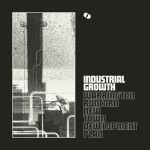
Artist: Warrington-Runcorn New Town Development Plan (@)
Title: Industrial Growth
Format: CD + Download
Label: Castles in Space (@)
Rated:

Title: Industrial Growth
Format: CD + Download
Label: Castles in Space (@)
Rated:
The future was supposed to be carefully planned. There would be modern housing, efficient public transport, pleasant green spaces, convenient shopping facilities and thriving communities, all arranged according to the reassuring geometry of post-war urban planning. Somewhere along the way, however, the brochures became detached from reality, the infrastructure began to deteriorate and the promised social improvements were quietly replaced by the usual assortment of economic calculations and political excuses. Gordon Chapman-Fox has spent several years exploring the distance between those aspirations and their eventual consequences through Warrington-Runcorn New Town Development Plan. With "Industrial Growth", he appears to have decided that the time for politely pointing at the cracks is over. The bulldozers are still running, but something considerably less constructive is happening behind the site fencing.
Since its emergence in 2020, WRNTDP has developed a distinctive musical and conceptual identity, drawing on the modernist ambitions of Britain's post-war new town programme. The project's retro-futurist electronics evoke the promotional films, architectural illustrations and public information broadcasts through which places such as Warrington and Runcorn were presented as models of a more rational, prosperous society. Chapman-Fox, however, has never been interested in uncomplicated nostalgia. The appeal lies in the contradiction between the optimism embedded in those original visions and the subsequent erosion of their promises. His music looks backwards in order to examine the present, rather than offering an imaginary return to an age when everything supposedly worked better. The distinction matters: this is not music for people who collect vintage council brochures because they find concrete car parks emotionally reassuring, although there may well be a market for that somewhere.
Chapman-Fox's personal connection to the subject goes back to childhood memories of television advertisements promoting the new towns. Their combination of idealised urban imagery and electronic music left a lasting impression, eventually becoming the foundation for a project that has grown into a surprisingly substantial body of work. His interest in these places is also rooted in their geographical and cultural position. Rather than concentrating on the familiar mythology of Britain's major cities, WRNTDP gives musical attention to towns that rarely receive much cultural recognition. In interviews, Chapman-Fox has stressed the importance of celebrating places that have been overlooked, while remaining conscious of the broken promises and inadequate investment that shaped their later development. The music's political dimension has consequently become more explicit with each release, without sacrificing its peculiar fascination with the aesthetics of an imagined future.
"Industrial Growth", the project's seventh album, marks a substantial escalation in sonic intensity. Much of the material originated as a suite commissioned by Roadburn Festival for its 2024 edition in Tilburg, a context that makes the record's heavier tendencies particularly understandable. The compositions were subsequently developed in the studio and refined through live performances in the UK. The result is a collection that retains the project's familiar synthesiser vocabulary while introducing considerably more distortion, dissonance and physical aggression. The album's title is deliberately misleading in the most productive sense: the growth in question is not the reassuring upward curve of an economic forecast, but something organic, invasive and difficult to contain. One suspects the planning committee would not have approved the revised proposal.
“This Machine” makes the change immediately apparent. Its pounding rhythms, abrasive electronic surfaces and searing noise establish an atmosphere of industrial hostility that would have seemed excessive on some of the project's earlier records. The track does not so much introduce the album as announce that the public consultation period has ended. Yet beneath its aggression there remains a strong sense of structure. The rhythmic elements are tightly organised, and the distorted textures are deployed with sufficient control to prevent the composition from collapsing into undifferentiated noise. Chapman-Fox understands the difference between sounding angry and simply turning everything up, a distinction that several industrial producers have apparently overlooked since the invention of the volume control.
“The Wire” follows with a more recognisable melodic framework, its repeating synthesiser figures recalling the cyclical constructions of Kraftwerk, particularly the hypnotic propulsion of "Trans-Europe Express". But where that classic album often suggested a technological future characterised by movement and possibility, Chapman-Fox's version seems to travel through an infrastructure that has begun to malfunction. The recurring patterns are both reassuring and faintly ominous, as though a familiar public announcement were being repeated long after the service it describes had ceased to operate.
“Warrington Bank Quay” brings the conceptual geography closer to the surface. The station is a real place, but its appearance here is less an invitation to travel than a reminder of the importance of transport infrastructure to the original new town vision. The track's gloomy electronic atmosphere suggests a location caught between activity and abandonment, its musical details gradually obscured by a sense of urban fatigue. “Heavy Industry” offers a striking contrast. Despite its title, it is one of the album's more luminous moments, with a stirring melodic construction that briefly allows the synthesizers to recover some of their earlier optimism. Chapman-Fox has described it as an unusual moment of light within the record, and its effect is all the more powerful because the surrounding material is so relentlessly dark. The track could almost accompany a public information film from an alternate 1980s, one in which John Carpenter had been commissioned to explain the benefits of regional employment schemes.
“Parkside” returns to a more unsettling electronic vocabulary. Its compact duration and eerie textures give it the character of an industrial warning signal, while “Post Industrial Policy” develops a more expansive, kosmische orientation. The synthesiser patterns are hypnotic, but their melodic beauty is complicated by a persistent sense of unease. There are moments when the music seems to occupy the territory between Chris & Cosey and Klaus Schulze, although the comparison should not obscure Chapman-Fox's own compositional identity. His electronic arrangements have always possessed a distinctive civic quality, as if they were documenting the psychological atmosphere of an entire region rather than the private concerns of an individual musician.
“Post Industrial Policy” is particularly effective because it does not treat industrial decline as a purely visual or documentary subject. Its repeated patterns suggest processes that continue long after their original purpose has disappeared. The track's title also carries an uncomfortable political implication: what happens when the industrial future has been dismantled, but no convincing alternative has been provided? The answer, at least musically, is a strangely compelling combination of rhythmic persistence and melodic uncertainty.
“Astmoor” moves into darker ambient territory, its murky textures suggesting a landscape in which the distinction between industrial residue and natural environment has become increasingly difficult to establish. The track offers a more restrained passage before the album's final confrontation. “Industrial Unrest” then brings everything to a suitably abrasive conclusion, with distortion and dissonant percussion replacing much of the melodic clarity that has characterised the record's more accessible passages. It is a formidable closing statement, although not an entirely comfortable one. The noise feels less like an ornamental climax than the accumulated consequence of everything that has preceded it.
The album's artwork, designed by Chapman-Fox with illustrations by Michael Cooke, reinforces the relationship between the music and the actual experience of living in these towns. Cooke grew up in Runcorn, and his contribution draws on first-hand familiarity with the area. This gives the visual presentation an additional dimension: the places being examined are not merely abstract examples of failed modernist planning, but lived environments with their own histories, memories and communities. That distinction is essential to the project's political perspective. It is easy to romanticise architectural utopianism from a distance; it is considerably harder to ignore the people left dealing with its unfinished business.
The bonus TVAM remix of “This Machine”, available through Bandcamp, provides another perspective on the album's central material, although the original version already makes its intentions abundantly clear. More broadly, "Industrial Growth" demonstrates how successfully Chapman-Fox has expanded the project's musical vocabulary without abandoning its conceptual foundations. The increased aggression does not feel like an attempt to follow contemporary industrial trends, but a response to the increasingly hostile social and political conditions that inform the work. There is still plenty of the shimmering, melodic electronic writing that made earlier WRNTDP releases so distinctive, but here it is frequently surrounded by sounds that seem intent on dismantling it.
The risk, of course, is that such a consistently dark approach might reduce the album to a single emotional register. A little more contrast would occasionally have made the heavier passages even more effective. Yet the moments of melodic brightness, particularly “Heavy Industry” and “The Wire”, provide enough variation to prevent the record from becoming a prolonged exercise in sonic pessimism. Chapman-Fox has also avoided the temptation to turn his political concerns into a series of musical slogans. The compositions remain compelling as electronic works in their own right, even when their titles and conceptual background give them a more specific meaning.
"Industrial Growth" is arguably the most uncompromising entry in the Warrington-Runcorn New Town Development Plan catalogue so far. It takes the project's fascination with post-war optimism and its subsequent disillusionment into harsher territory, replacing some of the earlier records' wistful melodic qualities with a more direct expression of anger. The result is both musically satisfying and politically pointed. The original new towns were designed around the belief that better planning could produce better lives. Chapman-Fox's latest work asks what happens when those ambitions are abandoned, and when the language of progress continues to be used long after its substance has disappeared. The answer is not especially comforting, but it makes for a compelling record. Somewhere, a municipal architect is probably reconsidering the soundtrack for the next public consultation.
Jeff Greinke: Land of Ice and Fog
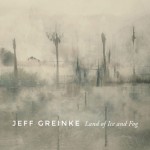

There is a peculiar discipline involved in knowing when to stop adding things. Electronic musicians, particularly those equipped with enough synthesizers and processing devices to make a small telecommunications company feel underfunded, are not always inclined to exercise it. Jeff Greinke, however, has spent more than four decades learning how to construct elaborate musical environments, and "Land of Ice and Fog" finds him deliberately reducing the number of ingredients. Seven compositions, a little over forty minutes, and an unusual amount of trust placed in the listener's ability to remain attentive when apparently very little is happening. It is a quietly radical proposition, although probably not one that will impress anyone measuring musical productivity by the number of knobs turned per minute.
Greinke's background makes this change of scale particularly interesting. He began composing in 1980, while studying meteorology, and the relationship between atmospheric conditions and musical atmosphere has remained central to his work. His early albums, including "Cities in Fog" (1985) and "Moving Climates" (1986), helped establish his reputation as an important figure in the development of dark ambient. Across more than twenty-five solo releases, he has moved between industrial textures, layered electronics, acoustic ensembles, modern classical arrangements and more rhythmically inclined projects. He also founded the group LAND and the duo Hana, demonstrating a willingness to work beyond the solitary electronic studio. His parallel activity as a photographer is equally revealing: he often uses multiple exposures and intentional camera movement to transform familiar scenes into painterly abstractions. In both disciplines, the objective seems less concerned with documenting a place than with discovering what happens when its appearance is allowed to change.
The central idea behind "Land of Ice and Fog" is restraint. Greinke has spoken of wanting to discover how much atmosphere, depth and emotion could be achieved through reduced sonic activity. The influence of longtime friend and composer Steve Peters was important in this respect, particularly his own minimalist approach. Peters co-composed two pieces here, “Bells in Fog” and “Over Land”, and his presence seems to have encouraged Greinke to reconsider the relationship between musical detail and available space. The result is not minimalism in the strict sense of reducing music to a few abstract gestures. There is still considerable attention to texture, harmonic colour and the interaction of acoustic and electronic elements. What has changed is the amount of time each element is allowed to occupy without being crowded by its neighbours.
“Bells in Fog” opens the album with a delicate sense of distance. Its title might suggest a maritime warning system operating under particularly poor visibility, but the music is less concerned with danger than with the uncertain character of sounds heard from somewhere beyond immediate perception. The tones are gently suspended, their resonances allowed to extend without being hurried towards a conventional resolution. The piece establishes a listening environment in which the smallest changes become significant. It also introduces one of the album's defining qualities: the impression that sound has a physical location, even when that location remains impossible to determine.
“How Clouds Hang on Mountains” develops this idea through a more explicitly melodic construction. A measured piano figure and choral textures give the composition a contemplative, almost devotional quality, with an affinity for the restrained harmonic language associated with composers such as Arvo PÄrt. Yet Greinke avoids turning the piece into a simple exercise in neo-classical solemnity. The voices and instrumental layers retain a certain softness and ambiguity, as though the music were being perceived through changing atmospheric conditions. The result is beautiful without becoming excessively sentimental, which is no small achievement in a genre that sometimes seems determined to make every listener feel as though they have just remembered a particularly meaningful childhood holiday.
“Ghost Harbor” introduces a darker shade. Its title evokes an abandoned port, but the composition does not rely on obvious nautical sound effects or cinematic gestures. Instead, it works through the gradual accumulation of tonal details and the suggestion of something once present but now absent. The atmosphere is subdued, with an underlying sense of melancholy that never becomes oppressive. Greinke is particularly effective when he allows a composition to suggest an emotional condition without assigning it a fixed narrative. The listener can imagine a deserted harbour, a forgotten departure or simply a quiet place encountered at the wrong hour. None of these possibilities needs to be confirmed.
The co-composed “Over Land” is among the album's most persuasive examples of its reduced approach. A slow melodic figure gradually becomes less distinct as the surrounding textures absorb it. Rather than developing through a succession of new elements, the composition changes through the gradual alteration of relationships between those already present. It is a deceptively simple process, and one that requires considerable compositional control. “When Thousands Fly as One” introduces a more expansive choral dimension, with a sense of collective movement that distinguishes it from the more solitary atmosphere of the preceding pieces. Its title suggests a flock in coordinated flight, although the music avoids becoming a literal illustration. There is something quietly stirring in its harmonic breadth, as if individual voices were gradually finding a shared direction.
“Noctilucent: Before Dawn” is especially effective in its handling of light and darkness. Noctilucent clouds are high-altitude formations visible after sunset or before sunrise, illuminated while the observer remains in darkness. It is an appropriately specific image for a musician whose meteorological interests have long informed his compositional vocabulary. The track's textures seem to hover between visibility and disappearance, with a subtle radiance emerging from its more shadowed elements. The closing “Adrift Across the Strait” offers a shorter conclusion, retaining the album's preference for unresolved movement rather than a grand final statement. It leaves the impression of having reached another stretch of water without necessarily knowing what lies on the opposite shore.
One of the album's strengths is that its seven compositions remain distinct despite their shared aesthetic. Greinke understands that spaciousness does not automatically produce depth, just as adding more layers does not necessarily make music more complex. The distinction lies in how carefully the available material is organised, and in the attention paid to the intervals between sounds. There are moments when the album's restraint approaches a familiar ambient vocabulary, and listeners seeking the more densely layered or unsettling side of Greinke's earlier work may find this reduced palette less immediately absorbing. Yet that relative austerity is precisely the point. The compositions are not underdeveloped sketches waiting for additional instrumentation; they are complete works whose character depends on what has been withheld.
"Land of Ice and Fog" is therefore less a departure than a recalibration. It draws on the atmospheric sensitivity that has defined Greinke's music since the beginning, but approaches it with a lighter touch and a greater willingness to let individual gestures stand alone. The album's landscapes are not grand panoramic vistas. They are places glimpsed briefly, sometimes from a distance, sometimes just before the weather changes. Greinke's meteorological background provides more than a convenient biographical footnote: it informs a musical imagination attentive to pressure, visibility, movement and the subtle transformations that occur without asking permission. The weather, as usual, refuses to follow a timetable. Fortunately, neither does this music.
Offerings: End Credits Noumena

Some records begin with an announcement; others sound as though we have accidentally tuned into something that was already happening somewhere nearby. "End Credits Noumena", the debut release by offerings, belongs firmly to the latter category. A collaboration between Portuguese musicians Bruno Silva and Gonçalo F. Cardoso, it comprises thirteen compact pieces assembled through an exchange of files during the stormy winter of 2026. Its apparent subject is the peripheral: overlooked urban spaces, domestic interiors, rain-soaked surfaces and those peculiar moments when the world seems to have temporarily stopped providing useful explanations. The title introduces a philosophical complication, but the music itself is refreshingly uninterested in delivering a lecture. It prefers to leave a few electronic fingerprints on the furniture and disappear before anyone can ask what happened.
The two musicians bring distinct histories to the project. Silva is known for his work as Ondness and Serpente, exploring experimental electronics through shifting combinations of rhythm, texture and abstract construction. Cardoso, meanwhile, is a prolific composer and sound collector whose activities extend across Lagoss, Prophetas and Hannibal Chew III, alongside his work running the Discrepant label and its Sucata Tapes imprint. Founded in London in 2011, Discrepant has developed a catalogue that moves freely between experimental electronics, field recordings, unconventional approaches to regional music and assorted forms of sonic misbehaviour. Cardoso's own work often involves gathering sounds and reorganising them into subjective, sometimes surreal musical narratives. It is an approach that makes him a particularly appropriate partner for Silva here: both are accustomed to treating sound as material that can be rearranged without necessarily needing to explain where it came from.
The album's thirteen pieces last just over 37 minutes, but their brevity is important. Rather than developing a conventional sequence of ambient compositions, offerings assemble a collection of fragments that seem to have been intercepted at different stages of their existence. The opening “Chuva D'ontem” (Portuguese for yesterday's rain) establishes a damp, slightly dislocated atmosphere, while “DJ Screwface” introduces a more pronounced rhythmic character. The latter's title might suggest an encounter with the chopped-and-screwed tradition associated with Houston's DJ Screw, although the track is less concerned with paying tribute than with establishing its own slightly unstable electronic vocabulary. “Relaxer”, at less than a minute, is almost a passing thought, while “Where Toness Stance” continues the album's preference for short forms that arrive, make an impression and leave before they become entirely identifiable.
“Lyra Flicks” and “Slackerdom Estates” provide two of the more substantial pieces, allowing their textures and rhythmic elements to develop beyond the album's shorter sketches. There is an appealingly untidy quality to the music: fragments of melody, processed sounds and irregular rhythmic gestures coexist without being forced into a polished hierarchy. The production has a grainy, slightly acidic character, but the atmosphere is not uniformly bleak. Even when the sounds become murky or unsettling, there is a strange sense of hospitality about them, as though the listener has been invited into a room whose occupants have temporarily stepped outside. Whether this is a domestic environment or a particularly neglected corner of an imaginary building remains unclear. The distinction probably isn't important.
The titles contribute considerably to the album's personality. “Prince of Darkness” lasts only 55 seconds, which seems a rather economical allocation of time for such a prestigious supernatural position. “Brave Murder Day” inevitably recalls Katatonia's 1996 album, although the title alone does not establish a direct musical connection. “Ambien Recollections” suggests memories assembled under chemical sedation, while “Desenterro” introduces a Portuguese word associated with exhumation. “Worn Out Estorilism” is perhaps the most intriguing of the bunch, hinting at a particular geographical and cultural reference without offering a helpful explanatory note. These names create a loose network of associations, but the music resists becoming an illustrated collection of references. It is better approached as a set of impressions whose connections remain provisional.
The shorter “Speaking Parts” briefly interrupts the sequence before the title track closes the album. At just under four minutes, “End Credits Noumena” does not provide the grand finale its name might lead one to expect. Instead, it seems to gather the record's various tendencies into a final, deliberately inconclusive statement. The reference to noumena, a term associated with Kant's distinction between things as they exist independently of our perception and the way they appear to us, is an appropriately mischievous choice. The album is concerned with sounds that suggest places, events and emotional conditions without allowing any of them to become fully visible. We hear traces, not complete explanations. There is no need to drag the philosopher into the studio, though one suspects he might have appreciated the difficulty of establishing exactly what was going on.
The collaboration's method is central to its character. The exchange of files allowed two musicians with related interests but different sonic sensibilities to work without having to negotiate every detail in real time. The resulting music has the looseness of a jam, even though it was assembled remotely. Some transitions feel almost accidental, and not every fragment develops into something particularly memorable. That is also where the album occasionally tests its own premise: cultivating uncertainty can be productive, but too much fragmentation risks making the individual pieces feel interchangeable. A few tracks pass by before they have established a sufficiently distinct identity. Yet the overall sequence benefits from this lack of insistence. It never becomes an elaborate demonstration of experimental credentials, nor does it mistake obscurity for sophistication.
There is also something appealing about the album's refusal to make a grand distinction between the everyday and the unusual. Rain, empty streets, domestic sounds and the residue of passing experiences are hardly exotic subjects, but they can become strange when removed from their familiar contexts. Cardoso's background in field recording and sonic collage meets Silva's interest in electronic abstraction somewhere in that uncertain territory. The music does not attempt to recreate a particular location so much as suggest the sensation of being somewhere without quite knowing how one got there. It is an atmosphere of partial recognition, where the familiar has been nudged slightly out of alignment.
"End Credits Noumena" is not an album that needs to be approached as a unified statement with a clearly defined beginning, middle and end. Its appeal lies in the movement between fragments, in the curious details that surface and vanish, and in the sense that the music has been left deliberately unfinished without feeling abandoned. It may occasionally flirt with self-indulgent obscurity, but its better moments possess a genuine instinct for atmosphere and unexpected connection. The result is a compelling first outing for offerings, and a welcome meeting between two musicians whose individual practices make the collaboration feel natural without rendering it predictable. The film is missing, the credits are still rolling, and somewhere in the cinema a projector has apparently decided that the audience can wait a little longer.
r beny: feedback memory

Memory is a rather unreliable recording device. It edits, loops, degrades, occasionally adds details that were never there and, with spectacular disregard for personal convenience, brings back things we had assumed safely archived. Austin Cairns, the Northern California musician behind r beny, takes this instability as the starting point for "feedback memory", a five-track album concerned with the relationship between experience, place and the shifting impressions we retain of both. Its title suggests an electronic process, but also a psychological one: a signal returning to its source, altered by every passage, until the distinction between the original and its repetition becomes difficult to establish.
Cairns has been developing his particular language of ambient electronics for several years, with releases on Dauw, Seil Records, Longform Editions, Past Inside the Present and Quiet Details. His route into modular synthesis was not entirely conventional. Having previously played guitar in industrial and post-rock bands, he eventually found himself creatively frustrated with the instrument and stepped away from music for a period. An encounter with modular synthesizers reopened that possibility, leading him to explore hardware, sampling and sound processing through both recordings and an educational YouTube channel. The name r beny, incidentally, began as an informal pseudonym inspired by the photographer Roloff Beny. What started as a convenient label for online tutorials gradually became the identity of a musician with a recognisable approach to electronic composition.
There is a personal dimension to this album that goes beyond the familiar ambient vocabulary of contemplation and introspection. Cairns explicitly connects the work to experiences of loss, trauma and depression, describing its musical materials as a combination of melody, harmony, decaying delay feedback, resonator processing, mandolin, field recordings and physically modelled instruments. This is not an attempt to translate difficult experiences into a neat sequence of musical illustrations. Rather, the sounds seem to retain the uncertainty of their origins. Melodies emerge without insisting on a destination; electronic tones acquire a slightly unstable, almost tactile quality; repetitions gradually lose their initial outlines. The result is music that approaches emotional subjects without turning them into explanatory captions.
The opening title track, at just under five minutes, establishes the album's delicate but not entirely pristine character. Its electronic layers possess a gentle, wavering quality, with melodic details appearing through a haze of resonance and decay. There is warmth here, but it is not the glossy, frictionless kind often associated with more decorative ambient music. The sound has grain and depth, and the subtle imperfections give the composition a sense of physical presence. The title is particularly apt: what returns is recognisable, but never quite identical to what went before.
“suspended in the lilt of desire” extends that atmosphere over nearly seven minutes, allowing its melodic elements more room to develop. The piece has a curious emotional ambiguity. Its title suggests longing, but the music avoids the obvious gestures of romantic melancholy, favouring a gentle movement between suspended tones and slowly shifting harmonies. Cairns understands that desire is not always an energetic condition; sometimes it is simply the awareness of something missing, accompanied by the rather inconvenient persistence of wanting it. “sursum corda” continues with a similarly measured approach. The Latin expression, traditionally associated with an invitation to lift the heart, gives the track a spiritual suggestion, although the music remains understated and avoids any grand devotional rhetoric. Its appeal lies in the balance between melodic clarity and the softened, slightly elusive textures surrounding it.
At just over three minutes, “glittered in thaw” functions as a brief interruption before the album's extended conclusion. The title evokes the moment when frozen surfaces begin to change, and there is something appropriate about its concise, bright appearance within the sequence. It does not attempt to develop a separate musical argument so much as offer a small alteration in perspective, a moment of relative clarity before the more expansive final piece.
“late fragment”, lasting twenty minutes, is the album's central achievement. Its duration allows Cairns to work with gradual transformations rather than conventional development. Repeated figures and resonant textures undergo subtle changes, sometimes becoming more pronounced, sometimes receding almost imperceptibly. The composition does not build towards a climax, and its patience should not be mistaken for an absence of direction. Its internal movement is measured in degrees rather than dramatic events. The longer it unfolds, the more the listener becomes aware of the changing relationships between its layers. There is a particular poignancy in the way the piece seems to preserve traces of earlier musical gestures without needing to restore them in their original form. It is less a conclusion than an extended process of accommodation.
This is where the album's conceptual premise becomes most persuasive. The electronic feedback Cairns employs is not merely a source of texture or an attractive technical effect. It provides a useful musical parallel for memory itself: repetition accompanied by alteration, a familiar signal gradually reshaped by the conditions through which it travels. The field recordings and mandolin introduce further points of contact with the physical world, while the synthesizers and processing techniques prevent those elements from becoming straightforward documentary references. The organic and electronic components do not need to be separated into opposing categories; they are simply different ways of giving form to an experience that resists direct description.
There is, admittedly, a certain risk in music this restrained. Five tracks built around delicate shifts, soft melodic structures and extended passages of gradual change could easily become indistinguishable from the vast quantity of ambient music that mistakes a lack of percussion for a philosophical position. Cairns avoids that trap through his attention to harmonic movement and the individual character of his textures. The album is quiet, but not anonymous; contemplative, but not passive. Its emotional weight comes from the careful arrangement of small details rather than from any attempt to manufacture profundity.
"feedback memory" is a thoughtful addition to r beny's catalogue, and perhaps one of his more personally revealing works. Its five compositions form a coherent sequence without imposing a rigid narrative, leaving enough room for the listener's own associations to take hold. The music does not promise resolution, nor does it pretend that difficult experiences can be processed simply by placing them inside a synthesizer and turning the appropriate knobs. That would be a rather optimistic view of both technology and human psychology. Instead, Cairns offers something more credible: an album that acknowledges how the past continues to change shape inside us, and how even its most persistent echoes can eventually acquire a different tone.
Portion Control: 1983-86 - Hit The Pulse to Purge…

Artist: Portion Control (@)
Title: 1983-86 - Hit The Pulse to Purge…
Format: CD x 4 (quadruple CD boxset)
Label: Artoffact (@)
Rated:
Title: 1983-86 - Hit The Pulse to Purge…
Format: CD x 4 (quadruple CD boxset)
Label: Artoffact (@)
Rated:
There is something pleasingly perverse about a band called Portion Control delivering a four-CD collection that contains enough material to keep an industrial dancefloor occupied until the building is condemned. Formed in London in 1979, Portion Control emerged from the post-punk underground with an approach to electronic music that was abrasive, rhythmically inventive and distinctly uninterested in behaving itself. Their importance is often measured through the artists who followed their lead, from Depeche Mode and Nitzer Ebb to Skinny Puppy, Front Line Assembly, Nine Inch Nails and Orbital. Yet influence can be a rather lazy form of historical recognition: it tells us who borrowed from whom, but not necessarily why the original music still deserves attention. "1983-86 - Hit The Pulse to Purge…" makes a fairly convincing case for listening to the source rather than merely admiring its descendants.
The collection covers a particularly fertile stretch of the group's history, bringing together the "Hit The Pulse" mini-album (1983), "..Step Forward" (1984), "Psycho-Bod Saves The World" (1986), the "Purge" EP and a selection of singles, B-sides, rarities, remixes, demos and live recordings. Its opening disc establishes the group's distinctive vocabulary: sequenced electronic patterns, hard-edged percussion, rough vocal delivery and bass lines that seem to have been designed with the express purpose of making furniture nervous. But the music is not simply an exercise in mechanical aggression. There is a strong sense of songcraft beneath the rough surfaces, with hooks, structural shifts and an instinct for rhythmic tension that prevent the material from becoming a monotonous parade of electronic blunt instruments.
The early tracks retain something of post-punk's unruly spirit, although guitars are largely replaced by synthesiser sequences and sampled fragments. Portion Control's relationship with technology was experimental in a practical rather than romantic sense. In the early days, the group worked with an ARP Axxe, Roland CR-78 drum machine and the Greengate DS:3 sampling system running on an Apple II computer, an arrangement whose limitations were apparently more productive than discouraging. Sampling was still a relatively young technique, and the available equipment offered little of the convenience that contemporary producers take for granted. The band's solution was not to wait for better tools, but to find ways of making the existing ones misbehave. Their early fascination with dub, particularly its use of echo, space and repetition, also helped distinguish their sound from the more straightforward electronic constructions of the period.
That mixture of rhythmic discipline and unruly detail is especially evident in "Hit The Pulse" and the material surrounding it. Tracks such as “Chew You To Bits”, “Discord” and “Death By Venom” have a wiry, confrontational energy, while “Abbo Dabbo” demonstrates that the group's sense of humour was not confined to the occasional eccentric title. The subsequent singles “Raise The Pulse”, “Rough Justice” and “Go-Talk” move more decisively towards the dancefloor, stretching the rhythmic framework into longer forms without sanding away the band's abrasive character. Their appeal lies partly in the tension between physical immediacy and sonic oddness: these are records that can make a body move while leaving the brain wondering what exactly has just happened.
"..Step Forward" marks another important stage in that development. The increased use of sequenced synthesiser lines, including the Roland MC-202, gives the music a more defined electronic architecture. “Havoc Man” and “Refugee” are particularly revealing examples of the band's ability to construct momentum through interlocking patterns rather than relying on conventional instrumental gestures. There is a curious balance between precision and volatility: the sequences are tightly controlled, but the vocals and surrounding textures retain a distinctly human roughness. The result is neither polished synth-pop nor industrial noise in its most uncompromising form. Portion Control occupied a productive patch of territory between the two, and seemed quite happy to leave the borders unmarked.
The second disc brings "Psycho-Bod Saves The World" into focus, alongside the "Purge" material and later reconstructions. The album's title alone suggests that the group had no intention of allowing solemnity to become a permanent condition. Its music continues the band's interest in forceful electronic rhythm, but the collection's broader range becomes more apparent here. “Brain Scraper Death Dive”, “Siren City”, “Danger Zone” and “Cut And Thrust” demonstrate different shades of the group's approach, from compact rhythmic assaults to more developed, dance-oriented constructions. The humour embedded in the titles is worth noting, too. Portion Control have always understood that darkness need not be accompanied by a compulsory facial expression suggesting a particularly difficult tax audit.
The "Purge" versions of “Raise The Pulse”, “Go-Talk” and “The Great Divide” provide an interesting opportunity to compare the band's treatment of familiar material. The latter, in particular, appears in several forms across the set, making its development one of the collection's recurring reference points. Rhys Fulber's rebuild of “Refugee” adds a later perspective, connecting the original recording with one of the artists whose work grew out of the same electro-industrial lineage. It is a useful inclusion, although the original remains essential to understanding the band's own musical language.
The third disc, devoted to B-sides, compilation appearances and demos, is where the collection becomes especially valuable to listeners interested in the mechanics of the creative process. Some of this material is less immediately accessible than the principal album tracks, but that is hardly a fault. “The Man Who Did Backwards Somersaults”, “Upside Down” and “Justice” reveal a group willing to explore less predictable structures, while the two demos of “H.O.T. Matter” offer a glimpse of how a composition can change during development. The Arthur Baker demo mix of “Conscience” is another welcome archival detail. These recordings do not merely pad out the running time; they broaden the picture of a band whose catalogue was never limited to a handful of genre-defining singles.
The final disc moves from the studio to two live recordings, captured in Amsterdam in 1984 and Lausanne in 1985. Their value is partly historical, but also musical: tracks such as “Eat Your Heart”, “Go-Talk”, “Raise The Pulse”, “Karateka” and “Havoc Man” acquire a different character when heard in performance. The sound is less controlled, the transitions more exposed, and the material's physical qualities become harder to ignore. These are documents rather than pristine concert productions, which is precisely why they belong here. They offer a useful reminder that Portion Control's music was never intended to remain safely inside the circuitry of a recording studio.
As an archival release, "1983-86 - Hit The Pulse to Purge…" is impressively comprehensive. All the material has been remastered by Paul Lavigne at Kontrast Mastering, while the 24-page booklet and archive photographs give the package a welcome visual dimension. The limited red-vinyl edition, with ten selected tracks, offers a more compact entry point, but the four-CD version is plainly the more rewarding option for anyone wanting to understand the full scope of this period. Its sheer length can occasionally test one's attention, and not every demo or alternate version is likely to become indispensable. That is an inevitable consequence of opening the archive rather than simply selecting the most obvious highlights.
Portion Control's subsequent return in the 2000s, followed by records such as "Wellcome", "Filthy White Guy" and "Pure Form", demonstrated that the group was not interested in treating its early catalogue as a museum exhibit. Their later work continued to develop the same interest in electronic construction, texture and rhythmic force, using newer tools without abandoning the independence that had shaped their beginnings. This collection therefore feels less like a nostalgic detour than an opportunity to reconsider a group whose historical importance has sometimes exceeded its public visibility.
The best thing about "1983-86 - Hit The Pulse to Purge…" is that it does not need to rely on influence as its main selling point. The music remains inventive, energetic and occasionally gloriously peculiar on its own terms. Portion Control were not simply preparing the ground for other artists to build something more commercially successful upon it. They were making records with their own personality, their own sense of rhythm and a healthy disregard for the boundaries between experimentation and entertainment. Forty years later, the pulse is still very much present. The purge, apparently, can wait.