
Browse by Genre
Industrial Music / Industrial Metal / Aggro Industrial / Electro Metal
Industrial Noise / Power Noise / Harsh Noise
Synth Pop / Electro Pop / Synth-Electronica
Techno / Trance / Goa / Drum'n'Bass / Jungle / Tribal / Trip-Hop
Ambient / Electronica / Ethereal / Dub / Soundscapes / Abstract
Experimental / Avantgarde / Weird & Wired / Glitch / Noise / Field Recording
Dark / Gothic / Wave / New Wave / Dark Wave / Industrial Gothic
New Music / Downtown / Avantgarde Jazz / New Classical / World
Search Reviews
Music Reviews
Emmanuel De La Paix: Chromaverse (and human structures)
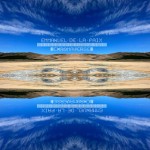
Artist: Emmanuel De La Paix (@)
Title: Chromaverse (and human structures)
Format: Download Only (MP3 + Lossless)
Label: Broque (@)
Rated:

Title: Chromaverse (and human structures)
Format: Download Only (MP3 + Lossless)
Label: Broque (@)
Rated:
Some albums invite the listener into a landscape. Others build a house. Emmanuel De La Paix's "Chromaverse (and human structures)" does something stranger: it constructs an entire complex of interconnected rooms, hands you a key of uncertain origin, and quietly disappears before explaining the floor plan.
Released on the ever-curious Broque imprint, the album unfolds as a continuous sixty-minute arc divided into fourteen interconnected pieces. While many ambient works employ the language of journeys, De La Paix seems more interested in architecture. Not architecture as engineering, but architecture as psychology: the invisible structures people build inside themselves to house memories, fears, desires, and the occasional irrational attachment to objects they haven't used since 2014 but might need someday.
The concept is deceptively simple. Each composition corresponds to a numbered room inspired by the vocabulary of horror cinema. Yet this is not horror in the conventional sense. There are no jump scares, no monsters emerging from sonic closets. Instead, the album explores a subtler form of unease: the feeling of entering an unfamiliar space and sensing that something has already happened there, though you cannot determine what.
From the opening "Sound Room - 014", De La Paix establishes a delicate balance between presence and absence. The textures seem almost suspended in midair, barely touching the ground. Tiny details emerge at the edge of perception, encouraging attentive listening without demanding it. The influence of artists such as múm, Sigur Rós, Radiohead, and Björk can certainly be detected, particularly in the album's willingness to treat atmosphere as a primary compositional tool rather than mere decoration. Yet the record avoids becoming derivative by pursuing its own peculiar internal logic.
The early pieces move with remarkable restraint. "Studio 2 Noise - 023" and "Wave Room - 069" feel like explorations of empty corridors, where every sound acquires significance simply because there are so few of them. The listener becomes aware of minute shifts in texture, much as one notices tiny changes in light when sitting alone in a quiet room for longer than modern life typically permits.
As the album progresses, density begins to accumulate. "Bright Lava" and "Synth Mode - 216" mark a turning point where the previously sparse environments acquire weight and momentum. Analog synthesizers swell against digital manipulations, while distorted rhythmic elements appear like structural stress fractures running through the building. The contrast between fragility and force becomes increasingly central.
One of the record's most intriguing qualities is its refusal to separate beauty from uncertainty. Even at its most turbulent, the music remains oddly inviting. "Joylato (3 Gusti)" - a title that sounds either delightfully whimsical or suspiciously like an ice cream order placed during an existential crisis - introduces an unexpected warmth amid the album's more introspective passages. Such moments prevent the conceptual framework from becoming oppressive.
The central section, particularly "Day One - 3120" and "Shif Cargo - 14579", reveals De La Paix's skill as a long-form architect. Rather than relying on dramatic climaxes, he allows tensions to accumulate gradually through subtle modifications of timbre and spatial depth. The listener often realizes a transformation has occurred only after it is already complete.
By the time "Doom Room - 304" arrives, the album reaches its emotional nadir. Yet even here, the darkness feels contemplative rather than threatening. The room is haunted less by external forces than by the traces of human presence itself. De La Paix seems fascinated by the way spaces retain emotional residue, how walls become repositories of invisible histories.
The closing sequence, culminating in "Summer Terrace - 1408", provides neither resolution nor escape. Instead, it offers something more valuable: perspective. The turbulence subsides, textures become lighter, and the architecture begins to dissolve. One leaves not because the journey is finished, but because the building has quietly transformed into open sky.
What makes "Chromaverse (and human structures)" particularly successful is its understanding of scale. Despite its ambient foundations, the album never drifts into passive background music. Every sound appears carefully positioned within an evolving structure, every transition serving the larger design. De La Paix demonstrates a mature grasp of pacing, allowing silence, tension, and release to coexist without competing for attention.
In the end, the record functions as a meditation on interiority itself. The "human structures" of the title are not merely buildings, rooms, or conceptual frameworks. They are the emotional architectures through which we navigate existence. Some are sturdy. Some are temporary. Some contain locked doors we avoid opening.
"Chromaverse (and human structures)" wanders through all of them with patience, curiosity, and a quiet sense of wonder. It reminds us that the most mysterious rooms are rarely abandoned houses or cinematic nightmares. More often, they are the ones we carry around inside us every day.
Released on the ever-curious Broque imprint, the album unfolds as a continuous sixty-minute arc divided into fourteen interconnected pieces. While many ambient works employ the language of journeys, De La Paix seems more interested in architecture. Not architecture as engineering, but architecture as psychology: the invisible structures people build inside themselves to house memories, fears, desires, and the occasional irrational attachment to objects they haven't used since 2014 but might need someday.
The concept is deceptively simple. Each composition corresponds to a numbered room inspired by the vocabulary of horror cinema. Yet this is not horror in the conventional sense. There are no jump scares, no monsters emerging from sonic closets. Instead, the album explores a subtler form of unease: the feeling of entering an unfamiliar space and sensing that something has already happened there, though you cannot determine what.
From the opening "Sound Room - 014", De La Paix establishes a delicate balance between presence and absence. The textures seem almost suspended in midair, barely touching the ground. Tiny details emerge at the edge of perception, encouraging attentive listening without demanding it. The influence of artists such as múm, Sigur Rós, Radiohead, and Björk can certainly be detected, particularly in the album's willingness to treat atmosphere as a primary compositional tool rather than mere decoration. Yet the record avoids becoming derivative by pursuing its own peculiar internal logic.
The early pieces move with remarkable restraint. "Studio 2 Noise - 023" and "Wave Room - 069" feel like explorations of empty corridors, where every sound acquires significance simply because there are so few of them. The listener becomes aware of minute shifts in texture, much as one notices tiny changes in light when sitting alone in a quiet room for longer than modern life typically permits.
As the album progresses, density begins to accumulate. "Bright Lava" and "Synth Mode - 216" mark a turning point where the previously sparse environments acquire weight and momentum. Analog synthesizers swell against digital manipulations, while distorted rhythmic elements appear like structural stress fractures running through the building. The contrast between fragility and force becomes increasingly central.
One of the record's most intriguing qualities is its refusal to separate beauty from uncertainty. Even at its most turbulent, the music remains oddly inviting. "Joylato (3 Gusti)" - a title that sounds either delightfully whimsical or suspiciously like an ice cream order placed during an existential crisis - introduces an unexpected warmth amid the album's more introspective passages. Such moments prevent the conceptual framework from becoming oppressive.
The central section, particularly "Day One - 3120" and "Shif Cargo - 14579", reveals De La Paix's skill as a long-form architect. Rather than relying on dramatic climaxes, he allows tensions to accumulate gradually through subtle modifications of timbre and spatial depth. The listener often realizes a transformation has occurred only after it is already complete.
By the time "Doom Room - 304" arrives, the album reaches its emotional nadir. Yet even here, the darkness feels contemplative rather than threatening. The room is haunted less by external forces than by the traces of human presence itself. De La Paix seems fascinated by the way spaces retain emotional residue, how walls become repositories of invisible histories.
The closing sequence, culminating in "Summer Terrace - 1408", provides neither resolution nor escape. Instead, it offers something more valuable: perspective. The turbulence subsides, textures become lighter, and the architecture begins to dissolve. One leaves not because the journey is finished, but because the building has quietly transformed into open sky.
What makes "Chromaverse (and human structures)" particularly successful is its understanding of scale. Despite its ambient foundations, the album never drifts into passive background music. Every sound appears carefully positioned within an evolving structure, every transition serving the larger design. De La Paix demonstrates a mature grasp of pacing, allowing silence, tension, and release to coexist without competing for attention.
In the end, the record functions as a meditation on interiority itself. The "human structures" of the title are not merely buildings, rooms, or conceptual frameworks. They are the emotional architectures through which we navigate existence. Some are sturdy. Some are temporary. Some contain locked doors we avoid opening.
"Chromaverse (and human structures)" wanders through all of them with patience, curiosity, and a quiet sense of wonder. It reminds us that the most mysterious rooms are rarely abandoned houses or cinematic nightmares. More often, they are the ones we carry around inside us every day.
Nathan Moore / Eddie Prévost / Ray Russell: Stacked
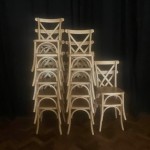
Artist: Nathan Moore / Eddie Prévost / Ray Russell (@)
Title: Stacked
Format: Download Only (MP3 + Lossless)
Label: Cuneiform (http://www.cuneiformrecords.com/) (@)
Rated:

Title: Stacked
Format: Download Only (MP3 + Lossless)
Label: Cuneiform (http://www.cuneiformrecords.com/) (@)
Rated:
There are improvisation records that sound like conversations, others that resemble arguments, and a few that feel like three people discovering a previously unknown species while trying not to scare it away. "Stacked" belongs somewhere in that last category.
On paper, the combination is already intriguing. Nathan Moore, a guitarist whose work draws equally from free improvisation, jazz, rock, electronics, and contemporary composition, joins two towering figures of British exploratory music: drummer Eddie Prévost and guitarist Ray Russell. Between them lies a remarkable amount of musical history. Prévost helped establish free improvisation as a radical practice through the legendary ensemble AMM, while Russell spent decades moving between jazz, rock, film scores, television soundtracks, and avant-garde experimentation, accumulating enough stylistic passports to fill several lifetimes. Moore enters this meeting not as a disciple but as an equal participant, bringing a contemporary sensibility sharpened through years within London's fertile improvising scene.
The result is a recording that feels both deeply rooted and refreshingly unconcerned with tradition.
Improvised music often carries an unfortunate burden of expectation. Some listeners approach it like a difficult academic text, convinced they are about to be examined on concepts they never studied. Others imagine anarchy: three musicians throwing sounds at one another until exhaustion or physics intervenes. "Stacked" avoids both traps. What emerges is remarkably coherent despite its spontaneous origins. The players do not seek consensus; they cultivate attentiveness.
The opening "Sheaf" immediately establishes the trio's unusual chemistry. Rather than rushing toward intensity, the music unfolds through cautious propositions. Russell's guitar introduces shapes that hover between melody and texture, while Moore responds with fragments that seem to question, redirect, or occasionally undermine them. Prévost operates less as a timekeeper than as an architect of space, creating conditions under which events can occur rather than dictating their outcome.
What makes the performance compelling is the absence of hierarchy. Despite the legendary status of the older musicians, there is no sense of deference. Ideas circulate freely. A gesture from one guitarist becomes material for the other. Rhythmic suggestions emerge, dissolve, and return transformed. The music evolves through mutual curiosity rather than competition.
"Pile" ventures closer to a rock-derived vocabulary without ever settling into one. This is one of the album's most fascinating qualities. There are moments where riffs threaten to materialize, where grooves seem ready to coalesce, but the trio consistently chooses exploration over confirmation. It's as though the ghost of rock music keeps wandering into the room only to discover that nobody is interested in repeating old stories.
The monumental "Stook", occupying more than thirty minutes, forms the album's center of gravity. Here the musicians achieve something increasingly rare: sustained unpredictability. Long-form improvisations often reveal their internal logic too quickly, but this piece continues generating new relationships throughout its duration. Textures accumulate and evaporate. Energy rises and falls organically. The music remains alive to possibility at every moment.
Prévost's contribution is especially striking. Decades after helping redefine improvised percussion, he still approaches the drum kit with the curiosity of someone who suspects it may contain unexplored territories. His playing is never flashy, yet it continuously reshapes the landscape beneath the guitars. Russell, meanwhile, demonstrates why younger generations of experimental musicians have rediscovered his early solo work. His sound retains a rare ability to combine lyricism with unpredictability, elegance with abrasion.
Moore serves as both catalyst and connector. His playing bridges eras and vocabularies, linking Russell's expansive harmonic imagination with Prévost's microscopic attention to interaction. The trio's generational spread becomes an advantage rather than a theme. No one is representing a school or defending a tradition. They are simply listening.
By the time "Raise" concludes the album, one is left with the impression of having witnessed a process rather than a product. The title "Stacked" proves surprisingly apt. The music accumulates layer upon layer of decisions, reactions, hesitations, and discoveries, each balancing precariously upon what came before. Yet the structure never collapses under its own weight.
Perhaps the most remarkable achievement of "Stacked" is its refusal to separate freedom from discipline. This is adventurous music, certainly, but also deeply humane music. Beneath the abstractions lies a simple principle: three musicians entering a room with no predetermined map and enough trust to get lost together.
In a world increasingly governed by algorithms eager to predict our next move, there is something quietly radical about listening to artists who genuinely do not know what will happen next. "Stacked" captures that uncertainty not as a problem to be solved, but as a source of possibility. The music breathes because nobody is trying to control it. And, as it turns out, that remains one of the oldest and most reliable forms of magic.
On paper, the combination is already intriguing. Nathan Moore, a guitarist whose work draws equally from free improvisation, jazz, rock, electronics, and contemporary composition, joins two towering figures of British exploratory music: drummer Eddie Prévost and guitarist Ray Russell. Between them lies a remarkable amount of musical history. Prévost helped establish free improvisation as a radical practice through the legendary ensemble AMM, while Russell spent decades moving between jazz, rock, film scores, television soundtracks, and avant-garde experimentation, accumulating enough stylistic passports to fill several lifetimes. Moore enters this meeting not as a disciple but as an equal participant, bringing a contemporary sensibility sharpened through years within London's fertile improvising scene.
The result is a recording that feels both deeply rooted and refreshingly unconcerned with tradition.
Improvised music often carries an unfortunate burden of expectation. Some listeners approach it like a difficult academic text, convinced they are about to be examined on concepts they never studied. Others imagine anarchy: three musicians throwing sounds at one another until exhaustion or physics intervenes. "Stacked" avoids both traps. What emerges is remarkably coherent despite its spontaneous origins. The players do not seek consensus; they cultivate attentiveness.
The opening "Sheaf" immediately establishes the trio's unusual chemistry. Rather than rushing toward intensity, the music unfolds through cautious propositions. Russell's guitar introduces shapes that hover between melody and texture, while Moore responds with fragments that seem to question, redirect, or occasionally undermine them. Prévost operates less as a timekeeper than as an architect of space, creating conditions under which events can occur rather than dictating their outcome.
What makes the performance compelling is the absence of hierarchy. Despite the legendary status of the older musicians, there is no sense of deference. Ideas circulate freely. A gesture from one guitarist becomes material for the other. Rhythmic suggestions emerge, dissolve, and return transformed. The music evolves through mutual curiosity rather than competition.
"Pile" ventures closer to a rock-derived vocabulary without ever settling into one. This is one of the album's most fascinating qualities. There are moments where riffs threaten to materialize, where grooves seem ready to coalesce, but the trio consistently chooses exploration over confirmation. It's as though the ghost of rock music keeps wandering into the room only to discover that nobody is interested in repeating old stories.
The monumental "Stook", occupying more than thirty minutes, forms the album's center of gravity. Here the musicians achieve something increasingly rare: sustained unpredictability. Long-form improvisations often reveal their internal logic too quickly, but this piece continues generating new relationships throughout its duration. Textures accumulate and evaporate. Energy rises and falls organically. The music remains alive to possibility at every moment.
Prévost's contribution is especially striking. Decades after helping redefine improvised percussion, he still approaches the drum kit with the curiosity of someone who suspects it may contain unexplored territories. His playing is never flashy, yet it continuously reshapes the landscape beneath the guitars. Russell, meanwhile, demonstrates why younger generations of experimental musicians have rediscovered his early solo work. His sound retains a rare ability to combine lyricism with unpredictability, elegance with abrasion.
Moore serves as both catalyst and connector. His playing bridges eras and vocabularies, linking Russell's expansive harmonic imagination with Prévost's microscopic attention to interaction. The trio's generational spread becomes an advantage rather than a theme. No one is representing a school or defending a tradition. They are simply listening.
By the time "Raise" concludes the album, one is left with the impression of having witnessed a process rather than a product. The title "Stacked" proves surprisingly apt. The music accumulates layer upon layer of decisions, reactions, hesitations, and discoveries, each balancing precariously upon what came before. Yet the structure never collapses under its own weight.
Perhaps the most remarkable achievement of "Stacked" is its refusal to separate freedom from discipline. This is adventurous music, certainly, but also deeply humane music. Beneath the abstractions lies a simple principle: three musicians entering a room with no predetermined map and enough trust to get lost together.
In a world increasingly governed by algorithms eager to predict our next move, there is something quietly radical about listening to artists who genuinely do not know what will happen next. "Stacked" captures that uncertainty not as a problem to be solved, but as a source of possibility. The music breathes because nobody is trying to control it. And, as it turns out, that remains one of the oldest and most reliable forms of magic.
Jarl: Nerve Cell Threads Electronics
For more than two decades, Jarl, the long-running project of Swedish composer Erik Jarl, has occupied a peculiar territory within the electronic underground. His music often feels scientific without becoming clinical, immersive without becoming decorative. Across releases that have explored neurotransmitters, synapses, receptors, and other hidden architectures of perception, Jarl has repeatedly approached the human body not as a biological machine but as a mysterious landscape of signals, delays, and electrical conversations.
With "Nerve Cell Threads Electronics", he returns once again to the nervous system, effectively creating an unofficial fourth chapter to that ongoing investigation. The title sounds like something discovered in a laboratory notebook left unattended after midnight, and the music follows suit: part experiment, part hallucination, part patient observation of invisible processes unfolding beneath consciousness.
The album consists of four extended pieces, each titled simply "Electrical Impulse", as if individual chapters of a single transmission. Together they occupy nearly an hour, unfolding with the kind of patience that has become increasingly rare in a culture where attention spans are measured in notifications per minute. Jarl appears unconcerned by such matters. His music advances at the speed of thought itself: not the rapid-fire chatter of everyday cognition, but the deeper currents moving beneath it.
From the opening moments of "Electrical Impulse 1", thick analog tones begin their slow migration across the stereo field. Sequences emerge, mutate, dissolve, and reappear in altered forms. Nothing is static, yet nothing feels hurried. The music resembles a living organism adjusting itself molecule by molecule, allowing subtle transformations to become the primary narrative.
The longer central pieces reveal the album's greatest strength. "Electrical Impulse 2" and "Electrical Impulse 4" function almost like neurological voyages, propelled by sequencer patterns that repeatedly threaten to become hypnotic before drifting into darker territory. Percussive elements appear not as conventional rhythm but as signals travelling through a network, firing intermittently and triggering new developments. One can imagine synapses communicating through vintage synthesizers, which is admittedly not how neuroscience works, but it would make conferences considerably more interesting.
What distinguishes this release from some of Jarl's earlier explorations is its increased sense of shadow. The melodies remain present, but they are partially obscured, like distant lights viewed through fog. The psychedelic dimension has not disappeared; rather, it has matured. Instead of bright cosmic excursions, the listener encounters something more subterranean, a descent into hidden circuitry where beauty and unease coexist comfortably.
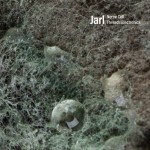
The mastering by Peter Andersson enhances this quality. Every layer feels carefully positioned, allowing dense analog textures to breathe without sacrificing their weight. The result is immersive but never overwhelming, detailed without becoming fussy. Meanwhile, the artwork by Karolina Urbaniak complements the album's conceptual framework, suggesting organic structures suspended somewhere between biology and abstraction.
There is an intriguing paradox at the heart of "Nerve Cell Threads Electronics". It is deeply rooted in the language of physiology, yet its emotional effect is surprisingly spiritual. Listening to these evolving patterns, one becomes aware not merely of neural activity but of consciousness itself: the strange phenomenon that arises from countless electrical exchanges and somehow produces memory, imagination, longing, and the persistent belief that buying another synthesizer will finally solve everything.
Perhaps that is why the album resonates beyond its conceptual premise. Jarl is not simply illustrating neurological processes. He is using them as metaphors for transformation. Sounds connect, separate, trigger reactions, and evolve into new forms, much like thoughts themselves. The listener becomes part of that circuit, following pathways whose destination remains uncertain but compelling.
In the end, "Nerve Cell Threads Electronics" feels less like a collection of compositions than a prolonged encounter with a living system. Darker than its predecessors yet equally rich in detail, it demonstrates that Erik Jarl remains one of the more distinctive voices in contemporary electronic music. Few artists can make sixty minutes of slowly shifting analog currents feel simultaneously scientific, mysterious, and quietly moving. Fewer still can make the firing of imaginary neurons sound this beautiful.
With "Nerve Cell Threads Electronics", he returns once again to the nervous system, effectively creating an unofficial fourth chapter to that ongoing investigation. The title sounds like something discovered in a laboratory notebook left unattended after midnight, and the music follows suit: part experiment, part hallucination, part patient observation of invisible processes unfolding beneath consciousness.
The album consists of four extended pieces, each titled simply "Electrical Impulse", as if individual chapters of a single transmission. Together they occupy nearly an hour, unfolding with the kind of patience that has become increasingly rare in a culture where attention spans are measured in notifications per minute. Jarl appears unconcerned by such matters. His music advances at the speed of thought itself: not the rapid-fire chatter of everyday cognition, but the deeper currents moving beneath it.
From the opening moments of "Electrical Impulse 1", thick analog tones begin their slow migration across the stereo field. Sequences emerge, mutate, dissolve, and reappear in altered forms. Nothing is static, yet nothing feels hurried. The music resembles a living organism adjusting itself molecule by molecule, allowing subtle transformations to become the primary narrative.
The longer central pieces reveal the album's greatest strength. "Electrical Impulse 2" and "Electrical Impulse 4" function almost like neurological voyages, propelled by sequencer patterns that repeatedly threaten to become hypnotic before drifting into darker territory. Percussive elements appear not as conventional rhythm but as signals travelling through a network, firing intermittently and triggering new developments. One can imagine synapses communicating through vintage synthesizers, which is admittedly not how neuroscience works, but it would make conferences considerably more interesting.
What distinguishes this release from some of Jarl's earlier explorations is its increased sense of shadow. The melodies remain present, but they are partially obscured, like distant lights viewed through fog. The psychedelic dimension has not disappeared; rather, it has matured. Instead of bright cosmic excursions, the listener encounters something more subterranean, a descent into hidden circuitry where beauty and unease coexist comfortably.
The mastering by Peter Andersson enhances this quality. Every layer feels carefully positioned, allowing dense analog textures to breathe without sacrificing their weight. The result is immersive but never overwhelming, detailed without becoming fussy. Meanwhile, the artwork by Karolina Urbaniak complements the album's conceptual framework, suggesting organic structures suspended somewhere between biology and abstraction.
There is an intriguing paradox at the heart of "Nerve Cell Threads Electronics". It is deeply rooted in the language of physiology, yet its emotional effect is surprisingly spiritual. Listening to these evolving patterns, one becomes aware not merely of neural activity but of consciousness itself: the strange phenomenon that arises from countless electrical exchanges and somehow produces memory, imagination, longing, and the persistent belief that buying another synthesizer will finally solve everything.
Perhaps that is why the album resonates beyond its conceptual premise. Jarl is not simply illustrating neurological processes. He is using them as metaphors for transformation. Sounds connect, separate, trigger reactions, and evolve into new forms, much like thoughts themselves. The listener becomes part of that circuit, following pathways whose destination remains uncertain but compelling.
In the end, "Nerve Cell Threads Electronics" feels less like a collection of compositions than a prolonged encounter with a living system. Darker than its predecessors yet equally rich in detail, it demonstrates that Erik Jarl remains one of the more distinctive voices in contemporary electronic music. Few artists can make sixty minutes of slowly shifting analog currents feel simultaneously scientific, mysterious, and quietly moving. Fewer still can make the firing of imaginary neurons sound this beautiful.
David Åhlén: Impartation
There are albums that ask for your attention, albums that demand your interpretation, and albums that simply sit beside you like a quiet companion while the world continues its frantic audition for relevance. Impartation, David Åhlén’s first release in four years, belongs firmly to the third category.
Åhlén has always occupied a distinctive place in the Swedish experimental landscape. The son of a preacher and a classically trained violinist, he has spent his career moving between devotional songwriting, ambient composition, electroacoustic experimentation, and visual art without treating any of those disciplines as separate rooms. His music often feels less composed than carefully uncovered, as if he were brushing dust from something that had been resonating long before he arrived.
That sensibility becomes especially poignant here. Written in the aftermath of burnout and a period of deep introspection, Impartation is framed as a “spiritual transference”, and the description is surprisingly accurate. These nine pieces do not behave like conventional songs; they function more like gestures, invocations, or fragments of a private liturgy. Some originated in church services, others in solitary reflection, and the album preserves that mixture of communal ritual and personal reckoning.
“Shin” opens the record with a sense of suspended breath. Tones emerge slowly, hover, and dissolve, creating an atmosphere that feels simultaneously ancient and fragile. “Untitled” extends that feeling, allowing silence to become an active participant rather than an empty space. In lesser hands, such restraint can drift into mere ambience; Åhlén avoids that trap through careful attention to texture and emotional weight.
Shorter pieces such as “Intercession” and “Largo” act almost like illuminated margins in a manuscript, brief pauses that deepen the surrounding material rather than interrupt it. “Yinnon” introduces a subtle sense of movement, while the title track gathers the album’s themes into a concentrated meditation on grief, renewal, and the difficult art of remaining open after exhaustion.
One of the record’s quiet strengths is its use of voice. Åhlén’s own vocal abstractions, along with contributions from Rebecka Karlsson, appear less as carriers of language than as human traces within the soundscape. They flicker in and out like memories that refuse to settle into clear narratives. The effect is intimate without becoming confessional, sacred without becoming doctrinaire.
Comparisons to artists such as Maria W Horn, Sofia Jernberg, or the broader Scandinavian minimalist tradition are understandable, especially given Åhlén’s collaborations within that circle. Yet Impartation possesses a warmth that sets it apart from colder strands of contemporary ambient music. Even at its most austere, the album feels inhabited by a human presence rather than a conceptual exercise.
The closing “Postlude” leaves the listener not with resolution but with a sense of gentle continuation, as though the music has merely stepped into another room. That lingering quality may be the album’s greatest achievement. Rather than presenting spirituality as certainty, Åhlén treats it as an ongoing practice of attention: to silence, to grief, to beauty, and to the possibility of renewal.
In the end, Impartation feels less like a comeback album than a carefully crafted space for contemplation. It does not seek to impress with grand gestures or technical spectacle. Instead, it offers something rarer: a quiet, luminous invitation to slow down and listen to what remains when the noise finally recedes.
Åhlén has always occupied a distinctive place in the Swedish experimental landscape. The son of a preacher and a classically trained violinist, he has spent his career moving between devotional songwriting, ambient composition, electroacoustic experimentation, and visual art without treating any of those disciplines as separate rooms. His music often feels less composed than carefully uncovered, as if he were brushing dust from something that had been resonating long before he arrived.
That sensibility becomes especially poignant here. Written in the aftermath of burnout and a period of deep introspection, Impartation is framed as a “spiritual transference”, and the description is surprisingly accurate. These nine pieces do not behave like conventional songs; they function more like gestures, invocations, or fragments of a private liturgy. Some originated in church services, others in solitary reflection, and the album preserves that mixture of communal ritual and personal reckoning.
“Shin” opens the record with a sense of suspended breath. Tones emerge slowly, hover, and dissolve, creating an atmosphere that feels simultaneously ancient and fragile. “Untitled” extends that feeling, allowing silence to become an active participant rather than an empty space. In lesser hands, such restraint can drift into mere ambience; Åhlén avoids that trap through careful attention to texture and emotional weight.
Shorter pieces such as “Intercession” and “Largo” act almost like illuminated margins in a manuscript, brief pauses that deepen the surrounding material rather than interrupt it. “Yinnon” introduces a subtle sense of movement, while the title track gathers the album’s themes into a concentrated meditation on grief, renewal, and the difficult art of remaining open after exhaustion.
One of the record’s quiet strengths is its use of voice. Åhlén’s own vocal abstractions, along with contributions from Rebecka Karlsson, appear less as carriers of language than as human traces within the soundscape. They flicker in and out like memories that refuse to settle into clear narratives. The effect is intimate without becoming confessional, sacred without becoming doctrinaire.
Comparisons to artists such as Maria W Horn, Sofia Jernberg, or the broader Scandinavian minimalist tradition are understandable, especially given Åhlén’s collaborations within that circle. Yet Impartation possesses a warmth that sets it apart from colder strands of contemporary ambient music. Even at its most austere, the album feels inhabited by a human presence rather than a conceptual exercise.
The closing “Postlude” leaves the listener not with resolution but with a sense of gentle continuation, as though the music has merely stepped into another room. That lingering quality may be the album’s greatest achievement. Rather than presenting spirituality as certainty, Åhlén treats it as an ongoing practice of attention: to silence, to grief, to beauty, and to the possibility of renewal.
In the end, Impartation feels less like a comeback album than a carefully crafted space for contemplation. It does not seek to impress with grand gestures or technical spectacle. Instead, it offers something rarer: a quiet, luminous invitation to slow down and listen to what remains when the noise finally recedes.
Petrolio: Club Atletico Voces y Gritos

Artist: Petrolio (@)
Title: Club Atletico Voces y Gritos
Format: CD & 12" + Download
Label: Subsound Records (@)
Rated:
Title: Club Atletico Voces y Gritos
Format: CD & 12" + Download
Label: Subsound Records (@)
Rated:
Petrolio’s "Club Atletico Voces y Gritos" doesn’t really behave like an album in the comforting, consumer-friendly sense of the word. It behaves more like a sealed room you’re asked to enter voluntarily, with the lights already off and history sitting in the corner, breathing slowly.
Enrico Cerrato, operating under the Petrolio moniker, has long occupied that uneasy Italian intersection where experimental music, noise aesthetics, and theatrical composition overlap without ever fully agreeing on terms. His background in soundtracks and stage work shows here not as ornament but as structure: this is music that thinks in scenes, bodies, and offstage voices rather than tracks.
The conceptual spine is explicit and heavy: Argentina’s dictatorship-era clandestine detention centers, memory as wound rather than archive, and the refusal of history to stay politely in the past. The album doesn’t dramatize this material so much as it lets it leak into everything, like ink in water. There is no safe distance engineered between listener and subject, which is precisely the point - and also where the discomfort begins doing its work.
Opening piece “2403” (with Pallas Athene) sets the tone in a restrained, almost deceptive way. Pallas Athene’s background in alt-pop and electronic reconfiguration of acoustic fragility introduces a voice that feels suspended, as if trying to remember how melody used to feel before it became evidence. It doesn’t “build” so much as it surfaces, briefly, before being pulled under again.
The shift into “Y Nadie Queria Saber” with Alòs tightens the atmosphere. Alòs - Stefania Pedretti, long active in Italian noise and industrial circles - brings a vocal presence that refuses decoration. Her contribution doesn’t sit on top of the music; it is already inside it, like something carved rather than added. The piece carries the sense of testimony that is always slightly too late, and therefore unbearable in a very specific, human way.
“La Picana”, featuring Pierpaolo Capovilla, is the album’s most direct confrontation. Capovilla’s history in Italian independent rock (from One Dimensional Man to Il Teatro degli Orrori) gives him a voice already shaped by political tension and theatrical gravitas, but here it is stripped of performance comfort. The subject matter - torture and coercion - removes any possibility of aesthetic distance. Petrolio’s sound design doesn’t illustrate violence; it refuses to translate it into something digestible. The result is not catharsis, but residue.
“El Silencio” with Julinko shifts the register again. Julinko’s slow, symbolic and ritual-adjacent approach introduces a kind of suspended myth-making, where silence is not absence but pressure. The track feels like it is circling something it cannot ethically touch directly, which makes it paradoxically more revealing. Dark folk tendencies appear not as style but as method: repetition as invocation, not comfort.
Closing piece “Strangled Cry” with Bestial Mouths pushes the album into its most physically intense territory. Lynette Cerezo’s project has always leaned toward emotional extremity and industrial-goth abrasion, and here that energy becomes almost confrontational in its refusal to soften edges. The track doesn’t conclude the narrative; it fractures it. Which, again, feels more honest than resolution.
What ties all of this together is Petrolio’s compositional discipline. Despite the multiplicity of vocal identities, the album never collapses into anthology. Cerrato’s production acts like a forensic space: controlled, detailed, and unwilling to romanticize the material it handles. The “voices and screams” of the title are not metaphorically amplified - they are structurally embedded, each guest functioning less as feature and more as temporary inhabitant of a shared collapse.
There is also an uncomfortable clarity in the project’s intention. It does not pretend that listening is neutral. It positions the listener as someone walking through reconstructed fragments of violence and memory, fully aware that reconstruction is already a form of interpretation, and therefore a risk.
"Club Atletico Voces y Gritos" ultimately behaves like an archive that refuses to be archived properly. It leaks, it resists categorization, and it insists that certain histories are not past tense material but ongoing acoustic pressure. If there is anything resembling beauty here, it is not decorative. It is the kind that appears when something refuses to disappear quietly.
Enrico Cerrato, operating under the Petrolio moniker, has long occupied that uneasy Italian intersection where experimental music, noise aesthetics, and theatrical composition overlap without ever fully agreeing on terms. His background in soundtracks and stage work shows here not as ornament but as structure: this is music that thinks in scenes, bodies, and offstage voices rather than tracks.
The conceptual spine is explicit and heavy: Argentina’s dictatorship-era clandestine detention centers, memory as wound rather than archive, and the refusal of history to stay politely in the past. The album doesn’t dramatize this material so much as it lets it leak into everything, like ink in water. There is no safe distance engineered between listener and subject, which is precisely the point - and also where the discomfort begins doing its work.
Opening piece “2403” (with Pallas Athene) sets the tone in a restrained, almost deceptive way. Pallas Athene’s background in alt-pop and electronic reconfiguration of acoustic fragility introduces a voice that feels suspended, as if trying to remember how melody used to feel before it became evidence. It doesn’t “build” so much as it surfaces, briefly, before being pulled under again.
The shift into “Y Nadie Queria Saber” with Alòs tightens the atmosphere. Alòs - Stefania Pedretti, long active in Italian noise and industrial circles - brings a vocal presence that refuses decoration. Her contribution doesn’t sit on top of the music; it is already inside it, like something carved rather than added. The piece carries the sense of testimony that is always slightly too late, and therefore unbearable in a very specific, human way.
“La Picana”, featuring Pierpaolo Capovilla, is the album’s most direct confrontation. Capovilla’s history in Italian independent rock (from One Dimensional Man to Il Teatro degli Orrori) gives him a voice already shaped by political tension and theatrical gravitas, but here it is stripped of performance comfort. The subject matter - torture and coercion - removes any possibility of aesthetic distance. Petrolio’s sound design doesn’t illustrate violence; it refuses to translate it into something digestible. The result is not catharsis, but residue.
“El Silencio” with Julinko shifts the register again. Julinko’s slow, symbolic and ritual-adjacent approach introduces a kind of suspended myth-making, where silence is not absence but pressure. The track feels like it is circling something it cannot ethically touch directly, which makes it paradoxically more revealing. Dark folk tendencies appear not as style but as method: repetition as invocation, not comfort.
Closing piece “Strangled Cry” with Bestial Mouths pushes the album into its most physically intense territory. Lynette Cerezo’s project has always leaned toward emotional extremity and industrial-goth abrasion, and here that energy becomes almost confrontational in its refusal to soften edges. The track doesn’t conclude the narrative; it fractures it. Which, again, feels more honest than resolution.
What ties all of this together is Petrolio’s compositional discipline. Despite the multiplicity of vocal identities, the album never collapses into anthology. Cerrato’s production acts like a forensic space: controlled, detailed, and unwilling to romanticize the material it handles. The “voices and screams” of the title are not metaphorically amplified - they are structurally embedded, each guest functioning less as feature and more as temporary inhabitant of a shared collapse.
There is also an uncomfortable clarity in the project’s intention. It does not pretend that listening is neutral. It positions the listener as someone walking through reconstructed fragments of violence and memory, fully aware that reconstruction is already a form of interpretation, and therefore a risk.
"Club Atletico Voces y Gritos" ultimately behaves like an archive that refuses to be archived properly. It leaks, it resists categorization, and it insists that certain histories are not past tense material but ongoing acoustic pressure. If there is anything resembling beauty here, it is not decorative. It is the kind that appears when something refuses to disappear quietly.