
Browse by Genre
Industrial Music / Industrial Metal / Aggro Industrial / Electro Metal
Industrial Noise / Power Noise / Harsh Noise
Synth Pop / Electro Pop / Synth-Electronica
Techno / Trance / Goa / Drum'n'Bass / Jungle / Tribal / Trip-Hop
Ambient / Electronica / Ethereal / Dub / Soundscapes / Abstract
Experimental / Avantgarde / Weird & Wired / Glitch / Noise / Field Recording
Dark / Gothic / Wave / New Wave / Dark Wave / Industrial Gothic
New Music / Downtown / Avantgarde Jazz / New Classical / World
Search Reviews
Music Reviews
Ensemble Volcanic Ash: Pluto In Aquarius

Artist: Ensemble Volcanic Ash (@)
Title: Pluto In Aquarius
Format: LP
Label: Cuneiform (http://www.cuneiformrecords.com/) (@)
Rated:

Title: Pluto In Aquarius
Format: LP
Label: Cuneiform (http://www.cuneiformrecords.com/) (@)
Rated:
There are moments when instrumental music seems to say more about the state of the world than a hundred opinion columns. Not because it offers solutions, and certainly not because a tenor saxophone has suddenly developed a coherent political platform, but because sound can sometimes capture the tension, urgency, frustration, and stubborn hope that language struggles to contain. "Pluto in Aquarius", the third release by Janel Leppin's Ensemble Volcanic Ash, belongs to that category of records.
Its title inevitably invites astrological interpretations, but one need not consult planetary charts to recognize that Leppin is responding to an era defined by instability, conflict, power struggles, and collective uncertainty. The album feels deeply connected to the contemporary moment, yet it wisely avoids becoming a topical document destined to age alongside yesterday's headlines. Instead, it examines broader cycles of resistance, renewal, and social transformation through a musical language that remains fluid, volatile, and alive.
Washington D.C.-based cellist, composer, and multi-instrumentalist Janel Leppin has spent more than two decades building one of the most distinctive artistic voices operating between jazz, contemporary composition, experimental rock, and improvisation. Whether leading Ensemble Volcanic Ash, collaborating with guitarist Anthony Pirog, or pursuing her own solo explorations, she consistently approaches genre not as a set of rules but as a collection of materials to be reshaped according to necessity.
That philosophy reaches a particularly potent form here. While earlier Ensemble Volcanic Ash recordings often embraced the group's chamber-jazz dimensions, "Pluto in Aquarius" strips away some of that orchestral grandeur in favour of something leaner and more immediate. The result resembles a collective that has traded polished footwear for combat boots. Not because elegance has disappeared, but because urgency has become impossible to ignore.
The ensemble itself remains formidable. Leppin's cello and CP-70 electric piano occupy a fascinating position within the music, functioning simultaneously as structural framework and disruptive force. Around her, bassist Luke Stewart, drummer Larry Ferguson, guitarist Anthony Pirog, and tenor saxophonist Brian Settles operate with the kind of intuitive communication that can only emerge from years of shared experience. Their interplay feels less like coordinated performance and more like a living ecosystem continually adapting to changing conditions.
The opening "Mountain Pose" immediately establishes the album's character. Despite the title's suggestion of stillness, the music radiates restless energy. Themes emerge and collide. Rhythms push against one another. The ensemble sounds perpetually on the verge of transformation, as though each piece contains several possible futures competing for realization.
That sense of motion defines much of the record. The title track condenses remarkable emotional complexity into less than five minutes, balancing tension and release without settling comfortably into either state. Elsewhere, "Hope Marathon" offers one of the album's most revealing titles. Hope here is not portrayed as a sudden revelation or triumphant victory. It is endurance. It is effort. It is continuing forward despite mounting evidence that reality has not read the motivational literature.
Leppin's compositional approach excels at this kind of ambiguity. The music rarely divides the world into simple oppositions. Strength and vulnerability coexist. Beauty emerges alongside abrasion. Moments of collective exhilaration are shadowed by uncertainty. The pieces often feel like conversations between conflicting impulses rather than declarations of certainty.
The shorter tracks contribute significantly to the album's impact. "Point Thy Sword", "New Guard", and the delightfully blunt "Cruel Motherfuckers" function almost like sharp sketches, concentrated bursts of energy that prevent the record from settling into predictability. Their brevity enhances their effectiveness. Like well-placed punctuation marks, they reshape the meaning of the surrounding material.
Particularly striking is "Susan Was a Warrior", a composition that channels admiration and resilience without lapsing into sentimentality. The ensemble approaches the piece with a combination of tenderness and determination, creating one of the album's most emotionally resonant moments. It demonstrates Leppin's ability to write music that remains deeply personal while inviting broader interpretations.
Then there are the titles that leave little room for ambiguity. "We See Dark Money" and "Jazz Is Resistance" practically announce their intentions before a single note is played. Yet the music itself remains refreshingly free from didacticism. Rather than illustrating political positions, the ensemble embodies them through process. Listening becomes a lesson in collective action: individual voices maintaining their identities while contributing to something larger than themselves.
This idea reaches its fullest expression in "The Collective", arguably the album's centrepiece. Here the group achieves a remarkable balance between structure and spontaneity. Every musician contributes actively, yet no single voice dominates. The composition becomes a model of cooperation, demonstrating through sound what many institutions struggle to accomplish in practice.
The closing "Deerhoof Is God" provides an appropriately irreverent finale. Its title may provoke a smile, but beneath the humour lies a genuine acknowledgment of artistic independence and creative fearlessness. The piece encapsulates much of what makes "Pluto in Aquarius" so compelling: intelligence without pretension, conviction without dogmatism, and complexity without unnecessary complication.
Perhaps the most impressive aspect of the album is how naturally it integrates its various influences. Jazz, post-rock, chamber music, improvisation, and experimental composition all appear within its vocabulary, but none are treated as destinations. They are simply tools for articulating ideas that exceed any single genre's capacity.
In the end, "Pluto in Aquarius" succeeds because it understands that resistance is not merely opposition. It is also creation. It is the act of building alternative possibilities, however fragile, within difficult circumstances. Janel Leppin and Ensemble Volcanic Ash have created a record that confronts the present without becoming trapped by it. The music remains alert, questioning, and defiantly imaginative.
Not a bad achievement for thirteen tracks that often sound as if they are simultaneously arguing, dancing, organizing a protest, and planning tomorrow's future over strong coffee and very little sleep.
Its title inevitably invites astrological interpretations, but one need not consult planetary charts to recognize that Leppin is responding to an era defined by instability, conflict, power struggles, and collective uncertainty. The album feels deeply connected to the contemporary moment, yet it wisely avoids becoming a topical document destined to age alongside yesterday's headlines. Instead, it examines broader cycles of resistance, renewal, and social transformation through a musical language that remains fluid, volatile, and alive.
Washington D.C.-based cellist, composer, and multi-instrumentalist Janel Leppin has spent more than two decades building one of the most distinctive artistic voices operating between jazz, contemporary composition, experimental rock, and improvisation. Whether leading Ensemble Volcanic Ash, collaborating with guitarist Anthony Pirog, or pursuing her own solo explorations, she consistently approaches genre not as a set of rules but as a collection of materials to be reshaped according to necessity.
That philosophy reaches a particularly potent form here. While earlier Ensemble Volcanic Ash recordings often embraced the group's chamber-jazz dimensions, "Pluto in Aquarius" strips away some of that orchestral grandeur in favour of something leaner and more immediate. The result resembles a collective that has traded polished footwear for combat boots. Not because elegance has disappeared, but because urgency has become impossible to ignore.
The ensemble itself remains formidable. Leppin's cello and CP-70 electric piano occupy a fascinating position within the music, functioning simultaneously as structural framework and disruptive force. Around her, bassist Luke Stewart, drummer Larry Ferguson, guitarist Anthony Pirog, and tenor saxophonist Brian Settles operate with the kind of intuitive communication that can only emerge from years of shared experience. Their interplay feels less like coordinated performance and more like a living ecosystem continually adapting to changing conditions.
The opening "Mountain Pose" immediately establishes the album's character. Despite the title's suggestion of stillness, the music radiates restless energy. Themes emerge and collide. Rhythms push against one another. The ensemble sounds perpetually on the verge of transformation, as though each piece contains several possible futures competing for realization.
That sense of motion defines much of the record. The title track condenses remarkable emotional complexity into less than five minutes, balancing tension and release without settling comfortably into either state. Elsewhere, "Hope Marathon" offers one of the album's most revealing titles. Hope here is not portrayed as a sudden revelation or triumphant victory. It is endurance. It is effort. It is continuing forward despite mounting evidence that reality has not read the motivational literature.
Leppin's compositional approach excels at this kind of ambiguity. The music rarely divides the world into simple oppositions. Strength and vulnerability coexist. Beauty emerges alongside abrasion. Moments of collective exhilaration are shadowed by uncertainty. The pieces often feel like conversations between conflicting impulses rather than declarations of certainty.
The shorter tracks contribute significantly to the album's impact. "Point Thy Sword", "New Guard", and the delightfully blunt "Cruel Motherfuckers" function almost like sharp sketches, concentrated bursts of energy that prevent the record from settling into predictability. Their brevity enhances their effectiveness. Like well-placed punctuation marks, they reshape the meaning of the surrounding material.
Particularly striking is "Susan Was a Warrior", a composition that channels admiration and resilience without lapsing into sentimentality. The ensemble approaches the piece with a combination of tenderness and determination, creating one of the album's most emotionally resonant moments. It demonstrates Leppin's ability to write music that remains deeply personal while inviting broader interpretations.
Then there are the titles that leave little room for ambiguity. "We See Dark Money" and "Jazz Is Resistance" practically announce their intentions before a single note is played. Yet the music itself remains refreshingly free from didacticism. Rather than illustrating political positions, the ensemble embodies them through process. Listening becomes a lesson in collective action: individual voices maintaining their identities while contributing to something larger than themselves.
This idea reaches its fullest expression in "The Collective", arguably the album's centrepiece. Here the group achieves a remarkable balance between structure and spontaneity. Every musician contributes actively, yet no single voice dominates. The composition becomes a model of cooperation, demonstrating through sound what many institutions struggle to accomplish in practice.
The closing "Deerhoof Is God" provides an appropriately irreverent finale. Its title may provoke a smile, but beneath the humour lies a genuine acknowledgment of artistic independence and creative fearlessness. The piece encapsulates much of what makes "Pluto in Aquarius" so compelling: intelligence without pretension, conviction without dogmatism, and complexity without unnecessary complication.
Perhaps the most impressive aspect of the album is how naturally it integrates its various influences. Jazz, post-rock, chamber music, improvisation, and experimental composition all appear within its vocabulary, but none are treated as destinations. They are simply tools for articulating ideas that exceed any single genre's capacity.
In the end, "Pluto in Aquarius" succeeds because it understands that resistance is not merely opposition. It is also creation. It is the act of building alternative possibilities, however fragile, within difficult circumstances. Janel Leppin and Ensemble Volcanic Ash have created a record that confronts the present without becoming trapped by it. The music remains alert, questioning, and defiantly imaginative.
Not a bad achievement for thirteen tracks that often sound as if they are simultaneously arguing, dancing, organizing a protest, and planning tomorrow's future over strong coffee and very little sleep.
Janel Leppin: Slowly Melting

Artist: Janel Leppin (@)
Title: Slowly Melting
Format: CD & 12" + Download
Label: Cuneiform (http://www.cuneiformrecords.com/) (@)
Rated:
Title: Slowly Melting
Format: CD & 12" + Download
Label: Cuneiform (http://www.cuneiformrecords.com/) (@)
Rated:
The cello has spent centuries cultivating a reputation for dignity. It occupies concert halls with aristocratic poise, appears in chamber ensembles wearing the musical equivalent of formal attire, and generally behaves like an instrument that knows exactly where it belongs in the social hierarchy. Janel Leppin, understandably, looked at all that history and decided it might be more interesting to run the cello through fuzz pedals instead.
The result is "Slowly Melting", a solo album that feels simultaneously intimate and expansive, rooted in tradition yet unwilling to remain there. It is a record that explores what happens when a classically trained musician with a deeply improvisational mindset allows her instrument to wander through landscapes of distortion, drone, melody, and texture without requiring a passport from genre authorities.
Leppin has long occupied a singular position within the fertile experimental community surrounding Washington, D.C. Over the past two decades she has built an impressively diverse body of work, moving between avant-jazz, contemporary composition, indie songwriting, free improvisation, and collaborative projects that rarely acknowledge stylistic boundaries. Whether performing with Ensemble Volcanic Ash, crafting dreamlike songs as Mellow Diamond, or collaborating with artists ranging from Anthony Pirog to Marissa Nadler, she has consistently demonstrated an ability to find common emotional ground between seemingly distant musical languages.
"Slowly Melting" may be her most direct artistic statement to date precisely because she is alone. There are no ensemble dynamics to navigate, no collaborative negotiations. Every sound originates from her own decisions, her own instincts, and her own dialogue with the instruments surrounding her. Alongside cello, she employs guitar, bass, piano, and Prophet-5 synthesizer, constructing environments that feel handcrafted rather than assembled.
What immediately distinguishes the album is its treatment of the cello as both protagonist and landscape. Sometimes the instrument sings in recognisable tones, rich and resonant. Elsewhere it dissolves into layers of fuzz and overtones, becoming something closer to a weather system than a string instrument. The distortion is never used for shock value. Instead, it expands the cello's emotional vocabulary, revealing colours hidden beneath its familiar voice.
The opening track, "Zonk", wastes little time establishing this approach. Leppin presents sound as a living material, malleable and unpredictable. The piece balances tension and momentum without settling into either, setting the stage for an album that continually resists fixed definitions. "Dizzy" follows with a restless energy that feels appropriately reflected in its title, melodies circling and reforming as though searching for a stable centre that may not exist.
One of the album's recurring strengths lies in its relationship with texture. Many contemporary experimental records treat texture as an end in itself, constructing elaborate sonic surfaces that ultimately lead nowhere. Leppin understands that texture acquires meaning through movement. Her layers evolve. They reveal hidden details over time. A distorted cello line may suddenly expose a fragile melodic core, while a seemingly simple progression can bloom into something unexpectedly vast.
"The Brink Is Home" serves as an excellent example of this dynamic. There is a sense of place embedded within the music, though not in any literal geographic sense. Rather, the piece evokes the feeling of arriving somewhere emotionally familiar after a long period of uncertainty. The title suggests a threshold, but the music inhabits that threshold rather than crossing it.
Elsewhere, "Dirge" embraces a darker atmosphere without succumbing to heaviness. Its mournful character feels contemplative rather than tragic. Leppin appears less interested in expressing sorrow than in examining its textures and contours. The result is music that acknowledges vulnerability while remaining remarkably resilient.
The wonderfully titled "Germanium" hints at another important aspect of the album: its fascination with the relationship between organic and technological processes. Germanium, after all, played a crucial role in early electronics. Here, the reference feels symbolic. Throughout the record, ancient acoustic traditions and modern signal manipulation coexist without conflict. The cello's centuries-old voice passes through contemporary circuitry, emerging transformed but never erased.
The title track stands near the album's emotional centre. "Slowly Melting" unfolds with the patience suggested by its name, allowing sounds to soften, dissolve, and reform. The process feels neither destructive nor nostalgic. Instead, it resembles a meditation on transformation itself. Things change. Shapes blur. Certainties become possibilities. The music accepts this reality with remarkable grace.
Perhaps the most affecting moment arrives with the closing "Kaffa House". Recorded separately in Leppin's personal studio, it carries a slightly different atmosphere from the preceding tracks. There is an intimacy here that feels almost conversational, as though the album has gradually moved from public performance into private reflection. It provides a fitting conclusion to a record that consistently balances scale and closeness.
There should be a personal history that quietly informs this album. Leppin's well-documented struggles with physical injury and recovery could easily have become the dominant narrative surrounding her work. Instead, they function as a deeper layer beneath the music. One senses not triumph over adversity, but a more nuanced understanding of limitation, adaptation, and persistence. The album's emotional resonance emerges from this perspective without ever reducing itself to autobiography.
In many ways, "Slowly Melting" is an album about transformation. Instruments transform. Sounds transform. Experiences transform. Even the listener changes slightly over the course of its forty minutes. Leppin approaches these shifts not as problems to be solved but as natural conditions of existence.
The record never shouts its intentions. It prefers to unfold gradually, revealing its strengths through repeated encounters. Like ice becoming water, or memory becoming story, its most significant changes occur almost imperceptibly. Then, suddenly, one notices that the landscape is entirely different from where it began.
That quiet metamorphosis is the album's lasting achievement. Janel Leppin has created a work that feels deeply rooted in the physical act of making sound while remaining open to mystery. The cello may still possess its dignity, but here it also acquires something even more valuable: freedom.
The result is "Slowly Melting", a solo album that feels simultaneously intimate and expansive, rooted in tradition yet unwilling to remain there. It is a record that explores what happens when a classically trained musician with a deeply improvisational mindset allows her instrument to wander through landscapes of distortion, drone, melody, and texture without requiring a passport from genre authorities.
Leppin has long occupied a singular position within the fertile experimental community surrounding Washington, D.C. Over the past two decades she has built an impressively diverse body of work, moving between avant-jazz, contemporary composition, indie songwriting, free improvisation, and collaborative projects that rarely acknowledge stylistic boundaries. Whether performing with Ensemble Volcanic Ash, crafting dreamlike songs as Mellow Diamond, or collaborating with artists ranging from Anthony Pirog to Marissa Nadler, she has consistently demonstrated an ability to find common emotional ground between seemingly distant musical languages.
"Slowly Melting" may be her most direct artistic statement to date precisely because she is alone. There are no ensemble dynamics to navigate, no collaborative negotiations. Every sound originates from her own decisions, her own instincts, and her own dialogue with the instruments surrounding her. Alongside cello, she employs guitar, bass, piano, and Prophet-5 synthesizer, constructing environments that feel handcrafted rather than assembled.
What immediately distinguishes the album is its treatment of the cello as both protagonist and landscape. Sometimes the instrument sings in recognisable tones, rich and resonant. Elsewhere it dissolves into layers of fuzz and overtones, becoming something closer to a weather system than a string instrument. The distortion is never used for shock value. Instead, it expands the cello's emotional vocabulary, revealing colours hidden beneath its familiar voice.
The opening track, "Zonk", wastes little time establishing this approach. Leppin presents sound as a living material, malleable and unpredictable. The piece balances tension and momentum without settling into either, setting the stage for an album that continually resists fixed definitions. "Dizzy" follows with a restless energy that feels appropriately reflected in its title, melodies circling and reforming as though searching for a stable centre that may not exist.
One of the album's recurring strengths lies in its relationship with texture. Many contemporary experimental records treat texture as an end in itself, constructing elaborate sonic surfaces that ultimately lead nowhere. Leppin understands that texture acquires meaning through movement. Her layers evolve. They reveal hidden details over time. A distorted cello line may suddenly expose a fragile melodic core, while a seemingly simple progression can bloom into something unexpectedly vast.
"The Brink Is Home" serves as an excellent example of this dynamic. There is a sense of place embedded within the music, though not in any literal geographic sense. Rather, the piece evokes the feeling of arriving somewhere emotionally familiar after a long period of uncertainty. The title suggests a threshold, but the music inhabits that threshold rather than crossing it.
Elsewhere, "Dirge" embraces a darker atmosphere without succumbing to heaviness. Its mournful character feels contemplative rather than tragic. Leppin appears less interested in expressing sorrow than in examining its textures and contours. The result is music that acknowledges vulnerability while remaining remarkably resilient.
The wonderfully titled "Germanium" hints at another important aspect of the album: its fascination with the relationship between organic and technological processes. Germanium, after all, played a crucial role in early electronics. Here, the reference feels symbolic. Throughout the record, ancient acoustic traditions and modern signal manipulation coexist without conflict. The cello's centuries-old voice passes through contemporary circuitry, emerging transformed but never erased.
The title track stands near the album's emotional centre. "Slowly Melting" unfolds with the patience suggested by its name, allowing sounds to soften, dissolve, and reform. The process feels neither destructive nor nostalgic. Instead, it resembles a meditation on transformation itself. Things change. Shapes blur. Certainties become possibilities. The music accepts this reality with remarkable grace.
Perhaps the most affecting moment arrives with the closing "Kaffa House". Recorded separately in Leppin's personal studio, it carries a slightly different atmosphere from the preceding tracks. There is an intimacy here that feels almost conversational, as though the album has gradually moved from public performance into private reflection. It provides a fitting conclusion to a record that consistently balances scale and closeness.
There should be a personal history that quietly informs this album. Leppin's well-documented struggles with physical injury and recovery could easily have become the dominant narrative surrounding her work. Instead, they function as a deeper layer beneath the music. One senses not triumph over adversity, but a more nuanced understanding of limitation, adaptation, and persistence. The album's emotional resonance emerges from this perspective without ever reducing itself to autobiography.
In many ways, "Slowly Melting" is an album about transformation. Instruments transform. Sounds transform. Experiences transform. Even the listener changes slightly over the course of its forty minutes. Leppin approaches these shifts not as problems to be solved but as natural conditions of existence.
The record never shouts its intentions. It prefers to unfold gradually, revealing its strengths through repeated encounters. Like ice becoming water, or memory becoming story, its most significant changes occur almost imperceptibly. Then, suddenly, one notices that the landscape is entirely different from where it began.
That quiet metamorphosis is the album's lasting achievement. Janel Leppin has created a work that feels deeply rooted in the physical act of making sound while remaining open to mystery. The cello may still possess its dignity, but here it also acquires something even more valuable: freedom.
yttriphie: Solipsis
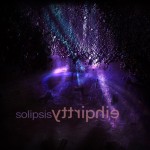
When Michael Plaster resurfaced in 2025 with "an extremely slow motion explosion", the album felt like a message that had spent two decades drifting through strange currents before finally reaching shore. It was deeply concerned with memory, entropy, and the peculiar beauty of things falling apart in slow motion. Listening to it was like wandering through someone else's dream and gradually discovering traces of your own reflection hidden inside it.
With "Solipsis", Plaster does not simply revisit that territory. He walks beyond it.
The second release under the yttriphie name feels less concerned with memory itself than with the consciousness experiencing that memory. If the previous album gazed outward toward the vast machinery of time and dissolution, "Solipsis" turns its attention inward, into the endlessly baffling chamber where perception, imagination, doubt, and identity all seem to share the same cramped apartment. Unsurprisingly, none of them get along particularly well.
Plaster remains best known to many listeners as a founding member of soulwhirlingsomewhere, one of the most beloved acts associated with Projekt Records' golden era. Yet yttriphie increasingly feels less like a nostalgic return and more like the continuation of a conversation interrupted by life, silence, and the passing of years. The sensibility remains recognisable: melancholy, introspective, and emotionally generous. But the perspective has shifted.
The title itself offers a clue. By removing the final "m" from "solipsism", Plaster transforms a philosophical doctrine into something slightly stranger and more personal. The album circles questions that have haunted thinkers for centuries: How can we know what is real? What is consciousness? Are we experiencing the world, or merely our interpretation of it? Thankfully, "Solipsis" never attempts to answer these questions. Humanity has already produced enough certainty about things it barely understands.
Instead, Plaster composes eight long-form pieces that inhabit uncertainty with remarkable grace. Across sixty-seven minutes, synthesizers, treated guitars, piano fragments, distant percussion, and countless half-glimpsed textures drift through one another like weather systems sharing the same sky. The music remains recognisably ambient, yet it possesses a narrative instinct that prevents it from becoming static. Every piece feels like a journey, however abstract its destination may be.
What distinguishes "Solipsis" from its predecessor is its increased sense of contrast. The previous album often resembled a continuous state of suspended reflection. Here, emotional weather changes unexpectedly. Gentle passages darken. Seemingly ominous textures soften into tenderness. Beauty and unease become inseparable companions, each revealing new dimensions within the other.
"Paddock of Skies" exemplifies this beautifully. Its immense duration allows Plaster to unfold ideas with patient confidence, gradually revealing hidden details buried beneath luminous surfaces. Sounds emerge and recede like distant landmarks seen through rain. The effect is immersive without ever becoming overwhelming.
That rain imagery proves difficult to escape throughout the record. Much like the strongest moments on "an extremely slow motion explosion", these compositions often evoke landscapes suspended between external reality and emotional projection. One is never entirely certain whether the storm exists outside the window or within the listener. The distinction gradually loses importance.
The album's centrepiece, "The Pulpy Center", introduces a welcome increase in density and momentum. Horn-like textures, percussion, and swelling synthesizers gather into one of the record's most dramatic passages. Yet even here, Plaster resists the temptation of grandiosity. The music expands rather than explodes. It accumulates pressure without seeking release. The result feels more psychologically complex than a conventional climax.
Meanwhile, "Everything is Disappearing" emerges as perhaps the album's emotional core. The title echoes themes present throughout Plaster's recent work, but the perspective feels different. Rather than contemplating disappearance as loss, the piece seems to accept impermanence as a condition of existence. There is sadness here, certainly, but also curiosity. The music asks what remains when familiar structures dissolve.
This sense of inquiry permeates the entire album. The tracks do not function as static ambient environments so much as thought experiments rendered in sound. Not intellectual exercises, but emotional investigations. Each composition explores a particular state of mind, tracing its contours without rushing toward conclusions.
Plaster's experience as a songwriter continues to shape his approach, even when traditional song structures are absent. Beneath the drifting atmospheres lies a strong sense of direction. Themes return in altered forms. Tensions emerge and resolve. Emotional arcs develop naturally. The listener is never simply floating. There is always movement, however subtle.
The closing "Underplump" serves as a fitting conclusion, gathering many of the album's recurring qualities into a final meditation on perception and uncertainty. By the time its last sounds fade, one has the sensation of waking from an unusually vivid dream and briefly questioning which side of sleep constitutes reality.
Like its predecessor, "Solipsis" thrives on ambiguity, but it deploys that ambiguity differently. "An Extremely Slow Motion Explosion" explored the poetry of dissolution, finding beauty in gradual collapse. "Solipsis" examines the observer standing amidst the fragments, wondering who is doing the observing in the first place.
The result is a richer, more expansive work that deepens rather than repeats the concerns of its predecessor. Michael Plaster has created an album that feels philosophical without becoming academic, emotional without becoming sentimental, and immersive without losing its sense of narrative purpose.
For a record built around the possibility that consciousness might be the only certainty available to us, it displays a remarkable generosity toward the unknown. It doesn't seek answers. It cultivates wonder.
And sometimes wonder is the most honest response available.
With "Solipsis", Plaster does not simply revisit that territory. He walks beyond it.
The second release under the yttriphie name feels less concerned with memory itself than with the consciousness experiencing that memory. If the previous album gazed outward toward the vast machinery of time and dissolution, "Solipsis" turns its attention inward, into the endlessly baffling chamber where perception, imagination, doubt, and identity all seem to share the same cramped apartment. Unsurprisingly, none of them get along particularly well.
Plaster remains best known to many listeners as a founding member of soulwhirlingsomewhere, one of the most beloved acts associated with Projekt Records' golden era. Yet yttriphie increasingly feels less like a nostalgic return and more like the continuation of a conversation interrupted by life, silence, and the passing of years. The sensibility remains recognisable: melancholy, introspective, and emotionally generous. But the perspective has shifted.
The title itself offers a clue. By removing the final "m" from "solipsism", Plaster transforms a philosophical doctrine into something slightly stranger and more personal. The album circles questions that have haunted thinkers for centuries: How can we know what is real? What is consciousness? Are we experiencing the world, or merely our interpretation of it? Thankfully, "Solipsis" never attempts to answer these questions. Humanity has already produced enough certainty about things it barely understands.
Instead, Plaster composes eight long-form pieces that inhabit uncertainty with remarkable grace. Across sixty-seven minutes, synthesizers, treated guitars, piano fragments, distant percussion, and countless half-glimpsed textures drift through one another like weather systems sharing the same sky. The music remains recognisably ambient, yet it possesses a narrative instinct that prevents it from becoming static. Every piece feels like a journey, however abstract its destination may be.
What distinguishes "Solipsis" from its predecessor is its increased sense of contrast. The previous album often resembled a continuous state of suspended reflection. Here, emotional weather changes unexpectedly. Gentle passages darken. Seemingly ominous textures soften into tenderness. Beauty and unease become inseparable companions, each revealing new dimensions within the other.
"Paddock of Skies" exemplifies this beautifully. Its immense duration allows Plaster to unfold ideas with patient confidence, gradually revealing hidden details buried beneath luminous surfaces. Sounds emerge and recede like distant landmarks seen through rain. The effect is immersive without ever becoming overwhelming.
That rain imagery proves difficult to escape throughout the record. Much like the strongest moments on "an extremely slow motion explosion", these compositions often evoke landscapes suspended between external reality and emotional projection. One is never entirely certain whether the storm exists outside the window or within the listener. The distinction gradually loses importance.
The album's centrepiece, "The Pulpy Center", introduces a welcome increase in density and momentum. Horn-like textures, percussion, and swelling synthesizers gather into one of the record's most dramatic passages. Yet even here, Plaster resists the temptation of grandiosity. The music expands rather than explodes. It accumulates pressure without seeking release. The result feels more psychologically complex than a conventional climax.
Meanwhile, "Everything is Disappearing" emerges as perhaps the album's emotional core. The title echoes themes present throughout Plaster's recent work, but the perspective feels different. Rather than contemplating disappearance as loss, the piece seems to accept impermanence as a condition of existence. There is sadness here, certainly, but also curiosity. The music asks what remains when familiar structures dissolve.
This sense of inquiry permeates the entire album. The tracks do not function as static ambient environments so much as thought experiments rendered in sound. Not intellectual exercises, but emotional investigations. Each composition explores a particular state of mind, tracing its contours without rushing toward conclusions.
Plaster's experience as a songwriter continues to shape his approach, even when traditional song structures are absent. Beneath the drifting atmospheres lies a strong sense of direction. Themes return in altered forms. Tensions emerge and resolve. Emotional arcs develop naturally. The listener is never simply floating. There is always movement, however subtle.
The closing "Underplump" serves as a fitting conclusion, gathering many of the album's recurring qualities into a final meditation on perception and uncertainty. By the time its last sounds fade, one has the sensation of waking from an unusually vivid dream and briefly questioning which side of sleep constitutes reality.
Like its predecessor, "Solipsis" thrives on ambiguity, but it deploys that ambiguity differently. "An Extremely Slow Motion Explosion" explored the poetry of dissolution, finding beauty in gradual collapse. "Solipsis" examines the observer standing amidst the fragments, wondering who is doing the observing in the first place.
The result is a richer, more expansive work that deepens rather than repeats the concerns of its predecessor. Michael Plaster has created an album that feels philosophical without becoming academic, emotional without becoming sentimental, and immersive without losing its sense of narrative purpose.
For a record built around the possibility that consciousness might be the only certainty available to us, it displays a remarkable generosity toward the unknown. It doesn't seek answers. It cultivates wonder.
And sometimes wonder is the most honest response available.
Hederosgruppen: Torsdag 24 april 2025
Artist: Hederosgruppen (@)
Title: Torsdag 24 april 2025
Format: CD + Download
Label: HOOB Records (@)
Rated:
Title: Torsdag 24 april 2025
Format: CD + Download
Label: HOOB Records (@)
Rated:
Some live albums are planned with military precision. Microphones are carefully positioned, performances are chosen months in advance, and musicians become acutely aware that posterity is listening. "Torsdag 24 april 2025" emerged through a far more appealing method: somebody simply pressed record without telling the band. Humanity occasionally stumbles into good ideas by accident, and this album is one of those fortunate cases.
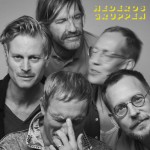
Captured at Jazzstudion in Umeå during a sold-out concert, Hederosgruppen's first live release documents a band operating without the self-consciousness that often accompanies official recordings. There is no sense of musicians preserving a legacy. Instead, there is only the evening itself: five players responding to each other, to the room, and to an audience whose anticipation seems to vibrate through every note.
The story of Hederosgruppen is, in many ways, a story about collective chemistry. Originally assembled by pianist Martin Hederos, whose work with Tonbruket and The Soundtrack of Our Lives had already established him as one of Sweden's most distinctive musicians, the ensemble quickly evolved beyond the concept of a leader with accompanists. Today, the group functions as a genuinely democratic organism, with all five members contributing compositions and ideas. In jazz, where ego can occasionally arrive before the instruments are unpacked, such equality remains refreshingly uncommon.
That collective spirit defines "Torsdag 24 april 2025". The album never feels like a showcase for individual virtuosity, despite the obvious technical prowess on display. Instead, it resembles a conversation among exceptionally articulate friends who frequently interrupt one another, finish each other's sentences, and somehow emerge with a more interesting story because of it.
From the opening "Luftskepp", the band's approach becomes immediately clear. Themes appear and dissolve with remarkable fluidity. Rhythms shift direction without warning. Melodies emerge from unlikely corners before being handed off to another instrument. Yet for all its unpredictability, the music never feels chaotic. There is an internal logic at work, a shared intuition that allows the musicians to navigate abrupt turns with almost telepathic ease.
Part of Hederosgruppen's appeal lies in their refusal to respect stylistic boundaries. Jazz remains the obvious reference point, but folk traditions, chamber music, free improvisation, cinematic atmospheres, and even traces of popular songwriting continuously drift through the music. The result is neither fusion nor pastiche. It feels more like a natural ecosystem where different influences coexist without needing to justify their presence.
Emil Strandberg's trumpet frequently serves as an emotional catalyst, capable of moving from lyrical warmth to sharp-edged urgency within a single phrase. Andreas Sjögren's saxophones provide both momentum and texture, weaving lines that alternately challenge and support the ensemble. Beneath them, Josef Kallerdahl's bass and Konrad Agnas' drums create an elastic foundation that can swing, stumble, sprint, or hover depending on the demands of the moment. At the centre sits Hederos, whose piano and organ work often acts less as a lead voice than as a source of constant provocation, nudging the music into unexpected territory.
Track titles such as "HÄr kommer en dikt jag skrev inatt" ("Here Comes a Poem I Wrote Last Night") suggest a playful sensibility that carries through the entire performance. There is humour embedded within the music, not in the form of novelty or irony, but in the band's willingness to embrace surprise. One gets the impression that even the musicians are occasionally delighted by what happens next.
"Lurlåt" and "Mjuk grupp" provide particularly vivid examples of the ensemble's dynamic range. The former unfolds with a mischievous energy that seems perpetually on the verge of transforming into something else, while the latter explores a more spacious and reflective mood without sacrificing momentum. Throughout, the musicians display an impressive ability to balance complexity with accessibility. The music remains intricate, but never academic. Curious, but never aloof.
Perhaps the album's greatest strength is its sense of presence. Many contemporary recordings strive for perfection, sanding away imperfections until all evidence of risk has disappeared. Hederosgruppen embrace the opposite philosophy. These performances breathe. Tiny imperfections remain intact. Tempos stretch and contract. Decisions are made in real time. The listener hears not only what the musicians know, but also what they are discovering.
This quality becomes especially apparent during "Allt ledde hit!" whose title translates roughly as "Everything Led Here!" It functions almost as an accidental mission statement for the album. Every previous rehearsal, every tour, every individual musical background converges in these moments of collective creation. Not toward a grand climax, but toward a shared experience.
The closing "Jennie" leaves a lingering impression of warmth and possibility. Rather than ending with a dramatic flourish, the performance feels like a door left slightly open, suggesting that the conversation could easily continue long after the recording stops.
What makes "Torsdag 24 april 2025" so rewarding is not merely the quality of the musicianship, impressive though it is. It is the reminder that music remains, at its core, a social act. Five people listening, responding, and trusting one another enough to leap into uncertainty together. In an era increasingly dominated by algorithms designed to predict our preferences before we know them ourselves, there is something quietly radical about a band dedicated to surprise.
This album captures that surprise in its natural habitat. Not polished into a monument, but alive, restless, and gloriously present. Like the best conversations, it leaves you with the feeling that something meaningful happened, even if you're not entirely sure how.
Captured at Jazzstudion in Umeå during a sold-out concert, Hederosgruppen's first live release documents a band operating without the self-consciousness that often accompanies official recordings. There is no sense of musicians preserving a legacy. Instead, there is only the evening itself: five players responding to each other, to the room, and to an audience whose anticipation seems to vibrate through every note.
The story of Hederosgruppen is, in many ways, a story about collective chemistry. Originally assembled by pianist Martin Hederos, whose work with Tonbruket and The Soundtrack of Our Lives had already established him as one of Sweden's most distinctive musicians, the ensemble quickly evolved beyond the concept of a leader with accompanists. Today, the group functions as a genuinely democratic organism, with all five members contributing compositions and ideas. In jazz, where ego can occasionally arrive before the instruments are unpacked, such equality remains refreshingly uncommon.
That collective spirit defines "Torsdag 24 april 2025". The album never feels like a showcase for individual virtuosity, despite the obvious technical prowess on display. Instead, it resembles a conversation among exceptionally articulate friends who frequently interrupt one another, finish each other's sentences, and somehow emerge with a more interesting story because of it.
From the opening "Luftskepp", the band's approach becomes immediately clear. Themes appear and dissolve with remarkable fluidity. Rhythms shift direction without warning. Melodies emerge from unlikely corners before being handed off to another instrument. Yet for all its unpredictability, the music never feels chaotic. There is an internal logic at work, a shared intuition that allows the musicians to navigate abrupt turns with almost telepathic ease.
Part of Hederosgruppen's appeal lies in their refusal to respect stylistic boundaries. Jazz remains the obvious reference point, but folk traditions, chamber music, free improvisation, cinematic atmospheres, and even traces of popular songwriting continuously drift through the music. The result is neither fusion nor pastiche. It feels more like a natural ecosystem where different influences coexist without needing to justify their presence.
Emil Strandberg's trumpet frequently serves as an emotional catalyst, capable of moving from lyrical warmth to sharp-edged urgency within a single phrase. Andreas Sjögren's saxophones provide both momentum and texture, weaving lines that alternately challenge and support the ensemble. Beneath them, Josef Kallerdahl's bass and Konrad Agnas' drums create an elastic foundation that can swing, stumble, sprint, or hover depending on the demands of the moment. At the centre sits Hederos, whose piano and organ work often acts less as a lead voice than as a source of constant provocation, nudging the music into unexpected territory.
Track titles such as "HÄr kommer en dikt jag skrev inatt" ("Here Comes a Poem I Wrote Last Night") suggest a playful sensibility that carries through the entire performance. There is humour embedded within the music, not in the form of novelty or irony, but in the band's willingness to embrace surprise. One gets the impression that even the musicians are occasionally delighted by what happens next.
"Lurlåt" and "Mjuk grupp" provide particularly vivid examples of the ensemble's dynamic range. The former unfolds with a mischievous energy that seems perpetually on the verge of transforming into something else, while the latter explores a more spacious and reflective mood without sacrificing momentum. Throughout, the musicians display an impressive ability to balance complexity with accessibility. The music remains intricate, but never academic. Curious, but never aloof.
Perhaps the album's greatest strength is its sense of presence. Many contemporary recordings strive for perfection, sanding away imperfections until all evidence of risk has disappeared. Hederosgruppen embrace the opposite philosophy. These performances breathe. Tiny imperfections remain intact. Tempos stretch and contract. Decisions are made in real time. The listener hears not only what the musicians know, but also what they are discovering.
This quality becomes especially apparent during "Allt ledde hit!" whose title translates roughly as "Everything Led Here!" It functions almost as an accidental mission statement for the album. Every previous rehearsal, every tour, every individual musical background converges in these moments of collective creation. Not toward a grand climax, but toward a shared experience.
The closing "Jennie" leaves a lingering impression of warmth and possibility. Rather than ending with a dramatic flourish, the performance feels like a door left slightly open, suggesting that the conversation could easily continue long after the recording stops.
What makes "Torsdag 24 april 2025" so rewarding is not merely the quality of the musicianship, impressive though it is. It is the reminder that music remains, at its core, a social act. Five people listening, responding, and trusting one another enough to leap into uncertainty together. In an era increasingly dominated by algorithms designed to predict our preferences before we know them ourselves, there is something quietly radical about a band dedicated to surprise.
This album captures that surprise in its natural habitat. Not polished into a monument, but alive, restless, and gloriously present. Like the best conversations, it leaves you with the feeling that something meaningful happened, even if you're not entirely sure how.
Linnéa Talp: Variations for Light Waves
Artist: Linnéa Talp
Title: Variations for Light Waves
Format: LP
Label: Thanatosis Produktion (@)
Rated:

Title: Variations for Light Waves
Format: LP
Label: Thanatosis Produktion (@)
Rated:
There is a peculiar courage required to make quiet music. Not the kind of quiet that functions as decorative ambience while someone answers emails or wonders where they left their keys, but the kind that asks for genuine attention. The kind that forces listeners to confront the uncomfortable possibility that silence may contain more information than noise. On "Variations for Light Waves", Swedish composer Linnéa Talp embraces precisely this challenge, creating a record whose most remarkable achievement is not what it adds to the air, but how carefully it inhabits it.
Talp has been gradually moving toward this territory for years. Before focusing on minimal composition and improvisation, she worked under the moniker Deerest, crafting songs that already hinted at an unusual sensitivity toward listening itself. The title of her 2020 album "Cochlea" now feels almost prophetic: the inner ear becoming both subject and instrument, listening elevated from passive reception to active practice. Since then, her work has increasingly explored breath, resonance, and the fragile threshold where sound emerges from silence.
"Variations for Light Waves" feels less like a collection of compositions than an extended study of attention. Recorded across several pipe organs in Sweden over a four-year period, the album examines the instrument not as a monument of ecclesiastical grandeur but as a living organism. The pipe organ, after all, is essentially a machine for transforming air into architecture. Talp seems fascinated by the mechanics of that transformation, by the way breath becomes vibration and vibration becomes emotional space.
From the opening "She Came Out of the White Fog", the album establishes its central concern with fragility. The organ's pipes struggle for air, producing tones that feel vulnerable and slightly unstable. Many musicians spend their careers attempting to make instruments sound more powerful. Talp appears more interested in the opposite question: what happens when an instrument reveals its limitations? The answer, it turns out, is often more moving than perfection.
Throughout the record, chords are treated less as harmonic destinations than as environments to inhabit. Talp lingers within them, examining their internal colours and microscopic shifts with the patience of someone studying changes in light across a winter landscape. The title itself proves revealing. These are not variations in the classical sense, where themes are transformed through compositional ingenuity. These are variations of light itself: changing angles, altered densities, subtle refractions.
The centrepiece "Air on Both Sides", recorded with veteran Swedish improviser Christer Bothén on contrabass clarinet, unfolds with extraordinary restraint. The two musicians seem less interested in dialogue than coexistence. Their sounds drift alongside one another like neighbouring weather systems, occasionally converging, occasionally separating, always maintaining a sense of mutual respect. In lesser hands, such sparseness could become austere. Here it feels generous.
Much of this generosity stems from Talp's remarkable understanding of space. Every sound appears positioned with careful consideration of its surroundings. The pipe organ's resonances are allowed to bloom naturally, while subtle appearances of modular synthesis gently blur distinctions between acoustic and electronic sources. One often loses track of where one sound ends and another begins. This ambiguity becomes part of the album's quiet magic.
The presence of trombonist Mats Äleklint on selected pieces further enriches the sonic palette without disrupting the album's cohesion. His contributions seem to emerge from within the organ itself, as though the instrument had suddenly developed additional voices hidden deep within its wooden frame. The collaborations throughout the album demonstrate an unusual degree of trust. Nobody appears interested in occupying the foreground.
Thematically, "Variations for Light Waves" is deeply intertwined with memory, landscape, and transformation. Talp has spoken about childhood experiences by the sea, about light emerging through thick fog, and about the birth of her daughter. These associations are never illustrated directly. Instead, they exist as emotional traces embedded within the music's structure. The pieces feel shaped by lived experience without becoming autobiographical documents.
This relationship between the personal and the elemental gives the album much of its emotional force. Water, air, fog, light: these recurring images suggest phenomena that are both intimate and universal. They resist ownership. They belong to everyone and no one. Talp's music operates similarly, inviting listeners into spaces that feel profoundly personal while remaining open to individual interpretation.
The closing title track provides the album's most striking demonstration of impermanence. Descending chordal patterns slowly unravel, losing stability and definition as they proceed. Yet the process never feels tragic. There is tenderness in the dismantling, an acceptance that transformation is inseparable from existence itself. The music does not mourn change; it inhabits it.
In an era increasingly dominated by acceleration, "Variations for Light Waves" offers a different proposition. It suggests that meaning may reside not in constant movement but in sustained attention. That listening can be a physical act. That a breath, a chord, a faint resonance hanging in the air may contain entire worlds if one remains present long enough.
Many records ask to be understood. Linnéa Talp's asks to be listened to. The distinction may seem small, but it changes everything. Like light moving through fog, the album reveals itself gradually, softly, and without certainty. By the end, one realises that its true subject is neither the organ nor the landscape nor even memory itself. It is perception: that fragile, miraculous process through which the world continuously arrives.
And for forty minutes or so, Talp makes that arrival feel new again.
Talp has been gradually moving toward this territory for years. Before focusing on minimal composition and improvisation, she worked under the moniker Deerest, crafting songs that already hinted at an unusual sensitivity toward listening itself. The title of her 2020 album "Cochlea" now feels almost prophetic: the inner ear becoming both subject and instrument, listening elevated from passive reception to active practice. Since then, her work has increasingly explored breath, resonance, and the fragile threshold where sound emerges from silence.
"Variations for Light Waves" feels less like a collection of compositions than an extended study of attention. Recorded across several pipe organs in Sweden over a four-year period, the album examines the instrument not as a monument of ecclesiastical grandeur but as a living organism. The pipe organ, after all, is essentially a machine for transforming air into architecture. Talp seems fascinated by the mechanics of that transformation, by the way breath becomes vibration and vibration becomes emotional space.
From the opening "She Came Out of the White Fog", the album establishes its central concern with fragility. The organ's pipes struggle for air, producing tones that feel vulnerable and slightly unstable. Many musicians spend their careers attempting to make instruments sound more powerful. Talp appears more interested in the opposite question: what happens when an instrument reveals its limitations? The answer, it turns out, is often more moving than perfection.
Throughout the record, chords are treated less as harmonic destinations than as environments to inhabit. Talp lingers within them, examining their internal colours and microscopic shifts with the patience of someone studying changes in light across a winter landscape. The title itself proves revealing. These are not variations in the classical sense, where themes are transformed through compositional ingenuity. These are variations of light itself: changing angles, altered densities, subtle refractions.
The centrepiece "Air on Both Sides", recorded with veteran Swedish improviser Christer Bothén on contrabass clarinet, unfolds with extraordinary restraint. The two musicians seem less interested in dialogue than coexistence. Their sounds drift alongside one another like neighbouring weather systems, occasionally converging, occasionally separating, always maintaining a sense of mutual respect. In lesser hands, such sparseness could become austere. Here it feels generous.
Much of this generosity stems from Talp's remarkable understanding of space. Every sound appears positioned with careful consideration of its surroundings. The pipe organ's resonances are allowed to bloom naturally, while subtle appearances of modular synthesis gently blur distinctions between acoustic and electronic sources. One often loses track of where one sound ends and another begins. This ambiguity becomes part of the album's quiet magic.
The presence of trombonist Mats Äleklint on selected pieces further enriches the sonic palette without disrupting the album's cohesion. His contributions seem to emerge from within the organ itself, as though the instrument had suddenly developed additional voices hidden deep within its wooden frame. The collaborations throughout the album demonstrate an unusual degree of trust. Nobody appears interested in occupying the foreground.
Thematically, "Variations for Light Waves" is deeply intertwined with memory, landscape, and transformation. Talp has spoken about childhood experiences by the sea, about light emerging through thick fog, and about the birth of her daughter. These associations are never illustrated directly. Instead, they exist as emotional traces embedded within the music's structure. The pieces feel shaped by lived experience without becoming autobiographical documents.
This relationship between the personal and the elemental gives the album much of its emotional force. Water, air, fog, light: these recurring images suggest phenomena that are both intimate and universal. They resist ownership. They belong to everyone and no one. Talp's music operates similarly, inviting listeners into spaces that feel profoundly personal while remaining open to individual interpretation.
The closing title track provides the album's most striking demonstration of impermanence. Descending chordal patterns slowly unravel, losing stability and definition as they proceed. Yet the process never feels tragic. There is tenderness in the dismantling, an acceptance that transformation is inseparable from existence itself. The music does not mourn change; it inhabits it.
In an era increasingly dominated by acceleration, "Variations for Light Waves" offers a different proposition. It suggests that meaning may reside not in constant movement but in sustained attention. That listening can be a physical act. That a breath, a chord, a faint resonance hanging in the air may contain entire worlds if one remains present long enough.
Many records ask to be understood. Linnéa Talp's asks to be listened to. The distinction may seem small, but it changes everything. Like light moving through fog, the album reveals itself gradually, softly, and without certainty. By the end, one realises that its true subject is neither the organ nor the landscape nor even memory itself. It is perception: that fragile, miraculous process through which the world continuously arrives.
And for forty minutes or so, Talp makes that arrival feel new again.