
Browse by Genre
Industrial Music / Industrial Metal / Aggro Industrial / Electro Metal
Industrial Noise / Power Noise / Harsh Noise
Synth Pop / Electro Pop / Synth-Electronica
Techno / Trance / Goa / Drum'n'Bass / Jungle / Tribal / Trip-Hop
Ambient / Electronica / Ethereal / Dub / Soundscapes / Abstract
Experimental / Avantgarde / Weird & Wired / Glitch / Noise / Field Recording
Dark / Gothic / Wave / New Wave / Dark Wave / Industrial Gothic
New Music / Downtown / Avantgarde Jazz / New Classical / World
Search Reviews
Music Reviews
Black Rain: Obliteration Bliss

Black Rain has always sounded like a shortwave transmission picked up at the end of history, and "Obliteration Bliss" does nothing to correct that impression. If anything, it leans into it harder, calmly, with the confidence of someone who has been documenting collapse for decades and no longer feels the need to raise their voice.
Stuart Argabright’s trajectory is long and oddly coherent. From Ike Yard onward, his work has treated machines not as tools but as witnesses: exhausted, semi-sentient devices mumbling through the aftermath. On "Obliteration Bliss", released on Room40, that perspective feels fully internalized. This is not a record about apocalypse as spectacle. It’s about what keeps running after the spectacle is over. Appliances still speak. Automated voices still list groceries. Systems continue, out of habit, long after meaning has evacuated the building.
The album unfolds like a slow pan across abandoned infrastructures. Fragmented speech appears and dissolves, drifting between broken English, Japanese, Korean, and Chinese, not as multicultural gesture but as debris. Language here is malfunctioning code. Zanias’ voice, when it emerges, doesn’t dominate; it flickers, human but partially absorbed into the circuitry. Presence is never stable. Everything is already on its way out.
Musically, "Obliteration Bliss" sits in a carefully degraded zone between industrial, ambient, and post-techno drift. Rhythms surface briefly, then erode. Guitars scrape and shimmer like corroded metal under low light. Modular synths breathe and convulse rather than pulse. Tracks such as “Obliterine Silvergreen” and “Atomisieren” feel less composed than weathered, as if shaped by time, dust, and electrical interference rather than intention.
There is a strange serenity running through the album, hinted at in its title. Obliteration is not presented as violent climax but as condition. “All Snowflake Melt” and “Sacred Battlegrounds” pass quickly, almost modestly, while longer pieces like “50 Signs Of Rain : Xenotime” stretch into a kind of suspended vigilance. Nothing resolves. Nothing needs to. The recurring imagery of rain, ash, fog, and rivers suggests cycles that outlast human narratives, indifferent but not hostile.
“Black Mother Bardo”, with its added double bass, deepens the record’s sense of ritual and liminality. The reference to bardo, a transitional state, feels accurate. This is music that lives between systems, between cultures, between eras, between function and ruin. Lawrence English’s mix and mastering emphasize that in-betweenness, allowing details to blur without ever collapsing into mush. Sound here decays with dignity.
"Obliteration Bliss" does not try to shock, reassure, or explain. It documents. It lingers. It listens to machines talking to themselves and finds, against better judgment, something almost tender there. This is not comfort listening, but it is strangely intimate. Black Rain continues to map a world where everything is failing softly, and somehow still glowing.
Stuart Argabright’s trajectory is long and oddly coherent. From Ike Yard onward, his work has treated machines not as tools but as witnesses: exhausted, semi-sentient devices mumbling through the aftermath. On "Obliteration Bliss", released on Room40, that perspective feels fully internalized. This is not a record about apocalypse as spectacle. It’s about what keeps running after the spectacle is over. Appliances still speak. Automated voices still list groceries. Systems continue, out of habit, long after meaning has evacuated the building.
The album unfolds like a slow pan across abandoned infrastructures. Fragmented speech appears and dissolves, drifting between broken English, Japanese, Korean, and Chinese, not as multicultural gesture but as debris. Language here is malfunctioning code. Zanias’ voice, when it emerges, doesn’t dominate; it flickers, human but partially absorbed into the circuitry. Presence is never stable. Everything is already on its way out.
Musically, "Obliteration Bliss" sits in a carefully degraded zone between industrial, ambient, and post-techno drift. Rhythms surface briefly, then erode. Guitars scrape and shimmer like corroded metal under low light. Modular synths breathe and convulse rather than pulse. Tracks such as “Obliterine Silvergreen” and “Atomisieren” feel less composed than weathered, as if shaped by time, dust, and electrical interference rather than intention.
There is a strange serenity running through the album, hinted at in its title. Obliteration is not presented as violent climax but as condition. “All Snowflake Melt” and “Sacred Battlegrounds” pass quickly, almost modestly, while longer pieces like “50 Signs Of Rain : Xenotime” stretch into a kind of suspended vigilance. Nothing resolves. Nothing needs to. The recurring imagery of rain, ash, fog, and rivers suggests cycles that outlast human narratives, indifferent but not hostile.
“Black Mother Bardo”, with its added double bass, deepens the record’s sense of ritual and liminality. The reference to bardo, a transitional state, feels accurate. This is music that lives between systems, between cultures, between eras, between function and ruin. Lawrence English’s mix and mastering emphasize that in-betweenness, allowing details to blur without ever collapsing into mush. Sound here decays with dignity.
"Obliteration Bliss" does not try to shock, reassure, or explain. It documents. It lingers. It listens to machines talking to themselves and finds, against better judgment, something almost tender there. This is not comfort listening, but it is strangely intimate. Black Rain continues to map a world where everything is failing softly, and somehow still glowing.
Luz González: Bi Gezur

Luz González does not write tracks so much as she sets forces in motion and watches what survives. "Bi Gezur" unfolds like a compact but dense chapter in her ongoing investigation into bodies, friction, and unstable terrains, both physical and emotional. The sentence printed on the cover is not decorative poetry but a functional warning. These sounds will collide, merge, tear apart, and then calmly masquerade as landscape.
González’s background in sound art and electroacoustic composition is crucial, though never paraded like a diploma on the wall. Her music thinks with muscles rather than concepts. Rhythms arrive whipped and uneven, textures grind and smear, and distortion behaves less like an effect than like a condition of the air. Nothing here is ornamental. Each sound occupies space, pushes against it, tests its density. This is electronic music that understands its own weight.
The title, "Bi Gezur" - “two lies” in Basque - suggests misdirection, and the EP lives by that principle. Narrative gestures appear only to dissolve into abstraction, then re-emerge as something uncomfortably intimate. “Volverse paisaxe” opens the record by doing exactly that: becoming terrain, letting rhythm erode into contour. “Today Yesterday Tomorrow” toys with linear time until it buckles, while “Drawing Dinosaurs (Where can I hide my anger?)” channels tension into intricate, restless sound design that never quite releases its grip.
“Tsunami” hits without ceremony, a sudden compression of force rather than a dramatic build-up, followed by the brief, fragile suspension of “Óxido e flores”, which lasts just long enough to leave a bruise. The closing “Erreka” stretches out and earns its duration, drifting through industrial abrasion, submerged motion, and exposed vulnerability. González allows space to breathe without turning it into refuge. The sound keeps moving, alert, unsentimental.
"Bi Gezur" resists classification. It draws from experimental electronics, sound sculpture, and improvisational thinking without pledging loyalty to any single territory. What it offers instead is a physical listening experience, where anger, tenderness, and joy are treated as materials with texture and mass. This is not music that asks to be solved. It asks to be inhabited, even briefly, even at some cost. When it ends, the space it occupied feels altered, as if something passed through and left its trace.
González’s background in sound art and electroacoustic composition is crucial, though never paraded like a diploma on the wall. Her music thinks with muscles rather than concepts. Rhythms arrive whipped and uneven, textures grind and smear, and distortion behaves less like an effect than like a condition of the air. Nothing here is ornamental. Each sound occupies space, pushes against it, tests its density. This is electronic music that understands its own weight.
The title, "Bi Gezur" - “two lies” in Basque - suggests misdirection, and the EP lives by that principle. Narrative gestures appear only to dissolve into abstraction, then re-emerge as something uncomfortably intimate. “Volverse paisaxe” opens the record by doing exactly that: becoming terrain, letting rhythm erode into contour. “Today Yesterday Tomorrow” toys with linear time until it buckles, while “Drawing Dinosaurs (Where can I hide my anger?)” channels tension into intricate, restless sound design that never quite releases its grip.
“Tsunami” hits without ceremony, a sudden compression of force rather than a dramatic build-up, followed by the brief, fragile suspension of “Óxido e flores”, which lasts just long enough to leave a bruise. The closing “Erreka” stretches out and earns its duration, drifting through industrial abrasion, submerged motion, and exposed vulnerability. González allows space to breathe without turning it into refuge. The sound keeps moving, alert, unsentimental.
"Bi Gezur" resists classification. It draws from experimental electronics, sound sculpture, and improvisational thinking without pledging loyalty to any single territory. What it offers instead is a physical listening experience, where anger, tenderness, and joy are treated as materials with texture and mass. This is not music that asks to be solved. It asks to be inhabited, even briefly, even at some cost. When it ends, the space it occupied feels altered, as if something passed through and left its trace.
Dééfait: s/t

This EP does not introduce itself. It grabs you by the collar, mutters something in three languages, and drags you into a poorly lit room where repetition is law and volume is a physical condition. "Dééfait" is not interested in charm, balance, or your long-term wellbeing. It is interested in trance. Everything else is optional.
Formed in 2023 and already steeped in sweat and basement acoustics, Dééfait operates somewhere between krautrock’s obsessive forward motion, noise rock’s abrasion, and a kind of decaying psychedelia that smells faintly of ritual smoke and damp concrete. The lineup matters here. Two guitars that don’t negotiate, a bass that thickens the air rather than outlining it, drums that push relentlessly without ever quite settling, and Ric Lara’s voice, which doesn’t sing so much as inhabit multiple states of urgency at once.
The EP unfolds as six extended incantations. These are not songs in the traditional sense. There are no hooks waiting to rescue you, no choruses waving from a safe distance. Instead, each track behaves like a loop under pressure, stretching and deforming until something gives. What breaks is usually avoiding discomfort.
"We Love Each Other So Much That We Won’t Belong To Any Species Anymore" opens the record with a title that already sounds like a manifesto scribbled during a sleepless night. The track itself moves like a collective vow, desire and violence braided together. Love here is not sentimental. It’s corrosive, ecstatic, and oddly tender in its refusal to stay within recognizable forms.
"Molokh" sinks deeper, chewing on sacrifice and chemical imagery with a slow, punishing patience. The guitars feel less like riffs and more like surfaces being scraped. "BONDBONDBOND" tightens the focus, voices tangling and untangling in a sensual spiral that keeps slipping into compulsion. It’s uncomfortable in a deliberate way, like watching something you’re not sure you’re supposed to witness.
On the B-side, "Comatose Big Sun" drags heat and lethargy into the same space, while "Al’Ether" detonates whatever restraint was left. This is where Dééfait sounds closest to a live animal. Rhythms convulse, guitars surge, and the whole thing threatens to collapse under its own momentum, but never quite does. It’s exhausting. It’s effective.
The closer, "Wow! Ferreri Cooked For Us", ends the EP with a dark grin. Words are chewed, spat out, reprocessed. It feels like satire performed with clenched teeth. If this is humor, it’s the kind that laughs while the room is still on fire.
Recorded in a deliberately raw, DIY context and mixed without attempting to civilize it, the sound captures the band’s physical impact rather than polishing it into something respectable. References float around easily, from proto-punk savagery to krautrock repetition and noise extremism, but the EP never feels derivative. It feels inhabited.
Dééfait makes music like a ceremony without doctrine. Masks are inverted, roles dissolve, and repetition becomes both weapon and refuge. This debut doesn’t explain itself, doesn’t justify its intensity, and doesn’t care if you’re ready. It simply insists. And once it’s done, you’re left slightly disoriented, a bit drained, and strangely alert. Which, in this case, counts as success.
Formed in 2023 and already steeped in sweat and basement acoustics, Dééfait operates somewhere between krautrock’s obsessive forward motion, noise rock’s abrasion, and a kind of decaying psychedelia that smells faintly of ritual smoke and damp concrete. The lineup matters here. Two guitars that don’t negotiate, a bass that thickens the air rather than outlining it, drums that push relentlessly without ever quite settling, and Ric Lara’s voice, which doesn’t sing so much as inhabit multiple states of urgency at once.
The EP unfolds as six extended incantations. These are not songs in the traditional sense. There are no hooks waiting to rescue you, no choruses waving from a safe distance. Instead, each track behaves like a loop under pressure, stretching and deforming until something gives. What breaks is usually avoiding discomfort.
"We Love Each Other So Much That We Won’t Belong To Any Species Anymore" opens the record with a title that already sounds like a manifesto scribbled during a sleepless night. The track itself moves like a collective vow, desire and violence braided together. Love here is not sentimental. It’s corrosive, ecstatic, and oddly tender in its refusal to stay within recognizable forms.
"Molokh" sinks deeper, chewing on sacrifice and chemical imagery with a slow, punishing patience. The guitars feel less like riffs and more like surfaces being scraped. "BONDBONDBOND" tightens the focus, voices tangling and untangling in a sensual spiral that keeps slipping into compulsion. It’s uncomfortable in a deliberate way, like watching something you’re not sure you’re supposed to witness.
On the B-side, "Comatose Big Sun" drags heat and lethargy into the same space, while "Al’Ether" detonates whatever restraint was left. This is where Dééfait sounds closest to a live animal. Rhythms convulse, guitars surge, and the whole thing threatens to collapse under its own momentum, but never quite does. It’s exhausting. It’s effective.
The closer, "Wow! Ferreri Cooked For Us", ends the EP with a dark grin. Words are chewed, spat out, reprocessed. It feels like satire performed with clenched teeth. If this is humor, it’s the kind that laughs while the room is still on fire.
Recorded in a deliberately raw, DIY context and mixed without attempting to civilize it, the sound captures the band’s physical impact rather than polishing it into something respectable. References float around easily, from proto-punk savagery to krautrock repetition and noise extremism, but the EP never feels derivative. It feels inhabited.
Dééfait makes music like a ceremony without doctrine. Masks are inverted, roles dissolve, and repetition becomes both weapon and refuge. This debut doesn’t explain itself, doesn’t justify its intensity, and doesn’t care if you’re ready. It simply insists. And once it’s done, you’re left slightly disoriented, a bit drained, and strangely alert. Which, in this case, counts as success.
Rie Nakajima + David Toop: Is Spring A Sculpture?
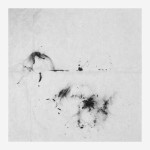
Artist: Rie Nakajima + David Toop (@)
Title: Is Spring A Sculpture?
Format: CD + Book
Label: Room40 (@)
Rated:

Title: Is Spring A Sculpture?
Format: CD + Book
Label: Room40 (@)
Rated:
The title already does most of the work. It asks a question, then refuses to answer it properly. Which is exactly the kind of behavior you would expect from Rie Nakajima and David Toop when left alone with time, emails, and an inconvenient global pause.
This project grows out of lockdown conversations, which sounds like a warning label, but turns out to be a strength. Confined situations tend to either flatten thought or sharpen it. Here, thought drifts, loops, sidesteps itself. Nakajima and Toop don’t use isolation as a dramatic backdrop. They treat it as a condition that alters attention. Things float away. Other things become strangely fixed. Sound behaves like memory does when it’s left unsupervised.
Both artists arrive with long histories of refusing rigid categories. Nakajima’s work has consistently treated everyday objects and fragile sounds as instruments that barely agree to exist. Toop, for decades now, has operated somewhere between music, writing, ethnography, improvisation, and gentle provocation. Together, they don’t collaborate so much as coexist, leaving space for accidents, humour, and partial listening.
The idea of sculpture hangs over the record like a polite misunderstanding. Sculpture is supposed to be solid, heavy, durable. This music is none of those things. Instead, it unfolds as duration, as gesture, as something that briefly takes shape and then moves on without asking permission. If there is mass here, it’s temporal. If there is weight, it’s attentional.
Across the four parts, sound behaves like a collection of small events that never demand hierarchy. Percussive ticks, airy resonances, quiet scrapes, near-silences. Nothing insists on being central. Part I introduces the logic gently, almost conversationally. By Part II and III, the listening deepens. You start noticing how often you stop trying to “follow” and simply let the sounds pass through, like light shifting across a room.
The long final part stretches this sensibility without urgency. At nearly half an hour, it never announces itself as a climax. Instead, it tests patience in a friendly way. Sounds appear, disappear, reappear altered. You might miss something. That’s fine. The record is comfortable with being partially ignored, which is rare and oddly generous.
Humour is present, but quietly. Not punchlines, more the amusement of two people enjoying how strange serious ideas become when you look at them from the side. The notion that a season could be a sculpture is absurd until you realize how much effort goes into pretending it isn’t. Spring arrives, changes everything, then leaves. No pedestal required.
The accompanying book matters here. Photographs, fragments, and visual traces don’t explain the music. They echo its logic. Documentation without authority. Evidence without conclusion. The design keeps things light, deliberately unmonumental.
Mastered by Lawrence English with a careful hand, the sound preserves fragility rather than polishing it away. Room40 continues to be exactly the right home for work that values listening as an active, slightly unreliable process.
"Is Spring A Sculpture?" doesn’t argue its case. It suggests. It lingers. It trusts that if you spend enough time with it, the question will stop feeling abstract and start feeling practical. You might not be able to touch these sculptures, but they have a way of rearranging how you notice things afterward. Which, inconveniently, is often the point.
This project grows out of lockdown conversations, which sounds like a warning label, but turns out to be a strength. Confined situations tend to either flatten thought or sharpen it. Here, thought drifts, loops, sidesteps itself. Nakajima and Toop don’t use isolation as a dramatic backdrop. They treat it as a condition that alters attention. Things float away. Other things become strangely fixed. Sound behaves like memory does when it’s left unsupervised.
Both artists arrive with long histories of refusing rigid categories. Nakajima’s work has consistently treated everyday objects and fragile sounds as instruments that barely agree to exist. Toop, for decades now, has operated somewhere between music, writing, ethnography, improvisation, and gentle provocation. Together, they don’t collaborate so much as coexist, leaving space for accidents, humour, and partial listening.
The idea of sculpture hangs over the record like a polite misunderstanding. Sculpture is supposed to be solid, heavy, durable. This music is none of those things. Instead, it unfolds as duration, as gesture, as something that briefly takes shape and then moves on without asking permission. If there is mass here, it’s temporal. If there is weight, it’s attentional.
Across the four parts, sound behaves like a collection of small events that never demand hierarchy. Percussive ticks, airy resonances, quiet scrapes, near-silences. Nothing insists on being central. Part I introduces the logic gently, almost conversationally. By Part II and III, the listening deepens. You start noticing how often you stop trying to “follow” and simply let the sounds pass through, like light shifting across a room.
The long final part stretches this sensibility without urgency. At nearly half an hour, it never announces itself as a climax. Instead, it tests patience in a friendly way. Sounds appear, disappear, reappear altered. You might miss something. That’s fine. The record is comfortable with being partially ignored, which is rare and oddly generous.
Humour is present, but quietly. Not punchlines, more the amusement of two people enjoying how strange serious ideas become when you look at them from the side. The notion that a season could be a sculpture is absurd until you realize how much effort goes into pretending it isn’t. Spring arrives, changes everything, then leaves. No pedestal required.
The accompanying book matters here. Photographs, fragments, and visual traces don’t explain the music. They echo its logic. Documentation without authority. Evidence without conclusion. The design keeps things light, deliberately unmonumental.
Mastered by Lawrence English with a careful hand, the sound preserves fragility rather than polishing it away. Room40 continues to be exactly the right home for work that values listening as an active, slightly unreliable process.
"Is Spring A Sculpture?" doesn’t argue its case. It suggests. It lingers. It trusts that if you spend enough time with it, the question will stop feeling abstract and start feeling practical. You might not be able to touch these sculptures, but they have a way of rearranging how you notice things afterward. Which, inconveniently, is often the point.
Paolo Tortora: Waves of Fading Memories
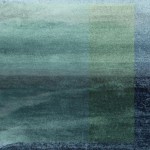
Artist: Paolo Tortora
Title: Waves of Fading Memories
Format: Tape + Download
Label: Torto Editions (@)
Rated:

Title: Waves of Fading Memories
Format: Tape + Download
Label: Torto Editions (@)
Rated:
Memory is unreliable. It edits without asking, loops details until they blur, replaces facts with atmospheres. Paolo Tortora seems perfectly comfortable with this problem. "Waves of Fading Memories" does not attempt to reconstruct the past. It lets it dissolve in real time, gently, stubbornly, one frequency at a time.
This cassette marks Tortora’s first solo outing after years spent inside the porous organism known as Japanese Gum, a project that treated krautrock, ambient, dub, and psychedelia less as genres than as climates. That sensibility hasn’t vanished. It has thinned out, slowed down, and turned inward. Where Japanese Gum often felt communal and expansive, this record feels solitary, coastal, and quietly obsessive.
The Ligurian Sea is not a postcard here. Its waves are broken down, stretched, filtered through guitar drones, analog pedals, and tape processes that refuse to behave like neutral tools. Natural sound and instrumental gesture blur until neither quite knows where it begins. The sea becomes texture. The guitar becomes weather. The synths hover like emotional residue rather than melody.
The album unfolds across four long chapters, all variations on the same fragile idea. "From a Memory" parts one through four don’t escalate or resolve. They circle. They return. They slightly misremember themselves. Listening feels less like following a path and more like wading into shallow water that keeps pulling you sideways. Progress happens, but quietly, almost shyly.
What Tortora does well is restraint. These pieces could easily collapse into formless drift, but they don’t. Subtle changes in density, slow shifts in harmonic pressure, and the grain of tape saturation keep the surface alive. There’s a physicality to the sound, an organic unevenness that resists the smoothness often associated with ambient music. This isn’t background. It’s an environment that notices you noticing it.
There’s also a soft melancholy at work, but not the dramatic kind. No grand statements, no cinematic sadness. More like the feeling of standing somewhere familiar and realizing you can’t quite place why it matters. The record’s title promises fading, and it delivers honestly. Nothing here is held too tightly. Everything is allowed to slip.
If there’s humor, it’s subtle and human. The idea that memories “have their own lives” sounds poetic until you realize it’s also inconvenient. They wander off. They refuse instructions. This album accepts that and builds around it, rather than trying to impose order. The waves keep coming, indifferent to narrative.
Mastered with care and presented on cassette, "Waves of Fading Memories" feels deliberately intimate. A format choice that matches the music’s scale and temperament. This is not a statement piece. It’s a patient one. A record that rewards deep listening, or half-listening, or drifting somewhere between the two.
Paolo Tortora doesn’t offer answers, and he doesn’t frame memory as something to recover. He treats it as a space you briefly inhabit before it reshapes itself. You leave changed, unsure how, carrying traces of sound that feel personal even if they aren’t yours. Which is probably the most honest way memory ever works.
This cassette marks Tortora’s first solo outing after years spent inside the porous organism known as Japanese Gum, a project that treated krautrock, ambient, dub, and psychedelia less as genres than as climates. That sensibility hasn’t vanished. It has thinned out, slowed down, and turned inward. Where Japanese Gum often felt communal and expansive, this record feels solitary, coastal, and quietly obsessive.
The Ligurian Sea is not a postcard here. Its waves are broken down, stretched, filtered through guitar drones, analog pedals, and tape processes that refuse to behave like neutral tools. Natural sound and instrumental gesture blur until neither quite knows where it begins. The sea becomes texture. The guitar becomes weather. The synths hover like emotional residue rather than melody.
The album unfolds across four long chapters, all variations on the same fragile idea. "From a Memory" parts one through four don’t escalate or resolve. They circle. They return. They slightly misremember themselves. Listening feels less like following a path and more like wading into shallow water that keeps pulling you sideways. Progress happens, but quietly, almost shyly.
What Tortora does well is restraint. These pieces could easily collapse into formless drift, but they don’t. Subtle changes in density, slow shifts in harmonic pressure, and the grain of tape saturation keep the surface alive. There’s a physicality to the sound, an organic unevenness that resists the smoothness often associated with ambient music. This isn’t background. It’s an environment that notices you noticing it.
There’s also a soft melancholy at work, but not the dramatic kind. No grand statements, no cinematic sadness. More like the feeling of standing somewhere familiar and realizing you can’t quite place why it matters. The record’s title promises fading, and it delivers honestly. Nothing here is held too tightly. Everything is allowed to slip.
If there’s humor, it’s subtle and human. The idea that memories “have their own lives” sounds poetic until you realize it’s also inconvenient. They wander off. They refuse instructions. This album accepts that and builds around it, rather than trying to impose order. The waves keep coming, indifferent to narrative.
Mastered with care and presented on cassette, "Waves of Fading Memories" feels deliberately intimate. A format choice that matches the music’s scale and temperament. This is not a statement piece. It’s a patient one. A record that rewards deep listening, or half-listening, or drifting somewhere between the two.
Paolo Tortora doesn’t offer answers, and he doesn’t frame memory as something to recover. He treats it as a space you briefly inhabit before it reshapes itself. You leave changed, unsure how, carrying traces of sound that feel personal even if they aren’t yours. Which is probably the most honest way memory ever works.