
Browse by Genre
Industrial Music / Industrial Metal / Aggro Industrial / Electro Metal
Industrial Noise / Power Noise / Harsh Noise
Synth Pop / Electro Pop / Synth-Electronica
Techno / Trance / Goa / Drum'n'Bass / Jungle / Tribal / Trip-Hop
Ambient / Electronica / Ethereal / Dub / Soundscapes / Abstract
Experimental / Avantgarde / Weird & Wired / Glitch / Noise / Field Recording
Dark / Gothic / Wave / New Wave / Dark Wave / Industrial Gothic
New Music / Downtown / Avantgarde Jazz / New Classical / World
Search Reviews
Music Reviews
Aukio Sound feat.John Follass: Hode Medio / Sakpata
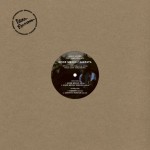
Artist: Aukio Sound feat.John Follass
Title: Hode Medio / Sakpata
Format: 12" + Download
Label: Futura Resistenza (@)
Rated:

Title: Hode Medio / Sakpata
Format: 12" + Download
Label: Futura Resistenza (@)
Rated:
There’s a particular kind of patience built into "Hode Medio / Sakpata". Not the trendy, lifestyle kind of patience - the real one, the sort that accumulates dust, sweat, distance, and unanswered questions. This record doesn’t rush because it already knows where it’s going. It took twelve years to get here; what’s another six minutes per side?
Aukio Sound’s path to this release reads less like a career move and more like a slow ethnographic drift. Helsinki-based, but mentally unmoored from neat geographies, he approaches electronic music as both social glue and solitary chamber - something you share in a room, but also something you disappear into alone. That duality hums quietly beneath every layer of this 12", shaping its peculiar calm. You can hear it in the way the beats walk rather than run, and in how the space around them feels inhabited rather than empty.
The voice of John Follass is the gravitational center here, and it’s treated with uncommon respect. Recorded in Grand-Popo in single takes back in 2013, his vocals arrive without theatricality - warm, direct, human. They don’t perform possession; they suggest presence. There’s something almost conversational in their tone, as if the microphone just happened to be there while something more important was happening. Dub techno often buries voices in fog; here the fog listens back.
Musically, Aukio Sound avoids the usual dub techno trap of fetishizing reduction for its own sake. Yes, the arrangements are stripped, but they’re not skeletal. They breathe. The rhythms lean into repetition without flattening into hypnosis-by-force. Polyrhythms surface gently, informed by voodou traditions without being dressed up as “world music seasoning”. Field recordings flicker at the edges, not as postcards but as residue - traces of a place remembered imperfectly, like humidity on the skin long after you’ve changed clothes.
“Hode Medio” moves with a grounded assurance, its triplet pulse quietly nudging the body while the synths hover somewhere between wood and vapor. It feels both terrestrial and slightly untethered, like walking at night and realizing you’ve been thinking in circles without noticing. “Sakpata”, meanwhile, loosens the grip even further. Echo bends the voice into soft spirals, the beat continues forward unbothered, and suddenly you’re no longer sure whether you’re listening or being listened to.
What makes this release quietly compelling is its refusal to dramatize its own backstory. Yes, it spans continents. Yes, it folds ritual, techno, dub, and ethnographic curiosity into a small physical object. But it never announces these facts. Instead, it lets them sediment. The result is music that feels lived-in rather than conceptualized - shaped by attention, revision, and the willingness to let ideas age before deciding what they are.
"Hode Medio / Sakpata" isn’t about trance as spectacle. It’s about focus as relief. About finding a narrow channel through the noise and staying there long enough for something to happen. Not transcendence, not revelation - just a moment where thought stops tripping over itself. In a culture addicted to immediacy, that might be the most quietly radical gesture of all.
Aukio Sound’s path to this release reads less like a career move and more like a slow ethnographic drift. Helsinki-based, but mentally unmoored from neat geographies, he approaches electronic music as both social glue and solitary chamber - something you share in a room, but also something you disappear into alone. That duality hums quietly beneath every layer of this 12", shaping its peculiar calm. You can hear it in the way the beats walk rather than run, and in how the space around them feels inhabited rather than empty.
The voice of John Follass is the gravitational center here, and it’s treated with uncommon respect. Recorded in Grand-Popo in single takes back in 2013, his vocals arrive without theatricality - warm, direct, human. They don’t perform possession; they suggest presence. There’s something almost conversational in their tone, as if the microphone just happened to be there while something more important was happening. Dub techno often buries voices in fog; here the fog listens back.
Musically, Aukio Sound avoids the usual dub techno trap of fetishizing reduction for its own sake. Yes, the arrangements are stripped, but they’re not skeletal. They breathe. The rhythms lean into repetition without flattening into hypnosis-by-force. Polyrhythms surface gently, informed by voodou traditions without being dressed up as “world music seasoning”. Field recordings flicker at the edges, not as postcards but as residue - traces of a place remembered imperfectly, like humidity on the skin long after you’ve changed clothes.
“Hode Medio” moves with a grounded assurance, its triplet pulse quietly nudging the body while the synths hover somewhere between wood and vapor. It feels both terrestrial and slightly untethered, like walking at night and realizing you’ve been thinking in circles without noticing. “Sakpata”, meanwhile, loosens the grip even further. Echo bends the voice into soft spirals, the beat continues forward unbothered, and suddenly you’re no longer sure whether you’re listening or being listened to.
What makes this release quietly compelling is its refusal to dramatize its own backstory. Yes, it spans continents. Yes, it folds ritual, techno, dub, and ethnographic curiosity into a small physical object. But it never announces these facts. Instead, it lets them sediment. The result is music that feels lived-in rather than conceptualized - shaped by attention, revision, and the willingness to let ideas age before deciding what they are.
"Hode Medio / Sakpata" isn’t about trance as spectacle. It’s about focus as relief. About finding a narrow channel through the noise and staying there long enough for something to happen. Not transcendence, not revelation - just a moment where thought stops tripping over itself. In a culture addicted to immediacy, that might be the most quietly radical gesture of all.
The Arms of Someone New: Susan Sleepwalking
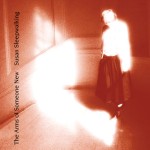
Artist: The Arms of Someone New (@)
Title: Susan Sleepwalking
Format: CD + Download
Label: Projekt (@)
Rated:

Title: Susan Sleepwalking
Format: CD + Download
Label: Projekt (@)
Rated:
There’s something quietly defiant about "Susan Sleepwalking" resurfacing forty years later, freshly remastered and unapologetically nocturnal. Not a comeback engineered for algorithms, but a slow reappearance - like a familiar figure you spot at dusk and aren’t sure is real until they pass close enough to breathe. The Arms of Someone New never chased the spotlight in 1985, and the album still doesn’t beg for attention now. It simply waits, confident that the right ears will wander by.
Formed by Steve Jones and Mel Eberle in the college-town half-light of Champaign-Urbana, The Arms of Someone New occupied a peculiar space even back then: adjacent to post-punk, flirting with college rock, but fundamentally invested in mood rather than momentum. "Susan Sleepwalking" was their opening statement, and it sounds like one - tentative, intimate, and stubbornly interior. The songs don’t rush. They drift, circle, hesitate. If this were cinema, it would be all lingering shots and meaningful silences.
The 2025 remaster doesn’t try to modernize the record, and that’s its greatest strength. Instead, it sharpens what was already there: the glassy synths, the soft mechanical pulse of early drum machines, guitars that feel less strummed than exhaled. Tracks like “St. Catherine” and “The Fisherman” retain their fragile gravity, suspended between romantic longing and emotional reserve. Vocals arrive veiled, never quite center stage, as if privacy itself were part of the arrangement.
What becomes clearer with time - and with better resolution - is how deliberate the restraint always was. These songs aren’t unfinished; they’re underlit. “With Louise” and “Susan Slept Here” don’t tell stories so much as suggest the existence of one just outside the frame. The effect is quietly addictive. You lean in, not because the band demands it, but because they refuse to spell things out.
The second disc, packed with demos, alternates, and rarities, acts like a sketchbook left open on a desk. You hear ideas branching, looping back, sometimes collapsing. It’s less about uncovering “lost classics” than about understanding the band’s internal logic - how repetition, minimalism, and atmosphere were not limitations, but chosen tools. Even at their roughest, these pieces carry the same inward pull.
Then there’s "Susan Dreaming", the third disc, which could have easily felt like an unnecessary appendix. Instead, it reframes the album through a new lens. Jones and Eberle reprocess the original material into an ambient-leaning electronic landscape that feels less like revisionism and more like afterimage. The melodies dissolve, rhythms evaporate, and what remains is pure residue - emotional dust, gently rearranged. It’s not nostalgic; it’s reflective, like revisiting a place you once lived in but now only recognize by smell and light.
What’s striking, listening now, is how little "Susan Sleepwalking" has aged - or perhaps how unconcerned it is with time altogether. It doesn’t sound retro so much as sidestepped by history. In an era obsessed with maximalism and confession-as-content, its quiet opacity feels almost radical. This is music that trusts ambiguity, that believes understatement can carry weight, that understands melancholy doesn’t need to announce itself loudly to linger.
"Susan Sleepwalking" remains what it always was: a record for insomniacs, wanderers, and people who prefer the long way home. The remaster doesn’t rewrite its story; it simply lets it speak a little more clearly in the dark. And if you miss its meaning on first listen, don’t worry - it was never meant to be fully awake anyway.
Formed by Steve Jones and Mel Eberle in the college-town half-light of Champaign-Urbana, The Arms of Someone New occupied a peculiar space even back then: adjacent to post-punk, flirting with college rock, but fundamentally invested in mood rather than momentum. "Susan Sleepwalking" was their opening statement, and it sounds like one - tentative, intimate, and stubbornly interior. The songs don’t rush. They drift, circle, hesitate. If this were cinema, it would be all lingering shots and meaningful silences.
The 2025 remaster doesn’t try to modernize the record, and that’s its greatest strength. Instead, it sharpens what was already there: the glassy synths, the soft mechanical pulse of early drum machines, guitars that feel less strummed than exhaled. Tracks like “St. Catherine” and “The Fisherman” retain their fragile gravity, suspended between romantic longing and emotional reserve. Vocals arrive veiled, never quite center stage, as if privacy itself were part of the arrangement.
What becomes clearer with time - and with better resolution - is how deliberate the restraint always was. These songs aren’t unfinished; they’re underlit. “With Louise” and “Susan Slept Here” don’t tell stories so much as suggest the existence of one just outside the frame. The effect is quietly addictive. You lean in, not because the band demands it, but because they refuse to spell things out.
The second disc, packed with demos, alternates, and rarities, acts like a sketchbook left open on a desk. You hear ideas branching, looping back, sometimes collapsing. It’s less about uncovering “lost classics” than about understanding the band’s internal logic - how repetition, minimalism, and atmosphere were not limitations, but chosen tools. Even at their roughest, these pieces carry the same inward pull.
Then there’s "Susan Dreaming", the third disc, which could have easily felt like an unnecessary appendix. Instead, it reframes the album through a new lens. Jones and Eberle reprocess the original material into an ambient-leaning electronic landscape that feels less like revisionism and more like afterimage. The melodies dissolve, rhythms evaporate, and what remains is pure residue - emotional dust, gently rearranged. It’s not nostalgic; it’s reflective, like revisiting a place you once lived in but now only recognize by smell and light.
What’s striking, listening now, is how little "Susan Sleepwalking" has aged - or perhaps how unconcerned it is with time altogether. It doesn’t sound retro so much as sidestepped by history. In an era obsessed with maximalism and confession-as-content, its quiet opacity feels almost radical. This is music that trusts ambiguity, that believes understatement can carry weight, that understands melancholy doesn’t need to announce itself loudly to linger.
"Susan Sleepwalking" remains what it always was: a record for insomniacs, wanderers, and people who prefer the long way home. The remaster doesn’t rewrite its story; it simply lets it speak a little more clearly in the dark. And if you miss its meaning on first listen, don’t worry - it was never meant to be fully awake anyway.
Ran Slavin: Neon Swans
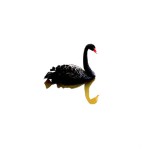
Artist: Ran Slavin (@)
Title: Neon Swans
Format: Download Only (MP3 + Lossless)
Label: Nocturnal Rainbow Recordings
Rated:
Title: Neon Swans
Format: Download Only (MP3 + Lossless)
Label: Nocturnal Rainbow Recordings
Rated:
With "Neon Swans", Ran Slavin doesn’t just release an album - he releases a climate. Nearly two hours long and articulated across thirty tracks, this is less a record than a slow-moving weather system, the kind that rolls in quietly and then refuses to leave your internal forecast unchanged. It’s ambitious, indulgent at times, and deliberately so: Slavin has never been interested in polite listening.
Slavin, long active at the intersection of electronic composition, sound art, and audiovisual practice, has spent years dissolving genre boundaries rather than decorating them. From his work on labels like Mille Plateaux, Sub Rosa, and Cronica to the ongoing curatorial logic of his own Nocturnal Rainbow imprint, his music often behaves like a system under test - stable enough to function, unstable enough to reveal its cracks. "Neon Swans" feels like the most vocal (literally and conceptually) chapter of that trajectory.
The album’s scale is immediately disarming. Thirty tracks could easily become a dumping ground, but here the abundance feels intentional: fragments, near-songs, instrumentals, vocal apparitions, and digital debris are arranged like a long corridor of interconnected rooms. You don’t remember every room distinctly, but you remember the way the building breathes. Slavin leans into fractured song forms, letting melody emerge briefly before dissolving back into texture, like a face glimpsed in a glitch and never fully recovered.
Vocals are everywhere, yet rarely behave like traditional lead performances. They flicker, loop, stretch, and blur - sometimes intimate, sometimes synthetic, sometimes hovering somewhere between human presence and interface residue. The repeated collaborators give the album a shifting sense of identity, as if "Neon Swans" were speaking in borrowed voices, testing emotional registers the way software tests beta features. Love, exhaustion, longing, and digital melancholy recur, but never settle into slogans.
Sonically, the record balances shimmer and erosion. Pads glow, rhythms stutter, high frequencies feel airbrushed while low-end pulses hint at systems under strain. Slavin’s production is meticulous without being sterile: even the cleanest moments feel slightly overheated, as if the circuits are enjoying themselves a bit too much. Tracks like “meant 2b” or “we--were” flirt with pop gravity, only to quietly sabotage it, pulling sentiment sideways instead of letting it land cleanly.
The swan metaphor at the heart of the album works precisely because it’s allowed to glitch. This is not elegance as surface beauty, but transformation as process - the white swan of harmony constantly shadowed by its darker, rarer twin. Beauty appears, yes, but it’s unstable, sometimes interrupted by errors, dropouts, or deliberate awkwardness. Slavin seems less interested in transcendence than in prolonged suspension: hovering between genres, moods, and states of attention.
The decision to release "Neon Swans" as a digital-only project with multiple alternate artworks feels aligned with its logic. This is music that resists singular framing. One cover would be a lie. One definitive version would miss the point. The album exists as a fluid object, adapting to how - and how long - you’re willing to listen.
"Neon Swans" is not an album you finish so much as one you inhabit temporarily. It asks for time, tolerance, and a willingness to get slightly lost. Not every moment demands your full attention, but over time the accumulation works its quiet spell. Like its title creatures, the music glides, glitches, and occasionally startles - reminding you that even in digital waters, elegance can still behave strangely. And that, frankly, is where it becomes interesting.
Slavin, long active at the intersection of electronic composition, sound art, and audiovisual practice, has spent years dissolving genre boundaries rather than decorating them. From his work on labels like Mille Plateaux, Sub Rosa, and Cronica to the ongoing curatorial logic of his own Nocturnal Rainbow imprint, his music often behaves like a system under test - stable enough to function, unstable enough to reveal its cracks. "Neon Swans" feels like the most vocal (literally and conceptually) chapter of that trajectory.
The album’s scale is immediately disarming. Thirty tracks could easily become a dumping ground, but here the abundance feels intentional: fragments, near-songs, instrumentals, vocal apparitions, and digital debris are arranged like a long corridor of interconnected rooms. You don’t remember every room distinctly, but you remember the way the building breathes. Slavin leans into fractured song forms, letting melody emerge briefly before dissolving back into texture, like a face glimpsed in a glitch and never fully recovered.
Vocals are everywhere, yet rarely behave like traditional lead performances. They flicker, loop, stretch, and blur - sometimes intimate, sometimes synthetic, sometimes hovering somewhere between human presence and interface residue. The repeated collaborators give the album a shifting sense of identity, as if "Neon Swans" were speaking in borrowed voices, testing emotional registers the way software tests beta features. Love, exhaustion, longing, and digital melancholy recur, but never settle into slogans.
Sonically, the record balances shimmer and erosion. Pads glow, rhythms stutter, high frequencies feel airbrushed while low-end pulses hint at systems under strain. Slavin’s production is meticulous without being sterile: even the cleanest moments feel slightly overheated, as if the circuits are enjoying themselves a bit too much. Tracks like “meant 2b” or “we--were” flirt with pop gravity, only to quietly sabotage it, pulling sentiment sideways instead of letting it land cleanly.
The swan metaphor at the heart of the album works precisely because it’s allowed to glitch. This is not elegance as surface beauty, but transformation as process - the white swan of harmony constantly shadowed by its darker, rarer twin. Beauty appears, yes, but it’s unstable, sometimes interrupted by errors, dropouts, or deliberate awkwardness. Slavin seems less interested in transcendence than in prolonged suspension: hovering between genres, moods, and states of attention.
The decision to release "Neon Swans" as a digital-only project with multiple alternate artworks feels aligned with its logic. This is music that resists singular framing. One cover would be a lie. One definitive version would miss the point. The album exists as a fluid object, adapting to how - and how long - you’re willing to listen.
"Neon Swans" is not an album you finish so much as one you inhabit temporarily. It asks for time, tolerance, and a willingness to get slightly lost. Not every moment demands your full attention, but over time the accumulation works its quiet spell. Like its title creatures, the music glides, glitches, and occasionally startles - reminding you that even in digital waters, elegance can still behave strangely. And that, frankly, is where it becomes interesting.
Assemblage 23: Null
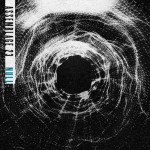
After five years of radio silence, Tom Shear resurfaces with "Null", a title that sounds like a shrug but behaves more like a loaded pause. Zero, nothing, reset - pick your poison. This is Assemblage 23 looking at the void and deciding it’s still worth singing into it, preferably with a four-on-the-floor pulse and a keyboard line sharp enough to cut through fog.
Shear has always been a strange case in electro-industrial history: an American who elbowed his way into a scene long dominated by European aesthetics, and then stayed there by being unapologetically earnest. "Null" doesn’t reinvent that wheel, nor does it pretend to. Instead, it polishes it, tightens the bolts, and sends it rolling straight over the anxieties of mid-life, disillusionment, endurance, and the weary optimism of someone who has survived himself more than once.
Musically, the album sits comfortably in the Assemblage 23 continuum: clean, muscular synth lines, disciplined structures, and beats that know exactly when to push and when to step back. There’s a clarity here that feels intentional - not sterile, but focused. Tracks like “Believe” and “Tolerate” aren’t designed to surprise so much as to hold: they loop emotional states the way club music loops rhythm, letting repetition do the psychological work. It’s future pop stripped of its chrome excess, less neon apocalypse, more fluorescent-lit honesty.
What still sets Shear apart is his relationship with language. His lyrics have never hidden behind abstraction, and "Null" continues that tradition with almost stubborn directness. These are songs that talk about limits, exhaustion, compromise, and persistence without theatrical despair. When he sings about absence, it’s not romanticized emptiness; it’s the practical kind - emotional balances checked at 3 a.m., relationships reduced to their remainder. Zero, again, depending on context.
There’s a subtle tension throughout the record between control and collapse. The production is precise, even sleek, while the themes gnaw from the inside. “Normal” and “Last” in particular feel like internal monologues disguised as club tracks - music you can dance to while quietly realizing you might not be fine, but you’re still here. In Assemblage 23 terms, that’s practically a love letter.
"Null" may not shock longtime listeners, but it doesn’t need to. It’s an album that understands its own legacy and refuses to cosplay youth or despair. Instead, it documents the sound of someone standing in the middle of nothing and choosing to articulate it anyway. In a genre that often fetishizes extremes, there’s something almost radical about that restraint.
Zero can mean failure, or it can mean a clean slate. "Null" lives in that uncomfortable overlap - not a comeback record, not a farewell, but a steady signal saying: I’m still transmitting. And sometimes, that’s more than enough.
Shear has always been a strange case in electro-industrial history: an American who elbowed his way into a scene long dominated by European aesthetics, and then stayed there by being unapologetically earnest. "Null" doesn’t reinvent that wheel, nor does it pretend to. Instead, it polishes it, tightens the bolts, and sends it rolling straight over the anxieties of mid-life, disillusionment, endurance, and the weary optimism of someone who has survived himself more than once.
Musically, the album sits comfortably in the Assemblage 23 continuum: clean, muscular synth lines, disciplined structures, and beats that know exactly when to push and when to step back. There’s a clarity here that feels intentional - not sterile, but focused. Tracks like “Believe” and “Tolerate” aren’t designed to surprise so much as to hold: they loop emotional states the way club music loops rhythm, letting repetition do the psychological work. It’s future pop stripped of its chrome excess, less neon apocalypse, more fluorescent-lit honesty.
What still sets Shear apart is his relationship with language. His lyrics have never hidden behind abstraction, and "Null" continues that tradition with almost stubborn directness. These are songs that talk about limits, exhaustion, compromise, and persistence without theatrical despair. When he sings about absence, it’s not romanticized emptiness; it’s the practical kind - emotional balances checked at 3 a.m., relationships reduced to their remainder. Zero, again, depending on context.
There’s a subtle tension throughout the record between control and collapse. The production is precise, even sleek, while the themes gnaw from the inside. “Normal” and “Last” in particular feel like internal monologues disguised as club tracks - music you can dance to while quietly realizing you might not be fine, but you’re still here. In Assemblage 23 terms, that’s practically a love letter.
"Null" may not shock longtime listeners, but it doesn’t need to. It’s an album that understands its own legacy and refuses to cosplay youth or despair. Instead, it documents the sound of someone standing in the middle of nothing and choosing to articulate it anyway. In a genre that often fetishizes extremes, there’s something almost radical about that restraint.
Zero can mean failure, or it can mean a clean slate. "Null" lives in that uncomfortable overlap - not a comeback record, not a farewell, but a steady signal saying: I’m still transmitting. And sometimes, that’s more than enough.
Stephen Vitiello and Edwin Torres: sublingual infinities

Artist: Stephen Vitiello and Edwin Torres (@)
Title: sublingual infinities
Format: Download Only (MP3 + Lossless)
Label: Room40 (@)
Rated:
Title: sublingual infinities
Format: Download Only (MP3 + Lossless)
Label: Room40 (@)
Rated:
There’s a particular kind of collaboration that doesn’t feel like a meeting, but like two radio frequencies accidentally locking into each other at 3 a.m. "sublingual infinities" lives exactly there: not in dialogue, not in hierarchy, but in a zone of mutual interference where voice and sound keep stealing each other’s clothes.
Stephen Vitiello, long-time cartographer of barely-there acoustics and environmental ghosts, has always treated sound as something porous - leaking, folding, refusing to sit still. Edwin Torres, poet, performer, linguistic saboteur, approaches language with similar suspicion: words are not containers of meaning, but volatile materials, best chewed, dissolved, or held under the tongue until they mutate. Put them together and you don’t get songs, poems, or soundscapes. You get events. Small, unstable weather systems.
What’s striking is how often the voice refuses to behave like a voice. Sometimes it leads, sometimes it dissolves into rhythm, sometimes it becomes raw material - grain, pulse, residue. Vitiello doesn’t set Torres’ words; he lets them leak into the circuitry, where syllables stretch, blur, refract. In return, Torres’ delivery never settles into recitation. It stutters, hovers, presses against silence, as if testing how much language the air can hold before it collapses.
Tracks like “travels in the not seeing world” and “the boy made of glass”, with Samita Sinha’s presence, widen the frame further. Her voice and ektara don’t add ornament - they bend the gravity of the whole piece. Suddenly there’s a sense of ritual, but one that refuses any fixed tradition. It feels ancient and improvised at once, like something remembered incorrectly on purpose. The body becomes audible here: breath as architecture, vibration as geography.
Elsewhere, pieces like “immigrant earthling (the euclidean barrio)” and “georgiana” lean into density. Layers pile up, meanings overlap, phonetics smear into texture. You don’t follow these tracks so much as inhabit them. It’s not always comfortable, and that’s part of the point. This is music that distrusts smooth comprehension. It prefers friction, the productive confusion where listening becomes physical.
There’s also an unexpected tenderness running through the record. For all its conceptual rigor, "sublingual infinities" never feels academic. It’s playful in a sly, sideways way - like watching language trip over itself and then pretend it meant to do that. The humor isn’t punchline-based; it’s the quiet absurdity of realizing that meaning keeps escaping, and that maybe that’s where it’s most alive.
In the end, this isn’t a record you memorize. It’s one you return to, knowing it won’t behave the same way twice. Voice becomes space, space becomes skin, and sound settles somewhere just below conscious parsing - right where the tongue rests. "sublingual infinities" doesn’t ask to be understood. It asks to be felt, misheard, and carried around like a secret you can’t quite translate, but wouldn’t want to lose.
Stephen Vitiello, long-time cartographer of barely-there acoustics and environmental ghosts, has always treated sound as something porous - leaking, folding, refusing to sit still. Edwin Torres, poet, performer, linguistic saboteur, approaches language with similar suspicion: words are not containers of meaning, but volatile materials, best chewed, dissolved, or held under the tongue until they mutate. Put them together and you don’t get songs, poems, or soundscapes. You get events. Small, unstable weather systems.
What’s striking is how often the voice refuses to behave like a voice. Sometimes it leads, sometimes it dissolves into rhythm, sometimes it becomes raw material - grain, pulse, residue. Vitiello doesn’t set Torres’ words; he lets them leak into the circuitry, where syllables stretch, blur, refract. In return, Torres’ delivery never settles into recitation. It stutters, hovers, presses against silence, as if testing how much language the air can hold before it collapses.
Tracks like “travels in the not seeing world” and “the boy made of glass”, with Samita Sinha’s presence, widen the frame further. Her voice and ektara don’t add ornament - they bend the gravity of the whole piece. Suddenly there’s a sense of ritual, but one that refuses any fixed tradition. It feels ancient and improvised at once, like something remembered incorrectly on purpose. The body becomes audible here: breath as architecture, vibration as geography.
Elsewhere, pieces like “immigrant earthling (the euclidean barrio)” and “georgiana” lean into density. Layers pile up, meanings overlap, phonetics smear into texture. You don’t follow these tracks so much as inhabit them. It’s not always comfortable, and that’s part of the point. This is music that distrusts smooth comprehension. It prefers friction, the productive confusion where listening becomes physical.
There’s also an unexpected tenderness running through the record. For all its conceptual rigor, "sublingual infinities" never feels academic. It’s playful in a sly, sideways way - like watching language trip over itself and then pretend it meant to do that. The humor isn’t punchline-based; it’s the quiet absurdity of realizing that meaning keeps escaping, and that maybe that’s where it’s most alive.
In the end, this isn’t a record you memorize. It’s one you return to, knowing it won’t behave the same way twice. Voice becomes space, space becomes skin, and sound settles somewhere just below conscious parsing - right where the tongue rests. "sublingual infinities" doesn’t ask to be understood. It asks to be felt, misheard, and carried around like a secret you can’t quite translate, but wouldn’t want to lose.