
Browse by Genre
Industrial Music / Industrial Metal / Aggro Industrial / Electro Metal
Industrial Noise / Power Noise / Harsh Noise
Synth Pop / Electro Pop / Synth-Electronica
Techno / Trance / Goa / Drum'n'Bass / Jungle / Tribal / Trip-Hop
Ambient / Electronica / Ethereal / Dub / Soundscapes / Abstract
Experimental / Avantgarde / Weird & Wired / Glitch / Noise / Field Recording
Dark / Gothic / Wave / New Wave / Dark Wave / Industrial Gothic
New Music / Downtown / Avantgarde Jazz / New Classical / World
Search Reviews
Music Reviews
PRAED orchestra!: The Dictionary of Lost Meanings
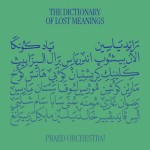
Artist: PRAED orchestra! (http://www.paed.ch/praed/) (@)
Title: The Dictionary of Lost Meanings
Format: 12" x 2 + Download
Label: Discrepant (@)
Rated:

Title: The Dictionary of Lost Meanings
Format: 12" x 2 + Download
Label: Discrepant (@)
Rated:
With "The Dictionary of Lost Meanings", PRAED orchestra! pull off something rare: they widen the field without thinning it out. On the contrary - every new musician entering the room makes the air heavier. This is a record that doesn’t ask for permission and doesn’t hand out easy explanations, but takes you by the hand the way certain oral tales do: you start from one story, end up in another, and somewhere in between you get lost - which, really, is the whole point.
Raed Yassin and Paed Conca, the shifting core of the PRAED project, have spent years cultivating a fertile friction: urban Arab tradition (shaabi, popular melodies, collective memory) rubbing up against radical improvisation, free jazz, and crooked electronics. Here, though, the duo step into the role of architects. The orchestra is neither ornament nor power display, but a living organism that breathes, stumbles, dances. The result doesn’t sound big in a symphonic sense; it sounds crowded - like a market, a radio picking up several stations at once, a party that’s about to derail but never quite does.
The pieces swing between rigorous composition and improvisation that always seems on the verge of escaping the fence. Reeds argue among themselves, percussion sparks microrhythms that smell of street and ritual, while synthesizers and filtered voices tear open temporal rifts. This is music that understands repetition but uses it as a spell, not as comfort. Every theme returns altered, slightly warped, like a word you’ve used for years and suddenly aren’t sure you understand anymore.
The title isn’t a conceptual flourish: this record really is a dictionary, but one with torn pages and scribbles in the margins. The “lost meanings” aren’t recovered - they’re set loose. Tradition and avant-garde don’t quarrel; they eye each other warily, then end up dancing together. At times it feels like listening to a brass band that studied Sun Ra; at others, to a ceremony that hacked European free jazz. There’s irony, yes, but no sarcasm - an intelligent lightness that coexists with stubborn depth.
The international ensemble is deployed with surgical intelligence: no one steals the spotlight, everyone bends it. Electronics don’t sterilize, roots never harden into folklore, improvisation doesn’t lapse into muscular display. It’s an unstable balance, deliberately so. As if PRAED were saying: memory isn’t an archive, it’s a minefield - and walking across it can be unexpectedly joyful.
"The Dictionary of Lost Meanings" isn’t a record to understand, but to pass through. It leaves you with the feeling that something slipped past you - and that this is perfectly fine. After all, some words work best once they stop obeying us.
Raed Yassin and Paed Conca, the shifting core of the PRAED project, have spent years cultivating a fertile friction: urban Arab tradition (shaabi, popular melodies, collective memory) rubbing up against radical improvisation, free jazz, and crooked electronics. Here, though, the duo step into the role of architects. The orchestra is neither ornament nor power display, but a living organism that breathes, stumbles, dances. The result doesn’t sound big in a symphonic sense; it sounds crowded - like a market, a radio picking up several stations at once, a party that’s about to derail but never quite does.
The pieces swing between rigorous composition and improvisation that always seems on the verge of escaping the fence. Reeds argue among themselves, percussion sparks microrhythms that smell of street and ritual, while synthesizers and filtered voices tear open temporal rifts. This is music that understands repetition but uses it as a spell, not as comfort. Every theme returns altered, slightly warped, like a word you’ve used for years and suddenly aren’t sure you understand anymore.
The title isn’t a conceptual flourish: this record really is a dictionary, but one with torn pages and scribbles in the margins. The “lost meanings” aren’t recovered - they’re set loose. Tradition and avant-garde don’t quarrel; they eye each other warily, then end up dancing together. At times it feels like listening to a brass band that studied Sun Ra; at others, to a ceremony that hacked European free jazz. There’s irony, yes, but no sarcasm - an intelligent lightness that coexists with stubborn depth.
The international ensemble is deployed with surgical intelligence: no one steals the spotlight, everyone bends it. Electronics don’t sterilize, roots never harden into folklore, improvisation doesn’t lapse into muscular display. It’s an unstable balance, deliberately so. As if PRAED were saying: memory isn’t an archive, it’s a minefield - and walking across it can be unexpectedly joyful.
"The Dictionary of Lost Meanings" isn’t a record to understand, but to pass through. It leaves you with the feeling that something slipped past you - and that this is perfectly fine. After all, some words work best once they stop obeying us.
Derision Cult: Flyover Noise
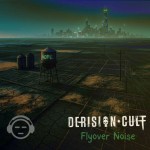
Artist: Derision Cult (@)
Title: Flyover Noise
Format: Download Only (MP3 + Lossless)
Label: self-released
Rated:

Title: Flyover Noise
Format: Download Only (MP3 + Lossless)
Label: self-released
Rated:
There’s something refreshingly unpretentious about Flyover Noise: a title that already shrugs, smirks, and lights a cigarette under a buzzing highway lamp. Derision Cult don’t come bearing grand manifestos or shiny futurisms here; instead, they roll up with two covers, a sense of lineage, and the kind of affection that only comes from having your DNA scrambled by someone else’s songs years ago.
Derision Cult, long-time operators in the American underground with roots tangled in industrial rock, EBM grit, and post-punk abrasion, have always understood that influence isn’t a museum piece. It’s a living, dented thing. On this short EP they turn their attention to two Illinois acts that clearly left bruises worth revisiting, and they do so without irony, pastiche, or cosplay. This isn’t karaoke with distortion pedals - it’s translation.
“Rocket Science” (originally by The Goodyear Pimps) comes out sounding like a confession shouted into an empty Midwestern parking lot. The song’s wounded romanticism - equal parts bravado and self-loathing - fits Derision Cult like a thrift-store jacket already broken in. They lean into the vulnerability without sanding down the rough edges, letting the repeated mantras spiral into something obsessive, almost claustrophobic. It’s love as fixation, identity as something you trip over rather than build. Not pretty, but honest in that unflattering way mirrors tend to be.
“Better Than Me”, pulled from Sister Machine Gun’s canon, shifts the EP into darker industrial territory. The nihilism here is blunt, almost weaponized: self-erasure as freedom, desire as the only remaining law. Derision Cult amplify the track’s fatalistic swagger, making it feel less like rebellion and more like a tired truth muttered through clenched teeth. The groove burns steadily, not explosively - controlled combustion, the kind that keeps you warm while everything else goes cold.
What makes Flyover Noise work isn’t nostalgia, but proximity. These songs aren’t treated as relics from a “golden age” of industrial or alt rock; they’re dragged into the present and scuffed up accordingly. Derision Cult understand that the so-called flyover states have always produced music heavy with contradiction: aggression and vulnerability, arrogance and defeat, movement without escape. This EP hums with that tension.
It’s short, sure. It doesn’t pretend to reinvent anything. But Flyover Noise knows exactly what it is: a nod between bands across time, a reminder that influence isn’t about geography or prestige, but about which songs lodged themselves in your nervous system and never quite left. Two covers, zero filler, and a lot of feeling packed into under eight minutes. Sometimes that’s all you need - just enough noise to remember where you came from, and why you’re still here.
Derision Cult, long-time operators in the American underground with roots tangled in industrial rock, EBM grit, and post-punk abrasion, have always understood that influence isn’t a museum piece. It’s a living, dented thing. On this short EP they turn their attention to two Illinois acts that clearly left bruises worth revisiting, and they do so without irony, pastiche, or cosplay. This isn’t karaoke with distortion pedals - it’s translation.
“Rocket Science” (originally by The Goodyear Pimps) comes out sounding like a confession shouted into an empty Midwestern parking lot. The song’s wounded romanticism - equal parts bravado and self-loathing - fits Derision Cult like a thrift-store jacket already broken in. They lean into the vulnerability without sanding down the rough edges, letting the repeated mantras spiral into something obsessive, almost claustrophobic. It’s love as fixation, identity as something you trip over rather than build. Not pretty, but honest in that unflattering way mirrors tend to be.
“Better Than Me”, pulled from Sister Machine Gun’s canon, shifts the EP into darker industrial territory. The nihilism here is blunt, almost weaponized: self-erasure as freedom, desire as the only remaining law. Derision Cult amplify the track’s fatalistic swagger, making it feel less like rebellion and more like a tired truth muttered through clenched teeth. The groove burns steadily, not explosively - controlled combustion, the kind that keeps you warm while everything else goes cold.
What makes Flyover Noise work isn’t nostalgia, but proximity. These songs aren’t treated as relics from a “golden age” of industrial or alt rock; they’re dragged into the present and scuffed up accordingly. Derision Cult understand that the so-called flyover states have always produced music heavy with contradiction: aggression and vulnerability, arrogance and defeat, movement without escape. This EP hums with that tension.
It’s short, sure. It doesn’t pretend to reinvent anything. But Flyover Noise knows exactly what it is: a nod between bands across time, a reminder that influence isn’t about geography or prestige, but about which songs lodged themselves in your nervous system and never quite left. Two covers, zero filler, and a lot of feeling packed into under eight minutes. Sometimes that’s all you need - just enough noise to remember where you came from, and why you’re still here.
Lovelorn Dolls: True Crimes EP

Artist: Lovelorn Dolls (@)
Title: True Crimes EP
Format: Download Only (MP3 + Lossless)
Label: Alfa Matrix (@)
Rated:
Title: True Crimes EP
Format: Download Only (MP3 + Lossless)
Label: Alfa Matrix (@)
Rated:
There’s a particular kind of chill that "True Crimes" traffics in: not the cheap jump-scare kind, but the slow, adhesive unease that sticks to your clothes and follows you home. With this four-track EP, Lovelorn Dolls take a sharp left turn into the alleyways of true crime lore, and somehow manage not to slip on the ethical banana peel that usually waits there, grinning.
Active for over a decade now, the Belgian duo - fronted by the unmistakable presence of Kristell - have always thrived on contrasts: sweetness laced with poison, pop hooks framed by gothic gloom, innocence flirting shamelessly with the abyss. Here, that duality becomes the concept itself. "True Crimes" is obsessed with voices that were silenced too early, stories mangled by time, media, and myth. The EP doesn’t reenact these tragedies so much as listen to them, ears pressed against the wall, trying to catch what still murmurs.
Musically, the formula is familiar but sharpened. Guitars arrive muscular and slightly theatrical, synths glow with a cold neon patience, and industrial touches rumble like distant machinery in an abandoned warehouse. Kristell’s vocals remain the emotional pivot: capable of sounding like a wounded child, a vengeful narrator, or an unreliable witness - sometimes all within the same song. She doesn’t so much sing "about" these crimes as inhabit their afterimages.
“Dahlia Bleeds” opens the file folder with cinematic confidence, balancing melodrama and restraint - never quite tipping into camp, though it flirts dangerously close, like it knows the line is there and enjoys the tension. “The Boy in the Box” is more restrained, almost devotional, its sadness carried not by bombast but by repetition and space. “Call Me Your Ghost” leans into menace with a smirk, letting menace seep rather than shout. And “Velvet Little Voice” closes things with a discomforting tenderness, the kind that makes you wonder whether lullabies were always a little terrifying.
What keeps "True Crimes" from feeling exploitative is its self-awareness. The EP knows it is dealing with stories already over-documented, over-consumed, turned into content. Lovelorn Dolls don’t claim revelation; instead, they stage a séance where pop, goth, and industrial tropes are used as candles - flickering, imperfect, human. The recent addition of guitarist and sound engineer Eric Renwart subtly deepens the sound, adding weight and polish without sanding down the rough emotional edges.
Is it catchy? Yes. Is it tasteful? Mostly. Is it slightly unsettling that you find yourself humming along to songs about unresolved murders? Absolutely - and that’s kind of the point. "True Crimes" mirrors our own morbid curiosity back at us, mascara smudged, smiling politely.
Four tracks, four ghosts, no closure. Lovelorn Dolls don’t solve the crimes - they leave the tape running, and let the silence do the accusing.
Active for over a decade now, the Belgian duo - fronted by the unmistakable presence of Kristell - have always thrived on contrasts: sweetness laced with poison, pop hooks framed by gothic gloom, innocence flirting shamelessly with the abyss. Here, that duality becomes the concept itself. "True Crimes" is obsessed with voices that were silenced too early, stories mangled by time, media, and myth. The EP doesn’t reenact these tragedies so much as listen to them, ears pressed against the wall, trying to catch what still murmurs.
Musically, the formula is familiar but sharpened. Guitars arrive muscular and slightly theatrical, synths glow with a cold neon patience, and industrial touches rumble like distant machinery in an abandoned warehouse. Kristell’s vocals remain the emotional pivot: capable of sounding like a wounded child, a vengeful narrator, or an unreliable witness - sometimes all within the same song. She doesn’t so much sing "about" these crimes as inhabit their afterimages.
“Dahlia Bleeds” opens the file folder with cinematic confidence, balancing melodrama and restraint - never quite tipping into camp, though it flirts dangerously close, like it knows the line is there and enjoys the tension. “The Boy in the Box” is more restrained, almost devotional, its sadness carried not by bombast but by repetition and space. “Call Me Your Ghost” leans into menace with a smirk, letting menace seep rather than shout. And “Velvet Little Voice” closes things with a discomforting tenderness, the kind that makes you wonder whether lullabies were always a little terrifying.
What keeps "True Crimes" from feeling exploitative is its self-awareness. The EP knows it is dealing with stories already over-documented, over-consumed, turned into content. Lovelorn Dolls don’t claim revelation; instead, they stage a séance where pop, goth, and industrial tropes are used as candles - flickering, imperfect, human. The recent addition of guitarist and sound engineer Eric Renwart subtly deepens the sound, adding weight and polish without sanding down the rough emotional edges.
Is it catchy? Yes. Is it tasteful? Mostly. Is it slightly unsettling that you find yourself humming along to songs about unresolved murders? Absolutely - and that’s kind of the point. "True Crimes" mirrors our own morbid curiosity back at us, mascara smudged, smiling politely.
Four tracks, four ghosts, no closure. Lovelorn Dolls don’t solve the crimes - they leave the tape running, and let the silence do the accusing.
Galati & Gri: Drift
"Drift" is one of those records that doesn’t knock on the door. It simply opens a window and lets the room slowly fill with air you didn’t know you were missing.
The collaboration between Roberto Galati and Francis Gri feels less like a meeting of two egos and more like a shared state of suspension. Different backgrounds, yes, but aligned temperaments: both artists seem far more interested in what sound leaves behind than in what it loudly declares. Guitars hover rather than riff, electronics breathe instead of pulse, and everything moves with the calm inevitability of something carried by water, not driven by will.
The title is not metaphorical decoration - it’s a method. "Drift" unfolds as a sequence of slow calibrations, where tones blur at the edges and direction is deliberately deferred. This isn’t ambient as wallpaper, nor post-rock chasing catharsis. It’s music that accepts instability as a given condition, and then gently explores its textures. Tracks like "Haze" and "Void" feel less composed than weathered into being, while "Fear" quietly resists its own name, choosing restraint over drama. Nothing collapses, nothing explodes. Things simply thin out, rearrange, and persist.
What makes the album quietly compelling is its refusal to dramatize fragility. In lesser hands, this kind of material might drown in its own seriousness. Here, instead, there’s a subtle elegance - even a dry, unspoken humor - in how little the music insists. Galati’s guitar work often sounds like it’s remembering itself mid-note, while Gri’s electronic treatments act as soft distortions of perspective, like looking through fogged glass rather than a filter.
The production favors space over density, but not emptiness. Silence is treated as a collaborator, not a gap to be filled. "Wane", closing the record, doesn’t resolve anything; it simply loosens the final knot and steps aside. The effect is less “ending” than gradual disappearance - a quality that feels honest, and oddly comforting.
"Drift" doesn’t offer answers, directions, or safe ground. It doesn’t even pretend to. What it offers instead is attention: to small shifts, to unstable balances, to the beauty that survives precisely because it isn’t fixed. It’s music for listening without urgency, for accepting motion without destination. A record that doesn’t ask where you’re going - only whether you’re willing to float for a while.
The collaboration between Roberto Galati and Francis Gri feels less like a meeting of two egos and more like a shared state of suspension. Different backgrounds, yes, but aligned temperaments: both artists seem far more interested in what sound leaves behind than in what it loudly declares. Guitars hover rather than riff, electronics breathe instead of pulse, and everything moves with the calm inevitability of something carried by water, not driven by will.
The title is not metaphorical decoration - it’s a method. "Drift" unfolds as a sequence of slow calibrations, where tones blur at the edges and direction is deliberately deferred. This isn’t ambient as wallpaper, nor post-rock chasing catharsis. It’s music that accepts instability as a given condition, and then gently explores its textures. Tracks like "Haze" and "Void" feel less composed than weathered into being, while "Fear" quietly resists its own name, choosing restraint over drama. Nothing collapses, nothing explodes. Things simply thin out, rearrange, and persist.
What makes the album quietly compelling is its refusal to dramatize fragility. In lesser hands, this kind of material might drown in its own seriousness. Here, instead, there’s a subtle elegance - even a dry, unspoken humor - in how little the music insists. Galati’s guitar work often sounds like it’s remembering itself mid-note, while Gri’s electronic treatments act as soft distortions of perspective, like looking through fogged glass rather than a filter.
The production favors space over density, but not emptiness. Silence is treated as a collaborator, not a gap to be filled. "Wane", closing the record, doesn’t resolve anything; it simply loosens the final knot and steps aside. The effect is less “ending” than gradual disappearance - a quality that feels honest, and oddly comforting.
"Drift" doesn’t offer answers, directions, or safe ground. It doesn’t even pretend to. What it offers instead is attention: to small shifts, to unstable balances, to the beauty that survives precisely because it isn’t fixed. It’s music for listening without urgency, for accepting motion without destination. A record that doesn’t ask where you’re going - only whether you’re willing to float for a while.
Franz Scala: Cafe Futuro
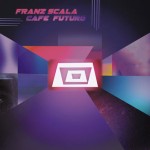
Artist: Franz Scala (@)
Title: Cafe Futuro
Format: LP
Label: Slow Motion Music (@)
Distributor: Word and Sound
Rated:
Title: Cafe Futuro
Format: LP
Label: Slow Motion Music (@)
Distributor: Word and Sound
Rated:
Franz Scala’s "Cafe Futuro" is not just an album, it’s a place you stumble into at the wrong hour and end up staying until the lights come on and your nostalgia has mascara running down its face. Released on Slow Motion, the record feels like a love letter written directly onto the dancefloor tiles of a Neukölln bar where history, sweat, eyeliner and synthesizers have soaked into the walls and refuse to leave.
Scala, Italian by birth and cosmic by vocation, has always had a rare talent: he understands that dance music is less about movement than memory. With "Cafe Futuro", he sharpens that instinct, pushing deeper into the emotional archaeology of Italo, New Beat and proto-house, not as revivalist cosplay but as lived language. These tracks don’t quote the past; they remember it, the way you remember a voice from another room.
The album opens with “New Look”, which hits like a confident stride across a smoke-filled floor. The bass is thick, the pulse assured, and the vocal presence carries that glamorous detachment that only works when it’s sincere. Scala knows exactly how much drama to allow before it tips into parody, and he never crosses the line - though he dances on it, smiling. “Echoes of Love” slows the heartbeat slightly, letting melody and vocoder blur into something tender but unresolved, like an unfinished confession whispered over a synthesizer that’s seen better nights.
Elsewhere, "Cafe Futuro" shows its range without losing cohesion. “Telephone Boy” crackles with nervous energy, while “Light Year Run” gives the album room to breathe, pads stretching out like neon reflections on wet pavement. Collaborations are used wisely, not as name-dropping but as character entrances in a carefully staged scene: Local Suicide bring bite and attitude to “Saxon Rebel”, while Charlie’s presence on “Crush Test” adds a sultry ambiguity that feels both intimate and distant. No one overstays their welcome.
One of the album’s quiet triumphs is “BIT99”, a track that doubles as both homage and self-portrait. Scala’s love for vintage Italian synthesis isn’t fetishistic; it’s personal. You can hear the circuitry thinking, aging, dreaming. It’s music aware of its own material body, humming proudly despite the years.
By the time "Cafe Futuro" reaches its closing stretch, culminating in “Fase Lunare”, the feeling is less of an ending than of drifting outside just before dawn, cigarette between fingers, unsure whether you’re exhausted or euphoric. Scala doesn’t offer resolution. He offers atmosphere, continuity, the sense that this world keeps spinning whether you’re on the floor or leaning against the bar.
There’s humor here, too - not jokes, but a knowing wink. "Cafe Futuro" understands the absurdity of taking nostalgia seriously, and does it anyway, with elegance and grit. It’s a record that respects the dancefloor as a site of emotional truth, where past and future briefly agree to share the same beat.
Franz Scala isn’t chasing trends, and he’s not embalming history. He’s keeping a place alive. Pull up a chair. The music’s already started.
Scala, Italian by birth and cosmic by vocation, has always had a rare talent: he understands that dance music is less about movement than memory. With "Cafe Futuro", he sharpens that instinct, pushing deeper into the emotional archaeology of Italo, New Beat and proto-house, not as revivalist cosplay but as lived language. These tracks don’t quote the past; they remember it, the way you remember a voice from another room.
The album opens with “New Look”, which hits like a confident stride across a smoke-filled floor. The bass is thick, the pulse assured, and the vocal presence carries that glamorous detachment that only works when it’s sincere. Scala knows exactly how much drama to allow before it tips into parody, and he never crosses the line - though he dances on it, smiling. “Echoes of Love” slows the heartbeat slightly, letting melody and vocoder blur into something tender but unresolved, like an unfinished confession whispered over a synthesizer that’s seen better nights.
Elsewhere, "Cafe Futuro" shows its range without losing cohesion. “Telephone Boy” crackles with nervous energy, while “Light Year Run” gives the album room to breathe, pads stretching out like neon reflections on wet pavement. Collaborations are used wisely, not as name-dropping but as character entrances in a carefully staged scene: Local Suicide bring bite and attitude to “Saxon Rebel”, while Charlie’s presence on “Crush Test” adds a sultry ambiguity that feels both intimate and distant. No one overstays their welcome.
One of the album’s quiet triumphs is “BIT99”, a track that doubles as both homage and self-portrait. Scala’s love for vintage Italian synthesis isn’t fetishistic; it’s personal. You can hear the circuitry thinking, aging, dreaming. It’s music aware of its own material body, humming proudly despite the years.
By the time "Cafe Futuro" reaches its closing stretch, culminating in “Fase Lunare”, the feeling is less of an ending than of drifting outside just before dawn, cigarette between fingers, unsure whether you’re exhausted or euphoric. Scala doesn’t offer resolution. He offers atmosphere, continuity, the sense that this world keeps spinning whether you’re on the floor or leaning against the bar.
There’s humor here, too - not jokes, but a knowing wink. "Cafe Futuro" understands the absurdity of taking nostalgia seriously, and does it anyway, with elegance and grit. It’s a record that respects the dancefloor as a site of emotional truth, where past and future briefly agree to share the same beat.
Franz Scala isn’t chasing trends, and he’s not embalming history. He’s keeping a place alive. Pull up a chair. The music’s already started.