
Browse by Genre
Industrial Music / Industrial Metal / Aggro Industrial / Electro Metal
Industrial Noise / Power Noise / Harsh Noise
Synth Pop / Electro Pop / Synth-Electronica
Techno / Trance / Goa / Drum'n'Bass / Jungle / Tribal / Trip-Hop
Ambient / Electronica / Ethereal / Dub / Soundscapes / Abstract
Experimental / Avantgarde / Weird & Wired / Glitch / Noise / Field Recording
Dark / Gothic / Wave / New Wave / Dark Wave / Industrial Gothic
New Music / Downtown / Avantgarde Jazz / New Classical / World
Search Reviews
Music Reviews
Wayku: Selva Selva
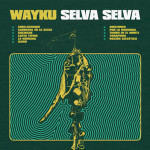
Wayku is the project of Percy A. Flores Navarro, a guitarist, researcher, and careful listener of the Peruvian Amazon. Before forming this project in 2022, Flores played with Motilones de Tarapoto and spent years traveling through Indigenous communities in San Martín and Loreto - not as a tourist but as someone willing to sit still long enough to hear how a culture breathes. That patient attention echoes across "Selva Selva", an album that reimagines the jungle’s musical traditions without trying to varnish them into some fashionable urban veneer.
Reviews online praise the record’s authenticity, its layered guitar work, its blend of the old with the slightly futuristic. Fair enough. But "Selva Selva" isn’t a museum piece brought into the studio for dusting. It’s more like a living creature that occasionally bares its teeth, or at least waves its tail with a mischievous twitch.
Flores anchors everything with his electric guitar - bright, sharp, sometimes surprisingly delicate, like sunlight glinting off machete steel. If the Amazon once adopted the electric guitar in the ’70s to electrify pandilla music, "Selva Selva" takes that historical spark and turns it into a controlled burn. The rhythms shuffle, slide, and whirl with a warmth that feels both festive and slightly hypnotic, the kind of ecstatic pulse you find in small-town squares during celebrations that go on longer than anyone intended.
Tracks like “Carnaval en la selva” and “Por la marginal” translate that communal exuberance into contemporary shapes. The flutes and percussion feel remembered rather than imitated - echoes of gatherings, not reenactments. Flores’s guitar dances over them like a bird that knows the path home without needing a map. It’s joyful music, yes, but the joy is never simple: there’s always a tiny ripple of tension somewhere underneath, a harmonic slip or rhythmic twitch that betrays Flores’s years spent studying how tradition and modernity don’t quite fit together but still insist on holding hands.
Elsewhere, the record leans into its more atmospheric instincts. “Icaro” moves like a dream left out to dry in the sun, a fragment of spiritual melody translated into electric shimmer. “Yanapuma” has a nocturnal quality - not dangerous, but alert, as though the track is listening to you as much as you are listening to it. And “Nación Selvática” closes the album with a broader horizon, the project’s cultural message surfacing without sloganeering: recognition, renewal, pride in a musical lineage too often overshadowed by coastal trends and cosmopolitan fashions.
If "Selva Selva" stumbles anywhere, it’s perhaps in its earnestness. Flores’s desire to honor, uplift, represent, reinterpret - that whole mission - sometimes presses more forcefully than the music itself. But honestly, that’s part of the album’s charm: its refusal to be ironic. In a world where everything is post-everything, there’s something refreshing about a record that wears its heart openly, like a woven cloth held up against the light.
Sonically, it’s a warm, slightly rough-edged listen - not polished to modern streaming-service gloss, and better for it. The production feels handcrafted, alive with room tone, humidity, and the occasional wild angle. Flores recorded nearly everything himself, and you can tell: the album sounds like a one-person expedition equipped with guitars, notebooks, memories, and a deep respect for the voices of the forest.
"Selva Selva" isn’t trying to be exotic or psychedelic or fashionable. It’s simply trying to be true - to place old rhythms into new shoes, to let tradition step forward without losing its accent.
And somehow, in that balance, the music blooms.
Reviews online praise the record’s authenticity, its layered guitar work, its blend of the old with the slightly futuristic. Fair enough. But "Selva Selva" isn’t a museum piece brought into the studio for dusting. It’s more like a living creature that occasionally bares its teeth, or at least waves its tail with a mischievous twitch.
Flores anchors everything with his electric guitar - bright, sharp, sometimes surprisingly delicate, like sunlight glinting off machete steel. If the Amazon once adopted the electric guitar in the ’70s to electrify pandilla music, "Selva Selva" takes that historical spark and turns it into a controlled burn. The rhythms shuffle, slide, and whirl with a warmth that feels both festive and slightly hypnotic, the kind of ecstatic pulse you find in small-town squares during celebrations that go on longer than anyone intended.
Tracks like “Carnaval en la selva” and “Por la marginal” translate that communal exuberance into contemporary shapes. The flutes and percussion feel remembered rather than imitated - echoes of gatherings, not reenactments. Flores’s guitar dances over them like a bird that knows the path home without needing a map. It’s joyful music, yes, but the joy is never simple: there’s always a tiny ripple of tension somewhere underneath, a harmonic slip or rhythmic twitch that betrays Flores’s years spent studying how tradition and modernity don’t quite fit together but still insist on holding hands.
Elsewhere, the record leans into its more atmospheric instincts. “Icaro” moves like a dream left out to dry in the sun, a fragment of spiritual melody translated into electric shimmer. “Yanapuma” has a nocturnal quality - not dangerous, but alert, as though the track is listening to you as much as you are listening to it. And “Nación Selvática” closes the album with a broader horizon, the project’s cultural message surfacing without sloganeering: recognition, renewal, pride in a musical lineage too often overshadowed by coastal trends and cosmopolitan fashions.
If "Selva Selva" stumbles anywhere, it’s perhaps in its earnestness. Flores’s desire to honor, uplift, represent, reinterpret - that whole mission - sometimes presses more forcefully than the music itself. But honestly, that’s part of the album’s charm: its refusal to be ironic. In a world where everything is post-everything, there’s something refreshing about a record that wears its heart openly, like a woven cloth held up against the light.
Sonically, it’s a warm, slightly rough-edged listen - not polished to modern streaming-service gloss, and better for it. The production feels handcrafted, alive with room tone, humidity, and the occasional wild angle. Flores recorded nearly everything himself, and you can tell: the album sounds like a one-person expedition equipped with guitars, notebooks, memories, and a deep respect for the voices of the forest.
"Selva Selva" isn’t trying to be exotic or psychedelic or fashionable. It’s simply trying to be true - to place old rhythms into new shoes, to let tradition step forward without losing its accent.
And somehow, in that balance, the music blooms.
Liv Andrea Hauge Trio: Døgnville

There’s something quietly heroic - and a bit comical, to be honest - about a jazz trio deciding to make an album about the sensation of being temporally misplaced. Most people deal with jet lag by drinking too much water and swearing at airport clocks; Liv Andrea Hauge decides to write half a record while delirious with fever and the other half while trying to remember what continent she’s on. That already tells you a lot about her approach: lucid when she isn’t, structured when everything else tilts sideways.
Hauge, at this point, has carved out a modest but confident profile in the Nordic jazz constellation. Critics often highlight her knack for floating between lyrical introspection and a more angular, contemporary pulse - the sort of aesthetic that keeps the ECM ghosts happy while also making room for younger, rougher inspirations. The trio with Georgia Wartel Collins and August GlÄnnestrand has been gaining traction because, well, they actually listen to each other. A rarity in jazz, just like a drummer who doesn’t fill all available airspace (thank you, August).
Døgnville sits in that hazy half-light where melody tries to remember its own name. The record isn’t revolutionary - reviews tend to call it “solid”, “mature”, “quietly ambitious”, which is critic-speak for “it won’t change your life but you’ll respect it in the morning”. But the trio plays with a sincerity that makes even the more familiar gestures feel a little enchanted.
“Natt Natt Natt” is the poster child for this twilight delirium: a tune that walks with its eyes half-closed, gently brushing the furniture, guided more by instinct than destination. Hauge’s touch is feather-soft but never vague; she outlines shadows, lets the silence breathe, and then tilts the harmony just enough to make you wonder if you’re dreaming.
The more rhythm-driven pieces - like “Karja” - show the band’s other face: the one inherited from seeing too many avant-jazz concerts where nothing is straight but everything is intentional. There’s a restless pulse under the piano’s harmonic fog, nudging the trio into that zone where structure is still present but might leave the room if you turn your head. It’s alive, alert, but never flashy.
And then there’s “Mange av oss”, their self-declared crowd-pleaser - the kind of tune that feels like sunlight hitting your brain after a week underground. It doesn’t pretend to be deep; it’s simply warm, honest, and gracefully built.
Across the album, the production preserves the trio’s natural chemistry: recorded live in one room, the sound feels like someone gently opened a door to let you eavesdrop. Nothing is over-polished. You hear chairs shift, breath move. Time is elastic, but life is present.
Døgnville isn’t an album that shouts or provokes. It wanders - in that soft, starlit Nordic way - letting the listener drift slightly out of phase with the world. Its poetry lies in how it refuses to dramatize disorientation; instead, it treats it as a natural, almost tender human state. You’re tired, you’re floating, but you’re still moving forward.
Maybe that’s the secret charm here: the trio doesn’t pretend to reveal the meaning of time. They just keep playing through it, with grace, understatement, and a touch of fever-dream humor.
Not extraordinary - but quietly luminous, in that unmistakably Hubro kind of way.
Hauge, at this point, has carved out a modest but confident profile in the Nordic jazz constellation. Critics often highlight her knack for floating between lyrical introspection and a more angular, contemporary pulse - the sort of aesthetic that keeps the ECM ghosts happy while also making room for younger, rougher inspirations. The trio with Georgia Wartel Collins and August GlÄnnestrand has been gaining traction because, well, they actually listen to each other. A rarity in jazz, just like a drummer who doesn’t fill all available airspace (thank you, August).
Døgnville sits in that hazy half-light where melody tries to remember its own name. The record isn’t revolutionary - reviews tend to call it “solid”, “mature”, “quietly ambitious”, which is critic-speak for “it won’t change your life but you’ll respect it in the morning”. But the trio plays with a sincerity that makes even the more familiar gestures feel a little enchanted.
“Natt Natt Natt” is the poster child for this twilight delirium: a tune that walks with its eyes half-closed, gently brushing the furniture, guided more by instinct than destination. Hauge’s touch is feather-soft but never vague; she outlines shadows, lets the silence breathe, and then tilts the harmony just enough to make you wonder if you’re dreaming.
The more rhythm-driven pieces - like “Karja” - show the band’s other face: the one inherited from seeing too many avant-jazz concerts where nothing is straight but everything is intentional. There’s a restless pulse under the piano’s harmonic fog, nudging the trio into that zone where structure is still present but might leave the room if you turn your head. It’s alive, alert, but never flashy.
And then there’s “Mange av oss”, their self-declared crowd-pleaser - the kind of tune that feels like sunlight hitting your brain after a week underground. It doesn’t pretend to be deep; it’s simply warm, honest, and gracefully built.
Across the album, the production preserves the trio’s natural chemistry: recorded live in one room, the sound feels like someone gently opened a door to let you eavesdrop. Nothing is over-polished. You hear chairs shift, breath move. Time is elastic, but life is present.
Døgnville isn’t an album that shouts or provokes. It wanders - in that soft, starlit Nordic way - letting the listener drift slightly out of phase with the world. Its poetry lies in how it refuses to dramatize disorientation; instead, it treats it as a natural, almost tender human state. You’re tired, you’re floating, but you’re still moving forward.
Maybe that’s the secret charm here: the trio doesn’t pretend to reveal the meaning of time. They just keep playing through it, with grace, understatement, and a touch of fever-dream humor.
Not extraordinary - but quietly luminous, in that unmistakably Hubro kind of way.
Stefan Goldmann & Ensemble 180°: Input (The Sofia Versions)

Artist: Stefan Goldmann & Ensemble 180°
Title: Input (The Sofia Versions)
Format: CD + Download
Label: Macro
Rated:

Title: Input (The Sofia Versions)
Format: CD + Download
Label: Macro
Rated:
Some albums feel like puzzles; Input (The Sofia Versions) feels like the puzzle and the hands assembling it. Stefan Goldmann, Berlin’s long - time sonic provocateur with a taste for conceptual acrobatics, takes one of the oldest questions in electronic music - what happens when the machine breathes? - and turns it inside out. Instead of translating orchestras into circuitry, he plants the electronics first and then asks composers to reverse - engineer the ghost.
The result is fascinating and, at times, deliciously disorienting: the original electronic work is never heard. It hovers like a rumor. What reaches us instead is the echo of a source we cannot touch, reshaped into acoustic form by Daniel Chernov, Adrian Pavlov, and Lukas Tobiassen - three composers who treat Goldmann’s unseen input like a meteorite fallen in their backyard. Ensemble 180°, a group assembled from Bulgarian, French, and Swiss musicians, performs these scores with an almost archaeological devotion, as though brushing dust from an ancient artefact.
“Chimera”, Tobiassen’s opening contribution, lives up to its name. The piece shifts like a creature made of incompatible parts, yet everything somehow walks in the same direction. Strings whisper and scrape at edges that seem to have been sanded down in some previous, electronic life; the phrasing is tentative, exploratory, like a hand reaching towards an object whose temperature is unknown.
Chernov’s “Big Drop” might be the closest the album gets to comedy - not humorous in a slapstick way, but in the cosmic sense: the score darts and flutters as if surprised by its own existence. Acoustic gestures poke at invisible walls, suggesting that the missing electronic original was perhaps less a composition and more a labyrinth.
Pavlov’s “gnomon A” is the most geometric of the three, all angles and shadows. It feels like someone has tried to chart sunlight with a ruler while the weather keeps changing. Notes hover in place, drift slightly, then re-align as though obeying a physics we can’t quite access. It’s precise and dreamlike at once, a contradiction that Goldmann seems to relish.
The later “Extension 1” folds the ensemble into a more processed environment - Goldmann’s own hand gently pushing the acoustic material toward a liminal zone. The piece doesn’t attempt to resolve the comparison between the heard and the unheard; instead, it revels in the instability of that relationship, as though letting the audience sit with the impossibility of knowing what’s missing.
And then comes Études Spectrales, the album’s long-form reflection pool. Here, the line between acoustic sound and Goldmann’s post-processing blurs in a way that feels less like a dialogue and more like a slow chemical reaction. Over nearly twenty minutes, the music moves with the patience of someone studying a distant coastline through fog. It never fully clarifies, and that’s the point.
If most remix projects are straightforward conversations, Input (The Sofia Versions) is a séance. We encounter interpretations of a work we never hear, and yet the absence becomes the album’s beating heart. It’s a hall of mirrors in which one mirror has been removed - and somehow its reflection persists.
Goldmann, ever the meticulous contrarian, has built a system that promises no final answers and delivers instead the strange thrill of speculation. You walk away from this album with the odd sensation that the electronics, unheard and unseen, were the most present voice all along.
The result is fascinating and, at times, deliciously disorienting: the original electronic work is never heard. It hovers like a rumor. What reaches us instead is the echo of a source we cannot touch, reshaped into acoustic form by Daniel Chernov, Adrian Pavlov, and Lukas Tobiassen - three composers who treat Goldmann’s unseen input like a meteorite fallen in their backyard. Ensemble 180°, a group assembled from Bulgarian, French, and Swiss musicians, performs these scores with an almost archaeological devotion, as though brushing dust from an ancient artefact.
“Chimera”, Tobiassen’s opening contribution, lives up to its name. The piece shifts like a creature made of incompatible parts, yet everything somehow walks in the same direction. Strings whisper and scrape at edges that seem to have been sanded down in some previous, electronic life; the phrasing is tentative, exploratory, like a hand reaching towards an object whose temperature is unknown.
Chernov’s “Big Drop” might be the closest the album gets to comedy - not humorous in a slapstick way, but in the cosmic sense: the score darts and flutters as if surprised by its own existence. Acoustic gestures poke at invisible walls, suggesting that the missing electronic original was perhaps less a composition and more a labyrinth.
Pavlov’s “gnomon A” is the most geometric of the three, all angles and shadows. It feels like someone has tried to chart sunlight with a ruler while the weather keeps changing. Notes hover in place, drift slightly, then re-align as though obeying a physics we can’t quite access. It’s precise and dreamlike at once, a contradiction that Goldmann seems to relish.
The later “Extension 1” folds the ensemble into a more processed environment - Goldmann’s own hand gently pushing the acoustic material toward a liminal zone. The piece doesn’t attempt to resolve the comparison between the heard and the unheard; instead, it revels in the instability of that relationship, as though letting the audience sit with the impossibility of knowing what’s missing.
And then comes Études Spectrales, the album’s long-form reflection pool. Here, the line between acoustic sound and Goldmann’s post-processing blurs in a way that feels less like a dialogue and more like a slow chemical reaction. Over nearly twenty minutes, the music moves with the patience of someone studying a distant coastline through fog. It never fully clarifies, and that’s the point.
If most remix projects are straightforward conversations, Input (The Sofia Versions) is a séance. We encounter interpretations of a work we never hear, and yet the absence becomes the album’s beating heart. It’s a hall of mirrors in which one mirror has been removed - and somehow its reflection persists.
Goldmann, ever the meticulous contrarian, has built a system that promises no final answers and delivers instead the strange thrill of speculation. You walk away from this album with the odd sensation that the electronics, unheard and unseen, were the most present voice all along.
Sergio Merce: Archipiélago
Artist: Sergio Merce
Title: Archipiélago
Format: Download Only (MP3 + Lossless)
Label: Room40 (@)
Rated:

Title: Archipiélago
Format: Download Only (MP3 + Lossless)
Label: Room40 (@)
Rated:
Listening to Archipiélago feels like setting sail into a sea that both reflects and devours the sky - it’s beautiful, abstract, uneasy, and strangely alive. Sergio Merce, known as a saxophonist and sound artist based in Buenos Aires, brings his radically modified microtonal sax to the forefront, crafting a sonic landscape where harmony drifts slowly, as though caught in a long tidal breath.
Merce’s self-built alto sax is not a traditional instrument anymore: by reworking its mechanisms, he unlocks vast harmonic worlds. On Archipiélago, he extends that journey, using microtonality as a cartographic tool, drawing contours not just in pitch but in perception. The result is terrain that feels at once familiar and alien - like memory filtered through fog.
The album unfolds in four movements, but really in two long ones (“Marea” and “Un faro”) plus their smaller counterparts. The opening track, Marea (which means “tide”), is a nearly 24-minute ebb-and-flow of pitch and silence. Merce’s tone seems to stretch outward, then fold in on itself, creating swells of sound that feel as organic and inevitable as water quietly reclaiming the shore. It’s slow-motion wave poetry: abstract, but you sense the weight of something deeply grounded - maybe fear, maybe longing, maybe both.
Then Un faro (“A Lighthouse”) arrives, roughly fifteen minutes long, and the metaphor becomes more concrete. The saxophone’s microtonal shifts feel like a beacon shining in darkness, guiding a fragile vessel. This piece carries a kind of spiritual calm - not resignation, exactly, but the sort of alert peace that comes with knowing how far you have traveled.
Merce’s own words haunt the project: “disappearing into the silence, we seek to understand fear and suffering… sometimes sound becomes silence”. This is not music for easy listening; it is a meditation. And yet, it is not aimless. Every subtle flicker in tone, every hesitated breath of air, feels intentional, as though Merce is mapping emotional terrain we didn’t know existed.
Part of what makes this work so compelling is Merce’s dual identity as both craftsman and composer. His microtonal sax isn’t just a tool - it’s a collaborator. He plays it, yes, but he also listens to what it offers him, letting its internal harmonics speak back, guiding his improvisations. That dynamic makes Archipiélago feel less like a concert and more like a conversation - with yourself, with your fears, with the uncharted depths of sound.
Another important contribution is the mastering by David Sylvian, whose touch brings every nuance forward without smoothing away the rough edges. It’s a masterful balance: the recording feels intimate, yet cavernous. You hear the sax’s vibrations as clearly as you sense the space around them.
What Merce achieves on Archipiélago is less a resolution than a kind of ongoing pilgrimage: a sonic archipelago where each island is a shade of feeling, each gap between sounds a channel, and each return a moment of recognition. For listeners willing to surrender to its slow currents, the album offers not just textures but a way to see into sound - and perhaps beyond it.
Merce’s self-built alto sax is not a traditional instrument anymore: by reworking its mechanisms, he unlocks vast harmonic worlds. On Archipiélago, he extends that journey, using microtonality as a cartographic tool, drawing contours not just in pitch but in perception. The result is terrain that feels at once familiar and alien - like memory filtered through fog.
The album unfolds in four movements, but really in two long ones (“Marea” and “Un faro”) plus their smaller counterparts. The opening track, Marea (which means “tide”), is a nearly 24-minute ebb-and-flow of pitch and silence. Merce’s tone seems to stretch outward, then fold in on itself, creating swells of sound that feel as organic and inevitable as water quietly reclaiming the shore. It’s slow-motion wave poetry: abstract, but you sense the weight of something deeply grounded - maybe fear, maybe longing, maybe both.
Then Un faro (“A Lighthouse”) arrives, roughly fifteen minutes long, and the metaphor becomes more concrete. The saxophone’s microtonal shifts feel like a beacon shining in darkness, guiding a fragile vessel. This piece carries a kind of spiritual calm - not resignation, exactly, but the sort of alert peace that comes with knowing how far you have traveled.
Merce’s own words haunt the project: “disappearing into the silence, we seek to understand fear and suffering… sometimes sound becomes silence”. This is not music for easy listening; it is a meditation. And yet, it is not aimless. Every subtle flicker in tone, every hesitated breath of air, feels intentional, as though Merce is mapping emotional terrain we didn’t know existed.
Part of what makes this work so compelling is Merce’s dual identity as both craftsman and composer. His microtonal sax isn’t just a tool - it’s a collaborator. He plays it, yes, but he also listens to what it offers him, letting its internal harmonics speak back, guiding his improvisations. That dynamic makes Archipiélago feel less like a concert and more like a conversation - with yourself, with your fears, with the uncharted depths of sound.
Another important contribution is the mastering by David Sylvian, whose touch brings every nuance forward without smoothing away the rough edges. It’s a masterful balance: the recording feels intimate, yet cavernous. You hear the sax’s vibrations as clearly as you sense the space around them.
What Merce achieves on Archipiélago is less a resolution than a kind of ongoing pilgrimage: a sonic archipelago where each island is a shade of feeling, each gap between sounds a channel, and each return a moment of recognition. For listeners willing to surrender to its slow currents, the album offers not just textures but a way to see into sound - and perhaps beyond it.
Blood Handsome: Nostalgia Hold
Artist: Blood Handsome (@)
Title: Nostalgia Hold
Format: Download Only (MP3 + Lossless)
Label: Strict Tempo (@)
Rated:
Title: Nostalgia Hold
Format: Download Only (MP3 + Lossless)
Label: Strict Tempo (@)
Rated:
If nostalgia had a shadow, and that shadow decided to dance in a club at 3 a.m., it might very well look and sound like Nostalgia Hold, the new album by Blood Handsome. Gerren Reach (Blood Handsome) takes the dark, post-punk corners of his earlier work and pushes them into a neon-lit disco inferno, all while keeping that sweet, slightly deadpan intensity that first made him compelling.
From the first track “Abandon”, you feel the tension right away: the synths are warm but slightly brittle, like they might crack if you lean on them too hard, while Reach’s voice intones with an emotional distance that makes you lean in just to catch what he means. It’s not just pop; it’s a memory made material - a heartbeat made of circuitry.
One of the great successes of Nostalgia Hold is how it balances gothic longing with something almost playful. On “Alone (Dancing)”, there’s a gap between the song’s upbeat rhythm and the loneliness in the lyrics. Reach sings about holding someone’s heart, but the “dancing all alone” refrain feels like both confession and joke. It’s the kind of song where you want to wave a lighter, but you’re not sure whether it’s sorrow or defiance you’re holding aloft.
Elsewhere, “Dreaming in Silver” glistens with romantic obsession, its synth arpeggios shimmering like moonlight on water. It’s intimate but not fragile - Reach’s words feel less like vows and more like experiments, as though he’s testing how much permanence a feeling can hold. “Inside” is quieter, more reflective, and asks straightforward, unnerving questions: where do you belong when what you lost was part of who you are?
With “Awaken”, the mood shifts: Reach sounds freed, but not without scars. The song’s energy pulses with a kind of fierce vulnerability. It’s a rise, but not a triumphant one - instead, it’s a cautious reorientation, as though reaching for a truth that might still slip through his fingers.
“Fear (Itself)” gets to the heart of the album’s tension: the darkness inside, the doorways we leave open and close. It’s not melodramatic; Reach doesn’t scream in fear. Instead, he questions. He teases the boundary between courage and surrender. By the end, you feel both challenged and strangely comforted.
“Dark Matter” and “Pout Balcony” round out the journey. In Dark Matter, Reach wonders about identity, about how much of ourselves gets buried in a crowd. The synths here feel like urban winds, carrying fragments of face and memory. “Pout Balcony” closes the album with a restless longing - you hear that ache in his voice, the sense that even when you’ve built something, “more” is always the ghost dancing in the wings.
Beyond the music itself, what makes *Nostalgia Hold* powerful is how it represents a turning point for Blood Handsome. After years of carving out a darkwave niche with earlier albums and live shows, Reach now brings collaboration and broader production into his work without softening his voice. The energy of his live performances - entrancing, sometimes feral - is translated here into something that’s designed to live on its own, to haunt headphones and dancefloors alike.
In a scene full of shadowy synths and gothic echoes, Nostalgia Hold stands out because it doesn’t just evoke nostalgia - it interrogates it. Reach isn’t asking you to remember the past; he’s asking you to feel what it cost. And that makes this feel like more than an album. It’s a gentle but unrelenting confrontation with memory and desire.
If you step into this album expecting a darkwave safe space, be warned: Nostalgia Hold demands your presence. It doesn’t just hold your emotions - it holds parts of you, too.
From the first track “Abandon”, you feel the tension right away: the synths are warm but slightly brittle, like they might crack if you lean on them too hard, while Reach’s voice intones with an emotional distance that makes you lean in just to catch what he means. It’s not just pop; it’s a memory made material - a heartbeat made of circuitry.
One of the great successes of Nostalgia Hold is how it balances gothic longing with something almost playful. On “Alone (Dancing)”, there’s a gap between the song’s upbeat rhythm and the loneliness in the lyrics. Reach sings about holding someone’s heart, but the “dancing all alone” refrain feels like both confession and joke. It’s the kind of song where you want to wave a lighter, but you’re not sure whether it’s sorrow or defiance you’re holding aloft.
Elsewhere, “Dreaming in Silver” glistens with romantic obsession, its synth arpeggios shimmering like moonlight on water. It’s intimate but not fragile - Reach’s words feel less like vows and more like experiments, as though he’s testing how much permanence a feeling can hold. “Inside” is quieter, more reflective, and asks straightforward, unnerving questions: where do you belong when what you lost was part of who you are?
With “Awaken”, the mood shifts: Reach sounds freed, but not without scars. The song’s energy pulses with a kind of fierce vulnerability. It’s a rise, but not a triumphant one - instead, it’s a cautious reorientation, as though reaching for a truth that might still slip through his fingers.
“Fear (Itself)” gets to the heart of the album’s tension: the darkness inside, the doorways we leave open and close. It’s not melodramatic; Reach doesn’t scream in fear. Instead, he questions. He teases the boundary between courage and surrender. By the end, you feel both challenged and strangely comforted.
“Dark Matter” and “Pout Balcony” round out the journey. In Dark Matter, Reach wonders about identity, about how much of ourselves gets buried in a crowd. The synths here feel like urban winds, carrying fragments of face and memory. “Pout Balcony” closes the album with a restless longing - you hear that ache in his voice, the sense that even when you’ve built something, “more” is always the ghost dancing in the wings.
Beyond the music itself, what makes *Nostalgia Hold* powerful is how it represents a turning point for Blood Handsome. After years of carving out a darkwave niche with earlier albums and live shows, Reach now brings collaboration and broader production into his work without softening his voice. The energy of his live performances - entrancing, sometimes feral - is translated here into something that’s designed to live on its own, to haunt headphones and dancefloors alike.
In a scene full of shadowy synths and gothic echoes, Nostalgia Hold stands out because it doesn’t just evoke nostalgia - it interrogates it. Reach isn’t asking you to remember the past; he’s asking you to feel what it cost. And that makes this feel like more than an album. It’s a gentle but unrelenting confrontation with memory and desire.
If you step into this album expecting a darkwave safe space, be warned: Nostalgia Hold demands your presence. It doesn’t just hold your emotions - it holds parts of you, too.