
Browse by Genre
Industrial Music / Industrial Metal / Aggro Industrial / Electro Metal
Industrial Noise / Power Noise / Harsh Noise
Synth Pop / Electro Pop / Synth-Electronica
Techno / Trance / Goa / Drum'n'Bass / Jungle / Tribal / Trip-Hop
Ambient / Electronica / Ethereal / Dub / Soundscapes / Abstract
Experimental / Avantgarde / Weird & Wired / Glitch / Noise / Field Recording
Dark / Gothic / Wave / New Wave / Dark Wave / Industrial Gothic
New Music / Downtown / Avantgarde Jazz / New Classical / World
Search Reviews
Music Reviews
Jana Irmert / 7038634357: Portals / Rope

Artist: Jana Irmert / 7038634357 (@)
Title: Portals / Rope
Format: 12" + Download
Label: Portraits GRM
Rated:

Title: Portals / Rope
Format: 12" + Download
Label: Portraits GRM
Rated:
There’s a particular pleasure in split releases that pair two artists who don’t so much complement each other as tilt the same world on different axes. "Portals / Rope", the meeting of Jana Irmert and the cryptic entity known as 7038634357 (a.k.a. Neo Gibson), is one of those records where the divide between the two sides feels like a held breath: two approaches to listening that meet in the middle, nod politely, and then plunge back into the deep.
Portals, Irmert’s contribution, arrives out of the forests and riverbeds of the Amazon - not the postcard version, but the unlit, ultrasonic, insect-ruled dimension where sound shivers beyond human reach. Irmert has spent the last years developing her practice around field recordings, spectral reshaping and quiet, severe patience; here she pushes that approach into something like an X-ray of a biome. Her hydrophone and ultrasonic captures are not just transposed into audibility but re-imagined, rearranged, cradled into a single slow-unfolding environment where every chirrup, throb, and submerged pulse feels at once documentary and dreamlike.
There’s a sense - whispered rather than shouted - that this forest is vanishing as we listen. Not in a sentimental way, but in the eerie, factual manner of a world eroding under its own pressure. The “portal” she constructs is therefore double: an opening into an unseen ecological vastness, and a reminder that such openings may soon seal shut. Yet the piece never collapses into gloom. Irmert’s sound design has a clarity that feels almost ceremonial, a sort of sonic lantern held up to illuminate the creatures whose frequencies we normally miss. It’s patient, lucid, and strangely welcoming, even as it brushes against the edge of catastrophe.
Flip the record and 7038634357’s “Rope” threads itself into being with a different kind of tension - less environmental, more metaphysical. Gibson has been cultivating a reputation for austere, slow-burn works that operate like architectural objects made from vibration. “Rope” continues that trajectory: a single idea stretched, twisted, and knotted at intervals, as if the piece is trying to teach you how to climb it.
It begins at the faint threshold where sound and stillness nearly overlap, but the subtle frictions accumulate. Synthetic fibers rasp against something more organic; harmonics tighten like strands pulled taut; densities bloom and retract. It’s the sonic equivalent of watching fog reorganize itself into a structure. And when a melodic shape finally surfaces - fragile, hesitant - it feels like an event, a tiny gesture of solace offered by a machine that has been thinking too long in the dark.
Despite the contrast between rainforest cacophony and minimalist suspense, the two sides share a strange kinship. Both investigate what lies just beyond normal hearing. Both stretch perception rather than overwhelm it. And both carry an emotional undertow that catches you off-guard: Irmert with her luminous, non-human chorus; Gibson with his slow gravitational pull toward something almost (but not quite) hopeful.
"Portals / Rope" is a study in listening as recalibration. A reminder that the world is louder, stranger, and far more intricate than our everyday ears assume. And, in its quiet way, it’s also deeply moving - the kind of record that opens a door, leaves it ajar, and trusts you to decide whether to step through.
Portals, Irmert’s contribution, arrives out of the forests and riverbeds of the Amazon - not the postcard version, but the unlit, ultrasonic, insect-ruled dimension where sound shivers beyond human reach. Irmert has spent the last years developing her practice around field recordings, spectral reshaping and quiet, severe patience; here she pushes that approach into something like an X-ray of a biome. Her hydrophone and ultrasonic captures are not just transposed into audibility but re-imagined, rearranged, cradled into a single slow-unfolding environment where every chirrup, throb, and submerged pulse feels at once documentary and dreamlike.
There’s a sense - whispered rather than shouted - that this forest is vanishing as we listen. Not in a sentimental way, but in the eerie, factual manner of a world eroding under its own pressure. The “portal” she constructs is therefore double: an opening into an unseen ecological vastness, and a reminder that such openings may soon seal shut. Yet the piece never collapses into gloom. Irmert’s sound design has a clarity that feels almost ceremonial, a sort of sonic lantern held up to illuminate the creatures whose frequencies we normally miss. It’s patient, lucid, and strangely welcoming, even as it brushes against the edge of catastrophe.
Flip the record and 7038634357’s “Rope” threads itself into being with a different kind of tension - less environmental, more metaphysical. Gibson has been cultivating a reputation for austere, slow-burn works that operate like architectural objects made from vibration. “Rope” continues that trajectory: a single idea stretched, twisted, and knotted at intervals, as if the piece is trying to teach you how to climb it.
It begins at the faint threshold where sound and stillness nearly overlap, but the subtle frictions accumulate. Synthetic fibers rasp against something more organic; harmonics tighten like strands pulled taut; densities bloom and retract. It’s the sonic equivalent of watching fog reorganize itself into a structure. And when a melodic shape finally surfaces - fragile, hesitant - it feels like an event, a tiny gesture of solace offered by a machine that has been thinking too long in the dark.
Despite the contrast between rainforest cacophony and minimalist suspense, the two sides share a strange kinship. Both investigate what lies just beyond normal hearing. Both stretch perception rather than overwhelm it. And both carry an emotional undertow that catches you off-guard: Irmert with her luminous, non-human chorus; Gibson with his slow gravitational pull toward something almost (but not quite) hopeful.
"Portals / Rope" is a study in listening as recalibration. A reminder that the world is louder, stranger, and far more intricate than our everyday ears assume. And, in its quiet way, it’s also deeply moving - the kind of record that opens a door, leaves it ajar, and trusts you to decide whether to step through.
Dave Fuglewicz & Michael Thomas Jackson: The Sky is Glowing (split)

Artist: Dave Fuglewicz & Michael Thomas Jackson
Title: The Sky is Glowing (split)
Format: CD + Download
Label: No Part Of It (@)
Rated:

Title: The Sky is Glowing (split)
Format: CD + Download
Label: No Part Of It (@)
Rated:
Here is a release that behaves like a slow-motion cosmic accident: four pieces scattered across time, lineage, tape hiss, Moogs, turntables, malfunctioning devices, and the occasional heart monitor. The Sky Is Glowing is not a collaboration in the polite, studio-coffee sense, it is something far stranger and more feral. Dave Fuglewicz, who passed away in 2021, takes the raw sonic detritus sent by Michael Thomas Jackson back in 2011 and 2012 and treats it not as material but as weather. He edits, dissolves, ferments, and in his own charming verb, blendarizes it into a pair of pieces that feel like transmissions from a parallel meteorological bureau.
Jackson has always had a talent for coaxing life out of things that should not make sound at all: appliances murmuring like confused animals, feedback coiling like bad dreams, turntables used less as playback devices and more as portals. Long before this split, under his alias Cephalic Index, he carved out a niche in the noisier corners of the electroacoustic underbrush from 1985 to 1990. Fuglewicz spent decades developing an idiosyncratic approach to analog electronics, early work that now feels prophetic in its willingness to let machines sweat, creak, and sometimes misbehave.
The opening track, Disintegrating Mirrors, first released in 2009, still sounds like a haunted greenhouse trying to correct its own humidity. Acoustic feedback ricochets like startled insects, while amplified objects rattle with a sense of agency they probably should not have. There is a ritualistic hum beneath the turbulence, something both fragile and stubborn. The track is short, but it leaves a peculiar aftertaste, like you have licked a battery charged with nostalgia.
Then comes the main star collapsing into itself: The Sky Is Glowing, nearly thirty minutes of slow-blooming unease. This is Fuglewicz at his most patient and Jackson at his most elemental. A Moog mutters, a turntable sighs, and the whole piece expands with the uneven logic of a weather system deciding whether it wants to be a storm or a memory. It is not ambient unless your idea of ambience includes tectonic drift and the occasional subharmonic heartbreak. The structure seems to fold in on itself repeatedly, like a long exposure photograph of an eclipse where the sun never quite sits still. There are passages that feel almost tender, though tender in the way an abandoned television might glow at 3 a.m. without witnesses.
The split concludes with two Blood Rhythms pieces, refurbished, revisited, and carrying the unmistakable cracked grin of Arvo Zylo's aesthetic. The Night Letter sounds like a communiqué smuggled out of an obsolete future: mechanical, haunted, but sweetly obsessive. It has that strange quality of noise that almost wants to become melody but thinks better of it at the last moment.
Thin Places (Revisited) stretches out for over twenty minutes, gliding between drone, abrasion, and something akin to séance activity. There is a sense of dissolution here, but also of purpose, like two shadows arguing about who gets to haunt which room.
Across the whole release, a theme emerges: communication through debris. Old files, forgotten source material, devices built for other tasks entirely, everything is recycled, recontextualized, and spun into a kind of cracked tapestry. You can feel the years in these recordings, not in a nostalgic way, more like sediment layers revealing how much persistence it takes to make the strange feel inevitable.
The Sky Is Glowing is not just a split, it is a temporal collage, a document of sonic friendships maintained through time lag, and a glowing reminder that noise can be tender, that decay can be generative, and that sometimes the most honest music is made from the things that refuse to die quietly.
Jackson has always had a talent for coaxing life out of things that should not make sound at all: appliances murmuring like confused animals, feedback coiling like bad dreams, turntables used less as playback devices and more as portals. Long before this split, under his alias Cephalic Index, he carved out a niche in the noisier corners of the electroacoustic underbrush from 1985 to 1990. Fuglewicz spent decades developing an idiosyncratic approach to analog electronics, early work that now feels prophetic in its willingness to let machines sweat, creak, and sometimes misbehave.
The opening track, Disintegrating Mirrors, first released in 2009, still sounds like a haunted greenhouse trying to correct its own humidity. Acoustic feedback ricochets like startled insects, while amplified objects rattle with a sense of agency they probably should not have. There is a ritualistic hum beneath the turbulence, something both fragile and stubborn. The track is short, but it leaves a peculiar aftertaste, like you have licked a battery charged with nostalgia.
Then comes the main star collapsing into itself: The Sky Is Glowing, nearly thirty minutes of slow-blooming unease. This is Fuglewicz at his most patient and Jackson at his most elemental. A Moog mutters, a turntable sighs, and the whole piece expands with the uneven logic of a weather system deciding whether it wants to be a storm or a memory. It is not ambient unless your idea of ambience includes tectonic drift and the occasional subharmonic heartbreak. The structure seems to fold in on itself repeatedly, like a long exposure photograph of an eclipse where the sun never quite sits still. There are passages that feel almost tender, though tender in the way an abandoned television might glow at 3 a.m. without witnesses.
The split concludes with two Blood Rhythms pieces, refurbished, revisited, and carrying the unmistakable cracked grin of Arvo Zylo's aesthetic. The Night Letter sounds like a communiqué smuggled out of an obsolete future: mechanical, haunted, but sweetly obsessive. It has that strange quality of noise that almost wants to become melody but thinks better of it at the last moment.
Thin Places (Revisited) stretches out for over twenty minutes, gliding between drone, abrasion, and something akin to séance activity. There is a sense of dissolution here, but also of purpose, like two shadows arguing about who gets to haunt which room.
Across the whole release, a theme emerges: communication through debris. Old files, forgotten source material, devices built for other tasks entirely, everything is recycled, recontextualized, and spun into a kind of cracked tapestry. You can feel the years in these recordings, not in a nostalgic way, more like sediment layers revealing how much persistence it takes to make the strange feel inevitable.
The Sky Is Glowing is not just a split, it is a temporal collage, a document of sonic friendships maintained through time lag, and a glowing reminder that noise can be tender, that decay can be generative, and that sometimes the most honest music is made from the things that refuse to die quietly.
Magic Wands: Cascades

Magic Wands have always trafficked in shadowy romance and dream-pop nostalgia - a pairing of goth-tinged post-punk and wistful reverie that seems, on paper, almost too pretty to last. But with "Cascades", the duo (vocalists/guitarists Dexy Valentine and Chris Valentine) deliver something both familiar and quietly bold: a record that doesn’t just invite you to dance under the neon moon, but urges you to drift, to remember, to wander.
Right from the opening track “Across the Water”, you sense the mood: a shimmering suspension of sound - reverb-laced guitars, synths like distant stars, vocals that hover half-remembered. It's stylishly bleak, but not self-serious. Already Magic Wands show they know their game: evoke longing, evoke nostalgia, but don’t sulk. They offer moody charm, not melodrama.
What "Cascades" does best is walk that razor-thin line between dream-pop and gothic atmosphere. Songs like “Hide” or “Time To Dream” lean into cinematic melodrama - echoing old-world romance, water’s movement, the weight of unseen currents. The duo have explained that much of the record’s inspiration came from a fascination with water - from fountains at the 1893 Chicago World’s Fair to imagined mythic flow - and you can feel it: melodies ripple, synth washes cascade, guitars drip like wet stone under torchlight.
Yet there’s an edge. Not in the aggressive sense, but a kind of luminous melancholy bristling beneath the gloss. “Albatross”. with its heavy reverb and layered guitars, feels like being pulled under a lagoon by a memory - beautiful, suffocating, inevitable. The dreamy pop aesthetic remains, but Magic Wands refuse to let it soften all the corners. The sadness lingers: not dramatic, but intimate. A whisper behind the smile.
At times, the album flirts with grandiosity - and that works for and against it. On the one hand, there’s a certain theatrical elegance, a sense of walking into a velvet-draped salon somewhere between the decades. On the other, a few tracks begin to blur together, the mood too uniform, the shadows too consistent. The risk with albums like this is comfort: the same sigh, the same cadence, track after track. Some listeners and reviewers have pointed out that "Cascades" occasionally drifts into that safe territory.
But those are small debts to pay. Because when "Cascades" works - and it often does - it catches you in that sweet spot where desire, nostalgia, and melancholy converge. It asks nothing more than your willingness to lean back against a wall, close your eyes, and let the music carry you somewhere between moonlit ruins and half-forgotten dreams.
What’s interesting about Magic Wands in 2025 is that they carry the ghosts of their early origins - Nashville beginnings, shoegaze and post-punk leanings, that early spark of mythic romance - but they’re not nostalgic in a lazy way. They’re crafting their own lagoon now, painting their own constellations, and inviting you to cross that threshold if you dare.
"Cascades" is not a revolution. It’s a slow, smoky invocation. A way of saying: sometimes darkness isn’t the end of the world - it’s just the frame you need to see the stars.
Right from the opening track “Across the Water”, you sense the mood: a shimmering suspension of sound - reverb-laced guitars, synths like distant stars, vocals that hover half-remembered. It's stylishly bleak, but not self-serious. Already Magic Wands show they know their game: evoke longing, evoke nostalgia, but don’t sulk. They offer moody charm, not melodrama.
What "Cascades" does best is walk that razor-thin line between dream-pop and gothic atmosphere. Songs like “Hide” or “Time To Dream” lean into cinematic melodrama - echoing old-world romance, water’s movement, the weight of unseen currents. The duo have explained that much of the record’s inspiration came from a fascination with water - from fountains at the 1893 Chicago World’s Fair to imagined mythic flow - and you can feel it: melodies ripple, synth washes cascade, guitars drip like wet stone under torchlight.
Yet there’s an edge. Not in the aggressive sense, but a kind of luminous melancholy bristling beneath the gloss. “Albatross”. with its heavy reverb and layered guitars, feels like being pulled under a lagoon by a memory - beautiful, suffocating, inevitable. The dreamy pop aesthetic remains, but Magic Wands refuse to let it soften all the corners. The sadness lingers: not dramatic, but intimate. A whisper behind the smile.
At times, the album flirts with grandiosity - and that works for and against it. On the one hand, there’s a certain theatrical elegance, a sense of walking into a velvet-draped salon somewhere between the decades. On the other, a few tracks begin to blur together, the mood too uniform, the shadows too consistent. The risk with albums like this is comfort: the same sigh, the same cadence, track after track. Some listeners and reviewers have pointed out that "Cascades" occasionally drifts into that safe territory.
But those are small debts to pay. Because when "Cascades" works - and it often does - it catches you in that sweet spot where desire, nostalgia, and melancholy converge. It asks nothing more than your willingness to lean back against a wall, close your eyes, and let the music carry you somewhere between moonlit ruins and half-forgotten dreams.
What’s interesting about Magic Wands in 2025 is that they carry the ghosts of their early origins - Nashville beginnings, shoegaze and post-punk leanings, that early spark of mythic romance - but they’re not nostalgic in a lazy way. They’re crafting their own lagoon now, painting their own constellations, and inviting you to cross that threshold if you dare.
"Cascades" is not a revolution. It’s a slow, smoky invocation. A way of saying: sometimes darkness isn’t the end of the world - it’s just the frame you need to see the stars.
Nicholas Remondino / Natalia Rogantini: Orassion
Artist: Nicholas Remondino / Natalia Rogantini
Title: Orassion
Format: CD + Download
Label: Torto Editions/Tour de Bras/Nunc. (@)
Rated:
Title: Orassion
Format: CD + Download
Label: Torto Editions/Tour de Bras/Nunc. (@)
Rated:
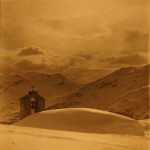
There are records that want to impress you, and there are records that simply happen to you - like a change in the weather, or the slow turning of a liturgical page. "Orassion" belongs firmly to the second category. Conceived and recorded in the Evangelical Reformed Church of St. Martin in Bondo, the album feels less like a studio document and more like a visitation: a moment when sound, space, and intention quietly agreed to coexist.
The pairing at its center is unusual yet strangely inevitable. Rogantini sits at a small positive organ, coaxing out timbres that bloom with the delicate stubbornness of alpine flowers. Remondino, notoriously suspicious of labels (“not” this, “not” that), divides his attention between tube bells, bass drum, and piano - an inventory that reads modest but behaves expansive. Together they approach the church not as a backdrop but as a collaborator: its air a resonant instrument, its walls a patient accomplice.
What emerges from these sessions is a series of miniature devotions, each one suspended between improvisation and composition. The tracks move with a kind of slow, luminous inevitability - sometimes as bare as a single harmonic exhalation, sometimes warm with overlapping overtones. You can hear both musicians listening intently, as though waiting for the room itself to decide the next step.
And if that sounds mystical, well… it is. But not in the incense-and-mystery sense. More in the “two people living in a mountain valley discovering that old organs still have secrets” sense. Because that’s the origin story here: Rogantini and Remondino live together in Valchiavenna, surrounded by small churches with instruments that are rarely touched and even more rarely explored. Their shared research has led them to approach these spaces as porous vessels, storing centuries of resonance. "Orassion" feels like an attempt to activate those traces - gently, respectfully, with the right kind of curiosity.
Musically, the album is full of chiaroscuro. Bright harmonics linger in the rafters; low percussive murmurs shift like distant snowfall. Some pieces arrive almost shyly (“in un cielo immenso”), while others seem carved from thicker stone (“oscuro”, indeed). There’s a sense of narrative throughout, but it’s the kind that unfolds in breath rather than plot. One moment the organ glitters like dust suspended in direct sunlight; the next, the bass drum tugs the floor downward, reminding you of gravity, of earth, of body.
The duo’s backgrounds enrich this palette. Rogantini’s work in voice, jazz, and radical improvisation gives her lines a human core even when she’s seated at the keys of a centuries-old mechanism. Remondino, with his sprawling constellation of collaborations - from lo-fi minimalism to contemporary ensembles to electronic dérives - brings an unstable, searching energy. Yet here he resists ornamentation, choosing instead to place sounds like stones in a stream: deliberate, sparse, quietly meaningful.
There’s a gentle humour in how solemn the record could have been and yet refuses to be. It’s earnest without being precious. Spiritual without wearing robes. More candle flame than cathedral. Even the shortest pieces feel complete, like haiku passed through wooden pipes and metal tongues.
"Orassion" ultimately functions as both a document and an invitation. It captures two artists tuned finely to place, to one another, and to the fragile shimmer that occurs when sound becomes a form of noticing - of catching light on a surface just long enough to understand something wordless.
It’s a small record, in the best sense: intimate, attentive, carved with care. You don’t listen to it so much as let it settle around you. And once it does, it feels a little like standing inside a prayer that hasn’t quite decided if it’s meant for you, or for the room that holds it.
The pairing at its center is unusual yet strangely inevitable. Rogantini sits at a small positive organ, coaxing out timbres that bloom with the delicate stubbornness of alpine flowers. Remondino, notoriously suspicious of labels (“not” this, “not” that), divides his attention between tube bells, bass drum, and piano - an inventory that reads modest but behaves expansive. Together they approach the church not as a backdrop but as a collaborator: its air a resonant instrument, its walls a patient accomplice.
What emerges from these sessions is a series of miniature devotions, each one suspended between improvisation and composition. The tracks move with a kind of slow, luminous inevitability - sometimes as bare as a single harmonic exhalation, sometimes warm with overlapping overtones. You can hear both musicians listening intently, as though waiting for the room itself to decide the next step.
And if that sounds mystical, well… it is. But not in the incense-and-mystery sense. More in the “two people living in a mountain valley discovering that old organs still have secrets” sense. Because that’s the origin story here: Rogantini and Remondino live together in Valchiavenna, surrounded by small churches with instruments that are rarely touched and even more rarely explored. Their shared research has led them to approach these spaces as porous vessels, storing centuries of resonance. "Orassion" feels like an attempt to activate those traces - gently, respectfully, with the right kind of curiosity.
Musically, the album is full of chiaroscuro. Bright harmonics linger in the rafters; low percussive murmurs shift like distant snowfall. Some pieces arrive almost shyly (“in un cielo immenso”), while others seem carved from thicker stone (“oscuro”, indeed). There’s a sense of narrative throughout, but it’s the kind that unfolds in breath rather than plot. One moment the organ glitters like dust suspended in direct sunlight; the next, the bass drum tugs the floor downward, reminding you of gravity, of earth, of body.
The duo’s backgrounds enrich this palette. Rogantini’s work in voice, jazz, and radical improvisation gives her lines a human core even when she’s seated at the keys of a centuries-old mechanism. Remondino, with his sprawling constellation of collaborations - from lo-fi minimalism to contemporary ensembles to electronic dérives - brings an unstable, searching energy. Yet here he resists ornamentation, choosing instead to place sounds like stones in a stream: deliberate, sparse, quietly meaningful.
There’s a gentle humour in how solemn the record could have been and yet refuses to be. It’s earnest without being precious. Spiritual without wearing robes. More candle flame than cathedral. Even the shortest pieces feel complete, like haiku passed through wooden pipes and metal tongues.
"Orassion" ultimately functions as both a document and an invitation. It captures two artists tuned finely to place, to one another, and to the fragile shimmer that occurs when sound becomes a form of noticing - of catching light on a surface just long enough to understand something wordless.
It’s a small record, in the best sense: intimate, attentive, carved with care. You don’t listen to it so much as let it settle around you. And once it does, it feels a little like standing inside a prayer that hasn’t quite decided if it’s meant for you, or for the room that holds it.
Diaspora Unit: III

Diaspora Unit’s "III" feels like the work of two producers who know exactly what they’re doing and are, perhaps, a little too polite to do anything they shouldn’t. Adnan Duric-Steinmann and Josef Fischer have developed a reputation in Munich for their refined, club-adjacent electronics - tracks that feel engineered rather than born, built with care and a strong sense of genre history. On their third album, that engineering shines, even if the emotional voltage doesn’t always follow.
The record moves confidently through familiar territories: polished techno, gleaming electro, measured ambient interludes. Everything is in its place; nothing threatens to fall apart. “Serendipity” and “Vellichor” have enough rhythmic grit to keep feet tapping, while “Panacea” and “Sequoia” offer the kind of atmospheric detours you’d expect from artists with a fondness for cinematic pads and evaporating chords. You can hear nods to Regis, a little Ancient Methods in the distortion, and a faint Vangelis hangover in the synthscapes - but these are influences worn lightly, not reimagined so much as referenced.
There "are" moments when the duo push beyond their comfort zone, if briefly. “Quadrivium” shows a welcome willingness to roughen up their usual polish, and “Temous Edax Rerum”, the closer, actually feels like an ending rather than just the last track - they let the structure crumble, just a bit, and the record breathes for the first time. These flashes hint at a version of Diaspora Unit that could cut deeper if they allowed more risk into the room.
But for most of "III", you’re in well-mapped territory: clean sound design, tight programming, a tastefully brooding mood that drifts between “late-night drive” and “your friend’s DJ set where everyone is vibing and nobody is complaining”. There’s no pretense of revolution here, despite the press-release adjectives floating around. It’s competent, pleasant, and unlikely to annoy anyone - which is both its charm and its limitation.
If you come looking for visionary boundary-pushing, you’ll leave with your hands empty. But if you want a reliably crafted, nicely produced collection of contemporary electronic tracks that ask nothing more than your attention for an hour, "III" delivers just fine. A good record, not a great one - but sometimes that’s all you need.
The record moves confidently through familiar territories: polished techno, gleaming electro, measured ambient interludes. Everything is in its place; nothing threatens to fall apart. “Serendipity” and “Vellichor” have enough rhythmic grit to keep feet tapping, while “Panacea” and “Sequoia” offer the kind of atmospheric detours you’d expect from artists with a fondness for cinematic pads and evaporating chords. You can hear nods to Regis, a little Ancient Methods in the distortion, and a faint Vangelis hangover in the synthscapes - but these are influences worn lightly, not reimagined so much as referenced.
There "are" moments when the duo push beyond their comfort zone, if briefly. “Quadrivium” shows a welcome willingness to roughen up their usual polish, and “Temous Edax Rerum”, the closer, actually feels like an ending rather than just the last track - they let the structure crumble, just a bit, and the record breathes for the first time. These flashes hint at a version of Diaspora Unit that could cut deeper if they allowed more risk into the room.
But for most of "III", you’re in well-mapped territory: clean sound design, tight programming, a tastefully brooding mood that drifts between “late-night drive” and “your friend’s DJ set where everyone is vibing and nobody is complaining”. There’s no pretense of revolution here, despite the press-release adjectives floating around. It’s competent, pleasant, and unlikely to annoy anyone - which is both its charm and its limitation.
If you come looking for visionary boundary-pushing, you’ll leave with your hands empty. But if you want a reliably crafted, nicely produced collection of contemporary electronic tracks that ask nothing more than your attention for an hour, "III" delivers just fine. A good record, not a great one - but sometimes that’s all you need.