
Tuesday, November 24, 2026
Browse by Genre
Industrial Music / Industrial Metal / Aggro Industrial / Electro Metal
Industrial Noise / Power Noise / Harsh Noise
Synth Pop / Electro Pop / Synth-Electronica
Techno / Trance / Goa / Drum'n'Bass / Jungle / Tribal / Trip-Hop
Ambient / Electronica / Ethereal / Dub / Soundscapes / Abstract
Experimental / Avantgarde / Weird & Wired / Glitch / Noise / Field Recording
Dark / Gothic / Wave / New Wave / Dark Wave / Industrial Gothic
New Music / Downtown / Avantgarde Jazz / New Classical / World
Search Reviews
Music Reviews
Martin Virgo: Ghost Piano
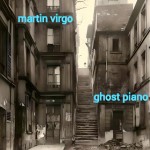
There is something quietly amusing about a musician who has spent decades working in the elaborate machinery of pop production deciding, eventually, that what he really needs is a piano and a little peace. Martin Virgo is hardly a newcomer to the business of shaping sound. His career includes work with Björk on "Debut", collaborations with Nellee Hooper and Massive Attack, and, most memorably, the creation of Mono, whose "Formica Blues" became one of the more distinctive records to emerge from the late-nineties fascination with trip-hop and cinematic pop. Yet "Ghost Piano", his first solo album, takes a considerable step away from that territory. There are no sampled orchestras, programmed beats or carefully assembled layers here, just Virgo at a Steinway Model B grand piano, with Nick Cooper's cello making a single appearance on the title track. It is a deliberately reduced setting, although reduction should not be mistaken for a lack of ambition.
Virgo's classical training at the Guildhall School of Music provides the obvious starting point, but the album is less an exercise in academic retrospection than an attempt to reconnect with a particular musical sensibility. Chopin, Debussy and Erik Satie are its most visible presences, with Philip Glass and Brian Eno also among the influences Virgo has acknowledged. The result is a collection of eleven short compositions that favour melodic clarity, carefully balanced harmonies and an almost old-fashioned sense of musical proportion. The title suggests something spectral, and the music does occasionally seem to arrive from another period, though not necessarily from another world. Its imagined geography is recognisably Parisian, with the late nineteenth century serving as an atmospheric reference rather than a historical reconstruction. One can almost picture the absinthe, the smoky cafés and the artists congratulating one another on having invented modernity, probably before the bill arrives.
The opening “Paris 1889” establishes the album's temperament through a gently melancholic piano figure, its Satie reference more than a decorative name-check. Virgo's two explicit homages, this piece and “Le Chat Noir”, frame the record with an affectionate awareness of the French composer's peculiar ability to make simplicity feel both elegant and faintly unsettling. “Ancient Modern” introduces a broader harmonic vocabulary, while “Nocturne” and “Hymn” explore more familiar territory, allowing the piano's natural resonance and Virgo's melodic instincts to do most of the work. The pieces are generally brief, often little more than two or three minutes, and their compactness gives the album the character of a sequence of finely drawn studies rather than a continuous, large-scale composition. That brevity is both an advantage and a limitation: ideas are presented with economy, but some disappear just as they begin to suggest a more substantial development.
The title track is the collection's most distinctive departure from its otherwise solitary arrangement. Cooper's cello adds a darker, more tactile counterweight to the piano, subtly altering the emotional temperature without turning the piece into a conventional chamber duet. Elsewhere, Virgo allows a few unexpected accents to disturb the prevailing refinement. “La Goulue” carries the suggestion of a more animated, theatrical Paris, while “Lagom” introduces a less predictable harmonic character, and “Strange Tango” brings a distinctly nostalgic, almost cinematic sway. The latter could easily accompany a scene in which two people meet after many years and discover that the past has become considerably more expensive than they remember. “Improvisation”, closing the album, loosens the formal approach a little, though it remains within the same restrained expressive language.
What makes "Ghost Piano" particularly interesting is the relationship between Virgo's earlier career and the music presented here. His work with Björk, Massive Attack and Shara Nelson, as well as his own compositions for Mono, involved a sophisticated understanding of arrangement, atmosphere and the emotional possibilities of production. The cinematic quality of "Formica Blues" was never simply a matter of borrowing vintage samples or dressing songs in retro clothing; its appeal depended on the precision with which Virgo balanced melody, texture and a certain European romanticism. Those qualities have not disappeared. They have simply been transferred to a different instrument and a much smaller vocabulary. Even without the elaborate production that helped define his earlier work, Virgo retains a strong instinct for memorable melodic shapes and harmonic colour. The apparent simplicity of the album therefore conceals a considerable amount of accumulated experience.
There is also something appealingly stubborn about the decision to record the pieces live on an acoustic grand piano, away from the conveniences of digital production. It is not a manifesto against technology, nor does the album need to pretend that acoustic music is inherently more authentic than anything involving a computer. Rather, Virgo seems interested in discovering how much expressive detail can be carried by the instrument itself, and by the compositional decisions made before the recording begins. The piano is allowed to sound like a piano, with its physical weight, its decay and its capacity to make a single melodic line feel unexpectedly spacious. In an era when even a modest keyboard passage can be subjected to enough processing to qualify for its own passport, this directness has a certain appeal.
Still, the album's consistency occasionally comes close to uniformity. Its reflective mood rarely changes dramatically, and the concise structures do not always leave enough room for the compositions to develop beyond their initial attraction. Listeners looking for the rhythmic invention and layered production of Mono will find little of that here. But expecting "Ghost Piano" to reproduce "Formica Blues" in miniature would miss the point. This is not an attempt to revisit a successful formula, but to approach a musical past that existed before the demands of a professional pop career began to shape it.
Ultimately, "Ghost Piano" is a modest, carefully considered record whose pleasures lie in its melodic intelligence rather than in any desire to impress through complexity. Its ghosts are not particularly frightening, and they seem perfectly content to occupy the piano bench without demanding royalties. Virgo has produced an album that feels personal without becoming confessional, nostalgic without being trapped by nostalgia, and classical in its references without behaving like an examination paper. The result is a graceful return to first principles, though the person returning is clearly not the same musician who left them behind.
Roxanne Turcotte: Sillages
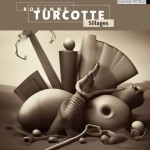
Roxanne Turcotte's idea of "cinemasonics" provides a useful key to the album. She describes an approach in which sound takes on the expressive role usually assigned to images, through overlapping layers, spatial organisation and the contrapuntal interaction of different timbres. The analogy with cinema is not simply about creating atmosphere or supplying imaginary pictures. It is about allowing several strands of material, each with its own history and identity, to develop simultaneously. In "Sillages", these strands include electronic constructions, recordings of everyday environments, animal calls, instrumental performances, fragments of speech and sounds whose original purpose may be difficult to identify. The result is a collection of six compositions that often feels closer to an edited documentary with an unusually adventurous soundtrack than to a conventional electroacoustic album.
Turcotte has a long history in this territory. Originally trained as a pianist at the Conservatoire de musique de Montréal, she went on to study electroacoustic composition with Marcelle Deschênes and Francis Dhomont at the Université de Montréal, becoming the first woman to obtain a master's degree in the discipline there in 1988. Her professional activity has extended into television, cinema, radio, theatre, dance, circus arts and multimedia installations. She has also received numerous distinctions, including the SOCAN Jan V. Matejcek Award for New Classical Music in 2021. Her work has consistently crossed the boundary between composition and sound design, and "Sillages" demonstrates how naturally she can move between those practices without reducing either to a supporting role.
“Gradation” opens the album with material drawn from two unusual instruments invented by Jean-François Laporte of Totem contemporain: the siren organ and the Babel table. Rather than treating their sounds as conventional instrumental performances, Turcotte selects recordings from an extensive sound bank and incorporates them into a composition concerned with escalation, transformation and eventual collapse. The piece develops through successive increases in intensity, suggesting a life cycle in which energy accumulates before subsiding into something more mysterious. Its imagery moves between mythical creatures, ritual, euphoria and extinction, but the music does not need to illustrate each reference literally. Its interest lies in the shifting relationship between recognisable gestures and less easily classified acoustic material. There is a certain irony in beginning a record about historical traces with instruments that sound as though they have arrived from a future civilisation whose technical documentation has been misplaced.
“Haïku” offers a more concentrated change of perspective. Lasting just over four minutes, it uses recordings made in and around Tokyo in 2025, combining urban and natural environments with fragments drawn from Turcotte's sound archive. Bells, voices and familiar objects become part of a miniature portrait of a place, but the composition is not simply a travel souvenir. Its references to ecological and human traces give the piece a more reflective dimension, while its brevity prevents the material from becoming over-explained. The work also acknowledges Belgian composer Annette Vande Gorne, whose "Haïkus" provided inspiration for some passages. It is a delicate interlude, though not an entirely tranquil one: cities have a habit of reminding us that even the most carefully composed moment is surrounded by other people's noise.
The album's central piece, “Artéfacts”, is also its most ambitious. Everyday objects, insects, recordings made during travels to the Seychelles and New Zealand, and fragments of spoken material are brought together in a composition that considers the relationship between human memory and the much longer history of life on Earth. Turcotte's fascination with cicadas is particularly revealing. Their extraordinary evolutionary age, underground development and brief adult existence provide a natural parallel for the way memories survive, sometimes long after the circumstances that produced them have disappeared. The piece also incorporates voices by actor Laurent Poitrenaux, excerpts from theatrical works and fragments of radio interviews recorded across several decades. These passages function as structural interruptions, but they also introduce a distinctly human dimension into the surrounding acoustic activity. Historical voices do not merely provide documentary evidence; they become performers in a composition whose cast includes insects, objects, machines and people who may no longer be alive. It is an expansive idea, and one that gives the album its strongest sense of purpose.
“Réel / Irréel” changes the scale again. Developed through the Sampo system, an electronic device designed by Alexander Mihalic to simplify the connection and control of acoustic instruments in live electronic performance, the work transforms the clarinet into an augmented instrument. Its title points towards the unstable relationship between the physical performer and the electronically modified result. The piece began as an exploration with clarinettist Laurent Fléchier and was later adapted into an imaginary duet involving bass clarinet and prerecorded video. The distinction between the instrument's natural voice and its electronically altered counterpart becomes a productive source of ambiguity. There is something pleasingly paradoxical about using technology designed to make live performance less cumbersome to create a work concerned with the uncertainty of what we are actually hearing.
“L'heure dorée” is among the album's most emotionally direct compositions. Its central instrument is the Armenian duduk, played here by Michel Dubeau, accompanied by Julien Grégoire on the udu and by a multichannel electronic component. The duduk's expressive, breath-like tone provides a melodic focus for a work that considers the landscapes of the Middle East and Armenia, while also addressing the human consequences of war, poverty and political oppression. Turcotte's text makes explicit reference to the suffering of Palestinians, Lebanese and Armenians, as well as the conditions faced by women in Afghanistan and Iran. The music's restrained sense of hope is therefore not an attempt to soften these realities. Rather, it gives the melody a fragile dignity, allowing the instrumental voice to carry an emotional weight that would be difficult to achieve through a more literal treatment. The recurring sound of sand, represented through recordings from the Îles-de-la-Madeleine and the movement of the udu, adds another geographical dimension to the composition. Different places meet without being confused with one another.
The closing “Forêt boréale” brings the album back to the natural environment, but with an intimacy that distinguishes it from the earlier travel recordings. Turcotte combines birdsongs with performances by four wind players, including flutes, ocarina and percussion, integrating processed instrumental sounds into the electronic composition. The work is dedicated in part to Chantal Dumas, whose radio piece "Le son-refuge" had a lasting influence on the composer. Turcotte's own experience volunteering at a wildlife rehabilitation centre also informs the piece. Her account of caring for injured birds, orphaned chicks and animals that have become dependent on human environments gives the composition a personal significance beyond the usual celebration of nature's beauty. Some of the birds she encountered had even learned to imitate mobile-phone ringtones and domestic sounds. One can hardly blame them: humans have been exporting their irritating habits into the natural world for quite some time. Yet the composition is not a complaint. Its exchanges between instrumentalists and recorded birds create a thoughtful musical relationship between human intervention and the independent activity of other species.
The album's dedication to Serge Arcuri, Chantal Dumas and several of Turcotte's mentors, including Francis Dhomont, Marcelle Deschênes, José Evangelista and Serge Garant, gives these different subjects an additional emotional connection. It is not a collection of memorial pieces in the conventional sense, but the presence of those who shaped the composer's life and artistic development is felt throughout. The recordings of voices, animals, instruments and environments all become part of a wider consideration of what survives and what disappears. The title "Sillages" is particularly appropriate in this respect: a wake is visible only because something has passed through a medium, leaving behind a temporary alteration. The original presence may be gone, but its effects remain perceptible.
There is, admittedly, a great deal happening here. The rapid changes of scale and subject, from the synthetic experiments of “Gradation” to the intimate instrumental writing of “L'heure dorée”, can make the album feel more like a carefully assembled exhibition than a continuous musical statement. The conceptual explanations are also unusually detailed, occasionally threatening to turn the listening experience into an exercise in reading the programme notes before allowing the music to speak. Yet Turcotte's compositional intelligence generally keeps these different strands from becoming an assortment of unrelated curiosities. Her ability to integrate environmental recordings, electronic transformations and live instrumental material gives the album a recognisable identity without forcing every composition into the same mould.
Released by empreintes DIGITALes, a label whose catalogue has been closely associated with electroacoustic and acousmatic music since 1990, "Sillages" is a persuasive example of how the documentary and the imaginative can coexist within a single musical language. Turcotte does not simply collect sounds from different locations and arrange them for aesthetic effect. She considers their origins, their cultural associations and the lives that have intersected with them, then gives those materials new relationships through composition. The album is intellectually generous without becoming entirely academic, and its occasional moments of beauty emerge from the specificity of what it contains rather than from any attempt to manufacture easy consolation. It leaves the impression of a world crowded with evidence of life, much of it overlooked, some of it already disappearing. Listening carefully is perhaps the least we can do.
Monique Jean: Malgré tout
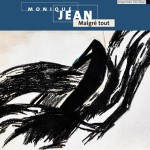
The title "Malgré tout" carries a quiet insistence: despite everything, something continues. In Monique Jean’s case, that persistence takes the form of sound refusing to settle into a definitive shape. Across four electroacoustic compositions, vibrations collide, accumulate, fragment and reassemble, as if the material were continually negotiating its own existence. This is not an especially polite form of music. Its surfaces can be rough, its movements unpredictable, and its structures occasionally difficult to grasp. Yet there is a curious vitality in the way Jean allows instability to become a compositional principle rather than a problem requiring correction.
Jean has been developing this approach for decades. A graduate of the Université de Montréal, where she studied electroacoustic composition with Francis Dhomont, she later completed a doctorate under Nicolas Bernier, focusing on the relationship between improvisation, composition and the unpredictable behaviour of physical sound systems. Her work extends into sound installation, experimental film, video, dance and performance. She is also a member of Theresa Transistor, an electroacoustic improvisation quartet. Her album "Greffes" received the 2012–13 Opus Prize for Best Album in the Musique actuelle / Electroacoustic Music category, while her compositions have appeared at festivals in Europe, North and South America. This is an artist with a substantial history in the field, but one whose methods remain unusually hands-on.
A central element of her practice is MissTake, a self-built instrument consisting of a four-track cassette recorder configured for no-input operation, connected to effects pedals and a multichannel spatialisation system. Rather than using the tape machine to reproduce previously recorded material, Jean turns the apparatus itself into a source of sound. Feedback, intermodulation and the unstable behaviour of analogue circuitry generate material that can be shaped, manipulated and organised without entirely losing its unpredictable character. The name MissTake seems particularly apt: the apparatus makes room for accidents, but these are not simply mistakes waiting to be repaired. They become opportunities, sometimes unruly ones, for discovering sounds that a more obedient system might never produce.
The album opens with “Tumultes”, its longest composition, and the most recent work in the collection. Inspired by Adania Shibli’s "Minor Detail" and Antoine Wauters’s "Mahmoud ou la montée des eaux", it is dedicated to the memory of Serge Arcuri. Its accompanying text evokes barriers, censorship and the divisions that obstruct communication, while insisting on the need to keep searching for a passage towards another person. The political and human implications are clear, but Jean does not attempt to illustrate the novels or translate their narratives into a sequence of sonic events. Instead, the composition seems concerned with the difficulty of reaching across separation itself. Its turbulent material suggests resistance without turning into a simplistic musical equivalent of protest. The result is a piece in which the abstract and the deeply human are not competing interests.
“Volt_#1”, originally composed in 2015 and revised in 2024, takes the listener back to the beginning of Jean’s ongoing investigation into homemade analogue devices. The sounds are rough, noisy and accompanied by the audible presence of the machinery that generates them. Feedback amplifies their unstable character, while the original improvisational sequences are transferred into a more carefully structured electroacoustic composition. This distinction matters. Jean is not simply documenting an improvised performance or preserving a collection of interesting electronic accidents. She is reconsidering what happens when spontaneous material is given a different duration, context and formal organisation. The piece retains a sense of risk, even though its eventual shape is the product of deliberate compositional decisions.
“Dancing on the Edge of Darkness”, developed between 2016 and 2017 in collaboration with video artist Monique Bertrand, brings another set of associations into play. Conceived as part of a five-screen video installation, the work draws on Hamlet, reimagined as a runaway teenager caught between the desire to exist and the temptation to disappear. Jean's response is not to construct a conventional dramatic soundtrack, but to pursue the disturbances implicit in the character: interruptions, electrical interference, abrupt silences, screeching and dissolution. The composition maintains a relatively high level of density, creating a restless continuity in which individual events seem to emerge and vanish before they can establish themselves as stable objects. There is something fittingly uncomfortable about this approach to Shakespeare's most famously indecisive protagonist. Hamlet has spent centuries wondering what to do; here, even the sounds appear unable to make up their minds.
The final “Volt_#3” was originally conceived for sixteen channels, with spatialisation playing a defining role in its construction. Jean imagined an empty public square, still carrying the residual presence of the people who once occupied it. The composition explores the relationship between dense clusters of activity and more scattered lines of sound, suggesting a place in which individual presences briefly gather before dispersing. The image is particularly effective because absence becomes an active component of the piece. An empty square is never entirely empty: its architecture, acoustic properties and accumulated history remain, even when its inhabitants have gone elsewhere. Presented within the album's stereo format, the work necessarily offers a different listening perspective from its original multichannel conception, but its underlying concern with the articulation of space remains central.
The four compositions also reveal the value of bringing together works from different periods rather than presenting the album as a single uninterrupted project. “Tumultes” provides a more recent perspective on Jean's methods, while the two "Volt" pieces and “Dancing on the Edge of Darkness” trace the development of an approach that has remained remarkably consistent without becoming static. The connections are evident, but so are the differences in context and intention. The result is not a chronological survey, nor does it attempt to conceal the gaps between the works. Instead, the sequence allows their shared vocabulary to become clearer through comparison.
There is a risk, naturally, in working with material whose main attraction is its unpredictability. Without sufficient compositional pressure, feedback and electronic instability can become a self-sustaining spectacle, the sonic equivalent of watching someone repeatedly unplug and reconnect a cable while waiting for something extraordinary to happen. Jean avoids this trap by giving her material conceptual and structural responsibilities. The references to literature, political division, theatrical characters and urban space are not decorative explanations attached after the fact. They provide different ways of thinking about the relationships between sound, bodies and environments, without dictating exactly what the listener should hear.
The album's most compelling quality is perhaps its refusal to separate physical sensation from intellectual engagement. Jean's music can be approached through its textures and movements, but it also invites consideration of the forces that shape them: interference, resistance, proximity, separation and the fragile conditions under which different elements coexist. Her compositions do not offer reassuring resolutions, and their roughness is not a cosmetic gesture designed to make electronic music appear more adventurous. There is a genuine commitment to allowing the material to retain its unruly character, even when that makes the listening experience demanding.
Released by empreintes DIGITALes, a Montréal label with a long-standing commitment to electroacoustic composition, "Malgré tout" is a convincing presentation of an artist whose technical ingenuity is matched by a broader interest in the expressive possibilities of sound. Its four pieces do not ask for passive admiration of clever equipment, nor do they turn their literary and political references into explanatory captions. They operate in the space between the concrete and the imagined, where a malfunction can become a compositional decision and an apparently empty place can still contain the traces of countless lives. The title's persistence is therefore more than an expression of endurance. It describes a way of working: continuing to listen, to question and to make something out of whatever refuses to remain still.
Tears|Ov: A Life on Hold
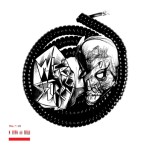
There are few experiences more perfectly designed to test human patience than being kept on hold by a company that has already taken your money. The synthetic reassurance, the apologetic voice that sounds as though it has never apologised for anything in its life, the promise that an operator will be with you shortly: it is a small theatre of institutional indifference, performed daily for an audience that cannot leave without losing its place in the queue. Tears|Ov have taken this familiar irritation as the starting point for "A Life on Hold", then expanded it into a much broader reflection on bureaucracy, media manipulation, social paralysis and the peculiar comedy of contemporary existence. Across ten tracks and just over twenty-five minutes, the London trio turn the language of customer service into an unsettling electronic cabaret, where the jokes are sharp, the machinery is unpredictable and nobody seems particularly convinced that an actual human being will ever answer.
Tears|Ov bring together Terces Wale, L.E. Allen and Lottie Lou Poulet, three artists whose individual histories help explain the project's unusual mixture of sonic experimentation, performance and black humour. Wale and Allen have worked together in various forms since reuniting in London in 2002, eventually developing Tears|Ov into a vehicle for sound collage, poetry and deliberately unstable musical structures. Their earlier work included "Tears Of The Material Vulture" (2016), built around fragments from Allen's involvement with the New York public-access television programme "Madame Chaos", and "A Hopeless Place" (2019), which established their taste for uncomfortable juxtapositions and absurdist vocal material. "Pluto's Return" followed in 2021. Poulet, who joined the project during the making of the new album, brings substantial technical experience: her work has included engineering live performances for Liars, Throbbing Gristle and 808 State, as well as producing Test Dept's "Disturbance". The trio's apparent lack of interest in conventional professional biographies is amusingly reflected in their own description of themselves, which lists digital catering, head-shrinking, laundry and internet research among their various occupations. It is probably the most honest artist statement issued in recent years.
The music is assembled from electronic sequences, samples, spoken fragments, abrasive rhythms and sudden changes of direction. The pieces are generally short, but their compactness rarely makes them feel like sketches waiting for proper development. “One Hour, Location 26” opens with a sense of disquiet that immediately establishes the album's peculiar atmosphere, while “A.W.O.L.” introduces a more forceful rhythmic presence. The title suggests absence without permission, an idea that fits the record's wider interest in people caught inside systems they neither control nor fully understand. “Simple Things/Formation For Now” is a brief but effective collision of synthetic tones and unstable melodic gestures, its slightly malfunctioning character suggesting that even the simplest arrangements can become difficult when too many people are involved.
“We're Sorry” is perhaps the album's most direct statement of intent. Its corporate apology is less an expression of regret than a sound cue signalling that responsibility has been carefully redirected elsewhere. The electronic movement beneath it grows increasingly tense, with prowling oscillator patterns and martial percussion giving the track an almost confrontational momentum. The effect is funny in the way a malfunctioning public-address system can be funny when it announces that everything is under control while smoke begins to emerge from the ceiling. “Probably, I (File Named: Image Is Everything)” is even more compressed, its title evoking the dubious relationship between personal identity and the images through which contemporary culture insists on representing us. The music has a restless, slightly disorienting quality, as if a digital advertisement had developed an anxiety disorder.
“Happy Meal” offers a more playful interlude, with burbling electronic figures that flirt with the cheerful vocabulary of commercial entertainment while quietly undermining it. The title is hardly innocent: fast-food branding, childhood nostalgia and corporate friendliness are all convenient ways of making consumption feel like a personality trait. “P/R/o/t/L”, meanwhile, turns the clipped language and repetitive procedures of automated customer service into a particularly frenetic miniature. Its abrupt edits and fragmented vocal material suggest a conversation in which every possible response has been pre-recorded, except the one that might actually solve the problem. Anyone who has ever attempted to cancel a subscription will recognise the underlying horror.
“Narrow Valley” introduces a more spacious and less immediately aggressive passage, with Poulet's vocal contribution adding another human dimension to the album's otherwise fractured communication. “Setting Sail”, the longest track, is also one of its most substantial. Deep bass pulses and spoken material gradually develop into something more expansive, while samples and shifting electronic textures introduce a sense of uncertainty that reaches beyond the album's initial customer-service premise. The title might imply escape, but the music offers no particularly convincing destination. It is more like setting off without knowing whether the vessel has been inspected, whether the navigation system works or whether the person selling the tickets has any idea where the sea is. “Grateful Relapse” closes the sequence with another concise intervention, and the vinyl edition adds a locked groove on the B-side, a small physical joke that seems entirely appropriate: the record itself is made to repeat, rather like the situations it describes.
The group's interest in media detritus and appropriated language has deeper roots than a simple attraction to found sound. Allen's earlier work with "Madame Chaos", alongside her background in archaeology, has informed a practice of retrieving cultural fragments that mainstream media would normally discard. Wale's writing and performance bring a more explicitly theatrical dimension, drawing on cut-up techniques, absurdist humour and the unstable relationship between public language and private experience. Their performances can be considerably more confrontational than the album's relatively compact electronic constructions suggest. In a recent feature for "The Wire", the group discussed the influence of Dada, the use of grotesque stage personae and the personal history that lies behind some of the record's political references. The events of September 11, 2001, for instance, are not simply an abstract symbol in their work: Allen was in New York when the attacks took place, and the experience had a profound effect on her relationship with Wale. That history gives the album's wider reflections on surveillance, power and collective vulnerability a more complicated emotional foundation.
What makes "A Life on Hold" particularly effective is that it does not confuse political seriousness with musical solemnity. Its humour is not decorative relief from the subject matter; it is part of the method. Corporate language is already a form of surrealism, after all, especially when it promises customer satisfaction while making satisfaction structurally impossible. Tears|Ov expose that absurdity through abrupt edits, synthetic absurdities and vocal interventions that sound as though they have escaped from a television broadcast whose producers have quietly abandoned the building. The brevity of several tracks can occasionally leave an idea hanging just as it begins to develop, and the album's deliberately fragmented construction will not appeal to listeners who expect a conventional progression. But a smooth, reassuring narrative would hardly suit a record about being trapped in systems that repeatedly fail to deliver what they promise.
"A Life on Hold" is a strange, funny and decidedly uncomfortable little object, one that turns the banal vocabulary of modern administration into a portrait of wider social unease. Its ten pieces are too concise to become lectures, too mischievous to settle into conventional protest music, and too sharply observed to be dismissed as mere electronic eccentricity. Tears|Ov understand that the absurdity of contemporary life rarely needs embellishment; it usually arrives in a polite automated voice, accompanied by a reference number and an estimated waiting time. The album's locked groove is therefore more than a vinyl novelty. It is the perfect final gesture: the line is still open, the music keeps playing, and the operator is apparently experiencing an unusually long lunch break.
Spencer Clark: The Spectacle of Light Abductions 2 – Music for the Paintings of Vedran Kopljar

Artist: Spencer Clark
Title: The Spectacle of Light Abductions 2 – Music for the Paintings of Vedran Kopljar
Format: 12" + Download
Label: Pacific City Discs (@)
Rated:


Title: The Spectacle of Light Abductions 2 – Music for the Paintings of Vedran Kopljar
Format: 12" + Download
Label: Pacific City Discs (@)
Rated:
Somewhere between a synthesiser demonstration conducted by an extraterrestrial civilisation and the soundtrack to a documentary about places that do not officially exist, Spencer Clark has found another destination for his peculiar imagination. "Music for the Paintings of Vedran Kopljar" is the second instalment of "The Spectacle of Light Abductions", fifteen years after the original appeared in 2011 under Clark's Fourth World Magazine alias. This time, the point of departure is not an imagined communication from future selves but the paintings of Croatian-born, Antwerp-based artist Vedran Kopljar. The album consists of two substantial pieces, recorded and performed during Kopljar's 2024 exhibition at the Muhka Museum in Antwerp. Together, they form an electronic excursion into a territory where ordinary geography has apparently resigned from its position.
Clark is one of the more distinctive figures to have emerged from the American experimental underground over the past two decades. He first attracted attention as one half of The Skaters, the project he formed with James Ferraro in the early 2000s, but his subsequent output has been remarkably prolific and difficult to contain within a single identity. Monopoly Child Star Searchers, Typhonian Highlife, Black Joker, Fourth World Magazine and Vodka Soap are among the names through which he has explored different variations of his musical imagination. His Pacific City Sound Visions imprint has become an important vehicle for this activity, while his more recent life in Athens has continued a pattern of geographical and artistic restlessness. Clark's music frequently draws on primitive electronic equipment, sampling, repetition and deliberately unstable fidelity, but its eccentricity is not simply a matter of sound. He tends to approach composition through images, sensations and imagined environments, treating musical ideas almost as independent organisms that need to be encouraged rather than disciplined into conventional arrangements. In an interview with "Cyclic Defrost", he described the process of concentrating on an inner image until it begins to develop its own world. That method is particularly relevant here.
The first side, “Abyssfields”, opens with low-resolution percussion and a strange assortment of electronic signals, as though a radio transmission were being received from a civilisation whose idea of communication involves several competing frequencies and an unusually active imagination. Clark's keyboards and sampler generate glistening melodic figures, wavering tones and distorted, voice-like sounds, while the rhythmic elements provide a loose but persistent sense of movement. The piece is not built around a conventional melodic destination. Instead, its motifs gradually mutate, sometimes acquiring an almost ceremonial quality, sometimes dissolving into murkier electronic textures. There is a curious tension between the music's apparent desolation and its vivid colours: the landscape may be barren, but somebody has clearly brought an extravagant collection of lighting equipment.
“Abomination Plateaus”, featuring John Also Bennet on flute, takes a somewhat different approach. A recurring, pinging loop provides the central reference point, while soft synthesiser layers accumulate above it. Bennet's contribution introduces an acoustic presence that seems to hover between recognisable instrumental phrasing and the surrounding electronic material. Rather than providing a conventional melodic counterpoint, the flute becomes another voice within the composition's unusual vocabulary, adding a delicate quality to the track's more insistent rhythmic structure. The repetition is important, but it never feels like a mechanical exercise in endurance. Each return subtly alters the relationship between the sounds, revealing harmonic possibilities that might have remained concealed in a more conventional arrangement. The piece gradually establishes an almost hypnotic momentum, although its sense of direction remains pleasantly elusive.
The visual source deserves more than a passing mention. Kopljar, born in Slavonski Brod in 1991 and now based in Antwerp, works across painting, performance, video and language. His 2024 exhibition at Muhka, "Vedran Kopljar (& parents) — MEAN", explored the ways in which systems create and disrupt meaning. Its paintings included verbal constructions, game-like structures and psychedelic images that resisted straightforward classification. Kopljar's interest in the unstable relationship between rules, interpretation and perception makes him an intriguing counterpart to Clark. Both artists seem interested in what happens when familiar structures are pushed beyond their expected function, although they approach that question through very different materials. Clark does not attempt to provide musical illustrations of individual paintings; instead, he responds to the mental space they suggest. The result is an exchange between visual and sonic abstraction, rather than an exercise in translating one medium into another.
The connection with the original "The Spectacle of Light Abductions" is also more than a matter of recycling an evocative title. The 2011 record, released as Fourth World Magazine, revolved around imagined encounters with future selves and extraterrestrial presences. The new album revisits some of that territory, but its inspiration comes from a more immediate artistic encounter. Clark's imagined beings and Kopljar's painted forms seem to inhabit neighbouring dimensions, connected by a shared suspicion that reality may be considerably less stable than its administrative documentation suggests. The music's peculiar combination of ritualistic repetition, melodic fragments and rough-edged electronic colour is recognisably Clark's, yet the two compositions also benefit from the discipline imposed by their extended forms. There is room for gradual development without the pressure to produce a succession of dramatic events.
One possible reservation concerns the album's limited range of materials. Across nearly thirty-seven minutes, the two pieces remain committed to a relatively narrow vocabulary of synthesised textures, loops and abstracted signals. Listeners looking for substantial rhythmic variation or sharply differentiated sections may find the experience somewhat uniform. But Clark's purpose seems to lie elsewhere. The repetition is a means of sustaining concentration, allowing small changes in tone and harmony to become significant without having to announce themselves with theatrical gestures. It is music that rewards a willingness to remain with an idea, even when that idea appears to be leading nowhere in particular. There are worse ways to spend half an hour, especially in an age when every spare second is apparently expected to become an opportunity for personal optimisation.
"Music for the Paintings of Vedran Kopljar" is an engaging continuation of Clark's long-running investigation into imaginary worlds, primitive electronics and the strange emotional possibilities of repetition. Its two pieces do not offer a conventional narrative, nor do they need to. They create an environment in which sounds seem to possess their own intentions, and where the distinction between musical instrument, signal and imagined presence becomes increasingly difficult to maintain. Kopljar's paintings provide the initial coordinates, Bennet adds an unexpected human breath, and Clark does the rest with his familiar combination of intuition and electronic mischief. The destination remains uncertain, but the expedition is worth taking. Just don't expect the museum gift shop to have a map.