
Browse by Genre
Industrial Music / Industrial Metal / Aggro Industrial / Electro Metal
Industrial Noise / Power Noise / Harsh Noise
Synth Pop / Electro Pop / Synth-Electronica
Techno / Trance / Goa / Drum'n'Bass / Jungle / Tribal / Trip-Hop
Ambient / Electronica / Ethereal / Dub / Soundscapes / Abstract
Experimental / Avantgarde / Weird & Wired / Glitch / Noise / Field Recording
Dark / Gothic / Wave / New Wave / Dark Wave / Industrial Gothic
New Music / Downtown / Avantgarde Jazz / New Classical / World
Search Reviews
Music Reviews
Håvard Skaset / Ståle Liavik Solberg: Truck Rurâl
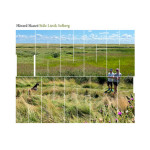
Artist: Håvard Skaset / Ståle Liavik Solberg
Title: Truck Rurâl
Format: CD + Download
Label: ConradSound (@)
Rated:

Title: Truck Rurâl
Format: CD + Download
Label: ConradSound (@)
Rated:
There’s a particular kind of honesty that only shows up when musicians abandon the safety net of “concept” and just sit in a room with wood, metal, and questionable decisions. "Truck Rural" by Håvard Skaset and Ståle Liavik Solberg does exactly that, and then refuses to tidy up the results.
The origin story alone already sets the tone: two veterans of Norway’s experimental underground, crossing paths at a barn party in Tangen and deciding, apparently without irony, that what the world needed was a folk duo. Not a polished, heritage-approved version of folk, of course. More like folk that wandered off, got distracted, and came back carrying bits of free improvisation, noise residue, and a mild disregard for tradition. The fact that the album is recorded in an actual stable, by the farm owner, is either a charming detail or a warning label. It works as both.
Skaset approaches the guitar like someone who doesn’t quite trust it. Open tunings are bent out of shape, phrases start as if they’re heading toward blues or rural lullabies, then quietly veer off into stranger territory. You hear echoes of American primitive styles, maybe a ghost of folk memory, but everything feels slightly misaligned, as if the instrument has its own opinion about where the music should go. It’s intimate in the way that makes you lean in, then immediately question why you did.
Solberg, on the other hand, treats percussion less like a timekeeping device and more like a conversational partner who enjoys interrupting. His playing doesn’t settle into grooves so much as orbit around Skaset’s gestures, sometimes supporting, sometimes poking at them, occasionally undermining them entirely. Given his history alongside figures like John Butcher, Phil Minton, and Pat Thomas, this refusal to behave is not surprising. Still, in this stripped-down context, it feels almost polite. Almost.
What’s interesting is how little the duo seems interested in proving anything. Tracks like “Furnes Fantasy” or “Lonesome Løten” unfold with a kind of rural absent-mindedness, as if the music were happening because it happens, not because it needs to justify itself. There are moments that flirt with melody, hints of something recognizable, but they’re never allowed to settle into comfort. Every time the listener starts to map the terrain, the ground shifts slightly. Not dramatically, just enough to keep you from feeling secure.
And yet, despite the improvisational looseness, there’s a quiet coherence running through the record. Maybe it’s the shared history between the two - decades of parallel trajectories finally intersecting - or maybe it’s the physical space itself, that stable in Tangen imprinting its own acoustics onto everything. The room breathes in the background, wood and air shaping the sound in ways no studio plugin could convincingly fake. You can almost hear the walls listening, which is unsettling if you think about it for too long.
Skaset’s past with projects like MoE and collaborations with Japanese improvisers such as Keiji Haino or PainJerk might suggest something more abrasive. Instead, "Truck Rural" feels like a deliberate narrowing of focus, a return to the bare materials of sound. Solberg mirrors that restraint, even when his instincts push toward disruption. The result is music that feels both grounded and slightly unstable, like a structure built from familiar parts but assembled according to a logic you’re not entirely privy to.
Releases on Conrad Sound often hover in that zone between documentation and exploration, and this one leans heavily toward the former. It doesn’t try to monumentalize the session. It just lets it exist, with all its small hesitations and sideways movements intact.
There’s something quietly disarming about that. No grand statements, no heavy conceptual framing, just two musicians, a shared history, and a room that smells faintly of hay and old decisions. It turns out that’s enough. Not in a triumphant, life-affirming sense. More in the modest way a conversation lingers after it’s over, leaving you with the vague suspicion that something meaningful happened, even if you can’t quite point to where.
The origin story alone already sets the tone: two veterans of Norway’s experimental underground, crossing paths at a barn party in Tangen and deciding, apparently without irony, that what the world needed was a folk duo. Not a polished, heritage-approved version of folk, of course. More like folk that wandered off, got distracted, and came back carrying bits of free improvisation, noise residue, and a mild disregard for tradition. The fact that the album is recorded in an actual stable, by the farm owner, is either a charming detail or a warning label. It works as both.
Skaset approaches the guitar like someone who doesn’t quite trust it. Open tunings are bent out of shape, phrases start as if they’re heading toward blues or rural lullabies, then quietly veer off into stranger territory. You hear echoes of American primitive styles, maybe a ghost of folk memory, but everything feels slightly misaligned, as if the instrument has its own opinion about where the music should go. It’s intimate in the way that makes you lean in, then immediately question why you did.
Solberg, on the other hand, treats percussion less like a timekeeping device and more like a conversational partner who enjoys interrupting. His playing doesn’t settle into grooves so much as orbit around Skaset’s gestures, sometimes supporting, sometimes poking at them, occasionally undermining them entirely. Given his history alongside figures like John Butcher, Phil Minton, and Pat Thomas, this refusal to behave is not surprising. Still, in this stripped-down context, it feels almost polite. Almost.
What’s interesting is how little the duo seems interested in proving anything. Tracks like “Furnes Fantasy” or “Lonesome Løten” unfold with a kind of rural absent-mindedness, as if the music were happening because it happens, not because it needs to justify itself. There are moments that flirt with melody, hints of something recognizable, but they’re never allowed to settle into comfort. Every time the listener starts to map the terrain, the ground shifts slightly. Not dramatically, just enough to keep you from feeling secure.
And yet, despite the improvisational looseness, there’s a quiet coherence running through the record. Maybe it’s the shared history between the two - decades of parallel trajectories finally intersecting - or maybe it’s the physical space itself, that stable in Tangen imprinting its own acoustics onto everything. The room breathes in the background, wood and air shaping the sound in ways no studio plugin could convincingly fake. You can almost hear the walls listening, which is unsettling if you think about it for too long.
Skaset’s past with projects like MoE and collaborations with Japanese improvisers such as Keiji Haino or PainJerk might suggest something more abrasive. Instead, "Truck Rural" feels like a deliberate narrowing of focus, a return to the bare materials of sound. Solberg mirrors that restraint, even when his instincts push toward disruption. The result is music that feels both grounded and slightly unstable, like a structure built from familiar parts but assembled according to a logic you’re not entirely privy to.
Releases on Conrad Sound often hover in that zone between documentation and exploration, and this one leans heavily toward the former. It doesn’t try to monumentalize the session. It just lets it exist, with all its small hesitations and sideways movements intact.
There’s something quietly disarming about that. No grand statements, no heavy conceptual framing, just two musicians, a shared history, and a room that smells faintly of hay and old decisions. It turns out that’s enough. Not in a triumphant, life-affirming sense. More in the modest way a conversation lingers after it’s over, leaving you with the vague suspicion that something meaningful happened, even if you can’t quite point to where.
Válek Merta Tarnovski: Punctum
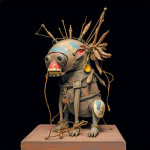
Some musicians spend years searching for the perfect room. Others, apparently, raid the storage closet, drag its contents into the spotlight, and let the room file a complaint later. "Punctum" by Petr Válek, Jara Tarnovski, and Ondej Merta chooses the second option with admirable stubbornness.
The premise sounds deceptively simple: what does a venue sound like when you stop treating it as a neutral container and start treating it as an accomplice? Recorded live at Punctum in Prague’s Zizkov district, the trio answers by dismantling the polite fiction of the concert space. Instead of clearing the stage, they clutter it deliberately, hauling in pots, broken appliances, bicycle parts, stones, branches. It’s less a setup than a minor act of vandalism against the idea of “proper” performance.
The first piece, “cut pum n”, unfolds like a slow-motion landslide of objects discovering their own voices. Metal scrapes against metal with a kind of irritated insistence; wood interrupts with dull thuds; something rattles as if it resents being woken up. Válek’s self-built electroacoustic devices don’t so much control the chaos as coax it into temporary alignments. You keep expecting structure to emerge in a recognizable form. It doesn’t. Instead, you get density, a thick weave of incidental sounds that somehow avoids collapsing into mere noise. Which is impressive, or deeply suspicious, depending on how much faith you have in improvisers behaving themselves.
There’s a strange humor in it, though not the kind that laughs with you. It’s closer to the quiet absurdity of watching a bicycle wheel become a percussion instrument while a saucepan argues back. The trio seems committed to the idea that every neglected object carries a dormant personality, and that personality is mildly annoyed to be part of this performance. The result is a kind of anti-orchestra: no hierarchy, no obvious lead, just a restless negotiation between materials that would prefer to be left alone.
The second piece, “cut pun m”, complicates things further with the arrival of Isabelle Duthoit and eRikm, performing here as SunDog. Duthoit’s voice doesn’t enter so much as seep into the existing texture, shifting between animalistic howls and something resembling sonar signals from a nervous deep-sea creature. eRikm threads electronics through the mass like a subtle corrosion. For a while, it feels as if the whole structure might solidify into a single, suffocating block of sound.
Then the reversal begins.
Where the first half accumulates, the second dismantles. Objects are gradually withdrawn, gestures shortened, densities thinned. The trio starts undoing its own work with a patience that borders on ritual. It’s almost architectural: build, inhabit, dismantle, erase the evidence. By the end, the space is emptied again, or at least returned to its usual state of quiet neglect. The palindrome is complete, and the room goes back to pretending it was never involved.
What makes "Punctum" linger isn’t just the sound palette, which any determined group of people with access to a junk room could theoretically reproduce. It’s the insistence on locality. This is not a portable idea. The album feels inseparable from that specific basement in Zizkov, from its dust, its forgotten corners, its collection of mildly tragic objects. Try to recreate it elsewhere and you’d get something similar, sure, but not this particular constellation of irritations.
Releases on Flaming Pines often flirt with site-specificity and improvisation, but "Punctum" pushes the concept until it becomes almost stubbornly literal. The venue is not just captured; it’s activated, provoked, briefly reorganized. Then, with a kind of deadpan courtesy, everything is put back where it came from, as if nothing unusual had happened.
It leaves you with an unhelpful realization: maybe spaces have always been sounding like this, full of low-level negotiations between objects, surfaces, and neglect. We just insist on calling it silence because it makes us feel in control. This record disagrees, methodically, for nearly forty minutes.
The premise sounds deceptively simple: what does a venue sound like when you stop treating it as a neutral container and start treating it as an accomplice? Recorded live at Punctum in Prague’s Zizkov district, the trio answers by dismantling the polite fiction of the concert space. Instead of clearing the stage, they clutter it deliberately, hauling in pots, broken appliances, bicycle parts, stones, branches. It’s less a setup than a minor act of vandalism against the idea of “proper” performance.
The first piece, “cut pum n”, unfolds like a slow-motion landslide of objects discovering their own voices. Metal scrapes against metal with a kind of irritated insistence; wood interrupts with dull thuds; something rattles as if it resents being woken up. Válek’s self-built electroacoustic devices don’t so much control the chaos as coax it into temporary alignments. You keep expecting structure to emerge in a recognizable form. It doesn’t. Instead, you get density, a thick weave of incidental sounds that somehow avoids collapsing into mere noise. Which is impressive, or deeply suspicious, depending on how much faith you have in improvisers behaving themselves.
There’s a strange humor in it, though not the kind that laughs with you. It’s closer to the quiet absurdity of watching a bicycle wheel become a percussion instrument while a saucepan argues back. The trio seems committed to the idea that every neglected object carries a dormant personality, and that personality is mildly annoyed to be part of this performance. The result is a kind of anti-orchestra: no hierarchy, no obvious lead, just a restless negotiation between materials that would prefer to be left alone.
The second piece, “cut pun m”, complicates things further with the arrival of Isabelle Duthoit and eRikm, performing here as SunDog. Duthoit’s voice doesn’t enter so much as seep into the existing texture, shifting between animalistic howls and something resembling sonar signals from a nervous deep-sea creature. eRikm threads electronics through the mass like a subtle corrosion. For a while, it feels as if the whole structure might solidify into a single, suffocating block of sound.
Then the reversal begins.
Where the first half accumulates, the second dismantles. Objects are gradually withdrawn, gestures shortened, densities thinned. The trio starts undoing its own work with a patience that borders on ritual. It’s almost architectural: build, inhabit, dismantle, erase the evidence. By the end, the space is emptied again, or at least returned to its usual state of quiet neglect. The palindrome is complete, and the room goes back to pretending it was never involved.
What makes "Punctum" linger isn’t just the sound palette, which any determined group of people with access to a junk room could theoretically reproduce. It’s the insistence on locality. This is not a portable idea. The album feels inseparable from that specific basement in Zizkov, from its dust, its forgotten corners, its collection of mildly tragic objects. Try to recreate it elsewhere and you’d get something similar, sure, but not this particular constellation of irritations.
Releases on Flaming Pines often flirt with site-specificity and improvisation, but "Punctum" pushes the concept until it becomes almost stubbornly literal. The venue is not just captured; it’s activated, provoked, briefly reorganized. Then, with a kind of deadpan courtesy, everything is put back where it came from, as if nothing unusual had happened.
It leaves you with an unhelpful realization: maybe spaces have always been sounding like this, full of low-level negotiations between objects, surfaces, and neglect. We just insist on calling it silence because it makes us feel in control. This record disagrees, methodically, for nearly forty minutes.
Karoline Wallace: Eon
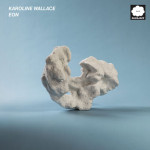
Karoline Wallace’s "Eon" doesn’t arrive politely. It sort of seeps in, like a memory you didn’t agree to revisit but now have to entertain anyway. Which is fitting, because this record spends a lot of time negotiating with time itself - how it stretches, loops, fractures, and occasionally just sits there staring at you.
Wallace has been circling this intersection of jazz, folk, and contemporary composition for a while now, but "Eon" feels less like a continuation and more like a widening of the frame. Her work with ensembles in the Norwegian scene already hinted at a taste for porous structures, but here she seems determined to let everything leak into everything else. Voice into electronics, melody into texture, intimacy into something slightly disorienting.
The lineup helps. Signe Emmeluth’s saxophone and flute don’t behave like polite jazz instruments; they flicker, intrude, dissolve. Karl Bjora’s guitar often feels like it’s remembering a groove rather than playing one. Joel Ring’s cello anchors things just enough to make the surrounding instability noticeable, while Martin Langlie - drums, electronics, banjo, because apparently categories are optional - keeps nudging the whole structure off balance. It’s an ensemble that understands restraint, but also enjoys quietly sabotaging it.
Wallace herself operates in that slippery space between singer and instigator. Her voice doesn’t dominate; it threads through the arrangements, sometimes clear and almost folk-like, sometimes fragmented, processed, or just hovering at the edge of intelligibility. The use of Norwegian lyrics adds another layer - not as exotic garnish, but as a rhythmic and phonetic material that shapes the music as much as it communicates meaning. Even if you don’t understand the words, you understand their weight.
What "Eon" does particularly well is avoid the trap of “fusion” as a tidy concept. This isn’t jazz plus electronics plus folk neatly arranged on a plate. It’s more like all those elements were thrown into the same room and left to negotiate their own relationships. Tape recordings drift in like ghosts of other contexts, Morse-like melodic fragments blink on and off, grooves emerge only to dissolve before they can settle into anything reassuring.
Take “Tycho”, which opens the album with a sense of suspended motion. It doesn’t build so much as accumulate, layers folding into each other until you realize the piece has quietly shifted its center of gravity. “Bittelille meg” pulls things inward, more intimate, almost fragile, before “Klokkestein” introduces a denser, more tactile interplay between voice and ensemble. Throughout, Wallace seems less interested in contrast for its own sake and more in how states bleed into one another.
There’s a peculiar elasticity to the album’s pacing. Some passages feel like they’re stretching toward something just out of reach, others like they’ve already arrived and are now slowly dissolving. “Karamellgneis” (which sounds like a geological formation invented during a sugar rush) manages to be both playful and slightly ominous, a trick the record pulls more than once. Even the closing “BULDER/Live for Today” resists the idea of resolution, ending not with a statement but with a kind of open-ended shrug.
What’s quietly impressive is how physical the music feels despite its abstract tendencies. Textures aren’t just decorative; they have weight, friction, temperature. You can almost map the album as a terrain - soft ground here, sharp edges there, occasional pockets where things sink unexpectedly.
There’s also a sense that Wallace is less interested in perfection than in presence. The performances retain a certain looseness, a willingness to let small imperfections remain visible. It gives the music a kind of lived-in quality, as if these pieces are still evolving even as you’re listening to them.
If "Eon" has a flaw, it’s that it doesn’t make itself easy to grasp in a single pass. It’s not built for quick consumption or immediate clarity. But that’s also its strength. It rewards the kind of listening that requires a bit of patience, a bit of surrender - two things people claim to value and then immediately avoid.
In the end, Wallace isn’t offering a grand statement about time, memory, or identity. She’s sketching their edges, letting them blur into sound. And somewhere in that blur, something quietly precise emerges. Not a conclusion, not a revelation. Just a space that feels, for a moment, convincingly real.
Wallace has been circling this intersection of jazz, folk, and contemporary composition for a while now, but "Eon" feels less like a continuation and more like a widening of the frame. Her work with ensembles in the Norwegian scene already hinted at a taste for porous structures, but here she seems determined to let everything leak into everything else. Voice into electronics, melody into texture, intimacy into something slightly disorienting.
The lineup helps. Signe Emmeluth’s saxophone and flute don’t behave like polite jazz instruments; they flicker, intrude, dissolve. Karl Bjora’s guitar often feels like it’s remembering a groove rather than playing one. Joel Ring’s cello anchors things just enough to make the surrounding instability noticeable, while Martin Langlie - drums, electronics, banjo, because apparently categories are optional - keeps nudging the whole structure off balance. It’s an ensemble that understands restraint, but also enjoys quietly sabotaging it.
Wallace herself operates in that slippery space between singer and instigator. Her voice doesn’t dominate; it threads through the arrangements, sometimes clear and almost folk-like, sometimes fragmented, processed, or just hovering at the edge of intelligibility. The use of Norwegian lyrics adds another layer - not as exotic garnish, but as a rhythmic and phonetic material that shapes the music as much as it communicates meaning. Even if you don’t understand the words, you understand their weight.
What "Eon" does particularly well is avoid the trap of “fusion” as a tidy concept. This isn’t jazz plus electronics plus folk neatly arranged on a plate. It’s more like all those elements were thrown into the same room and left to negotiate their own relationships. Tape recordings drift in like ghosts of other contexts, Morse-like melodic fragments blink on and off, grooves emerge only to dissolve before they can settle into anything reassuring.
Take “Tycho”, which opens the album with a sense of suspended motion. It doesn’t build so much as accumulate, layers folding into each other until you realize the piece has quietly shifted its center of gravity. “Bittelille meg” pulls things inward, more intimate, almost fragile, before “Klokkestein” introduces a denser, more tactile interplay between voice and ensemble. Throughout, Wallace seems less interested in contrast for its own sake and more in how states bleed into one another.
There’s a peculiar elasticity to the album’s pacing. Some passages feel like they’re stretching toward something just out of reach, others like they’ve already arrived and are now slowly dissolving. “Karamellgneis” (which sounds like a geological formation invented during a sugar rush) manages to be both playful and slightly ominous, a trick the record pulls more than once. Even the closing “BULDER/Live for Today” resists the idea of resolution, ending not with a statement but with a kind of open-ended shrug.
What’s quietly impressive is how physical the music feels despite its abstract tendencies. Textures aren’t just decorative; they have weight, friction, temperature. You can almost map the album as a terrain - soft ground here, sharp edges there, occasional pockets where things sink unexpectedly.
There’s also a sense that Wallace is less interested in perfection than in presence. The performances retain a certain looseness, a willingness to let small imperfections remain visible. It gives the music a kind of lived-in quality, as if these pieces are still evolving even as you’re listening to them.
If "Eon" has a flaw, it’s that it doesn’t make itself easy to grasp in a single pass. It’s not built for quick consumption or immediate clarity. But that’s also its strength. It rewards the kind of listening that requires a bit of patience, a bit of surrender - two things people claim to value and then immediately avoid.
In the end, Wallace isn’t offering a grand statement about time, memory, or identity. She’s sketching their edges, letting them blur into sound. And somewhere in that blur, something quietly precise emerges. Not a conclusion, not a revelation. Just a space that feels, for a moment, convincingly real.
Stephen O’Malley: Spheres Collapser
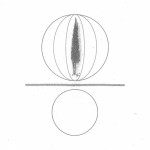
Artist: Stephen O’Malley (@)
Title: Spheres Collapser
Format: 12" + Download
Label: XKatedral / La Becque Editions (@)
Rated:

Title: Spheres Collapser
Format: 12" + Download
Label: XKatedral / La Becque Editions (@)
Rated:
Stephen O’Malley deciding to write for pipe organ feels less like a stylistic pivot and more like an inevitability. After years spent bending amplifiers into monolithic drones with Sunn O))), moving into a cathedral and letting the building itself do the amplification was probably the next logical step. Why carry the weight when the architecture can do it for you.
"Spheres Collapser" is, on paper, disarmingly simple: two long-form organ pieces, recorded in a Swiss church, performed alongside Kali Malone and Frederikke Hoffmeier. In practice, it’s about as subtle as tectonic plates shifting under a marble floor. The pipe organ - specifically the sprawling, historically layered instrument at Église Saint-François in Lausanne - becomes less an instrument than a system of pressure, air, and time. You don’t “play” it so much as initiate a process and then wait for the consequences.
O’Malley’s compositional language hasn’t changed as much as it has migrated. The same obsessions are here: duration, density, the slow revelation of harmonic overtones that feel less written than uncovered. If you’ve followed his work with Khanate or his various electroacoustic collaborations, you’ll recognize the patience. What’s different is the medium’s refusal to be rushed. The organ breathes on its own terms, and the room answers back.
“Phase I” unfolds like a negotiation with gravity. Low frequencies gather in the nave, thickening the air until it feels almost tactile. There’s no dramatic gesture, no obvious narrative arc. Instead, sound accumulates, layer by microscopic layer, until you realize the piece has quietly reconfigured your sense of scale. Time stretches. Listening becomes less about following and more about enduring, or maybe inhabiting.
Kali Malone’s presence is not incidental. Her own work with organ minimalism has a reputation for turning austerity into something strangely luminous, and here that sensibility seeps into the performance. The tones are not just heavy; they’re precise, almost surgical in how they occupy space. Frederikke Hoffmeier, better known in other contexts as Puce Mary, adds another layer of tension - less visible, perhaps, but felt in the way the sound resists settling into pure consonance.
“Phase II” doesn’t so much continue as deepen the descent. If the first piece establishes a gravitational field, the second explores what happens when you stop resisting it. Harmonics begin to shimmer at the edges, like light caught in slow motion. There are moments where the organ seems to fracture into smaller particles of sound, only to reassemble into something even more imposing. It’s not dramatic in the cinematic sense. It’s geological. Change happens, but on a scale that makes human impatience look slightly ridiculous.
The origin of the material - part of a larger suite created for choreographer Cindy Van Acker - lingers in the background. You can almost sense the phantom of movement, the idea that bodies once interacted with these sounds. But stripped of that visual component, the music stands as a kind of architectural study. Sound shaping space, space reshaping perception.
What’s quietly fascinating is how little O’Malley seems interested in transcendence here. The pipe organ, with all its ecclesiastical baggage, practically begs for spiritual readings. Instead, "Spheres Collapser" feels grounded, even physical. Air moves through pipes. Frequencies collide. The room vibrates. If there’s anything sacred, it’s the mechanics.
This is not an album that meets you halfway. It expects stillness, attention, and a willingness to let go of the idea that something needs to “happen”. For some listeners, that will translate to profundity. For others, it will feel like being politely crushed by a very patient machine.
Either way, "Spheres Collapser" does what O’Malley has always done, just with bigger lungs: it stretches sound until it stops behaving like music and starts behaving like an environment. And once you’re inside it, leaving feels slightly theoretical.
"Spheres Collapser" is, on paper, disarmingly simple: two long-form organ pieces, recorded in a Swiss church, performed alongside Kali Malone and Frederikke Hoffmeier. In practice, it’s about as subtle as tectonic plates shifting under a marble floor. The pipe organ - specifically the sprawling, historically layered instrument at Église Saint-François in Lausanne - becomes less an instrument than a system of pressure, air, and time. You don’t “play” it so much as initiate a process and then wait for the consequences.
O’Malley’s compositional language hasn’t changed as much as it has migrated. The same obsessions are here: duration, density, the slow revelation of harmonic overtones that feel less written than uncovered. If you’ve followed his work with Khanate or his various electroacoustic collaborations, you’ll recognize the patience. What’s different is the medium’s refusal to be rushed. The organ breathes on its own terms, and the room answers back.
“Phase I” unfolds like a negotiation with gravity. Low frequencies gather in the nave, thickening the air until it feels almost tactile. There’s no dramatic gesture, no obvious narrative arc. Instead, sound accumulates, layer by microscopic layer, until you realize the piece has quietly reconfigured your sense of scale. Time stretches. Listening becomes less about following and more about enduring, or maybe inhabiting.
Kali Malone’s presence is not incidental. Her own work with organ minimalism has a reputation for turning austerity into something strangely luminous, and here that sensibility seeps into the performance. The tones are not just heavy; they’re precise, almost surgical in how they occupy space. Frederikke Hoffmeier, better known in other contexts as Puce Mary, adds another layer of tension - less visible, perhaps, but felt in the way the sound resists settling into pure consonance.
“Phase II” doesn’t so much continue as deepen the descent. If the first piece establishes a gravitational field, the second explores what happens when you stop resisting it. Harmonics begin to shimmer at the edges, like light caught in slow motion. There are moments where the organ seems to fracture into smaller particles of sound, only to reassemble into something even more imposing. It’s not dramatic in the cinematic sense. It’s geological. Change happens, but on a scale that makes human impatience look slightly ridiculous.
The origin of the material - part of a larger suite created for choreographer Cindy Van Acker - lingers in the background. You can almost sense the phantom of movement, the idea that bodies once interacted with these sounds. But stripped of that visual component, the music stands as a kind of architectural study. Sound shaping space, space reshaping perception.
What’s quietly fascinating is how little O’Malley seems interested in transcendence here. The pipe organ, with all its ecclesiastical baggage, practically begs for spiritual readings. Instead, "Spheres Collapser" feels grounded, even physical. Air moves through pipes. Frequencies collide. The room vibrates. If there’s anything sacred, it’s the mechanics.
This is not an album that meets you halfway. It expects stillness, attention, and a willingness to let go of the idea that something needs to “happen”. For some listeners, that will translate to profundity. For others, it will feel like being politely crushed by a very patient machine.
Either way, "Spheres Collapser" does what O’Malley has always done, just with bigger lungs: it stretches sound until it stops behaving like music and starts behaving like an environment. And once you’re inside it, leaving feels slightly theoretical.
Emily Wittbrodt: Wearing Words
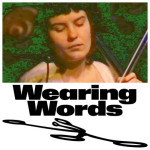
Artist: Emily Wittbrodt (@)
Title: Wearing Words
Format: 12" + Download
Label: Futura Resistenza (@)
Rated:
Title: Wearing Words
Format: 12" + Download
Label: Futura Resistenza (@)
Rated:
Emily Wittbrodt’s "Wearing Words" is built on a small, slightly maddening premise: what if language doesn’t belong to you, but you insist on using it anyway? Not as expression, but as adaptation. Not speaking, but wearing.
She describes the process as feeling “like wearing clothes that don’t belong to me”, a borrowed vocabulary that never quite settles on the skin. That image ends up doing more work than most album concepts manage in a lifetime. Because once you hear it, you can’t un-hear it: every phrase on this record sounds negotiated rather than owned, gently forced into melodic shapes that existed before meaning arrived.
Wittbrodt, trained in classical traditions but clearly uninterested in staying obedient to them, constructs the music first - clean, deliberate, almost architectural - and only later searches for the words that can inhabit it. Not decorate it, not explain it. Fit it. It’s a backwards method, and predictably, it produces a kind of friction that becomes the album’s real subject.
She has said she spent weeks doing nothing but chasing the right words, to the point of dreaming about them, as if language had turned into a low-level fever. You can hear that obsessive fine-tuning everywhere: lines that feel just slightly too tight, vowels stretched like fabric under tension, consonants landing with surgical precision. It’s meticulous, but not sterile. More like someone trying to tailor a suit in the dark.
Musically, "Wearing Words" drifts in a zone where chamber pop, baroque echoes, and restrained improvisation keep brushing against each other without ever fully merging. The cello remains the axis, warm but unsentimental, while accordion, clarinet, and electronics hover like secondary thoughts. Nothing insists. Nothing performs urgency. Even the more ornate passages feel as if they’re holding back, aware that too much certainty would break the spell.
Sandro HÄhnel’s voice is a crucial decision. Wittbrodt deliberately writes outside his natural range, forcing him into a softer, almost disembodied delivery. The result is a voice that doesn’t declare identity but suspends it. Gender blurs, authority dissolves, and what remains is something fragile, almost provisional. A voice that sounds like it’s trying on language rather than owning it.
There’s also a darker undercurrent Wittbrodt hints at: that people “wear words” not just out of discomfort, but out of strategy. Language as camouflage. Language as manipulation. It’s not hammered into a thesis, but it lingers behind the songs like a quiet suspicion that meaning itself might be compromised.
And that’s where the album becomes more than an elegant experiment. It starts to resemble a study of how we communicate when we’re not entirely sure we can. When language feels second-hand, when expression arrives late, when clarity is something you assemble rather than discover.
Tracks like “Lied” or the title piece don’t resolve this tension. They sit inside it. Melodies offer a sense of direction, while the words keep shifting underfoot, never fully settling. It’s beautiful in a slightly unstable way, like a sentence that almost says what you mean but leaves a residue of doubt.
In the end, "Wearing Words" doesn’t try to fix the gap between sound and language. It just exposes it, patiently, almost tenderly. Wittbrodt doesn’t claim fluency. She documents the effort.
And honestly, that’s a lot closer to how most people actually live with language than they’d like to admit.
She describes the process as feeling “like wearing clothes that don’t belong to me”, a borrowed vocabulary that never quite settles on the skin. That image ends up doing more work than most album concepts manage in a lifetime. Because once you hear it, you can’t un-hear it: every phrase on this record sounds negotiated rather than owned, gently forced into melodic shapes that existed before meaning arrived.
Wittbrodt, trained in classical traditions but clearly uninterested in staying obedient to them, constructs the music first - clean, deliberate, almost architectural - and only later searches for the words that can inhabit it. Not decorate it, not explain it. Fit it. It’s a backwards method, and predictably, it produces a kind of friction that becomes the album’s real subject.
She has said she spent weeks doing nothing but chasing the right words, to the point of dreaming about them, as if language had turned into a low-level fever. You can hear that obsessive fine-tuning everywhere: lines that feel just slightly too tight, vowels stretched like fabric under tension, consonants landing with surgical precision. It’s meticulous, but not sterile. More like someone trying to tailor a suit in the dark.
Musically, "Wearing Words" drifts in a zone where chamber pop, baroque echoes, and restrained improvisation keep brushing against each other without ever fully merging. The cello remains the axis, warm but unsentimental, while accordion, clarinet, and electronics hover like secondary thoughts. Nothing insists. Nothing performs urgency. Even the more ornate passages feel as if they’re holding back, aware that too much certainty would break the spell.
Sandro HÄhnel’s voice is a crucial decision. Wittbrodt deliberately writes outside his natural range, forcing him into a softer, almost disembodied delivery. The result is a voice that doesn’t declare identity but suspends it. Gender blurs, authority dissolves, and what remains is something fragile, almost provisional. A voice that sounds like it’s trying on language rather than owning it.
There’s also a darker undercurrent Wittbrodt hints at: that people “wear words” not just out of discomfort, but out of strategy. Language as camouflage. Language as manipulation. It’s not hammered into a thesis, but it lingers behind the songs like a quiet suspicion that meaning itself might be compromised.
And that’s where the album becomes more than an elegant experiment. It starts to resemble a study of how we communicate when we’re not entirely sure we can. When language feels second-hand, when expression arrives late, when clarity is something you assemble rather than discover.
Tracks like “Lied” or the title piece don’t resolve this tension. They sit inside it. Melodies offer a sense of direction, while the words keep shifting underfoot, never fully settling. It’s beautiful in a slightly unstable way, like a sentence that almost says what you mean but leaves a residue of doubt.
In the end, "Wearing Words" doesn’t try to fix the gap between sound and language. It just exposes it, patiently, almost tenderly. Wittbrodt doesn’t claim fluency. She documents the effort.
And honestly, that’s a lot closer to how most people actually live with language than they’d like to admit.