
Browse by Genre
Industrial Music / Industrial Metal / Aggro Industrial / Electro Metal
Industrial Noise / Power Noise / Harsh Noise
Synth Pop / Electro Pop / Synth-Electronica
Techno / Trance / Goa / Drum'n'Bass / Jungle / Tribal / Trip-Hop
Ambient / Electronica / Ethereal / Dub / Soundscapes / Abstract
Experimental / Avantgarde / Weird & Wired / Glitch / Noise / Field Recording
Dark / Gothic / Wave / New Wave / Dark Wave / Industrial Gothic
New Music / Downtown / Avantgarde Jazz / New Classical / World
Search Reviews
Music Reviews
Frédéric L'Epée: Contre Courant
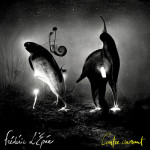
Artist: Frédéric L'Epée (@)
Title: Contre Courant
Format: Download Only (MP3 + Lossless)
Label: Cuneiform (http://www.cuneiformrecords.com/) (@)
Rated:

Title: Contre Courant
Format: Download Only (MP3 + Lossless)
Label: Cuneiform (http://www.cuneiformrecords.com/) (@)
Rated:
Electric guitar music often suffers from a peculiar form of inflation. More pedals, more speed, more volume, more evidence that someone spent adolescence practicing scales instead of developing sustainable social skills. Frédéric L'Epée takes the opposite route on "Contre Courant", stripping the instrument of its habitual theatrics until what remains is touch, resonance, and the quiet confidence of someone uninterested in competing for attention.
Released by Cuneiform Records, the album feels less like a conventional guitar record than a patient argument for the electric guitar as a chamber instrument. L’Epée’s stated ambition - to create a solo electric repertoire analogous to classical recital traditions - could easily have resulted in something stiff or academic. Instead, "Contre Courant" breathes with remarkable intimacy. The pieces unfold like carefully observed thoughts rather than demonstrations of technique.
That restraint is crucial. L’Epée avoids the reflexive gestures associated with the instrument almost entirely: no grandstanding solos, no distortion-heavy catharsis, no endless declarations of emotional importance through volume. The guitar sounds mostly natural, almost exposed, and because of that every tonal shift matters. Harmonics shimmer briefly before dissolving, chords linger with delicate ambiguity, melodies emerge cautiously as if testing the air before continuing.
The title itself, French for “against the current”, proves apt. In a musical landscape increasingly addicted to immediacy and saturation, these compositions move slowly and with unusual patience. “Festina Lente” establishes the atmosphere immediately, balancing motion and stillness with a grace that recalls the paradox contained in its title: make haste slowly. The piece doesn’t progress toward climax so much as circulate through subtle transformations, rewarding attention rather than demanding it.
L’Epée’s affection for early twentieth-century French composers hovers throughout the record, particularly in “Sarabande”, “Trois Miniatures”, and the remarkable “Les Sonneurs”. You can sense traces of Claude Debussy, Maurice Ravel, and Erik Satie not through direct quotation, but through atmosphere: harmonic colors that seem to shift with the light, phrases that evaporate before fully resolving, emotional tones suspended somewhere between melancholy and tenderness. L’Epée appears less interested in imitation than in imagining an alternate musical history where these composers actually wrote for electric guitar. A strangely moving thought, honestly. History could have used more tasteful guitar music and fewer twelve-minute drum solos.
At times, the album edges toward minimalism, though never in a doctrinaire sense. “Pluie Inversée” and “Anchor” feel almost weightless, while “Méditation Polyrythmique” introduces rhythmic complexity without sacrificing clarity or warmth. Even the more substantial pieces, such as “Floating Forest” or “Le Ciel après nous”, avoid excess. The music continually resists overstatement, preferring implication to declaration.
This approach makes sense within the broader context of L’Epée’s career. Known for his work with Yang, where progressive rock structures intertwine with chamber-like precision, he has long occupied an unusual space between rock experimentation and contemporary composition. Here, however, the extroverted energy associated with ensemble work recedes, revealing what he describes as the “Yin” side of his musical personality: inward-looking, restrained, quietly luminous.
There’s something almost unfashionable about the album’s sincerity. "Contre Courant" does not hide behind irony, conceptual overload, or technological spectacle. It simply trusts sound itself to carry meaning. That trust can feel disarming in 2026, when so much music behaves as if terrified of silence or subtlety.
And perhaps that is the album’s greatest strength. It asks the listener not to consume, but to dwell. To pay attention to resonance, decay, hesitation. To remember that intimacy is not the absence of complexity, but another form of it entirely.
A radical proposition, apparently.
Released by Cuneiform Records, the album feels less like a conventional guitar record than a patient argument for the electric guitar as a chamber instrument. L’Epée’s stated ambition - to create a solo electric repertoire analogous to classical recital traditions - could easily have resulted in something stiff or academic. Instead, "Contre Courant" breathes with remarkable intimacy. The pieces unfold like carefully observed thoughts rather than demonstrations of technique.
That restraint is crucial. L’Epée avoids the reflexive gestures associated with the instrument almost entirely: no grandstanding solos, no distortion-heavy catharsis, no endless declarations of emotional importance through volume. The guitar sounds mostly natural, almost exposed, and because of that every tonal shift matters. Harmonics shimmer briefly before dissolving, chords linger with delicate ambiguity, melodies emerge cautiously as if testing the air before continuing.
The title itself, French for “against the current”, proves apt. In a musical landscape increasingly addicted to immediacy and saturation, these compositions move slowly and with unusual patience. “Festina Lente” establishes the atmosphere immediately, balancing motion and stillness with a grace that recalls the paradox contained in its title: make haste slowly. The piece doesn’t progress toward climax so much as circulate through subtle transformations, rewarding attention rather than demanding it.
L’Epée’s affection for early twentieth-century French composers hovers throughout the record, particularly in “Sarabande”, “Trois Miniatures”, and the remarkable “Les Sonneurs”. You can sense traces of Claude Debussy, Maurice Ravel, and Erik Satie not through direct quotation, but through atmosphere: harmonic colors that seem to shift with the light, phrases that evaporate before fully resolving, emotional tones suspended somewhere between melancholy and tenderness. L’Epée appears less interested in imitation than in imagining an alternate musical history where these composers actually wrote for electric guitar. A strangely moving thought, honestly. History could have used more tasteful guitar music and fewer twelve-minute drum solos.
At times, the album edges toward minimalism, though never in a doctrinaire sense. “Pluie Inversée” and “Anchor” feel almost weightless, while “Méditation Polyrythmique” introduces rhythmic complexity without sacrificing clarity or warmth. Even the more substantial pieces, such as “Floating Forest” or “Le Ciel après nous”, avoid excess. The music continually resists overstatement, preferring implication to declaration.
This approach makes sense within the broader context of L’Epée’s career. Known for his work with Yang, where progressive rock structures intertwine with chamber-like precision, he has long occupied an unusual space between rock experimentation and contemporary composition. Here, however, the extroverted energy associated with ensemble work recedes, revealing what he describes as the “Yin” side of his musical personality: inward-looking, restrained, quietly luminous.
There’s something almost unfashionable about the album’s sincerity. "Contre Courant" does not hide behind irony, conceptual overload, or technological spectacle. It simply trusts sound itself to carry meaning. That trust can feel disarming in 2026, when so much music behaves as if terrified of silence or subtlety.
And perhaps that is the album’s greatest strength. It asks the listener not to consume, but to dwell. To pay attention to resonance, decay, hesitation. To remember that intimacy is not the absence of complexity, but another form of it entirely.
A radical proposition, apparently.
Decent News: Computer EP

Artist: Decent News (@)
Title: Computer EP
Format: Download Only (MP3 + Lossless)
Label: Kowloon [Walled City] Studios
Rated:

Title: Computer EP
Format: Download Only (MP3 + Lossless)
Label: Kowloon [Walled City] Studios
Rated:
There’s a particular exhaustion that only modern life can produce: being constantly connected, constantly informed, and somehow constantly wrong about everything anyway. "Computer EP" by DECENT NEWS takes that exhaustion, drenches it in distortion, hardcore abrasion, and industrial grime, then hurls it back at the listener like a riot shield ricocheting off concrete.
Founded in 2016 and operating somewhere between industrial metal, American hardcore, and the sound of a server room developing anger issues, DECENT NEWS have always approached aggression less as spectacle than as diagnosis. "Computer" continues that trajectory with admirable hostility. Five tracks, no wasted motion, and just enough bleak humor to remind you that civilization now largely consists of people doomscrolling themselves into ideological trench warfare while pretending this counts as participation.
“Flesh for the Feast” opens the EP in full confrontation mode, channeling protest violence, state repression, and collective disillusionment into a barrage of grinding riffs and barked accusations. The track’s central tension lies in its refusal to romanticize resistance. There are no heroic poses here, only bodies colliding with systems that already calculated the acceptable level of damage beforehand. The hardcore influence is unmistakable, but the industrial textures give everything a colder, more mechanized cruelty, as if the brutality itself had been automated for efficiency.
“Drowned in Power” pushes deeper into grotesque allegory. Its imagery of execution, mutilation, and a body incapable of dying feels almost medieval, yet disturbingly contemporary in spirit. Humanity’s appetite for spectacle has not evolved nearly as much as its technology. We’ve simply upgraded the delivery systems. The track lurches forward with an ugly momentum that suits its themes perfectly, every riff sounding partially rusted, every vocal line delivered like someone trying to spit blood out of a cracked helmet.
Then comes “Help Computer”, an instrumental interlude built around archival media samples celebrating the rise of the information age. Positioned in the center of the EP, it functions like a brief hallucination of optimism before the record resumes dragging itself through psychic wreckage. There’s something darkly comic about hearing outdated techno-utopian rhetoric framed by the knowledge of what followed: misinformation economies, algorithmic paranoia, entire populations confidently citing fabricated headlines written by websites that look like phishing scams designed by exhausted raccoons.
The emotional core of the EP, however, sits inside “Bloated & Blue”. Beneath the heaviness and hostility, the song exposes something rawer: isolation curdling into self-erasure. The lyrics move through addiction, self-loathing, suicidal ideation, and emotional abandonment with an uncomfortable directness. Importantly, the track never glamorizes despair. It sounds trapped inside it. The repetition of drowning imagery gives the piece a suffocating quality, as though the music itself were struggling to surface for air.
Closer “Valueless Trade” leaves little room for redemption, which feels consistent with the EP’s worldview. DECENT NEWS aren’t interested in catharsis. They document collapse with the grim focus of people who no longer believe collapse is hypothetical. Yet there’s still an undeniable vitality in the performance. Rage, after all, remains one of the few emotions capable of cutting through contemporary numbness.
Musically, the band’s fusion of industrial textures and hardcore directness avoids many of the clichés that plague both genres. The electronics don’t merely decorate the riffs, and the heaviness never devolves into empty machismo. There’s an underlying sense of social observation holding the whole thing together, however abrasive the delivery becomes.
Released via Kowloon [Walled City] Studios, "Computer EP" feels less like a polished statement than a compressed transmission from inside a nervous breakdown shared collectively by half the planet. Which, to be fair, may currently qualify as realism.
Not exactly comforting listening. But comfort is part of the problem this record is screaming about in the first place.
Founded in 2016 and operating somewhere between industrial metal, American hardcore, and the sound of a server room developing anger issues, DECENT NEWS have always approached aggression less as spectacle than as diagnosis. "Computer" continues that trajectory with admirable hostility. Five tracks, no wasted motion, and just enough bleak humor to remind you that civilization now largely consists of people doomscrolling themselves into ideological trench warfare while pretending this counts as participation.
“Flesh for the Feast” opens the EP in full confrontation mode, channeling protest violence, state repression, and collective disillusionment into a barrage of grinding riffs and barked accusations. The track’s central tension lies in its refusal to romanticize resistance. There are no heroic poses here, only bodies colliding with systems that already calculated the acceptable level of damage beforehand. The hardcore influence is unmistakable, but the industrial textures give everything a colder, more mechanized cruelty, as if the brutality itself had been automated for efficiency.
“Drowned in Power” pushes deeper into grotesque allegory. Its imagery of execution, mutilation, and a body incapable of dying feels almost medieval, yet disturbingly contemporary in spirit. Humanity’s appetite for spectacle has not evolved nearly as much as its technology. We’ve simply upgraded the delivery systems. The track lurches forward with an ugly momentum that suits its themes perfectly, every riff sounding partially rusted, every vocal line delivered like someone trying to spit blood out of a cracked helmet.
Then comes “Help Computer”, an instrumental interlude built around archival media samples celebrating the rise of the information age. Positioned in the center of the EP, it functions like a brief hallucination of optimism before the record resumes dragging itself through psychic wreckage. There’s something darkly comic about hearing outdated techno-utopian rhetoric framed by the knowledge of what followed: misinformation economies, algorithmic paranoia, entire populations confidently citing fabricated headlines written by websites that look like phishing scams designed by exhausted raccoons.
The emotional core of the EP, however, sits inside “Bloated & Blue”. Beneath the heaviness and hostility, the song exposes something rawer: isolation curdling into self-erasure. The lyrics move through addiction, self-loathing, suicidal ideation, and emotional abandonment with an uncomfortable directness. Importantly, the track never glamorizes despair. It sounds trapped inside it. The repetition of drowning imagery gives the piece a suffocating quality, as though the music itself were struggling to surface for air.
Closer “Valueless Trade” leaves little room for redemption, which feels consistent with the EP’s worldview. DECENT NEWS aren’t interested in catharsis. They document collapse with the grim focus of people who no longer believe collapse is hypothetical. Yet there’s still an undeniable vitality in the performance. Rage, after all, remains one of the few emotions capable of cutting through contemporary numbness.
Musically, the band’s fusion of industrial textures and hardcore directness avoids many of the clichés that plague both genres. The electronics don’t merely decorate the riffs, and the heaviness never devolves into empty machismo. There’s an underlying sense of social observation holding the whole thing together, however abrasive the delivery becomes.
Released via Kowloon [Walled City] Studios, "Computer EP" feels less like a polished statement than a compressed transmission from inside a nervous breakdown shared collectively by half the planet. Which, to be fair, may currently qualify as realism.
Not exactly comforting listening. But comfort is part of the problem this record is screaming about in the first place.
Tiago Sousa: Sustained Tones Vol.1

Artist: Tiago Sousa (@)
Title: Sustained Tones Vol.1
Format: Tape + Download
Label: Sucata Tapes (@)
Rated:
Title: Sustained Tones Vol.1
Format: Tape + Download
Label: Sucata Tapes (@)
Rated:
For years, ambient music has suffered from a peculiar modern indignity: being treated as decorative upholstery for overworked brains. Streaming platforms casually classify entire worlds of sonic exploration as “focus aids”, “deep sleep tools”, or “music to answer emails while your soul quietly evaporates”. Into this algorithmically softened landscape arrives Sustained Tones Vol. 1 by Tiago Sousa, a record that politely but firmly refuses to become background sound. It does not accompany space. It alters it.
Released by Sucata Tapes, this first volume feels like the culmination of ideas Sousa has been patiently refining through his "Organic Music" explorations: sustained harmonic movement, slowly mutating textures, and an approach to composition that seems less interested in linear narrative than in ecological balance. These tracks do not “develop” in the conventional sense. They circulate, breathe, and subtly reorganize themselves, like weather systems becoming conscious of your presence.
There is a rare kind of confidence in this music. Not the confidence of virtuosity demanding attention, but the confidence of an artist who understands exactly how long a sound should remain alive before dissolving. Sousa has always occupied an intriguing position within experimental and minimalist music, balancing modern composition, ambient drift, electroacoustic sensitivity, and a nearly tactile understanding of resonance. His work often feels architectural, but not in the cold geometric sense. More like wandering through abandoned cathedrals overtaken by moss and invisible frequencies.
“Readily Reliance”, the fifteen-minute opener, immediately establishes the album’s peculiar luminosity. Organ-like tones shimmer and overlap in gradual waves, creating motion without urgency. The piece glows rather than progresses. Listening to it feels oddly physical, as though harmonic layers were brushing gently against the nervous system itself. Sousa constructs complexity without announcing it. Patterns emerge, fold into one another, disappear, then return slightly transformed. The effect is hypnotic but never narcotic. There is too much detail lurking beneath the surface for passive listening.
That distinction matters. A great deal of contemporary drone music mistakes slowness for depth. "Sustained Tones Vol. 1" understands that duration alone means nothing unless tension exists within it. Sousa fills his extended forms with minute fluctuations and fragile internal frictions. Even at its most serene, the album carries a subtle instability, as though the tonal structures were balancing on invisible fault lines.
“Flickers” introduces a more unsettled atmosphere. The drones ripple with a faint emotional unease, like light reflecting across water moments before a storm reorganizes the horizon. Sousa excels at this ambiguity. His harmonies often hover between comfort and estrangement without fully resolving into either state. It is music that seems aware of fragility but not defeated by it.
The central piano pieces, “Smooth Flow Into It” and “Swirling Mist and Thin Dust”, provide some of the album’s most affecting moments. Here Sousa allows melody to emerge more openly, though never sentimentally. The piano does not dominate the surrounding textures; it inhabits them carefully, like somebody speaking softly in a vast empty room. There is something profoundly human in these passages, not because they are overtly emotional, but because they acknowledge impermanence so calmly. Sunlight through cracked windows. Dust drifting in slow motion. Civilization collapsing somewhere outside while a single note continues resonating with stubborn dignity.
“Restlessness” darkens the emotional palette considerably. Electronics smear into ghostly layers that feel almost biological, as though the machines themselves had developed insomnia. The track carries a quiet psychological tension, suspended between meditation and anxiety. One begins noticing tiny shifts in tone the way sleepless people notice the sound of electrical appliances at three in the morning. Human consciousness: forever inventing stress from subtle vibrations and unfinished thoughts.
Then comes “Becoming a Landscape”, an ending that feels less like closure than transformation. The title is revealing. Throughout the album, Sousa repeatedly blurs distinctions between interior and exterior spaces, between body and environment, between emotional states and acoustic phenomena. By the end, the listener no longer feels positioned outside the music observing it analytically. One has been absorbed into its slow-moving terrain.
There are echoes here of minimalism, electroacoustic composition, kosmische music, and contemporary drone traditions, but Sousa never sounds derivative. His restraint is too personal for that. One can perhaps sense distant affinities with figures like Eliane Radigue, Harold Budd, or even the patient harmonic sensibilities of William Basinski, yet "Sustained Tones Vol. 1" ultimately inhabits its own carefully sustained emotional climate.
What makes the album linger is its refusal to overstate itself. Sousa does not weaponize grandeur or drown the listener in conceptual rhetoric. Instead, he trusts resonance, duration, and microscopic change. In an age where nearly everything competes aggressively for attention, this feels quietly radical.
Some records attempt to soundtrack reality. "Sustained Tones Vol. 1" behaves more like an alternate condition of it, a place where time loosens its grip slightly and sound becomes less an object than an atmosphere one temporarily lives inside. Not bad for six tracks built largely from sustained tones. Humans have constructed entire economic systems with less structural coherence.
Released by Sucata Tapes, this first volume feels like the culmination of ideas Sousa has been patiently refining through his "Organic Music" explorations: sustained harmonic movement, slowly mutating textures, and an approach to composition that seems less interested in linear narrative than in ecological balance. These tracks do not “develop” in the conventional sense. They circulate, breathe, and subtly reorganize themselves, like weather systems becoming conscious of your presence.
There is a rare kind of confidence in this music. Not the confidence of virtuosity demanding attention, but the confidence of an artist who understands exactly how long a sound should remain alive before dissolving. Sousa has always occupied an intriguing position within experimental and minimalist music, balancing modern composition, ambient drift, electroacoustic sensitivity, and a nearly tactile understanding of resonance. His work often feels architectural, but not in the cold geometric sense. More like wandering through abandoned cathedrals overtaken by moss and invisible frequencies.
“Readily Reliance”, the fifteen-minute opener, immediately establishes the album’s peculiar luminosity. Organ-like tones shimmer and overlap in gradual waves, creating motion without urgency. The piece glows rather than progresses. Listening to it feels oddly physical, as though harmonic layers were brushing gently against the nervous system itself. Sousa constructs complexity without announcing it. Patterns emerge, fold into one another, disappear, then return slightly transformed. The effect is hypnotic but never narcotic. There is too much detail lurking beneath the surface for passive listening.
That distinction matters. A great deal of contemporary drone music mistakes slowness for depth. "Sustained Tones Vol. 1" understands that duration alone means nothing unless tension exists within it. Sousa fills his extended forms with minute fluctuations and fragile internal frictions. Even at its most serene, the album carries a subtle instability, as though the tonal structures were balancing on invisible fault lines.
“Flickers” introduces a more unsettled atmosphere. The drones ripple with a faint emotional unease, like light reflecting across water moments before a storm reorganizes the horizon. Sousa excels at this ambiguity. His harmonies often hover between comfort and estrangement without fully resolving into either state. It is music that seems aware of fragility but not defeated by it.
The central piano pieces, “Smooth Flow Into It” and “Swirling Mist and Thin Dust”, provide some of the album’s most affecting moments. Here Sousa allows melody to emerge more openly, though never sentimentally. The piano does not dominate the surrounding textures; it inhabits them carefully, like somebody speaking softly in a vast empty room. There is something profoundly human in these passages, not because they are overtly emotional, but because they acknowledge impermanence so calmly. Sunlight through cracked windows. Dust drifting in slow motion. Civilization collapsing somewhere outside while a single note continues resonating with stubborn dignity.
“Restlessness” darkens the emotional palette considerably. Electronics smear into ghostly layers that feel almost biological, as though the machines themselves had developed insomnia. The track carries a quiet psychological tension, suspended between meditation and anxiety. One begins noticing tiny shifts in tone the way sleepless people notice the sound of electrical appliances at three in the morning. Human consciousness: forever inventing stress from subtle vibrations and unfinished thoughts.
Then comes “Becoming a Landscape”, an ending that feels less like closure than transformation. The title is revealing. Throughout the album, Sousa repeatedly blurs distinctions between interior and exterior spaces, between body and environment, between emotional states and acoustic phenomena. By the end, the listener no longer feels positioned outside the music observing it analytically. One has been absorbed into its slow-moving terrain.
There are echoes here of minimalism, electroacoustic composition, kosmische music, and contemporary drone traditions, but Sousa never sounds derivative. His restraint is too personal for that. One can perhaps sense distant affinities with figures like Eliane Radigue, Harold Budd, or even the patient harmonic sensibilities of William Basinski, yet "Sustained Tones Vol. 1" ultimately inhabits its own carefully sustained emotional climate.
What makes the album linger is its refusal to overstate itself. Sousa does not weaponize grandeur or drown the listener in conceptual rhetoric. Instead, he trusts resonance, duration, and microscopic change. In an age where nearly everything competes aggressively for attention, this feels quietly radical.
Some records attempt to soundtrack reality. "Sustained Tones Vol. 1" behaves more like an alternate condition of it, a place where time loosens its grip slightly and sound becomes less an object than an atmosphere one temporarily lives inside. Not bad for six tracks built largely from sustained tones. Humans have constructed entire economic systems with less structural coherence.
João Hã: Cintura Interna

There are albums that arrive carefully engineered, polished into conceptual submission, every frequency aligned like luxury kitchen furniture in an architecture magazine. Then there are records like Cintura Interna by João Hã, which seem assembled from collapsing memories, broken cassette mechanisms, accidental gestures, and the kind of stubborn creative instinct that refuses to separate noise from intimacy. Civilization tends to celebrate efficiency. Experimental music occasionally survives by doing the opposite.
Released by Sucata Tapes, "Cintura Interna" operates according to what Hã describes as “Música Careca” or “Bald Music”, a wonderfully absurd and oddly precise phrase apparently linked to the sound experiments of Jean Dubuffet. It is difficult to imagine a more fitting conceptual entry point for this album. Bald music. Music stripped of vanity. Music unconcerned with sophistication as performance. Not primitive exactly, but exposed. Uneven. Vulnerable. Like somebody opening a drawer filled with obsolete tapes, damaged microphones, strange field recordings, and unresolved emotional residue, then deciding the disorder itself is the composition.
The remarkable thing is that "Cintura Interna" never feels random despite its fractured construction. Built from recordings spanning more than fifteen years and stitched together through obsolete equipment and newer interventions, the album possesses the peculiar coherence of dreams. The pieces are brief, unstable, often humorous in strange subterranean ways, yet they maintain an emotional and textural logic that slowly reveals itself across repeated listening.
“Anel Cego” opens with the feeling of entering an unfamiliar workshop where half-finished sonic objects hang from the ceiling. Sounds scrape, wobble, collide. One immediately understands that fidelity is irrelevant here. Hã treats tape degradation not as nostalgia but as active material. The hiss, distortion, and imbalance become compositional forces, shaping the emotional temperature of the record.
Several tracks function almost like sonic sketches or broken miniatures. “Um Prego No Túnel” vanishes almost before it fully arrives, while “Tinha” and “Peruca” behave like tiny interruptions from another dimension. Yet these fragments matter. They destabilize expectations, preventing the listener from settling into conventional album-listening habits. "Cintura Interna" continually shifts between collage, musique concrète, outsider pop instinct, and surrealist prank.
The title “Frankenoise” mentioned in the accompanying notes feels particularly apt. Hã assembles these pieces the way an eccentric inventor might construct creatures from abandoned components. Some tracks lurch awkwardly; others unexpectedly bloom into moments of delicate beauty. “Amuleto Obsoleto” carries a ghostly tenderness beneath its lo-fi surface, while the recurring “Tema Coxo” variations introduce a strangely limping melodic continuity across the record. The word “coxo” (Portuguese for crippled or lame) itself suggests something crippled or uneven, and indeed these themes seem to walk with deliberate imbalance, refusing smooth resolution.
Then there is “Os Pesados Da Via Rápida”, one of the album’s longest and most absorbing pieces. Here Hã allows repetition, texture, and disorientation to accumulate into something approaching ritual. Mechanical sounds, degraded loops, and distant rhythmic implications create the sensation of overhearing traffic signals transmitted from an exhausted subconscious. It feels urban and deeply private simultaneously, which is harder to achieve than many experimental artists realize.
And naturally, because no experimental release is complete without at least one glorious act of conceptual sabotage, Hã includes a version of Louie Louie. Except “LL” does not arrive as nostalgic homage or ironic quotation. Instead, the garage-rock classic appears like a damaged cultural memory washed ashore after decades drifting through magnetic decay. The melody barely clings to recognizability at times, transformed into something skeletal and strangely touching. Popular music history reduced to fragments muttering through static. A surprisingly accurate metaphor for modern civilization, honestly.
“Narinas De Dragão”, the closing piece, leaves the album suspended in ambiguity. There is no grand culmination, no conceptual summary. Instead, the record simply continues dissolving into itself, as though these sounds had existed long before the listener encountered them and will persist afterward somewhere inside forgotten tape reels and obsolete machines.
What makes "Cintura Interna" compelling is its resistance to categorization. It is not quite noise music, not quite ambient collage, not quite outsider experimentation, though it borrows freely from all these territories. More importantly, it avoids the self-conscious severity that often burdens experimental releases. Hã allows absurdity, fragility, and accidental humor into the work without undermining its emotional weight.
That balance is rare. Too much contemporary experimental music either over-explains itself into academic paralysis or hides behind abstraction so completely that nothing human remains. "Cintura Interna" instead feels handmade in the deepest sense: flawed, tactile, inconsistent, alive. It reminds us that sound can still behave like a physical material rather than merely a polished digital product optimized for passive consumption.
There is something liberating about hearing music unconcerned with perfection. João Hã seems interested instead in traces: traces of old recordings, failed ideas, worn-out equipment, interrupted gestures, unfinished emotions. The album does not attempt to erase time’s damage. It composes with it.
And perhaps that is what “Bald Music” ultimately means: sound with nothing left to hide behind.
Released by Sucata Tapes, "Cintura Interna" operates according to what Hã describes as “Música Careca” or “Bald Music”, a wonderfully absurd and oddly precise phrase apparently linked to the sound experiments of Jean Dubuffet. It is difficult to imagine a more fitting conceptual entry point for this album. Bald music. Music stripped of vanity. Music unconcerned with sophistication as performance. Not primitive exactly, but exposed. Uneven. Vulnerable. Like somebody opening a drawer filled with obsolete tapes, damaged microphones, strange field recordings, and unresolved emotional residue, then deciding the disorder itself is the composition.
The remarkable thing is that "Cintura Interna" never feels random despite its fractured construction. Built from recordings spanning more than fifteen years and stitched together through obsolete equipment and newer interventions, the album possesses the peculiar coherence of dreams. The pieces are brief, unstable, often humorous in strange subterranean ways, yet they maintain an emotional and textural logic that slowly reveals itself across repeated listening.
“Anel Cego” opens with the feeling of entering an unfamiliar workshop where half-finished sonic objects hang from the ceiling. Sounds scrape, wobble, collide. One immediately understands that fidelity is irrelevant here. Hã treats tape degradation not as nostalgia but as active material. The hiss, distortion, and imbalance become compositional forces, shaping the emotional temperature of the record.
Several tracks function almost like sonic sketches or broken miniatures. “Um Prego No Túnel” vanishes almost before it fully arrives, while “Tinha” and “Peruca” behave like tiny interruptions from another dimension. Yet these fragments matter. They destabilize expectations, preventing the listener from settling into conventional album-listening habits. "Cintura Interna" continually shifts between collage, musique concrète, outsider pop instinct, and surrealist prank.
The title “Frankenoise” mentioned in the accompanying notes feels particularly apt. Hã assembles these pieces the way an eccentric inventor might construct creatures from abandoned components. Some tracks lurch awkwardly; others unexpectedly bloom into moments of delicate beauty. “Amuleto Obsoleto” carries a ghostly tenderness beneath its lo-fi surface, while the recurring “Tema Coxo” variations introduce a strangely limping melodic continuity across the record. The word “coxo” (Portuguese for crippled or lame) itself suggests something crippled or uneven, and indeed these themes seem to walk with deliberate imbalance, refusing smooth resolution.
Then there is “Os Pesados Da Via Rápida”, one of the album’s longest and most absorbing pieces. Here Hã allows repetition, texture, and disorientation to accumulate into something approaching ritual. Mechanical sounds, degraded loops, and distant rhythmic implications create the sensation of overhearing traffic signals transmitted from an exhausted subconscious. It feels urban and deeply private simultaneously, which is harder to achieve than many experimental artists realize.
And naturally, because no experimental release is complete without at least one glorious act of conceptual sabotage, Hã includes a version of Louie Louie. Except “LL” does not arrive as nostalgic homage or ironic quotation. Instead, the garage-rock classic appears like a damaged cultural memory washed ashore after decades drifting through magnetic decay. The melody barely clings to recognizability at times, transformed into something skeletal and strangely touching. Popular music history reduced to fragments muttering through static. A surprisingly accurate metaphor for modern civilization, honestly.
“Narinas De Dragão”, the closing piece, leaves the album suspended in ambiguity. There is no grand culmination, no conceptual summary. Instead, the record simply continues dissolving into itself, as though these sounds had existed long before the listener encountered them and will persist afterward somewhere inside forgotten tape reels and obsolete machines.
What makes "Cintura Interna" compelling is its resistance to categorization. It is not quite noise music, not quite ambient collage, not quite outsider experimentation, though it borrows freely from all these territories. More importantly, it avoids the self-conscious severity that often burdens experimental releases. Hã allows absurdity, fragility, and accidental humor into the work without undermining its emotional weight.
That balance is rare. Too much contemporary experimental music either over-explains itself into academic paralysis or hides behind abstraction so completely that nothing human remains. "Cintura Interna" instead feels handmade in the deepest sense: flawed, tactile, inconsistent, alive. It reminds us that sound can still behave like a physical material rather than merely a polished digital product optimized for passive consumption.
There is something liberating about hearing music unconcerned with perfection. João Hã seems interested instead in traces: traces of old recordings, failed ideas, worn-out equipment, interrupted gestures, unfinished emotions. The album does not attempt to erase time’s damage. It composes with it.
And perhaps that is what “Bald Music” ultimately means: sound with nothing left to hide behind.
Death By Love: 444

Some bands are born from artistic vision. Others are born because reality detonates the previous arrangement and leaves musicians standing in the smoke holding damaged synthesizers and unresolved feelings. Death By Love clearly belongs to the second category. And honestly, that tends to produce better music. Stability is wonderful for cardiovascular health, less effective for goth-industrial records.
After the collapse of Dichro, producer and multi-instrumentalist Peter Guellard could have easily disappeared into the familiar post-band limbo of vague announcements and unfinished Dropbox folders. Instead, an unexpected creative collision with Polish vocalist Inga Habiba gave rise to something darker, sleeker, and emotionally more expansive. Their debut album 444, released through Distortion Productions, feels less like a debut and more like the documentation of two artists rapidly discovering a shared nocturnal language.
The album inhabits familiar territories: darkwave, industrial, gothic electronics, trip-hop atmospherics. Yet what makes "444" compelling is not genre allegiance but emotional architecture. Guellard and Habiba understand that darkness without tension quickly becomes costume drama. Plenty of modern darkwave records sound like attractive people sadly staring at candles while expensive reverb plugins do all the emotional labor. "444" instead carries genuine instability beneath its polished surfaces. There is longing here, exhaustion, seduction, spiritual confusion, resilience. Human wreckage, essentially. The eternal fuel source of art and late-night online conversations.
“Sellenno” opens the album like the slow unveiling of a ritual space. Habiba’s voice arrives with remarkable control, never overreaching into theatricality. She understands restraint, which in this style is invaluable. Rather than dominating the arrangements, her vocals move through them like smoke through ruined architecture. Guellard’s production meanwhile balances cinematic density with enough breathing room to avoid collapsing into gothic wallpaper.
“Cosmic Power” and “In Unity” deepen the album’s central mood: a strange mixture of vulnerability and propulsion. Rhythms pulse steadily beneath layers of shimmering synth textures, while guitars emerge not as rock gestures but as emotional weather systems. There is a subtle dialogue throughout the record between European coldwave melancholy, Eastern Asian nuances and American industrial precision, perhaps unsurprising considering the project’s transatlantic construction. The internet occasionally produces something more meaningful than targeted advertisements and collective neurological erosion.
One of the album’s greatest strengths lies in how naturally it integrates its influences. Trip-hop elements surface in the pacing and atmosphere, but never feel nostalgically borrowed from the 1990s. The gothic aesthetics avoid parody. Industrial textures appear as emotional pressure rather than brute aggression. Even the more dramatic moments maintain a sense of intimacy. “I Don’t” captures this especially well, allowing tension to simmer rather than explode.
“Strong Inside” deserves mention for how effectively it balances heaviness and momentum. The additional guitar work from Tomasz “Mechu” Wojciechowski injects a muscular undercurrent without pushing the track into metal territory. It remains elegant in its darkness, which is harder to achieve than people assume. Many artists mistake volume for intensity. "444" generally understands that true emotional heaviness often whispers.
Then there is “God”, perhaps the album’s emotional pivot point. Guellard’s vocal contributions add an almost confrontational fragility, creating one of the record’s most human moments. Not human in the triumphant self-help sense modern culture demands, but human in the older sense: uncertain creatures standing beneath incomprehensible skies while trying not to emotionally disintegrate before breakfast.
“Forest” and “Ziro” drift toward more atmospheric terrain, the latter enriched by Wojciech Lubertowicz’s duduk performance, which introduces a mournful organic texture that cuts beautifully through the electronic framework. It is one of several moments where "444" reveals its interest in spatial atmosphere rather than merely song construction. The album frequently feels architectural, as though each track were building another chamber inside an abandoned cathedral lit by malfunctioning LEDs.
The closing “Sellenno (Reprise)” stretches nearly eight minutes and wisely refuses the temptation of a grand explosive finale. Instead, it dissolves slowly into reflection, spoken word fragments, lingering textures, and emotional afterimages. The effect is less “ending” than “remaining haunted for a while”.
What ultimately elevates "444" beyond competent darkwave revivalism is its sincerity. There is no detectable cynicism in its construction. Guellard and Habiba seem genuinely invested in building emotional worlds rather than simply reproducing scene aesthetics. That matters. Dark music without emotional sincerity becomes fashion photography with drum machines.
The backstory inevitably shadows the album: a dissolved project, international collaboration, rapid creative reinvention, musicians rebuilding after rupture. Yet "444" never feels burdened by narrative baggage. Instead, it transforms instability into momentum. There is a difference between music that romanticizes darkness and music that has actually spent time wandering through it with open eyes.
In that sense, "444" succeeds beautifully. It dances with ghosts without turning them into mascots. And somewhere between Pittsburgh and ód, between collapsing pasts and uncertain futures, Death By Love managed to create a debut that feels strangely alive inside its shadows.
After the collapse of Dichro, producer and multi-instrumentalist Peter Guellard could have easily disappeared into the familiar post-band limbo of vague announcements and unfinished Dropbox folders. Instead, an unexpected creative collision with Polish vocalist Inga Habiba gave rise to something darker, sleeker, and emotionally more expansive. Their debut album 444, released through Distortion Productions, feels less like a debut and more like the documentation of two artists rapidly discovering a shared nocturnal language.
The album inhabits familiar territories: darkwave, industrial, gothic electronics, trip-hop atmospherics. Yet what makes "444" compelling is not genre allegiance but emotional architecture. Guellard and Habiba understand that darkness without tension quickly becomes costume drama. Plenty of modern darkwave records sound like attractive people sadly staring at candles while expensive reverb plugins do all the emotional labor. "444" instead carries genuine instability beneath its polished surfaces. There is longing here, exhaustion, seduction, spiritual confusion, resilience. Human wreckage, essentially. The eternal fuel source of art and late-night online conversations.
“Sellenno” opens the album like the slow unveiling of a ritual space. Habiba’s voice arrives with remarkable control, never overreaching into theatricality. She understands restraint, which in this style is invaluable. Rather than dominating the arrangements, her vocals move through them like smoke through ruined architecture. Guellard’s production meanwhile balances cinematic density with enough breathing room to avoid collapsing into gothic wallpaper.
“Cosmic Power” and “In Unity” deepen the album’s central mood: a strange mixture of vulnerability and propulsion. Rhythms pulse steadily beneath layers of shimmering synth textures, while guitars emerge not as rock gestures but as emotional weather systems. There is a subtle dialogue throughout the record between European coldwave melancholy, Eastern Asian nuances and American industrial precision, perhaps unsurprising considering the project’s transatlantic construction. The internet occasionally produces something more meaningful than targeted advertisements and collective neurological erosion.
One of the album’s greatest strengths lies in how naturally it integrates its influences. Trip-hop elements surface in the pacing and atmosphere, but never feel nostalgically borrowed from the 1990s. The gothic aesthetics avoid parody. Industrial textures appear as emotional pressure rather than brute aggression. Even the more dramatic moments maintain a sense of intimacy. “I Don’t” captures this especially well, allowing tension to simmer rather than explode.
“Strong Inside” deserves mention for how effectively it balances heaviness and momentum. The additional guitar work from Tomasz “Mechu” Wojciechowski injects a muscular undercurrent without pushing the track into metal territory. It remains elegant in its darkness, which is harder to achieve than people assume. Many artists mistake volume for intensity. "444" generally understands that true emotional heaviness often whispers.
Then there is “God”, perhaps the album’s emotional pivot point. Guellard’s vocal contributions add an almost confrontational fragility, creating one of the record’s most human moments. Not human in the triumphant self-help sense modern culture demands, but human in the older sense: uncertain creatures standing beneath incomprehensible skies while trying not to emotionally disintegrate before breakfast.
“Forest” and “Ziro” drift toward more atmospheric terrain, the latter enriched by Wojciech Lubertowicz’s duduk performance, which introduces a mournful organic texture that cuts beautifully through the electronic framework. It is one of several moments where "444" reveals its interest in spatial atmosphere rather than merely song construction. The album frequently feels architectural, as though each track were building another chamber inside an abandoned cathedral lit by malfunctioning LEDs.
The closing “Sellenno (Reprise)” stretches nearly eight minutes and wisely refuses the temptation of a grand explosive finale. Instead, it dissolves slowly into reflection, spoken word fragments, lingering textures, and emotional afterimages. The effect is less “ending” than “remaining haunted for a while”.
What ultimately elevates "444" beyond competent darkwave revivalism is its sincerity. There is no detectable cynicism in its construction. Guellard and Habiba seem genuinely invested in building emotional worlds rather than simply reproducing scene aesthetics. That matters. Dark music without emotional sincerity becomes fashion photography with drum machines.
The backstory inevitably shadows the album: a dissolved project, international collaboration, rapid creative reinvention, musicians rebuilding after rupture. Yet "444" never feels burdened by narrative baggage. Instead, it transforms instability into momentum. There is a difference between music that romanticizes darkness and music that has actually spent time wandering through it with open eyes.
In that sense, "444" succeeds beautifully. It dances with ghosts without turning them into mascots. And somewhere between Pittsburgh and ód, between collapsing pasts and uncertain futures, Death By Love managed to create a debut that feels strangely alive inside its shadows.