
Browse by Genre
Industrial Music / Industrial Metal / Aggro Industrial / Electro Metal
Industrial Noise / Power Noise / Harsh Noise
Synth Pop / Electro Pop / Synth-Electronica
Techno / Trance / Goa / Drum'n'Bass / Jungle / Tribal / Trip-Hop
Ambient / Electronica / Ethereal / Dub / Soundscapes / Abstract
Experimental / Avantgarde / Weird & Wired / Glitch / Noise / Field Recording
Dark / Gothic / Wave / New Wave / Dark Wave / Industrial Gothic
New Music / Downtown / Avantgarde Jazz / New Classical / World
Search Reviews
Music Reviews
Erik Klinga: Hundred Tongues
Some records try to speak loudly, to convince you of their importance through sheer sonic mass. Others whisper until you lean in, forcing your ears to adjust, your pulse to slow, your sense of time to stretch a little. "Hundred Tongues" by Erik Klinga firmly belongs to the second category.
Released by Thanatosis Produktion as the second chapter in Klinga’s ongoing trilogy, following "Elusive Shimmer" (2025), the album deepens the composer’s exploration of fragile sonic ecosystems where electronics, acoustic instruments, and environmental recordings coexist like uneasy neighbors sharing the same weather.
Klinga is not your stereotypical academic electroacoustic hermit. Born in Sandviken in 1991, he has wandered through Sweden’s indie and experimental scenes as drummer, band member, and composer, performing with groups such as Simian Ghost while also cultivating a parallel practice in modular synthesis and sound art. That background shows. His music carries both the patience of contemporary composition and the instinctive pacing of someone who has spent years inside bands, listening for when a sound should enter and when it should simply stay quiet.
"Hundred Tongues" unfolds like a long meditation disguised as a sequence of pieces. The materials themselves are deceptively simple: the 16th-century Genarps organ housed at Malmö Art Museum, a Buchla modular synthesizer, and field recordings gathered from the landscapes of Skåne and Öland. Old pipes, electronic circuits, birds, wind, the faint mechanical noises of human presence. A modest cast of characters. Yet in Klinga’s hands they behave like a small society negotiating how to speak together.
The opening track, “Spring to Mind”, begins almost reluctantly. Static murmurs in the background, as if the piece is trying to remember how sound works. Gradually a low tone emerges, something between a foghorn and a distant generator. When the organ finally appears it does not announce itself with ecclesiastical grandeur. Instead it breathes carefully, tentative chords hovering between warmth and unease.
Already the album’s central tension is visible. Klinga constantly blurs boundaries between natural and artificial sound. Pipes resemble circuitry. Electronics mimic weather. At times you genuinely can’t tell whether a tone comes from centuries-old wood and metal or from a patch cable plugged into a modular system. This ambiguity becomes one of the record’s most compelling features.
“Opaque Stars” rises into a brighter register, where delicate harmonic threads stretch upward like thin beams of light. The organ’s upper frequencies shimmer alongside electronic overtones until both dissolve into something resembling birdsong. This is no coincidence. Klinga’s work often circles around the idea that human music grew from listening to animals, especially birds, and the album gently reconstructs that ancient dialogue.
That idea reaches its most poetic form in “Conspiracy of Silence”, where recordings of a collared flycatcher weave through trembling organ pipes. The bird sings with casual virtuosity while the human instrument answers with slow, slightly weary chords. The exchange feels oddly philosophical. One voice ephemeral, the other monumental. Yet the bird easily outmaneuvers the organ in melodic agility, which is a mildly humbling reminder that nature has been composing longer than we have.
The centrepiece, the eighteen-minute “Hundred Tongues”, gathers the album’s ideas into a single extended landscape. Crackling noises, distant murmurs, and faint mechanical sounds blur into a shifting acoustic fog. Organ clusters swell from beneath while Buchla tones hover above like cold satellites. At certain moments the whole mass locks onto a single sustained pitch that glows with almost painful intensity. Then it dissolves again into rustling leaves, footsteps, and the faint noises of an audience shifting in their seats.
These traces of human presence are important. Klinga includes recordings from several live performances, and the occasional cough or chair creak remains in the mix like a ghostly watermark. It reminds you that this music exists not in some abstract electronic void but in real rooms, with people breathing quietly while the sound unfolds around them.
As the piece fades, the sonic environment gradually returns to ordinary life: bicycle wheels, construction noise, distant traffic. After nearly an hour spent inside Klinga’s attentive listening, those everyday sounds suddenly feel strangely musical. Irritating, perhaps, but musical nonetheless.
That might be the album’s quiet trick. "Hundred Tongues" doesn’t overwhelm the listener with spectacle. Instead it recalibrates perception. The record slows you down, forces your ears to track microscopic changes in timbre and space, until even the smallest sonic event becomes significant.
It is tempting to describe the music as dark ambient or electroacoustic minimalism, and technically that would not be wrong. But those labels miss the point slightly. Klinga is less interested in genre than in relationships between sounds: organ pipes conversing with circuits, birds answering instruments, field recordings slipping into musical structure.
The result is music that feels ancient and futuristic at the same time. A 16th-century organ and a Buchla synthesizer speaking through the same breath. Birds singing alongside modular oscillators. A quiet reminder that the world has always been full of voices, most of which we simply forget to hear.
Human culture has spent centuries building louder instruments, bigger orchestras, stronger amplifiers. Klinga instead does the opposite. He lowers the volume of the world until listening itself becomes the main event. Which, considering how badly humans usually listen to anything, might be the most radical gesture of all.
Released by Thanatosis Produktion as the second chapter in Klinga’s ongoing trilogy, following "Elusive Shimmer" (2025), the album deepens the composer’s exploration of fragile sonic ecosystems where electronics, acoustic instruments, and environmental recordings coexist like uneasy neighbors sharing the same weather.
Klinga is not your stereotypical academic electroacoustic hermit. Born in Sandviken in 1991, he has wandered through Sweden’s indie and experimental scenes as drummer, band member, and composer, performing with groups such as Simian Ghost while also cultivating a parallel practice in modular synthesis and sound art. That background shows. His music carries both the patience of contemporary composition and the instinctive pacing of someone who has spent years inside bands, listening for when a sound should enter and when it should simply stay quiet.
"Hundred Tongues" unfolds like a long meditation disguised as a sequence of pieces. The materials themselves are deceptively simple: the 16th-century Genarps organ housed at Malmö Art Museum, a Buchla modular synthesizer, and field recordings gathered from the landscapes of Skåne and Öland. Old pipes, electronic circuits, birds, wind, the faint mechanical noises of human presence. A modest cast of characters. Yet in Klinga’s hands they behave like a small society negotiating how to speak together.
The opening track, “Spring to Mind”, begins almost reluctantly. Static murmurs in the background, as if the piece is trying to remember how sound works. Gradually a low tone emerges, something between a foghorn and a distant generator. When the organ finally appears it does not announce itself with ecclesiastical grandeur. Instead it breathes carefully, tentative chords hovering between warmth and unease.
Already the album’s central tension is visible. Klinga constantly blurs boundaries between natural and artificial sound. Pipes resemble circuitry. Electronics mimic weather. At times you genuinely can’t tell whether a tone comes from centuries-old wood and metal or from a patch cable plugged into a modular system. This ambiguity becomes one of the record’s most compelling features.
“Opaque Stars” rises into a brighter register, where delicate harmonic threads stretch upward like thin beams of light. The organ’s upper frequencies shimmer alongside electronic overtones until both dissolve into something resembling birdsong. This is no coincidence. Klinga’s work often circles around the idea that human music grew from listening to animals, especially birds, and the album gently reconstructs that ancient dialogue.
That idea reaches its most poetic form in “Conspiracy of Silence”, where recordings of a collared flycatcher weave through trembling organ pipes. The bird sings with casual virtuosity while the human instrument answers with slow, slightly weary chords. The exchange feels oddly philosophical. One voice ephemeral, the other monumental. Yet the bird easily outmaneuvers the organ in melodic agility, which is a mildly humbling reminder that nature has been composing longer than we have.
The centrepiece, the eighteen-minute “Hundred Tongues”, gathers the album’s ideas into a single extended landscape. Crackling noises, distant murmurs, and faint mechanical sounds blur into a shifting acoustic fog. Organ clusters swell from beneath while Buchla tones hover above like cold satellites. At certain moments the whole mass locks onto a single sustained pitch that glows with almost painful intensity. Then it dissolves again into rustling leaves, footsteps, and the faint noises of an audience shifting in their seats.
These traces of human presence are important. Klinga includes recordings from several live performances, and the occasional cough or chair creak remains in the mix like a ghostly watermark. It reminds you that this music exists not in some abstract electronic void but in real rooms, with people breathing quietly while the sound unfolds around them.
As the piece fades, the sonic environment gradually returns to ordinary life: bicycle wheels, construction noise, distant traffic. After nearly an hour spent inside Klinga’s attentive listening, those everyday sounds suddenly feel strangely musical. Irritating, perhaps, but musical nonetheless.
That might be the album’s quiet trick. "Hundred Tongues" doesn’t overwhelm the listener with spectacle. Instead it recalibrates perception. The record slows you down, forces your ears to track microscopic changes in timbre and space, until even the smallest sonic event becomes significant.
It is tempting to describe the music as dark ambient or electroacoustic minimalism, and technically that would not be wrong. But those labels miss the point slightly. Klinga is less interested in genre than in relationships between sounds: organ pipes conversing with circuits, birds answering instruments, field recordings slipping into musical structure.
The result is music that feels ancient and futuristic at the same time. A 16th-century organ and a Buchla synthesizer speaking through the same breath. Birds singing alongside modular oscillators. A quiet reminder that the world has always been full of voices, most of which we simply forget to hear.
Human culture has spent centuries building louder instruments, bigger orchestras, stronger amplifiers. Klinga instead does the opposite. He lowers the volume of the world until listening itself becomes the main event. Which, considering how badly humans usually listen to anything, might be the most radical gesture of all.
TYGRA: Magic Summer


There are albums that aim for depth, density, conceptual rigor. Then there are records that simply want to feel like sunlight on your skin sometime around 6:30 in the evening, when the air is warm but the day is beginning to loosen its grip. "Magic Summer", the debut album by Tygra, clearly belongs to the second category. Ambition here is measured less in complexity and more in atmosphere.
Released by Constellation Tatsu, a label that has quietly cultivated a reputation for dreamy, lo-fi electronics and hazy ambient pop, "Magic Summer" drifts across a palette of styles that would have sounded like a messy playlist ten years ago but now feels strangely natural: ambient textures, slow trip-hop rhythms, fragments of soul, and the glossy nostalgia of vaporwave.
The album is built from a sequence of short pieces, most of them hovering around the three-minute mark or less. Fifteen tracks pass by like small postcards rather than full narratives. It’s less an album of dramatic statements than a collage of moods, each fragment hinting at the same central image: the soft, slightly surreal glow of late summer afternoons.
The opening title track, “Magic Summer”, barely lasts ninety seconds, but it sets the tone immediately. Gentle pads expand like a pastel sky while small melodic gestures float in and out of focus. It feels like the musical equivalent of opening a window after a long winter, letting some air into the room.
From there, the record slides into “Echoes”, where mellow trip-hop rhythms and soft vocal layers from collaborators Dag Alexander and Ecovillage introduce a more defined groove. The beat never fully asserts itself; it drifts rather than pushes forward. The sensation is closer to gliding on a bicycle along a coastal road than marching toward a destination.
Collaboration plays a central role throughout the album. Voices appear and disappear like passing conversations: MC David adds a relaxed spoken cadence to “For Some More”, while RÄVE brings a slightly more playful energy to “5EVERRRR”. None of these performances try to dominate the music. Instead, they melt into the texture, functioning as additional colors rather than central focal points.
This approach has its advantages. The album maintains a remarkably consistent atmosphere, a warm sonic haze where ambient washes, gentle beats, and fragments of melody coexist without friction. Tracks such as “Within You” and “Golden Sunflower” achieve a pleasant balance between dreamy ambience and understated rhythm, evoking the sort of nostalgic calm that vaporwave once pursued through irony but here approaches with a bit more sincerity.
At the same time, that same consistency can occasionally blur the record’s contours. With many tracks sharing similar tempos, textures, and tonal palettes, the listening experience sometimes resembles flipping through variations of the same sunset photograph. Beautiful, certainly, but not always surprising.
Still, "Magic Summer" never pretends to be something it isn’t. Its strength lies in its modesty. The album avoids grand gestures and instead focuses on creating a coherent emotional temperature. Short instrumental interludes like “Summer Birds” and “Return of the Magic Summer” function almost like breaths between scenes, keeping the atmosphere intact even when the musical ideas remain simple.
By the time the closing track “Summer Dream” fades out, the record feels less like a journey with a beginning and an end than a small seasonal memory captured in sound. Nothing revolutionary, nothing particularly dramatic. Just a gentle collection of warm tones, soft beats, and voices drifting through a nostalgic glow.
In the crowded universe of genre-blending electronic music, "Magic Summer" may not radically redefine anything. But it does succeed at what it clearly intends: offering a comfortable sonic refuge, a place where ambient haze and downtempo rhythms meet somewhere between a beach, a dream, and an old VHS tape left in the sun a little too long.
Not the kind of album that changes the world. But for half an hour or so, it might make the world feel slightly softer.
Released by Constellation Tatsu, a label that has quietly cultivated a reputation for dreamy, lo-fi electronics and hazy ambient pop, "Magic Summer" drifts across a palette of styles that would have sounded like a messy playlist ten years ago but now feels strangely natural: ambient textures, slow trip-hop rhythms, fragments of soul, and the glossy nostalgia of vaporwave.
The album is built from a sequence of short pieces, most of them hovering around the three-minute mark or less. Fifteen tracks pass by like small postcards rather than full narratives. It’s less an album of dramatic statements than a collage of moods, each fragment hinting at the same central image: the soft, slightly surreal glow of late summer afternoons.
The opening title track, “Magic Summer”, barely lasts ninety seconds, but it sets the tone immediately. Gentle pads expand like a pastel sky while small melodic gestures float in and out of focus. It feels like the musical equivalent of opening a window after a long winter, letting some air into the room.
From there, the record slides into “Echoes”, where mellow trip-hop rhythms and soft vocal layers from collaborators Dag Alexander and Ecovillage introduce a more defined groove. The beat never fully asserts itself; it drifts rather than pushes forward. The sensation is closer to gliding on a bicycle along a coastal road than marching toward a destination.
Collaboration plays a central role throughout the album. Voices appear and disappear like passing conversations: MC David adds a relaxed spoken cadence to “For Some More”, while RÄVE brings a slightly more playful energy to “5EVERRRR”. None of these performances try to dominate the music. Instead, they melt into the texture, functioning as additional colors rather than central focal points.
This approach has its advantages. The album maintains a remarkably consistent atmosphere, a warm sonic haze where ambient washes, gentle beats, and fragments of melody coexist without friction. Tracks such as “Within You” and “Golden Sunflower” achieve a pleasant balance between dreamy ambience and understated rhythm, evoking the sort of nostalgic calm that vaporwave once pursued through irony but here approaches with a bit more sincerity.
At the same time, that same consistency can occasionally blur the record’s contours. With many tracks sharing similar tempos, textures, and tonal palettes, the listening experience sometimes resembles flipping through variations of the same sunset photograph. Beautiful, certainly, but not always surprising.
Still, "Magic Summer" never pretends to be something it isn’t. Its strength lies in its modesty. The album avoids grand gestures and instead focuses on creating a coherent emotional temperature. Short instrumental interludes like “Summer Birds” and “Return of the Magic Summer” function almost like breaths between scenes, keeping the atmosphere intact even when the musical ideas remain simple.
By the time the closing track “Summer Dream” fades out, the record feels less like a journey with a beginning and an end than a small seasonal memory captured in sound. Nothing revolutionary, nothing particularly dramatic. Just a gentle collection of warm tones, soft beats, and voices drifting through a nostalgic glow.
In the crowded universe of genre-blending electronic music, "Magic Summer" may not radically redefine anything. But it does succeed at what it clearly intends: offering a comfortable sonic refuge, a place where ambient haze and downtempo rhythms meet somewhere between a beach, a dream, and an old VHS tape left in the sun a little too long.
Not the kind of album that changes the world. But for half an hour or so, it might make the world feel slightly softer.
Abdelnour / Loriot / Meier / Niggenkemper: Et il y aura…
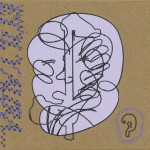
Artist: Abdelnour / Loriot / Meier / Niggenkemper
Title: Et il y aura…
Format: CD + Download
Label: Veto Records (@)
Rated:

Title: Et il y aura…
Format: CD + Download
Label: Veto Records (@)
Rated:
Writing about free improvisation is a peculiar exercise. On one hand, it’s music born in the moment, often allergic to tidy explanations. On the other, critics keep trying to pin it down with neat paragraphs, like botanists labeling a plant that refuses to stay still. "Et il y aura…" by the quartet Abdelnour / Loriot / Meier / Niggenkemper is exactly that kind of restless organism.
Released by Veto Records, the album documents a performance recorded in June 2024 at the Kunstraum Walcheturm in Zürich. The lineup reads like a small map of contemporary European improvisation: Christine Abdelnour on alto saxophone, Frantz Loriot on viola, David Meier working mainly with bass drum and objects, and Pascal Niggenkemper handling double bass and assorted objects. Four musicians who, over the years, have cultivated a reputation for exploring the fragile borderlands between sound, texture, and silence.
The structure is disarmingly simple: two long pieces. One stretches close to twenty minutes, the other expands beyond half an hour. No quick hits, no polite introductions. The quartet drops the listener directly into the slow mechanics of collective listening.
The first track, “De 0 à -0.67”, begins with a kind of cautious emergence. Small gestures appear like tentative footsteps in a dark room. Abdelnour’s alto saxophone does not behave like a conventional melodic lead; instead it breathes, whispers, occasionally scratches the air with thin lines of sound. Loriot’s viola answers with dry, almost skeletal textures, while Meier and Niggenkemper build a shifting terrain of percussive murmurs and low resonances. The music unfolds less like a conversation and more like a group of people exploring the same unfamiliar landscape from different directions.
There is something almost architectural in the way the quartet organizes space. The double bass often functions as a gravitational center, though Niggenkemper rarely settles into anything resembling a steady pulse. Meier’s bass drum and objects contribute a wide palette of muted impacts and metallic flickers, suggesting movement without ever locking into rhythm. The result is a field of tension that slowly stretches and contracts.
Christine Abdelnour, who has long been associated with the experimental scene in Berlin, brings a distinctive vocabulary to the session. Her approach to the alto sax often prioritizes breath, friction, and microtonal inflections over conventional phrasing. At times the instrument sounds less like a horn and more like a living creature testing the limits of its lungs. It’s an aesthetic that can feel austere, but it also gives the ensemble a strangely organic quality.
The title piece, “Et il y aura…”, extends this logic even further. If the first track sketches the terrain, the second wanders deeper into it. The music becomes more spacious, occasionally hovering on the edge of near-silence. Individual sounds appear, linger for a moment, and dissolve before they can solidify into patterns. Listening requires a certain patience, the same patience one might need when watching clouds rearrange themselves above a quiet field.
That said, the album does not always escape the common pitfalls of long-form free improvisation. Extended durations demand a strong internal narrative, and here the music occasionally circles familiar textural ideas without fully transforming them. Certain passages feel less like development and more like careful hovering. Admirable restraint, perhaps, but sometimes restraint borders on inertia.
Still, there are moments where the quartet achieves something quietly compelling. A fragile alignment of viola harmonics, distant bass resonance, and breathy saxophone can suddenly produce a fleeting sense of clarity, as if the ensemble briefly discovers a shared language before dispersing again. These flashes are subtle but rewarding for listeners willing to remain attentive.
Production-wise, the recording captures the acoustic intimacy of the Zürich space with impressive detail. The engineering by Philipp Schaufelberger allows every scrape, breath, and vibration to sit clearly within the stereo field, while the mastering by Giuseppe Ielasi preserves the music’s delicate dynamic range. In this kind of material, fidelity matters; the smallest sonic detail often carries the emotional weight.
In the end, "Et il y aura…" is not a record that tries to impress through dramatic gestures. It moves slowly, cautiously, sometimes almost stubbornly. For listeners deeply invested in contemporary improvisation, that slow exploration can feel meditative, even quietly beautiful. For others, the experience may resemble watching a very thoughtful conversation conducted in whispers.
Perhaps that is the point. Free improvisation often thrives in that ambiguous space where meaning is never entirely fixed. Sounds appear, interact, disappear. And somehow, out of these temporary constellations, a fragile sense of presence emerges.
Not a revelation, perhaps, but a carefully observed moment in the ongoing dialogue of experimental music. A patient listener may find themselves returning to it, if only to see what new shapes might surface in the quiet.
Released by Veto Records, the album documents a performance recorded in June 2024 at the Kunstraum Walcheturm in Zürich. The lineup reads like a small map of contemporary European improvisation: Christine Abdelnour on alto saxophone, Frantz Loriot on viola, David Meier working mainly with bass drum and objects, and Pascal Niggenkemper handling double bass and assorted objects. Four musicians who, over the years, have cultivated a reputation for exploring the fragile borderlands between sound, texture, and silence.
The structure is disarmingly simple: two long pieces. One stretches close to twenty minutes, the other expands beyond half an hour. No quick hits, no polite introductions. The quartet drops the listener directly into the slow mechanics of collective listening.
The first track, “De 0 à -0.67”, begins with a kind of cautious emergence. Small gestures appear like tentative footsteps in a dark room. Abdelnour’s alto saxophone does not behave like a conventional melodic lead; instead it breathes, whispers, occasionally scratches the air with thin lines of sound. Loriot’s viola answers with dry, almost skeletal textures, while Meier and Niggenkemper build a shifting terrain of percussive murmurs and low resonances. The music unfolds less like a conversation and more like a group of people exploring the same unfamiliar landscape from different directions.
There is something almost architectural in the way the quartet organizes space. The double bass often functions as a gravitational center, though Niggenkemper rarely settles into anything resembling a steady pulse. Meier’s bass drum and objects contribute a wide palette of muted impacts and metallic flickers, suggesting movement without ever locking into rhythm. The result is a field of tension that slowly stretches and contracts.
Christine Abdelnour, who has long been associated with the experimental scene in Berlin, brings a distinctive vocabulary to the session. Her approach to the alto sax often prioritizes breath, friction, and microtonal inflections over conventional phrasing. At times the instrument sounds less like a horn and more like a living creature testing the limits of its lungs. It’s an aesthetic that can feel austere, but it also gives the ensemble a strangely organic quality.
The title piece, “Et il y aura…”, extends this logic even further. If the first track sketches the terrain, the second wanders deeper into it. The music becomes more spacious, occasionally hovering on the edge of near-silence. Individual sounds appear, linger for a moment, and dissolve before they can solidify into patterns. Listening requires a certain patience, the same patience one might need when watching clouds rearrange themselves above a quiet field.
That said, the album does not always escape the common pitfalls of long-form free improvisation. Extended durations demand a strong internal narrative, and here the music occasionally circles familiar textural ideas without fully transforming them. Certain passages feel less like development and more like careful hovering. Admirable restraint, perhaps, but sometimes restraint borders on inertia.
Still, there are moments where the quartet achieves something quietly compelling. A fragile alignment of viola harmonics, distant bass resonance, and breathy saxophone can suddenly produce a fleeting sense of clarity, as if the ensemble briefly discovers a shared language before dispersing again. These flashes are subtle but rewarding for listeners willing to remain attentive.
Production-wise, the recording captures the acoustic intimacy of the Zürich space with impressive detail. The engineering by Philipp Schaufelberger allows every scrape, breath, and vibration to sit clearly within the stereo field, while the mastering by Giuseppe Ielasi preserves the music’s delicate dynamic range. In this kind of material, fidelity matters; the smallest sonic detail often carries the emotional weight.
In the end, "Et il y aura…" is not a record that tries to impress through dramatic gestures. It moves slowly, cautiously, sometimes almost stubbornly. For listeners deeply invested in contemporary improvisation, that slow exploration can feel meditative, even quietly beautiful. For others, the experience may resemble watching a very thoughtful conversation conducted in whispers.
Perhaps that is the point. Free improvisation often thrives in that ambiguous space where meaning is never entirely fixed. Sounds appear, interact, disappear. And somehow, out of these temporary constellations, a fragile sense of presence emerges.
Not a revelation, perhaps, but a carefully observed moment in the ongoing dialogue of experimental music. A patient listener may find themselves returning to it, if only to see what new shapes might surface in the quiet.
Ombrée: Calvaire
Artist: Ombrée
Title: Calvaire
Format: CD + Download
Label: I Shall Sing Until My Land Is Free (@)
Rated:
Title: Calvaire
Format: CD + Download
Label: I Shall Sing Until My Land Is Free (@)
Rated:
Reviewing a record born from grief always puts the critic in a slightly awkward position. You sit there judging textures, structures, pacing, while the artist is clearly dealing with something much more private and irreversible. Still, music eventually leaves the studio and enters the public world, and once it does, it has to stand on its own legs.
Ombrée, the project of French musician Guillaume Sonne, has been moving quietly through the experimental underground for some time. His work tends to orbit the edges of dark ambient, electroacoustic improvisation, and field recording practices, usually built from relatively simple means: guitars and bass run through amplifiers, tape machines, environmental recordings, and digital manipulation used more as a sculpting tool than as a central instrument. His aesthetic has always leaned toward atmosphere and slow, immersive development rather than sharp compositional drama.
With "Calvaire", released by I Shall Sing Until My Land Is Free, the conceptual core is very explicit. The album emerged after the death of Sonne’s father on February 2, 2025. According to the artist, the tolling bells of the village church during his final farewell became the initial sonic impulse for the project. What follows is presented as a kind of musical meditation on the threshold between life and death, populated by natural omens: fox cries at night, worms in the soil, distant animal voices, fragments of the surrounding environment entering the composition like signals from a parallel layer of reality.
The instrumentation remains intentionally limited. Electric bass and guitar form the backbone, heavily processed through amplifiers, effects chains, and tape saturation. Field recordings and subtle digital treatments weave through the pieces, creating a hazy sonic environment that often feels more like a shifting landscape than a sequence of traditional tracks.
The opening piece, “Foie”, establishes this atmosphere with a slow, droning structure that gradually accumulates layers of distortion and low-frequency resonance. The sound feels physical, almost geological, though its development is extremely gradual. This patience can be immersive for listeners inclined toward meditative sound design, though it occasionally risks drifting into a kind of textural stasis where movement becomes difficult to perceive.
“Vers-cendre” introduces more environmental presence. The subtle intrusion of field recordings creates the sense of an external world bleeding into the music. Animal calls and distant rustling elements function less as narrative devices and more as symbolic textures. They contribute to the album’s central idea that death does not interrupt the ecosystem surrounding it. The forest keeps moving.
The shorter “Brûlé” provides one of the few moments where the record briefly sharpens its edges. Distorted layers rise and collapse in a more dynamic fashion, hinting at a rawer emotional core beneath the otherwise restrained pacing. Ironically, this fleeting intensity also highlights what the rest of the album occasionally lacks: contrast.
Throughout the remaining tracks, titles such as “D’illusions cadavériques” and “Transforme les souvenirs en monolithe” suggest a ceremonial or ritualistic framework. The music mirrors that tone, unfolding like a slow procession through dimly lit sonic spaces. Tape textures, amplifier hum, and environmental fragments create a sense of distance that fits the thematic focus on memory and absence.
Yet despite its thoughtful concept and carefully constructed atmosphere, "Calvaire" sometimes struggles to maintain a strong sense of progression. The sound design is competent and occasionally evocative, but several passages blur together, relying heavily on the same palette of drones and environmental murmurs. For listeners deeply invested in this corner of experimental ambient music, that consistency may feel immersive. For others, it may come across as somewhat predictable within a genre that already thrives on similar textures.
This does not mean the album lacks sincerity. On the contrary, the emotional motivation behind it is unmistakable. Sonne even notes that his father likely would have disliked this music, which adds a strange layer of honesty to the project. Rather than a sentimental tribute, the album feels more like a private ritual translated into sound, an attempt to process loss using the tools the artist happens to possess.
Ultimately, "Calvaire" sits in that middle ground where intention and atmosphere are clear, but the musical results remain uneven. It is a respectful, introspective work that occasionally produces striking sonic moments, yet it rarely pushes its materials far enough to become truly memorable within the broader experimental landscape.
Postscript: This review focuses exclusively on the artistic and sonic aspects of the release. The reviewer maintains a neutral position regarding any political messages or statements associated with the label I Shall Sing Until My Land Is Free and does not intend to endorse or oppose them.
Ombrée, the project of French musician Guillaume Sonne, has been moving quietly through the experimental underground for some time. His work tends to orbit the edges of dark ambient, electroacoustic improvisation, and field recording practices, usually built from relatively simple means: guitars and bass run through amplifiers, tape machines, environmental recordings, and digital manipulation used more as a sculpting tool than as a central instrument. His aesthetic has always leaned toward atmosphere and slow, immersive development rather than sharp compositional drama.
With "Calvaire", released by I Shall Sing Until My Land Is Free, the conceptual core is very explicit. The album emerged after the death of Sonne’s father on February 2, 2025. According to the artist, the tolling bells of the village church during his final farewell became the initial sonic impulse for the project. What follows is presented as a kind of musical meditation on the threshold between life and death, populated by natural omens: fox cries at night, worms in the soil, distant animal voices, fragments of the surrounding environment entering the composition like signals from a parallel layer of reality.
The instrumentation remains intentionally limited. Electric bass and guitar form the backbone, heavily processed through amplifiers, effects chains, and tape saturation. Field recordings and subtle digital treatments weave through the pieces, creating a hazy sonic environment that often feels more like a shifting landscape than a sequence of traditional tracks.
The opening piece, “Foie”, establishes this atmosphere with a slow, droning structure that gradually accumulates layers of distortion and low-frequency resonance. The sound feels physical, almost geological, though its development is extremely gradual. This patience can be immersive for listeners inclined toward meditative sound design, though it occasionally risks drifting into a kind of textural stasis where movement becomes difficult to perceive.
“Vers-cendre” introduces more environmental presence. The subtle intrusion of field recordings creates the sense of an external world bleeding into the music. Animal calls and distant rustling elements function less as narrative devices and more as symbolic textures. They contribute to the album’s central idea that death does not interrupt the ecosystem surrounding it. The forest keeps moving.
The shorter “Brûlé” provides one of the few moments where the record briefly sharpens its edges. Distorted layers rise and collapse in a more dynamic fashion, hinting at a rawer emotional core beneath the otherwise restrained pacing. Ironically, this fleeting intensity also highlights what the rest of the album occasionally lacks: contrast.
Throughout the remaining tracks, titles such as “D’illusions cadavériques” and “Transforme les souvenirs en monolithe” suggest a ceremonial or ritualistic framework. The music mirrors that tone, unfolding like a slow procession through dimly lit sonic spaces. Tape textures, amplifier hum, and environmental fragments create a sense of distance that fits the thematic focus on memory and absence.
Yet despite its thoughtful concept and carefully constructed atmosphere, "Calvaire" sometimes struggles to maintain a strong sense of progression. The sound design is competent and occasionally evocative, but several passages blur together, relying heavily on the same palette of drones and environmental murmurs. For listeners deeply invested in this corner of experimental ambient music, that consistency may feel immersive. For others, it may come across as somewhat predictable within a genre that already thrives on similar textures.
This does not mean the album lacks sincerity. On the contrary, the emotional motivation behind it is unmistakable. Sonne even notes that his father likely would have disliked this music, which adds a strange layer of honesty to the project. Rather than a sentimental tribute, the album feels more like a private ritual translated into sound, an attempt to process loss using the tools the artist happens to possess.
Ultimately, "Calvaire" sits in that middle ground where intention and atmosphere are clear, but the musical results remain uneven. It is a respectful, introspective work that occasionally produces striking sonic moments, yet it rarely pushes its materials far enough to become truly memorable within the broader experimental landscape.
Postscript: This review focuses exclusively on the artistic and sonic aspects of the release. The reviewer maintains a neutral position regarding any political messages or statements associated with the label I Shall Sing Until My Land Is Free and does not intend to endorse or oppose them.
Tobias Meier: The universe looking at itself through a tiny mirror
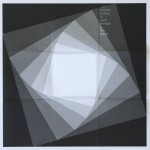
Artist: Tobias Meier (@)
Title: The universe looking at itself through a tiny mirror
Format: CD
Label: Wide Ear Records (@)
Rated:
Title: The universe looking at itself through a tiny mirror
Format: CD
Label: Wide Ear Records (@)
Rated:
I was unfamiliar with this artist, but Tobias Meier hails from Zurich, Switzerland and has been releasing material for almost 20 years now. The label describes his work thus: “In his artistic practice, he researches condensation points and singularities where something emerges. Thereby he pursues a congruence between musical material, process of creation and content. . . . His current works in the form of solo performances, installations, texts, collaborations, or compositions for other artists make use of various media and often have a collage-like character.” This makes sense when the liner notes list the following sound sources: “Voice, bell, Pure Data, Casiotone, saxophone, field recordings, a piano in some rehearsal space, guitar, A Linear Thought, more voices, zither, more guitars, and samples of Im Wald.” Well, I’m a fan of collage, sound and otherwise, so let's peek over the universe’s shoulder and see what is reflected in the mirror.
We open with “Room Without a Floor.” After singing the title, the track brings in a lot of bells that are just out of sync with some drone underneath. This is like listening to a bell choir in an echo chamber. What keeps it interesting is that it is not simply echoes, but the bells are looped onto each other and the sounds become increasingly chaotic. I'm a percussionist, but this is still a hard track to listen to; definitely an exercise in endurance. Over time, the drone begins to take over, mitigating the harshness a bit. Over time, it slows down and becomes more mellow, like a record player coming to a stop. I suspect that this would be fun to see live. After a singing intro, “Almost Nothing” kicks into heavy drone with a hint of dissonance that sounds like a mix of synth and trumpet. This drone shifts almost perceptibly until it suddenly adds in what sounds like someone singing in the shower. “The Artist's Room” continues the shower and what sounds like a radio playing in the background. Someone begins playing a piano over this short slice of life. I enjoy field recording based work, so this is quite nice. “Today My Name Is” opens with heavily processed voice intoning "today my name is" over the shower from the previous track and adds a repetitive guitar line and unsettling spectral voices before settling into an actually sung song over guitar loops and other noises. This eventually resolves to a repeated singing of "I don't know what my name is anymore" repeated for several minutes without accompaniment. There is a lot going on in this track, and it is the most conventional song on the disc, although that is not saying much for readers of Chain D.L.K..
Meier describes this album in this way: “I believe it tells a personal story, but as one possible example of human experience, it can also be read as a singular window into something much more universal.” This is one of those discs that is hard to evaluate and rate, because simply sitting down and listening to it does not seem to be the goal of the artist. I get the sense that these compositions were meant for a very specific space or occasion, and this serves as the artifact of that space. I may not want to listen to it a lot, but I appreciate what Meier is doing and get the sense that seeing it is much better than only hearing it on the disc. If you want something that pushes the envelope of experimental music, this is certainly one to pick up. This album weighs in at around 42 minutes, which incidentally is also the answer to the question of life, the universe, and everything.
We open with “Room Without a Floor.” After singing the title, the track brings in a lot of bells that are just out of sync with some drone underneath. This is like listening to a bell choir in an echo chamber. What keeps it interesting is that it is not simply echoes, but the bells are looped onto each other and the sounds become increasingly chaotic. I'm a percussionist, but this is still a hard track to listen to; definitely an exercise in endurance. Over time, the drone begins to take over, mitigating the harshness a bit. Over time, it slows down and becomes more mellow, like a record player coming to a stop. I suspect that this would be fun to see live. After a singing intro, “Almost Nothing” kicks into heavy drone with a hint of dissonance that sounds like a mix of synth and trumpet. This drone shifts almost perceptibly until it suddenly adds in what sounds like someone singing in the shower. “The Artist's Room” continues the shower and what sounds like a radio playing in the background. Someone begins playing a piano over this short slice of life. I enjoy field recording based work, so this is quite nice. “Today My Name Is” opens with heavily processed voice intoning "today my name is" over the shower from the previous track and adds a repetitive guitar line and unsettling spectral voices before settling into an actually sung song over guitar loops and other noises. This eventually resolves to a repeated singing of "I don't know what my name is anymore" repeated for several minutes without accompaniment. There is a lot going on in this track, and it is the most conventional song on the disc, although that is not saying much for readers of Chain D.L.K..
Meier describes this album in this way: “I believe it tells a personal story, but as one possible example of human experience, it can also be read as a singular window into something much more universal.” This is one of those discs that is hard to evaluate and rate, because simply sitting down and listening to it does not seem to be the goal of the artist. I get the sense that these compositions were meant for a very specific space or occasion, and this serves as the artifact of that space. I may not want to listen to it a lot, but I appreciate what Meier is doing and get the sense that seeing it is much better than only hearing it on the disc. If you want something that pushes the envelope of experimental music, this is certainly one to pick up. This album weighs in at around 42 minutes, which incidentally is also the answer to the question of life, the universe, and everything.