
Browse by Genre
Industrial Music / Industrial Metal / Aggro Industrial / Electro Metal
Industrial Noise / Power Noise / Harsh Noise
Synth Pop / Electro Pop / Synth-Electronica
Techno / Trance / Goa / Drum'n'Bass / Jungle / Tribal / Trip-Hop
Ambient / Electronica / Ethereal / Dub / Soundscapes / Abstract
Experimental / Avantgarde / Weird & Wired / Glitch / Noise / Field Recording
Dark / Gothic / Wave / New Wave / Dark Wave / Industrial Gothic
New Music / Downtown / Avantgarde Jazz / New Classical / World
Search Reviews
Music Reviews
Craven Faults: Sidings
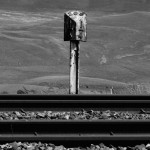
Some musicians write albums. Others map territories. Craven Faults has been doing the latter for years, patiently sketching a peculiar cartography where analogue synthesizers behave like geological tools and melodies emerge the way old rail lines surface from peat and fog.
With "Sidings", the project’s third full-length double LP following "Erratics & Unconformities" and "Standers", the anonymous architect behind the name returns to the same terrain: northern England seen not through postcards but through strata. Landscapes here are layered with industry, abandoned engineering projects, folklore, and a quietly obsessive relationship with sound technology. It’s pastoral music, if your idea of pasture includes rusted rail yards, forgotten viaducts, and the faint electrical hum of machines that refuse to die.
Craven Faults has always worked within a language of slowly evolving analogue sequences. Repetition is the skeleton, but patience is the real instrument. "Sidings" stretches this approach across eight pieces that unfold like journeys rather than compositions. The opener “A. Ganger” immediately sets the tone: arpeggios rotate with deliberate inevitability, like wheels finding their rhythm after a long push uphill. There’s propulsion, but it’s not the impatient kind. It feels engineered rather than performed.
The album’s conceptual framework wanders through railway construction, remote communities, and a labyrinth of historical references that jump between continents and decades. Recording studios appear in the liner notes like distant signal posts: Olympic, Gold Star, Black Ark, Wally Heider. The implication is quietly mischievous. The building of railroads, the building of studios, the building of electronic music cultures. All forms of infrastructure, all shaping how energy travels.
“Stoneyman” is perhaps the clearest demonstration of Craven Faults’ craft. The sequence is simple, almost stubborn, but the surrounding textures shift like weather over open moorland. Synth tones accumulate warmth until they glow rather than pulse. You start noticing microscopic variations, tiny rhythmic hesitations. It’s hypnotic in the literal sense, not the fashionable one.
Shorter tracks like “Yard Loup” and “Drover Hole Sike” function almost like signposts along the route. Brief, skeletal, they let the larger pieces breathe. “Three Loaning End” and “Incline Huttes” introduce subtle harmonic turns that feel like a road suddenly bending around a hill you didn’t see coming.
Then there’s “Far Closes”, the fifteen-minute closing track that quietly confirms the whole project’s logic. By this point the album has trained your ears to accept slow development as narrative. The piece unfolds with a kind of stoic beauty: two chords, a patient sequence, and a gradually thickening atmosphere that seems to condense out of cold air. Minimal ingredients, maximum horizon.
The persistent mystery around the project’s identity has always been part of the appeal. Rumours circulate, theories multiply, but none of it matters much. Craven Faults works precisely because the music feels detached from personality. It behaves more like landscape than confession.
What "Sidings" does particularly well is reinforce the idea that electronic music can carry a sense of place without relying on obvious sonic clichés. There are no field recordings of wind or sheep. Instead, the geography emerges through structure: repetition as terrain, modulation as weather, analogue warmth as soil.
It also quietly continues a tradition running from early minimalist electronics to kosmische music and the experimental underground that treats synthesizers less like futuristic gadgets and more like patient mechanical companions. The sound is neither nostalgic nor aggressively modern. It simply persists.
By the end of "Sidings", the metaphor of railways feels unavoidable. Tracks branching, converging, disappearing into tunnels. Some lines abandoned, others still carrying cargo through the night. Craven Faults doesn’t hurry the journey. It lets the listener walk beside the rails, counting sleepers, watching distant red kites circle overhead.
In an age addicted to immediacy, this sort of music feels almost subversive. Nothing explodes, nothing begs for attention. The album just continues forward, mile after mile, quietly proving that sometimes two chords really are enough. Three, as the album itself suggests, would probably be extravagant.
With "Sidings", the project’s third full-length double LP following "Erratics & Unconformities" and "Standers", the anonymous architect behind the name returns to the same terrain: northern England seen not through postcards but through strata. Landscapes here are layered with industry, abandoned engineering projects, folklore, and a quietly obsessive relationship with sound technology. It’s pastoral music, if your idea of pasture includes rusted rail yards, forgotten viaducts, and the faint electrical hum of machines that refuse to die.
Craven Faults has always worked within a language of slowly evolving analogue sequences. Repetition is the skeleton, but patience is the real instrument. "Sidings" stretches this approach across eight pieces that unfold like journeys rather than compositions. The opener “A. Ganger” immediately sets the tone: arpeggios rotate with deliberate inevitability, like wheels finding their rhythm after a long push uphill. There’s propulsion, but it’s not the impatient kind. It feels engineered rather than performed.
The album’s conceptual framework wanders through railway construction, remote communities, and a labyrinth of historical references that jump between continents and decades. Recording studios appear in the liner notes like distant signal posts: Olympic, Gold Star, Black Ark, Wally Heider. The implication is quietly mischievous. The building of railroads, the building of studios, the building of electronic music cultures. All forms of infrastructure, all shaping how energy travels.
“Stoneyman” is perhaps the clearest demonstration of Craven Faults’ craft. The sequence is simple, almost stubborn, but the surrounding textures shift like weather over open moorland. Synth tones accumulate warmth until they glow rather than pulse. You start noticing microscopic variations, tiny rhythmic hesitations. It’s hypnotic in the literal sense, not the fashionable one.
Shorter tracks like “Yard Loup” and “Drover Hole Sike” function almost like signposts along the route. Brief, skeletal, they let the larger pieces breathe. “Three Loaning End” and “Incline Huttes” introduce subtle harmonic turns that feel like a road suddenly bending around a hill you didn’t see coming.
Then there’s “Far Closes”, the fifteen-minute closing track that quietly confirms the whole project’s logic. By this point the album has trained your ears to accept slow development as narrative. The piece unfolds with a kind of stoic beauty: two chords, a patient sequence, and a gradually thickening atmosphere that seems to condense out of cold air. Minimal ingredients, maximum horizon.
The persistent mystery around the project’s identity has always been part of the appeal. Rumours circulate, theories multiply, but none of it matters much. Craven Faults works precisely because the music feels detached from personality. It behaves more like landscape than confession.
What "Sidings" does particularly well is reinforce the idea that electronic music can carry a sense of place without relying on obvious sonic clichés. There are no field recordings of wind or sheep. Instead, the geography emerges through structure: repetition as terrain, modulation as weather, analogue warmth as soil.
It also quietly continues a tradition running from early minimalist electronics to kosmische music and the experimental underground that treats synthesizers less like futuristic gadgets and more like patient mechanical companions. The sound is neither nostalgic nor aggressively modern. It simply persists.
By the end of "Sidings", the metaphor of railways feels unavoidable. Tracks branching, converging, disappearing into tunnels. Some lines abandoned, others still carrying cargo through the night. Craven Faults doesn’t hurry the journey. It lets the listener walk beside the rails, counting sleepers, watching distant red kites circle overhead.
In an age addicted to immediacy, this sort of music feels almost subversive. Nothing explodes, nothing begs for attention. The album just continues forward, mile after mile, quietly proving that sometimes two chords really are enough. Three, as the album itself suggests, would probably be extravagant.
Passepartout Duo: Pieces from Places
Artist: Passepartout Duo (@)
Title: Pieces from Places
Format: Flexidisc + Download
Label: self-released
Rated:

Title: Pieces from Places
Format: Flexidisc + Download
Label: self-released
Rated:
There are artists who tour. Then there are artists who simply relocate their nervous system every few months and call it a life. Passepartout Duo belong firmly to the second category.
For nearly a decade, Nicoletta Favari and Christopher Salvito have treated geography as both instrument and accomplice. No permanent studio, no fixed coordinates. Just wires, wood, metal, circuits, and whatever room happens to resonate that week. Pieces from Places is less an album than a cartographic diary: twelve tracks released monthly, each stamped with a city but resistant to postcard nostalgia.
If you’ve followed their trajectory through Argot or the Central Asia train-born Vis-à-Vis, you’ll recognize the method: self-built synthesizers, DIY percussion, and an almost athletic choreography of shared instruments. They often play what is effectively one device together, like two operators piloting the same spacecraft. It should look impractical. It sounds inevitable.
What changes here is the framing. Each track is a location, but the music refuses tourism. “From Taipei” carries a humid patience, tones hovering as if unsure whether to condense into rhythm. “From Belgrade” snaps into a compact urban pulse, concise and alert. “From Fes” seems to listen more than it speaks, letting percussive fragments ricochet in imagined corridors. “From Trondheim” feels slowed by winter light, a kind of suspended breath rendered in circuitry.
The grooves remain slightly asymmetrical, that characteristic off-kilter propulsion that makes you question your own internal metronome. Over it, their synth lines glow rather than blaze. There is warmth, but it is engineered warmth, coaxed out of handmade machines that never quite behave like commercial gear. One suspects that unpredictability is the point.
“From Chengdu”, the longest piece, stretches the concept. It unfolds gradually, as if mapping a walk rather than a skyline. Motifs emerge, dissolve, reappear altered. The duo’s long experience of near-continuous travel since 2015 has sharpened their sense of structure: these are miniatures, yes, but rarely sketches. Even the shortest track, “From Rauma,” feels finished, like a haiku written in voltage.
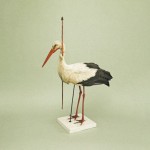
The artwork’s reference to the Rostocker Pfeilstorch, the stork discovered with an African arrow lodged in its neck, is not subtle. Migration leaves marks. Movement is proof, but also wound. Passepartout Duo seem aware of both sides. Their music does not romanticize travel; it documents its friction. Airports, residencies, temporary studios, borrowed rooms. Inspiration is negotiated, not harvested.
There is also a quiet technological subtext. Their collaboration with KOMA Elektronik on the Chromaplane hints at a philosophy: instruments are not sacred relics but evolving organisms. In Pieces from Places, you hear that ethos everywhere. Sound is built, adapted, reconfigured. Nothing is static except the listener’s assumption that it might be.
This interesting project seems to refuse to anchor identity to a single sonic homeland. The language they speak is unmistakably theirs, yet geographically unplaceable. It absorbs atmosphere without mimicking it. No field recordings of obvious street noise. No easy exoticism. Just two people listening hard to where they are, then translating that attention into rhythm and timbre.
Releasing it monthly was a clever constraint. It mirrors their lifestyle: episodic, anticipatory, slightly unstable. By the end of the twelve pieces, you do not feel like you have traveled the world. You feel like you have shared a method of being in it.
And in an era when “global” often means algorithmic flattening, there is something almost defiant about this approach. Two humans, a handful of homemade machines, and a stubborn commitment to listening. It should not be radical. Yet here we are.
Pieces from Places does not ask where home is. It suggests that home might simply be the act of paying attention together. For a duo perpetually in transit, that is a surprisingly grounded conclusion.
For nearly a decade, Nicoletta Favari and Christopher Salvito have treated geography as both instrument and accomplice. No permanent studio, no fixed coordinates. Just wires, wood, metal, circuits, and whatever room happens to resonate that week. Pieces from Places is less an album than a cartographic diary: twelve tracks released monthly, each stamped with a city but resistant to postcard nostalgia.
If you’ve followed their trajectory through Argot or the Central Asia train-born Vis-à-Vis, you’ll recognize the method: self-built synthesizers, DIY percussion, and an almost athletic choreography of shared instruments. They often play what is effectively one device together, like two operators piloting the same spacecraft. It should look impractical. It sounds inevitable.
What changes here is the framing. Each track is a location, but the music refuses tourism. “From Taipei” carries a humid patience, tones hovering as if unsure whether to condense into rhythm. “From Belgrade” snaps into a compact urban pulse, concise and alert. “From Fes” seems to listen more than it speaks, letting percussive fragments ricochet in imagined corridors. “From Trondheim” feels slowed by winter light, a kind of suspended breath rendered in circuitry.
The grooves remain slightly asymmetrical, that characteristic off-kilter propulsion that makes you question your own internal metronome. Over it, their synth lines glow rather than blaze. There is warmth, but it is engineered warmth, coaxed out of handmade machines that never quite behave like commercial gear. One suspects that unpredictability is the point.
“From Chengdu”, the longest piece, stretches the concept. It unfolds gradually, as if mapping a walk rather than a skyline. Motifs emerge, dissolve, reappear altered. The duo’s long experience of near-continuous travel since 2015 has sharpened their sense of structure: these are miniatures, yes, but rarely sketches. Even the shortest track, “From Rauma,” feels finished, like a haiku written in voltage.
The artwork’s reference to the Rostocker Pfeilstorch, the stork discovered with an African arrow lodged in its neck, is not subtle. Migration leaves marks. Movement is proof, but also wound. Passepartout Duo seem aware of both sides. Their music does not romanticize travel; it documents its friction. Airports, residencies, temporary studios, borrowed rooms. Inspiration is negotiated, not harvested.
There is also a quiet technological subtext. Their collaboration with KOMA Elektronik on the Chromaplane hints at a philosophy: instruments are not sacred relics but evolving organisms. In Pieces from Places, you hear that ethos everywhere. Sound is built, adapted, reconfigured. Nothing is static except the listener’s assumption that it might be.
This interesting project seems to refuse to anchor identity to a single sonic homeland. The language they speak is unmistakably theirs, yet geographically unplaceable. It absorbs atmosphere without mimicking it. No field recordings of obvious street noise. No easy exoticism. Just two people listening hard to where they are, then translating that attention into rhythm and timbre.
Releasing it monthly was a clever constraint. It mirrors their lifestyle: episodic, anticipatory, slightly unstable. By the end of the twelve pieces, you do not feel like you have traveled the world. You feel like you have shared a method of being in it.
And in an era when “global” often means algorithmic flattening, there is something almost defiant about this approach. Two humans, a handful of homemade machines, and a stubborn commitment to listening. It should not be radical. Yet here we are.
Pieces from Places does not ask where home is. It suggests that home might simply be the act of paying attention together. For a duo perpetually in transit, that is a surprisingly grounded conclusion.
Carlos Giffoni: Pendulum

There are albums that stay politely in one place, and then there is "Pendulum", which seems physically incapable of standing still. Conceived in California, completed in fragments across continents, mixed in Japan, designed in Australia, and finally released by Room40, this record travels more than most of us manage in a year. Fittingly, it is obsessed with motion.
Carlos Giffoni has never been a static figure. Born in Venezuela, long based in the United States, he has moved through noise, electronics, and cross-genre collaborations with a restless curiosity. With "Pendulum", he frames that restlessness as structure. The swinging arc becomes both metaphor and method. Tracks were recorded between 2024 and 2025, sent outward to collaborators, returned, reshaped, then dispatched again for mixing by Jim O’Rourke. The music’s geography mirrors its conceptual core: departure and return, tension and release.
The title track, featuring Greg Kelley, opens with brevity and focus. At just over two minutes, it sketches the album’s premise rather than declaring it. There is a tautness to the sound, a sense of suspended mass waiting to swing. "Dermis", with Mabe Fratti, moves inward. Textures feel close to the surface, almost tactile, as if sound were pressed directly against skin. Giffoni avoids grand gestures. Instead, he lets the collaboration breathe in layered restraint.
"The Past Beyond" expands the field. It stretches into a more spacious environment, where subtle electronic currents ripple beneath an austere melodic presence. Time here feels elastic. The pendulum is not merely oscillating; it is stretching the distance between its extremes.
"Beam", featuring Zola Jesus, introduces a sharper beam of light through the album’s otherwise muted palette. Her presence does not dominate; it refracts. The track carries a faint dramatic undercurrent, yet remains controlled, resisting the temptation to erupt. It is tension contained rather than tension discharged.
On "Axis", with Ben Chasny, the motion becomes more rotational. Layers interlock, circling a central pivot. The piece unfolds with a quiet authority, allowing repetition to accumulate weight rather than drift into complacency. "Dos", featuring Lea Bertucci, shifts the texture again, introducing a denser, breath-infused dimension. Air moves audibly through the composition, grounding the abstraction in physical gesture.
The shorter "Thorn" feels like a compressed pulse, a reminder that movement can also sting. Then comes "Whirlwind", featuring Iggor Cavalera. As the title implies, it intensifies the album’s kinetic theme. Yet even here, Giffoni does not indulge in chaos for its own sake. The energy is directed, spiraling rather than scattering.
What holds "Pendulum" together is not stylistic uniformity but balance. Each collaboration introduces a distinct timbral character, yet Giffoni’s sensibility anchors the whole. The production, shaped and clarified by O’Rourke’s mixing, gives the album a coherence that belies its geographic and collaborative sprawl.
Conceptually, the record suggests that movement is not merely physical but existential. The pendulum swings because it must. The world rotates without asking our permission. Giffoni frames this inevitability not as anxiety but as rhythm. There is a quiet acceptance here, even a subtle humor in the idea that the music has traveled the globe simply to land in your ears. Target acquired.
If the album has a thesis, it is this: stability is temporary, and that is not a problem. Motion generates meaning. By the time "Pendulum" completes its arc, one realizes it has not truly stopped. It has only reached the point where the swing reverses direction.
Carlos Giffoni has never been a static figure. Born in Venezuela, long based in the United States, he has moved through noise, electronics, and cross-genre collaborations with a restless curiosity. With "Pendulum", he frames that restlessness as structure. The swinging arc becomes both metaphor and method. Tracks were recorded between 2024 and 2025, sent outward to collaborators, returned, reshaped, then dispatched again for mixing by Jim O’Rourke. The music’s geography mirrors its conceptual core: departure and return, tension and release.
The title track, featuring Greg Kelley, opens with brevity and focus. At just over two minutes, it sketches the album’s premise rather than declaring it. There is a tautness to the sound, a sense of suspended mass waiting to swing. "Dermis", with Mabe Fratti, moves inward. Textures feel close to the surface, almost tactile, as if sound were pressed directly against skin. Giffoni avoids grand gestures. Instead, he lets the collaboration breathe in layered restraint.
"The Past Beyond" expands the field. It stretches into a more spacious environment, where subtle electronic currents ripple beneath an austere melodic presence. Time here feels elastic. The pendulum is not merely oscillating; it is stretching the distance between its extremes.
"Beam", featuring Zola Jesus, introduces a sharper beam of light through the album’s otherwise muted palette. Her presence does not dominate; it refracts. The track carries a faint dramatic undercurrent, yet remains controlled, resisting the temptation to erupt. It is tension contained rather than tension discharged.
On "Axis", with Ben Chasny, the motion becomes more rotational. Layers interlock, circling a central pivot. The piece unfolds with a quiet authority, allowing repetition to accumulate weight rather than drift into complacency. "Dos", featuring Lea Bertucci, shifts the texture again, introducing a denser, breath-infused dimension. Air moves audibly through the composition, grounding the abstraction in physical gesture.
The shorter "Thorn" feels like a compressed pulse, a reminder that movement can also sting. Then comes "Whirlwind", featuring Iggor Cavalera. As the title implies, it intensifies the album’s kinetic theme. Yet even here, Giffoni does not indulge in chaos for its own sake. The energy is directed, spiraling rather than scattering.
What holds "Pendulum" together is not stylistic uniformity but balance. Each collaboration introduces a distinct timbral character, yet Giffoni’s sensibility anchors the whole. The production, shaped and clarified by O’Rourke’s mixing, gives the album a coherence that belies its geographic and collaborative sprawl.
Conceptually, the record suggests that movement is not merely physical but existential. The pendulum swings because it must. The world rotates without asking our permission. Giffoni frames this inevitability not as anxiety but as rhythm. There is a quiet acceptance here, even a subtle humor in the idea that the music has traveled the globe simply to land in your ears. Target acquired.
If the album has a thesis, it is this: stability is temporary, and that is not a problem. Motion generates meaning. By the time "Pendulum" completes its arc, one realizes it has not truly stopped. It has only reached the point where the swing reverses direction.
Marcelo dos Reis Flora: Our Time

Artist: Marcelo dos Reis Flora (@)
Title: Our Time
Format: CD + Download
Label: JACC Records (@)
Rated:

Title: Our Time
Format: CD + Download
Label: JACC Records (@)
Rated:
There are guitarists who cultivate refinement like a rare orchid, and then there are those who eventually plug in and let the amp breathe fire. Marcelo dos Reis has done both. If earlier listeners encountered him through the delicacy of his nylon-string work or the chamber-like textures of his collaborations, "Our Time" makes it clear that subtlety and voltage are not mutually exclusive states.
This is the second outing from his trio Flora, featuring Luís Filipe Silva on drums and Miguel Falcão on double bass, released by JACC Records. The three musicians, all orbiting the Coimbra scene, are not a studio accident but a working band in the old-fashioned sense. Fifty-plus concerts since their debut have forged something that cannot be rehearsed into existence: reflexes, trust, and the ability to pivot without panic.
Dos Reis himself has long been a distinctive voice in Portuguese jazz and improvised music. Through projects like Chamber 4 and releases on Cipsela, he explored quieter terrains, often emphasizing texture over attack. With Flora, and now "Our Time", he leans into a more assertive electric language. The guitar tone is dry, slightly abrasive, and refreshingly unpolished. It does not shimmer; it states.
The opening track, "Irreversible Light", wastes no time pretending to be modest. A double-stop motif slices through an urgent rhythm section, and the trio locks in with the kind of drive that suggests they enjoy playing loud without feeling the need to apologize for it. The piece is tightly structured yet open enough to allow the solos to twist the theme into new angles. It is hard-rocking jazz, but without empty theatrics.
"Thirteen Minutes" stretches the canvas. As the title implies, it unfolds with patience. The trio explores tension through incremental development rather than grand gestures. Falcão’s bass anchors the harmonic shifts with a grounded pulse, while Silva’s drumming alternates between propulsion and subtle disruption. Dos Reis threads melodic lines that feel interrogative rather than declarative. The drama accumulates gradually, like a conversation that becomes more revealing with each passing minute.
On "Bending Cycles", rhythmic interplay takes center stage. The drums and bass establish a nervous momentum that the guitar both rides and resists. There is a constant sense of turning, as if the trio were testing how far they can stretch a motif before it snaps. It never does. The elasticity holds.
"After the Between (Tanger)" introduces contrast. It begins with a solitary, contemplative guitar line, almost recalling dos Reis’ earlier, more introspective work. The trio then reenters, not to overwhelm but to widen the field. The transition feels organic, a reminder that this band’s strength lies in its capacity to expand and contract without losing coherence.
The closer, "Now That We Know", is the album’s most expansive statement. It begins with restraint, almost teasing, before building into a layered, rhythmically intricate surge. The composition balances written material with improvisational openness, and the trio navigates the shifts with precision. It grips gently at first, then tightens its hold. Not aggressive for the sake of spectacle, but intense because the structure demands it.
What distinguishes "Our Time" is not merely its energy, but its cohesion. This is music shaped by shared geography, shared history, and a shared appetite for risk. Dos Reis has spoken about wanting musicians capable of handling abrupt cuts, complex written passages, and fluid improvisation. Silva and Falcão deliver exactly that. They anticipate without suffocating, support without restraining.
There is also a subtle philosophical undertone in the title. “Our time” is both personal and collective. It suggests ownership of the present moment, but also the fleeting nature of it. The trio plays with that awareness. The music feels urgent yet unhurried, confident yet exploratory.
In an era where jazz trios often lean toward either polite minimalism or maximalist spectacle, Flora opts for something more balanced. They rock when it serves the composition. They complicate when the material calls for it. They leave space when space is necessary. It is the sound of three musicians fully inhabiting their shared moment.
And if this is what their time sounds like, it is time well spent.
This is the second outing from his trio Flora, featuring Luís Filipe Silva on drums and Miguel Falcão on double bass, released by JACC Records. The three musicians, all orbiting the Coimbra scene, are not a studio accident but a working band in the old-fashioned sense. Fifty-plus concerts since their debut have forged something that cannot be rehearsed into existence: reflexes, trust, and the ability to pivot without panic.
Dos Reis himself has long been a distinctive voice in Portuguese jazz and improvised music. Through projects like Chamber 4 and releases on Cipsela, he explored quieter terrains, often emphasizing texture over attack. With Flora, and now "Our Time", he leans into a more assertive electric language. The guitar tone is dry, slightly abrasive, and refreshingly unpolished. It does not shimmer; it states.
The opening track, "Irreversible Light", wastes no time pretending to be modest. A double-stop motif slices through an urgent rhythm section, and the trio locks in with the kind of drive that suggests they enjoy playing loud without feeling the need to apologize for it. The piece is tightly structured yet open enough to allow the solos to twist the theme into new angles. It is hard-rocking jazz, but without empty theatrics.
"Thirteen Minutes" stretches the canvas. As the title implies, it unfolds with patience. The trio explores tension through incremental development rather than grand gestures. Falcão’s bass anchors the harmonic shifts with a grounded pulse, while Silva’s drumming alternates between propulsion and subtle disruption. Dos Reis threads melodic lines that feel interrogative rather than declarative. The drama accumulates gradually, like a conversation that becomes more revealing with each passing minute.
On "Bending Cycles", rhythmic interplay takes center stage. The drums and bass establish a nervous momentum that the guitar both rides and resists. There is a constant sense of turning, as if the trio were testing how far they can stretch a motif before it snaps. It never does. The elasticity holds.
"After the Between (Tanger)" introduces contrast. It begins with a solitary, contemplative guitar line, almost recalling dos Reis’ earlier, more introspective work. The trio then reenters, not to overwhelm but to widen the field. The transition feels organic, a reminder that this band’s strength lies in its capacity to expand and contract without losing coherence.
The closer, "Now That We Know", is the album’s most expansive statement. It begins with restraint, almost teasing, before building into a layered, rhythmically intricate surge. The composition balances written material with improvisational openness, and the trio navigates the shifts with precision. It grips gently at first, then tightens its hold. Not aggressive for the sake of spectacle, but intense because the structure demands it.
What distinguishes "Our Time" is not merely its energy, but its cohesion. This is music shaped by shared geography, shared history, and a shared appetite for risk. Dos Reis has spoken about wanting musicians capable of handling abrupt cuts, complex written passages, and fluid improvisation. Silva and Falcão deliver exactly that. They anticipate without suffocating, support without restraining.
There is also a subtle philosophical undertone in the title. “Our time” is both personal and collective. It suggests ownership of the present moment, but also the fleeting nature of it. The trio plays with that awareness. The music feels urgent yet unhurried, confident yet exploratory.
In an era where jazz trios often lean toward either polite minimalism or maximalist spectacle, Flora opts for something more balanced. They rock when it serves the composition. They complicate when the material calls for it. They leave space when space is necessary. It is the sound of three musicians fully inhabiting their shared moment.
And if this is what their time sounds like, it is time well spent.
Androctonyx: Respawning as a Pearl
Artist: Androctonyx
Title: Respawning as a Pearl
Format: Download Only (MP3 + Lossless)
Label: Adventurous Music (@)
Rated:
Title: Respawning as a Pearl
Format: Download Only (MP3 + Lossless)
Label: Adventurous Music (@)
Rated:
There is a certain ambition in naming your debut "Respawning as a Pearl". It suggests death, irritation, pressure, rebirth, and at least one philosophical footnote. Subtle it is not. Fortunately, Androctonyx does not aim for subtlety. He aims for transformation.
Behind the alias stands Lucas Gendre, born in the south of France, initially trained in film and philosophy before redirecting his attention toward what he calls power ambient. That background matters. You can hear cinema in the spatial scale of this record, and philosophy in its insistence on becoming rather than being. The album draws from post-cyberpunk atmospheres reminiscent of "Blame!" and from the ancient Gnostic poem “The Hymn of the Pearl”. High-tech dystopia meets early Christian mysticism. Marseille to Mesopotamia, via MAX/MSP.
The premise alone could collapse under its own weight. It does not, largely because the music was created in a single improvised take. That decision keeps the project from turning into conceptual homework. Instead, it breathes, glitches, falters, and surges forward as if discovering itself in real time.
The four-part structure unfolds as a gradual crystallization. Part 1 begins in instability. Electronic debris flickers at the edges. Malfunctioning MAX/MSP processes sputter and recalibrate. Rather than polishing these glitches away, Gendre leans into them. Failure becomes generative. The sound feels raw, unstable, almost embryonic.
By Part 2, shimmering waves emerge, often resembling altered pipe-organ tones stretched beyond liturgical decorum. These are not churchly harmonies meant to soothe. They vibrate with tension, as if the sacred had been routed through damaged circuitry. Layers accumulate slowly, each frequency pressing against the next, building density without resorting to percussive drama.
Part 3 deepens the immersion. Here, the “pearl” metaphor becomes more convincing. The music thickens, its surfaces iridescent but not smooth. Dopaminergic bursts, to borrow the album’s own language, manifest as sudden intensifications in the harmonic field. The listener is drawn into a zone where saturation borders on overload, yet never tips into noise for its own sake. There is intention behind the excess.
The final and longest section, Part 4, feels like emergence. Not triumphant, not euphoric in a simplistic way, but expanded. The earlier glitches seem subsumed into a broader, more coherent flow. The arc is subtle yet perceptible: from malfunction to bloom. From mud to nacre. The transformation is neither clean nor complete, which makes it believable.
The mastering by Lawrence English adds a final layer of authority. The low frequencies carry weight without becoming opaque, while higher textures retain their shimmer. The result is immersive but not suffocating.
What distinguishes "Respawning as a Pearl" from the endless tide of ambient releases is its sense of risk. The improvisational core means there are moments that feel exposed, almost precarious. That vulnerability aligns with the album’s thematic focus on early-stage transformation. This is not the polished gem displayed in a velvet case. It is the irritant lodged in flesh, the slow accretion around it, the discomfort that precedes form.
Gendre’s philosophical background surfaces not through explicit references but through structure. The album treats identity as process. Sound is not fixed material but evolving state. The cybernetic and the mystical are not opposites here; they are parallel metaphors for transcendence through rupture.
As a debut, it is remarkably assured without being rigid. It does not try to impress with complexity for its own sake. Instead, it commits to duration, saturation, and the patient unfolding of texture. The result is intimate yet expansive, meditative yet charged.
Some pearls are cultivated under controlled conditions. This one feels grown in storm water, imperfect and luminous.
Behind the alias stands Lucas Gendre, born in the south of France, initially trained in film and philosophy before redirecting his attention toward what he calls power ambient. That background matters. You can hear cinema in the spatial scale of this record, and philosophy in its insistence on becoming rather than being. The album draws from post-cyberpunk atmospheres reminiscent of "Blame!" and from the ancient Gnostic poem “The Hymn of the Pearl”. High-tech dystopia meets early Christian mysticism. Marseille to Mesopotamia, via MAX/MSP.
The premise alone could collapse under its own weight. It does not, largely because the music was created in a single improvised take. That decision keeps the project from turning into conceptual homework. Instead, it breathes, glitches, falters, and surges forward as if discovering itself in real time.
The four-part structure unfolds as a gradual crystallization. Part 1 begins in instability. Electronic debris flickers at the edges. Malfunctioning MAX/MSP processes sputter and recalibrate. Rather than polishing these glitches away, Gendre leans into them. Failure becomes generative. The sound feels raw, unstable, almost embryonic.
By Part 2, shimmering waves emerge, often resembling altered pipe-organ tones stretched beyond liturgical decorum. These are not churchly harmonies meant to soothe. They vibrate with tension, as if the sacred had been routed through damaged circuitry. Layers accumulate slowly, each frequency pressing against the next, building density without resorting to percussive drama.
Part 3 deepens the immersion. Here, the “pearl” metaphor becomes more convincing. The music thickens, its surfaces iridescent but not smooth. Dopaminergic bursts, to borrow the album’s own language, manifest as sudden intensifications in the harmonic field. The listener is drawn into a zone where saturation borders on overload, yet never tips into noise for its own sake. There is intention behind the excess.
The final and longest section, Part 4, feels like emergence. Not triumphant, not euphoric in a simplistic way, but expanded. The earlier glitches seem subsumed into a broader, more coherent flow. The arc is subtle yet perceptible: from malfunction to bloom. From mud to nacre. The transformation is neither clean nor complete, which makes it believable.
The mastering by Lawrence English adds a final layer of authority. The low frequencies carry weight without becoming opaque, while higher textures retain their shimmer. The result is immersive but not suffocating.
What distinguishes "Respawning as a Pearl" from the endless tide of ambient releases is its sense of risk. The improvisational core means there are moments that feel exposed, almost precarious. That vulnerability aligns with the album’s thematic focus on early-stage transformation. This is not the polished gem displayed in a velvet case. It is the irritant lodged in flesh, the slow accretion around it, the discomfort that precedes form.
Gendre’s philosophical background surfaces not through explicit references but through structure. The album treats identity as process. Sound is not fixed material but evolving state. The cybernetic and the mystical are not opposites here; they are parallel metaphors for transcendence through rupture.
As a debut, it is remarkably assured without being rigid. It does not try to impress with complexity for its own sake. Instead, it commits to duration, saturation, and the patient unfolding of texture. The result is intimate yet expansive, meditative yet charged.
Some pearls are cultivated under controlled conditions. This one feels grown in storm water, imperfect and luminous.