
Browse by Genre
Industrial Music / Industrial Metal / Aggro Industrial / Electro Metal
Industrial Noise / Power Noise / Harsh Noise
Synth Pop / Electro Pop / Synth-Electronica
Techno / Trance / Goa / Drum'n'Bass / Jungle / Tribal / Trip-Hop
Ambient / Electronica / Ethereal / Dub / Soundscapes / Abstract
Experimental / Avantgarde / Weird & Wired / Glitch / Noise / Field Recording
Dark / Gothic / Wave / New Wave / Dark Wave / Industrial Gothic
New Music / Downtown / Avantgarde Jazz / New Classical / World
Search Reviews
Music Reviews
SINE: La Mordre
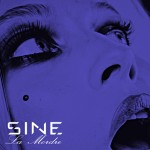
There is something deliciously suspicious about "La Mordre". SINE, the Austin-based project of multi-instrumentalist Rona Rougeheart, builds electronic music around sub-bass, heavy beats, industrial textures and a sharp sense of theatricality, but underneath the glamour there is always something with teeth. Her new album for Metropolis Records turns that tension into a narrative about ambition, seduction and the dangerous attraction of success. Rougeheart imagines a character chasing the big breakthrough, gradually discovering that the price of getting there may involve surrendering rather more than expected. The story is present, but never suffocatingly explained: it lives inside the music.
“Goddess” establishes the atmosphere with sleek menace, while “Perilized” introduces a more spectral dimension. From there, “Succumb To Me”, “2 Die 4” and “Trauma Bondage” sharpen the album's central contradiction: the music is designed to attract the body while the lyrics keep whispering that perhaps we should be suspicious. This is where SINE is particularly effective. Desire and danger are rarely presented as opposites. They are two sides of the same mechanism, and Rougeheart knows exactly how much temptation a good bassline can conceal.
Her concept of “Electronic Boom” is useful here, although "La Mordre" is considerably broader than a genre tag might suggest. Industrial electronics, dark pop, EBM-adjacent rhythms, cinematic atmospheres and more sensual passages constantly exchange places. Rougeheart's background as a drummer and multi-instrumentalist is important: the rhythms feel physical rather than merely programmed, while the voice behaves less like a conventional lead vocal than another component of the machinery. She can sound seductive, confrontational, detached or almost playful, sometimes within the same song.
That last quality saves the album from becoming overly solemn. Rougeheart has a well-developed taste for sarcasm and humour, and tracks such as “Immortal Disco” embrace the absurdity of the record's glamorous darkness. It is a useful counterweight to songs dealing with cruelty, trauma, obsession and control. Human beings have always enjoyed dancing while contemplating terrible decisions, so there is something reassuringly traditional about it.
The production, divided between Rougeheart and collaborators including Curse Mackey and AwareNess, gives the album enough variety without sacrificing cohesion. Mark Pistel's mastering provides additional definition to the heavy low end, but the record never becomes simply an exercise in sonic weight. The more effective moments are those in which attractive surfaces conceal uncomfortable ideas. “Blood + Wine” is seductive without becoming innocent; “Cruel” turns unpleasantness into something almost irresistibly danceable; “Bodies” brings the album's fascination with physicality closer to the foreground.
The title itself offers the appropriate metaphor. "La Mordre" evokes biting, and the entire album revolves around the transformation of desire into appetite. Stardom appears first as glitter, then as temptation, finally as something capable of changing the person who wants it. Rougeheart does not turn this into a conventional morality tale. There is no reassuring lesson waiting at the end, only the increasingly blurred boundary between wanting power and becoming consumed by it.
That ambiguity is one of the record's greatest strengths. SINE understands that darkness is more convincing when it does not constantly announce how dark it is. The music can be sensual, funny, aggressive and genuinely uneasy without having to choose one personality. It can invite you onto the dance floor while quietly questioning why you wanted to go there in the first place.
"La Mordre" therefore feels less like a collection of industrial-electronic tracks than a carefully staged descent into temptation. It is sleek without being sterile, theatrical without becoming camp, accessible without surrendering its sharper edges. Most importantly, it understands that seduction works better than intimidation. You do not have to be forced into the darkness. Sometimes the darkness simply offers you a drink. And if the drink happens to contain blood and wine, well, the warning was there. You just chose not to read it.
“Goddess” establishes the atmosphere with sleek menace, while “Perilized” introduces a more spectral dimension. From there, “Succumb To Me”, “2 Die 4” and “Trauma Bondage” sharpen the album's central contradiction: the music is designed to attract the body while the lyrics keep whispering that perhaps we should be suspicious. This is where SINE is particularly effective. Desire and danger are rarely presented as opposites. They are two sides of the same mechanism, and Rougeheart knows exactly how much temptation a good bassline can conceal.
Her concept of “Electronic Boom” is useful here, although "La Mordre" is considerably broader than a genre tag might suggest. Industrial electronics, dark pop, EBM-adjacent rhythms, cinematic atmospheres and more sensual passages constantly exchange places. Rougeheart's background as a drummer and multi-instrumentalist is important: the rhythms feel physical rather than merely programmed, while the voice behaves less like a conventional lead vocal than another component of the machinery. She can sound seductive, confrontational, detached or almost playful, sometimes within the same song.
That last quality saves the album from becoming overly solemn. Rougeheart has a well-developed taste for sarcasm and humour, and tracks such as “Immortal Disco” embrace the absurdity of the record's glamorous darkness. It is a useful counterweight to songs dealing with cruelty, trauma, obsession and control. Human beings have always enjoyed dancing while contemplating terrible decisions, so there is something reassuringly traditional about it.
The production, divided between Rougeheart and collaborators including Curse Mackey and AwareNess, gives the album enough variety without sacrificing cohesion. Mark Pistel's mastering provides additional definition to the heavy low end, but the record never becomes simply an exercise in sonic weight. The more effective moments are those in which attractive surfaces conceal uncomfortable ideas. “Blood + Wine” is seductive without becoming innocent; “Cruel” turns unpleasantness into something almost irresistibly danceable; “Bodies” brings the album's fascination with physicality closer to the foreground.
The title itself offers the appropriate metaphor. "La Mordre" evokes biting, and the entire album revolves around the transformation of desire into appetite. Stardom appears first as glitter, then as temptation, finally as something capable of changing the person who wants it. Rougeheart does not turn this into a conventional morality tale. There is no reassuring lesson waiting at the end, only the increasingly blurred boundary between wanting power and becoming consumed by it.
That ambiguity is one of the record's greatest strengths. SINE understands that darkness is more convincing when it does not constantly announce how dark it is. The music can be sensual, funny, aggressive and genuinely uneasy without having to choose one personality. It can invite you onto the dance floor while quietly questioning why you wanted to go there in the first place.
"La Mordre" therefore feels less like a collection of industrial-electronic tracks than a carefully staged descent into temptation. It is sleek without being sterile, theatrical without becoming camp, accessible without surrendering its sharper edges. Most importantly, it understands that seduction works better than intimidation. You do not have to be forced into the darkness. Sometimes the darkness simply offers you a drink. And if the drink happens to contain blood and wine, well, the warning was there. You just chose not to read it.
Josh Mason: Kicking A Dark Horse
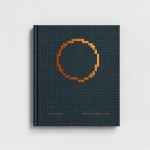

Some records emerge from a place. Kicking A Dark Horse seems to have been trapped inside one, breathing through limestone while the road above repeats its insistent Morse code. The third volume in Greyfade's FOLIO series binds a full-length recording in hardcover form, pairing nine modular-synthesizer pieces by sound artist Josh Mason with his book-length A Temporally Untethered Travelogue of the State(s) of Florida. The parenthetical plural opens beneath the state as a grammatical sinkhole, hovering somewhere between drainage problem and family archive. Sound and language do not accompany one another so much as exchange organs. Between them lies a creature whose dreams glow behind fever-laden curtains.
Mason constructs the music from systems designed to resist mastery: streams of binary information tangled with oscillators pushed beyond their intended behavior, mismatched converters rubbing against delay lines built to strike. Chance supplies the abrasion, while Mason shapes its consequences with severe tenderness. The opening piece, “Unincorporated Community Fight Song,” gathers minute electronic gestures into a fragile social body. Its title promises ceremony, yet the music offers a municipality too dispersed for marching, each tone carrying a small lantern through the bloodstream. “Traumahawk (Volunteer Corps.)” brings that current closer to the skin.
The book teaches us to distrust illumination. Florida's brightness bleaches evidence and gives catastrophe a devotional sheen, turning parking lots into immaculate alibis. Mason watches radiance glance from hotel pools, sodium lamps, bridge pavement, television windows, and the blind terminus of travel. History and hallucination occupy the same overexposed frame. Water initially proposes another grammar, carrying childhood behind the engineering required to keep tenderness above sea level. Every beautiful image drags behind it a permit or pipe, some buried cost still accruing interest. Within this contaminated radiance, “Would Go” reads as a message recovered after its senders have vanished into their own machinery. “A Tomb” receives the signal and folds it inward. Tiny electronic movements flare inside a chamber too immense for human tenancy.
Time in Mason's Florida refuses the road's forward command. A vacuum cord catches beneath a wheel. Film accepts multiple exposures until childhood and adulthood share one face. The self disperses through grandparents' kitchens, a father's unruly metaphysics, friends dead or disappearing, and rooms abandoned after a final glance. Autobiography consequently loses its borders, seeping into county roads and municipal failure until identity becomes a public utility with unreliable service. “Hellified Ire” occupies this psychic center, gritted with a friction that makes duration sound combustible. The track does not illustrate injury but discovers the frequency at which a scar communicates the history of its becoming. Beneath it, development proceeds with administrative calm: mangroves uprooted, shell middens mined, bridges arriving out of sequence, communities translated from ink into debris.
Even the page refuses passive service. Paragraphs crowd the margins while isolated phrases drift through broad white fields. “You have one new message” returns with a machine's immaculate courtesy, announcing contact from an adjacent dimension. The blankness pressurizes whatever language has left unresolved; silence becomes an active material, dense enough to bend memory around it. That spatial tension enters “No Vacancy Loose And Violent In The Socket,” whose liquid delicacy carries light through an electrical wound. The title's idiom opens into metaphysical eviction. “Repair 22,000,000” then crosshatches luminous impulses and removes them strip by strip, until perception confronts its scaffolding. Repair here means attention practiced under impossible conditions. The past cannot be restored, but its wreckage can still be weighed and cataloged.
Mason's surrealism achieves its force by refusing escape. A gull falls burning while a worker finishes his cigarette. A chained man stands beyond the dune and receives the terrible anonymity of being ignored. Elsewhere, a landmark dragon collapses into brackish water, its forgotten sacrifice sinking beneath civic memory. Rockets rupture the coast, after which commerce sprouts from the remains. The comedy of it all curdles inside the throat because absurdity has become realism stripped of public-relations niceties. “Live, From Behind The Power Curve” answers with implied voices and celestial pressure, a broadcast whose choir has no mouths, while “A Garden” opens nearby, though its peace carries no innocence. Delicate tones admit radiance through damaged material, allowing beauty to exist without laundering what produced it.
That ethical refusal gives Kicking A Dark Horse its unusual inflammation. Broken clocks converse with air conditioners; insects enter the same damaged orchestra as saws and failing batteries. The urban and the sublime trade masks until no hierarchy survives. Near the book's close, “La Florida” accumulates objects, injuries, relatives, jokes, appetites, and ghosts. Definition overloads until its circuitry blooms, leaving home immense enough to contain its own indictment. Love for a place can contain the evidence against it. Mason neither resolves that contradiction nor displays it as a trophy. He lets attachment remain morally unfinished, an animal bucking against the enclosure of explanation.
The work's final command is double: capture, release. Mason catches a vanishing place while exposing the violence concealed inside every net, then permits it to escape through heat and ungovernable time. What remains is a haunting of the machine of preservation, salt whitening the circuitry while water rehearses its patient coup below. Yet the deepest disturbance arrives elsewhere. Perhaps memory has never lived inside us at all. Perhaps landscapes use human beings as temporary recording devices, growing eyes to witness their own erasure and nervous systems capable of grieving it. Under that possibility, Kicking A Dark Horse becomes a state dreaming through Mason of the day it will no longer require a witness, because the witness, the wound, and the map will have entered the same clouded water.
Mason constructs the music from systems designed to resist mastery: streams of binary information tangled with oscillators pushed beyond their intended behavior, mismatched converters rubbing against delay lines built to strike. Chance supplies the abrasion, while Mason shapes its consequences with severe tenderness. The opening piece, “Unincorporated Community Fight Song,” gathers minute electronic gestures into a fragile social body. Its title promises ceremony, yet the music offers a municipality too dispersed for marching, each tone carrying a small lantern through the bloodstream. “Traumahawk (Volunteer Corps.)” brings that current closer to the skin.
The book teaches us to distrust illumination. Florida's brightness bleaches evidence and gives catastrophe a devotional sheen, turning parking lots into immaculate alibis. Mason watches radiance glance from hotel pools, sodium lamps, bridge pavement, television windows, and the blind terminus of travel. History and hallucination occupy the same overexposed frame. Water initially proposes another grammar, carrying childhood behind the engineering required to keep tenderness above sea level. Every beautiful image drags behind it a permit or pipe, some buried cost still accruing interest. Within this contaminated radiance, “Would Go” reads as a message recovered after its senders have vanished into their own machinery. “A Tomb” receives the signal and folds it inward. Tiny electronic movements flare inside a chamber too immense for human tenancy.
Time in Mason's Florida refuses the road's forward command. A vacuum cord catches beneath a wheel. Film accepts multiple exposures until childhood and adulthood share one face. The self disperses through grandparents' kitchens, a father's unruly metaphysics, friends dead or disappearing, and rooms abandoned after a final glance. Autobiography consequently loses its borders, seeping into county roads and municipal failure until identity becomes a public utility with unreliable service. “Hellified Ire” occupies this psychic center, gritted with a friction that makes duration sound combustible. The track does not illustrate injury but discovers the frequency at which a scar communicates the history of its becoming. Beneath it, development proceeds with administrative calm: mangroves uprooted, shell middens mined, bridges arriving out of sequence, communities translated from ink into debris.
Even the page refuses passive service. Paragraphs crowd the margins while isolated phrases drift through broad white fields. “You have one new message” returns with a machine's immaculate courtesy, announcing contact from an adjacent dimension. The blankness pressurizes whatever language has left unresolved; silence becomes an active material, dense enough to bend memory around it. That spatial tension enters “No Vacancy Loose And Violent In The Socket,” whose liquid delicacy carries light through an electrical wound. The title's idiom opens into metaphysical eviction. “Repair 22,000,000” then crosshatches luminous impulses and removes them strip by strip, until perception confronts its scaffolding. Repair here means attention practiced under impossible conditions. The past cannot be restored, but its wreckage can still be weighed and cataloged.
Mason's surrealism achieves its force by refusing escape. A gull falls burning while a worker finishes his cigarette. A chained man stands beyond the dune and receives the terrible anonymity of being ignored. Elsewhere, a landmark dragon collapses into brackish water, its forgotten sacrifice sinking beneath civic memory. Rockets rupture the coast, after which commerce sprouts from the remains. The comedy of it all curdles inside the throat because absurdity has become realism stripped of public-relations niceties. “Live, From Behind The Power Curve” answers with implied voices and celestial pressure, a broadcast whose choir has no mouths, while “A Garden” opens nearby, though its peace carries no innocence. Delicate tones admit radiance through damaged material, allowing beauty to exist without laundering what produced it.
That ethical refusal gives Kicking A Dark Horse its unusual inflammation. Broken clocks converse with air conditioners; insects enter the same damaged orchestra as saws and failing batteries. The urban and the sublime trade masks until no hierarchy survives. Near the book's close, “La Florida” accumulates objects, injuries, relatives, jokes, appetites, and ghosts. Definition overloads until its circuitry blooms, leaving home immense enough to contain its own indictment. Love for a place can contain the evidence against it. Mason neither resolves that contradiction nor displays it as a trophy. He lets attachment remain morally unfinished, an animal bucking against the enclosure of explanation.
The work's final command is double: capture, release. Mason catches a vanishing place while exposing the violence concealed inside every net, then permits it to escape through heat and ungovernable time. What remains is a haunting of the machine of preservation, salt whitening the circuitry while water rehearses its patient coup below. Yet the deepest disturbance arrives elsewhere. Perhaps memory has never lived inside us at all. Perhaps landscapes use human beings as temporary recording devices, growing eyes to witness their own erasure and nervous systems capable of grieving it. Under that possibility, Kicking A Dark Horse becomes a state dreaming through Mason of the day it will no longer require a witness, because the witness, the wound, and the map will have entered the same clouded water.
Ed Cooper: Vestibule
Artist: Ed Cooper
Title: Vestibule
Format: Download Only (MP3 + Lossless)
Label: Thanatosis Produktion (@)
Rated:

Title: Vestibule
Format: Download Only (MP3 + Lossless)
Label: Thanatosis Produktion (@)
Rated:
The heart is a rather inconvenient metronome. It refuses to keep proper time, gets excited when it shouldn't, slows down for reasons nobody has been consulted about, and occasionally reminds us that the entire biological enterprise is operating on a schedule that can be interrupted without notice. Ed Cooper's "Vestibule" takes precisely this unreliable mechanism and places it at the centre of two long compositions, turning the performers' heartbeats into temporal reference points. It is an elegant idea, but "Vestibule" is not an elegant record in the conventional sense. It is too murky, too bodily, too interested in sounds that seem to hover just beyond recognition. Released by the Stockholm label Thanatosis in May 2026 as a limited edition of only fifty CD-Rs alongside the digital version, it gathers five pieces performed by cellist and pianist Ben Finlay, tubist Jack Adler-McKean and the Octandre Ensemble.
The album is structured rather neatly on paper: three short pieces surround two compositions of approximately twenty-five minutes each. In practice, however, the arrangement produces something much less orderly. The shorter works feel like brief glimpses of a musical world that the longer pieces then enter and refuse to leave. The first of these, “The Indentation”, lasts barely a minute and a half. Its brevity is almost mischievous. It introduces low registers and a strangely saturated atmosphere without giving the listener enough material to establish a comfortable interpretation. Then the door opens onto the enormous “... grown up, you are grown, and feeling stronger, feeling...”. Here Jack Adler-McKean's tuba becomes something quite different from the heroic brass instrument that usually occupies popular imagination. Cooper wrote the piece across 2020–22, using a specially constructed four-valved microtonal tuba and a collection of extended techniques including singing, growling and multiphonics. The instrument does not simply play low notes. It seems to manufacture them from somewhere underneath the floor. And then there is the heartbeat.
Rather than functioning as an obvious pulse, it appears intermittently, almost furtively, as though the body has wandered into the composition without realising it is being recorded. The music stutters around these moments. Tuba sounds emerge, deform, overlap and retreat. Sometimes the result resembles a melody that has forgotten how melody works; elsewhere it approaches noise without ever completely surrendering to it. This ambiguity is essential to Cooper's aesthetic.
His work as a composer and writer repeatedly circles around the limits between hearing and listening, inside and outside, sound and meaning. He has written extensively about contemporary music and is currently the co-editor of "Tempo", while his academic research has focused on precisely these unstable zones of perception. His compositional practice similarly moves between instrumental music, electroacoustics, installation and voice. In other words, the philosophical machinery behind "Vestibule" is not something retrofitted after the fact by a reviewer desperate to sound intelligent. It is already built into the way Cooper makes music. Fortunately, the music does not require a PhD to survive. This is important because "Vestibule" could easily have become one of those records whose conceptual description is considerably more exciting than the actual listening experience. Instead, its ideas are translated into physical sensations. You hear pressure, breath, friction, resonance and instability before you start thinking about what any of them might represent.
The middle miniature, “The Mobile”, brings the scale down again. Like “The Indentation”, it is one of the three pieces originally written for Ben Finlay in 2025. These works began as transcriptions of fragments from Jeff Buckley songs, although almost everything conventionally associated with Buckley's music has been drained away. What remains is not recognisable quotation but a residue: low, blurred, strangely romantic material with the melodic contours partly obscured. This is perhaps one of the album's most intriguing contradictions. Cooper starts with songs, then strips away their identity until what remains is atmosphere, interval and timbre. Romanticism survives, but in a rather unhealthy condition. The melodies seem to have spent too long underground. There is something almost geological about these miniatures. They are not interludes in the traditional sense. They feel more like fragments excavated from the longer works, small pieces of melodic evidence found after the larger structure has collapsed.
Then comes the album's other great mass, “... as far as... unloving still... down on your stomach...”. The unusual instrumentation is crucial: contrabass flute, two bass clarinets and two double basses. Five musicians, all apparently instructed to travel downward as far as physics, technique and human patience will permit. The result is extraordinary precisely because the ensemble does not simply sound “deep”. Depth here is an unstable quality. The contrabass flute can sound hollow and almost subterranean. The bass clarinets introduce tones that seem to emerge from behind a wall. The double basses give the whole thing a physical floor, although that floor is constantly shifting. Overlapping heartbeats provide another layer of uncertainty, while the players' extended techniques blur the boundary between deliberate musical gesture and involuntary bodily event.
The composition therefore becomes a strange negotiation between control and physiology. The musicians determine what they play, but their bodies remain present inside the mechanism. Breath, pulse, muscular effort and resonance become part of the formal structure. This is not music that pretends the performer is an invisible technician operating a machine. The machine is the performer. That distinction also explains why "Vestibule" can feel detached even when its subject matter is intensely corporeal. Cooper's music does not invite the listener to dissolve completely into its atmosphere. It keeps a certain distance. You are listening into something rather than being enveloped by it. This is an unusual strategy for such low-frequency music.
Much contemporary drone and ambient music wants to remove the boundary between listener and sound. "Vestibule" seems more interested in making the boundary noticeable. You remain outside the room, listening through the wall. Occasionally you can hear enough to understand what is happening; just as often, the sound remains partially concealed. The title is therefore particularly apt. A vestibule is neither quite outside nor properly inside. It is a transitional space, a place of waiting, passage and uncertainty about where one is supposed to go next. Cooper's music behaves in much the same way. It refuses to settle entirely into melody, noise, chamber music, drone or electronic abstraction. It occupies the threshold between them. Humans do love thresholds. We spend an absurd amount of time standing in doorways.
The final miniature, “The Suppression”, returns to the Finlay material and provides the album with its briefest farewell. Again, the musical language is recognisably melodic without becoming conventionally song-like. The fragments are intimate, but they also feel strangely remote. If the longer compositions resemble bodies whose internal processes have become audible, these shorter pieces are almost their memories. That is where the album's triptych structure becomes more than a neat piece of packaging.
The three short works do frame the two large compositions, but they also alter our perception of them. Their relatively clear melodic material gives us something recognisable to hold onto, while the longer pieces gradually loosen that grip. By the time “The Suppression” arrives, melody has become less a destination than a faint recollection. There is a particularly effective cruelty in this arrangement. Just when the listener begins to understand the vocabulary, the record takes it away.
Cooper's use of Jeff Buckley fragments makes this even more resonant. Buckley's songs are generally associated with expressive immediacy, exposed singing and emotional clarity. Cooper's transcriptions retain something of that emotional pressure while refusing its usual release. The melodic source is there, but it has been slowed, lowered and obscured until sentiment becomes texture. The effect is not nostalgic. It is closer to remembering a song heard through another apartment. This sense of distance runs through the entire record. The performers' heartbeats are intimate, almost unbearably so, yet they are not presented as confession. The body is treated as an acoustic fact. It supplies irregularity, but it also imposes discipline. A pulse can regulate music precisely because it is never perfectly regular. That paradox gives "Vestibule" its strongest structural idea. Order does not come from eliminating instability. It comes from building with it.
Adler-McKean's tuba piece makes this especially clear. Its microtonal instrument and vocalised brass techniques produce a sound world that is constantly threatening to fracture, but the heartbeat gives that fracture a point of reference. In the Octandre Ensemble piece, the same principle becomes collective. Five musicians listen through their own physical processes while simultaneously responding to the others. The resulting music feels less like a conventional ensemble performance than a temporary ecology. Nobody is exactly in control. Everyone is listening.
That makes the performances by Finlay, Adler-McKean and Octandre Ensemble particularly important. This material could easily become mannered in less attentive hands. Low frequencies, extended techniques and extremely slow development are a dangerous combination. One misplaced gesture and the listener is trapped inside an expensive demonstration of how slowly a bass clarinet can breathe. Here the performers maintain enough tension for the music to remain alive.
The production helps. Cooper himself recorded the Finlay pieces, while the Adler-McKean work was recorded by Aaron Holloway-Nahum at the Royal Northern College of Music, and the Octandre piece at Goldsmiths Music Studios by Sean Woodlock, with further mixing by Holloway-Nahum and Cooper. Miles Whittaker, known for his work with Demdike Stare and Pendle Coven, handled the mastering. The different recording histories nevertheless cohere into a remarkably tactile album.
The artwork extends the same logic. Cooper's photographs of a dying sunflower head, layered into grainy black-and-white images, depict something caught between persistence and disappearance. It is almost embarrassingly appropriate, except that the music earns the image rather than merely decorating itself with it.
A dying sunflower is still a sunflower. The shape remains while the living processes withdraw. "Vestibule" is interested in a similar state of suspension. Its sounds are neither fully alive nor dead, neither stable nor chaotic, neither melodic nor abstract. They persist in a transitional condition. This may explain why the record can be difficult without becoming hostile. It asks for attention, but it does not demand worship. You can listen closely and follow the tiny changes in pitch, pressure and rhythm. You can also let the music sit in the background and occasionally discover that what you thought was silence was actually a bass clarinet quietly changing shape for the last three minutes. The label Thanatosis describes its catalogue in terms of minimalist, slow-moving and often sombre music intended for both deep and shallow listening, and "Vestibule" fits that philosophy unusually well. But “minimalist” is not quite enough.
There is too much bodily information here. There are lungs, throats, fingers, strings, reeds, valves, bow pressure, embouchure, fatigue and pulse. The music may move slowly, but the body never does entirely. Something is always happening beneath the apparent stillness.
That is why the record's darkness never becomes decorative gloom. Cooper is not painting everything black and calling it profound. He is listening to the places where sound begins to lose its certainty. And perhaps that is the real achievement of "Vestibule". It makes instability audible without turning instability into spectacle. It finds drama in tiny physiological fluctuations, melody in damaged fragments, rhythm in the unreliable machinery of the body. Its two long compositions do not lead us somewhere so much as keep us hovering at the point where somewhere might begin.
The album ends after less than an hour, but it does not feel concluded. It feels like having stood in a doorway long enough to realise that the room on the other side was never the destination.
There was only the listening. And the pulse, continuing quietly, inconveniently, without asking whether the composition is finished.
The album is structured rather neatly on paper: three short pieces surround two compositions of approximately twenty-five minutes each. In practice, however, the arrangement produces something much less orderly. The shorter works feel like brief glimpses of a musical world that the longer pieces then enter and refuse to leave. The first of these, “The Indentation”, lasts barely a minute and a half. Its brevity is almost mischievous. It introduces low registers and a strangely saturated atmosphere without giving the listener enough material to establish a comfortable interpretation. Then the door opens onto the enormous “... grown up, you are grown, and feeling stronger, feeling...”. Here Jack Adler-McKean's tuba becomes something quite different from the heroic brass instrument that usually occupies popular imagination. Cooper wrote the piece across 2020–22, using a specially constructed four-valved microtonal tuba and a collection of extended techniques including singing, growling and multiphonics. The instrument does not simply play low notes. It seems to manufacture them from somewhere underneath the floor. And then there is the heartbeat.
Rather than functioning as an obvious pulse, it appears intermittently, almost furtively, as though the body has wandered into the composition without realising it is being recorded. The music stutters around these moments. Tuba sounds emerge, deform, overlap and retreat. Sometimes the result resembles a melody that has forgotten how melody works; elsewhere it approaches noise without ever completely surrendering to it. This ambiguity is essential to Cooper's aesthetic.
His work as a composer and writer repeatedly circles around the limits between hearing and listening, inside and outside, sound and meaning. He has written extensively about contemporary music and is currently the co-editor of "Tempo", while his academic research has focused on precisely these unstable zones of perception. His compositional practice similarly moves between instrumental music, electroacoustics, installation and voice. In other words, the philosophical machinery behind "Vestibule" is not something retrofitted after the fact by a reviewer desperate to sound intelligent. It is already built into the way Cooper makes music. Fortunately, the music does not require a PhD to survive. This is important because "Vestibule" could easily have become one of those records whose conceptual description is considerably more exciting than the actual listening experience. Instead, its ideas are translated into physical sensations. You hear pressure, breath, friction, resonance and instability before you start thinking about what any of them might represent.
The middle miniature, “The Mobile”, brings the scale down again. Like “The Indentation”, it is one of the three pieces originally written for Ben Finlay in 2025. These works began as transcriptions of fragments from Jeff Buckley songs, although almost everything conventionally associated with Buckley's music has been drained away. What remains is not recognisable quotation but a residue: low, blurred, strangely romantic material with the melodic contours partly obscured. This is perhaps one of the album's most intriguing contradictions. Cooper starts with songs, then strips away their identity until what remains is atmosphere, interval and timbre. Romanticism survives, but in a rather unhealthy condition. The melodies seem to have spent too long underground. There is something almost geological about these miniatures. They are not interludes in the traditional sense. They feel more like fragments excavated from the longer works, small pieces of melodic evidence found after the larger structure has collapsed.
Then comes the album's other great mass, “... as far as... unloving still... down on your stomach...”. The unusual instrumentation is crucial: contrabass flute, two bass clarinets and two double basses. Five musicians, all apparently instructed to travel downward as far as physics, technique and human patience will permit. The result is extraordinary precisely because the ensemble does not simply sound “deep”. Depth here is an unstable quality. The contrabass flute can sound hollow and almost subterranean. The bass clarinets introduce tones that seem to emerge from behind a wall. The double basses give the whole thing a physical floor, although that floor is constantly shifting. Overlapping heartbeats provide another layer of uncertainty, while the players' extended techniques blur the boundary between deliberate musical gesture and involuntary bodily event.
The composition therefore becomes a strange negotiation between control and physiology. The musicians determine what they play, but their bodies remain present inside the mechanism. Breath, pulse, muscular effort and resonance become part of the formal structure. This is not music that pretends the performer is an invisible technician operating a machine. The machine is the performer. That distinction also explains why "Vestibule" can feel detached even when its subject matter is intensely corporeal. Cooper's music does not invite the listener to dissolve completely into its atmosphere. It keeps a certain distance. You are listening into something rather than being enveloped by it. This is an unusual strategy for such low-frequency music.
Much contemporary drone and ambient music wants to remove the boundary between listener and sound. "Vestibule" seems more interested in making the boundary noticeable. You remain outside the room, listening through the wall. Occasionally you can hear enough to understand what is happening; just as often, the sound remains partially concealed. The title is therefore particularly apt. A vestibule is neither quite outside nor properly inside. It is a transitional space, a place of waiting, passage and uncertainty about where one is supposed to go next. Cooper's music behaves in much the same way. It refuses to settle entirely into melody, noise, chamber music, drone or electronic abstraction. It occupies the threshold between them. Humans do love thresholds. We spend an absurd amount of time standing in doorways.
The final miniature, “The Suppression”, returns to the Finlay material and provides the album with its briefest farewell. Again, the musical language is recognisably melodic without becoming conventionally song-like. The fragments are intimate, but they also feel strangely remote. If the longer compositions resemble bodies whose internal processes have become audible, these shorter pieces are almost their memories. That is where the album's triptych structure becomes more than a neat piece of packaging.
The three short works do frame the two large compositions, but they also alter our perception of them. Their relatively clear melodic material gives us something recognisable to hold onto, while the longer pieces gradually loosen that grip. By the time “The Suppression” arrives, melody has become less a destination than a faint recollection. There is a particularly effective cruelty in this arrangement. Just when the listener begins to understand the vocabulary, the record takes it away.
Cooper's use of Jeff Buckley fragments makes this even more resonant. Buckley's songs are generally associated with expressive immediacy, exposed singing and emotional clarity. Cooper's transcriptions retain something of that emotional pressure while refusing its usual release. The melodic source is there, but it has been slowed, lowered and obscured until sentiment becomes texture. The effect is not nostalgic. It is closer to remembering a song heard through another apartment. This sense of distance runs through the entire record. The performers' heartbeats are intimate, almost unbearably so, yet they are not presented as confession. The body is treated as an acoustic fact. It supplies irregularity, but it also imposes discipline. A pulse can regulate music precisely because it is never perfectly regular. That paradox gives "Vestibule" its strongest structural idea. Order does not come from eliminating instability. It comes from building with it.
Adler-McKean's tuba piece makes this especially clear. Its microtonal instrument and vocalised brass techniques produce a sound world that is constantly threatening to fracture, but the heartbeat gives that fracture a point of reference. In the Octandre Ensemble piece, the same principle becomes collective. Five musicians listen through their own physical processes while simultaneously responding to the others. The resulting music feels less like a conventional ensemble performance than a temporary ecology. Nobody is exactly in control. Everyone is listening.
That makes the performances by Finlay, Adler-McKean and Octandre Ensemble particularly important. This material could easily become mannered in less attentive hands. Low frequencies, extended techniques and extremely slow development are a dangerous combination. One misplaced gesture and the listener is trapped inside an expensive demonstration of how slowly a bass clarinet can breathe. Here the performers maintain enough tension for the music to remain alive.
The production helps. Cooper himself recorded the Finlay pieces, while the Adler-McKean work was recorded by Aaron Holloway-Nahum at the Royal Northern College of Music, and the Octandre piece at Goldsmiths Music Studios by Sean Woodlock, with further mixing by Holloway-Nahum and Cooper. Miles Whittaker, known for his work with Demdike Stare and Pendle Coven, handled the mastering. The different recording histories nevertheless cohere into a remarkably tactile album.
The artwork extends the same logic. Cooper's photographs of a dying sunflower head, layered into grainy black-and-white images, depict something caught between persistence and disappearance. It is almost embarrassingly appropriate, except that the music earns the image rather than merely decorating itself with it.
A dying sunflower is still a sunflower. The shape remains while the living processes withdraw. "Vestibule" is interested in a similar state of suspension. Its sounds are neither fully alive nor dead, neither stable nor chaotic, neither melodic nor abstract. They persist in a transitional condition. This may explain why the record can be difficult without becoming hostile. It asks for attention, but it does not demand worship. You can listen closely and follow the tiny changes in pitch, pressure and rhythm. You can also let the music sit in the background and occasionally discover that what you thought was silence was actually a bass clarinet quietly changing shape for the last three minutes. The label Thanatosis describes its catalogue in terms of minimalist, slow-moving and often sombre music intended for both deep and shallow listening, and "Vestibule" fits that philosophy unusually well. But “minimalist” is not quite enough.
There is too much bodily information here. There are lungs, throats, fingers, strings, reeds, valves, bow pressure, embouchure, fatigue and pulse. The music may move slowly, but the body never does entirely. Something is always happening beneath the apparent stillness.
That is why the record's darkness never becomes decorative gloom. Cooper is not painting everything black and calling it profound. He is listening to the places where sound begins to lose its certainty. And perhaps that is the real achievement of "Vestibule". It makes instability audible without turning instability into spectacle. It finds drama in tiny physiological fluctuations, melody in damaged fragments, rhythm in the unreliable machinery of the body. Its two long compositions do not lead us somewhere so much as keep us hovering at the point where somewhere might begin.
The album ends after less than an hour, but it does not feel concluded. It feels like having stood in a doorway long enough to realise that the room on the other side was never the destination.
There was only the listening. And the pulse, continuing quietly, inconveniently, without asking whether the composition is finished.
Tim Ra & Jens Strüver: Kosmische Kuriere
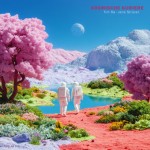
There are two possible ways of making a record about the end of civilisation. One is to stare into the abyss until it starts looking marketable. The other is to put on a spacesuit, leave the planet for a while and see whether humanity looks any better from a sufficient distance. "Kosmische Kuriere" chooses the second option, although it sensibly leaves the spacesuit at home.
Tim Ra and Jens Strüver have constructed an album that treats outer space less as an escape route than as a change of perspective. The premise is unapologetically utopian: in a world increasingly organised around borders, hostility, technological anxiety and political exhaustion, the cosmic becomes a metaphor for a humanity capable of exceeding its own habits. It is an ambitious idea, perhaps even an unfashionably sincere one. Fortunately, the music is considerably more subtle than the manifesto might suggest.
The Berlin connection matters. Strüver's long engagement with Krautrock, minimal electronics, experimental archives and cinematic sound gives the project a strong historical memory, while Tim Ra's work as a producer, rapper and multimedia artist brings together synthesizers, sequencers, science fiction and AI-assisted processes. Their meeting point is not retro-futurism for its own sake, but a kind of speculative musical archaeology: familiar twentieth-century sounds are taken out of their original habitats and allowed to float somewhere else.
"Venus Matinee" is an elegant place to begin. Its soft shimmer and carefully arranged melodic details carry an unmistakable cinematic flavour, with the kind of sophisticated orchestral pop atmosphere that makes you expect someone in a perfectly tailored suit to walk into the room carrying a martini. Except the room is apparently Venus, so the dress code is presumably complicated. The track establishes one of the album's most appealing qualities: its futurism is not metallic or dystopian. It is warm, sensual and surprisingly human.
Then "Pulsar" introduces a more explicit rhythmic presence. The track seems to orbit between lounge jazz, exotica and electronic pulse, gradually becoming more expansive without ever needing to resort to brute-force propulsion. It is music that understands that a groove can suggest movement without necessarily requiring a kick drum to shout instructions at everyone.
That relaxed quality is central to "Kosmische Kuriere". The album often allows rhythm to become implied rather than declared. Structures breathe. Instruments appear almost weightlessly. Melodic fragments drift into one another instead of behaving like obedient pop hooks. The effect is cinematic, but not in the usual sense of providing a soundtrack to something that already exists. These pieces seem to construct their own imaginary films while playing.
"Labyrinth der Sterne" is one of the album's most concise examples. Barely two minutes long, it behaves more like a passage between dimensions than a conventional composition. "Planet außer Kurs", meanwhile, introduces a gentle instability into the journey. Its playful sense of disorientation is important because the album's utopianism could otherwise become dangerously well-behaved. Fortunately, the Cosmic Couriers understand that paradise without a little eccentricity would probably be unbearably dull.
"Saturn Soiree" then settles into a graceful cosmic lounge. The title is almost too perfect, but the music earns it. There is elegance here without stiffness, nostalgia without a desperate attempt to recreate a supposedly better past. It feels like an imaginary 1960s vision of the future that has somehow survived long enough to discover synthesizers, minimal techno and the internet.
The second half becomes more contemplative. "Darkstar" and "Nebula" move into darker territory, where choral textures and orchestral associations create a much larger sense of scale. The influence of classical and cinematic science fiction traditions can be felt without turning the pieces into exercises in quotation. There is a faint memory of grand cosmic narratives, of humanity standing beneath an enormous sky and suddenly realising that its political arguments are rather small.
"Nebula", at nearly nine minutes, is the album's great expansion. Rather than rushing toward some spectacular interstellar climax, it allows atmosphere to accumulate. Layers appear gradually, producing a sense of suspended motion. The music seems to be travelling without having a destination. That paradox suits the album perfectly: outer space is not presented as somewhere to conquer, but somewhere in which our usual categories become less convincing.
This is also where the collaboration's political dimension becomes most interesting. The idea of a "world without borders" could easily become the sort of grand statement that looks impressive on a gallery wall and collapses when someone asks what it actually means. Here, however, the music does some of the thinking itself. The tracks refuse rigid boundaries between jazz, classical music, exotica, electronic composition and cinematic sound. Their hybridity is not decoration. It is the argument.
Different musical histories are allowed to coexist without one being required to dominate the others.
That makes Strüver's archival sensibility particularly useful. His work with experimental traditions and overlooked musical histories has given him an ear for connections that aren't necessarily obvious. Ra brings a different kind of synthesis, one in which hip-hop, electronic production, multimedia art and artificial intelligence become part of the same imaginative vocabulary. Neither approach is treated as a novelty. The past is not museum material, and the future is not merely a collection of shiny gadgets. Which brings us to the album's relationship with AI.
In lesser hands, artificial intelligence in a utopian cosmic project could produce something painfully obvious: a machine-made vision of a machine-shaped paradise. "Kosmische Kuriere" instead uses technology as one ingredient in a broader human process. The result is not about surrendering imagination to algorithms, but about finding ways to use contemporary tools while retaining curiosity, taste and emotional intention. That distinction matters.
"Wasser des Lebens", the closing track, makes the point quietly. Its weightless sweetness provides no triumphant finale, no orchestral declaration that humanity has finally learned its lesson. It simply settles into a gentler emotional space. After all the planets, stars, nebulae and cosmic machinery, the album ends with something remarkably terrestrial: tenderness. And perhaps that is the real destination.
Despite all its talk of the cosmos, "Kosmische Kuriere" is ultimately concerned with earthly behaviour. It looks outward in order to reconsider how we inhabit the place we already have. The music's greatest achievement is therefore not its ability to evoke space, but its refusal to use space as an excuse for abandoning humanity.
There is something almost quaint about believing that empathy and love might still constitute a meaningful political proposition. In 2026, such optimism can seem considerably more radical than another dystopian soundtrack. We have accumulated enough cultural products predicting our extinction to fill several galaxies. What is rarer is an artistic work willing to imagine what might come after the catastrophe without pretending that catastrophe is inevitable.
"Kosmische Kuriere" does exactly that. It is not naïve. There are shadows here, moments of melancholy and uncertainty, and a persistent awareness that the old structures are failing. But the album refuses to turn collapse into spectacle. Instead, it proposes transformation: loosen the borders, scramble the categories, listen differently, and perhaps discover that the strange planet we were looking for was the one underneath our feet all along.
The Cosmic Couriers don't bring back a message from another civilisation. They bring back a slightly altered perspective on ours. And, considering the state of the delivery service down here, that may already count as interstellar progress.
Tim Ra and Jens Strüver have constructed an album that treats outer space less as an escape route than as a change of perspective. The premise is unapologetically utopian: in a world increasingly organised around borders, hostility, technological anxiety and political exhaustion, the cosmic becomes a metaphor for a humanity capable of exceeding its own habits. It is an ambitious idea, perhaps even an unfashionably sincere one. Fortunately, the music is considerably more subtle than the manifesto might suggest.
The Berlin connection matters. Strüver's long engagement with Krautrock, minimal electronics, experimental archives and cinematic sound gives the project a strong historical memory, while Tim Ra's work as a producer, rapper and multimedia artist brings together synthesizers, sequencers, science fiction and AI-assisted processes. Their meeting point is not retro-futurism for its own sake, but a kind of speculative musical archaeology: familiar twentieth-century sounds are taken out of their original habitats and allowed to float somewhere else.
"Venus Matinee" is an elegant place to begin. Its soft shimmer and carefully arranged melodic details carry an unmistakable cinematic flavour, with the kind of sophisticated orchestral pop atmosphere that makes you expect someone in a perfectly tailored suit to walk into the room carrying a martini. Except the room is apparently Venus, so the dress code is presumably complicated. The track establishes one of the album's most appealing qualities: its futurism is not metallic or dystopian. It is warm, sensual and surprisingly human.
Then "Pulsar" introduces a more explicit rhythmic presence. The track seems to orbit between lounge jazz, exotica and electronic pulse, gradually becoming more expansive without ever needing to resort to brute-force propulsion. It is music that understands that a groove can suggest movement without necessarily requiring a kick drum to shout instructions at everyone.
That relaxed quality is central to "Kosmische Kuriere". The album often allows rhythm to become implied rather than declared. Structures breathe. Instruments appear almost weightlessly. Melodic fragments drift into one another instead of behaving like obedient pop hooks. The effect is cinematic, but not in the usual sense of providing a soundtrack to something that already exists. These pieces seem to construct their own imaginary films while playing.
"Labyrinth der Sterne" is one of the album's most concise examples. Barely two minutes long, it behaves more like a passage between dimensions than a conventional composition. "Planet außer Kurs", meanwhile, introduces a gentle instability into the journey. Its playful sense of disorientation is important because the album's utopianism could otherwise become dangerously well-behaved. Fortunately, the Cosmic Couriers understand that paradise without a little eccentricity would probably be unbearably dull.
"Saturn Soiree" then settles into a graceful cosmic lounge. The title is almost too perfect, but the music earns it. There is elegance here without stiffness, nostalgia without a desperate attempt to recreate a supposedly better past. It feels like an imaginary 1960s vision of the future that has somehow survived long enough to discover synthesizers, minimal techno and the internet.
The second half becomes more contemplative. "Darkstar" and "Nebula" move into darker territory, where choral textures and orchestral associations create a much larger sense of scale. The influence of classical and cinematic science fiction traditions can be felt without turning the pieces into exercises in quotation. There is a faint memory of grand cosmic narratives, of humanity standing beneath an enormous sky and suddenly realising that its political arguments are rather small.
"Nebula", at nearly nine minutes, is the album's great expansion. Rather than rushing toward some spectacular interstellar climax, it allows atmosphere to accumulate. Layers appear gradually, producing a sense of suspended motion. The music seems to be travelling without having a destination. That paradox suits the album perfectly: outer space is not presented as somewhere to conquer, but somewhere in which our usual categories become less convincing.
This is also where the collaboration's political dimension becomes most interesting. The idea of a "world without borders" could easily become the sort of grand statement that looks impressive on a gallery wall and collapses when someone asks what it actually means. Here, however, the music does some of the thinking itself. The tracks refuse rigid boundaries between jazz, classical music, exotica, electronic composition and cinematic sound. Their hybridity is not decoration. It is the argument.
Different musical histories are allowed to coexist without one being required to dominate the others.
That makes Strüver's archival sensibility particularly useful. His work with experimental traditions and overlooked musical histories has given him an ear for connections that aren't necessarily obvious. Ra brings a different kind of synthesis, one in which hip-hop, electronic production, multimedia art and artificial intelligence become part of the same imaginative vocabulary. Neither approach is treated as a novelty. The past is not museum material, and the future is not merely a collection of shiny gadgets. Which brings us to the album's relationship with AI.
In lesser hands, artificial intelligence in a utopian cosmic project could produce something painfully obvious: a machine-made vision of a machine-shaped paradise. "Kosmische Kuriere" instead uses technology as one ingredient in a broader human process. The result is not about surrendering imagination to algorithms, but about finding ways to use contemporary tools while retaining curiosity, taste and emotional intention. That distinction matters.
"Wasser des Lebens", the closing track, makes the point quietly. Its weightless sweetness provides no triumphant finale, no orchestral declaration that humanity has finally learned its lesson. It simply settles into a gentler emotional space. After all the planets, stars, nebulae and cosmic machinery, the album ends with something remarkably terrestrial: tenderness. And perhaps that is the real destination.
Despite all its talk of the cosmos, "Kosmische Kuriere" is ultimately concerned with earthly behaviour. It looks outward in order to reconsider how we inhabit the place we already have. The music's greatest achievement is therefore not its ability to evoke space, but its refusal to use space as an excuse for abandoning humanity.
There is something almost quaint about believing that empathy and love might still constitute a meaningful political proposition. In 2026, such optimism can seem considerably more radical than another dystopian soundtrack. We have accumulated enough cultural products predicting our extinction to fill several galaxies. What is rarer is an artistic work willing to imagine what might come after the catastrophe without pretending that catastrophe is inevitable.
"Kosmische Kuriere" does exactly that. It is not naïve. There are shadows here, moments of melancholy and uncertainty, and a persistent awareness that the old structures are failing. But the album refuses to turn collapse into spectacle. Instead, it proposes transformation: loosen the borders, scramble the categories, listen differently, and perhaps discover that the strange planet we were looking for was the one underneath our feet all along.
The Cosmic Couriers don't bring back a message from another civilisation. They bring back a slightly altered perspective on ours. And, considering the state of the delivery service down here, that may already count as interstellar progress.
Dave Mech: Berlin Seite

There is a small but important difference between recording a live techno set and making a record about having played a live techno set. The former preserves a situation. The latter tends to clean up the evidence.
Dave Mech has chosen the first option.
"Berlin Seite", released by Diffuse Reality, is deliberately less interested in presenting techno as a perfectly engineered object than in preserving what happens when machines, a room and a crowd begin to influence one another. The ten-track digital edition gathers material recorded live at Berlin's Oxi and Aeden, while the vinyl edition condenses the experience into four tracks: “Berlin Seite Part 3”, “Roots”, “Concrete Jungle” and “Sledgehammer”. The distinction between the two formats is useful, because the vinyl feels like a concentrated statement while the digital version lets the night unfold at considerably greater length.
The old-school principle behind the project is simple: do not fix what happened. There is no extensive studio surgery afterwards, no attempt to make every transition mathematically symmetrical, no cosmetic operation designed to remove every trace of the human being who was actually standing behind the machines. Small sections have been looped to extend openings and endings, but otherwise the recordings retain their original shape, including the little leaks and repetitions that occur when one piece grows naturally into another. That decision gives "Berlin Seite" its character. It also gives it a certain sense of danger.
Not danger in the melodramatic sense. Nobody is about to ride a motorcycle through a wall. The danger is subtler: the possibility that the music might do something the producer did not completely anticipate. And techno is at its best when that possibility remains alive. Mech's background helps explain the balance. He is a Dutch producer and music coach whose musical history began with flamenco guitar at seven, later expanding into bass and drums before moving deeply into electronic production. His work combines synthesis, field recordings and sampling with a strong rhythmic instinct, while his live setup is deliberately compact, allowing him to improvise arrangements and grooves in real time. That combination of musician's reflexes and electronic precision is audible throughout "Berlin Seite".
The record is not built around spectacular drops. It is built around pressure. “Berlin Seite Part 1”, “Part 2” and “Part 3” form the most obvious example. The three sections share a sonic identity while refusing to behave like conventional sequential chapters. Their connective tissue is the peculiar sample that gives the album its title. The source is wonderfully mundane: an elevator announcement recorded by Mech in Berlin, telling passengers that the door will open on the other side. Through accidental editing, the phrase was chopped into something that sounds like “Berlin Seite”, then pitched down and gradually transformed into a recurring element of his live sets. On the record it appears across the opening sequence and on the vinyl's A1, occasionally functioning almost like a bassline.
This is exactly the sort of accident that techno understands better than almost any other musical form. A tiny piece of recorded reality goes into the machine and comes out with a completely different job. A voice intended to provide practical information becomes rhythm. Rhythm becomes texture. Texture becomes identity. Identity becomes the name of a record. Somewhere, an elevator technician is presumably unaware that their announcement has acquired a second career.
“Berlin Seite Part 3” is perhaps the most persuasive piece in the vinyl sequence because it makes that transformation feel complete. Rather than simply dropping the vocal sample in as a recognisable gimmick, Mech folds it into the rhythmic fabric. The phrase becomes part of the propulsion, its linguistic origin gradually less important than its shape as sound.
That is one of the album's recurring strategies. Mech likes sounds that can perform more than one function. A rhythmic figure can become atmosphere. A sampled fragment can become bass. A groove can carry a melodic suggestion. A transition can effectively become part of the composition rather than merely the corridor between two tracks.
This is where the Detroit influence becomes apparent. The music is concerned with forward motion, but not with motion for its own sake. There is space inside the groove. Synthesised elements appear above the rhythmic machinery without trying to dominate it, while the dub-inflected side of the production introduces depth and delay without turning the tracks into exercises in misty abstraction. The result is physical but not blunt.
“Roots” makes that particularly clear. The track carries the muscular repetition expected from peak-time techno, but its atmosphere is more patient than the title might suggest. The groove does not simply hammer away. It establishes a cycle and then allows small deviations to accumulate inside it. This is where the decision not to polish the recordings becomes valuable.
In a studio production, an unexpected overlap between tracks might be regarded as something to correct. Here it becomes evidence of continuity. Motifs recur because the performer is thinking across the set rather than treating each track as a sealed container. The music remembers itself. That is an important difference.
A club set is not experienced as ten separate files. It is experienced as one extended physical event in which ideas reappear after several minutes, sounds acquire new meaning because of what preceded them, and a rhythm can become familiar enough to feel almost architectural. "Berlin Seite" preserves some of that memory. “Inner City” continues the movement with a more driving emphasis, while “Off Into The Woods” and “Deep Into Woods” demonstrate that Mech is not particularly interested in maintaining one fixed speed or density. The published tempo information ranges from around 91 BPM to 146 BPM across the digital tracks, but those numbers only partly explain the sensation of movement.
The slower material is especially revealing. At reduced tempo, the same obsession with repetition takes on another physical quality. The groove stops feeling like something pushing the body forward and begins to feel like something pulling it downward. This is where Mech's dub sensibility becomes more apparent: space itself becomes rhythmic.
Then the faster tracks return, and the body is apparently expected to resume employment. “Concrete Jungle”, recorded at Aeden, is one of the strongest examples. The track's title might suggest urban claustrophobia, but the music is less about describing a city than reproducing its continuous mechanical movement. There is little sense of a beginning or ending. Everything seems already in motion. This is precisely why the live recording works.
A polished studio version might make the track more precise, but it would also make it less believable as a fragment of an actual night. Here the groove retains its rough edges. The imperfections are not presented as mistakes to be admired reverently. They simply remain part of the object. That distinction matters because “imperfection” has become a rather fashionable aesthetic.
Everyone wants their machines to sound slightly broken now. Digital technology has become so capable of correcting everything that artists have begun deliberately adding the appearance of failure, as though humanity has finally discovered a way to manufacture spontaneity on demand. Mech's approach is more convincing because the irregularities were actually produced by performance. The record therefore occupies an interesting middle ground between documentation and composition. It is not raw footage. Mech has selected the material, shaped the releases, extended some sections and decided how the different pieces should coexist. But neither is it a studio album pretending to be live. The tension between those two states is exactly what gives it life. “Sledgehammer” takes the most obvious route through the record's physical side. The groove is heavier, more insistent, and its title is hardly subtle. This is music that knows what a dance floor is for. Yet the track avoids becoming merely functional. There are enough changes in texture and enough movement inside the pattern to prevent the rhythm from turning into an industrial photocopier.
The club is present without being audible as a gimmick. You can almost feel the room rather than hear it. That may be the album's greatest achievement. Mech is attempting something notoriously difficult: recording the relationship between performer and audience when the audience itself cannot be included as a conventional musical element. There is no microphone pointed at a crowd screaming. Instead, the crowd's influence survives indirectly through the decisions being made at the machines.
The floor changes the performance. The performance changes the floor. That feedback loop is what "Berlin Seite" is really documenting. And this is why the title sample is more than an amusing anecdote. “The door will open on the other side” is a surprisingly good accidental metaphor for the record. A transition is announced, but the destination remains hidden. You move through one sonic space and emerge somewhere slightly different. The phrase itself becomes distorted, shortened and repurposed, but its original function remains buried inside it. That is essentially what the entire album does with techno history.
Old-school club energy meets contemporary production. Detroit groove meets dub space. Live improvisation meets carefully chosen hardware. A Berlin elevator meets a dance floor. A single voice becomes a bassline. Nothing is particularly sacred. Everything is potentially useful.
By the time “In Between” arrives, the title starts to feel almost descriptive rather than incidental. Mech's music is constantly suspended between states: between track and transition, repetition and variation, machine and performer, composition and documentation. It is also caught between nostalgia and forward motion. There is clearly affection here for an older idea of techno: the long night, the physical room, the DJ or live performer shaping material in real time, the crowd as an active component rather than a passive consumer. But "Berlin Seite" does not attempt to recreate a historical sound. Its production remains contemporary, and its interest in hybrid textures and live manipulation keeps the music moving forward. That balance prevents the record from becoming retro cosplay. It remembers the past without dressing up in its clothes.
The four-track vinyl edition is particularly effective in this regard. “Berlin Seite Part 3”, “Roots”, “Concrete Jungle” and “Sledgehammer” make for a compact journey through the record's main concerns: groove, repetition, atmosphere, pressure and movement. The six additional digital tracks broaden the picture, but the vinyl has the advantage of forcing the listener to encounter the music as a physical sequence rather than an enormous playlist. There is something appropriate about that. A record about physical presence should probably have some physical presence. "Berlin Seite" is ultimately less interested in perfection than in continuity. The tracks bleed into one another because that is what performances do. Motifs return because musicians remember what they have just played. Small imperfections survive because the moment has already passed and cannot be recreated in a studio without becoming something else. The record therefore succeeds not because it captures a Berlin night perfectly. It succeeds because it admits that no night can be captured perfectly.
What remains is the trace: a groove, a fragment of voice, a recurring bass figure, a change in pressure, a transition that happened once and now exists on vinyl. The elevator says the door will open on the other side. In "Berlin Seite", the door keeps opening. The useful trick is that Dave Mech never tells us exactly what is waiting there. He simply keeps the beat moving until we arrive.
Dave Mech has chosen the first option.
"Berlin Seite", released by Diffuse Reality, is deliberately less interested in presenting techno as a perfectly engineered object than in preserving what happens when machines, a room and a crowd begin to influence one another. The ten-track digital edition gathers material recorded live at Berlin's Oxi and Aeden, while the vinyl edition condenses the experience into four tracks: “Berlin Seite Part 3”, “Roots”, “Concrete Jungle” and “Sledgehammer”. The distinction between the two formats is useful, because the vinyl feels like a concentrated statement while the digital version lets the night unfold at considerably greater length.
The old-school principle behind the project is simple: do not fix what happened. There is no extensive studio surgery afterwards, no attempt to make every transition mathematically symmetrical, no cosmetic operation designed to remove every trace of the human being who was actually standing behind the machines. Small sections have been looped to extend openings and endings, but otherwise the recordings retain their original shape, including the little leaks and repetitions that occur when one piece grows naturally into another. That decision gives "Berlin Seite" its character. It also gives it a certain sense of danger.
Not danger in the melodramatic sense. Nobody is about to ride a motorcycle through a wall. The danger is subtler: the possibility that the music might do something the producer did not completely anticipate. And techno is at its best when that possibility remains alive. Mech's background helps explain the balance. He is a Dutch producer and music coach whose musical history began with flamenco guitar at seven, later expanding into bass and drums before moving deeply into electronic production. His work combines synthesis, field recordings and sampling with a strong rhythmic instinct, while his live setup is deliberately compact, allowing him to improvise arrangements and grooves in real time. That combination of musician's reflexes and electronic precision is audible throughout "Berlin Seite".
The record is not built around spectacular drops. It is built around pressure. “Berlin Seite Part 1”, “Part 2” and “Part 3” form the most obvious example. The three sections share a sonic identity while refusing to behave like conventional sequential chapters. Their connective tissue is the peculiar sample that gives the album its title. The source is wonderfully mundane: an elevator announcement recorded by Mech in Berlin, telling passengers that the door will open on the other side. Through accidental editing, the phrase was chopped into something that sounds like “Berlin Seite”, then pitched down and gradually transformed into a recurring element of his live sets. On the record it appears across the opening sequence and on the vinyl's A1, occasionally functioning almost like a bassline.
This is exactly the sort of accident that techno understands better than almost any other musical form. A tiny piece of recorded reality goes into the machine and comes out with a completely different job. A voice intended to provide practical information becomes rhythm. Rhythm becomes texture. Texture becomes identity. Identity becomes the name of a record. Somewhere, an elevator technician is presumably unaware that their announcement has acquired a second career.
“Berlin Seite Part 3” is perhaps the most persuasive piece in the vinyl sequence because it makes that transformation feel complete. Rather than simply dropping the vocal sample in as a recognisable gimmick, Mech folds it into the rhythmic fabric. The phrase becomes part of the propulsion, its linguistic origin gradually less important than its shape as sound.
That is one of the album's recurring strategies. Mech likes sounds that can perform more than one function. A rhythmic figure can become atmosphere. A sampled fragment can become bass. A groove can carry a melodic suggestion. A transition can effectively become part of the composition rather than merely the corridor between two tracks.
This is where the Detroit influence becomes apparent. The music is concerned with forward motion, but not with motion for its own sake. There is space inside the groove. Synthesised elements appear above the rhythmic machinery without trying to dominate it, while the dub-inflected side of the production introduces depth and delay without turning the tracks into exercises in misty abstraction. The result is physical but not blunt.
“Roots” makes that particularly clear. The track carries the muscular repetition expected from peak-time techno, but its atmosphere is more patient than the title might suggest. The groove does not simply hammer away. It establishes a cycle and then allows small deviations to accumulate inside it. This is where the decision not to polish the recordings becomes valuable.
In a studio production, an unexpected overlap between tracks might be regarded as something to correct. Here it becomes evidence of continuity. Motifs recur because the performer is thinking across the set rather than treating each track as a sealed container. The music remembers itself. That is an important difference.
A club set is not experienced as ten separate files. It is experienced as one extended physical event in which ideas reappear after several minutes, sounds acquire new meaning because of what preceded them, and a rhythm can become familiar enough to feel almost architectural. "Berlin Seite" preserves some of that memory. “Inner City” continues the movement with a more driving emphasis, while “Off Into The Woods” and “Deep Into Woods” demonstrate that Mech is not particularly interested in maintaining one fixed speed or density. The published tempo information ranges from around 91 BPM to 146 BPM across the digital tracks, but those numbers only partly explain the sensation of movement.
The slower material is especially revealing. At reduced tempo, the same obsession with repetition takes on another physical quality. The groove stops feeling like something pushing the body forward and begins to feel like something pulling it downward. This is where Mech's dub sensibility becomes more apparent: space itself becomes rhythmic.
Then the faster tracks return, and the body is apparently expected to resume employment. “Concrete Jungle”, recorded at Aeden, is one of the strongest examples. The track's title might suggest urban claustrophobia, but the music is less about describing a city than reproducing its continuous mechanical movement. There is little sense of a beginning or ending. Everything seems already in motion. This is precisely why the live recording works.
A polished studio version might make the track more precise, but it would also make it less believable as a fragment of an actual night. Here the groove retains its rough edges. The imperfections are not presented as mistakes to be admired reverently. They simply remain part of the object. That distinction matters because “imperfection” has become a rather fashionable aesthetic.
Everyone wants their machines to sound slightly broken now. Digital technology has become so capable of correcting everything that artists have begun deliberately adding the appearance of failure, as though humanity has finally discovered a way to manufacture spontaneity on demand. Mech's approach is more convincing because the irregularities were actually produced by performance. The record therefore occupies an interesting middle ground between documentation and composition. It is not raw footage. Mech has selected the material, shaped the releases, extended some sections and decided how the different pieces should coexist. But neither is it a studio album pretending to be live. The tension between those two states is exactly what gives it life. “Sledgehammer” takes the most obvious route through the record's physical side. The groove is heavier, more insistent, and its title is hardly subtle. This is music that knows what a dance floor is for. Yet the track avoids becoming merely functional. There are enough changes in texture and enough movement inside the pattern to prevent the rhythm from turning into an industrial photocopier.
The club is present without being audible as a gimmick. You can almost feel the room rather than hear it. That may be the album's greatest achievement. Mech is attempting something notoriously difficult: recording the relationship between performer and audience when the audience itself cannot be included as a conventional musical element. There is no microphone pointed at a crowd screaming. Instead, the crowd's influence survives indirectly through the decisions being made at the machines.
The floor changes the performance. The performance changes the floor. That feedback loop is what "Berlin Seite" is really documenting. And this is why the title sample is more than an amusing anecdote. “The door will open on the other side” is a surprisingly good accidental metaphor for the record. A transition is announced, but the destination remains hidden. You move through one sonic space and emerge somewhere slightly different. The phrase itself becomes distorted, shortened and repurposed, but its original function remains buried inside it. That is essentially what the entire album does with techno history.
Old-school club energy meets contemporary production. Detroit groove meets dub space. Live improvisation meets carefully chosen hardware. A Berlin elevator meets a dance floor. A single voice becomes a bassline. Nothing is particularly sacred. Everything is potentially useful.
By the time “In Between” arrives, the title starts to feel almost descriptive rather than incidental. Mech's music is constantly suspended between states: between track and transition, repetition and variation, machine and performer, composition and documentation. It is also caught between nostalgia and forward motion. There is clearly affection here for an older idea of techno: the long night, the physical room, the DJ or live performer shaping material in real time, the crowd as an active component rather than a passive consumer. But "Berlin Seite" does not attempt to recreate a historical sound. Its production remains contemporary, and its interest in hybrid textures and live manipulation keeps the music moving forward. That balance prevents the record from becoming retro cosplay. It remembers the past without dressing up in its clothes.
The four-track vinyl edition is particularly effective in this regard. “Berlin Seite Part 3”, “Roots”, “Concrete Jungle” and “Sledgehammer” make for a compact journey through the record's main concerns: groove, repetition, atmosphere, pressure and movement. The six additional digital tracks broaden the picture, but the vinyl has the advantage of forcing the listener to encounter the music as a physical sequence rather than an enormous playlist. There is something appropriate about that. A record about physical presence should probably have some physical presence. "Berlin Seite" is ultimately less interested in perfection than in continuity. The tracks bleed into one another because that is what performances do. Motifs return because musicians remember what they have just played. Small imperfections survive because the moment has already passed and cannot be recreated in a studio without becoming something else. The record therefore succeeds not because it captures a Berlin night perfectly. It succeeds because it admits that no night can be captured perfectly.
What remains is the trace: a groove, a fragment of voice, a recurring bass figure, a change in pressure, a transition that happened once and now exists on vinyl. The elevator says the door will open on the other side. In "Berlin Seite", the door keeps opening. The useful trick is that Dave Mech never tells us exactly what is waiting there. He simply keeps the beat moving until we arrive.