
Wednesday, October 7, 2026
Browse by Genre
Industrial Music / Industrial Metal / Aggro Industrial / Electro Metal
Industrial Noise / Power Noise / Harsh Noise
Synth Pop / Electro Pop / Synth-Electronica
Techno / Trance / Goa / Drum'n'Bass / Jungle / Tribal / Trip-Hop
Ambient / Electronica / Ethereal / Dub / Soundscapes / Abstract
Experimental / Avantgarde / Weird & Wired / Glitch / Noise / Field Recording
Dark / Gothic / Wave / New Wave / Dark Wave / Industrial Gothic
New Music / Downtown / Avantgarde Jazz / New Classical / World
Search Reviews
Music Reviews
Magic Wands: Remixes EP

Artist: Magic Wands (@)
Title: Remixes EP
Format: Download Only (MP3 + Lossless)
Label: Metropolis (@)
Rated:

Title: Remixes EP
Format: Download Only (MP3 + Lossless)
Label: Metropolis (@)
Rated:
A remix EP is normally where songs go when their parents have decided they need to meet other people. Sometimes the result is illuminating; sometimes it is merely the original wearing somebody else's jacket. "Remixes EP", however, makes a reasonably strong case for the former. Across six reinterpretations, Magic Wands hand material from their recent catalogue to Lost Signal, Lars Deutsch, Delerium, Principe Valiente and Glass Chapel, and the resulting record behaves less like a collection of decorative alternatives than a set of parallel readings of the same peculiar musical language.
That language has been developing since Dexy and Chris Valentine began Magic Wands in Nashville in the late 2000s before eventually relocating to Los Angeles. Their music has gradually moved between dream-pop, shoegaze, post-punk and goth, with heavily treated guitars, synths and vocals creating a tension between sweetness and darkness. The early "Aloha Moon" already suggested that the duo was interested in atmosphere as much as conventional indie-rock mechanics; subsequent records have made the sound more synthetic, nocturnal and spacious. "Cascades", released in 2025, pushed further into gothic romance, myth and literary imagery, while 2026's "Wishing Well" suggested a somewhat lighter direction.
The "Remixes EP" consequently arrives at an interesting moment. It looks backwards at "Cascades" and 2023's "Switch", while also including “Sacred Mirrors”, the new collaboration with John Ashton of The Psychedelic Furs. That song is itself already a kind of exchange: Ashton supplied the initial instrumental, after which Magic Wands added guitars, keyboards, percussion and vocals. The remix therefore transforms a song that was already born from collaboration, which is rather like asking one conversation to explain itself through another conversation.
Lost Signal gets two opportunities to interfere with the Magic Wands formula, beginning with “Armour”. The original belongs to the darker side of "Cascades", where the band's shimmering guitars and romantic gloom lean toward the post-punk tradition. Lost Signal pushes that material toward greater electronic definition. The guitar haze becomes more sharply organised, the rhythmic component assumes greater importance, and the song acquires a harder silhouette without losing its underlying melancholy. It is less a matter of making "Armour" heavier than of revealing the electronic skeleton that was already hiding beneath its soft surfaces.
That distinction becomes important throughout the EP. The best remixes here do not seem determined to demonstrate how radically somebody can alter a track. They identify something latent and enlarge it. Magic Wands already operate somewhere between songcraft and atmosphere, so the remixers have plenty of loose material to work with. There are melodies that can become motifs, guitar textures that can become drones, and vocal lines that can be pushed forward or allowed to recede.
“Albatross”, reworked by Lars Deutsch, takes a different route. The original "Cascades" track draws on the ominous literary associations of its title, recalling Coleridge's doomed bird without needing to turn the thing into an undergraduate poetry seminar. Its original form combines propulsion with thick layers of synth and reverberation. Deutsch, an Emmy-winning composer as well as a musician, makes the electronic dimension more prominent, creating a treatment in which atmosphere and arrangement become unusually close companions.
The effect is subtly cinematic. Instead of simply making the song larger, Deutsch seems to widen the spaces between its components. The vocal acquires more room around it, while the electronic layers suggest movement beneath the surface. There is still a recognisable Magic Wands song underneath, but its emotional centre has shifted. The darkness feels less like a room decorated in black and more like an expanse in which the listener has temporarily misplaced the exit.
Lost Signal returns for “Sacred Mirrors”, and this is perhaps the EP's most conceptually satisfying transformation. The original song was already unusual within the Magic Wands catalogue because it emerged from John Ashton's instrumental contribution. Ashton, best known as guitarist of The Psychedelic Furs, had independently become interested in the duo and sent them the piece; Magic Wands subsequently added their own instrumental and vocal material. The song's atmosphere was correspondingly lighter and more reflective than much of "Cascades".
Lost Signal does not destroy that luminosity. Instead, the remix places it under a cooler electronic light. The vocal becomes part of a larger synthetic environment, while the rhythmic details give the track a more nocturnal momentum. The result is interesting precisely because the song's emotional centre survives the transformation. Its sense of openness remains, but the route toward it has become more circuitous.
This is where "Remixes EP" becomes more than a catalogue maintenance exercise. A successful remix can reveal that a song contains several possible identities, only one of which happened to be selected for the original recording. Magic Wands' material is particularly susceptible to this because their songs are built from layers that do not always belong to the same musical tradition. A guitar can suggest shoegaze while a synth points toward darkwave; a vocal can sound romantic while the rhythm section behaves like electronic pop. The remixers simply choose which of these competing impulses gets to sit in the front row.
Delerium's treatment of “Moonshadow” makes that choice especially apparent. Delerium have been refining the meeting point between electronic music, atmosphere and vocal melodicism for decades, so their involvement is less a collision than a conversation between adjacent dialects. Their remix extends the track into a more spacious electronic landscape, allowing its melodic qualities to become more pronounced while maintaining the dusky emotional tone associated with Magic Wands.
The six-and-a-half-minute duration helps. Delerium are given enough time to let the arrangement breathe rather than compressing everything into the usual three-minute requirement for people who apparently consider silence a personal insult. The track develops gradually, with textures appearing and receding around the vocal. It feels less like a remix designed for a club than a reconsideration of the song's atmospheric possibilities.
Principe Valiente's “Candle Sea” takes yet another route. Their own relationship with darkwave and post-punk makes the connection almost suspiciously logical, but the treatment avoids merely adding darkness to an already dark band. Instead, the remix sharpens the contrast between the song's melodic core and its surrounding textures. The emotional temperature becomes cooler, and the arrangement acquires a more distinctly European gothic character.
This is one of the recurring pleasures of the EP: the collaborators do not have to teach Magic Wands how to be gloomy. They are already perfectly capable of that, having spent much of "Cascades" exploring melancholy, romanticism and nocturnal imagery. The remixers are more interesting when they alter the proportions. One brings rhythm forward, another enlarges the electronic space, another makes the guitars feel more architectural, another foregrounds melody.
Glass Chapel's “Time To Dream” closes the collection and perhaps offers the most fitting ending. The title itself could describe much of Magic Wands' aesthetic, but the remix does not simply dissolve into soft-focus dreaminess. Instead, the track retains a defined melodic centre while the surrounding production becomes more spacious and suspended. The effect is intimate without becoming delicate, which is not quite the same thing.
The sequence as a whole is revealing. “Armour” establishes the harder electronic potential; “Albatross” expands the cinematic dimension; “Sacred Mirrors” moves through a cooler and more synthetic atmosphere; “Moonshadow” stretches toward spacious electronic pop; “Candle Sea” deepens the gothic side; and “Time To Dream” brings the collection toward something more weightless. The EP therefore works almost like a prism. The songs remain recognisable, but the colours change according to who holds them up to the light.
That is also why the record benefits from being heard after "Cascades". The original album was already praised for its mixture of goth, shoegaze, post-punk and dream-pop, with reviewers noting both its strong 1980s references and its more literary or mythological tendencies. The remixes expose the seams between those influences rather than smoothing them over. What initially sounded like one coherent style turns out to contain several possible arrangements waiting to be separated.
There is a slight paradox at the heart of Magic Wands' music. Their aesthetic depends heavily on atmosphere, but atmosphere is normally the thing least likely to survive rearrangement. Change the drums, move the guitars, alter the vocal treatment and suddenly the supposed essence of a song has vanished. Here, however, the songs prove sturdier than their surface suggests. The melodies and vocal phrasing remain sufficiently distinctive to survive considerable changes in emphasis.
“Sacred Mirrors” is the clearest example because its collaborative origins are already embedded in the composition. The song was conceived around Ashton's instrumental piece and then developed collectively by Ashton and the Valentines. Its subsequent remix turns that history into another layer of authorship. The track has effectively passed through three stages: Ashton’s initial composition, Magic Wands' transformation of it into a song, and Lost Signal's transformation of that song into something else. At some point the notion of an “original version” becomes almost bureaucratic.
That is perhaps the most interesting thing about remix culture when it works properly. A song stops being a fixed object and becomes a set of possibilities. Magic Wands seem comfortable with that idea. Their own catalogue has already included remixes and reworkings, and "Remixes EP" continues the process rather than treating the original recordings as sacred property.
The record is also careful not to confuse difference with quality. Some remixes are more radical than others, but the collection does not require every contributor to perform a spectacular act of sonic vandalism. In several cases, the pleasure comes precisely from hearing how little needs to be changed for the emotional balance of a song to shift.
That restraint suits Magic Wands. Their music has always depended on blurred boundaries: between softness and distortion, romance and melancholy, organic guitar textures and synthetic surfaces, darkness and a surprisingly persistent sense of wonder. The remixers do not resolve those contradictions. They simply rearrange them.
"Remixes EP" is therefore a useful second look at a band whose music can initially appear deceptively consistent. Six versions later, the consistency starts looking more like flexibility. The songs survive because their identity is not located in any single guitar tone, drum pattern or production trick. It lies somewhere less tangible, in the combination of melody, voice and emotional atmosphere that remains recognisable even after the furniture has been rearranged.
Human beings have always had difficulty leaving a perfectly serviceable song alone, which is probably why remix culture exists. In this case, the interference proves worthwhile. "Remixes EP" does not replace "Cascades" or "Switch", and it does not pretend to improve them by decree. It simply opens several side doors into material that already had more than one way of being heard.
For Magic Wands, that may be the most appropriate form of continuation: not another definitive statement, but six alternate perspectives on songs that were never quite as settled as they first appeared.
That language has been developing since Dexy and Chris Valentine began Magic Wands in Nashville in the late 2000s before eventually relocating to Los Angeles. Their music has gradually moved between dream-pop, shoegaze, post-punk and goth, with heavily treated guitars, synths and vocals creating a tension between sweetness and darkness. The early "Aloha Moon" already suggested that the duo was interested in atmosphere as much as conventional indie-rock mechanics; subsequent records have made the sound more synthetic, nocturnal and spacious. "Cascades", released in 2025, pushed further into gothic romance, myth and literary imagery, while 2026's "Wishing Well" suggested a somewhat lighter direction.
The "Remixes EP" consequently arrives at an interesting moment. It looks backwards at "Cascades" and 2023's "Switch", while also including “Sacred Mirrors”, the new collaboration with John Ashton of The Psychedelic Furs. That song is itself already a kind of exchange: Ashton supplied the initial instrumental, after which Magic Wands added guitars, keyboards, percussion and vocals. The remix therefore transforms a song that was already born from collaboration, which is rather like asking one conversation to explain itself through another conversation.
Lost Signal gets two opportunities to interfere with the Magic Wands formula, beginning with “Armour”. The original belongs to the darker side of "Cascades", where the band's shimmering guitars and romantic gloom lean toward the post-punk tradition. Lost Signal pushes that material toward greater electronic definition. The guitar haze becomes more sharply organised, the rhythmic component assumes greater importance, and the song acquires a harder silhouette without losing its underlying melancholy. It is less a matter of making "Armour" heavier than of revealing the electronic skeleton that was already hiding beneath its soft surfaces.
That distinction becomes important throughout the EP. The best remixes here do not seem determined to demonstrate how radically somebody can alter a track. They identify something latent and enlarge it. Magic Wands already operate somewhere between songcraft and atmosphere, so the remixers have plenty of loose material to work with. There are melodies that can become motifs, guitar textures that can become drones, and vocal lines that can be pushed forward or allowed to recede.
“Albatross”, reworked by Lars Deutsch, takes a different route. The original "Cascades" track draws on the ominous literary associations of its title, recalling Coleridge's doomed bird without needing to turn the thing into an undergraduate poetry seminar. Its original form combines propulsion with thick layers of synth and reverberation. Deutsch, an Emmy-winning composer as well as a musician, makes the electronic dimension more prominent, creating a treatment in which atmosphere and arrangement become unusually close companions.
The effect is subtly cinematic. Instead of simply making the song larger, Deutsch seems to widen the spaces between its components. The vocal acquires more room around it, while the electronic layers suggest movement beneath the surface. There is still a recognisable Magic Wands song underneath, but its emotional centre has shifted. The darkness feels less like a room decorated in black and more like an expanse in which the listener has temporarily misplaced the exit.
Lost Signal returns for “Sacred Mirrors”, and this is perhaps the EP's most conceptually satisfying transformation. The original song was already unusual within the Magic Wands catalogue because it emerged from John Ashton's instrumental contribution. Ashton, best known as guitarist of The Psychedelic Furs, had independently become interested in the duo and sent them the piece; Magic Wands subsequently added their own instrumental and vocal material. The song's atmosphere was correspondingly lighter and more reflective than much of "Cascades".
Lost Signal does not destroy that luminosity. Instead, the remix places it under a cooler electronic light. The vocal becomes part of a larger synthetic environment, while the rhythmic details give the track a more nocturnal momentum. The result is interesting precisely because the song's emotional centre survives the transformation. Its sense of openness remains, but the route toward it has become more circuitous.
This is where "Remixes EP" becomes more than a catalogue maintenance exercise. A successful remix can reveal that a song contains several possible identities, only one of which happened to be selected for the original recording. Magic Wands' material is particularly susceptible to this because their songs are built from layers that do not always belong to the same musical tradition. A guitar can suggest shoegaze while a synth points toward darkwave; a vocal can sound romantic while the rhythm section behaves like electronic pop. The remixers simply choose which of these competing impulses gets to sit in the front row.
Delerium's treatment of “Moonshadow” makes that choice especially apparent. Delerium have been refining the meeting point between electronic music, atmosphere and vocal melodicism for decades, so their involvement is less a collision than a conversation between adjacent dialects. Their remix extends the track into a more spacious electronic landscape, allowing its melodic qualities to become more pronounced while maintaining the dusky emotional tone associated with Magic Wands.
The six-and-a-half-minute duration helps. Delerium are given enough time to let the arrangement breathe rather than compressing everything into the usual three-minute requirement for people who apparently consider silence a personal insult. The track develops gradually, with textures appearing and receding around the vocal. It feels less like a remix designed for a club than a reconsideration of the song's atmospheric possibilities.
Principe Valiente's “Candle Sea” takes yet another route. Their own relationship with darkwave and post-punk makes the connection almost suspiciously logical, but the treatment avoids merely adding darkness to an already dark band. Instead, the remix sharpens the contrast between the song's melodic core and its surrounding textures. The emotional temperature becomes cooler, and the arrangement acquires a more distinctly European gothic character.
This is one of the recurring pleasures of the EP: the collaborators do not have to teach Magic Wands how to be gloomy. They are already perfectly capable of that, having spent much of "Cascades" exploring melancholy, romanticism and nocturnal imagery. The remixers are more interesting when they alter the proportions. One brings rhythm forward, another enlarges the electronic space, another makes the guitars feel more architectural, another foregrounds melody.
Glass Chapel's “Time To Dream” closes the collection and perhaps offers the most fitting ending. The title itself could describe much of Magic Wands' aesthetic, but the remix does not simply dissolve into soft-focus dreaminess. Instead, the track retains a defined melodic centre while the surrounding production becomes more spacious and suspended. The effect is intimate without becoming delicate, which is not quite the same thing.
The sequence as a whole is revealing. “Armour” establishes the harder electronic potential; “Albatross” expands the cinematic dimension; “Sacred Mirrors” moves through a cooler and more synthetic atmosphere; “Moonshadow” stretches toward spacious electronic pop; “Candle Sea” deepens the gothic side; and “Time To Dream” brings the collection toward something more weightless. The EP therefore works almost like a prism. The songs remain recognisable, but the colours change according to who holds them up to the light.
That is also why the record benefits from being heard after "Cascades". The original album was already praised for its mixture of goth, shoegaze, post-punk and dream-pop, with reviewers noting both its strong 1980s references and its more literary or mythological tendencies. The remixes expose the seams between those influences rather than smoothing them over. What initially sounded like one coherent style turns out to contain several possible arrangements waiting to be separated.
There is a slight paradox at the heart of Magic Wands' music. Their aesthetic depends heavily on atmosphere, but atmosphere is normally the thing least likely to survive rearrangement. Change the drums, move the guitars, alter the vocal treatment and suddenly the supposed essence of a song has vanished. Here, however, the songs prove sturdier than their surface suggests. The melodies and vocal phrasing remain sufficiently distinctive to survive considerable changes in emphasis.
“Sacred Mirrors” is the clearest example because its collaborative origins are already embedded in the composition. The song was conceived around Ashton's instrumental piece and then developed collectively by Ashton and the Valentines. Its subsequent remix turns that history into another layer of authorship. The track has effectively passed through three stages: Ashton’s initial composition, Magic Wands' transformation of it into a song, and Lost Signal's transformation of that song into something else. At some point the notion of an “original version” becomes almost bureaucratic.
That is perhaps the most interesting thing about remix culture when it works properly. A song stops being a fixed object and becomes a set of possibilities. Magic Wands seem comfortable with that idea. Their own catalogue has already included remixes and reworkings, and "Remixes EP" continues the process rather than treating the original recordings as sacred property.
The record is also careful not to confuse difference with quality. Some remixes are more radical than others, but the collection does not require every contributor to perform a spectacular act of sonic vandalism. In several cases, the pleasure comes precisely from hearing how little needs to be changed for the emotional balance of a song to shift.
That restraint suits Magic Wands. Their music has always depended on blurred boundaries: between softness and distortion, romance and melancholy, organic guitar textures and synthetic surfaces, darkness and a surprisingly persistent sense of wonder. The remixers do not resolve those contradictions. They simply rearrange them.
"Remixes EP" is therefore a useful second look at a band whose music can initially appear deceptively consistent. Six versions later, the consistency starts looking more like flexibility. The songs survive because their identity is not located in any single guitar tone, drum pattern or production trick. It lies somewhere less tangible, in the combination of melody, voice and emotional atmosphere that remains recognisable even after the furniture has been rearranged.
Human beings have always had difficulty leaving a perfectly serviceable song alone, which is probably why remix culture exists. In this case, the interference proves worthwhile. "Remixes EP" does not replace "Cascades" or "Switch", and it does not pretend to improve them by decree. It simply opens several side doors into material that already had more than one way of being heard.
For Magic Wands, that may be the most appropriate form of continuation: not another definitive statement, but six alternate perspectives on songs that were never quite as settled as they first appeared.
Damage Control & Leæther Strip: Master Of Silence EP

Artist: Damage Control & Leæther Strip
Title: Master Of Silence EP
Format: Download Only (MP3 + Lossless)
Label: Metropolis (@)
Rated:
Title: Master Of Silence EP
Format: Download Only (MP3 + Lossless)
Label: Metropolis (@)
Rated:
Industrial music has never suffered from a shortage of things being called "Rage", "Oblivion", "Obstacles" or "Crowned". It is practically a genre requirement, somewhere between distortion and a black-and-white photograph of a factory. The interesting question is what musicians actually do with such vocabulary once the familiar machinery is switched on. On "Master Of Silence", Damage Control and Leæther Strip approach the territory from a position of considerable experience, and the result is more nuanced than its titles might initially suggest.
Damage Control is an international electro-industrial collaboration centred on Australians Bill Barsby, Richard Thacker and Alex Wise, with Markus App from Germany among the wider creative network. Barsby and Thacker originally come from Birmingham, giving the project an interesting geographical collision between British industrial lineage and its later Australian incarnation. Their 2017 debut "Ultranoia" established a habit of working with outside musicians, and "Master Of Silence" extends that principle by placing Danish electro-industrial veteran Claus Larsen in the vocal foreground. Larsen has been operating as Leæther Strip since the late 1980s, becoming one of the defining figures in the development of European EBM and electro-industrial music, while also repeatedly bending that vocabulary toward darker, stranger or more melodic territory.
There is consequently no need here for anyone to prove their industrial credentials by hitting the distortion pedal with a large object. The production team already tells much of the story. Chris Peterson, whose résumé includes Front Line Assembly, Noise Unit and Unit:187, handles production, with Greg Reely, associated with Skinny Puppy, Front Line Assembly and Fear Factory, on engineering duties. Peterson also contributes synthesizer parts to “Obstacles”, while Josh Rombout of SIRUS adds programming to the same track. The result is suitably polished without becoming antiseptic, preserving the blunt physicality that electro-industrial music requires while allowing enough detail for the arrangements to breathe.
"Oblivion" opens the EP with an immediately recognisable combination of programmed momentum, hard-edged electronic textures and Larsen's unmistakable delivery. Yet the track is less interested in sheer punishment than in pressure. The rhythm has weight, but the arrangement leaves enough space around it for the synth layers to acquire shape. Larsen's voice provides the human element without softening anything. His performance carries the accumulated authority of somebody who has spent decades making electronic music sound confrontational, but there is no sense of him simply reenacting his own past.
That distinction matters. A guest appearance by an established industrial vocalist can easily become a karaoke version of the 1990s, with everybody politely agreeing that the old sounds were better before moving on to the next track. "Master Of Silence" avoids that trap because Larsen is incorporated into Damage Control's electronic framework rather than being treated as a historical artefact. His voice is part of the architecture, not a nostalgic sticker placed on top of it.
“Rage” makes this even clearer. The track's title is admirably economical, but the music does not behave like an instruction manual for anger. Its propulsion is controlled, with the rhythm section pushing forward while the synth programming gives the track a colder, more spacious contour. The aggression is therefore functional rather than theatrical. There is enough force to work on a dancefloor, but also enough restraint to keep the track from collapsing into the industrial equivalent of somebody repeatedly shouting at a printer.
Larsen is especially effective because his voice has always possessed an unusual combination of severity and personality. In the Leæther Strip catalogue, harsh electronics have frequently been balanced by melodic instincts, theatrical phrasing and an ability to make machine-driven music feel surprisingly personal. His long career has included everything from hard EBM to more experimental and symphonic approaches, and he has continued to release and perform well beyond the period in which the style was supposedly destined for the historical basement. On these four tracks, that history is useful without becoming a burden.
“Obstacles” is perhaps the most revealing piece because the production becomes more layered. Peterson's additional synth work and Rombout's programming give the track a denser electronic surface, while the rhythm remains sharply defined. The arrangement seems to operate through competing layers of insistence: one pattern establishes a direction, another interferes with it, and the vocal rides above the resulting friction. This is where Damage Control's collaborative nature becomes audible. Rather than simply adding another musician to a completed formula, the extra contributors alter the internal balance of the track.
There is also a useful irony in the title. Industrial music has been writing songs about obstacles for decades, usually while constructing an enormous rhythmic object specifically designed to run straight through them. Here the obstacle is less an external enemy than a structural principle. The track keeps introducing elements that make its own movement slightly more complicated, and therefore more interesting.
"Crowned" closes the EP with perhaps the most ceremonial atmosphere of the four. The title suggests triumph, authority and all the usual paraphernalia of industrial grandeur, but the music is more ambiguous. The synthesizers provide a darkly polished surface while the rhythm retains the physical insistence of EBM. Larsen's voice gives the track its sense of command, yet the production avoids turning that authority into bombast. It feels less like somebody being handed a crown than somebody wondering what, exactly, the crown is supposed to accomplish.
Taken together, the four tracks work because they occupy a useful middle ground between club functionality and studio detail. The rhythms are strong enough to give the music bodily momentum, but the production rewards attention away from the dancefloor too. This is partly due to the experience behind the controls. Peterson and Reely have been involved with Damage Control since "Ultranoia", and their continuing presence gives the project a sonic consistency even as its guest collaborations change.
The collaboration with Larsen also makes sense historically. Leæther Strip was founded as a solo project in 1988 and emerged during the period when EBM and electro-industrial music were developing their defining vocabulary in Europe. Larsen became particularly associated with the German Zoth Ommog scene and later maintained a remarkably durable career through label changes, stylistic shifts and periods of renewed activity. His participation therefore brings more than a familiar voice. It introduces a performer whose own history is embedded in the musical language Damage Control are using.
What makes "Master Of Silence" successful, however, is that it does not attempt to turn that history into a ceremonial reunion. There is no need for the tracks to sound as though they were retrieved from a forgotten warehouse containing obsolete drum machines and several extremely angry German club promoters. The production is contemporary, clean and deliberately muscular. At the same time, it understands that electro-industrial music does not need to disguise its physical origins. Bass frequencies still have to move the body. Percussion still has to hit somewhere below the intellect. A synth line can be both a compositional element and a piece of machinery with an attitude problem.
The EP's brevity helps enormously. Nineteen minutes is enough time to establish a world without requiring the listener to sign a long-term lease. Each track has a clear identity, but the four pieces also form a coherent sequence: darkness and pressure in “Oblivion”, more direct propulsion in “Rage”, increased textural complexity in “Obstacles”, and a slightly more imposing finale in “Crowned”. There is no unnecessary interlude, ambient corridor or five-minute passage in which somebody presumably adjusts the lighting.
Most importantly, Master Of Silence understands the difference between heaviness and density. Heavy music does not necessarily need to contain more sounds. Sometimes it is the spacing between them, the weight of a bass pulse, the dry impact of percussion or the contrast between a controlled electronic arrangement and a very human voice that creates the sensation of mass. Damage Control and Larsen use those contrasts effectively.
The EP also functions as a useful preview of Damage Control's developing Oblivion Grid cycle. The project has always relied on international collaboration, but this particular combination feels unusually coherent. Larsen does not merely lend his name to four tracks. His voice becomes a connecting element between the group's Australian electronic foundation and a lineage of European EBM that reaches back more than three decades.
There is nothing revolutionary about making electro-industrial music in 2026. That is precisely why doing it convincingly requires some care. The genre has accumulated so many established gestures that the danger is not failure but automatic competence: the correct kick drum, the correct vocal distortion, the correct ominous title, the correct photograph in which everyone looks as though they have recently been informed that joy is illegal. Master Of Silence works because its musicians understand those conventions well enough to manipulate them rather than merely obey them.
It is not an attempt to reinvent industrial music, nor does it need to be. Its achievement is more practical and arguably more valuable: four tightly constructed tracks that respect the genre's physical power while giving their collaborators enough room to remain recognisable. Damage Control provide the electronic framework; Claus Larsen supplies a voice with history, character and considerable bite; Peterson and Reely make sure the whole arrangement arrives with the necessary precision.
The result is a compact, disciplined EP that sounds neither trapped in its lineage nor embarrassed by it. Master Of Silence knows exactly what kind of music it is making, which in an age of increasingly complicated genre labels is almost an act of civil disobedience. The silence in the title may therefore be less about absence than about control: knowing when to let the machinery speak, when to pull something back, and when four people in different parts of the world can make an old musical language sound usefully alive again.
Damage Control is an international electro-industrial collaboration centred on Australians Bill Barsby, Richard Thacker and Alex Wise, with Markus App from Germany among the wider creative network. Barsby and Thacker originally come from Birmingham, giving the project an interesting geographical collision between British industrial lineage and its later Australian incarnation. Their 2017 debut "Ultranoia" established a habit of working with outside musicians, and "Master Of Silence" extends that principle by placing Danish electro-industrial veteran Claus Larsen in the vocal foreground. Larsen has been operating as Leæther Strip since the late 1980s, becoming one of the defining figures in the development of European EBM and electro-industrial music, while also repeatedly bending that vocabulary toward darker, stranger or more melodic territory.
There is consequently no need here for anyone to prove their industrial credentials by hitting the distortion pedal with a large object. The production team already tells much of the story. Chris Peterson, whose résumé includes Front Line Assembly, Noise Unit and Unit:187, handles production, with Greg Reely, associated with Skinny Puppy, Front Line Assembly and Fear Factory, on engineering duties. Peterson also contributes synthesizer parts to “Obstacles”, while Josh Rombout of SIRUS adds programming to the same track. The result is suitably polished without becoming antiseptic, preserving the blunt physicality that electro-industrial music requires while allowing enough detail for the arrangements to breathe.
"Oblivion" opens the EP with an immediately recognisable combination of programmed momentum, hard-edged electronic textures and Larsen's unmistakable delivery. Yet the track is less interested in sheer punishment than in pressure. The rhythm has weight, but the arrangement leaves enough space around it for the synth layers to acquire shape. Larsen's voice provides the human element without softening anything. His performance carries the accumulated authority of somebody who has spent decades making electronic music sound confrontational, but there is no sense of him simply reenacting his own past.
That distinction matters. A guest appearance by an established industrial vocalist can easily become a karaoke version of the 1990s, with everybody politely agreeing that the old sounds were better before moving on to the next track. "Master Of Silence" avoids that trap because Larsen is incorporated into Damage Control's electronic framework rather than being treated as a historical artefact. His voice is part of the architecture, not a nostalgic sticker placed on top of it.
“Rage” makes this even clearer. The track's title is admirably economical, but the music does not behave like an instruction manual for anger. Its propulsion is controlled, with the rhythm section pushing forward while the synth programming gives the track a colder, more spacious contour. The aggression is therefore functional rather than theatrical. There is enough force to work on a dancefloor, but also enough restraint to keep the track from collapsing into the industrial equivalent of somebody repeatedly shouting at a printer.
Larsen is especially effective because his voice has always possessed an unusual combination of severity and personality. In the Leæther Strip catalogue, harsh electronics have frequently been balanced by melodic instincts, theatrical phrasing and an ability to make machine-driven music feel surprisingly personal. His long career has included everything from hard EBM to more experimental and symphonic approaches, and he has continued to release and perform well beyond the period in which the style was supposedly destined for the historical basement. On these four tracks, that history is useful without becoming a burden.
“Obstacles” is perhaps the most revealing piece because the production becomes more layered. Peterson's additional synth work and Rombout's programming give the track a denser electronic surface, while the rhythm remains sharply defined. The arrangement seems to operate through competing layers of insistence: one pattern establishes a direction, another interferes with it, and the vocal rides above the resulting friction. This is where Damage Control's collaborative nature becomes audible. Rather than simply adding another musician to a completed formula, the extra contributors alter the internal balance of the track.
There is also a useful irony in the title. Industrial music has been writing songs about obstacles for decades, usually while constructing an enormous rhythmic object specifically designed to run straight through them. Here the obstacle is less an external enemy than a structural principle. The track keeps introducing elements that make its own movement slightly more complicated, and therefore more interesting.
"Crowned" closes the EP with perhaps the most ceremonial atmosphere of the four. The title suggests triumph, authority and all the usual paraphernalia of industrial grandeur, but the music is more ambiguous. The synthesizers provide a darkly polished surface while the rhythm retains the physical insistence of EBM. Larsen's voice gives the track its sense of command, yet the production avoids turning that authority into bombast. It feels less like somebody being handed a crown than somebody wondering what, exactly, the crown is supposed to accomplish.
Taken together, the four tracks work because they occupy a useful middle ground between club functionality and studio detail. The rhythms are strong enough to give the music bodily momentum, but the production rewards attention away from the dancefloor too. This is partly due to the experience behind the controls. Peterson and Reely have been involved with Damage Control since "Ultranoia", and their continuing presence gives the project a sonic consistency even as its guest collaborations change.
The collaboration with Larsen also makes sense historically. Leæther Strip was founded as a solo project in 1988 and emerged during the period when EBM and electro-industrial music were developing their defining vocabulary in Europe. Larsen became particularly associated with the German Zoth Ommog scene and later maintained a remarkably durable career through label changes, stylistic shifts and periods of renewed activity. His participation therefore brings more than a familiar voice. It introduces a performer whose own history is embedded in the musical language Damage Control are using.
What makes "Master Of Silence" successful, however, is that it does not attempt to turn that history into a ceremonial reunion. There is no need for the tracks to sound as though they were retrieved from a forgotten warehouse containing obsolete drum machines and several extremely angry German club promoters. The production is contemporary, clean and deliberately muscular. At the same time, it understands that electro-industrial music does not need to disguise its physical origins. Bass frequencies still have to move the body. Percussion still has to hit somewhere below the intellect. A synth line can be both a compositional element and a piece of machinery with an attitude problem.
The EP's brevity helps enormously. Nineteen minutes is enough time to establish a world without requiring the listener to sign a long-term lease. Each track has a clear identity, but the four pieces also form a coherent sequence: darkness and pressure in “Oblivion”, more direct propulsion in “Rage”, increased textural complexity in “Obstacles”, and a slightly more imposing finale in “Crowned”. There is no unnecessary interlude, ambient corridor or five-minute passage in which somebody presumably adjusts the lighting.
Most importantly, Master Of Silence understands the difference between heaviness and density. Heavy music does not necessarily need to contain more sounds. Sometimes it is the spacing between them, the weight of a bass pulse, the dry impact of percussion or the contrast between a controlled electronic arrangement and a very human voice that creates the sensation of mass. Damage Control and Larsen use those contrasts effectively.
The EP also functions as a useful preview of Damage Control's developing Oblivion Grid cycle. The project has always relied on international collaboration, but this particular combination feels unusually coherent. Larsen does not merely lend his name to four tracks. His voice becomes a connecting element between the group's Australian electronic foundation and a lineage of European EBM that reaches back more than three decades.
There is nothing revolutionary about making electro-industrial music in 2026. That is precisely why doing it convincingly requires some care. The genre has accumulated so many established gestures that the danger is not failure but automatic competence: the correct kick drum, the correct vocal distortion, the correct ominous title, the correct photograph in which everyone looks as though they have recently been informed that joy is illegal. Master Of Silence works because its musicians understand those conventions well enough to manipulate them rather than merely obey them.
It is not an attempt to reinvent industrial music, nor does it need to be. Its achievement is more practical and arguably more valuable: four tightly constructed tracks that respect the genre's physical power while giving their collaborators enough room to remain recognisable. Damage Control provide the electronic framework; Claus Larsen supplies a voice with history, character and considerable bite; Peterson and Reely make sure the whole arrangement arrives with the necessary precision.
The result is a compact, disciplined EP that sounds neither trapped in its lineage nor embarrassed by it. Master Of Silence knows exactly what kind of music it is making, which in an age of increasingly complicated genre labels is almost an act of civil disobedience. The silence in the title may therefore be less about absence than about control: knowing when to let the machinery speak, when to pull something back, and when four people in different parts of the world can make an old musical language sound usefully alive again.
Raphael Loher: Figuren
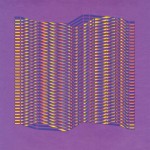

There is a peculiar kind of musical archaeology involved in "Figuren". Raphael Loher does not excavate old recordings merely to preserve their remains, nor does he treat them as convenient material for the usual ambient makeover. He takes performances that already existed, separates them into melodic fragments, isolated tones and resonances, subjects some of them to tape manipulation, changes their pitch and then rebuilds the results into something that no longer behaves like its source. The past is not remembered here. It is repeatedly disassembled until it starts behaving differently.
This is particularly significant because Loher is a pianist. His previous work has often begun with the physical presence of the instrument, whether through preparation, altered tuning, pedals or unusually concentrated playing. His 2022 debut "Keemuun" reduced the piano's enormous possibilities to a remarkably restricted field, while "Hug of Gravity" subsequently took recordings of those performances and stretched their relationships across much longer durations. Loher is also active in the Swiss improvisation scene through Baumschule, with Manuel Troller and Julian Sartorius, and KALI Trio, alongside Urs Müller and Nicolas Stocker. His musical personality therefore makes the apparent retreat from the piano in "Figuren" rather more interesting than a simple change of equipment. He is not abandoning his instrument so much as questioning how much of an instrument needs to remain audible for its musical identity to survive.
The source material consists of ten intimate performances of "Keemuun", recorded during the pandemic for audiences of only one or two people. During a residency in the Blenio Valley, Loher pulled those recordings apart and generated around thirty preliminary pieces from their constituent material. Some of that process informed "Hug of Gravity"; "Figuren" pushes the same family of ideas further, passing selected fragments through a Revox B77 before digitising and reshaping them again. The resulting album is consequently less like a set of compositions than a series of carefully engineered mutations. There is something almost perversely patient about making music this way. Most people edit because they want to finish. Loher edits because apparently finishing was not complicated enough.
"Figuren I" opens with a few hesitant melodic shapes whose edges seem slightly softened by repetition. The notes do not arrive with the authority of piano statements anymore. They have become objects whose previous identity can still be sensed, but not entirely recovered. Their recurrence is important: each return places the same material in a subtly different context, so that memory itself becomes part of the arrangement. A tiny alteration in decay or pitch can make a familiar figure appear less familiar without actually changing its basic outline.
That tension between recognition and estrangement runs through the record. "Figuren II" is more rhythmically articulate, built from small gestures that seem to overlap imperfectly. The music has a pulse, but not one generous enough to qualify as a beat. Instead, rhythmic information emerges from repetition, interruption and slight displacement. It is a wonderfully economical trick. Loher does not need to create a complex rhythm when he can allow two simple patterns to disagree politely.
The pieces remain short enough to resist the grand architectural gestures of "Hug of Gravity". "Figuren III" and "Figuren IV" pass through sparse melodic configurations in which silence and decay are as consequential as the notes themselves. The effect is not empty space but a heightened awareness of what remains after a sound has stopped. Loher's fascination with reduction becomes particularly clear here: he keeps taking information away until the remaining material starts carrying disproportionate weight.
There is also a quiet strangeness to the tape process. A Revox B77 is not merely a nostalgic prop in this context. Its ability to alter speed and therefore pitch introduces a physical instability into material that could otherwise have been manipulated entirely within a computer. That matters because the slight imperfections of analogue treatment give the fragments a history. Even when the final pieces sound extremely clean, there is a sense that the tones have travelled somewhere before arriving in their present form.
"Figuren V" is among the album's more finely balanced constructions, with fragments appearing to orbit one another without settling into a conventional progression. The result is deceptively simple. One hears a small amount of material, but the relationships between its repetitions keep changing. This is where the comparison with Morton Feldman becomes useful, not because Loher imitates Feldman's language, but because both composers understand that duration can make apparently modest events acquire enormous perceptual significance.
The connection with William Basinski is equally tempting, particularly because both artists have discovered how much expressive information can be extracted from repetition and deterioration. Yet Loher's method is more interventionist. He is not simply allowing old material to decay. He actively rearranges it, alters its pitch and changes the scale at which its components operate. The music therefore feels less like a tape loop gradually losing its original shape and more like an image being photocopied, cut apart and reconstructed by someone who keeps becoming interested in a different detail.
"Figuren VI" introduces a darker tension, with a low recurring presence set against more fragmented harmonic material. The simplicity of the components makes their collision unusually effective. There is no need for a dramatic crescendo because the friction is already embedded in the patterns themselves. One begins to hear the record's “figures” not as melodies in the conventional sense but as small behavioural units: they repeat, hesitate, collide, drift apart and occasionally seem to anticipate one another.
"Figuren VII" is perhaps the most delicate of the shorter pieces, while the concluding "Figuren VIII" allows the material more time to accumulate. Its slightly awkward repetitions and unstable harmonic relations give the ending an intriguing ambiguity. It does not provide closure in the conventional sense. Instead, the final piece feels as though the album has arrived at another arrangement of the same unresolved materials. The circle is not completed so much as redrawn with a slightly different radius.
This makes the title "Figuren" particularly apt. The German word can suggest figures, forms, characters or shapes, and Loher's pieces occupy all those meanings without settling on one. A figure can be a melody, a rhythmic cell, a recurring sonic object, or simply a pattern that becomes recognisable through repetition. Here, each one is provisional. Its identity depends upon where it appears and what surrounds it.
The record's greatest strength is therefore not its resemblance to ambient music, minimalism or experimental electronics, although it comfortably touches all three. It is the unusual precision with which Loher manages the threshold between composition and transformation. The original performances are not merely quoted, but neither are they completely erased. Their physical memory survives in altered form. What began as piano playing has become a collection of traces that no longer need the piano to make sense.
That is a surprisingly rich proposition for a record so restrained. "Figuren" does not demand attention through volume, density or dramatic development. It operates by making small discrepancies matter. A repeated note shifts slightly; a loop seems to lose its balance; two fragments briefly occupy the same rhythmic space; a resonance lasts just long enough to change the meaning of the next sound. The listener is gradually trained to notice distinctions that would be almost invisible in a more crowded piece of music.
There is something almost comic about how much technological labour has gone into producing music that can sound so modest. Ten performances, a residency, around thirty preliminary pieces, tape processing, pitch alterations, digitisation, recombination and further editing have ultimately produced eight compact compositions. Humanity has invented computers, tape machines and digital audio workstations, only to use them to make a three-minute fragment wait very patiently before becoming interesting. Fortunately, in Loher's case, the patience pays off.
Figuren is less concerned with making new sounds than with discovering how differently an existing sound can behave once its context has been dismantled. That gives the album an unusually intimate quality. The music feels close to its source material without ever becoming nostalgic for it. What survives is not the performance itself but its potential for another life.
In that sense, Loher's deliberate distance from the piano is not really a departure from his earlier work. It is its logical consequence. Having reduced the instrument, altered it, recorded it and reconsidered it, he now treats its sounds as raw material rather than as evidence of pianistic performance. The instrument has become less visible precisely because Loher has learned how much can be done with what it leaves behind.
Figuren ultimately succeeds through this modest act of refusal: it refuses the piano its traditional authority, refuses repetition its usual predictability, and refuses ambient music the obligation to be merely soothing. Its eight pieces are small, but they are not slight. They behave like fragments of something larger whose original outline may no longer matter. What matters is the strange new coherence they acquire after being taken apart.
This is particularly significant because Loher is a pianist. His previous work has often begun with the physical presence of the instrument, whether through preparation, altered tuning, pedals or unusually concentrated playing. His 2022 debut "Keemuun" reduced the piano's enormous possibilities to a remarkably restricted field, while "Hug of Gravity" subsequently took recordings of those performances and stretched their relationships across much longer durations. Loher is also active in the Swiss improvisation scene through Baumschule, with Manuel Troller and Julian Sartorius, and KALI Trio, alongside Urs Müller and Nicolas Stocker. His musical personality therefore makes the apparent retreat from the piano in "Figuren" rather more interesting than a simple change of equipment. He is not abandoning his instrument so much as questioning how much of an instrument needs to remain audible for its musical identity to survive.
The source material consists of ten intimate performances of "Keemuun", recorded during the pandemic for audiences of only one or two people. During a residency in the Blenio Valley, Loher pulled those recordings apart and generated around thirty preliminary pieces from their constituent material. Some of that process informed "Hug of Gravity"; "Figuren" pushes the same family of ideas further, passing selected fragments through a Revox B77 before digitising and reshaping them again. The resulting album is consequently less like a set of compositions than a series of carefully engineered mutations. There is something almost perversely patient about making music this way. Most people edit because they want to finish. Loher edits because apparently finishing was not complicated enough.
"Figuren I" opens with a few hesitant melodic shapes whose edges seem slightly softened by repetition. The notes do not arrive with the authority of piano statements anymore. They have become objects whose previous identity can still be sensed, but not entirely recovered. Their recurrence is important: each return places the same material in a subtly different context, so that memory itself becomes part of the arrangement. A tiny alteration in decay or pitch can make a familiar figure appear less familiar without actually changing its basic outline.
That tension between recognition and estrangement runs through the record. "Figuren II" is more rhythmically articulate, built from small gestures that seem to overlap imperfectly. The music has a pulse, but not one generous enough to qualify as a beat. Instead, rhythmic information emerges from repetition, interruption and slight displacement. It is a wonderfully economical trick. Loher does not need to create a complex rhythm when he can allow two simple patterns to disagree politely.
The pieces remain short enough to resist the grand architectural gestures of "Hug of Gravity". "Figuren III" and "Figuren IV" pass through sparse melodic configurations in which silence and decay are as consequential as the notes themselves. The effect is not empty space but a heightened awareness of what remains after a sound has stopped. Loher's fascination with reduction becomes particularly clear here: he keeps taking information away until the remaining material starts carrying disproportionate weight.
There is also a quiet strangeness to the tape process. A Revox B77 is not merely a nostalgic prop in this context. Its ability to alter speed and therefore pitch introduces a physical instability into material that could otherwise have been manipulated entirely within a computer. That matters because the slight imperfections of analogue treatment give the fragments a history. Even when the final pieces sound extremely clean, there is a sense that the tones have travelled somewhere before arriving in their present form.
"Figuren V" is among the album's more finely balanced constructions, with fragments appearing to orbit one another without settling into a conventional progression. The result is deceptively simple. One hears a small amount of material, but the relationships between its repetitions keep changing. This is where the comparison with Morton Feldman becomes useful, not because Loher imitates Feldman's language, but because both composers understand that duration can make apparently modest events acquire enormous perceptual significance.
The connection with William Basinski is equally tempting, particularly because both artists have discovered how much expressive information can be extracted from repetition and deterioration. Yet Loher's method is more interventionist. He is not simply allowing old material to decay. He actively rearranges it, alters its pitch and changes the scale at which its components operate. The music therefore feels less like a tape loop gradually losing its original shape and more like an image being photocopied, cut apart and reconstructed by someone who keeps becoming interested in a different detail.
"Figuren VI" introduces a darker tension, with a low recurring presence set against more fragmented harmonic material. The simplicity of the components makes their collision unusually effective. There is no need for a dramatic crescendo because the friction is already embedded in the patterns themselves. One begins to hear the record's “figures” not as melodies in the conventional sense but as small behavioural units: they repeat, hesitate, collide, drift apart and occasionally seem to anticipate one another.
"Figuren VII" is perhaps the most delicate of the shorter pieces, while the concluding "Figuren VIII" allows the material more time to accumulate. Its slightly awkward repetitions and unstable harmonic relations give the ending an intriguing ambiguity. It does not provide closure in the conventional sense. Instead, the final piece feels as though the album has arrived at another arrangement of the same unresolved materials. The circle is not completed so much as redrawn with a slightly different radius.
This makes the title "Figuren" particularly apt. The German word can suggest figures, forms, characters or shapes, and Loher's pieces occupy all those meanings without settling on one. A figure can be a melody, a rhythmic cell, a recurring sonic object, or simply a pattern that becomes recognisable through repetition. Here, each one is provisional. Its identity depends upon where it appears and what surrounds it.
The record's greatest strength is therefore not its resemblance to ambient music, minimalism or experimental electronics, although it comfortably touches all three. It is the unusual precision with which Loher manages the threshold between composition and transformation. The original performances are not merely quoted, but neither are they completely erased. Their physical memory survives in altered form. What began as piano playing has become a collection of traces that no longer need the piano to make sense.
That is a surprisingly rich proposition for a record so restrained. "Figuren" does not demand attention through volume, density or dramatic development. It operates by making small discrepancies matter. A repeated note shifts slightly; a loop seems to lose its balance; two fragments briefly occupy the same rhythmic space; a resonance lasts just long enough to change the meaning of the next sound. The listener is gradually trained to notice distinctions that would be almost invisible in a more crowded piece of music.
There is something almost comic about how much technological labour has gone into producing music that can sound so modest. Ten performances, a residency, around thirty preliminary pieces, tape processing, pitch alterations, digitisation, recombination and further editing have ultimately produced eight compact compositions. Humanity has invented computers, tape machines and digital audio workstations, only to use them to make a three-minute fragment wait very patiently before becoming interesting. Fortunately, in Loher's case, the patience pays off.
Figuren is less concerned with making new sounds than with discovering how differently an existing sound can behave once its context has been dismantled. That gives the album an unusually intimate quality. The music feels close to its source material without ever becoming nostalgic for it. What survives is not the performance itself but its potential for another life.
In that sense, Loher's deliberate distance from the piano is not really a departure from his earlier work. It is its logical consequence. Having reduced the instrument, altered it, recorded it and reconsidered it, he now treats its sounds as raw material rather than as evidence of pianistic performance. The instrument has become less visible precisely because Loher has learned how much can be done with what it leaves behind.
Figuren ultimately succeeds through this modest act of refusal: it refuses the piano its traditional authority, refuses repetition its usual predictability, and refuses ambient music the obligation to be merely soothing. Its eight pieces are small, but they are not slight. They behave like fragments of something larger whose original outline may no longer matter. What matters is the strange new coherence they acquire after being taken apart.
Dirk Serries: Curves of Splendor
Artist: Dirk Serries (@)
Title: Curves of Splendor
Format: Download Only (MP3 + Lossless)
Label: Projekt (@)
Rated:
Title: Curves of Splendor
Format: Download Only (MP3 + Lossless)
Label: Projekt (@)
Rated:
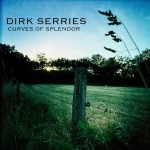
"Curves of Splendor" sounds like the sort of title that might come with its own incense, a photograph of a mountain nobody has actually climbed and instructions to breathe deeply while pretending not to think about the electricity bill. Dirk Serries, fortunately, is too experienced a musician to reduce serenity to lifestyle decoration. On "Curves of Splendor", his fifth solo release for Projekt, tranquillity is not presented as an escape hatch but as something constructed patiently, tone by tone, from the unstable physical properties of an electric guitar and a handful of effects.
Serries has spent more than four decades testing what a limited vocabulary can actually contain. Beginning in the experimental underground of the 1980s and developing the celebrated Vidna Obmana project into one of the better-known names in European ambient music, he eventually abandoned that moniker in 2007. His later work under his own name, including the "Streams of Consciousness" series, has increasingly concentrated on the guitar as a source of sustained harmonic movement. Rather than treating the instrument as a vehicle for riffs, solos or conventional melody, Serries uses it almost as a generating surface, allowing tones to overlap, reinforce one another and gradually acquire different emotional weights.
That approach is immediately apparent in "Destination Rewind". The title implies movement backwards, but the music refuses anything so efficient as actual time travel. A low, melancholy resonance establishes itself and then seems to inspect its own surroundings. Additional tones appear without announcing themselves as events, subtly modifying the harmonic temperature. The piece does not progress by accumulating conventional musical information. Instead, its changes are perceptual: a tone that initially seems distant becomes suddenly intimate; a stable chord reveals a faint internal agitation; what appeared to be a background layer turns out to have been doing most of the emotional work all along.
There is considerable discipline in this apparent simplicity. Anyone can sustain a guitar note. Doing so for twelve minutes while keeping the listener aware of minute changes in colour is another matter. Serries understands that repetition becomes interesting when the ear is given a reason to keep checking whether anything has changed. The answer is usually yes, although sometimes the change is so slight that the listener feels almost complicit in discovering it.
"Slowly Wired" is more obviously concerned with the electrical character of the instrument. Its harmonics gather in overlapping strata, producing a sensation of motion without requiring a beat. The title is almost comically accurate: the guitar seems to be connected to some enormous circuit whose voltage has been turned down sufficiently for us to hear the wiring rather than the fireworks. Serries' effects do not decorate the guitar from the outside. They alter its identity, allowing a recognisable instrument to become a collection of resonances whose origin remains just visible enough to keep the music tactile.
This is an important distinction in an era when ambient music can too easily become indistinguishable from a beautifully photographed productivity app. "Curves of Splendor" has warmth, but it does not confuse warmth with blandness. Its harmonic language contains small frictions and ambiguities, and the brighter passages retain enough density to avoid becoming sonic wallpaper. The optimism in the record is therefore more convincing because it has not been achieved by simply deleting every darker shade.
The twelve-minute "A Curve of Splendor" develops that idea with particular patience. Its layers seem to bend around one another rather than move toward a destination, creating a sensation of continuous curvature. There is no dramatic arrival because the point is not arrival. Serries is interested in what happens when a sound remains present long enough for its physical character to become perceptible. Harmonics shimmer, tones thicken and recede, and the boundaries between foreground and background become pleasantly unreliable.
This is where the album's title starts to make more sense. The “curves” are not merely melodic or spatial. They describe the way the music changes without breaking its continuity. A chord can brighten without becoming a new chord; a drone can acquire tension without turning into a climax; a familiar interval can suddenly seem larger because the surrounding frequencies have shifted. Serries makes these almost microscopic adjustments carry the expressive burden normally assigned to melody, rhythm and dramatic structure.
Then comes "Oblivion Serenade", occupying more than half an hour and effectively changing the scale of the entire album. Thirty-three minutes is enough time for the listener's usual impatience to begin making administrative inquiries, but the piece has little interest in satisfying it. Instead, it establishes a broad field in which harmonic layers slowly alter their relationships. The effect is hypnotic without relying on the blunt repetition of a conventional loop. One begins listening less for “what happens next” and more for the exact character of what is already happening.
There is something almost old-fashioned about this kind of attention. Serries asks for the listener to stay with a sound rather than consume a sequence of developments. That makes "Curves of Splendor" surprisingly resistant to background listening, despite belonging to a genre that is frequently recruited for precisely that purpose. It can certainly accompany quiet activities, but its subtleties reward a more concentrated ear. The longer one remains inside the piece, the more its apparently uniform surface starts to reveal differences in density, pitch and resonance.
The album also makes an interesting companion to Serries' earlier ambient history without functioning as a nostalgia exercise. His vidnaObmana work was strongly associated with synthesizers and elaborate electronic environments, whereas his contemporary ambient practice places the electric guitar at the centre of the process. The instrument gives the music a certain organic irregularity. Even when heavily processed, its harmonics retain traces of touch, pressure and physical vibration. The electronics do not erase the guitar's body so much as stretch it beyond its usual proportions.
That may be why the record's serenity never feels entirely weightless. Beneath the smooth surfaces there is always evidence of something being played, manipulated and listened to in real time. The music has patience because the musician has developed a remarkably detailed understanding of how little needs to be changed for a texture to become newly expressive.
"Curves of Splendor" is therefore less a collection of four ambient compositions than an extended study in controlled continuity. Its achievement lies in making duration itself expressive without turning slowness into a virtue merely because it is slowness. The four pieces occupy a narrow territory, but Serries knows that narrow territories can contain plenty of weather.
And perhaps that is the album's most useful form of optimism. It does not promise transcendence, enlightenment or any of the other expensive nouns routinely attached to ambient music. It simply demonstrates that attention can still make small things seem substantial: one harmonic overtone, one change in density, one tone arriving slightly later than expected. In a culture that keeps mistaking acceleration for progress, Serries offers something almost radical by comparison: music that has nowhere urgent to be, and consequently has time to notice what is happening.
"Curves of Splendor" does not demand that the world disappear. It merely makes it quieter for a while, which, given the current state of the species, is already a fairly respectable achievement.
Serries has spent more than four decades testing what a limited vocabulary can actually contain. Beginning in the experimental underground of the 1980s and developing the celebrated Vidna Obmana project into one of the better-known names in European ambient music, he eventually abandoned that moniker in 2007. His later work under his own name, including the "Streams of Consciousness" series, has increasingly concentrated on the guitar as a source of sustained harmonic movement. Rather than treating the instrument as a vehicle for riffs, solos or conventional melody, Serries uses it almost as a generating surface, allowing tones to overlap, reinforce one another and gradually acquire different emotional weights.
That approach is immediately apparent in "Destination Rewind". The title implies movement backwards, but the music refuses anything so efficient as actual time travel. A low, melancholy resonance establishes itself and then seems to inspect its own surroundings. Additional tones appear without announcing themselves as events, subtly modifying the harmonic temperature. The piece does not progress by accumulating conventional musical information. Instead, its changes are perceptual: a tone that initially seems distant becomes suddenly intimate; a stable chord reveals a faint internal agitation; what appeared to be a background layer turns out to have been doing most of the emotional work all along.
There is considerable discipline in this apparent simplicity. Anyone can sustain a guitar note. Doing so for twelve minutes while keeping the listener aware of minute changes in colour is another matter. Serries understands that repetition becomes interesting when the ear is given a reason to keep checking whether anything has changed. The answer is usually yes, although sometimes the change is so slight that the listener feels almost complicit in discovering it.
"Slowly Wired" is more obviously concerned with the electrical character of the instrument. Its harmonics gather in overlapping strata, producing a sensation of motion without requiring a beat. The title is almost comically accurate: the guitar seems to be connected to some enormous circuit whose voltage has been turned down sufficiently for us to hear the wiring rather than the fireworks. Serries' effects do not decorate the guitar from the outside. They alter its identity, allowing a recognisable instrument to become a collection of resonances whose origin remains just visible enough to keep the music tactile.
This is an important distinction in an era when ambient music can too easily become indistinguishable from a beautifully photographed productivity app. "Curves of Splendor" has warmth, but it does not confuse warmth with blandness. Its harmonic language contains small frictions and ambiguities, and the brighter passages retain enough density to avoid becoming sonic wallpaper. The optimism in the record is therefore more convincing because it has not been achieved by simply deleting every darker shade.
The twelve-minute "A Curve of Splendor" develops that idea with particular patience. Its layers seem to bend around one another rather than move toward a destination, creating a sensation of continuous curvature. There is no dramatic arrival because the point is not arrival. Serries is interested in what happens when a sound remains present long enough for its physical character to become perceptible. Harmonics shimmer, tones thicken and recede, and the boundaries between foreground and background become pleasantly unreliable.
This is where the album's title starts to make more sense. The “curves” are not merely melodic or spatial. They describe the way the music changes without breaking its continuity. A chord can brighten without becoming a new chord; a drone can acquire tension without turning into a climax; a familiar interval can suddenly seem larger because the surrounding frequencies have shifted. Serries makes these almost microscopic adjustments carry the expressive burden normally assigned to melody, rhythm and dramatic structure.
Then comes "Oblivion Serenade", occupying more than half an hour and effectively changing the scale of the entire album. Thirty-three minutes is enough time for the listener's usual impatience to begin making administrative inquiries, but the piece has little interest in satisfying it. Instead, it establishes a broad field in which harmonic layers slowly alter their relationships. The effect is hypnotic without relying on the blunt repetition of a conventional loop. One begins listening less for “what happens next” and more for the exact character of what is already happening.
There is something almost old-fashioned about this kind of attention. Serries asks for the listener to stay with a sound rather than consume a sequence of developments. That makes "Curves of Splendor" surprisingly resistant to background listening, despite belonging to a genre that is frequently recruited for precisely that purpose. It can certainly accompany quiet activities, but its subtleties reward a more concentrated ear. The longer one remains inside the piece, the more its apparently uniform surface starts to reveal differences in density, pitch and resonance.
The album also makes an interesting companion to Serries' earlier ambient history without functioning as a nostalgia exercise. His vidnaObmana work was strongly associated with synthesizers and elaborate electronic environments, whereas his contemporary ambient practice places the electric guitar at the centre of the process. The instrument gives the music a certain organic irregularity. Even when heavily processed, its harmonics retain traces of touch, pressure and physical vibration. The electronics do not erase the guitar's body so much as stretch it beyond its usual proportions.
That may be why the record's serenity never feels entirely weightless. Beneath the smooth surfaces there is always evidence of something being played, manipulated and listened to in real time. The music has patience because the musician has developed a remarkably detailed understanding of how little needs to be changed for a texture to become newly expressive.
"Curves of Splendor" is therefore less a collection of four ambient compositions than an extended study in controlled continuity. Its achievement lies in making duration itself expressive without turning slowness into a virtue merely because it is slowness. The four pieces occupy a narrow territory, but Serries knows that narrow territories can contain plenty of weather.
And perhaps that is the album's most useful form of optimism. It does not promise transcendence, enlightenment or any of the other expensive nouns routinely attached to ambient music. It simply demonstrates that attention can still make small things seem substantial: one harmonic overtone, one change in density, one tone arriving slightly later than expected. In a culture that keeps mistaking acceleration for progress, Serries offers something almost radical by comparison: music that has nowhere urgent to be, and consequently has time to notice what is happening.
"Curves of Splendor" does not demand that the world disappear. It merely makes it quieter for a while, which, given the current state of the species, is already a fairly respectable achievement.
Mats Äleklint & Sten Sandell: Airflow

Artist: Mats Äleklint & Sten Sandell (@)
Title: Airflow
Format: CD & 12" + Download
Label: Aleklint Records
Rated:
Title: Airflow
Format: CD & 12" + Download
Label: Aleklint Records
Rated:
The title "Airflow" sounds almost too sensible for a record involving Mats Äleklint, Sten Sandell and a church organ. Air is, after all, the basic requirement of both instruments: the trombone needs a player's breath, the organ needs a mechanism to push air through pipes. But on this album air is not merely the invisible employee doing the actual work behind the scenes. It becomes the thing being shaped, stretched, interrupted and occasionally made to sound as though it has developed opinions.
Recorded at the Church of Revelation in Saltsjöbaden on March 2nd, 2026, "Airflow" contains six entirely improvised pieces, with Äleklint on trombone and Sandell on pipe organ. The recording was made, mixed and mastered by Äleklint himself, and the circumstances matter. There is no elaborate ensemble architecture here, no rhythm section to provide diplomatic relations between the two protagonists, and no predetermined composition waiting patiently underneath the improvisation. Instead, the music depends almost entirely on how accurately two experienced musicians can sense what the other is doing.
That is hardly an inexperienced pairing. Äleklint has spent decades moving between free improvisation, jazz, large ensembles and projects such as Angles and Fire! Orchestra, while working with figures ranging from Carla Bley and Dave Holland to Paal Nilssen-Love and Mats Gustafsson. Sandell has an equally formidable history, both as a member of Gush and through collaborations with Evan Parker, Sven-Åke Johansson, Paal Nilssen-Love and many others. He is also a composer whose work extends into voice, electronics, text and visual art. Their familiarity is therefore not the interesting part. The interesting part is what they choose to do with it.
"Fanfare" begins by making the trombone sound almost excessively human. Äleklint's breath produces attacks that can be abrupt, grainy or strained, while Sandell gradually establishes the organ's much larger reservoir of resonance. Yet the organ does not simply become an imposing background. It answers, interrupts and changes the apparent scale of what the trombone is doing. The two instruments initially seem to occupy different physical universes, only to discover that their sounds can meet surprisingly close to the same point.
"State of Mind" reduces the rhetoric and concentrates the listening. It is one of the album's more revealing moments because very little needs to happen for the relationship to remain compelling. A sustained organ tone can alter the perceived pitch of the trombone; a small change in Äleklint's embouchure can make the surrounding resonance suddenly feel unstable. Improvisation here is less about spontaneous invention than about extremely quick adjustments to changing circumstances.
The longer "All Aboard" develops this principle without rushing toward some grand climax. The title might suggest departure, movement and a timetable, but the music has no interest in keeping railway time. Its pace is patient, and the tension comes from the changing behaviour of the sounds themselves. Sandell can make the organ seem almost static while its internal colours continue shifting, whereas Äleklint's slide allows him to occupy the unstable territory between fixed pitches. The contrast gives the piece an unusual sense of elasticity.
There is something particularly fascinating about the organ in this context because it is both an instrument and a building-sized proposition. A trombone is carried into a room and immediately depends on the body of its player. A pipe organ remains there, occupying architecture, waiting for somebody to decide which of its enormous possibilities should become audible. Sandell knows how to exploit that disproportion without allowing the organ to win simply because it has more cubic metres.
"Broken Machine" makes the physical mechanics more conspicuous. The sounds become harder, sharper and less obviously instrumental, with the organ acquiring percussive and pneumatic qualities while Äleklint manipulates the trombone into rasping, muted and fractured forms. The title becomes almost literal without becoming descriptive: mechanisms seem to be revealing their joints. Yet there is humour in the situation too. These are two highly sophisticated musicians apparently spending several minutes investigating how much damage can be done to two perfectly respectable instruments without actually breaking either of them.
"Meeting Points", Äleklint's sole individually credited composition on the record, is more fragile. The trombone can suddenly sound intimate, almost vocal, while Sandell chooses colours that reduce the organ's monumental reputation to something thinner and more elusive. It is perhaps the clearest demonstration that "Airflow" is not simply an exercise in weight. The album understands that a large sound is not necessarily a powerful one, and that restraint can make resonance more conspicuous rather than less.
The final "Alloy" brings the album's central relationship into especially sharp focus. The word suggests combination, but also material transformation: different substances retaining their identities while producing something that neither could have produced alone. That is close to what happens throughout the record. Äleklint and Sandell never quite disappear into a single sound, despite occasionally approaching that effect. Their individual timbres remain perceptible, but the listener becomes increasingly interested in the boundary between them.
This is also where the church setting proves more than convenient acoustics. The organ inevitably carries centuries of cultural baggage, from sacred music to grand concert repertoire, while the trombone arrives with an entirely different history of military bands, jazz, popular music and experimental improvisation. "Airflow" does not attempt to reconcile those histories or turn them into some tasteful ecumenical meeting. It simply puts them in the same room and allows their physical properties to negotiate the consequences.
The most successful free improvisation does not necessarily sound free. It can sound remarkably precise because the musicians are responding with enough speed and attention to make uncertainty itself structurally useful. That is what gives "Airflow" its character. The music never feels as though Äleklint and Sandell are searching for a predetermined destination, but neither does it wander aimlessly. Each piece develops through accumulated decisions, with the players repeatedly testing how much tension a sound can carry before it needs to change.
There is also something quietly generous about the album's refusal to over-explain itself. The premise is simple: trombone, organ, air, room, six improvisations. Human beings have spent centuries finding increasingly complicated ways of making music, and then occasionally somebody remembers that two people breathing into things can still be enough.
"Airflow" is one of those occasions. Its real achievement is not that the trombone and organ sometimes become difficult to distinguish. It is that they remain unmistakably different while learning, piece by piece, how to inhabit the same acoustic reality. The music does not dissolve the distance between them. It makes that distance productive.
Recorded at the Church of Revelation in Saltsjöbaden on March 2nd, 2026, "Airflow" contains six entirely improvised pieces, with Äleklint on trombone and Sandell on pipe organ. The recording was made, mixed and mastered by Äleklint himself, and the circumstances matter. There is no elaborate ensemble architecture here, no rhythm section to provide diplomatic relations between the two protagonists, and no predetermined composition waiting patiently underneath the improvisation. Instead, the music depends almost entirely on how accurately two experienced musicians can sense what the other is doing.
That is hardly an inexperienced pairing. Äleklint has spent decades moving between free improvisation, jazz, large ensembles and projects such as Angles and Fire! Orchestra, while working with figures ranging from Carla Bley and Dave Holland to Paal Nilssen-Love and Mats Gustafsson. Sandell has an equally formidable history, both as a member of Gush and through collaborations with Evan Parker, Sven-Åke Johansson, Paal Nilssen-Love and many others. He is also a composer whose work extends into voice, electronics, text and visual art. Their familiarity is therefore not the interesting part. The interesting part is what they choose to do with it.
"Fanfare" begins by making the trombone sound almost excessively human. Äleklint's breath produces attacks that can be abrupt, grainy or strained, while Sandell gradually establishes the organ's much larger reservoir of resonance. Yet the organ does not simply become an imposing background. It answers, interrupts and changes the apparent scale of what the trombone is doing. The two instruments initially seem to occupy different physical universes, only to discover that their sounds can meet surprisingly close to the same point.
"State of Mind" reduces the rhetoric and concentrates the listening. It is one of the album's more revealing moments because very little needs to happen for the relationship to remain compelling. A sustained organ tone can alter the perceived pitch of the trombone; a small change in Äleklint's embouchure can make the surrounding resonance suddenly feel unstable. Improvisation here is less about spontaneous invention than about extremely quick adjustments to changing circumstances.
The longer "All Aboard" develops this principle without rushing toward some grand climax. The title might suggest departure, movement and a timetable, but the music has no interest in keeping railway time. Its pace is patient, and the tension comes from the changing behaviour of the sounds themselves. Sandell can make the organ seem almost static while its internal colours continue shifting, whereas Äleklint's slide allows him to occupy the unstable territory between fixed pitches. The contrast gives the piece an unusual sense of elasticity.
There is something particularly fascinating about the organ in this context because it is both an instrument and a building-sized proposition. A trombone is carried into a room and immediately depends on the body of its player. A pipe organ remains there, occupying architecture, waiting for somebody to decide which of its enormous possibilities should become audible. Sandell knows how to exploit that disproportion without allowing the organ to win simply because it has more cubic metres.
"Broken Machine" makes the physical mechanics more conspicuous. The sounds become harder, sharper and less obviously instrumental, with the organ acquiring percussive and pneumatic qualities while Äleklint manipulates the trombone into rasping, muted and fractured forms. The title becomes almost literal without becoming descriptive: mechanisms seem to be revealing their joints. Yet there is humour in the situation too. These are two highly sophisticated musicians apparently spending several minutes investigating how much damage can be done to two perfectly respectable instruments without actually breaking either of them.
"Meeting Points", Äleklint's sole individually credited composition on the record, is more fragile. The trombone can suddenly sound intimate, almost vocal, while Sandell chooses colours that reduce the organ's monumental reputation to something thinner and more elusive. It is perhaps the clearest demonstration that "Airflow" is not simply an exercise in weight. The album understands that a large sound is not necessarily a powerful one, and that restraint can make resonance more conspicuous rather than less.
The final "Alloy" brings the album's central relationship into especially sharp focus. The word suggests combination, but also material transformation: different substances retaining their identities while producing something that neither could have produced alone. That is close to what happens throughout the record. Äleklint and Sandell never quite disappear into a single sound, despite occasionally approaching that effect. Their individual timbres remain perceptible, but the listener becomes increasingly interested in the boundary between them.
This is also where the church setting proves more than convenient acoustics. The organ inevitably carries centuries of cultural baggage, from sacred music to grand concert repertoire, while the trombone arrives with an entirely different history of military bands, jazz, popular music and experimental improvisation. "Airflow" does not attempt to reconcile those histories or turn them into some tasteful ecumenical meeting. It simply puts them in the same room and allows their physical properties to negotiate the consequences.
The most successful free improvisation does not necessarily sound free. It can sound remarkably precise because the musicians are responding with enough speed and attention to make uncertainty itself structurally useful. That is what gives "Airflow" its character. The music never feels as though Äleklint and Sandell are searching for a predetermined destination, but neither does it wander aimlessly. Each piece develops through accumulated decisions, with the players repeatedly testing how much tension a sound can carry before it needs to change.
There is also something quietly generous about the album's refusal to over-explain itself. The premise is simple: trombone, organ, air, room, six improvisations. Human beings have spent centuries finding increasingly complicated ways of making music, and then occasionally somebody remembers that two people breathing into things can still be enough.
"Airflow" is one of those occasions. Its real achievement is not that the trombone and organ sometimes become difficult to distinguish. It is that they remain unmistakably different while learning, piece by piece, how to inhabit the same acoustic reality. The music does not dissolve the distance between them. It makes that distance productive.