
Browse by Genre
Industrial Music / Industrial Metal / Aggro Industrial / Electro Metal
Industrial Noise / Power Noise / Harsh Noise
Synth Pop / Electro Pop / Synth-Electronica
Techno / Trance / Goa / Drum'n'Bass / Jungle / Tribal / Trip-Hop
Ambient / Electronica / Ethereal / Dub / Soundscapes / Abstract
Experimental / Avantgarde / Weird & Wired / Glitch / Noise / Field Recording
Dark / Gothic / Wave / New Wave / Dark Wave / Industrial Gothic
New Music / Downtown / Avantgarde Jazz / New Classical / World
Search Reviews
Music Reviews
Microtub: Thin Peaks

Let’s be honest - if you see "microtonal tuba trio" and your first thought is, "Where can I get this as a ringtone?", you’re probably lying. But "Thin Peaks" - the latest release from "Microtub" (yes, a group whose entire raison d'être is stretching the sonic possibilities of tubas) - demands more than a snicker or a curious glance. This is a record that requires deep listening, patience, and, quite possibly, a reimagining of what music even "is". I’m only halfway kidding.
Microtub’s "Thin Peaks" is an exercise in exploring the full timbral potential of the tuba, a traditionally bulky brass instrument here wielded with a deftness that transforms its sound from the comically robust into something like a meditative force of nature. Across the album’s two extended compositions, “Andersabo” and the title track, we’re treated to a study of half-valve techniques, where dissonance and consonance ebb and flow like mist over mountains. The album feels less like music in the conventional sense and more like an abstract, slow-motion conversation between tectonic plates.
"Andersabo" is divided into four parts, each based on a different half-valve combination, which essentially means that the tubas are being played “wrong” on purpose - an approach that somehow works. It’s like they’ve unlocked a secret, barely noticeable set of frequencies and vibrations that most of us would never think to listen for. Part 1 opens like a subdued foghorn across a glassy bay, and from there, the piece subtly mutates, occasionally surprising with moments of what might be called harmony - if harmony is the sensation of standing inside a giant bell as it vibrates.
By the time you reach Part 3, a particular alchemy takes place where it’s hard to distinguish who’s playing what. The result is a rich, microtonal soup of sonic fragments. "Andersabo" closes with Part 4, where consonance peeks through like sunlight on a cold, cloudy day - ephemeral, haunting, and oddly satisfying in its simplicity. It almost makes you wonder: is this what mountains hum when we’re not listening?
And then we come to "Thin Peaks", the 17-minute monolith of the album. Here, the trio takes what they’ve been hinting at in "Andersabo" and stretches it out over a single, minimalist journey. Tubas don’t just play notes here; they breathe, creak, and occasionally seem to meditate. The half-valve technique results in long, slow pitches that drift in and out of tune, like an aural mirage. The entire track feels like a sonic hallucination, swaying between the mechanical and the mystical. You might find yourself thinking, "Is this music?" - to which Microtub would probably reply with a smug, knowing smile, because that’s entirely the point.
There’s something almost existential about "Thin Peaks". The way the notes hover in space and decay at their own pace feels less like composition and more like a conversation between the players and the natural resonance of the space they’re in - recorded, fittingly, at the "Henie Onstad Kunstsenter", a venue known for its reverberant, cathedral-like acoustic properties. You can almost "hear" the room breathing back at them, as if the tubas have unlocked some hidden voice trapped within its walls.
The most impressive thing about "Thin Peaks" is how it can sound both utterly foreign and completely organic at the same time. It’s avant-garde without being pretentious, experimental without losing a sense of grounding - though that grounding is often subterranean, like listening to the Earth's core through a brass filter. And while it may be billed as “microtonal tuba music”, don’t be fooled - this album exists somewhere far beyond the normal constraints of genre. In fact, listening to it feels like the antithesis of scrolling through endless Spotify playlists or YouTube mixes. It’s slow, deliberate, and forces you to "be present".
For fans of the avant-garde, experimental, and microtonal music scenes, "Thin Peaks" will undoubtedly feel like a revelation - something akin to discovering a new color. For others, it might come across as alien, baffling, or even nonsensical at first. But that’s exactly why it’s worth a listen. The trio - Robin Hayward, Peder Simonsen, and Martin Taxt - are masters of their niche, making the case that even the most cumbersome of instruments can unlock realms of delicate, intricate beauty when approached with enough curiosity and restraint.
In comparison to other experimentalists like Ellen Arkbro or Catherine Lamb, whose work similarly challenges traditional Western harmonic ideas, Microtub pushes even further, using the physical limitations of the tuba to redefine what we think of as musicality. It’s not about melody or rhythm here; it’s about resonance, texture, and, most importantly, space. Much like their past works ("Bite of the Orange" or "Chronic Shift"), "Thin Peaks" invites listeners to reconsider what they think a musical instrument can do.
So, is "Thin Peaks" the kind of album you’ll blast during a workout or put on at a party? God, no. But for those rare moments when you want to slow down, let go of expectations, and immerse yourself in something wholly other, it’s a strangely compelling experience - one that lingers long after the final note fades. Think of it as the perfect soundtrack for an afternoon spent staring at a particularly fascinating rock and don't ask yourself "Who killed Laura Pulmer?"!
Microtub’s "Thin Peaks" is an exercise in exploring the full timbral potential of the tuba, a traditionally bulky brass instrument here wielded with a deftness that transforms its sound from the comically robust into something like a meditative force of nature. Across the album’s two extended compositions, “Andersabo” and the title track, we’re treated to a study of half-valve techniques, where dissonance and consonance ebb and flow like mist over mountains. The album feels less like music in the conventional sense and more like an abstract, slow-motion conversation between tectonic plates.
"Andersabo" is divided into four parts, each based on a different half-valve combination, which essentially means that the tubas are being played “wrong” on purpose - an approach that somehow works. It’s like they’ve unlocked a secret, barely noticeable set of frequencies and vibrations that most of us would never think to listen for. Part 1 opens like a subdued foghorn across a glassy bay, and from there, the piece subtly mutates, occasionally surprising with moments of what might be called harmony - if harmony is the sensation of standing inside a giant bell as it vibrates.
By the time you reach Part 3, a particular alchemy takes place where it’s hard to distinguish who’s playing what. The result is a rich, microtonal soup of sonic fragments. "Andersabo" closes with Part 4, where consonance peeks through like sunlight on a cold, cloudy day - ephemeral, haunting, and oddly satisfying in its simplicity. It almost makes you wonder: is this what mountains hum when we’re not listening?
And then we come to "Thin Peaks", the 17-minute monolith of the album. Here, the trio takes what they’ve been hinting at in "Andersabo" and stretches it out over a single, minimalist journey. Tubas don’t just play notes here; they breathe, creak, and occasionally seem to meditate. The half-valve technique results in long, slow pitches that drift in and out of tune, like an aural mirage. The entire track feels like a sonic hallucination, swaying between the mechanical and the mystical. You might find yourself thinking, "Is this music?" - to which Microtub would probably reply with a smug, knowing smile, because that’s entirely the point.
There’s something almost existential about "Thin Peaks". The way the notes hover in space and decay at their own pace feels less like composition and more like a conversation between the players and the natural resonance of the space they’re in - recorded, fittingly, at the "Henie Onstad Kunstsenter", a venue known for its reverberant, cathedral-like acoustic properties. You can almost "hear" the room breathing back at them, as if the tubas have unlocked some hidden voice trapped within its walls.
The most impressive thing about "Thin Peaks" is how it can sound both utterly foreign and completely organic at the same time. It’s avant-garde without being pretentious, experimental without losing a sense of grounding - though that grounding is often subterranean, like listening to the Earth's core through a brass filter. And while it may be billed as “microtonal tuba music”, don’t be fooled - this album exists somewhere far beyond the normal constraints of genre. In fact, listening to it feels like the antithesis of scrolling through endless Spotify playlists or YouTube mixes. It’s slow, deliberate, and forces you to "be present".
For fans of the avant-garde, experimental, and microtonal music scenes, "Thin Peaks" will undoubtedly feel like a revelation - something akin to discovering a new color. For others, it might come across as alien, baffling, or even nonsensical at first. But that’s exactly why it’s worth a listen. The trio - Robin Hayward, Peder Simonsen, and Martin Taxt - are masters of their niche, making the case that even the most cumbersome of instruments can unlock realms of delicate, intricate beauty when approached with enough curiosity and restraint.
In comparison to other experimentalists like Ellen Arkbro or Catherine Lamb, whose work similarly challenges traditional Western harmonic ideas, Microtub pushes even further, using the physical limitations of the tuba to redefine what we think of as musicality. It’s not about melody or rhythm here; it’s about resonance, texture, and, most importantly, space. Much like their past works ("Bite of the Orange" or "Chronic Shift"), "Thin Peaks" invites listeners to reconsider what they think a musical instrument can do.
So, is "Thin Peaks" the kind of album you’ll blast during a workout or put on at a party? God, no. But for those rare moments when you want to slow down, let go of expectations, and immerse yourself in something wholly other, it’s a strangely compelling experience - one that lingers long after the final note fades. Think of it as the perfect soundtrack for an afternoon spent staring at a particularly fascinating rock and don't ask yourself "Who killed Laura Pulmer?"!
Mads Emil Nielsen + Chromacolor: Heartbeats
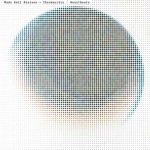
Artist: Mads Emil Nielsen + Chromacolor (@)
Title: Heartbeats
Format: 10"
Label: arbitrary (@)
Rated:

Title: Heartbeats
Format: 10"
Label: arbitrary (@)
Rated:
Mads Emil Nielsen's latest release "Heartbeats" is an exercise in contradiction. It’s both incredibly simple and intricately complex, disarmingly intimate yet meticulously crafted. Presented as a 10” vinyl in collaboration with German sound artist Hanno Leichtmann (aka Chromacolor), this two-sided sonic experiment feels like the audio equivalent of trying to find a heartbeat within a machine: cold, sterile, yet somehow pulsating with life.
The first thing you notice about Nielsen's "Heartbeats" is its refusal to announce itself. The track, born out of loops and sine waves from his modular synth, is like a sonic blueprint - an audio sketch that feels deliberately incomplete but somehow perfect in its minimalism. Imagine listening to the hum of a city from a distance or hearing the soft murmurs of machinery inside a factory. There’s a certain calm in the repetition of these granular pulses, the way they float in and out, subtly layered with deep, organ-like tones and synthesized bass. It’s the kind of piece that could easily soundtrack the quiet, transitional moments of life, where time stretches out and contracts in curious ways.
But don't get too comfortable. Nielsen’s original "Heartbeats" is minimalist to the core, almost to the point where you might ask, "Is this it?" Yes, that "is" it. Nielsen offers us the barest sketch of a heartbeat, a soft, sinewy pulse that is more felt than heard. It’s a meditation on restraint, where every sound has space to breathe, yet somehow, you’re always aware that something more is lurking just beneath the surface.
Which is where Hanno Leichtmann steps in.
On Side B, under his "Chromacolor" moniker, Leichtmann takes Nielsen's careful, quiet composition and says, “Alright, now let’s "really" listen to that heartbeat.” His remix doesn’t just remix - it remakes the track, turning it inside out, expanding its textural palette while preserving its original pulse. Leichtmann adds layers of Fender Rhodes and Moog bass, grounding the once-abstract pulses with real-world weight. Suddenly, that machine heartbeat has a body - one with a slightly funkier soul.
The remix becomes a swirling combination of acoustic and electronic textures, with cello contributions from "Anthea Caddy" and haunting vocals from "Annie Garlid" weaving in and out. The cello is a brilliant addition, grounding the remix with a sense of organic warmth, while Garlid’s voice brings a spectral, otherworldly quality. It’s as if Leichtmann took Nielsen’s sparse blueprint and invited a small, secret orchestra to flesh it out, creating a stark contrast to the solo meditation of the A-side.
But what really sets the remix apart is the sense of unpredictability Leichtmann introduces. While Nielsen’s original piece is all about precision and control, Leichtmann’s version is more organic, allowing the piece to drift and swell in unexpected ways. It feels as though we’ve moved from the clean lines of an architect’s sketch to the messy beauty of an actual building, complete with creaking floors and whispered conversations.
The combination of Nielsen’s minimalist approach with Leichtmann’s more expansive remix feels like a sonic tug-of-war between two musical philosophies - one obsessed with reduction and purity, the other more interested in layers, texture, and contrast. And somehow, despite their differences, they complement each other perfectly. It’s the kind of release that rewards multiple listens, where the starkness of the original becomes even more profound after hearing the remix, and vice versa.
The fact that this 10” release is physically beautiful doesn’t hurt either. With artwork by "Karel Martens", the tactile pleasure of holding this inside-out sleeve, printed in CYK + Pantone, is as satisfying as the music itself. Arbitrary continues to deliver on its promise of making limited-edition vinyl releases feel like special, artful objects, and "Heartbeats" is no exception.
So, where does that leave us? Is "Heartbeats" an essential listen? It depends on what you’re looking for. If you’re in the mood for meditative minimalism, Nielsen’s original is a masterclass in sonic restraint. If you want something that pushes those boundaries into more visceral, tactile territory, Leichtmann’s remix is where the magic happens. Together, they create a beautiful, evolving dialogue - one that speaks to the power of collaboration and the endless possibilities of sound.
In the end, "Heartbeats" offers two distinct but interconnected visions: one of minimal, machine-like precision, and another of lush, human warmth. And somewhere in the middle of those two pulses, you’ll find the heart of this record.
The first thing you notice about Nielsen's "Heartbeats" is its refusal to announce itself. The track, born out of loops and sine waves from his modular synth, is like a sonic blueprint - an audio sketch that feels deliberately incomplete but somehow perfect in its minimalism. Imagine listening to the hum of a city from a distance or hearing the soft murmurs of machinery inside a factory. There’s a certain calm in the repetition of these granular pulses, the way they float in and out, subtly layered with deep, organ-like tones and synthesized bass. It’s the kind of piece that could easily soundtrack the quiet, transitional moments of life, where time stretches out and contracts in curious ways.
But don't get too comfortable. Nielsen’s original "Heartbeats" is minimalist to the core, almost to the point where you might ask, "Is this it?" Yes, that "is" it. Nielsen offers us the barest sketch of a heartbeat, a soft, sinewy pulse that is more felt than heard. It’s a meditation on restraint, where every sound has space to breathe, yet somehow, you’re always aware that something more is lurking just beneath the surface.
Which is where Hanno Leichtmann steps in.
On Side B, under his "Chromacolor" moniker, Leichtmann takes Nielsen's careful, quiet composition and says, “Alright, now let’s "really" listen to that heartbeat.” His remix doesn’t just remix - it remakes the track, turning it inside out, expanding its textural palette while preserving its original pulse. Leichtmann adds layers of Fender Rhodes and Moog bass, grounding the once-abstract pulses with real-world weight. Suddenly, that machine heartbeat has a body - one with a slightly funkier soul.
The remix becomes a swirling combination of acoustic and electronic textures, with cello contributions from "Anthea Caddy" and haunting vocals from "Annie Garlid" weaving in and out. The cello is a brilliant addition, grounding the remix with a sense of organic warmth, while Garlid’s voice brings a spectral, otherworldly quality. It’s as if Leichtmann took Nielsen’s sparse blueprint and invited a small, secret orchestra to flesh it out, creating a stark contrast to the solo meditation of the A-side.
But what really sets the remix apart is the sense of unpredictability Leichtmann introduces. While Nielsen’s original piece is all about precision and control, Leichtmann’s version is more organic, allowing the piece to drift and swell in unexpected ways. It feels as though we’ve moved from the clean lines of an architect’s sketch to the messy beauty of an actual building, complete with creaking floors and whispered conversations.
The combination of Nielsen’s minimalist approach with Leichtmann’s more expansive remix feels like a sonic tug-of-war between two musical philosophies - one obsessed with reduction and purity, the other more interested in layers, texture, and contrast. And somehow, despite their differences, they complement each other perfectly. It’s the kind of release that rewards multiple listens, where the starkness of the original becomes even more profound after hearing the remix, and vice versa.
The fact that this 10” release is physically beautiful doesn’t hurt either. With artwork by "Karel Martens", the tactile pleasure of holding this inside-out sleeve, printed in CYK + Pantone, is as satisfying as the music itself. Arbitrary continues to deliver on its promise of making limited-edition vinyl releases feel like special, artful objects, and "Heartbeats" is no exception.
So, where does that leave us? Is "Heartbeats" an essential listen? It depends on what you’re looking for. If you’re in the mood for meditative minimalism, Nielsen’s original is a masterclass in sonic restraint. If you want something that pushes those boundaries into more visceral, tactile territory, Leichtmann’s remix is where the magic happens. Together, they create a beautiful, evolving dialogue - one that speaks to the power of collaboration and the endless possibilities of sound.
In the end, "Heartbeats" offers two distinct but interconnected visions: one of minimal, machine-like precision, and another of lush, human warmth. And somewhere in the middle of those two pulses, you’ll find the heart of this record.
Etienne Nillesen: en

Here’s the thing about "en", Etienne Nillesen’s latest aural odyssey: it’s less an album and more of a doctoral dissertation on how to make a snare drum meditate on the meaning of life. The record, one long 32-minute piece, feels like the drum woke up one morning, said “I don’t want to be the punchline in another rock drummer’s joke,” and decided to show the world what it’s "really" made of.
Nillesen, a virtuoso of minimalism with a snare drum as his only companion, takes this instrument - typically relegated to keeping time, adding punch, or simply getting bashed - and transforms it into something akin to a philosophical tool. He approaches it with a level of patience and nuance that borders on the obsessive. This isn’t just drumming; this is sonic alchemy, as if he’s distilling the drum’s essence into something so ethereal, so esoteric, that the instrument seems to transcend itself.
Let’s break down how that works: Nillesen’s playing is simultaneously a masterclass in extended technique and a zen-like exercise in restraint. He doesn’t hit the snare so much as he "caresses" it, coaxing out overtones, harmonics, and textures you’d swear weren’t possible from a simple drumhead. With the use of circular motions, a granular drum skin, and something as delicate as a thin stick, he creates sustained pitches that float in the air like sound waves trapped in a dream. It’s a bit like listening to a snare drum have an existential monologue, one slow, deliberate syllable at a time.
But does it groove? Does it bang? Oh, absolutely not. There’s not a groove in sight. No foot-tapping here, my friend. Instead, Nillesen seems more interested in the "silence" between the sounds. To borrow from Nate Wooley’s beautifully poetic liner notes, this album is filled with that kind of rich, “untapped emotional material” just beneath the surface. Silence isn’t just an absence here; it’s the co-star. The drum speaks, then falls into moments of silence so rich they almost feel like a second voice. It’s the kind of record where, at any given moment, you’re either fully entranced or you’ve completely forgotten it’s playing. Either reaction is valid.
So what does "en" actually "sound" like? Imagine: You’re in a darkened room, somewhere between sleep and wakefulness. The air is thick with tension, and in the corner, a snare drum starts to hum - not loudly, but just enough that you know it’s there. Every now and then, a stick grazes its surface, and with each soft stroke, a web of overtones unfurls in the distance. The sound is deliberate, sparse, and pregnant with meaning. Each subtle variation in texture feels like a new chapter in the snare drum’s slow-motion revelation.
It’s not an album to enjoy in the conventional sense - it’s an album to "experience". This is music that demands attention, rewarding only those who are willing to give themselves over to it entirely. There’s no melody to latch onto, no rhythm to carry you forward, only the sound of the drum revealing itself layer by layer, breath by breath. In some ways, it feels like a minimalist companion to the works of radical improvisers like Axel Dörner or Nate Wooley (both of whom Nillesen has collaborated with). It’s not about showing off technique; it’s about showing you how deep this rabbit hole goes.
Of course, if you’re the kind of listener who needs a hook or even just a recognizable beat, you might struggle to appreciate "en". But if you’re in the mood for something that challenges the boundaries of what music can be - something that turns the simple act of listening into a kind of meditative practice - then Nillesen’s snare drum will take you on a journey that’s surprisingly emotional for an instrument most commonly associated with rock ‘n’ roll aggression.
And let’s talk about that recording, shall we? Captured live at the Chamber Music Hall in Cologne, this single-take performance is pristine, thanks to the work of Hendrik Manook and the team at Deutschlandfunk. There’s an almost tactile sense of space here - the air around the drum feels alive, the room itself becoming an integral part of the performance. The sound is so precise that you can almost "feel" the texture of the drum skin as Nillesen works his magic.
In the end, "en" is a profound, idiosyncratic work that rewards patient listeners with its complexity and depth. It’s an album that transforms the humble snare drum into something you didn’t know it could be: an instrument of melody, harmony, and even silence. And it’s silence, as much as sound, that leaves the deepest impression here.
So, if you’re up for the challenge, if you’re willing to sit in that silence and hear what Nillesen is really trying to say, "en" might just be the most revelatory snare drum solo you’ll ever hear. Just don’t expect it to go "boom bap". Expect it to whisper its way into your psyche instead.
Nillesen, a virtuoso of minimalism with a snare drum as his only companion, takes this instrument - typically relegated to keeping time, adding punch, or simply getting bashed - and transforms it into something akin to a philosophical tool. He approaches it with a level of patience and nuance that borders on the obsessive. This isn’t just drumming; this is sonic alchemy, as if he’s distilling the drum’s essence into something so ethereal, so esoteric, that the instrument seems to transcend itself.
Let’s break down how that works: Nillesen’s playing is simultaneously a masterclass in extended technique and a zen-like exercise in restraint. He doesn’t hit the snare so much as he "caresses" it, coaxing out overtones, harmonics, and textures you’d swear weren’t possible from a simple drumhead. With the use of circular motions, a granular drum skin, and something as delicate as a thin stick, he creates sustained pitches that float in the air like sound waves trapped in a dream. It’s a bit like listening to a snare drum have an existential monologue, one slow, deliberate syllable at a time.
But does it groove? Does it bang? Oh, absolutely not. There’s not a groove in sight. No foot-tapping here, my friend. Instead, Nillesen seems more interested in the "silence" between the sounds. To borrow from Nate Wooley’s beautifully poetic liner notes, this album is filled with that kind of rich, “untapped emotional material” just beneath the surface. Silence isn’t just an absence here; it’s the co-star. The drum speaks, then falls into moments of silence so rich they almost feel like a second voice. It’s the kind of record where, at any given moment, you’re either fully entranced or you’ve completely forgotten it’s playing. Either reaction is valid.
So what does "en" actually "sound" like? Imagine: You’re in a darkened room, somewhere between sleep and wakefulness. The air is thick with tension, and in the corner, a snare drum starts to hum - not loudly, but just enough that you know it’s there. Every now and then, a stick grazes its surface, and with each soft stroke, a web of overtones unfurls in the distance. The sound is deliberate, sparse, and pregnant with meaning. Each subtle variation in texture feels like a new chapter in the snare drum’s slow-motion revelation.
It’s not an album to enjoy in the conventional sense - it’s an album to "experience". This is music that demands attention, rewarding only those who are willing to give themselves over to it entirely. There’s no melody to latch onto, no rhythm to carry you forward, only the sound of the drum revealing itself layer by layer, breath by breath. In some ways, it feels like a minimalist companion to the works of radical improvisers like Axel Dörner or Nate Wooley (both of whom Nillesen has collaborated with). It’s not about showing off technique; it’s about showing you how deep this rabbit hole goes.
Of course, if you’re the kind of listener who needs a hook or even just a recognizable beat, you might struggle to appreciate "en". But if you’re in the mood for something that challenges the boundaries of what music can be - something that turns the simple act of listening into a kind of meditative practice - then Nillesen’s snare drum will take you on a journey that’s surprisingly emotional for an instrument most commonly associated with rock ‘n’ roll aggression.
And let’s talk about that recording, shall we? Captured live at the Chamber Music Hall in Cologne, this single-take performance is pristine, thanks to the work of Hendrik Manook and the team at Deutschlandfunk. There’s an almost tactile sense of space here - the air around the drum feels alive, the room itself becoming an integral part of the performance. The sound is so precise that you can almost "feel" the texture of the drum skin as Nillesen works his magic.
In the end, "en" is a profound, idiosyncratic work that rewards patient listeners with its complexity and depth. It’s an album that transforms the humble snare drum into something you didn’t know it could be: an instrument of melody, harmony, and even silence. And it’s silence, as much as sound, that leaves the deepest impression here.
So, if you’re up for the challenge, if you’re willing to sit in that silence and hear what Nillesen is really trying to say, "en" might just be the most revelatory snare drum solo you’ll ever hear. Just don’t expect it to go "boom bap". Expect it to whisper its way into your psyche instead.
Pablo Diserens & the Ocean Comm/uni/ty: Upstream Ensemble
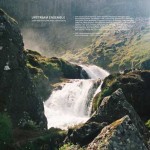
Artist: Pablo Diserens & the Ocean Comm/uni/ty (@)
Title: Upstream Ensemble
Format: Tape
Label: Forms of Minutiae
Rated:

Title: Upstream Ensemble
Format: Tape
Label: Forms of Minutiae
Rated:
"Upstream Ensemble" - or as I like to call it, the wet dream of the eco-acoustic community. Pablo Diserens has crafted an aqueous opus here, something that feels less like an album and more like the sound of the planet exhaling after a long day of dealing with humanity. If you’ve ever wanted to feel simultaneously connected to every drop of water on Earth while also questioning whether you should have just stayed dry at home, this might be your record.
Let’s start with the premise: a collaborative field recording project where "35" contributors from the ocean comm/uni/ty (what a name) sent in their wettest sounds - from humpback whale croons to the hum of submarines, from glacial melting to the gentle (and oh-so-unsettling) drip of pipes. It’s a Noah’s Ark of aquatic audio that Diserens has woven into a continuous 30-minute piece, flowing like the world’s most eco-conscious, slow-burn mixtape. But instead of bangers, we get algae photosynthesis. The audacity!
To be clear, this isn’t your typical nature sounds album - the kind you put on to feel like you’re lounging by a babbling brook, sipping herbal tea. No, this is a much more intense affair. "Upstream Ensemble" plunges you deep into the sonic ecosystems of our planet’s waterways, and spoiler: it’s not always soothing. Water, as Diserens demonstrates, is as terrifying as it is tranquil. You’ll be lulled into a false sense of serenity by a whale song only to be jolted by the industrial thrum of boat engines. Think of it as the aural version of walking barefoot in a picturesque forest, only to step on a rusty nail.
And yet, beneath the seemingly disjointed layers, there’s a profound emotional current. Diserens, with her acute sense of space and time, blends these sounds into a flowing narrative that feels as expansive as it is intimate. There are moments where you can almost feel the cold wind of glacial waters on your skin, and others where the distant mechanical hums remind you that, yes, humans are always ruining something. It’s an auditory reckoning - Diserens forces you to reckon with your own presence in this vast, liquid world. It’s like Pauline Oliveros' deep listening practice with a side of eco-anxiety.
But here’s the thing: "Upstream Ensemble" isn’t content with just "sounding" like water. No, it’s here to remind you of the politics and violence embedded in every droplet. This isn’t just an album for passive listening; it’s a political act. The juxtaposition of nature’s serene beauty with human interference is no accident. Diserens is practically yelling, in her quiet, reflective way, that we’re part of this watery web, whether we like it or not. The use of recordings from the naval industry, for instance, feels like a not-so-subtle critique of how human technology is always barging in on nature’s symphony. The oceans and rivers are alive, yes, but they’re also under siege.
The reference to Rachel Carson’s "The Edge of the Sea" and Pauline Oliveros is more than just name-dropping; it’s a nod to the lineage of artists who have used sound to explore our relationship with the environment. In this case, Diserens takes it a step further, using water as both a literal and metaphorical conduit. There’s a sense of interconnectedness here, a feeling that, just like the water cycle, we are all part of something much larger - something that flows endlessly, from the depths of the ocean to the glaciers of the Arctic. But don’t get too comfortable: this isn’t about unity and peace. The invasive hums, the sonar beeps, the industrial noise - Diserens won’t let you forget the violence we’ve done to these ecosystems.
As for the listening experience itself? It’s... an exercise in patience, let’s be real. This isn’t something you casually throw on during a dinner party (unless your guests are the kind who enjoy contemplating the collapse of ecosystems over wine). The piece demands attention and a willingness to let go of conventional musical expectations. There are no beats to hang onto, no melodies to hum along with. Instead, it’s a sprawling, organic thing that ebbs and flows like, well, water. The track is 30 minutes long, but if you’re doing it right, it should feel timeless - or like it’s lasted a small eternity.
But that’s precisely the point. "Upstream Ensemble" asks you to listen - "really" listen - to the world around you. And in that listening, there’s a kind of unsettling beauty. You hear the cries of whales and the gurgles of melting ice, and you realize: these sounds won’t be around forever. In that sense, the album isn’t just a composition - it’s a eulogy, a love letter to the planet’s waterways, tinged with the grief of knowing they’re slowly being drowned out.
In summary, "Upstream Ensemble" is not just an album. It’s a fluid, shapeshifting meditation on our relationship with water and, by extension, the Earth itself. Diserens has created something that is as beautiful as it is unsettling, a piece that resonates with ecological urgency while inviting deep contemplation. It’s a bold statement in the world of field recording and sound art, where the line between music and environment becomes as blurred as the boundary between land and sea.
So, grab a pair of good headphones, find a quiet spot, and prepare to be swept away. Just don’t expect to come back feeling dry.
Let’s start with the premise: a collaborative field recording project where "35" contributors from the ocean comm/uni/ty (what a name) sent in their wettest sounds - from humpback whale croons to the hum of submarines, from glacial melting to the gentle (and oh-so-unsettling) drip of pipes. It’s a Noah’s Ark of aquatic audio that Diserens has woven into a continuous 30-minute piece, flowing like the world’s most eco-conscious, slow-burn mixtape. But instead of bangers, we get algae photosynthesis. The audacity!
To be clear, this isn’t your typical nature sounds album - the kind you put on to feel like you’re lounging by a babbling brook, sipping herbal tea. No, this is a much more intense affair. "Upstream Ensemble" plunges you deep into the sonic ecosystems of our planet’s waterways, and spoiler: it’s not always soothing. Water, as Diserens demonstrates, is as terrifying as it is tranquil. You’ll be lulled into a false sense of serenity by a whale song only to be jolted by the industrial thrum of boat engines. Think of it as the aural version of walking barefoot in a picturesque forest, only to step on a rusty nail.
And yet, beneath the seemingly disjointed layers, there’s a profound emotional current. Diserens, with her acute sense of space and time, blends these sounds into a flowing narrative that feels as expansive as it is intimate. There are moments where you can almost feel the cold wind of glacial waters on your skin, and others where the distant mechanical hums remind you that, yes, humans are always ruining something. It’s an auditory reckoning - Diserens forces you to reckon with your own presence in this vast, liquid world. It’s like Pauline Oliveros' deep listening practice with a side of eco-anxiety.
But here’s the thing: "Upstream Ensemble" isn’t content with just "sounding" like water. No, it’s here to remind you of the politics and violence embedded in every droplet. This isn’t just an album for passive listening; it’s a political act. The juxtaposition of nature’s serene beauty with human interference is no accident. Diserens is practically yelling, in her quiet, reflective way, that we’re part of this watery web, whether we like it or not. The use of recordings from the naval industry, for instance, feels like a not-so-subtle critique of how human technology is always barging in on nature’s symphony. The oceans and rivers are alive, yes, but they’re also under siege.
The reference to Rachel Carson’s "The Edge of the Sea" and Pauline Oliveros is more than just name-dropping; it’s a nod to the lineage of artists who have used sound to explore our relationship with the environment. In this case, Diserens takes it a step further, using water as both a literal and metaphorical conduit. There’s a sense of interconnectedness here, a feeling that, just like the water cycle, we are all part of something much larger - something that flows endlessly, from the depths of the ocean to the glaciers of the Arctic. But don’t get too comfortable: this isn’t about unity and peace. The invasive hums, the sonar beeps, the industrial noise - Diserens won’t let you forget the violence we’ve done to these ecosystems.
As for the listening experience itself? It’s... an exercise in patience, let’s be real. This isn’t something you casually throw on during a dinner party (unless your guests are the kind who enjoy contemplating the collapse of ecosystems over wine). The piece demands attention and a willingness to let go of conventional musical expectations. There are no beats to hang onto, no melodies to hum along with. Instead, it’s a sprawling, organic thing that ebbs and flows like, well, water. The track is 30 minutes long, but if you’re doing it right, it should feel timeless - or like it’s lasted a small eternity.
But that’s precisely the point. "Upstream Ensemble" asks you to listen - "really" listen - to the world around you. And in that listening, there’s a kind of unsettling beauty. You hear the cries of whales and the gurgles of melting ice, and you realize: these sounds won’t be around forever. In that sense, the album isn’t just a composition - it’s a eulogy, a love letter to the planet’s waterways, tinged with the grief of knowing they’re slowly being drowned out.
In summary, "Upstream Ensemble" is not just an album. It’s a fluid, shapeshifting meditation on our relationship with water and, by extension, the Earth itself. Diserens has created something that is as beautiful as it is unsettling, a piece that resonates with ecological urgency while inviting deep contemplation. It’s a bold statement in the world of field recording and sound art, where the line between music and environment becomes as blurred as the boundary between land and sea.
So, grab a pair of good headphones, find a quiet spot, and prepare to be swept away. Just don’t expect to come back feeling dry.
Gustavo Denouard: Mysterious Wind

Oh, "Mysterious Wind", how you slyly breeze in, promising serene reflection but leaving me with the unsettling sensation that the cosmos might be too vast for my petty human concerns. Gustavo Denouard’s foray into ambient drone on his 7th studio album is as personal as it is otherworldly - offering an experience that feels like staring into the void, with the faintest hope that the void will politely look away. Spoiler: it doesn’t.
After spending years tinkering with synthesizers in rock and pop bands, Buenos Aires-based Gustavo finally ditched the middleman (aka structure) and let himself sink fully into electronic abstraction. And thank the ambient gods he did, because "Mysterious Wind" finds him delivering exactly the kind of album that Projekt Records was made for. It's filled with expansive, atmospheric drones, where each note feels like it was extracted from some haunted, wind-tossed forest in the rural Argentine wilderness. As far as metaphorical isolation goes, Denouard has set the bar high. But is this a sonic meditation on nature’s quiet power - or the soundtrack for getting lost in it? Maybe both.
The opening title track, "Mysterious Wind", clocks in at 8 minutes and 40 seconds and is pure, uncut drone. The first few moments feel like the aural equivalent of stepping into thick fog. Denouard layers his synth lines with the precision of someone who's spent countless solitary hours letting the silence speak, and in doing so, he creates an atmosphere that balances perfectly between calming and ominous. The wind metaphor is potent here - gusts of noise swell and recede, always just on the edge of being comprehensible but never quite resolving. It’s like the wind has secrets, and it’s not inclined to share them with you anytime soon.
And then, there’s “Spirits”, where Gustavo shifts gears - or rather, refuses to. The track glides forward with slow, sweeping synth pads, almost mocking the listener’s desire for anything resembling a melody. It's hypnotic in that "let's-get-lost-in-the-vibes" way that ambient music junkies crave. Think Brian Eno’s "Music for Airports" but if the airport was located in some spectral forest where no one ever boards a plane.
“Cosmic Serenity” is exactly what you think it is - except for the serenity part. The track’s soundscapes feel vast, like staring at the night sky and realizing you're less than a speck in the universe. There’s something cold here, a sense of endlessness that’s both beautiful and terrifying. This is Denouard at his most cosmic - synths float by like distant planets, and every sound feels suspended in a sort of anti-gravity. It’s gorgeous, but don't be fooled; there’s an emotional detachment that makes you feel eerily alone, like Gustavo composed this while floating in space, and you’re just catching fragments of his transmissions.
The real surprise comes with “Forest”. You might expect a nature-inspired track to feel grounded, earthy - maybe even peaceful - but not here. Denouard’s interpretation of the forest is haunted, with deep bass drones that rumble like the earth shifting beneath your feet. It’s both ominous and introspective, as if the trees themselves are watching you, silently judging your every move. And as you lose yourself in the murky, dense layers of sound, you can’t help but feel small and insignificant.
"Sky Blue" comes as a bit of a reprieve after the darker moods of the previous tracks, though "reprieve" might be pushing it. The tone is lighter - more open - but still drenched in a kind of somber, meditative calm. It's like the moment just before dawn, where the sky is just beginning to turn blue, but the weight of night hasn’t quite lifted yet. Gustavo plays with tension here, offering a glimpse of peace but keeping it just out of reach.
The album closes with “Reflection”, a track that feels like the sonic equivalent of an emotional sigh. It’s quiet, contemplative, and feels like Denouard is taking stock of everything that came before. There’s a gentle sadness here, as if the wind has finally stopped blowing, leaving nothing but silence in its wake. And maybe that’s the point - after all the sound and motion, all that’s left is you, alone with your thoughts, staring into the endless expanse of whatever Gustavo wants you to call home.
If you're looking for hooks, melodies, or any semblance of traditional song structure, "Mysterious Wind" will leave you out in the cold. But if you’re ready to confront the vastness of sound - and maybe yourself - then Gustavo Denouard has created something that’ll resonate deeply. The album's emotional and sonic palette recalls the likes of Tim Hecker, Loscil, and even Harold Budd, but with its own distinctly personal undercurrent.
Denouard’s music asks you to sit with it - to take in its hypnotic drones not as background music, but as a mirror for your own inner landscape. And while that may sound daunting, it’s also what makes "Mysterious Wind" so compelling. It’s a reminder that sometimes the wind - like life - blows hardest when you’re trying to listen.
After spending years tinkering with synthesizers in rock and pop bands, Buenos Aires-based Gustavo finally ditched the middleman (aka structure) and let himself sink fully into electronic abstraction. And thank the ambient gods he did, because "Mysterious Wind" finds him delivering exactly the kind of album that Projekt Records was made for. It's filled with expansive, atmospheric drones, where each note feels like it was extracted from some haunted, wind-tossed forest in the rural Argentine wilderness. As far as metaphorical isolation goes, Denouard has set the bar high. But is this a sonic meditation on nature’s quiet power - or the soundtrack for getting lost in it? Maybe both.
The opening title track, "Mysterious Wind", clocks in at 8 minutes and 40 seconds and is pure, uncut drone. The first few moments feel like the aural equivalent of stepping into thick fog. Denouard layers his synth lines with the precision of someone who's spent countless solitary hours letting the silence speak, and in doing so, he creates an atmosphere that balances perfectly between calming and ominous. The wind metaphor is potent here - gusts of noise swell and recede, always just on the edge of being comprehensible but never quite resolving. It’s like the wind has secrets, and it’s not inclined to share them with you anytime soon.
And then, there’s “Spirits”, where Gustavo shifts gears - or rather, refuses to. The track glides forward with slow, sweeping synth pads, almost mocking the listener’s desire for anything resembling a melody. It's hypnotic in that "let's-get-lost-in-the-vibes" way that ambient music junkies crave. Think Brian Eno’s "Music for Airports" but if the airport was located in some spectral forest where no one ever boards a plane.
“Cosmic Serenity” is exactly what you think it is - except for the serenity part. The track’s soundscapes feel vast, like staring at the night sky and realizing you're less than a speck in the universe. There’s something cold here, a sense of endlessness that’s both beautiful and terrifying. This is Denouard at his most cosmic - synths float by like distant planets, and every sound feels suspended in a sort of anti-gravity. It’s gorgeous, but don't be fooled; there’s an emotional detachment that makes you feel eerily alone, like Gustavo composed this while floating in space, and you’re just catching fragments of his transmissions.
The real surprise comes with “Forest”. You might expect a nature-inspired track to feel grounded, earthy - maybe even peaceful - but not here. Denouard’s interpretation of the forest is haunted, with deep bass drones that rumble like the earth shifting beneath your feet. It’s both ominous and introspective, as if the trees themselves are watching you, silently judging your every move. And as you lose yourself in the murky, dense layers of sound, you can’t help but feel small and insignificant.
"Sky Blue" comes as a bit of a reprieve after the darker moods of the previous tracks, though "reprieve" might be pushing it. The tone is lighter - more open - but still drenched in a kind of somber, meditative calm. It's like the moment just before dawn, where the sky is just beginning to turn blue, but the weight of night hasn’t quite lifted yet. Gustavo plays with tension here, offering a glimpse of peace but keeping it just out of reach.
The album closes with “Reflection”, a track that feels like the sonic equivalent of an emotional sigh. It’s quiet, contemplative, and feels like Denouard is taking stock of everything that came before. There’s a gentle sadness here, as if the wind has finally stopped blowing, leaving nothing but silence in its wake. And maybe that’s the point - after all the sound and motion, all that’s left is you, alone with your thoughts, staring into the endless expanse of whatever Gustavo wants you to call home.
If you're looking for hooks, melodies, or any semblance of traditional song structure, "Mysterious Wind" will leave you out in the cold. But if you’re ready to confront the vastness of sound - and maybe yourself - then Gustavo Denouard has created something that’ll resonate deeply. The album's emotional and sonic palette recalls the likes of Tim Hecker, Loscil, and even Harold Budd, but with its own distinctly personal undercurrent.
Denouard’s music asks you to sit with it - to take in its hypnotic drones not as background music, but as a mirror for your own inner landscape. And while that may sound daunting, it’s also what makes "Mysterious Wind" so compelling. It’s a reminder that sometimes the wind - like life - blows hardest when you’re trying to listen.