
Browse by Genre
Industrial Music / Industrial Metal / Aggro Industrial / Electro Metal
Industrial Noise / Power Noise / Harsh Noise
Synth Pop / Electro Pop / Synth-Electronica
Techno / Trance / Goa / Drum'n'Bass / Jungle / Tribal / Trip-Hop
Ambient / Electronica / Ethereal / Dub / Soundscapes / Abstract
Experimental / Avantgarde / Weird & Wired / Glitch / Noise / Field Recording
Dark / Gothic / Wave / New Wave / Dark Wave / Industrial Gothic
New Music / Downtown / Avantgarde Jazz / New Classical / World
Search Reviews
Music Reviews
Ernesto Longobardi + Demetrio Cecchitelli: Maloviento

Artist: Ernesto Longobardi + Demetrio Cecchitelli
Title: Maloviento
Format: Download Only (MP3 + Lossless)
Label: Line (@)
Rated:

Title: Maloviento
Format: Download Only (MP3 + Lossless)
Label: Line (@)
Rated:
There’s something particularly satisfying about an album that takes silence - not as an absence of sound but as a presence, a character in itself - and molds it into something tangible. With "Maloviento", Ernesto Longobardi and Demetrio Cecchitelli have given us a work that’s as much about what you don’t hear as what you do. It’s a meticulous exploration of sound's more elusive qualities, where the line between music and noise, between structure and improvisation, is deliberately, deliciously blurred. This album does not simply exist - it hovers, much like the titular wind it evokes.
Let’s start with the album’s conceptual ambition, which is, frankly, a bold one: the notion of dissecting the relationship between voice and wind, noise and breath, and then arranging these fragments into something resembling a composition. If this sounds too abstract for its own good, well, you’re both right and wrong. Yes, "Maloviento" is a deeply cerebral work, one that feels more like a gallery installation than an album you put on during your commute. But the magic lies in the fact that it doesn’t alienate - instead, it invites you into its whispered, wind-chapped world with an eerie familiarity.
The opening track, “3'04"” (all tracks seem having being titled by their running time), is the album’s shortest but somehow feels like a microcosm of the entire work. A trembling breath of noise, like the sound of an empty room being nudged by a draft, starts to make its presence known. Longobardi and Cecchitelli have managed to capture the quiet tension of an object being moved ever so slightly, as if to remind us that nothing is ever truly still. The interplay between sub-oscillations and faint crackles evokes a presence - not necessarily human, but alive. It's a barely-there, sonic wisp, reminiscent of sound artists like Richard Chartier, whose cover image appropriately foreshadows the album's translucent, barely-there aesthetic.
Next comes the behemoth “14'24"”, which serves as "Maloviento"’s centerpiece. Over fourteen minutes, the duo explore the sonic idea of "windbreath-voice" in its purest form. This is where the philosophical inquiry of “what is the sound of voice on a windy day?” takes root. There are whispers here - literal and figurative - that seem to emerge from nowhere, only to dissipate just as mysteriously. The transverse flute makes its first appearance, but not in the way you might expect. Instead of being melodic, it feels like another layer of air being pushed through a tunnel. There’s something unsettling about it, like the soundtrack to a forgotten dream. The organic instruments melt into synthesized drones so seamlessly that it's impossible to tell where one ends and the other begins. This is music, or perhaps anti-music, that feels both ancient and futuristic at the same time, a paradox that keeps you listening, wondering if the wind itself might hold secrets.
Track three, “7'00"”, sees the soundscape narrow ever so slightly, focusing on the organic textures of the harmonica and voice, but not in any conventional sense. Here, the harmonica seems to exhale rather than play, as if it's struggling to exist in the same space as the digital frequencies that surround it. The voice is present, but it’s not leading the way. Instead, it’s one more instrument in the cacophony, whispering barely formed words that seem to exist somewhere between the physical and the imagined. It’s a testament to the restraint of both artists that this track doesn’t escalate into something larger - it holds back, stays restrained, always just shy of climax, and in doing so, heightens the tension.
And then there’s “21'18"”, the album’s final and most ambitious track, which feels like the culmination of all the elements hinted at before. This is where Longobardi and Cecchitelli fully embrace the “subtractive” approach outlined in the album’s notes. For over twenty minutes, they allow their sonic world to slowly disintegrate in front of us, leaving only the raw, elemental sounds - wind, breath, static - to linger. There’s something deeply meditative about this piece, but not in the “close your eyes and drift off” kind of way. It’s the type of meditation that requires active engagement, a deep listening that forces you to confront the tiniest details: the way a sound moves from left to right, the way a whisper catches in the ear, or how the white noise seems to hover just on the edge of perception. There’s a sense of purpose here, as though the artists are guiding us through a sonic purging, stripping away the unnecessary until only the essence remains.
"Maloviento" is an album that will not appeal to everyone, and frankly, that’s probably the point. It’s not concerned with traditional forms of enjoyment or accessibility. This is sound art at its most reductionist, where the silence between the notes is just as important as the notes themselves. Longobardi and Cecchitelli have crafted an album that forces you to listen, not just hear. It requires patience, a willingness to surrender to its slow, windy pace, and an openness to find beauty in the smallest of details.
Is this a work of genius? Perhaps. Or perhaps it’s the musical equivalent of staring at a minimalist painting for hours, waiting for it to reveal itself to you. Either way, "Maloviento" is an experience - an unsettling, contemplative, and ultimately rewarding one for those willing to brave its turbulent winds.
Let’s start with the album’s conceptual ambition, which is, frankly, a bold one: the notion of dissecting the relationship between voice and wind, noise and breath, and then arranging these fragments into something resembling a composition. If this sounds too abstract for its own good, well, you’re both right and wrong. Yes, "Maloviento" is a deeply cerebral work, one that feels more like a gallery installation than an album you put on during your commute. But the magic lies in the fact that it doesn’t alienate - instead, it invites you into its whispered, wind-chapped world with an eerie familiarity.
The opening track, “3'04"” (all tracks seem having being titled by their running time), is the album’s shortest but somehow feels like a microcosm of the entire work. A trembling breath of noise, like the sound of an empty room being nudged by a draft, starts to make its presence known. Longobardi and Cecchitelli have managed to capture the quiet tension of an object being moved ever so slightly, as if to remind us that nothing is ever truly still. The interplay between sub-oscillations and faint crackles evokes a presence - not necessarily human, but alive. It's a barely-there, sonic wisp, reminiscent of sound artists like Richard Chartier, whose cover image appropriately foreshadows the album's translucent, barely-there aesthetic.
Next comes the behemoth “14'24"”, which serves as "Maloviento"’s centerpiece. Over fourteen minutes, the duo explore the sonic idea of "windbreath-voice" in its purest form. This is where the philosophical inquiry of “what is the sound of voice on a windy day?” takes root. There are whispers here - literal and figurative - that seem to emerge from nowhere, only to dissipate just as mysteriously. The transverse flute makes its first appearance, but not in the way you might expect. Instead of being melodic, it feels like another layer of air being pushed through a tunnel. There’s something unsettling about it, like the soundtrack to a forgotten dream. The organic instruments melt into synthesized drones so seamlessly that it's impossible to tell where one ends and the other begins. This is music, or perhaps anti-music, that feels both ancient and futuristic at the same time, a paradox that keeps you listening, wondering if the wind itself might hold secrets.
Track three, “7'00"”, sees the soundscape narrow ever so slightly, focusing on the organic textures of the harmonica and voice, but not in any conventional sense. Here, the harmonica seems to exhale rather than play, as if it's struggling to exist in the same space as the digital frequencies that surround it. The voice is present, but it’s not leading the way. Instead, it’s one more instrument in the cacophony, whispering barely formed words that seem to exist somewhere between the physical and the imagined. It’s a testament to the restraint of both artists that this track doesn’t escalate into something larger - it holds back, stays restrained, always just shy of climax, and in doing so, heightens the tension.
And then there’s “21'18"”, the album’s final and most ambitious track, which feels like the culmination of all the elements hinted at before. This is where Longobardi and Cecchitelli fully embrace the “subtractive” approach outlined in the album’s notes. For over twenty minutes, they allow their sonic world to slowly disintegrate in front of us, leaving only the raw, elemental sounds - wind, breath, static - to linger. There’s something deeply meditative about this piece, but not in the “close your eyes and drift off” kind of way. It’s the type of meditation that requires active engagement, a deep listening that forces you to confront the tiniest details: the way a sound moves from left to right, the way a whisper catches in the ear, or how the white noise seems to hover just on the edge of perception. There’s a sense of purpose here, as though the artists are guiding us through a sonic purging, stripping away the unnecessary until only the essence remains.
"Maloviento" is an album that will not appeal to everyone, and frankly, that’s probably the point. It’s not concerned with traditional forms of enjoyment or accessibility. This is sound art at its most reductionist, where the silence between the notes is just as important as the notes themselves. Longobardi and Cecchitelli have crafted an album that forces you to listen, not just hear. It requires patience, a willingness to surrender to its slow, windy pace, and an openness to find beauty in the smallest of details.
Is this a work of genius? Perhaps. Or perhaps it’s the musical equivalent of staring at a minimalist painting for hours, waiting for it to reveal itself to you. Either way, "Maloviento" is an experience - an unsettling, contemplative, and ultimately rewarding one for those willing to brave its turbulent winds.
Mother Mallard's Portable Masterpiece Company: Make Way For Mother Mallard

Artist: Mother Mallard's Portable Masterpiece Company (@)
Title: Make Way For Mother Mallard
Format: CD x 2 (double CD)
Label: Cuneiform (http://www.cuneiformrecords.com/) (@)
Rated:
Title: Make Way For Mother Mallard
Format: CD x 2 (double CD)
Label: Cuneiform (http://www.cuneiformrecords.com/) (@)
Rated:
David Borden and Mother Mallard's Portable Masterpiece Co. might just be the best-kept secret in the world of early electronic music. Not only did Borden and his crew pioneer the use of Moog synthesizers - yes, "those" Moog synthesizers - they also formed the world's first synthesizer ensemble. The sheer historical weight of this achievement should be tattooed onto the psyche of anyone who claims to love minimalism, electronic music, or, well, the future. But alas, David Borden is underappreciated in a world where electronic musicians with fewer pioneering credentials have been canonized. So let’s dive into "Make Way for Mother Mallard: 50 Years of Music" with the awe it deserves, and maybe a bit of the side-eye it can't help but invite.
This two-disc set (also available on cd and digital release) serves as both a time capsule and a battle cry. On the first disc, we get to step back into the analog-soaked 1970s, a time when synthesizers looked more like a spaceship control panel than anything resembling an instrument. Tracks like "Endocrine Dot Patterns" and “CAGE I” practically shout, "We are the weirdest thing you’ve ever heard, and we’re going to change music forever!" And boy, do they.
There’s something wonderfully quaint about hearing these old recordings now. Not quaint in a patronizing sense, but in the way you feel when you look at an old computer that took up an entire room just to do basic math. There’s an endearing struggle in these tracks - the awkward steps of musicians learning to master machines that had barely been invented yet. Borden, along with Steve Drews and Linda Fisher, weren’t just making music - they were taming electronic beasts. Sure, Wendy Carlos was out there making Bach go bleep-bloop for mass audiences, but this is different. This is raw experimentation, the joy of hacking together a future no one else quite saw coming.
But what’s truly fascinating about this release is how seamlessly the newer material on Disc Two sits next to these ancient relics. Jumping from the Moog-era madness of the '70s to the polished laptop performances of 2019 should give you whiplash, but it doesn’t. And this, friends, is the magic of Borden’s compositions. "The Continuing Story of Counterpoint" - his ongoing masterwork of minimalism - remains timeless. Even with newer digital instruments (and the occasional Fender Rhodes piano, bless its groovy heart), the ethos remains the same. Repetition, subtle shifts, the mechanical and the organic waltzing in a sonic pas de deux - Borden’s music, like a fine wine or a well-constructed algorithm, ages beautifully.
Is it perfect? No, and that’s part of the charm. "Counterpoint" can be infuriatingly intricate. The repetition can feel as though you’ve entered a Möbius strip of sound. But for those who lean into it, who allow themselves to dissolve into the recursive madness, it’s deeply satisfying. In a way, it’s the ultimate minimalist conundrum: does nothingness have a form? Borden answers by filling the void with undulating patterns, shimmering tones, and just enough emotion to make you feel human again when you least expect it.
If anything, this release is a long-overdue celebration. It's high time Borden's work is recognized alongside the likes of Steve Reich, Terry Riley, or even Philip Glass. These guys might’ve been riding the same minimalist train, but Borden was the one building synthesizers in the back, grinning maniacally while soldering wires together and composing music that defied categorization.
In the end, "Make Way for Mother Mallard: 50 Years of Music" is both a history lesson and an invitation. A lesson in how the future of music was once precariously balanced on a few modular wires, and an invitation to listen to that future unfold in real-time. There’s an intimacy to this music, a feeling that you’re sitting right next to Borden and his ensemble, watching them create something that even they couldn’t quite define yet.
It’s imperfect, it’s visionary, it’s pure analog warmth and digital precision, and most of all, it’s vital. Fifty years on, Borden still has us asking: What is the sound of tomorrow, and how do we make sense of it today?
This two-disc set (also available on cd and digital release) serves as both a time capsule and a battle cry. On the first disc, we get to step back into the analog-soaked 1970s, a time when synthesizers looked more like a spaceship control panel than anything resembling an instrument. Tracks like "Endocrine Dot Patterns" and “CAGE I” practically shout, "We are the weirdest thing you’ve ever heard, and we’re going to change music forever!" And boy, do they.
There’s something wonderfully quaint about hearing these old recordings now. Not quaint in a patronizing sense, but in the way you feel when you look at an old computer that took up an entire room just to do basic math. There’s an endearing struggle in these tracks - the awkward steps of musicians learning to master machines that had barely been invented yet. Borden, along with Steve Drews and Linda Fisher, weren’t just making music - they were taming electronic beasts. Sure, Wendy Carlos was out there making Bach go bleep-bloop for mass audiences, but this is different. This is raw experimentation, the joy of hacking together a future no one else quite saw coming.
But what’s truly fascinating about this release is how seamlessly the newer material on Disc Two sits next to these ancient relics. Jumping from the Moog-era madness of the '70s to the polished laptop performances of 2019 should give you whiplash, but it doesn’t. And this, friends, is the magic of Borden’s compositions. "The Continuing Story of Counterpoint" - his ongoing masterwork of minimalism - remains timeless. Even with newer digital instruments (and the occasional Fender Rhodes piano, bless its groovy heart), the ethos remains the same. Repetition, subtle shifts, the mechanical and the organic waltzing in a sonic pas de deux - Borden’s music, like a fine wine or a well-constructed algorithm, ages beautifully.
Is it perfect? No, and that’s part of the charm. "Counterpoint" can be infuriatingly intricate. The repetition can feel as though you’ve entered a Möbius strip of sound. But for those who lean into it, who allow themselves to dissolve into the recursive madness, it’s deeply satisfying. In a way, it’s the ultimate minimalist conundrum: does nothingness have a form? Borden answers by filling the void with undulating patterns, shimmering tones, and just enough emotion to make you feel human again when you least expect it.
If anything, this release is a long-overdue celebration. It's high time Borden's work is recognized alongside the likes of Steve Reich, Terry Riley, or even Philip Glass. These guys might’ve been riding the same minimalist train, but Borden was the one building synthesizers in the back, grinning maniacally while soldering wires together and composing music that defied categorization.
In the end, "Make Way for Mother Mallard: 50 Years of Music" is both a history lesson and an invitation. A lesson in how the future of music was once precariously balanced on a few modular wires, and an invitation to listen to that future unfold in real-time. There’s an intimacy to this music, a feeling that you’re sitting right next to Borden and his ensemble, watching them create something that even they couldn’t quite define yet.
It’s imperfect, it’s visionary, it’s pure analog warmth and digital precision, and most of all, it’s vital. Fifty years on, Borden still has us asking: What is the sound of tomorrow, and how do we make sense of it today?
EPRC: Bodies
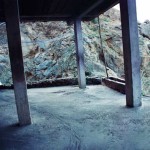

"Bodies" is the debut album from EPRC - a duo drenched in conceptual aesthetics, leaning on abstraction as hard as they lean on synthesizers. Roberto Crippa and Elisabetta Porcinai have sculpted an auditory landscape that feels like an avant-garde soundtrack to an existential road trip: part trance, part anxiety attack.
Tracks like "Sometimes" and "I Know We Exist" flirt with repetition, hypnotizing the listener into a sonic limbo where each loop tightens, a snake coiling around fragile human emotions. The album’s core? Obsession with dualities - control versus surrender, violence against tenderness. The interplay between calm, ethereal harmonies and guttural percussion leaves you spinning, unsure if you’re about to be kissed or punched in the gut.
This tension works beautifully, yet sometimes it feels like the duo is "trying too hard". Is this careful balance organic, or is it meticulously crafted to the point of sterility? Either way, EPRC's language is fluent in abstract storytelling, even if the message can be maddeningly opaque. You won’t dance to "Bodies", but you might shiver, sweat, or stare into the abyss for a bit too long.
The ethereal soundscapes of "Calm and Silver" and the apocalyptic pulse of "War" offer stark contrasts, reflecting the unpredictable nature of the human psyche, much like a dream that refuses to follow narrative logic. At its best, "Bodies" feels like a high-stakes conversation between body and machine; at its worst, it veers into self-indulgent moodiness.
Is it revolutionary? Maybe not. But "Bodies" certainly knows how to haunt your thoughts, demanding a level of emotional engagement that leaves you feeling both violated and tenderly embraced by the synthetic folds of its sonic architecture.
Tracks like "Sometimes" and "I Know We Exist" flirt with repetition, hypnotizing the listener into a sonic limbo where each loop tightens, a snake coiling around fragile human emotions. The album’s core? Obsession with dualities - control versus surrender, violence against tenderness. The interplay between calm, ethereal harmonies and guttural percussion leaves you spinning, unsure if you’re about to be kissed or punched in the gut.
This tension works beautifully, yet sometimes it feels like the duo is "trying too hard". Is this careful balance organic, or is it meticulously crafted to the point of sterility? Either way, EPRC's language is fluent in abstract storytelling, even if the message can be maddeningly opaque. You won’t dance to "Bodies", but you might shiver, sweat, or stare into the abyss for a bit too long.
The ethereal soundscapes of "Calm and Silver" and the apocalyptic pulse of "War" offer stark contrasts, reflecting the unpredictable nature of the human psyche, much like a dream that refuses to follow narrative logic. At its best, "Bodies" feels like a high-stakes conversation between body and machine; at its worst, it veers into self-indulgent moodiness.
Is it revolutionary? Maybe not. But "Bodies" certainly knows how to haunt your thoughts, demanding a level of emotional engagement that leaves you feeling both violated and tenderly embraced by the synthetic folds of its sonic architecture.
Isak Hedtj?rn: Kvarpan
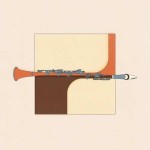
If you’ve ever wondered what it sounds like when a clarinet suffers a quarter-life crisis, look no further than Isak HedtjÄrn’s debut solo album, "Kvarpan". Recorded in a boatyard near Stockholm, this album isn't your typical clarinet showcase - in fact, it’s barely even a clarinet album in the traditional sense. HedtjÄrn, armed with a metal clarinet (because, why not?), dives deep into the abyss of improvisation, and what comes out is...well, somewhere between chaotic genius and an elaborate prank on the avant-garde.
Let’s talk about this clarinet. Not just any clarinet, mind you - it’s a "metal" one. Picture this: HedtjÄrn's instrument is less Benny Goodman and more Cthulhu with a brass reed, bending the edges of sound itself like it’s trying to call down a thunderstorm. The title "Kvarpan" refers to a slang word for the clarinet that apparently only one guy used, Roland Keijser, a Swedish jazz legend. But it’s fitting that HedtjÄrn would resurrect this obscure term for an album that feels like it’s resurrecting the very concept of free improvisation from the dustbin of music theory.
The album is all recorded “on location” in one session, as if HedtjÄrn is staging an art-house film where the plot is improvised and the protagonist is a clarinet with an existential crisis. There’s a strange charm in this raw, unedited approach. The ferries, the waiting cars - they’re all part of the atmosphere, the soundscape intruding on the music like uninvited guests to an intimate concert. It’s not just a recording; it’s a document of time and space, a snapshot of the day when a clarinet decided to throw itself into the sea and swim for freedom.
From the first notes of "Toner", you know you’re in for something otherworldly. The clarinet stretches and warps, as if it’s learning to speak a new language - one made of breath and the sharp inhale before the world collapses. This is free improvisation at its most unsettling. Forget melodic lines, forget structured rhythms; what HedtjÄrn offers is something more primal, like the clarinet’s unfiltered thoughts spilling out in real time. This ain’t smooth jazz, and Kenny G would probably run screaming in the opposite direction.
Tracks like "Kvarplek" and "Sågen II" play like abstract sonic puzzles, each note a piece you’re never quite sure fits. HedtjÄrn overdubs himself into a quartet - except, he does it "blind". He records each part without hearing the others, a bold artistic choice that somehow, against all odds, works. It’s like listening to a conversation where everyone is talking past each other, yet some inexplicable harmony emerges. It’s disjointed but oddly satisfying, like a jigsaw puzzle where all the pieces are from different sets but still form some kind of fractured picture.
But it’s not all anarchic noise. "Kvarpan" surprises with moments of fragile beauty. On tracks like "Kvarpan I" and "Toner II", HedtjÄrn lets his instrument breathe, playing with tone and texture in ways that hint at the clarinet's more classical roots. These passages are haunting, almost tender, as though the clarinet itself is pausing to reflect before diving back into chaos. There’s a deep emotional undercurrent here, a sense that HedtjÄrn is tapping into something raw and personal, even as he pushes his instrument to the breaking point.
HedtjÄrn’s influences are wide-ranging, from early jazz clarinetists like Johnny Dodds to the more experimental approaches of Mats Gustafsson. But he’s not content to mimic; he bends these traditions into something wholly his own. There’s a deep respect for history here, but also a kind of irreverent rebellion. He learned the rules, and now he’s gleefully tearing them apart. As he says in the liner notes, “My idea was first to never play tonally at all”, which, in jazz, is like saying you’re going to paint but only use invisible ink. And yet, in the hands of HedtjÄrn, this approach becomes something weirdly profound.
At times, this album is uncomfortable - like hearing a private conversation you weren’t meant to overhear - but it’s also deeply rewarding for those who stick with it., but it features radical, beautifully strange music that pushes the boundaries of what a clarinet (and music itself) can be. If you're tired of the predictable and crave something that will quite literally f""k with your brain (as Mats Gustafsson so poetically put it), "Kvarpan" is your album.
Just don’t expect to understand it on the first listen. Or the second. Or, honestly, ever. But isn’t that the point?
Let’s talk about this clarinet. Not just any clarinet, mind you - it’s a "metal" one. Picture this: HedtjÄrn's instrument is less Benny Goodman and more Cthulhu with a brass reed, bending the edges of sound itself like it’s trying to call down a thunderstorm. The title "Kvarpan" refers to a slang word for the clarinet that apparently only one guy used, Roland Keijser, a Swedish jazz legend. But it’s fitting that HedtjÄrn would resurrect this obscure term for an album that feels like it’s resurrecting the very concept of free improvisation from the dustbin of music theory.
The album is all recorded “on location” in one session, as if HedtjÄrn is staging an art-house film where the plot is improvised and the protagonist is a clarinet with an existential crisis. There’s a strange charm in this raw, unedited approach. The ferries, the waiting cars - they’re all part of the atmosphere, the soundscape intruding on the music like uninvited guests to an intimate concert. It’s not just a recording; it’s a document of time and space, a snapshot of the day when a clarinet decided to throw itself into the sea and swim for freedom.
From the first notes of "Toner", you know you’re in for something otherworldly. The clarinet stretches and warps, as if it’s learning to speak a new language - one made of breath and the sharp inhale before the world collapses. This is free improvisation at its most unsettling. Forget melodic lines, forget structured rhythms; what HedtjÄrn offers is something more primal, like the clarinet’s unfiltered thoughts spilling out in real time. This ain’t smooth jazz, and Kenny G would probably run screaming in the opposite direction.
Tracks like "Kvarplek" and "Sågen II" play like abstract sonic puzzles, each note a piece you’re never quite sure fits. HedtjÄrn overdubs himself into a quartet - except, he does it "blind". He records each part without hearing the others, a bold artistic choice that somehow, against all odds, works. It’s like listening to a conversation where everyone is talking past each other, yet some inexplicable harmony emerges. It’s disjointed but oddly satisfying, like a jigsaw puzzle where all the pieces are from different sets but still form some kind of fractured picture.
But it’s not all anarchic noise. "Kvarpan" surprises with moments of fragile beauty. On tracks like "Kvarpan I" and "Toner II", HedtjÄrn lets his instrument breathe, playing with tone and texture in ways that hint at the clarinet's more classical roots. These passages are haunting, almost tender, as though the clarinet itself is pausing to reflect before diving back into chaos. There’s a deep emotional undercurrent here, a sense that HedtjÄrn is tapping into something raw and personal, even as he pushes his instrument to the breaking point.
HedtjÄrn’s influences are wide-ranging, from early jazz clarinetists like Johnny Dodds to the more experimental approaches of Mats Gustafsson. But he’s not content to mimic; he bends these traditions into something wholly his own. There’s a deep respect for history here, but also a kind of irreverent rebellion. He learned the rules, and now he’s gleefully tearing them apart. As he says in the liner notes, “My idea was first to never play tonally at all”, which, in jazz, is like saying you’re going to paint but only use invisible ink. And yet, in the hands of HedtjÄrn, this approach becomes something weirdly profound.
At times, this album is uncomfortable - like hearing a private conversation you weren’t meant to overhear - but it’s also deeply rewarding for those who stick with it., but it features radical, beautifully strange music that pushes the boundaries of what a clarinet (and music itself) can be. If you're tired of the predictable and crave something that will quite literally f""k with your brain (as Mats Gustafsson so poetically put it), "Kvarpan" is your album.
Just don’t expect to understand it on the first listen. Or the second. Or, honestly, ever. But isn’t that the point?
Kiwanoid: Vanat?hi
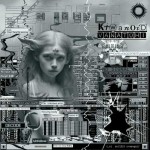
Here we go - another album trying to bottle the sound of the void. "Vanatühi" by Kiwanoid, released on Mille Plateaux and Glitch Please, is ostensibly a technopagan concept album, but let’s be honest: this record is more like a pixelated fever dream of a hard-drive graveyard, where ancient DOS systems croak out their last whispers of binary breath. For an album that delights in disorder, the sonic chaos somehow ties itself into a peculiar coherence - an electronic thicket of glitch aesthetics that feels like it’s always one click away from self-destructing.
Let's start with the premise. "Vanatühi" ("emptiness" in Estonian, if you're keeping track) is a philosophical rabbit hole disguised as a glitch album. Kiwanoid dubs this a “technopagan” venture - because nothing says “return to nature” quite like hammering out glitch-techno on a 4-bit laptop that belongs in a museum. The album’s track titles are variations of the word “nothing” in different languages, signaling a love affair with existential nihilism dressed up in techno’s darkest robes. It’s a bold, heady concept, but one can’t help but chuckle at the notion of "nothing" being stretched over 20 tracks. You almost expect the sound of a vacuum cleaner sucking up ideas, but instead, Kiwanoid gives us rhythmic disorder that’s every bit as intricate as it is opaque.
The album opens with "nix", a foreboding landscape of jagged clicks and minimal textures that immediately transports you to Kiwanoid's strange digital forest. You can practically hear the low-bitrate software wheezing for oxygen. What initially feels like a disjointed collision of corrupted files soon reveals itself to be a carefully curated dance of alien clicks, bleeps, and off-kilter bass drums that insist on getting your attention. Like Mille Plateaux alumni Oval and Alva Noto, Kiwanoid leans into the unpredictability of glitch but sidesteps the genre’s tendency for sterile precision. Instead, there's something almost folksy about the digital decay on display here, as if a forest of microchips had grown moss over centuries of forgotten computations.
Tracks like "khh nh" and "nikakatiting" bring the more frenetic side of Kiwanoid’s glitchcraft into focus. The fractured beats slap you in the face with the disorienting glee of someone operating on caffeine and zero sleep. The polyrhythms are both irregular and addictive, with tempos that swing violently between glitch-techno and tribal reverie. Imagine dancing around a fire in a post-apocalyptic forest, but instead of drums, you’ve got malfunctioning hard drives and a haunted CPU spewing out percussive error codes.
What really sets "Vanatühi" apart from your garden-variety glitch experiments is its strange warmth. For all its digital abrasiveness, there’s an undeniable sense of nostalgia and human touch lurking beneath the clatter. Tracks like "" and "ha ho na letho" might initially sound like they’re crafted from broken electronics, but the deeper you listen, the more these lo-fi sounds begin to form a kind of surreal, esoteric beauty. It’s like staring at cave paintings while hearing the hum of a distant satellite - worlds colliding in the best possible way.
Of course, glitch purists might balk at the album’s reliance on unpredictable contrasts. You can’t settle into any groove for long before Kiwanoid rips the rug out from under you. "impumpununu" feels like a brief 66-second experiment in controlled demolition, while "kphanavi" sounds like an alien stomp dance, complete with fractured voice samples that sound like they’re being warped by an intergalactic DJ. It’s messy, but it’s an exhilarating mess - one that keeps you on edge without ever descending into noise-for-noise's-sake.
And then, there’s the conceptual heft. These 20 tracks don’t just aim for glitchy chaos; they are an exploration of "nothingness" in all its forms, and you can't help but feel the eerie absence of convention in every digital scrape. Kiwanoid's choice to include human voice samples (warped and garbled as they are) adds an almost cyborg-like dimension to the record, making you wonder if you’re listening to the last gasps of human consciousness in a world ruled by sentient machines.
But is "Vanatühi" an easy listen? Absolutely not. Like many Mille Plateaux releases, this album demands attention, patience, and perhaps a bit of masochism. The unpredictable sharp edges and tachycardic rhythms can grate on the nerves, especially if you’re expecting anything resembling traditional structure. There are no radio-friendly cuts here. Kiwanoid isn’t interested in making things accessible or easy - this is music for the late-night headphone crowd, the ones who find beauty in the abstract and unsettling.
And yet, for all its glitchy disarray, "Vanatühi" never feels like it’s trying to alienate its listener. There’s something oddly communal about the record, as if Kiwanoid is inviting us all to join in a technopagan ritual where the glitches are sacred and the chaos is celebrated. It’s the kind of album that will likely divide listeners into two camps: those who view it as an intricate puzzle worth solving and those who dismiss it as sonic gibberish. I, for one, am firmly in the former camp.
Kiwanoid has created a record that feels both ancient and futuristic, a swirling maelstrom of decaying technology and primal rhythm. "Vanatühi" may be about nothing, but in that void, Kiwanoid has found a vast, intricate world worth exploring. It’s an album that feels like it shouldn’t exist, but thankfully, it does.
Let's start with the premise. "Vanatühi" ("emptiness" in Estonian, if you're keeping track) is a philosophical rabbit hole disguised as a glitch album. Kiwanoid dubs this a “technopagan” venture - because nothing says “return to nature” quite like hammering out glitch-techno on a 4-bit laptop that belongs in a museum. The album’s track titles are variations of the word “nothing” in different languages, signaling a love affair with existential nihilism dressed up in techno’s darkest robes. It’s a bold, heady concept, but one can’t help but chuckle at the notion of "nothing" being stretched over 20 tracks. You almost expect the sound of a vacuum cleaner sucking up ideas, but instead, Kiwanoid gives us rhythmic disorder that’s every bit as intricate as it is opaque.
The album opens with "nix", a foreboding landscape of jagged clicks and minimal textures that immediately transports you to Kiwanoid's strange digital forest. You can practically hear the low-bitrate software wheezing for oxygen. What initially feels like a disjointed collision of corrupted files soon reveals itself to be a carefully curated dance of alien clicks, bleeps, and off-kilter bass drums that insist on getting your attention. Like Mille Plateaux alumni Oval and Alva Noto, Kiwanoid leans into the unpredictability of glitch but sidesteps the genre’s tendency for sterile precision. Instead, there's something almost folksy about the digital decay on display here, as if a forest of microchips had grown moss over centuries of forgotten computations.
Tracks like "khh nh" and "nikakatiting" bring the more frenetic side of Kiwanoid’s glitchcraft into focus. The fractured beats slap you in the face with the disorienting glee of someone operating on caffeine and zero sleep. The polyrhythms are both irregular and addictive, with tempos that swing violently between glitch-techno and tribal reverie. Imagine dancing around a fire in a post-apocalyptic forest, but instead of drums, you’ve got malfunctioning hard drives and a haunted CPU spewing out percussive error codes.
What really sets "Vanatühi" apart from your garden-variety glitch experiments is its strange warmth. For all its digital abrasiveness, there’s an undeniable sense of nostalgia and human touch lurking beneath the clatter. Tracks like "" and "ha ho na letho" might initially sound like they’re crafted from broken electronics, but the deeper you listen, the more these lo-fi sounds begin to form a kind of surreal, esoteric beauty. It’s like staring at cave paintings while hearing the hum of a distant satellite - worlds colliding in the best possible way.
Of course, glitch purists might balk at the album’s reliance on unpredictable contrasts. You can’t settle into any groove for long before Kiwanoid rips the rug out from under you. "impumpununu" feels like a brief 66-second experiment in controlled demolition, while "kphanavi" sounds like an alien stomp dance, complete with fractured voice samples that sound like they’re being warped by an intergalactic DJ. It’s messy, but it’s an exhilarating mess - one that keeps you on edge without ever descending into noise-for-noise's-sake.
And then, there’s the conceptual heft. These 20 tracks don’t just aim for glitchy chaos; they are an exploration of "nothingness" in all its forms, and you can't help but feel the eerie absence of convention in every digital scrape. Kiwanoid's choice to include human voice samples (warped and garbled as they are) adds an almost cyborg-like dimension to the record, making you wonder if you’re listening to the last gasps of human consciousness in a world ruled by sentient machines.
But is "Vanatühi" an easy listen? Absolutely not. Like many Mille Plateaux releases, this album demands attention, patience, and perhaps a bit of masochism. The unpredictable sharp edges and tachycardic rhythms can grate on the nerves, especially if you’re expecting anything resembling traditional structure. There are no radio-friendly cuts here. Kiwanoid isn’t interested in making things accessible or easy - this is music for the late-night headphone crowd, the ones who find beauty in the abstract and unsettling.
And yet, for all its glitchy disarray, "Vanatühi" never feels like it’s trying to alienate its listener. There’s something oddly communal about the record, as if Kiwanoid is inviting us all to join in a technopagan ritual where the glitches are sacred and the chaos is celebrated. It’s the kind of album that will likely divide listeners into two camps: those who view it as an intricate puzzle worth solving and those who dismiss it as sonic gibberish. I, for one, am firmly in the former camp.
Kiwanoid has created a record that feels both ancient and futuristic, a swirling maelstrom of decaying technology and primal rhythm. "Vanatühi" may be about nothing, but in that void, Kiwanoid has found a vast, intricate world worth exploring. It’s an album that feels like it shouldn’t exist, but thankfully, it does.